Most jarred salsas are sodium bombs disguised as a healthy snack. A single two-tablespoon serving from a standard supermarket brand often packs more salt than a handful of pretzels, making it nearly impossible to keep your daily intake in check while still enjoying real flavor.
I’m Emma — the founder and writer behind Baby Bangs. I’ve spent years digging through nutrition labels and ingredient decks on grocery staples, analyzing how manufacturers hide sodium behind natural flavors and processed tomato concentrates.
After sorting through dozens of options by their actual sodium content and ingredient integrity, I’ve landed on the five jars that deliver taste without the heavy numbers. This is your complete guide to finding the best low-sodium salsa that actually belongs in your fridge.
How To Choose The Best Low-Sodium Salsa
Low-sodium salsa is not a compromise — it is a deliberate choice of ingredient quality over salt-heavy processing. The key is knowing what to look for on the back label and which preparation methods naturally keep sodium low.
Sodium Per Serving Is The Only Metric That Matters
The FDA defines “low sodium” as 140 mg or less per serving. Most traditional salsas land between 200 and 350 mg per two-tablespoon serving. If a jar claims to be “reduced sodium” but still clocks over 140 mg, it is not low-sodium — it is just less salty than the bomb version. Always check the milligram number on the nutrition facts panel, not the front-of-jar marketing.
Look For Whole Tomato Bases Instead Of Paste
Tomato paste is concentrated and often has added salt for preservation. Salsas built on fresh Roma tomatoes or crushed whole tomatoes without paste generally carry less baseline sodium. Brands that list “tomatoes” or “vine-ripened tomatoes” as the first ingredient rather than “tomato puree” or “tomato paste” are almost always lighter on the salt shaker.
Avoid Hidden Sodium Carriers
Ingredients like calcium chloride, disodium inosinate, and natural flavors can all contribute sodium without being obvious salt. A salsa that lists “sea salt” as the only sodium source is usually more straightforward than one with a laundry list of preservatives and flavor enhancers. The shorter the ingredient deck, the easier it is to control exactly how much sodium enters your body.
Quick Comparison
On smaller screens, swipe sideways to see the full table.
| Model | Category | Best For | Key Spec | Amazon |
|---|---|---|---|---|
| Dennis’ Gourmet Pineapple Salsa | Fruit Salsa | Everyday snacking | 15 cal per serving, low sugar | Amazon |
| Yo Mama’s Foods Marinara | Pasta Sauce | Cooking & keto diets | Low-sodium, no sugar added | Amazon |
| Dennis’ Gourmet Variety Pack | Salsa Variety | Taste variety | 48 oz total, three flavors | Amazon |
| H&H 30 Second Salsa Mix | Seasoning Mix | DIY batches | Makes 26 batches per can | Amazon |
| Mrs. Renfro’s Habanero Salsa | Spicy Salsa | Heat seekers | No added sugar, gluten-free | Amazon |
In‑Depth Reviews
1. Dennis’ Gourmet All-Natural Pineapple Salsa

This is the jar I reach for when I want real salsa flavor without the heavy sodium punch. Made with fresh Roma tomatoes and real pineapple chunks, it delivers a naturally sweet heat that lets you skip the salt shaker entirely. At only 15 calories per serving and with no added fat or gluten, it fits cleanly into a low-sodium eating pattern without tasting like a diet food.
The balancing act here is the touch of brown sugar — just enough to round out the jalapeño heat without sending the sugar content through the roof. Each 16-ounce jar comes from small-batch production, which means the ingredient list stays short and recognizable. No MSG, no calcium chloride, no hidden sodium carriers.
I use this on everything from eggs in the morning to grilled chicken at dinner. The fruit-forward profile pairs especially well with fish and tacos, making it more versatile than a standard tomato salsa. If you want one jar that covers snacks and cooking without spiking your sodium budget, this is it.
Why it’s great
- Only 15 calories per serving with low sugar
- Short, recognizable ingredient deck with no MSG
- Versatile enough for chips, eggs, tacos, and fish
Good to know
- Contains a small amount of brown sugar for balance
- Fruit-forward flavor may not suit traditional tomato salsa purists
2. Yo Mama’s Foods Keto Marinara Pasta Sauce

Yo Mama’s Marinara is technically a pasta sauce, but its low-sodium, no-sugar-added profile makes it a strong contender for anyone trying to cut salt without cutting flavor. The base is whole fresh Non-GMO tomatoes, fresh garlic, and fresh basil, with real organic chicken stock providing depth instead of a salt blast. It beat three leading premium brands in a blind taste test, which tells you the flavor is there.
This three-pack gives you 37.5 total ounces across three jars, making it a solid pantry staple. The sauce is Paleo-friendly, Whole 30 compatible, and low-glycemic, so it works across multiple dietary frameworks. I use it as a quick pizza base or a simmer sauce for veggies when I want something richer than a fresh salsa.
The trade-off is that this is a cooked marinara, not a fresh salsa. It lacks the chunkiness and raw vegetable crunch of a traditional pico-style salsa. If your primary need is a scoopable chip dip, this is better suited for cooking applications. But if you want a low-sodium tomato-based sauce that pulls double duty in the kitchen, the value here is undeniable.
Why it’s great
- Low-sodium with no added sugar and clean ingredients
- Blind taste-test winner against premium brands
- Compatible with keto, Paleo, and Whole 30 diets
Good to know
- It is a marinara sauce, not a fresh chunky salsa
- Best suited for cooking rather than chip dipping
3. Dennis’ Gourmet Salsa Variety Pack
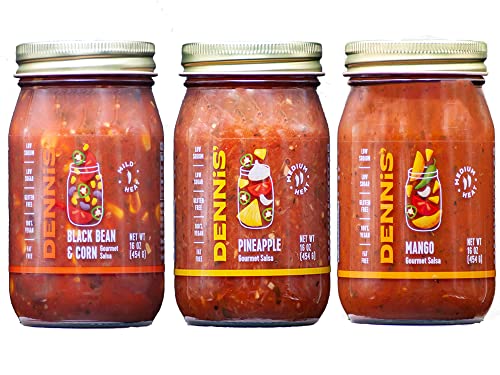
This variety pack solves the biggest problem with low-sodium salsa: boredom. You get three distinct flavor profiles — Black Bean and Corn, Mango, and Pineapple — all made with vine-ripened Roma tomatoes and the same clean, short ingredient philosophy as the single Dennis’ jars. No MSG, no preservatives, just whole ingredients and spices.
Each batch is handcrafted in small runs, which means the texture stays fresh and the sodium stays low across all three varieties. The 48-ounce total across the pack gives you serious pantry mileage without the risk of a single flavor going stale. The Black Bean and Corn salsa is particularly good as a topping for grilled meats because the beans add texture without requiring extra salt.
The catch is that you are committing to three jars at once. If you are not a fan of fruit-based salsas, the Mango and Pineapple options may not land. But if you enjoy rotating flavors and want to keep your sodium intake consistent across different meals, this is the most efficient way to stock your fridge.
Why it’s great
- Three distinct flavors keep meals interesting
- 48 ounces total for a well-stocked pantry
- Handcrafted with whole ingredients and no MSG
Good to know
- Two of three flavors are fruit-based, not for everyone
- Comes as a fixed pack with no individual jar selection
4. H&H 30 Second Salsa Seasoning Mix
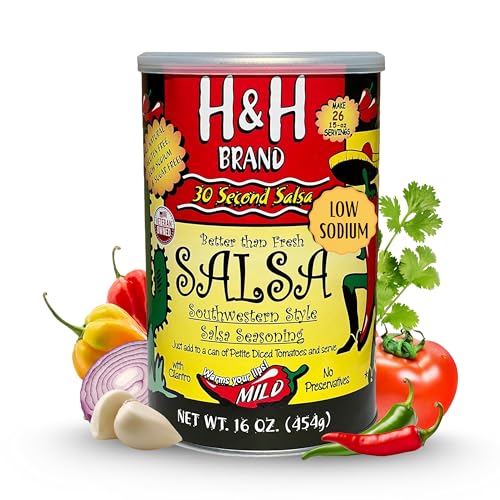
If you want absolute control over your sodium intake, this seasoning mix is the smartest play. You add your own tomatoes and adjust the salt yourself, so you are not at the mercy of a jarred product. The mix uses dehydrated onions, garlic, chili peppers, cilantro, and vinegar powder — all natural ingredients with no preservatives. It won a Gold Medal and has been trusted since 2005.
One 16-ounce can makes approximately twenty-six 15-ounce batches of salsa. That is a massive yield for the money. Because you control the tomato base, you can use fresh Roma tomatoes for a raw pico style or canned crushed tomatoes for a smoother texture. The mix is kid-friendly and crowd-pleasing, with a balanced heat that does not overwhelm.
The downside is the upfront work. You have to prep tomatoes and mix everything yourself, which takes the convenience out of a grab-and-go jar. But for someone who is serious about keeping sodium below 140 mg per serving and wants to avoid the hidden carriers found in many prepared salsas, this is the most reliable route.
Why it’s great
- Complete sodium control by adding your own tomatoes
- Makes 26 batches per can, huge value per serving
- All-natural ingredients with no preservatives
Good to know
- Requires prep work and fresh or canned tomatoes
- Less convenient than a ready-to-eat jar
5. Mrs. Renfro’s Habanero Salsa
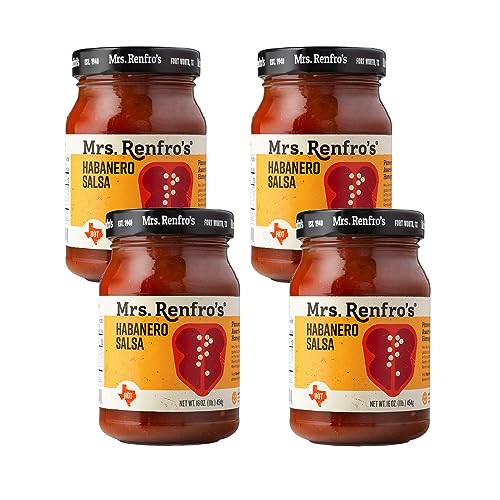
Mrs. Renfro’s has been slow-cooking salsas in Fort Worth, Texas since 1940, and their Habanero version is a standout for anyone who wants serious heat without the sugar crash. No high-fructose corn syrup, no added sugar, and the ingredient list stays clean with fresh peppers and vinegar as the primary flavor drivers. It is gluten-free and fits into keto and paleo lifestyles without question.
The 4-pack gives you four 16-ounce jars, which is a generous amount for stocking your pantry. The habanero heat is authentic — it builds steadily rather than smacking you immediately, which makes it work as both a dipping salsa and a cooking sauce for enchiladas or nachos. Because it relies on pepper heat rather than salt for flavor, the sodium profile stays reasonable.
The challenge is the heat level. If you are sensitive to spicy foods, this will be too much for casual snacking. The habanero variety is one of the hottest in their lineup, and there is no mild version in this pack. But if you want a low-sugar, low-sodium salsa that brings real fire, Mrs. Renfro’s delivers on tradition and taste.
Why it’s great
- No added sugar and no HFCS for clean eating
- Authentic slow-cooked Tex-Mex flavor since 1940
- 4-pack provides excellent pantry value
Good to know
- Habanero heat is intense, not for mild palates
- 4-pack means a big commitment to one heat level
FAQ
Can I trust a salsa labeled reduced sodium instead of low sodium?
Does fruit salsa naturally have less sodium than tomato salsa?
Will a low-sodium salsa taste bland compared to regular salsa?
Final Thoughts: The Verdict
For most users, the best low-sodium salsa winner is the Dennis’ Gourmet All-Natural Pineapple Salsa because it delivers real small-batch flavor with only 15 calories and minimal sugar, all without relying on salt for taste. If you want total sodium control from the ground up, grab the H&H 30 Second Salsa Seasoning Mix. And for heat lovers who refuse to compromise on spice or clean ingredients, nothing beats the Mrs. Renfro’s Habanero Salsa 4-pack.