Finding a frozen meal that doesn’t punish your palate with a salt bomb while still clearing your daily sodium limit in one sitting is a genuine challenge. Most options in the freezer aisle are engineered for flavor through heavy sodium, leaving anyone watching their blood pressure or just trying to eat cleaner with very few satisfying choices. The reality is that a truly low-sodium meal needs to deliver on taste, texture, and convenience without relying on the salt shaker as a crutch.
I’m Emma — the founder and writer behind Baby Bangs. I’ve spent years analyzing the nutritional profiles and ingredient decks of frozen and shelf-stable convenience foods, separating the marketing spin from meals that actually work for a low-sodium lifestyle.
A great meal is one that fits your dietary needs without feeling like a compromise, which is exactly what the best low-sodium frozen meals should deliver: real flavor, controlled sodium, and genuine convenience all in one package.
How To Choose The Best Low-Sodium Frozen Meals
Not every meal labeled “reduced sodium” is actually a smart choice for a low-sodium diet. The FDA defines “low sodium” as 140 mg or less per serving, while “reduced sodium” just means 25% less than the original version. Many “light in sodium” options still pack 300–400 mg per serving, which can add up fast if you eat multiple meals a day. The key is reading the Nutrition Facts panel carefully and understanding what the label actually means for your daily allowance.
Check the Sodium Per Serving, Not the Package
A single frozen meal container might list two or more servings per package, meaning you could be getting double the sodium shown on the label if you eat the whole thing. Always look at the serving size first, then calculate the sodium for the full meal you plan to eat. Many “low sodium” options are only low if you eat half the box, which defeats the purpose of convenience eating.
Look Beyond the Sodium Number
Sodium doesn’t just come from salt. Ingredients like sodium phosphate, sodium citrate, monosodium glutamate (MSG), disodium inosinate, and baking soda all add sodium to a meal. A product can have “no added salt” on the front but still be high in sodium from these additives. If you have specific health concerns like high blood pressure or kidney issues, checking the full ingredient list is non-negotiable.
Prioritize Whole Food Ingredients
Meals built around whole grains, legumes, vegetables, and lean proteins naturally contain less sodium than heavily processed options. A lentil soup or a bean-based bowl will typically have a cleaner sodium profile than a breaded chicken or pasta dish with a heavy sauce. Focusing on whole-food-based meals makes hitting your sodium target much easier without sacrificing satisfaction.
Quick Comparison
On smaller screens, swipe sideways to see the full table.
| Model | Category | Best For | Key Spec | Amazon |
|---|---|---|---|---|
| Amy’s Light in Sodium Variety Pack | Canned Soup | Organic, plant-based meals | 50% less sodium than regular | Amazon |
| Miss Olive’s Lentil & Beef with Vegetables | Shelf-Stable Entrée | Hearty, protein-packed single serving | Lower sodium lentils & beef | Amazon |
| Miss Olive’s Ready Meals Variety Pack | Shelf-Stable Variety | Trying different lower-sodium flavors | 6 flavors, lower sodium | Amazon |
| BAMI Gluten Free Ramen Noodles | Instant Noodles | GF, low sodium ramen craving | Low sodium seasoning, no MSG | Amazon |
| Maruchan Less Sodium Chicken Ramen | Instant Noodles | Budget-friendly quick lunch | 25% less sodium than original | Amazon |
In‑Depth Reviews
1. Amy’s Light in Sodium Variety Pack
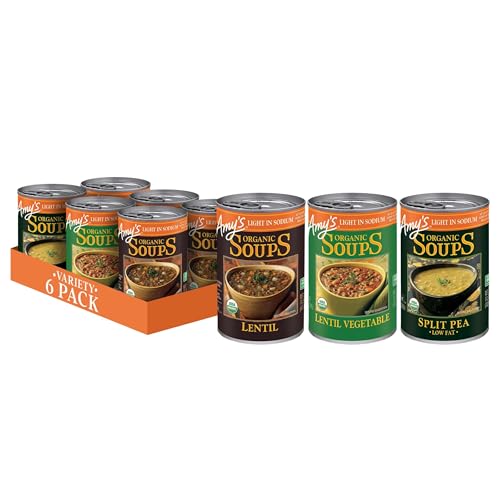
Amy’s has built a reputation on clean ingredient decks, and this Light in Sodium Variety Pack delivers exactly what the name promises. Each soup in the pack — Lentil Vegetable, Lentil, and Split Pea — contains 50% less sodium than Amy’s regular versions, which already sit on the lower end of the soup aisle. That means you’re getting a legitimate low-sodium meal without sacrificing the hearty, slow-cooked flavor these recipes are known for. The use of organic vegetables and spices rather than salt-heavy broths is the key differentiator here.
The pack of six cans gives you genuine variety, and each soup works as a standalone lunch or a base for adding fresh greens, grains, or a lean protein. The Lentil Vegetable is particularly satisfying, with a thick texture that feels more like a stew than a watery soup. Because these are shelf-stable canned goods, they’re perfect for pantry stocking without worrying about freezer space — though the listing is technically for canned soup, the low-sodium profile and meal-ready convenience make them a direct competitor to frozen options for anyone watching their salt intake.
One practical note: the portion size is reasonable but not enormous. If you have a larger appetite, you’ll want to pair a can with a side of roasted vegetables or a piece of whole-grain toast. The sodium per serving is genuinely low enough to fit into a strict 1,500 mg daily target, which is rare in the convenience meal category. For anyone prioritizing organic ingredients and plant-based eating, this pack is the clear frontrunner.
Why it’s great
- 50% less sodium than regular Amy’s soups — genuinely low sodium per serving
- Made with organic vegetables and spices; no artificial additives
- Three flavors in one pack reduce meal boredom
Good to know
- Canned format, not frozen — shelf-stable, but not a freezer meal
- Portion sizes are modest; may need a side dish for a full meal
- Some may find the texture of lentil-based soups too thick
2. Miss Olive’s Lentil & Beef with Vegetables Ready Meal
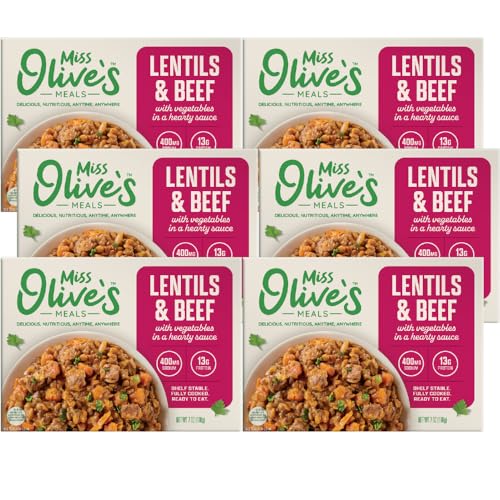
Miss Olive’s has carved out a niche in the lower-sodium ready meal space, and this Lentil & Beef with Vegetables entrée is the standout single-flavor option in their lineup. The combination of lentils and beef provides a solid protein and fiber base that keeps you full without the blood sugar crash that high-sodium, high-carb meals often cause. The lower sodium profile is achieved through a careful blend of herbs and spices rather than drowning the dish in salt, which means the lentils and beef actually taste like themselves rather than just salty broth.
The 7-ounce portion is smaller than a typical frozen dinner, but the density of the lentils and beef makes it more satisfying than the package size suggests. It microwaves in under two minutes and is shelf-stable until opened, making it an excellent option for office lunches, travel, or emergency meal storage. The hearty sauce provides enough moisture that the dish doesn’t dry out during reheating, a common problem with smaller-portion shelf-stable meals.
One thing to be aware of: the sodium reduction is relative to other shelf-stable meals, not to fresh-cooked food. While it is lower in sodium than many competitors, it’s still a processed meal, so pairing it with fresh vegetables or a side salad helps round out the nutritional profile. If you need a protein-forward, low-sodium option that fits in a desk drawer or a go-bag, this is a reliable choice.
Why it’s great
- High protein and fiber from lentils and beef keep you full
- Lower sodium than most shelf-stable ready meals
- Shelf-stable and microwaves in under 2 minutes
Good to know
- 7 oz portion is smaller than typical frozen dinners
- Still a processed meal; pair with fresh sides for best nutrition
- Single flavor only — no variety if you buy the 6-pack
3. Miss Olive’s Ready Meals Variety Pack
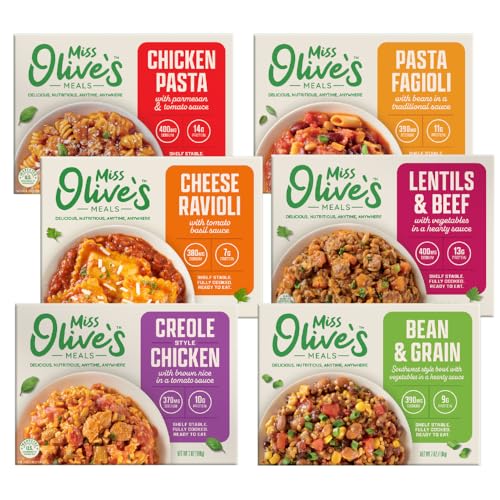
If you’re not sure which lower-sodium flavor you’ll like best, Miss Olive’s Variety Pack solves the problem by giving you six different options in one order. The lineup includes Chicken Pasta, Pasta Fagioli, Cheese Ravioli, Lentils & Beef, Creole Chicken, and Bean & Grain — each formulated with a reduced sodium profile compared to traditional ready meals. The Creole Chicken brings a welcome bit of spice that keeps the low-sodium experience from feeling flat, while the Bean & Grain option offers a plant-based alternative in an otherwise meat-inclusive pack.
The portion size is consistent across all flavors at 7 ounces each, and the shelf-stable format means you can keep a stash in your pantry, car, or desk without refrigeration. Preparation is genuinely as simple as microwaving for 60–90 seconds, which makes these a strong option for anyone who needs a hot meal in a hurry without the sodium hangover. Some users have noted that the sauce in certain varieties can be on the watery side, particularly in the Pasta Fagioli, but the overall flavor profile is well-balanced and does not rely on heavy salt.
Customer feedback does point out that the portions are small for the price point, especially if you are accustomed to larger frozen dinners. These are best treated as a light lunch or a component of a larger meal rather than a standalone dinner. For someone who wants to explore different lower-sodium options without committing to a single flavor, this variety pack is a practical entry point.
Why it’s great
- Six different lower-sodium flavors prevent menu fatigue
- Includes both meat and plant-based options in one pack
- Shelf-stable and ready in about a minute
Good to know
- Portions are small; best for light meals or as a base
- Sauce consistency varies between flavors
- Price per ounce is higher than many frozen meal options
4. BAMI Gluten Free Ramen Noodles (Chicken Flavor)

BAMI has solved a problem that gluten-free eaters have faced for years: finding a ramen noodle that actually tastes and feels like the real thing. These gluten-free rice ramen noodles have a texture that reviewers consistently describe as indistinguishable from wheat-based ramen, which is a remarkable achievement in the GF space. The chicken seasoning packet is designed as a low-sodium alternative to standard ramen seasonings, with no added MSG, making this a viable option for anyone avoiding both gluten and excessive salt.
Some users have noted that the seasoning packet is quite generous — one reviewer even mentioned that using the entire pack is a bit much for their taste. That’s a welcome problem, because it means you can control your sodium intake by using less seasoning while still having plenty of flavor from the noodles themselves. The noodles cook in about three minutes and hold up well in broth without turning mushy, which is a common failure point for GF noodles.
The main consideration here is that BAMI is still an instant noodle product, not a complete meal. You will want to add vegetables, protein, or an egg to turn it into a balanced lunch or dinner. The low-sodium seasoning gives you room to add your own ingredients without blowing past your daily sodium target, which is exactly how a smart convenience product should function. For anyone with celiac disease or gluten sensitivity who misses ramen, this is a genuine game-changer.
Why it’s great
- Noodle texture is nearly identical to traditional ramen
- Low sodium seasoning with no MSG
- You can control sodium by using less seasoning
Good to know
- Not a complete meal — needs added protein and vegetables
- Seasoning can be overpowering if you use the whole packet
- Rice noodles may be softer than some prefer
5. Maruchan Less Sodium Chicken Ramen
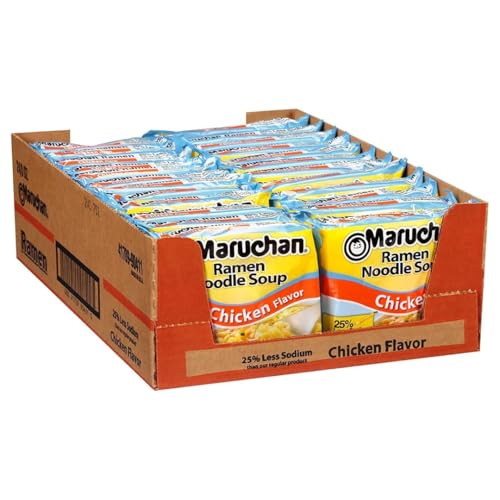
Maruchan’s Less Sodium Chicken Ramen is exactly what it sounds like: the classic instant ramen you grew up with, but reformulated to contain 25% less sodium than the original. For someone on a tight budget who still wants a quick, hot meal, this 24-pack delivers the lowest cost-per-serving in this list by a wide margin. The noodles are the same familiar curly texture, and the chicken broth retains enough savory depth that you won’t feel like you’re eating a watered-down version.
The caveat is that “25% less” still leaves the sodium content relatively high compared to whole-food-based low-sodium options. Maruchan’s original ramen is famously high in salt, so a 25% reduction brings it down but does not make it a low-sodium product in the strict sense. This is best understood as a less-bad option within the instant ramen category, rather than a genuinely low-sodium meal. You can further control sodium by using only half the seasoning packet, which many budget-conscious buyers already do.
For its intended use — a pantry staple for students, busy families, or anyone needing a sub-dollar meal in minutes — this pack is effective. The value proposition is undeniable, and the lower-sodium version is a meaningful improvement over the original. Just don’t mistake it for a health food. Pair it with frozen vegetables and a soft-boiled egg to round out the nutrition, and it becomes a respectable, affordable low-sodium meal component.
Why it’s great
- Extremely budget-friendly 24-pack
- Familiar taste and quick 3-minute preparation
- 25% less sodium than original Maruchan ramen
Good to know
- Still high in sodium compared to whole-food meals
- Not a complete meal — needs added nutrition
- “Less sodium” is relative; not a true low-sodium product
FAQ
Can I rely solely on low-sodium frozen meals for my daily sodium limit?
Are frozen meals with no added salt actually low in sodium?
How do I keep low-sodium frozen meals from tasting bland?
Final Thoughts: The Verdict
For most users, the best low-sodium frozen meals winner is the Amy’s Light in Sodium Variety Pack because it delivers genuine 50% less sodium with organic ingredients and three satisfying flavors. If you want a protein-packed, shelf-stable option, grab the Miss Olive’s Lentil & Beef with Vegetables. And for a gluten-free instant noodle fix that actually tastes like real ramen, nothing beats the BAMI Gluten Free Ramen Noodles.