Finding a breakfast cereal that doesn’t flood your system with sodium while still delivering a satisfying crunch is tougher than it sounds. Most popular boxes pack between 200 and 300 mg of sodium per serving, which can sabotage a low-sodium dietary goal before your day even starts. The real challenge is finding options that rely on whole grains and natural flavors rather than salt as a cheap taste booster.
I’m Emma — the founder and writer behind Baby Bangs. I’ve spent years analyzing food labels and ingredient decks to separate genuinely clean products from those that just wear a health halo.
Whether you are managing hypertension or simply trying to cut back on salt, this guide walks through five cereal choices that keep sodium at or near zero without sacrificing texture or taste. This is the definitive resource for finding the best low-sodium cereal that fits your morning routine.
How To Choose The Best Low-Sodium Cereal
Shopping for low-sodium cereal requires reading the fine print. Many cereals marketed as “healthy” still contain significant added salt for flavor. Focus on three factors to ensure you are getting a genuinely low-sodium product that also tastes good.
Sodium Content Per Serving Is Not Always Obvious
A cereal labeled “low sodium” legally contains 140 mg or less per serving. But “sodium-free” means less than 5 mg. For strict low-sodium diets, only sodium-free or salt-free options should make the cut. Check the Nutrition Facts panel — anything above 100 mg per serving is substantial for a breakfast cereal.
Ingredient Simplicity Matters More Than Marketing
The shortest ingredient lists are usually the safest bet for avoiding hidden sodium. Whole grain alone (brown rice, whole wheat, oats) contains negligible natural sodium. Once you see “salt” anywhere on the ingredient list — even near the end — the cereal is no longer sodium-free. Some brands also add sodium-based leavening agents or preservatives, which can push numbers up without tasting salty.
Fiber Content Determines Satiety and Health Impact
A low-sodium cereal that is also low in fiber will leave you hungry within an hour. Look for at least 3 grams of fiber per serving. Whole grain shredded wheat and muesli typically deliver the highest fiber counts. Rice-based cereals tend to be lower in fiber, so pairing them with fruit or nuts can help balance the nutritional profile.
Quick Comparison
On smaller screens, swipe sideways to see the full table.
| Model | Category | Best For | Key Spec | Amazon |
|---|---|---|---|---|
| Post Original Shredded Wheat | Whole Grain | Highest fiber option | 6g fiber per serving | Amazon |
| Quaker Salt Free Rice Cakes | Puffed Grain | 35 calories per cake | Amazon | |
| The Real Cereal Company Organic Brown Rice Crisps | Organic Crisp | Single-ingredient clean eating | Zero sugar, one ingredient | Amazon |
| Alpen Muesli No Sugar Added | Muesli | Nutrient-dense variety | High fiber, no added sugar | Amazon |
| Kellogg’s Special K Cereal Cups | Portable | On-the-go convenience | Single-serve cups, 12 count | Amazon |
In‑Depth Reviews
1. Post Original Shredded Wheat
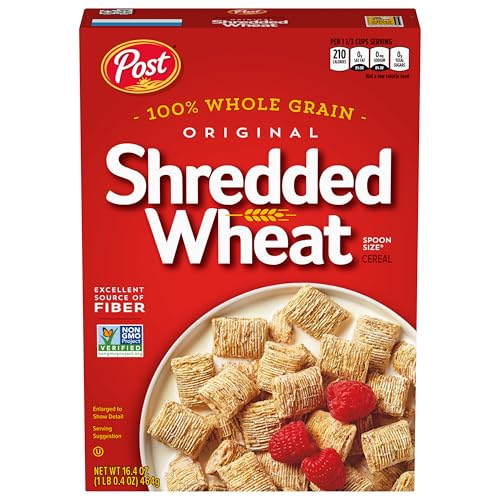
Post Original Shredded Wheat is the gold standard for sodium-free cereal because it contains absolutely no added salt — just one ingredient: whole grain wheat. Each serving delivers 6 grams of fiber, which is among the highest in the cold cereal aisle, and the Spoon Size format makes it easy to pour without breaking the biscuits apart. Reviews consistently mention that this is one of the few cereals that remains entirely free of sodium and sugar while still tasting like real wheat.
The six-pack format covers nearly 100 ounces total, making it a practical pantry staple for households that go through cereal quickly. Customers specifically note that they choose this cereal for its clean label and that store-brand alternatives often have a cardboard-like flavor that the Post version avoids. The crunchy texture holds up well in milk without turning soggy too fast, which matters for slow morning eaters.
It is Non-GMO Project Verified, Kosher certified, and qualifies for heart-healthy dietary patterns because it is naturally low in saturated fat and cholesterol. The only trade-off is the complete absence of sweetness — this cereal tastes like plain toasted wheat, so adding fresh fruit is almost necessary for palatability.
Why it’s great
- Zero sodium and zero sugar from a single whole-grain ingredient
- 6 grams of fiber per serving keeps you full for hours
- Bulk six-pack offers excellent value per ounce
Good to know
- No sweetness at all — fruit or a dash of cinnamon is almost required
- Texture can be very crunchy for those with sensitive teeth
2. Quaker Large Rice Cakes, Salt Free

Quaker Salt Free Rice Cakes are not a traditional bowl cereal in the spoonable sense, but they function as an excellent low-sodium breakfast base when crumbled into a bowl or topped with yogurt and fruit. Each cake contains only 35 calories and is made from puffed whole grain brown rice with absolutely no added salt, making it one of the few truly sodium-free options in the rice cake category.
The pack of three includes 8.53 ounces per bag, giving you a total of roughly 24 large rice cakes. These are certified gluten-free, which is helpful for those avoiding gluten alongside a low-sodium diet. Customers use them as a neutral canvas for toppings like peanut butter, avocado, or low-sodium cottage cheese — the plain flavor profile means you control everything that goes on top.
Because they are puffed rather than baked or extruded, the texture is light and airy rather than dense. Do not expect the crunchy mouthfeel of a traditional flake or shredded cereal. The low calorie and low sodium profile makes them particularly useful for snacking or as a crouton substitute in salads for anyone watching salt intake.
Why it’s great
- Completely salt-free with only one ingredient: brown rice
- Extremely low calorie count per cake — great for weight management
- Certified gluten-free and versatile for toppings
Good to know
- Not a traditional cereal texture — more like an airy snack
- Nearly zero fiber, so pair with fruit or nuts for satiety
3. The Real Cereal Company Organic Brown Rice Crisps

The Real Cereal Company Organic Brown Rice Crisps are exactly what the name promises: organic brown rice and nothing else. There is no added salt, no sugar, no natural flavors, and no preservatives. The ingredient list is literally one item — a rarity in any packaged food category. Each serving delivers zero grams of sugar and zero milligrams of sodium while providing a satisfying crisp texture reminiscent of rice krispies without the sweet coating.
This three-pack contains a total of 25.2 ounces across resealable pouches made from post-consumer recycled materials. The eco-friendly packaging aligns with the brand’s clean philosophy. Customer reviews highlight the retro feel of the packaging and the fact that the crisps stay crunchy even after being poured into milk — a common frustration with other puffed rice cereals that turn to mush quickly.
Because it is Certified USDA Organic and Non-GMO, this cereal appeals to shoppers who prioritize certified organic sourcing. The main downside is the price point, which sits higher than commodity cereals. Some reviewers note that the cost feels steep for a simple puffed rice product, but the single-ingredient purity is difficult to find elsewhere.
Why it’s great
- Single ingredient — organic brown rice — with zero sodium and zero sugar
- USDA Organic and Non-GMO certified for clean eating
- Stays crunchy in milk longer than standard puffed rice cereals
Good to know
- Premium price for a simple rice crisp — cost per ounce is high
- Low in fiber — only about 1g per serving without toppings
4. Alpen Muesli No Sugar Added
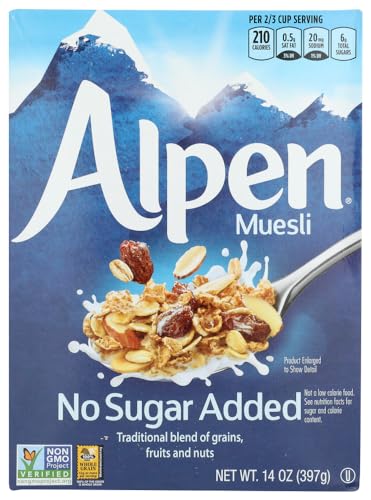
Alpen Muesli No Sugar Added offers a different approach to low-sodium breakfast: a blend of whole grain oats, wheat flakes, nuts, and dried fruits that provides sweetness naturally rather than from added sugar or salt. The dried fruits — typically raisins and dates — supply the only sweetness, and the sodium level remains low because no salt is added to the grain blend. This is a hearty, dense cereal meant for slow eating and sustained energy release.
The three-pack provides three 14-ounce boxes for a total of 42 ounces. Each serving is high in fiber thanks to the whole oats and wheat flakes, and the nuts add healthy fats and protein that make this one of the most satiating options on this list. It can be eaten cold with milk, hot as a porridge, or mixed into yogurt for a textured parfait. The versatility makes it a favorite for people who want more variety than plain puffed grains.
Because the sweetness comes exclusively from dried fruit, the sugar content is natural rather than added, but it is not sugar-free — dried fruit contains concentrated natural sugars. For strict low-sugar diets alongside low-sodium goals, this may be less suitable. However, for most people looking to avoid both added salt and refined sugar, this muesli hits a strong balance of flavor and nutrition.
Why it’s great
- Naturally sweetened with dried fruit — no added sugar or salt
- High fiber and healthy fats from nuts and whole grains
- Versatile: eat cold, hot, or as a yogurt topping
Good to know
- Contains natural sugars from dried fruit — not suitable for zero-sugar diets
- Texture is chewy and dense rather than light and crispy
5. Kellogg’s Special K Cereal Cups
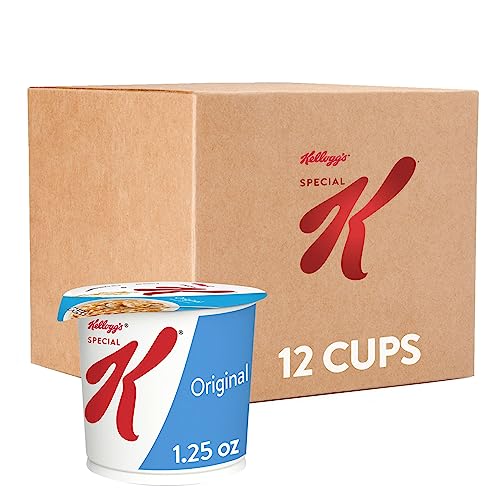
Kellogg’s Special K Original cereal cups provide a convenient, portion-controlled option for low-sodium breakfast on the go. Each 1.5-ounce cup contains toasted rice flakes that are lightly sweetened, and the sodium content is relatively low compared to many sugary cereals on the market. While not sodium-free, this is the most portable option on the list and requires no bowl or measuring — just add milk directly to the cup.
This pack includes two trays of six cups each, for a total of 12 single-serve portions. Customer reviews consistently praise the fresh, crunchy texture and the convenience factor, especially for busy mornings, travel, and school lunches. The cups eliminate the problem of stale cereal from an opened box, and the portion control helps prevent overeating at breakfast.
Special K cups contain no high fructose corn syrup and are made without cholesterol. They are also fortified with essential vitamins and minerals. The main consideration is that this is still a lightly sweetened processed cereal, so it is not as clean as the single-ingredient options. But for shoppers who prioritize convenience and want a lower-sodium alternative to sugary kid cereals, these cups fill a specific need.
Why it’s great
- Ultra-convenient single-serve cups — no bowl or cleanup needed
- Portion control helps with calorie management at breakfast
- Lightly sweetened with no high fructose corn syrup
Good to know
- Contains some added sugar — not a zero-sugar cereal
- Not sodium-free, though sodium is lower than many mainstream cereals
FAQ
What sodium level qualifies a cereal as low sodium?
Can I eat low-sodium cereal if I have high blood pressure?
Are rice cakes a good substitute for cereal?
Final Thoughts: The Verdict
For most users, the best low-sodium cereal is the Post Original Shredded Wheat because it delivers 6 grams of fiber with absolutely zero sodium or sugar from a single whole-grain ingredient. If you want a clean single-ingredient option with organic certification, grab the The Real Cereal Company Organic Brown Rice Crisps. And for maximum convenience on busy mornings, nothing beats the portion-controlled portability of the Kellogg’s Special K Cereal Cups.