A single cup of standard chicken broth can pack nearly 900 mg of sodium—almost 40% of your daily limit. For anyone managing blood pressure, kidney health, or simply trying to reduce dietary salt, finding a base that delivers savory depth without the sodium spike is a daily challenge. The grocery aisle is full of misleading labels, hidden salts, and watery broths that dilute flavor along with the sodium.
I’m Emma — the founder and writer behind Baby Bangs. I’ve spent years analyzing the nutritional panels, ingredient sourcing, and taste profiles of shelf-stable broths to understand which reduced-sodium options actually deliver on flavor without compromising on clean ingredients.
This guide breaks down the best options across powders, concentrates, and ready-to-use cartons so you can cook with confidence. Finding the right low-sodium broth means looking past the front label and checking ingredient lists for hidden sodium sources.
How To Choose The Best Low-Sodium Broth
Not all “low-sodium” broths are created equal. Some rely on yeast extract or natural flavors that still contain hidden glutamates and sodium compounds. To pick a broth that truly helps you cut salt without sacrificing taste, you need to evaluate three things: the ingredient list, the format, and the sodium-per-serving ratio relative to a standard broth.
Check the Sodium Per Serving, Not Just the Label
A broth labeled “reduced sodium” still needs context. Standard broths typically contain 500–900 mg of sodium per cup. A true low-sodium broth should clock in at 140 mg or less per serving to qualify as “low sodium” by FDA standards. Some brands sneak in higher amounts by listing a smaller serving size. Always check the Nutrition Facts panel for the per-cup sodium content.
Format Matters: Powder, Concentrate, or Ready-to-Use
Powdered broths give you precise portion control—you can stir in half a teaspoon instead of a full serving. Concentrates in paste or packet form are convenient for travel and small-batch cooking but often contain more preservatives or MSG-derived ingredients to maintain shelf stability. Ready-to-use cartons and cans are the most straightforward but take up significant pantry space and spoil quickly after opening. Choose based on how often you cook and how much broth you typically use at once.
Watch for Hidden Sodium Sources
Yeast extract, autolyzed yeast, hydrolyzed vegetable protein, and even “natural flavors” can contain sodium or glutamate compounds that mimic salt’s effect. A clean low-sodium broth should have a short ingredient list—water, vegetables, herbs, maybe a bit of salt—without these additives. Organic and non-GMO certifications don’t guarantee low sodium, so read the fine print every time.
Quick Comparison
On smaller screens, swipe sideways to see the full table.
| Model | Category | Best For | Key Spec | Amazon |
|---|---|---|---|---|
| Better Than Bouillon Reduced Sodium Variety Pack | Concentrate | Everyday sodium reduction | 8 oz jars, 38 servings each | Amazon |
| Frontier Co-op Vegetable Flavored Broth Powder | Powder | Clean ingredient control | 1 lb bulk pouch | Amazon |
| SAVORY CHOICE Reduced Sodium Broth Concentrate Packets | Packet | Portability & convenience | 30 packets, 9.6g each | Amazon |
| SWANSON Unsalted Chicken Broth | Ready-to-Use | Zero-sodium cooking base | 32 oz cartons (12 pack) | Amazon |
| Campbell’s Unsalted Cream of Chicken Soup | Condensed | Recipe ingredient substitute | 10.5 oz cans (12 pack) | Amazon |
In‑Depth Reviews
1. Better Than Bouillon Reduced Sodium Variety Pack
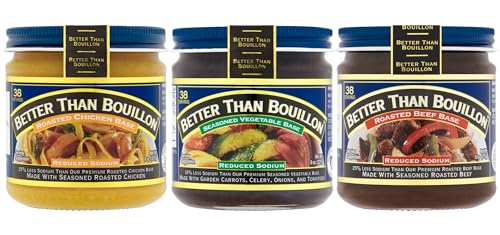
The Better Than Bouillon Reduced Sodium Variety Pack offers three 8-ounce jars—Roasted Chicken, Seasoned Vegetable, and Roasted Beef—each delivering about 38 servings per jar. Customers consistently praise the robust flavor, noting that it tastes far richer than cube or powder alternatives even at reduced sodium levels. One verified reviewer who switched to this after a life-changing health event said it “tastes great” and allowed them to enjoy cooking again without salt overload.
The paste format gives you precise control over sodium per serving since you decide how much to dissolve. The reduced sodium chicken base, for example, contains about 30% less sodium than the original version, making it a solid middle-ground choice for anyone looking to cut salt without going to zero. The vegetable base is seasoned with classic mirepoix flavors, ideal for soups and stews.
One minor note: some users found the reduced sodium versions still “very salty” in their personal assessment, though the same review gave it five stars for flavor. If you need absolute zero-sodium, this isn’t the pick—but for everyday low-sodium cooking where flavor still matters, this variety pack is hard to beat.
Why it’s great
- Rich, layered flavor across all three varieties
- Paste format allows precise portion control
- Each jar yields 38 servings—excellent value
Good to know
- Not sodium-free; still contains reduced levels of salt
- Jars require refrigeration after opening
2. Frontier Co-op Vegetable Flavored Broth Powder
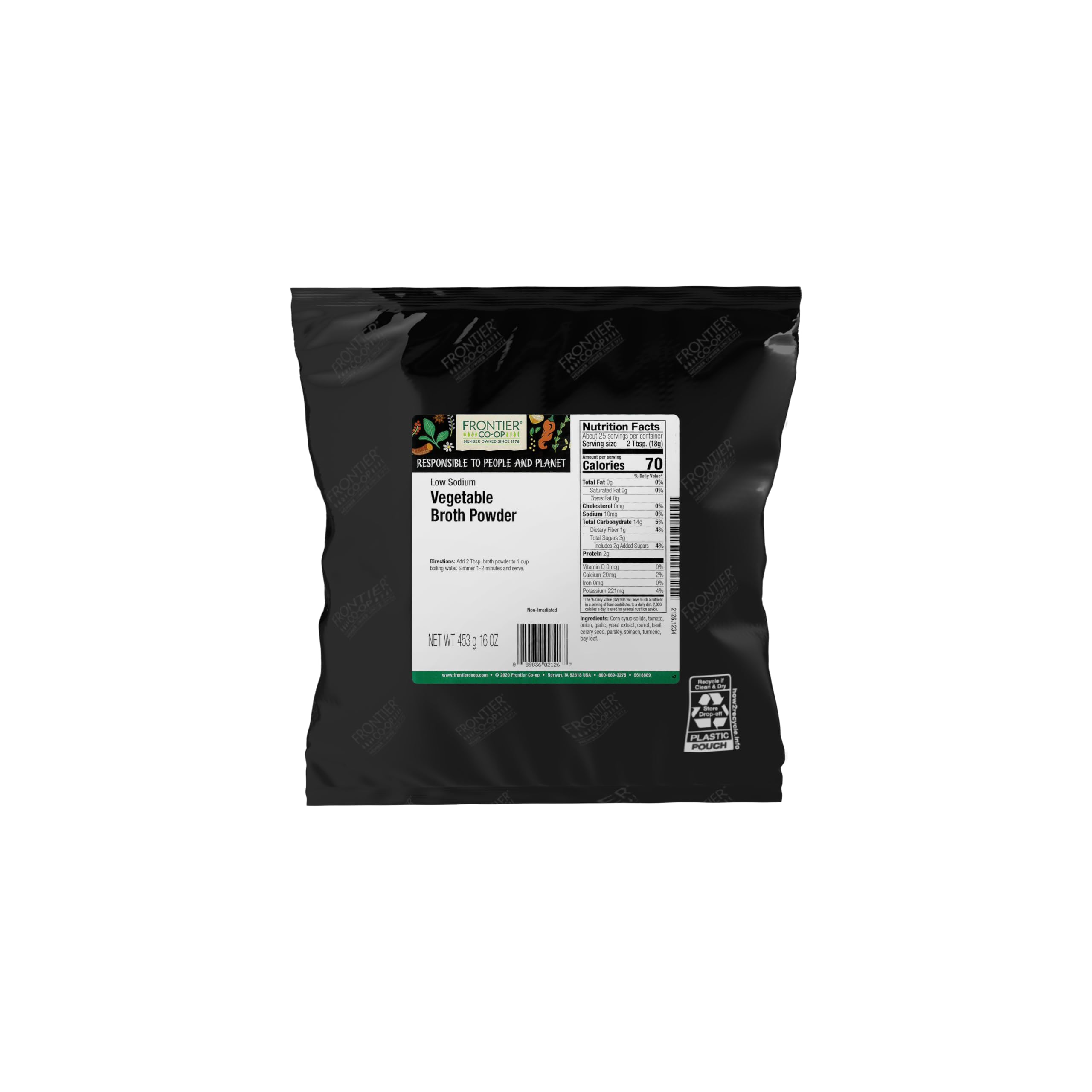
Frontier Co-op’s Vegetable Flavored Broth Powder comes in a 1-pound bulk pouch, making it one of the most cost-effective low-sodium options per serving. The ingredient list is refreshingly simple—onion, garlic, carrot, basil, turmeric, and celery seed—with no artificial flavors or preservatives. As a co-op committed to ethical sourcing, Frontier prioritizes grower relationships and sustainable packaging that reduces plastic waste.
The powder format means you control every milligram of sodium by adjusting the amount you mix. A typical serving uses about 1 teaspoon in 8 ounces of water, which keeps sodium low enough for most restricted diets. The turmeric adds a subtle earthy depth and golden hue, while the basil and celery seed provide herbal brightness. Vegetarians and vegans will appreciate that this is entirely plant-based.
Because it’s a powder, the texture can be slightly grainier than a strained carton broth if not fully dissolved. Whisk vigorously in hot water, or simmer for a minute to ensure full integration. The bulk pouch is not resealable, so transfer to an airtight container after opening to maintain freshness over multiple uses.
Why it’s great
- Short, clean ingredient list with recognizable spices
- Bulk format offers excellent per-serving value
- Ethical sourcing and minimal packaging waste
Good to know
- Powder may clump if not whisked thoroughly
- Pouch lacks a resealable closure
3. SAVORY CHOICE Reduced Sodium Broth Concentrate Packets
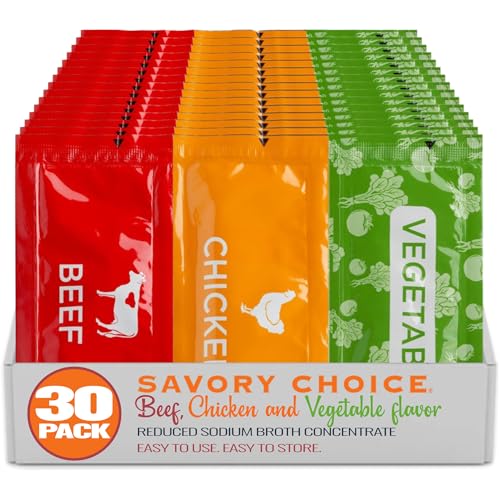
SAVORY CHOICE’s Reduced Sodium Broth Concentrate Packets bundle 30 single-serving packets (10 each of beef, chicken, and vegetable) at 9.6 grams per packet. Each packet dissolves instantly in hot water—no measuring, no leftover broth spoiling in the fridge. The ingredients are gluten-free, dairy-free, and non-GMO, with no unnecessary fillers. For travelers, office workers, or anyone who wants broth on demand without hauling cartons, this is a promising option.
Flavor-wise, each variety aims for a clean balanced depth. The chicken variant leans savory without being overly salty, while the vegetable version carries a mild herbal note that works well in soups and rice dishes. The beef base provides a richer backbone for stews and gravies. Users who prefer a more intense flavor can use the packet in less water without it becoming overpoweringly salty.
The packets are individually wrapped, which generates more packaging waste than a single jar or pouch. If you cook large batches regularly, the packet format may feel wasteful compared to bulk options. Also, some customers noted that the flavor is less robust than a simmered-from-scratch broth—expect a serviceable base, not a showstopper.
Why it’s great
- Extremely portable with zero mess or cleanup
- Three flavors in one box for variety
- Instant dissolve—no simmering required
Good to know
- Individual packets generate more packaging waste
- Flavor depth is moderate, not as rich as paste broths
4. SWANSON Unsalted Chicken Broth
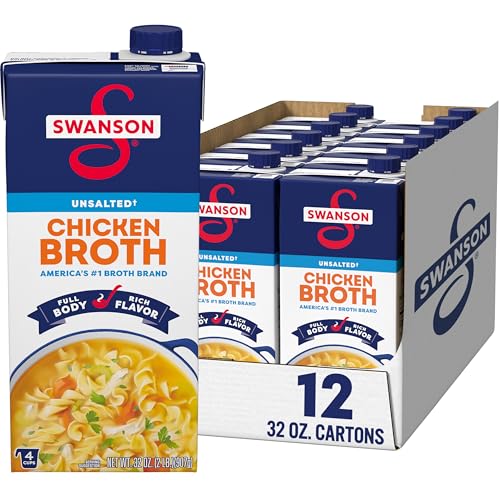
Swanson’s 100% Natural Unsalted Chicken Broth is exactly what the name promises—no added salt, zero grams of sodium per serving, and a clean ingredient list of chicken stock, vegetables, and natural flavorings. The 12-pack of 32-ounce cartons provides 384 ounces total, making it a substantial pantry staple for anyone on a strict sodium restriction. The broth is fat-free and gluten-free, and it uses non-GMO ingredients with no artificial colors or preservatives.
Because there’s zero added salt, the flavor is noticeably milder than even reduced-sodium alternatives. This isn’t a broth you’d sip on its own—it’s designed as a blank canvas. It shines when used to cook rice, quinoa, or pasta, where it replaces water and adds a subtle savory depth without tipping the sodium needle. It’s also a smart base for homemade soups where you control all the seasoning.
The cartons are bulky—25.5 pounds total for the case—so you’ll need dedicated pantry shelf space. Once opened, a carton lasts about 5–7 days in the refrigerator, so the 12-pack makes sense for heavy users or households that cook multiple meals weekly. If you only need broth occasionally, consider freezing individual portions in ice cube trays to avoid waste.
Why it’s great
- True zero-sodium option for strict dietary needs
- Clean, non-GMO ingredients without any additives
- Versatile as a water replacement in grains and soups
Good to know
- Mild flavor may underwhelm if used as a standalone drink
- Bulky cartons require significant pantry space
5. Campbell’s Unsalted Cream of Chicken Soup
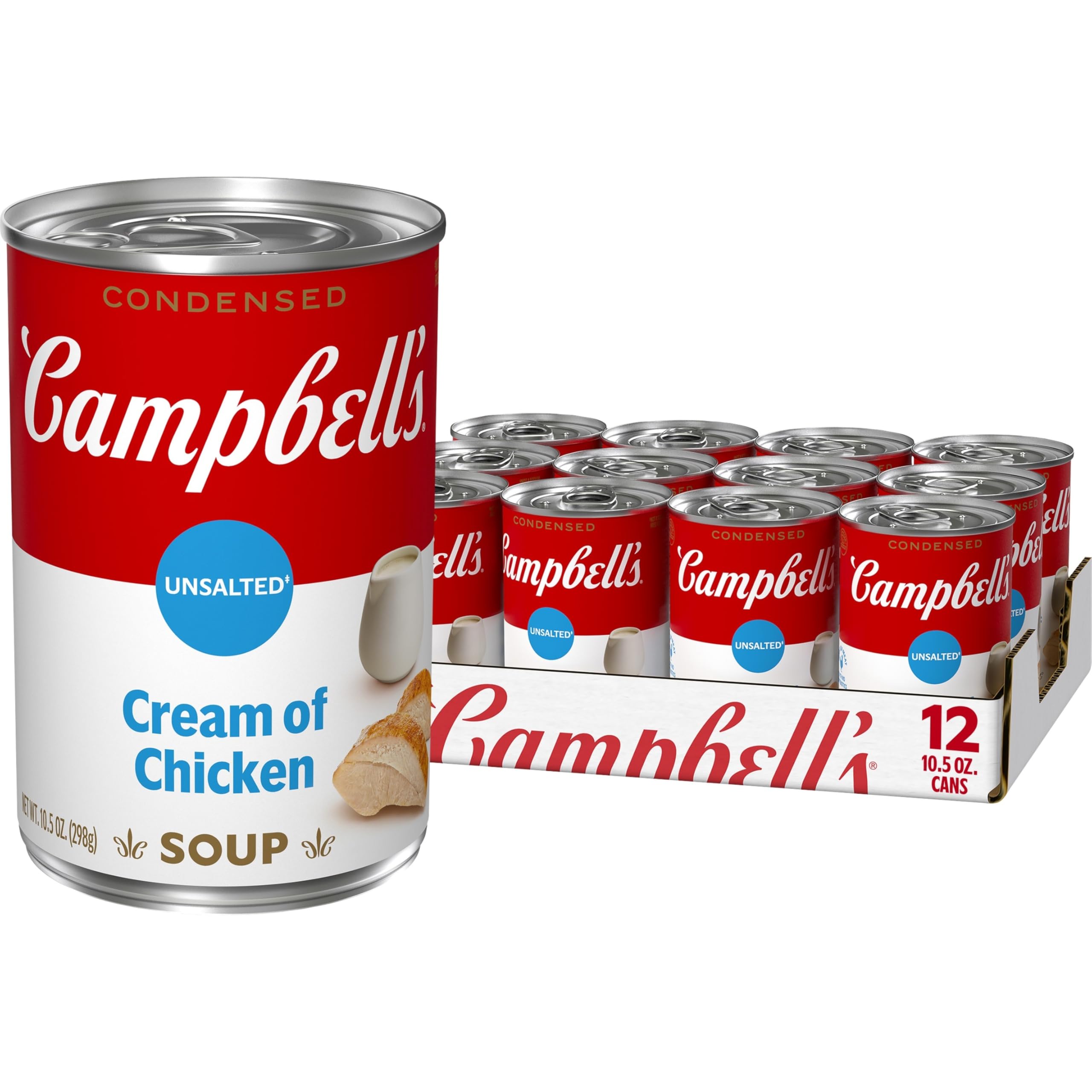
Campbell’s Condensed Unsalted Cream of Chicken Soup offers a unique entry in the low-sodium broth space: a creamy, condensed soup base with no added salt. Each 10.5-ounce can is crafted with fresh cream, high-quality chicken stock, and tender chicken meat raised without antibiotics. The “unsalted” claim means no salt was added during cooking, though the soup is not technically sodium-free due to naturally occurring sodium in the ingredients.
This product is less of a broth and more of a recipe ingredient substitute. It works as a drop-in replacement for standard cream of chicken soup in casseroles, slow cooker meals, and creamy pasta bakes—allowing you to cut significant sodium from classic comfort dishes. The non-BPA lining on the cans is a nice touch for anyone avoiding canned food liners.
On its own, the soup tastes noticeably flat compared to the regular version. The creaminess is there, but the savory punch is muted. It’s best used in dishes where you can add your own seasoning—garlic powder, black pepper, or fresh herbs—to rebuild the flavor profile. The 12-pack is a smart buy for meal preppers who use cream soups weekly, but single-can buyers might find it less useful.
Why it’s great
- Direct substitute for standard cream soups in recipes
- No added salt with a clean ingredient base
- Non-BPA can lining reduces chemical exposure
Good to know
- Flavor is bland without additional seasoning
- Contains dairy, gluten, and soy—not allergen-friendly
FAQ
What is the difference between low sodium and reduced sodium broth?
Can I use low-sodium broth powder as a direct substitute for liquid broth in recipes?
Why does some unsalted broth still taste salty?
Final Thoughts: The Verdict
For most users, the low-sodium broth winner is the Better Than Bouillon Reduced Sodium Variety Pack because it balances rich, multi-dimensional flavor with genuine sodium reduction across three versatile bases. If you want absolute zero-sodium control for cooking grains and homemade soups, grab the SWANSON Unsalted Chicken Broth. And for the ultimate in portability and mess-free convenience, nothing beats the SAVORY CHOICE Reduced Sodium Broth Concentrate Packets.