Finding bread that doesn’t blow your daily sodium budget in two slices feels like hunting for a myth. Most grocery store loaves pack 150–200 mg of sodium per serving, and “healthy” whole wheat options are often just as salty. The real problem is that sodium acts as both a preservative and a flavor booster, so stripping it out usually leaves you with something dense, dry, or cardboard-flat.
I’m Emma — the founder and writer behind Baby Bangs. I’ve spent months cross-referencing nutrition labels, ingredient lists, and customer feedback to separate the loaves that actually work from the ones that taste like punishment.
This guide covers five grocery-shelf options that deliver real flavor and usable texture while keeping sodium in check. After comparing fiber content, ingredient transparency, and practical everyday use, the winners are the ones you’ll genuinely want to eat — and that’s the whole point of finding a truly great low-sodium bread.
How To Choose The Best Low-Sodium Bread
The biggest mistake shoppers make is assuming “low sodium” on the front label guarantees a clean ingredient deck on the back. Many brands compensate by adding sugar, refined flour, or chemical dough conditioners to restore texture. You need to look past the marketing phrase and focus on three specific areas.
Check the Milligrams Per Slice, Not Per Serving
A single serving of bread is often listed as one slice, but many brands define a serving as two slices to make the sodium number look smaller. Always multiply by the number of slices you actually eat. For a genuinely low-sodium loaf, you want 50 mg or less per slice — ideally closer to zero in a no-salt-added product.
Look for Whole Grains and Fiber Density
Sodium is only half the equation. Without enough fiber (at least 3 grams per slice), even a salt-free loaf will spike your blood sugar and leave you hungry fast. Whole rye, sprouted grains, and oat fiber hold up better structurally when salt is reduced, so they tend to produce a more satisfying chew.
Evaluate the Freeze-and-Thaw Test
Because low-sodium bread lacks salt’s natural preservative effect, it spoils faster at room temperature. The best options freeze beautifully and thaw slice by slice without turning gummy or dry. If a loaf requires you to eat the whole package within 3–4 days, it needs to earn that inconvenience with exceptional taste.
Quick Comparison
On smaller screens, swipe sideways to see the full table.
| Model | Category | Best For | Key Spec | Amazon |
|---|---|---|---|---|
| Joseph’s Low Carb Mini Pita | Low-Carb Pita | Versatile pockets & low net carbs | 5g net carbs per mini pita | Amazon |
| Mestemacher 3-Flavor Variety | German Rye Loaf | Dense, high-fiber daily loaf | 17.6 oz loaves, 3 flavors | Amazon |
| Toufayan No Added Salt Pitettes | No Salt Added Pita | Low-sodium pita for wraps | No added salt, 24 pitas total | Amazon |
| Toufayan Whole Wheat Smart Pockets | Pocket Pita | Stuffed sandwich pockets | Pre-cut & scored, 18 total | Amazon |
| Food For Life Ezekiel 4:9 Low Sodium | Sprouted Grain Loaf | Organic sprouted nutrition | 24 oz loaf, organic sprouted | Amazon |
In‑Depth Reviews
1. Joseph’s Low Carb Mini Pita Bread 3-Pack
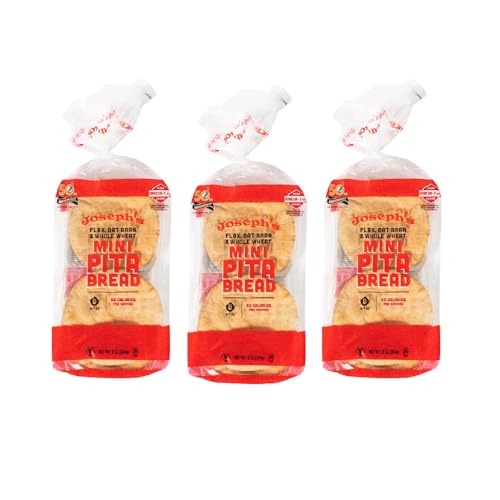
Joseph’s mini pitas sit at the intersection of low-sodium eating and low-carb lifestyles. Each 5-inch pita delivers only 60 calories and 1.5g of fat, with a flax, oat bran, and whole wheat base that holds together better than most low-salt flatbreads. Because they ship fresh rather than frozen, you get a soft, pliable pocket right out of the box — no thawing required.
The 3-pack includes 24 mini pitas total, and the net carb count sits at 5g per serving, making these a smart pick if you’re watching both sodium and blood sugar response. The flax and oat bran add enough structure that they don’t fall apart when stuffed with wet fillings like egg salad or roasted vegetables.
One trade-off: the 16-day shelf life after defrost means you need to freeze any extras quickly if you’re not eating them daily. But for a fresh-tasting, low-sodium pita that actually functions as a sandwich vehicle without turning into a cracker, this is the most flexible option on the list.
Why it’s great
- Fresh-baked texture with no frozen aftertaste
- Low net carbs work for keto and low-sodium diets together
- Pocket structure holds fillings without tearing
Good to know
- Short room-temperature shelf life after opening
- May be too small for full-size sandwich fillings
2. Mestemacher Natural High Fiber Bread 3-Flavor Variety

Mestemacher’s variety pack covers three classic German rye styles — Organic Three Grain, Pumpernickel, and Whole Rye — and each 17.6 oz loaf uses whole kernel rye as the primary ingredient. The sodium content across all three is remarkably low because the brand relies on traditional fermentation and grain structure rather than salt for flavor and preservation.
The texture is dense and hearty, closer to a European-style brick loaf than the airy soft bread most Americans expect. That density pays off in fiber content: a single slice delivers significantly more roughage than standard white or whole wheat sandwich bread, keeping you full longer and providing a slower glucose release.
The biggest adjustment is the chew. These loaves are moist and heavy, not fluffy, so they work best toasted or used as a base for open-faced toppings like avocado, smoked fish, or nut butter. If you want a low-sodium bread that actually tastes like bread and not a flavorless sponge, this is the most authentic option here.
Why it’s great
- Three distinct flavors in one bundle offer variety
- Whole kernel rye provides exceptional fiber density
- Naturally low sodium from traditional baking, not trickery
Good to know
- Very dense texture may not suit soft-bread lovers
- Best toasted to bring out flavor and reduce moisture
3. Toufayan No Added Salt Whole Wheat Pitettes
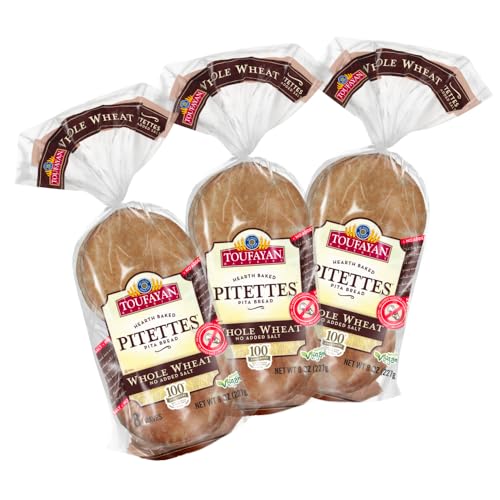
Toufayan’s No Added Salt Pitettes solve the biggest problem with low-sodium bread: they actually taste good. Customer reviews consistently describe them as flavorful, soft, and versatile — not the dry, crumbly experience you’d expect from a salt-free product. The whole wheat base provides a mild nuttiness that stands up on its own, and the pocket structure is reliably formed for stuffing.
The 3-pack contains 24 pitas total, and the brand stamps a Manufacturing Date rather than an expiration date, relying on freezer storage to lock in freshness for up to 8 months. That means you can buy in bulk without worrying about spoilage, thawing only what you need and using it within 5 days of defrosting.
One small caveat: because there’s no added salt, the pitas lack the slight firmness that salt provides, so they can feel a bit softer than traditional pita. Toasted, they crisp up beautifully — a move that multiple reviewers specifically recommend for egg salad or goat cheese fillings.
Why it’s great
- No added salt, yet consistently praised for taste
- Freezes well for up to 8 months without quality loss
- Soft, pliable texture works for wraps and dips
Good to know
- Softer texture than traditional salted pita
- Toasting recommended for extra crispness
4. Toufayan Whole Wheat Smart Pockets Pita Bread
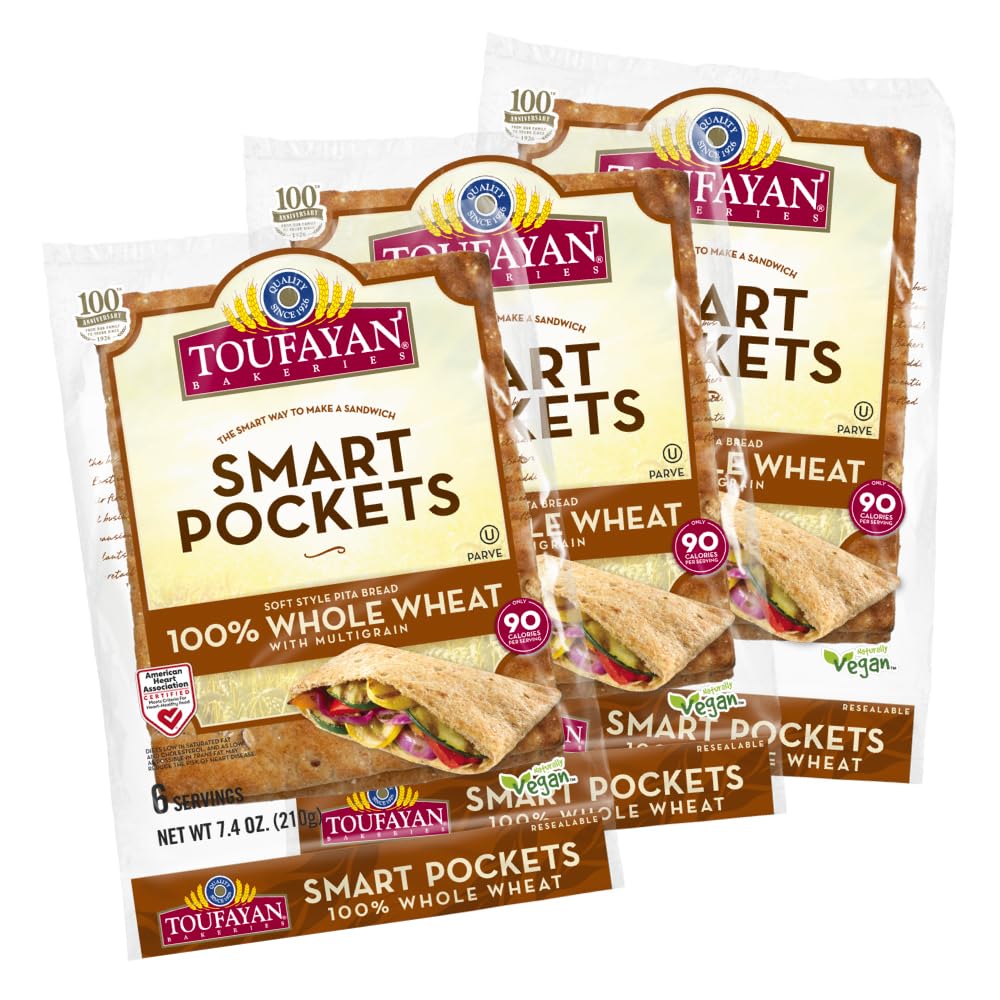
Toufayan’s Smart Pockets take the same whole wheat foundation as the Pitettes but add a pre-cut and scored design that makes stuffing effortless. The pockets are already split, so you don’t have to wrestle with tearing a delicate pita seam — just open and fill. That convenience matters when you’re meal-prepping sandwiches for the week.
The 3-pack includes 18 pockets total, and the brand ships them frozen to lock in freshness. Because they’re frozen rather than fresh, they have a longer practical shelf life in your freezer, which is useful if you’re the type of person who buys in bulk and eats sporadically. The whole wheat base keeps the sodium profile reasonable.
The downside is that the pockets are thinner than a traditional loaf slice, so they’re best suited for cold fillings or quick grilling rather than heavy, wet ingredients that might soak through. For anyone who wants the structure of pita without the hassle of cutting it open, these are the most efficient option.
Why it’s great
- Pre-cut and scored for zero-prep stuffing
- Frozen format extends storage life significantly
- Whole wheat provides solid nutritional base
Good to know
- Thinner texture can struggle with wet fillings
- Best for cold sandwiches or light grilling
5. Food For Life Ezekiel 4:9 Sprouted Grain Low Sodium Organic

Food For Life’s Ezekiel 4:9 is the gold standard for sprouted grain bread, and the low-sodium version removes the salt without gutting the nutritional profile. The loaf is made from organic sprouted grains and legumes — wheat, barley, beans, lentils, millet, and spelt — which creates a complete protein profile that no refined-flour bread can match.
The 24 oz loaf is dense and moist, with a nutty, slightly sweet flavor from the sprouting process. Sprouting breaks down anti-nutrients and makes the minerals more bioavailable, so you get more nutritional value per slice than any standard low-sodium loaf. The texture is chewy and substantial, holding up well to toasting.
The main barrier is the premium cost, which sits well above conventional options. You’re paying for organic certification, sprouted methodology, and a lower sodium count that doesn’t require fillers or gums to achieve. If your budget allows and you want the most nutrient-dense low-sodium loaf available, this is the clear pick.
Why it’s great
- Complete protein from sprouted grains and legumes
- Organic and low-sodium without sacrificing nutrition
- Dense, chewy texture that toasts beautifully
Good to know
- Premium cost is significantly higher than alternatives
- Dense texture may not suit everyone’s preference
FAQ
How much sodium is in a typical slice of bread?
Does low-sodium bread go bad faster than regular bread?
Can I toast low-sodium bread without it drying out?
Final Thoughts: The Verdict
For most users, the low-sodium bread winner is the Mestemacher 3-Flavor Variety because it delivers exceptional fiber density, authentic European baking that doesn’t rely on salt, and three distinct flavors in one purchase. If you want a versatile, low-carb pita that ships fresh and handles fillings without tearing, grab the Joseph’s Low Carb Mini Pitas. And for the most nutritionally dense option — organic, sprouted, complete protein — nothing beats the Food For Life Ezekiel 4:9 Low Sodium.