Killing a houseplant shouldn’t be a rite of passage, yet most new owners drown their snake plants or starve their pothos within weeks. The best low-maintenance house plants forgive forgotten waterings, survive dim corners, and bounce back from neglect without demanding a green thumb or a rigid schedule.
I’m Emma — the founder and writer behind Baby Bangs. After combing through hundreds of Amazon listings and filtering out the finicky divas, I’ve sorted the true survivors from the drama.
My criteria were simple: they had to tolerate inconsistent care, thrive in average indoor light, and stay alive long enough to make you feel like a capable plant parent. Read on for the definitive list of the best low-maintenance house plants that actually earn their keep.
How To Choose The Best Low-Maintenance House Plants
Not every plant labeled “easy” survives your actual lifestyle. The real test is whether it can tolerate low light, irregular watering, and dry indoor air while still growing. Here are the three specs that separate survivors from casualties.
Light Flexibility Is Non-Negotiable
A true low-maintenance house plant doesn’t demand a south-facing window. Look for species that thrive in low to bright indirect light — snake plants, peperomias, and spider plants all adapt to less-than-ideal placement. If the listing says “full sun only,” it’s not low-maintenance.
Watering Tolerance (Not Schedule)
The easiest plants to kill are the ones you overwater. Seek varieties that want their soil to dry out between waterings — snake plants and peperomias are prime examples. The ideal candidate is drought-tolerant, meaning a missed week won’t trigger leaf drop or root rot.
Root Health Over Leaf Count
A plant with a well-established root system in a proper pot will outlast a bushier plant with weak roots. Bare-root shipments (like the spider plant trio) can be riskier because the root ball hasn’t been confined, but mature roots adapt faster. A plant grown in a nursery pot with visible roots is a safer bet than something stuck in a decorative cachepot.
Quick Comparison
On smaller screens, swipe sideways to see the full table.
| Model | Category | Best For | Key Spec | Amazon |
|---|---|---|---|---|
| Snake Plant (Zeylanica) | Succulent | Ultimate neglect tolerance | 13 in height, drought-tolerant | Amazon |
| Baby Rubber Plant | Peperomia | Compact desk plant | 4 in pot, glossy round leaves | Amazon |
| Anthurium Red | Flowering | Low-care blooms | 10-11 in height, 2-3 blooms | Amazon |
| Spider Plant Trio | Bare Root | Multi-plant value pack | 16 in leaves, variegated | Amazon |
| Reverse Variegated Spider Plant | Variegated | Aesthetic leaf pattern | 4 in pot, reverse variegation | Amazon |
In‑Depth Reviews
1. Snake Plant (Zeylanica) – Altman Plants, 4 in Pot

The snake plant is the undisputed champion of neglect. This Altman Plants Zeylanica arrives fully rooted in a 4.25-inch grower pot at roughly 13 inches tall, with sword-shaped leaves that tolerate everything from a dark corner to a bright office window. The variegated deep green pattern adds visual depth without requiring any grooming.
Watering is practically foolproof — let the soil dry completely between drinks, and it will thrive even if you forget for two weeks. It’s the ideal candidate for frequent travelers or anyone who considers weekly misting a chore. The plant also filters common indoor pollutants, though its real strength is surviving your absence.
Consider this the anchor plant for a low-maintenance collection. It doesn’t need repotting for at least a year, and its upright growth won’t take over your shelf. If you could only buy one houseplant, this is the one.
Why it’s great
- Nearly indestructible — survives low light, dry air, and missed waterings
- Arrives in a mature pot with an established root system
- Grows upright without needing staking or pruning
Good to know
- Needs well-draining soil; avoid letting it sit in standing water
- Slow grower, so don’t expect rapid size increase
2. Baby Rubber Plant (Peperomia Obtusifolia) – California Tropicals, 4 in Pot

The Peperomia Obtusifolia from California Tropicals is the smart pick when you need a desktop-sized plant that doesn’t outgrow its welcome. Standing just 4 inches tall in its starter pot, this compact variety produces thick, glossy round leaves that look lacquered. It’s one of the rare low-maintenance plants that’s also pet-friendly, so cat owners can breathe easy.
Care is straightforward: bright indirect light keeps the leaves vibrant, and letting the soil dry partially between waterings prevents root rot. It doesn’t need high humidity, making it suitable for air-conditioned offices or dry apartments. The hardy disposition means occasional lapses in watering won’t trigger immediate leaf drop.
This works beautifully as a desk companion, bathroom shelf plant, or small gift for someone new to houseplants. It won’t grow into a floor plant, so you’ll never need to relocate it.
Why it’s great
- Pet-safe foliage with no toxic sap or ingesta
- Glossy leaves stay clean-looking without polishing
- Small footprint fits shelves and desktops
Good to know
- Prefers slightly warmer temperatures (65-75°F)
- Can be sensitive to overwatering — let soil dry out
3. Anthurium Red – California Tropicals, 4 in Pot
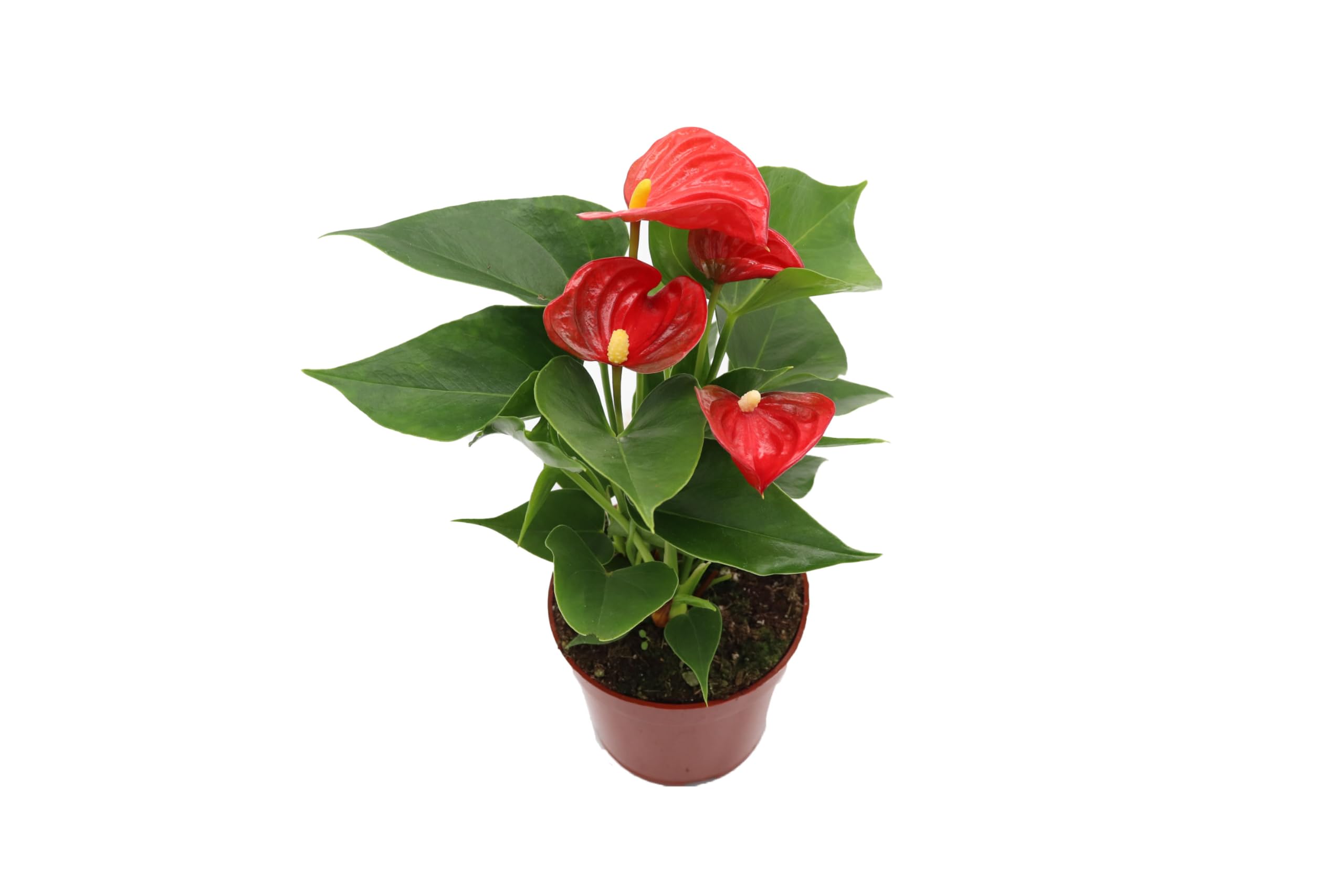
Anthuriums are the rare flowering plants that don’t demand fussy care. This California Tropicals specimen arrives in a 4-inch pot at 10-11 inches overall height, with lush green leaves and 2-3 bright red spathes (the “blooms”). It offers the tropical aesthetic without requiring a greenhouse — just medium to bright indirect light and weekly watering.
The blooms last for weeks, much longer than cut flowers, and the plant reblooms reliably through spring and summer. It also filters indoor air, though the main appeal is the splash of red color that breaks up a sea of green foliage. The care instructions are refreshingly simple: water once a week, avoid direct sun that scorches leaves.
This is the best choice if you want something that looks “alive” and colorful but still survives on a casual schedule. It makes an impactful sympathy gift or housewarming present that keeps blooming for months.
Why it’s great
- Produces long-lasting red blooms on a low-care schedule
- Thrives in normal indoor light, not just bright windows
- Grows to a manageable 10-11 inches for tabletop display
Good to know
- Not pet-friendly — toxic if ingested by cats or dogs
- Needs consistent weekly watering; don’t let soil dry completely
4. Spider Plant Trio – AUGUST BREEZE FARM, Bare Root
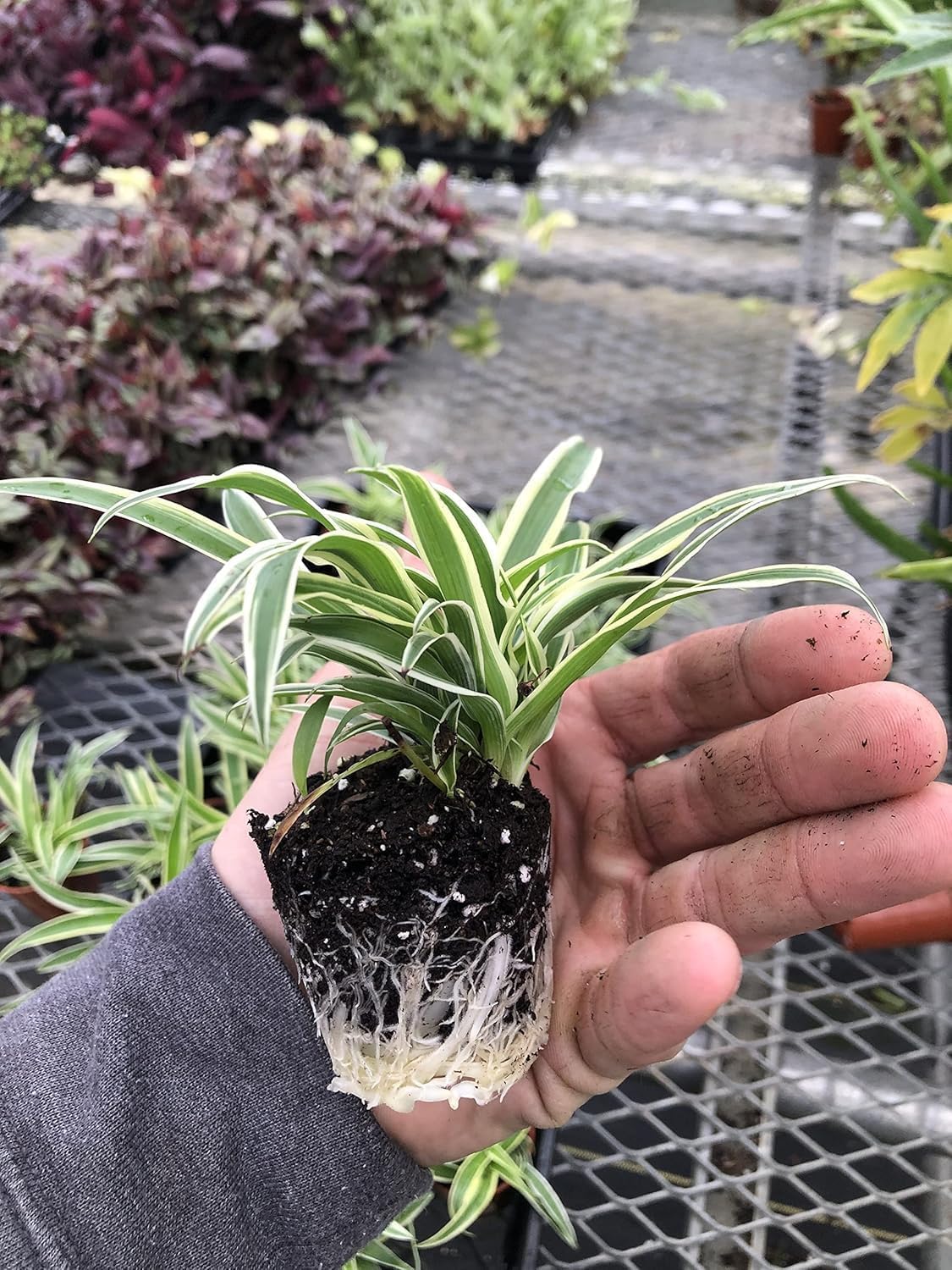
Spider plants are a classic for good reason, and this trio from AUGUST BREEZE FARM delivers three fully established bare-root plants with white-and-green striped foliage. Customers report fast shipping and healthy root systems, with leaves around 4-5 inches upon arrival. Once potted, these plants quickly fill out hanging baskets or table pots with arching leaves.
Care is straightforward: bright indirect light keeps the variegation sharp, and moderate watering is sufficient. Spider plants are known for filtering formaldehyde and xylene from indoor air, but their real draw is the rapid growth and offshoots (spiderettes) they produce, making it easy to propagate more plants. The bare-root format means you’ll need your own potting mix and containers.
This is the economical way to fill multiple spots at once — office desk, kitchen counter, and living room shelf. It’s also a thoughtful gift set for someone starting their indoor garden.
Why it’s great
- Three plants for one price; propagates easily via spiderettes
- Arrives with healthy roots and 4-5 inch leaves
- Excellent air-purifying reputation
Good to know
- Bare root requires immediate potting in well-draining soil
- Prefers not to sit in wet soil — water when top inch is dry
5. Reverse Variegated Spider Plant – JM BAMBOO, 4 in Pot

Standard spider plants have green edges with white centers — the Reverse Variegated version flips the pattern, with white outer stripes framing a greener core. This JM BAMBOO plant ships in a 4-inch pot and is ready to display immediately. The visual contrast makes it stand out on a shelf or desk where ordinary spider plants blend in.
Care is similar to other spider varieties, with a slight distinction: it prefers the soil kept evenly moist rather than fully drying out between waterings. Bright indirect light or artificial light maintains the striking variegation, while partial shade is tolerated. The plant stays compact and won’t overwhelm a small space.
This is the spider plant for buyers who already know the standard version and want something with a more unusual aesthetic. It cleans the air just as effectively and requires the same forgiving attitude toward occasional neglect.
Why it’s great
- Distinctive reverse variegation pattern for visual interest
- Prefers even moisture but tolerates some inconsistency
- Compact size, stays manageable in a 4-inch pot
Good to know
- Slightly more moisture-dependent than standard spider plants
- Variegation may fade in very low light
FAQ
How often should I water a snake plant?
Can a peperomia survive in a windowless office?
What does “bare root” mean for the spider plant trio?
Is the anthurium actually low-maintenance if it flowers?
Final Thoughts: The Verdict
For most users, the best low-maintenance house plants winner is the Altman Plants Snake Plant (Zeylanica) because it forgives every mistake — low light, dry soil, and plain neglect — while still looking architectural and clean. If you want a compact desktop plant that also pet-safe, grab the California Tropicals Baby Rubber Plant (Peperomia). And for a pop of color that lasts months without fuss, nothing beats the California Tropicals Anthurium Red.