Iron deficiency shows up as that bone-deep tiredness that doesn’t go away after sleep. But for many, the standard ferrous sulfate pills that are supposed to fix it cause nausea, cramping, and constipation so bad they give up. A low-iron supplement offers a gentler path, using forms like ferrous bisglycinate or heme iron that your body can actually tolerate.
I’m Emma — the founder and writer behind Baby Bangs. My deep market research focuses on analyzing supplement bioavailability forms and clinical trial data to separate truly gentle formulas from marketing claims.
This guide breaks down the five best iron options that increase ferritin levels without wrecking your gut. If you want a stomach-friendly way to beat fatigue, read on to find the best low-iron supplement that actually works for sensitive systems.
How To Choose The Best Low-Iron Supplement
Choosing a low-iron supplement that works without punishing your digestive system requires more than picking the cheapest bottle on the shelf. You need to match the iron form, the supporting nutrients, and the dosage to your specific ferritin baseline and tolerance level.
Prioritize the Iron Form Above All Else
Ferrous sulfate is the cheapest and most common form, but it’s also the most likely to cause nausea, stomach cramping, and constipation. Ferrous bisglycinate, an amino acid chelate, avoids the stomach irritation because the glycine molecule carries the iron across the gut lining without the oxidative stress sulfate causes. Heme iron, sourced from animal hemoglobin, uses a completely separate absorption pathway and typically causes zero GI side effects. For anyone with a sensitive stomach, bisglycinate or heme iron is mandatory, not optional.
Check for Co-Factors That Drive Absorption
Vitamin C increases non-heme iron absorption by reducing ferric iron to ferrous iron in the stomach. A low-iron supplement that already includes vitamin C — especially from acerola fruit or ascorbic acid — eliminates the need to take a separate orange juice chaser. Folate (as L-5-MTHF), B12 (as methylcobalamin), and B6 (as P-5-P) support red blood cell production downstream, meaning the iron you absorb actually gets used to build hemoglobin. Without these co-factors, absorption percentages drop and results take longer.
Match the Elemental Iron Dose to Your Lab Results
Low-iron supplements range from 18 mg to 65 mg of elemental iron per serving. A ferritin level under 30 ng/mL often requires the higher end of that range for a few months, while maintenance needs are better suited to 18 mg daily. Avoid guessing — test ferritin, hemoglobin, and iron saturation before you start, then retest after 90 days to confirm you’re in the optimal range without overshooting.
Quick Comparison
On smaller screens, swipe sideways to see the full table.
| Model | Category | Best For | Key Spec | Amazon |
|---|---|---|---|---|
| MegaFood Blood Builder | Premium | Clinically proven to raise iron without constipation | 26 mg iron + beetroot, B12, folate | Amazon |
| Pink Stork Iron for Women | Premium | Women through pregnancy and perimenopause | 18 mg bisglycinate + acerola vitamin C | Amazon |
| Doctor’s Recipes Iron Plus | Mid-Range | Multinutrient approach with active B vitamins | 36 mg bisglycinate + P-5-P, L-5-MTHF | Amazon |
| Proferrin Clear | Mid-Range | Zero-GI heme iron for severe sensitivity | 10.5 mg heme iron polypeptide (NSF certified) | Amazon |
| Naked Iron | Budget | Highest potency at a low cost per serving | 65 mg ferrous bisglycinate | Amazon |
In‑Depth Reviews
1. MegaFood Blood Builder

MegaFood Blood Builder is built on an 8-week clinical trial that demonstrated significant increases in iron levels without the constipation that plagues most iron users. Each tablet delivers 26 mg of elemental iron alongside beetroot, vitamin B12 (methylcobalamin), folic acid, and vitamin C — a co-factor stack designed to maximize hemoglobin production. The beetroot base makes the tablet smell earthy, which users either love or ignore, but it eliminates the metallic aftertaste typical of cheap iron pills.
Customer reviews consistently show ferritin moving from the single digits or low teens into the normal range within two to three months. Users with extremely sensitive stomachs — including those who couldn’t tolerate prescription iron — report zero nausea and normal bowel movements. The dosage flexibility is also a practical win: you can take it on an empty stomach without needing to time it around food, making it one of the easiest low-iron supplements to stick with long-term.
The trade-off is that the beetroot content can cause harmless red-toned stools, which startles new users who aren’t expecting it. Additionally, each tablet is about the size of a standard multivitamin, which may be a minor nuisance for those who prefer smaller capsules. But for sheer efficacy combined with a near-zero side effect profile, this is the benchmark that other iron supplements are measured against.
Why it’s great
- 8-week clinical trial confirming iron level increases
- Can be taken on an empty stomach without nausea
- Includes co-factors B12, folate, and vitamin C for absorption
Good to know
- Beetroot may cause harmless red stools
- Tablet size is larger than average capsules
2. Pink Stork Iron for Women
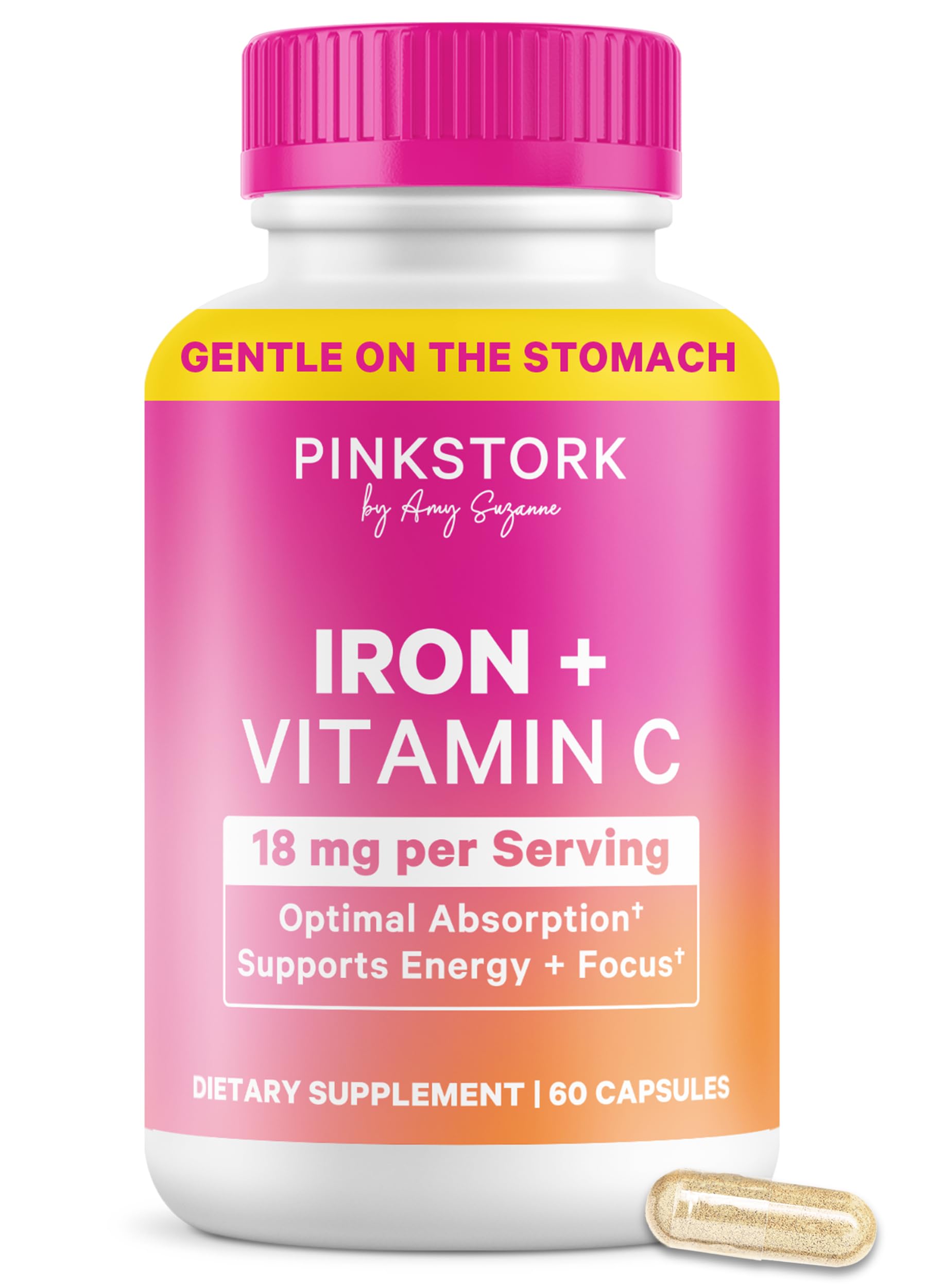
Pink Stork targets the unique iron demands that follow the female reproductive timeline — heavy menstruation, pregnancy, postpartum, and perimenopause — where daily losses can outpace dietary intake. Each capsule provides 18 mg of ferrous bisglycinate paired with 50 mg of vitamin C sourced from acerola fruit extract, a whole-food antioxidant that improves non-heme iron uptake without synthetic ascorbic acid. The dose is intentional: high enough to correct a mild to moderate deficiency, low enough to avoid the overload that causes gastric upset.
Women who struggle with standard iron pills during pregnancy report that Pink Stork’s formulation stays down even during first-trimester nausea. The 18 mg serving also works well as a maintenance dose after ferritin levels normalize, making it a realistic long-term supplement rather than a short-term crash course. The capsules are small, easy to swallow, and free from common allergens like soy, gluten, and dairy.
The main downside is the cost per milligram of iron, which is higher than simpler formulations. For context, you get only 18 mg of elemental iron per capsule, so someone with ferritin below 20 ng/mL may need a higher-potency product for the first few months, then switch to Pink Stork for ongoing maintenance. But for women who want a gentle, category-specific iron designed around their hormonal lifecycle, this is a standout that aligns formulation with real physiology.
Why it’s great
- Formulated around female hormonal stages
- Whole-food acerola vitamin C supports absorption
- Small capsule size with no aftertaste
Good to know
- 18 mg dose may be too low for severe deficiency
- Premium pricing relative to elemental iron content
3. Doctor’s Recipes Iron Plus
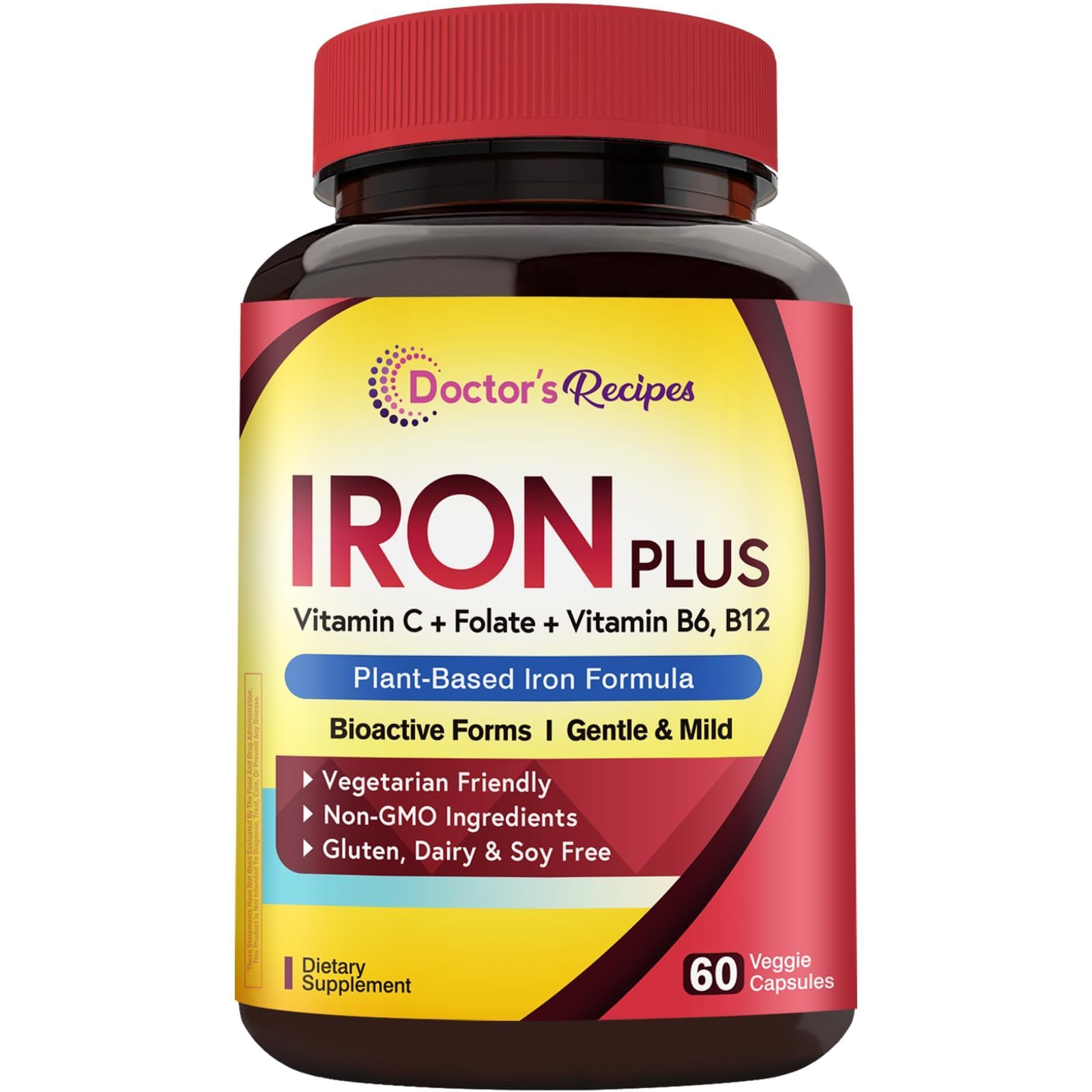
Doctor’s Recipes Iron Plus delivers 36 mg of elemental iron as ferrous bisglycinate — the sweet spot between a maintenance dose and a therapeutic repletion protocol. What sets this formula apart is the inclusion of the active forms of three B vitamins: 5 mg of vitamin B6 as P-5-P, 667 mcg DFE of folate as L-5-MTHF, and 30 mcg of vitamin B12 as methylcobalamin. These methylated forms bypass common genetic variations in the MTHFR gene that prevent some people from converting synthetic folic acid into usable folate.
The 36 mg dose is supported by 30 mg of vitamin C to further enhance absorption, and the bisglycinate form keeps the GI tract happy even during prolonged use. Customer feedback shows users experiencing noticeable energy improvements within the first few weeks, and ferritin increases that are measurable by the 90-day mark. The capsule size is moderate — size 00 — and the product is certified vegan, non-GMO, and free from soy and gluten.
The complication is the daily serving: you can’t simply take one pill and be done. Also, the bottle contains 60 capsules — a two-month supply — which means reordering sooner than products with 90-count bottles. Still, for the balance of potency, cost, and bioavailable co-factors, this is a strategic mid-range pick that punches above its price point.
Why it’s great
- Active methylated B vitamins support MTHFR variants
- 36 mg dose is strong enough for moderate deficiency
- Non-constipating bisglycinate formulation
Good to know
- 60-count bottle means reordering every two months
- Maximum dose may need to be tailored individually
4. Proferrin Clear
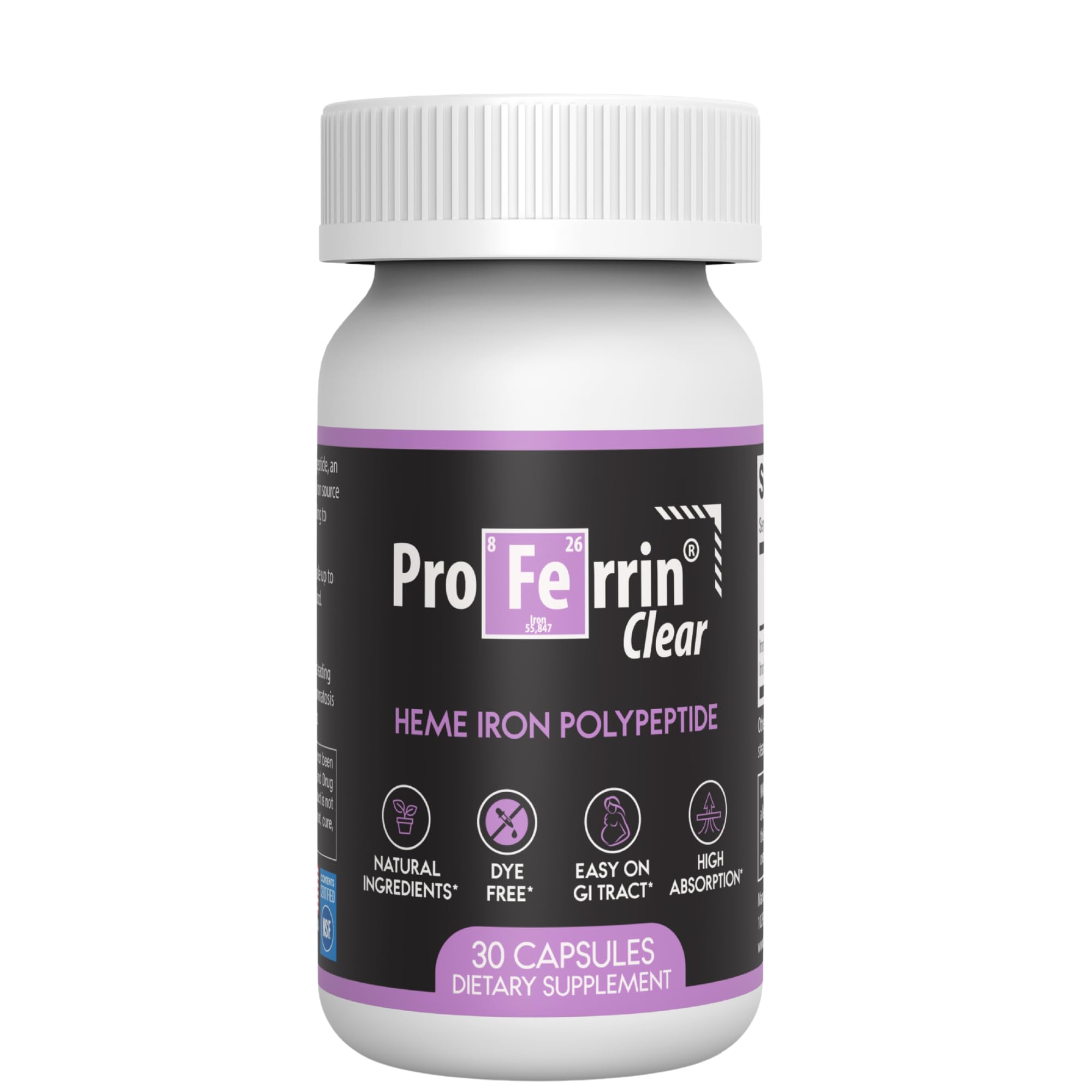
Proferrin Clear takes a radically different approach to iron supplementation by using heme iron polypeptide — the same type of iron found in red meat, extracted and concentrated into a dye-free capsule. Heme iron bypasses the DMT1 transporter that causes oxidative stress and inflammation in the gut, which is why users who vomited or cramped on every bisglycinate product suddenly tolerate Proferrin without issues. Each capsule provides 10.5 mg of elemental iron, and the label allows up to three tablets per day for a total of 31.5 mg.
The 10.5 mg per capsule is lower than non-heme competitors, but heme iron absorbs at a much higher rate — typically 15 to 35 percent compared to 2 to 20 percent for non-heme forms. That means 10.5 mg of heme iron can be functionally equivalent to a much larger non-heme dose. The product is NSF certified, gluten-free, and made in the USA by Colorado Biolabs, which is a strong quality signal for a category where manufacturing standards vary wildly.
The main drawback is the potency-per-pill ratio: you have to take multiple capsules to reach a therapeutic dose, which makes the bottle of 30 disappear quickly if you follow the three-times-daily recommendation. The cost per serving adds up compared to bisglycinate options. However, for the subset of users whose GI tract simply refuses to accept non-heme iron, Proferrin is not a preference — it’s the only option that works without side effects, and that makes it indispensable.
Why it’s great
- Heme iron is absorbed via a separate, non-irritating pathway
- NSF certification ensures manufacturing quality
- Zero reports of GI side effects from sensitive users
Good to know
- Low dose per capsule requires multiple daily servings
- 30-count bottle runs out quickly at three-per-day use
5. Naked Iron 65mg

Naked Iron delivers 65 mg of elemental iron as ferrous bisglycinate in a single size 00 capsule — the highest potency you will find in a gentle form. The philosophy behind the brand is minimalism: no fillers, no binders, no flow agents, and no unnecessary excipients. The label lists exactly what you need and stops there, which is refreshingly transparent in a supplement market cluttered with proprietary blends. Each bottle contains 60 capsules, giving a two-month supply at one capsule per day.
The 65 mg dose is well above the RDA for most adults, but that’s precisely the point for someone with confirmed iron deficiency who wants to raise ferritin aggressively. The bisglycinate form prevents the gastric distress that would inevitably accompany a 65 mg dose of ferrous sulfate. Postpartum and nursing mothers report immediate improvements in energy levels, and users note that the capsules are free of any off-putting metallic aftertaste.
The high dose, however, means you need to be careful: taking 65 mg daily without proper lab testing could push your iron stores too high, which carries its own risks. Also, the lack of co-factors like vitamin C means your personal absorption rate becomes a variable — some users will need to add their own vitamin C source for optimal uptake. But if you need the most elemental iron per dollar in a gentle form, and you are already tracking your ferritin, this is the most straightforward way to get there.
Why it’s great
- Highest bisglycinate dose available in a single capsule
- No fillers, excipients, or unnecessary additives
- Gentle enough for postpartum women
Good to know
- No vitamin C or B-vitamin co-factors included
- High dose requires ferritin monitoring to avoid overload
FAQ
Can I take a low-iron supplement if I already eat red meat daily?
How long does it take for a low-iron supplement to stop fatigue?
Will a low-iron supplement cause weight gain or bloating?
Should I stop my low-iron supplement once my ferritin is in the normal range?
Can a low-iron supplement interfere with thyroid medication?
Final Thoughts: The Verdict
For most users, the best low-iron supplement winner is the MegaFood Blood Builder because the clinical trial backing and the non-constipating formula make it a safe, predictable choice for correcting iron deficiency. If you want a targeted iron designed specifically for the female hormonal timeline, grab the Pink Stork Iron for Women. And for the deepest value with full B-vitamin co-factors, nothing beats the Doctor’s Recipes Iron Plus for getting your ferritin back on track without breaking the bank.