Swapping standard all-purpose flour for a low-carb alternative shouldn’t mean sacrificing the crumb on your morning muffin or the stretch in your pizza dough. The real challenge isn’t finding a flour that’s low in carbs — it’s finding one that bakes, browns, and binds like the real thing without turning your kitchen into a science experiment.
I’m Emma — the founder and writer behind Baby Bangs. I’ve spent years analyzing the macronutrient profiles, fiber content, and baking performance of alternative flours to cut through the marketing claims and find what actually holds up in a mixing bowl.
Whether you’re managing blood sugar, following a keto protocol, or simply cutting back on refined carbs, this guide breaks down the five strongest contenders in the low-carb flour category based on net carb count, texture, and real-world recipe versatility.
How To Choose The Best Low-Carb Flour
The low-carb flour aisle is crowded with almond, coconut, chickpea, and wheat-based blends, each with a unique ratio of protein, fat, and fiber. Picking the wrong one can turn a promising loaf into a dense, crumbly, or greasy mess. Focus on these three factors to narrow the field.
Net Carbs vs. Total Carbs: Read Past the Headline
Many labels boast a low total carb count, but the real number for keto and low-carb diets is net carbs (total carbs minus fiber and sugar alcohols). A flour with 20 grams of total carbs but 15 grams of fiber has only 5 grams of net carbs — a drastically different impact on blood sugar. Always do the subtraction before you buy.
Texture and Grind Fineness
Coarse almond meal creates a gritty crumb that works for pie crusts but fails in delicate cakes or macarons. Finely ground blanched almond flour absorbs moisture differently than coconut flour, which can require an egg-to-flour ratio that throws off a standard recipe. Match the grind to your intended use — fine for pastries, medium for cookies and quick breads.
Wheat-Based vs. Nut-Based vs. Legume-Based
Wheat-based low-carb flours (like Carbalose) contain gluten, giving them a stretch and chew that mimics all-purpose flour. Nut flours (almond, coconut) are grain-free but lack gluten structure, so they need more eggs or binders. Legume flours (chickpea) offer a protein punch but carry a distinct earthy flavor that works better in savory dishes than sweet desserts.
Quick Comparison
On smaller screens, swipe sideways to see the full table.
| Model | Category | Best For | Key Spec | Amazon |
|---|---|---|---|---|
| Carbalose All-Purpose Low-Carb Flour | Wheat Blend | 1:1 swap for regular flour | 90% fewer net carbs vs. standard flour | Amazon |
| Bob’s Red Mill Paleo Keto All-Purpose Baking Flour | Grain-Free Blend | Keto cookies and pancakes | 10g net carbs per serving | Amazon |
| Yupik Organic Chickpea Flour | Legume Flour | Savory cooking and batters | USDA certified organic | Amazon |
| Yupik Blanched Almond Flour | Nut Flour | Desserts and pie crusts | Finely whole ground | Amazon |
| Coconut Flour Organic 3 lb | Coconut Flour | High-fiber baking | 3 lbs budget-friendly bulk | Amazon |
In‑Depth Reviews
1. Carbalose All-Purpose Low-Carb Flour
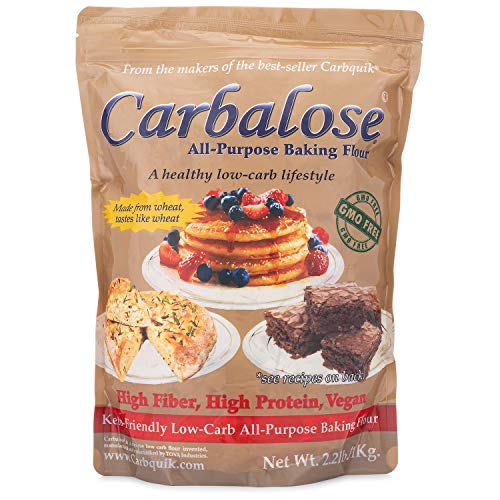
Carbalose is the closest you can get to standard all-purpose flour without spiking blood sugar. It’s made from wheat — not almonds or coconuts — so it contains gluten, which means doughs develop real elasticity and baked goods rise with a familiar crumb structure. The net carb reduction is roughly 90 percent per serving compared to regular white flour, a dramatic drop that puts it in a class of its own for people who refuse to give up yeast breads or pizza crust.
Texture-wise, this flour behaves almost identically to standard AP flour in terms of absorbency and browning. You can use it cup-for-cup in most recipes without having to adjust liquid ratios or add extra binders. The 2.2-pound resealable pouch keeps it fresh between baking sessions, and it’s the base ingredient in Carbquik, so if you’ve had success with that mix, you’ll recognize the performance here.
One trade-off: because it contains modified wheat starch, it’s not suitable for gluten-free or grain-free diets. The flavor is very neutral, so it works well in both sweet and savory applications without leaving a nutty or beany aftertaste. For bakers who want a direct swap that preserves the traditional eating experience, this is the most practical option on the shelf.
Why it’s great
- Behaves like real wheat flour in nearly every recipe
- 90 percent net carb reduction per serving
- Gluten provides dough elasticity for breads and pizza
Good to know
- Not gluten-free or grain-free
- Resealable pouch is convenient but bag-opener can be messy
2. Bob’s Red Mill Paleo Keto All-Purpose Baking Flour
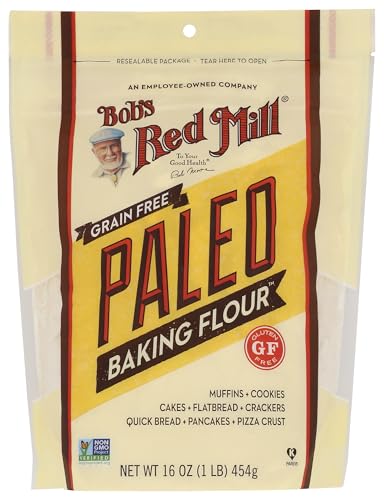
Bob’s Red Mill built its reputation on whole-grain integrity, and this grain-free blend carries that standard into the keto aisle. It’s formulated to skip gluten, grains, dairy, and beans entirely, making it one of the few low-carb flours that checks every box for paleo and autoimmune protocol followers. Each serving clocks in at 10 grams of net carbs, which is reasonable for a single serving of baked goods within a strict macro budget.
The blend uses a mix of alternative flours and starches to approximate the texture of all-purpose flour. Cookies and flatbreads come out with a tender bite, and pancakes hold together well without turning gummy. Pizza crust will be softer and less chewy than a wheat-based version, but the flavor is clean and neutral enough to work with both sweet and savory toppings.
The 1-pound bag is smaller than most competitors, so if you bake frequently, you’ll reorder more often. Some users find the texture slightly more delicate than traditional flour, meaning over-mixing can lead to denser results. Still, for anyone avoiding grains entirely, this is a reliable, trustworthy option from a brand that has been refining whole-food ingredients for decades.
Why it’s great
- Grain-free, gluten-free, dairy-free, and bean-free
- Clean, neutral flavor suitable for sweet and savory
- Trusted brand with consistent quality control
Good to know
- Small 1-pound bag may require frequent reordering
- Delicate texture can become dense if over-mixed
3. Yupik Organic Chickpea Flour

Chickpea flour is a dark horse in the low-carb world because it brings more protein and iron than most nut-based flours, and Yupik’s version is USDA-certified organic with a clean label. The grind is fine enough to produce smooth batters for crepes, socca, and tempura-style coatings, and it holds up well in savory applications where almond flour’s moisture content can cause sogginess.
The nutritional profile is strong: high fiber content helps offset the total carbs, and the earthy, slightly nutty flavor pairs naturally with spices and herbs. This is not a flour you’d reach for to make a vanilla sponge cake, but for flatbreads, fritters, and thickening soups, it performs admirably. The 2.2-pound bag offers a generous volume at a competitive per-ounce cost, making it a smart option for households that cook low-carb meals regularly.
One important detail: chickpea flour has a notably higher total carbohydrate count than almond or coconut flour, so it’s better suited to moderate low-carb diets than strict keto. The texture also lacks gluten, so baked goods will be denser and more crumbly. For those who prioritize organic sourcing and protein content over strict carb limits, this is an excellent pantry addition.
Why it’s great
- USDA certified organic and Non-GMO
- High in protein, fiber, and iron
- Excellent choice for savory batters and flatbreads
Good to know
- Higher total carb count than nut or wheat-based low-carb flours
- Distinct earthy flavor dominates sweet recipes
4. Yupik Blanched Almond Flour

Almond flour is the default low-carb flour for good reason: it’s naturally low in digestible carbs, high in healthy fats, and requires minimal processing. Yupik’s version is made from blanched almonds (skins removed), which gives it a lighter color and less bitter flavor than unblanched almond meal. Customers consistently note its fresh, nutty taste and describe it as a great value for the 2.2-pound bag size.
The grind is described as finely whole ground, but several reviews point out that it’s coarser than some premium brands, with occasional larger pieces that can affect the texture of delicate baked goods like macarons or fine-crumb cakes. For cookies, crusts, and quick breads, this texture works perfectly — the coarser grind actually adds a pleasant bite to shortbread and tart shells. It’s a reliable pantry staple that performs well across a wide range of standard low-carb recipes.
This flour contains no added oil, salt, or sugar, so you control the seasoning in your final dish. It’s also vegan, kosher, and GMO-free, fitting most dietary restrictions except strict paleo. The biggest complaint is not about quality but about price — at this tier, almond flour can be expensive per pound, but the flavor and versatility make it a strong contender for anyone committed to nut-based baking.
Why it’s great
- Fresh, natural nutty flavor with no additives
- Good source of fiber and protein, low in sodium
- Versatile for cookies, crusts, and breading
Good to know
- Grind is coarser than some premium almond flours
- Not ideal for ultra-fine pastries like macarons
5. Coconut Flour Organic 3 lb

This 3-pound bag of organic coconut flour offers the lowest cost per ounce in this lineup, making it an ideal entry point for anyone experimenting with low-carb baking on a budget. Coconut flour is extremely high in fiber — often 4 to 5 grams per tablespoon — which pulls net carbs down dramatically, but it also absorbs moisture like a sponge, requiring a fundamentally different approach to recipe development.
You cannot substitute coconut flour cup-for-cup with wheat flour or even almond flour. Recipes typically need one-quarter cup of coconut flour for every cup of wheat flour, along with significantly more eggs or liquid to counteract its thirsty nature. The result is a lighter, airier crumb when done correctly, but a dry, crumbly mess when the ratio is off. This flour works beautifully for coconut-centric baked goods like macaroons, pancakes, and mug cakes where its natural sweetness can shine.
The organic certification adds peace of mind for clean eaters, and the large 3-pound bag means fewer restocks. The main learning curve is adjusting to its unique hydration requirements — expect a few failed batches before you nail the ratios. For bakers willing to adapt their approach, this is the most economical way to stock a low-carb pantry.
Why it’s great
- Very low net carbs due to extremely high fiber content
- Organic and budget-friendly per ounce
- Light, airy texture in properly adjusted recipes
Good to know
- Requires significantly different ratios than other flours
- Easy to produce dry, crumbly results without recipe adjustment
FAQ
Can I use low-carb flour as a 1-to-1 replacement for regular flour in any recipe?
Which low-carb flour has the least noticeable taste difference in baked goods?
Is almond flour or coconut flour better for keto baking?
Final Thoughts: The Verdict
For most users, the low-carb flour winner is the Carbalose All-Purpose Low-Carb Flour because it delivers the closest experience to traditional wheat flour with a 90 percent net carb reduction, making it the easiest transition for bakers who want to keep their favorite recipes intact. If you need a grain-free option with a clean label, grab the Bob’s Red Mill Paleo Keto All-Purpose Baking Flour. And for the best value in savory cooking, nothing beats the Yupik Organic Chickpea Flour.