Dropping your daily calorie count doesn’t have to mean staring at a plate of steamed vegetables while everyone else twirls spaghetti. The market for low-calorie noodles has split into two clear camps: konjac-based shirataki noodles that hover near zero calories and engineered wheat pastas that cut traditional calories in half while keeping a genuine gluten structure. Each approach solves a different set of dietary constraints, and picking the wrong one for your cooking habits leads to a sad bowl of rubbery disappointment.
I’m Emma — the founder and writer behind Baby Bangs. I’ve spent years analyzing food science literature, studying consumer reports on texture and satiety, and cross-referencing nutritional panels to separate marketing gimmicks from genuinely effective diet-friendly alternatives.
After testing dozens of options, the key differentiator comes down to how each noodle handles heat, sauce adhesion, and chew resistance. This guide breaks down the strongest performers available right now so you can confidently choose the right low-calorie noodles for your kitchen routine and taste preferences.
How To Choose The Best Low-Calorie Noodles
The fundamental choice in this category is base ingredient: konjac root yields near-zero-calorie translucent noodles that require rinsing and dry-frying to remove their characteristic liquid scent, while modified wheat formulations deliver genuine pasta texture with roughly half the normal calories. Neither is inherently superior — your cooking style and tolerance for preparation steps determine which one works in your kitchen.
Understand the Base Ingredient
Konjac-derived shirataki noodles are roughly 97% water and glucomannan fiber, producing a gelatinous, slightly chewy texture that absorbs surrounding sauce flavors. They typically register between 5 and 25 calories per serving with near-zero digestible carbs. Wheat-based low-calorie noodles retain gluten structure and al dente bite, achieving caloric reduction through fiber injection and modified processing, landing around 100 calories per serving with 12 to 15 grams of net carbs. Choose konjac if you need ultra-low carb macros for strict keto or diabetic management. Choose wheat-based if you prioritize mouthfeel and sauce compatibility over absolute calorie minimization.
Check Fiber Content and Net Carbs
Fiber is the functional engine of low-calorie noodles. In konjac noodles, glucomannan fiber provides the structural matrix that creates the noodle shape and delivers the satiety effect. In hybrid wheat pastas, added fiber dilutes the caloric density while maintaining structural integrity. Look for at least 3 grams of fiber per serving as a meaningful threshold — anything lower suggests the manufacturer simply made a smaller portion and called it diet-friendly. Net carbs (total carbs minus fiber) below 6 grams per serving make a noodle truly low-carb compatible.
Evaluate Preparation Requirements Honestly
Konjac-based noodles require rinsing under cold water for one to two minutes, followed by dry-frying in a hot pan without oil for three to five minutes to evaporate the liquid that carries the signature brine-like odor. Some new-generation brands reduce this odor through improved processing, but all konjac noodles benefit from this treatment. Wheat-based low-calorie noodles cook identically to standard pasta — boil in salted water for 8 to 12 minutes — making them dramatically more convenient for weeknight meals. If your schedule rarely allows extra prep steps, lean toward the wheat-based option.
Quick Comparison
On smaller screens, swipe sideways to see the full table.
| Model | Category | Best For | Key Spec | Amazon |
|---|---|---|---|---|
| 52USA Organic Konjac | Konjac Variety Pack | Organic purity & shape variety | USDA Organic, 3 shapes | Amazon |
| Soeos Organic Konjac | Konjac Variety Pack | Value volume in organic konjac | USDA Organic, 57 oz total | Amazon |
| Miracle Noodle Spaghetti | Ultra-Low Cal Konjac | Minimum calories (5 per serving) | 5 calories, 1g net carbs | Amazon |
| LIVIVA Dried Shirataki | Dried Konjac | Al dente texture at low calories | 25 calories, dried format | Amazon |
| Pastabilities Penne | Wheat-Based Hybrid | Real wheat feel, half calories | 100 cal, 27g fiber | Amazon |
In‑Depth Reviews
1. 52USA Organic Konjac Shirataki Noodle Variety Pack
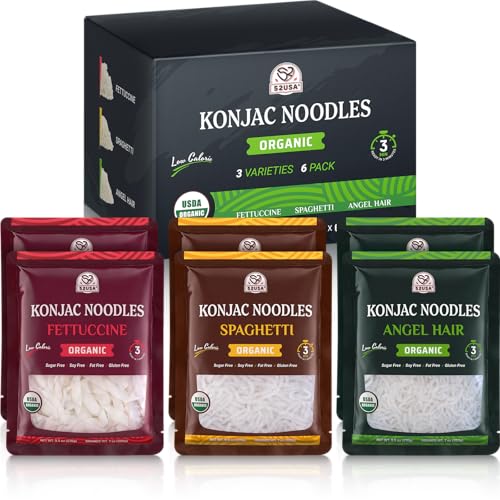
This six-pack delivers three distinct shapes — Angel Hair, Fettuccine, and Spaghetti — in a single box, covering the most common pasta formats without forcing you to buy three separate products. Each bag holds roughly 8.8 ounces of USDA Organic konjac noodles, making the total yield 52.8 ounces, which translates to approximately 12 to 15 servings depending on how generous you portion. The USDA Organic certification means the konjac root was grown without synthetic pesticides or fertilizers, a meaningful distinction for anyone trying to minimize dietary chemical exposure.
Customer reports consistently highlight the reduced brine odor compared to generic konjac brands. While no shirataki noodle is completely scent-free straight from the bag, this batch processes the noodles in a way that requires less aggressive rinsing to achieve a neutral base. The glucomannan fiber content delivers around 3 grams of soluble fiber per serving, contributing to the satiety effect that helps portion control between meals. Texture reviewers describe as “chewy but not rubbery” — the noodles hold up to stir-frying without disintegrating.
The packaging itself is notably practical: an outer stand-up bag that sits neatly on a pantry shelf, with each inner bag sealed firmly for moisture control. Preparation follows the standard konjac protocol — rinse thoroughly, dry-fry for three to five minutes, then sauce. The noodles have no inherent flavor, making them fully dependent on your sauce quality, so pair them with something punchy like a garlic chili oil or a rich tomato basil.
Why it’s great
- USDA Organic certification provides genuine ingredient quality assurance
- Three shape formats in one purchase covers recipe diversity without extra cost
- Minimal brine odor compared to standard konjac noodles, reducing prep friction
Good to know
- No flavor on its own — sauce quality determines the dish outcome
- Konjac texture is chewier than wheat pasta; not a one-to-one substitute
2. Soeos Organic Konjac Noodles Variety Pack
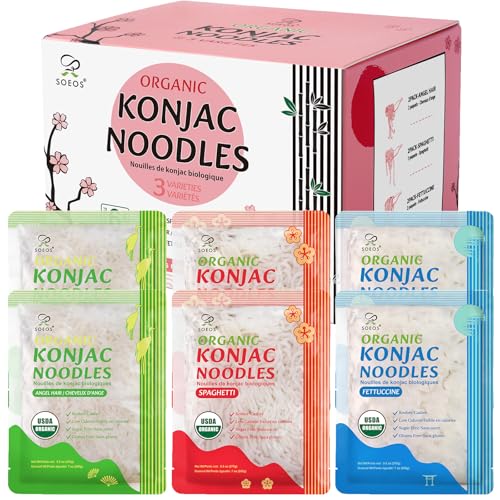
Soeos pushes the volume ceiling with a combined 57 ounces across six individual bags, again split into three shapes: Fettuccine, Angel Hair, and Spaghetti. That extra 4.2 ounces versus the 52USA pack adds roughly one additional serving to the total yield. The USDA Organic certification carries through here, and Soeos has built a reliable reputation in the konjac space for consistent processing that avoids the excessive mushiness that plagues poorly manufactured shirataki noodles.
The technical specs list 316.8 ounces in the units field, which appears to be a data anomaly — each bag is 9.5 ounces, and six bags total 57 ounces. The individual 9.5-ounce bag size is slightly larger than the typical 7- to 8-ounce shirataki bag, meaning fewer packages to open per meal if you’re cooking for two or more people. The noodles have a clean appearance, opaque white with uniform thickness, and they hold their shape well during boiling or stir-frying.
One practical advantage of this pack is the bag structure: the inner pouches are easy to open without tearing sideways, and the outer box (or bag depending on fulfillment) provides decent crush protection during shipping. The noodles pair equally well with cold salad preparations — toss with sesame oil, rice vinegar, and shredded cucumber — and hot applications like Thai-inspired peanut sauce noodles. As with all konjac products, thorough rinsing and dry-frying remain non-negotiable for best results.
Why it’s great
- Largest total volume in the organic konjac category for bulk buyers
- 9.5-ounce bags reduce packaging waste per serving compared to smaller pouches
- Consistent manufacturing quality with minimal structural breakdown during cooking
Good to know
- Still requires standard konjac prep: rinse and dry-fry for optimal texture
- Angel Hair shape can clump if not agitated sufficiently during rinsing
3. Miracle Noodle Ready to Eat Spaghetti Pasta
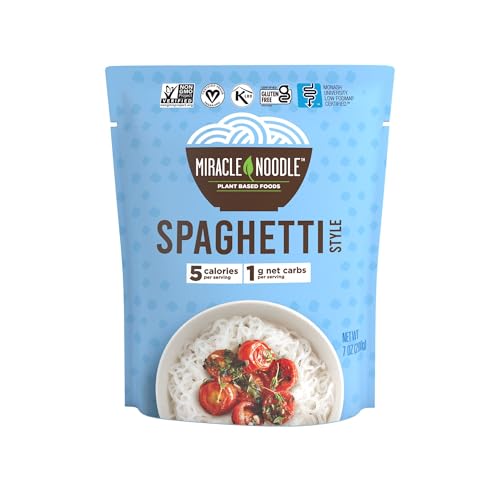
Miracle Noodle has been a fixture in the low-calorie noodle space for years, and this six-pack of spaghetti-style shirataki noodles delivers the absolute floor in caloric impact: 5 calories per serving with 1 gram of net carbs. The numbers are so low that they become functionally negligible in any daily macro calculation, making this the strongest option for strict keto dieters, pre-contest bodybuilders, or anyone running an aggressive caloric deficit who still wants to eat a bowl of something that looks like pasta.
Each bag contains 7 ounces of ready-to-eat noodles. The “ready to eat” label is slightly generous — you still need to drain, rinse, and heat them — but the processing does produce a noticeably softer, less gelatinous texture than some competitors. The noodles are shorter and more fragmented than traditional spaghetti, which some users find easier to eat with a fork without the awkward slip-and-slide that long konjac strands create. The spaghetti format is the only shape offered in this pack, so if you want fettuccine or angel hair, you need to look at the brand’s other product lines.
The brine odor is present straight from the bag but dissipates more quickly during rinsing than with generic brands. Because the calorie count is so low, you have significant flexibility to add high-calorie sauces — think creamy Alfredo or rich Bolognese — without blowing your daily budget. The fiber content is primarily glucomannan, which expands in the stomach and contributes to the fullness signal, but the total fiber per serving is lower than the hybrid wheat alternatives, so pair with a vegetable-heavy sauce for satiety.
Why it’s great
- 5 calories per serving leaves maximum room in your daily budget for sauces and toppings
- Shorter noodle strands reduce the awkward texture complaints common with long konjac
- Well-known brand with consistent quality control across production batches
Good to know
- Single shape format (spaghetti only) limits recipe variety without additional purchases
- Softer texture: may not satisfy those seeking al dente chew
4. LIVIVA Dried Shirataki Low Carb Noodles
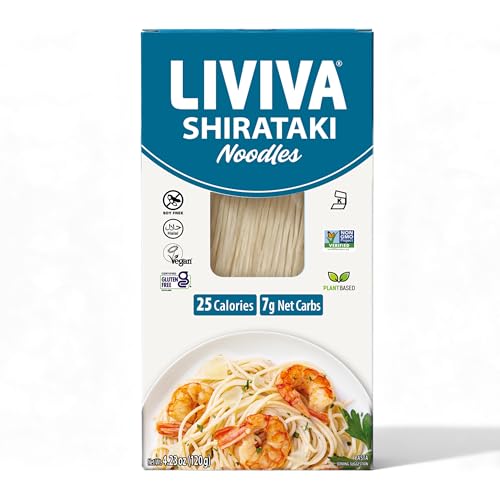
LIVIVA takes an unusual approach in the konjac category by offering dried shirataki noodles rather than the standard wet-packed format. This is the critical distinction: dried konjac noodles have a firmer, more al dente texture after rehydration than their wet-pack counterparts, directly addressing the most common complaint about shirataki — that it feels too soft or mushy. Each serving delivers 25 calories, 5 to 6 grams of net carbs, and zero sugar or fat, with the Keto Certified label confirming compliance with strict ketogenic macro standards.
The drying process removes excess water that typically dilutes texture, then rehydration during cooking restores a structure that more closely mimics traditional semolina pasta. The noodles come in a 2-pack format with 13.05 ounces total, and the company recommends simply incorporating them into your favorite recipes without the specialized rinsing and dry-frying routine required by wet konjac. This convenience factor is significant for anyone who found standard shirataki’s prep steps too cumbersome for regular use.
One trade-off: because the noodles are dried, they require boiling for several minutes to reach the right consistency, which adds time compared to wet konjac that is ready in three minutes. The non-GMO and gluten-free certifications are verified, and the manufacturing facility holds Kosher and Halal certifications, broadening the dietary applicability. Texture reviews consistently rate this as the closest to regular pasta among the konjac options reviewed here, though it still lacks the gluten structure that defines authentic wheat pasta.
Why it’s great
- Dried format produces firmer, more satisfying bite than standard wet shirataki
- Eliminates the need for rinsing and dry-frying prep steps
- Keto Certified with clear macro labeling for strict dietary tracking
Good to know
- Requires boiling for rehydration, adding prep time compared to wet konjac
- Two-pack format offers fewer total servings than larger variety packs
5. Pastabilities Lower Calorie Pasta Penne

Pastabilities represents the wheat-based alternative to the konjac-heavy market, delivering genuine semolina pasta engineered to contain 50 percent fewer calories than standard pasta. Each serving lands at 100 calories with 12 grams of net carbs and a staggering 27 grams of dietary fiber. That fiber count is the headline feature here — it is far higher than any konjac noodle on this list and fundamentally changes how the pasta behaves in your digestive system, providing serious satiety and blood sugar stabilization effects.
Unlike konjac noodles, which require rinsing and dry-frying, Pastabilities cooks exactly like regular penne: boil in salted water for 8 to 10 minutes, drain, and sauce. The texture is genuinely indistinguishable from standard pasta to most palates — there is no gelatinous mouthfeel, no off-flavor, and no need to explain to dinner guests that they are eating diet pasta. The Non-GMO Project certification adds an additional quality signal, and the product is vegan since no eggs are used in the formulation.
The trade-off is clear: 100 calories and 12 net carbs per serving is significantly higher than the 5-to-25-calorie, 1-to-6-net-carb konjac options. If your macro targets require absolute minimal numbers, this is not the right choice. But if you want a weeknight pasta dinner that tastes identical to the real thing and still cuts your caloric intake by half while delivering 27 grams of fiber, Pastabilities wins decisively. The two-pack format provides 16 ounces total, roughly eight servings.
Why it’s great
- Real wheat taste and texture indistinguishable from standard pasta
- Zero special preparation steps — boils exactly like regular penne
- 27 grams of fiber per serving is extraordinarily high for any pasta product
Good to know
- 100 calories and 12g net carbs per serving is not suitable for strict keto
- Only available in penne shape — no spaghetti or fettuccine format
FAQ
Why do konjac noodles smell strange straight from the bag and how do I fix it?
Can I use low-calorie noodles in cold salads and meal prep containers?
Are low-calorie noodles safe for people with diabetes and blood sugar concerns?
Why do some low-calorie noodle packs show unrealistic serving counts?
Final Thoughts: The Verdict
For most users, the low-calorie noodles winner is the 52USA Organic Konjac Variety Pack because it delivers USDA Organic ingredient quality, three shape options, and a manageable prep routine at the sweet spot of value and performance. If you want the absolute lowest calorie floor with 5 calories per serving for strict keto, grab the Miracle Noodle Spaghetti. And for anyone who wants the taste and texture of real wheat pasta with half the calories and a massive 27 grams of fiber, nothing beats the Pastabilities Penne.