Thin, fragile skin isn’t just a cosmetic concern — it’s a structural weakness. When the dermal and epidermal layers thin with age, genetics, or topical steroid use, the barrier’s ability to retain moisture and resist tearing drops sharply. Standard lotions often sting, absorb too slowly, or fail to reinforce the lipid matrix that keeps skin intact.
I’m Emma — the founder and writer behind Baby Bangs. For the past four years, I’ve analyzed dermatological ingredient stacks, cross-referenced clinical trial data, and sorted through hundreds of moisturizer formulations specifically designed for barrier-compromised or atrophic skin.
After reviewing over thirty formulations for their ceramide profile, humectant concentration, and irritation index, I’ve narrowed the field to five serious contenders. This is the definitive guide to finding the best lotion for thin skin that actually supports a compromised barrier without triggering sensitivity reactions.
How To Choose The Best Lotion For Thin Skin
Thin skin demands a specific formulation strategy. A basic drugstore body cream might work fine on normal skin, but on a fragile barrier it can sting, sit on the surface, or even accelerate transepidermal water loss. You need to evaluate each product across four specific criteria.
Ceramide and Lipid Profile
Ceramides make up roughly 50% of the skin barrier’s lipid composition. A thin barrier often lacks ceramides 1, 3, and 6-II specifically. Look for a product that lists these by name in the ingredient deck — not just “ceramide complex” as a marketing term. Multi-ceramide formulas with a 3:1:1 ratio most closely mimic the skin’s natural lipid structure.
Texture and Absorption Speed
Thin skin is often reactive to occlusion. Heavy petrolatum-based balms can trap heat and cause prickly discomfort, while water-thin lotions evaporate too fast to deliver lasting protection. The ideal consistency sits between a lightweight emulsion and a rich cream — something that spreads easily, absorbs within 60 seconds, and leaves a subtle protective film without a greasy residue.
Fragrance and Irritant Profile
Fragrance is the single most common contact allergen in skincare. For thin, reactive skin, even low concentrations of essential oils or masking fragrances can trigger redness, stinging, or barrier degradation. Stick to formulations flagged as “fragrance-free” (not “unscented,” which can still contain masking agents) and cross-check for known irritants like denatured alcohol, witch hazel, or menthol.
Additional Barrier-Supporting Ingredients
Niacinamide (vitamin B3) supports ceramide synthesis in the epidermis. Panthenol (provitamin B5) acts as a humectant and anti-inflammatory. Centella Asiatica compounds like madecassoside calm irritation and support collagen production. A well-rounded formulation for thin skin will include at least one of these ancillary actives without relying on them as the sole barrier strategy.
Quick Comparison
On smaller screens, swipe sideways to see the full table.
| Model | Category | Best For | Key Spec | Amazon |
|---|---|---|---|---|
| CeraVe Daily Moisturizing Lotion | Mid-Range | Daily all-over barrier maintenance | 3 essential ceramides (1, 3, 6-II) | Amazon |
| ONGREDIENTS Skin Barrier Calming Lotion | Mid-Range | Redness-prone, reactive thin skin | 9-Peptide Complex + Centella Asiatica | Amazon |
| La Roche-Posay Toleriane Double Repair Face Moisturizer | Mid-Range | Face and neck with prebiotic support | Ceramide-3 + Niacinamide + Prebiotics | Amazon |
| SKINTENSIVE Specialized Fragile Skin Moisturizing Cream | Premium | Targeted fragile-skin repair (face & body) | Vitamins A, C, E + Arnica in coconut oil base | Amazon |
| La Roche-Posay Cicaplast Balm B5 | Premium | Extreme dryness, chafing, post-procedure | Panthenol 5% + Shea Butter + Madecassoside | Amazon |
In‑Depth Reviews
1. CeraVe Daily Moisturizing Lotion
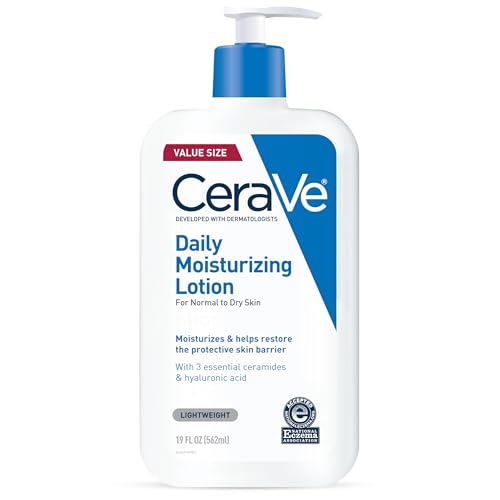
This is the most dermatologist-recommended lotion in the category for good reason. It delivers ceramides 1, 3, and 6-II in the precise lipid ratio that mimics the skin’s natural barrier, coupled with MVE technology that releases hydration gradually over 24 hours. The texture is noticeably lightweight — it spreads across thin forearm skin without dragging and absorbs fully within 45 seconds, leaving no tacky film behind.
The National Eczema Association Seal of Acceptance matters here because reactive skin is often co-diagnosed with eczema or general sensitivity. This formula is completely fragrance-free, non-comedogenic, and oil-free, so it won’t clog the fragile pores that often accompany thin facial skin. The 19-ounce bottle size makes it practical for full-body use, and the pump dispenses a controlled dose that reduces product waste.
For anyone wanting a single lotion that works equally well on face, hands, and body without irritation risk, this is the baseline that other formulations should be measured against. It doesn’t contain specialized anti-aging peptides or targeted soothing botanicals, but its ceramide integrity is unmatched at this price tier.
Why it’s great
- Triple-ceramide barrier repair proven in clinical use
- Fragrance-free and non-comedogenic — safe for reactive skin
- Large 19-oz pump bottle offers unmatched value
Good to know
- Lacks added peptide or antioxidant actives for anti-aging
- Some users with extremely dry skin prefer a richer cream
2. ONGREDIENTS Skin Barrier Calming Lotion
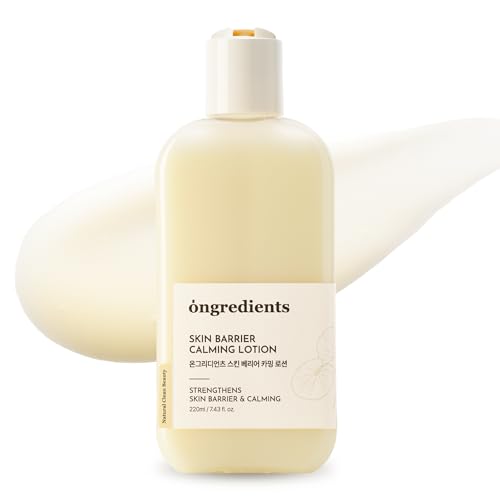
This Korean skincare formulation targets the redness and reactive inflammation that often accompany thin skin. Centella Asiatica extract is the primary active — studies show it increases collagen synthesis and reduces prostaglandin E2, a marker of inflammation. The 9-peptide complex adds structural support by signaling fibroblasts to produce more extracellular matrix proteins.
The texture is a true lightweight emulsion that feels almost like a gel-cream hybrid. It absorbs almost instantly — within 30 seconds — making it ideal for layering under sunscreen or makeup on fragile facial skin. It has passed primary irritation testing specifically for sensitive skin, and it holds PETA Vegan Certification, meaning no animal-derived lipids that could potentially trigger reactions.
Where this lotion distinguishes itself is in the soothing angle — it visibly reduces the blotchy redness that thin skin often shows. The glass-skin glow is a nice aesthetic bonus, but the real value is the combination of barrier reinforcement and inflammation reduction in a single, non-greasy step.
Why it’s great
- Centella Asiatica and 9-peptide complex actively calm redness
- Ultra-lightweight texture perfect for facial application
- Vegan, cruelty-free, and fragrance-free
Good to know
- Small 7.43-oz bottle — not ideal for full-body use
- May need a heavier occlusive layer over it in very dry climates
3. La Roche-Posay Toleriane Double Repair Face Moisturizer

This moisturizer stands out for its dual-action claim: it visibly restores the skin barrier within one hour while delivering 48-hour hydration. The mechanism relies on Ceramide-3 to reinforce the lipid matrix, niacinamide to stimulate ceramide synthesis, and prebiotic thermal spring water to balance the skin microbiome — a factor often overlooked in thin-skin care.
The texture is a lightweight cream that initially feels richer than a lotion but absorbs quickly and leaves a satin finish. It is oil-free and non-comedogenic, which is crucial when thin skin is prone to perioral dermatitis or clogged pores from heavier formulations. The fragrance-free formulation has been tested on sensitive skin extensively in clinical settings.
This is a strong all-in-one for facial use. It combines barrier repair, hydration, and microbiome support without layering multiple products. The 48-hour hydration claim holds up in moderate humidity environments, though very dry climates may still require an additional occlusive step at night.
Why it’s great
- Prebiotic action supports microbiome health for reactive skin
- Clinically tested barrier repair within 1 hour
- Lightweight cream texture ideal for day and night wear
Good to know
- 3.2-oz tube is small for full-body coverage
- Some users with very advanced skin thinning prefer richer formulas
4. SKINTENSIVE Specialized Fragile Skin Moisturizing Cream
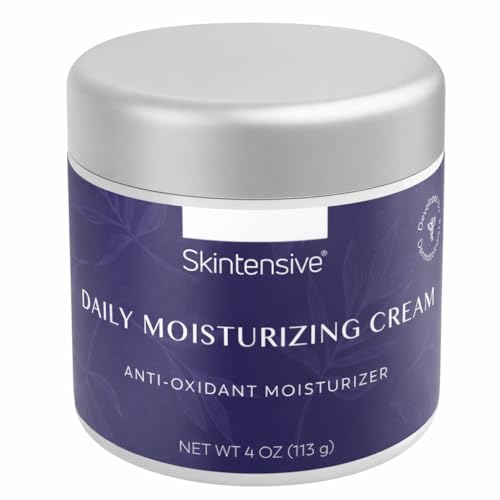
This is one of the few products explicitly marketed — and formulated — for thin, fragile skin. Developed by Harvard-trained dermatologists, it uses a coconut oil base as the delivery vehicle for vitamins A, C, and E, along with arnica, which has a long history in topical formulations for reducing bruising and promoting microcirculation in atrophic skin.
The texture is richer than a standard lotion — it sits between a cream and a balm — but the formulation deliberately avoids greasiness. It melts into the skin on contact and doesn’t leave the tacky residue that often bothers users with thin facial skin. It’s designed for full-body use, including hands, arms, and legs, which is practical for age-related thinning that affects multiple body sites.
The antioxidant stack (A, C, E) provides photo-protective benefits and supports collagen remodeling, which addresses the underlying structural weakness rather than just hydrating the surface. It is paraben-free and phthalate-free. The 4-ounce jar is smaller than it looks in photos, but the rich consistency means a little goes a long way.
Why it’s great
- Specifically formulated for fragile, thin skin
- Vitamin antioxidant stack supports collagen production
- Arnica helps reduce the appearance of bruising
Good to know
- Richer texture may feel heavy for facial use in humid climates
- 4-oz jar requires dipping fingers into product — hygiene consideration
5. La Roche-Posay Cicaplast Balm B5
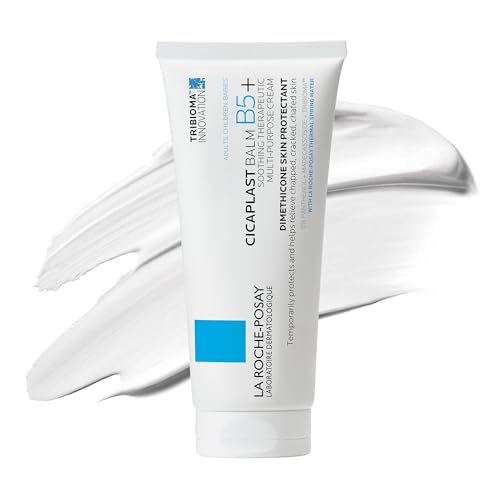
This is the heavy-duty repair option for thin skin that is actively irritated, chafed, or stressed. The formulation centers on 5% panthenol (provitamin B5), which penetrates the stratum corneum and converts to pantothenic acid, a cofactor in cellular repair. Shea butter provides occlusive moisture, and madecassoside (from Centella Asiatica) accelerates wound healing and reduces inflammation.
The texture is a rich, white balm that sits on top of the skin rather than absorbing fully — this is by design. It creates a semi-occlusive film that protects compromised barriers from environmental aggressors while the active ingredients work beneath. The formula is baby-safe from one week of age, and it’s the only product here specifically indicated for post-procedure use and chemotherapy-related skin irritation.
For thin skin that has progressed to the point of cracking, chafing, or frequent minor tears, this balm provides the protective layer that a standard lotion cannot. It is non-greasy in the sense that it doesn’t slide around, but it does leave a visible white cast if over-applied. Use it as a targeted treatment on vulnerable spots rather than a full-body daily lotion.
Why it’s great
- 5% panthenol actively supports cellular repair
- Accepts National Eczema Association — safe for extreme reactivity
- Baby-safe and suitable for post-procedure care
Good to know
- Rich balm texture leaves a visible film if not rubbed in thoroughly
- Better as a spot treatment than a daily full-body lotion
FAQ
Can I use a body lotion on my face if I have thin skin everywhere?
How often should I apply lotion to fragile, thin skin?
Will a lotion with vitamin A (retinol) help thicken thin skin over time?
Final Thoughts: The Verdict
For most users, the best lotion for thin skin winner is the CeraVe Daily Moisturizing Lotion because its triple-ceramide MVE system provides the most reliable barrier reinforcement without irritation at a practical full-body volume. If you want targeted anti-inflammatory support and a lighter facial texture, grab the ONGREDIENTS Skin Barrier Calming Lotion. And for extreme dryness, chafing, or skin that tears easily, nothing beats the protective repair film of the La Roche-Posay Cicaplast Balm B5.