Fresh tattoo skin is an open wound, and slathering on the wrong body lotion can trap bacteria, fade lines, or trigger a reaction that ruins months of planning. The first 14 days after leaving the chair determine whether your ink heals crisp and bright or develops patchy, dull scarring that needs costly touch-ups.
I’m Emma — the founder and writer behind Baby Bangs. I’ve spent years analyzing aftercare ingredient decks, pore-clogging ratings, and healing timelines across dozens of tattoo-specific and dermatological formulas to separate what actually works from what simply feels nice on healthy skin.
Choosing the right formula means understanding occlusion versus breathability and pH-balanced ingredients versus harsh preservatives. This guide breaks down the top contenders so you can pick the best lotion for tattoo aftercare that locks in your investment without suffocating your skin.
How To Choose The Best Lotion For Tattoo Aftercare
A tattoo aftercare lotion is not a moisturizer — it is a wound-healing occlusive that must simultaneously protect against infection and allow oxygen exchange. Beginners often reach for thick body butter and end up smothering the tattoo, trapping serous fluid under a greasy film that invites bacterial overgrowth. The three criteria below separate a smart buy from a regret.
Occlusion vs. Breathability: The Healing Balance
Petrolatum and mineral oil create a completely waterproof seal that stops moisture loss and dirt ingress, but they also stop oxygen from reaching the wound bed. For the first 72 hours, a semi-occlusive formula (water-based, with ingredients like dimethicone, panthenol, or bisabolol) lets the skin breathe while still protecting against friction from clothing. After day three, a slightly richer balm speeds up the flaking phase without pulling scabs off prematurely.
Ingredient Blacklist: What Should Never Touch Fresh Ink
Fragrance, denatured alcohol, and essential oils like tea tree or lavender are common irritants that cause contact dermatitis on broken skin. Also avoid retinoids, alpha hydroxy acids, and high-concentration vitamin C — these accelerate cell turnover and can lift pigment before the dermis has locked the ink. Stick to formulas that list fewer than twelve ingredients and are labeled fragrance-free and dye-free.
Texture and Absorption for Daily Comfort
A lotion that leaves a white film or sticky residue creates a sandpaper effect against bedding and clothing, which can tear off scabs. You want a fast-absorbing cream that dries down to a light, non-tacky feel within 60 seconds. The ideal product spreads easily over a double-coverage area like a full sleeve and does not require vigorous rubbing — massaging too hard on day three can shear off the forming plasma layer.
Quick Comparison
On smaller screens, swipe sideways to see the full table.
| Model | Category | Best For | Key Spec | Amazon |
|---|---|---|---|---|
| Ebanel Tattoo Balm | Balm | Color enhancement & sensitive skin | Manuka oil + arnica blend | Amazon |
| Stories & Ink Aftercare Cream | Cream | Artist-recommended, fragrance-free | Panthenol + bisabolol | Amazon |
| Tattoo Care Kit (Cream + Soap) | Kit | Complete aftercare system | Propolis + vitamins A & E | Amazon |
| Aquaphor Healing Ointment | Ointment | Initial 72-hour seal | Water-free petrolatum base | Amazon |
| H2Ocean Ocean Foam | Foam | Lightweight, non-greasy hydration | Red Sea salt + 82 trace minerals | Amazon |
In‑Depth Reviews
1. Ebanel Tattoo Balm 3oz
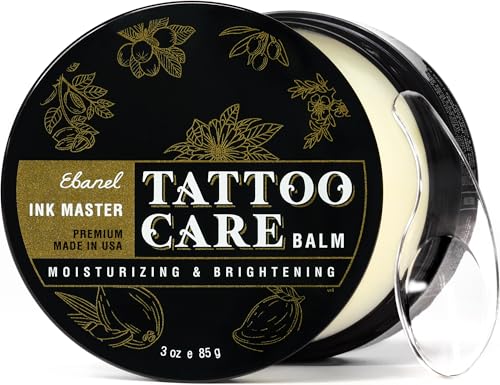
The Ebanel balm is formulated with mango butter, shea butter, and a suite of herbal extracts including manuka oil, frankincense, and clove oil. Unlike heavy petrolatum pastes, this balm spreads thin and absorbs fully within 90 seconds, leaving a matte finish that does not stick to pillowcases or denim. The inclusion of arnica specifically targets the redness and swelling common in the first 48 hours, which is rare among aftercare products at this tier.
The multi-stage claim holds up — you can apply it as a stencil preserver before the session, as a primary moisturizer during healing, and later as a maintenance cream to stop old tattoos from turning ashy. The formula is free of petrolatum, mineral oil, lanolin, and synthetic fragrance, which makes it a strong choice for anyone whose skin reacts to the standard Aquaphor approach. It is also made in an FDA-registered, cGMP-certified facility, so quality control is consistent batch to batch.
On the downside, the herbal scent — though mild and natural — may be noticeable to those who prefer completely unscented products. Also, the 3-ounce jar requires dipping fingers, so hygiene-conscious users should scoop with a clean spatula to avoid introducing bacteria into the balm during the healing window.
Why it’s great
- Arnica and manuka oil actively calm redness and irritation
- Fast-absorbing, non-greasy finish protects without residue
- Petrolatum-free formula safe for sensitive and reactive skin
Good to know
- Mild natural herbal scent, not completely fragrance-free
- Jar packaging requires clean scooping to avoid contamination
2. Stories & Ink Tattoo Care Aftercare Cream
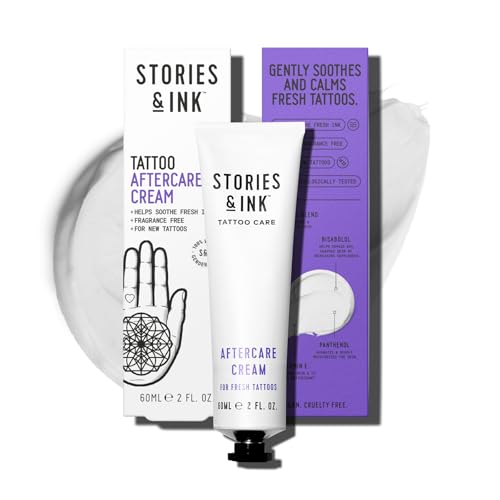
Stories & Ink was developed and trialed at a UK tattoo studio, which means the texture and healing profile were refined by artists who watch thousands of fresh tattoos heal. The cream relies on panthenol (pro-vitamin B5) and bisabolol (chamomile-derived) to reduce itch and visible redness. Unlike thicker pastes, this cream spreads like a light facial moisturizer and sinks in within 30 seconds — genuinely useful when you need to reapply five times a day without sitting around waiting for it to absorb.
The formula skips petrolatum entirely, so it does not create the occlusive “slug” that shears off when you move. This makes it particularly suitable for tattoos on high-mobility areas like the ribs, knee ditch, and inner arm, where heavy ointments tend to migrate and cause tacky buildup on clothing. It is also dermatologically approved and independently patch-tested, and the fragrance-free base means zero interaction with the tattoo’s own pigments.
The downside is the 2-ounce tube size runs out fast if you are healing a larger piece — expect to repurchase before the flaking phase ends. And while it moisturizes well, it does not have the deep occlusive power needed for the initial “wet” stage if your artist recommends sealing the tattoo for the first 24 hours.
Why it’s great
- Studio-tested by artists who see real healing outcomes
- Ultra-light, 30-second absorption perfect for frequent application
- Panthenol and bisabolol actively calm itch without medication
Good to know
- 2-ounce tube runs out quickly on large or multi-session tattoos
- Not occlusive enough for the first 24 hours if artist wants a seal
3. Tattoo Care Aftercare Kit (Cream + Soap)
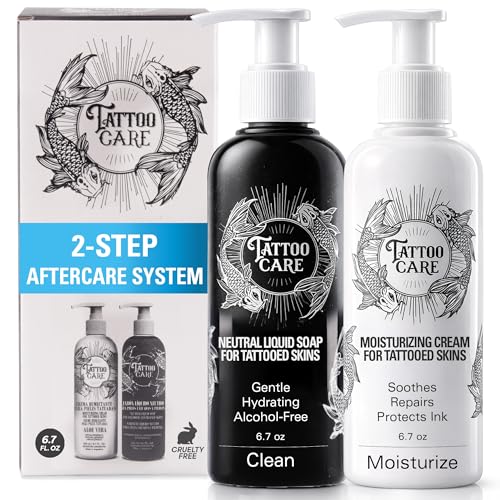
This kit delivers two 6.7-ounce bottles — one cream and one soap — which is enough product to last through the entire healing cycle of multiple large tattoos. The cream contains propolis, vitamins A and E, and a shea butter base, while the soap is a gentle, non-stripping cleanser that removes plasma buildup without over-drying the wound. Having the matching cleanser reduces the chance of using a harsh antibacterial hand soap that can slow healing.
The cream texture sits between a lotion and a butter: rich enough to prevent flaking but light enough that it does not pool in the crevices of linework. The propolis adds a natural antimicrobial layer that supports the skin barrier without the need for heavy synthetic preservatives. The kit is also cruelty-free and paraben-free, aligning with a clean-beauty standard that matters when you are applying product to broken skin up to six times a day.
One thing to note: the cream contains a light natural scent from the shea and propolis. It is not synthetic, but if you are extremely sensitive to any smell during healing, you may prefer a fragrance-free alternative. Also, the pump bottles are convenient but can clog slightly if the cream thickens in cooler temperatures.
Why it’s great
- Complete aftercare system with matching gentle cleanser
- Large 6.7-ounce bottles last through multiple healing cycles
- Propolis provides natural antimicrobial protection for the wound
Good to know
- Mild natural scent from shea and propolis, not completely unscented
- Pump dispenser can clog in cooler room temperatures
4. Aquaphor Healing Ointment Advanced Therapy

Aquaphor is the emergency-room standard for post-procedure wound protection, and its petrolatum-and-panthenol base creates an impermeable barrier that seals the tattoo from bacteria, dirt, and friction. The water-free formula means zero evaporation, so the skin stays hydrated for hours without reapplication — a major advantage during the weepy stage when the tattoo is leaking plasma and lymph fluid that can dry into a hard scab if left exposed.
The 7-ounce tube is extremely economical for covering large areas, and the consistency is thick enough to stay put on vertical surfaces like the forearm or calf without dripping. It is also fragrance-free, dye-free, and contains no preservatives, which lowers the risk of a contact allergy on compromised skin. For the first 72 hours, many professional tattoo artists still recommend Aquaphor as the gold standard before switching to a lighter lotion.
The downside is that petrolatum is completely non-breathable. If you apply too thick a layer, the tattoo can become macerated (over-hydrated skin that peels prematurely), and it feels greasy on clothing and bedding. You also need to wash the area before each reapplication to prevent the ointment from trapping bacteria against the skin.
Why it’s great
- Superior occlusion for the first 72-hour wound-sealing stage
- Large 7-ounce tube is very cost-effective for full sleeves or back pieces
- Fragrance-free and preservative-free with low allergy potential
Good to know
- Completely non-breathable; excessive layers can cause maceration
- Greasy texture transfers to clothing and needs thorough washing before reapplication
5. H2Ocean Ocean Foam Tattoo Aftercare
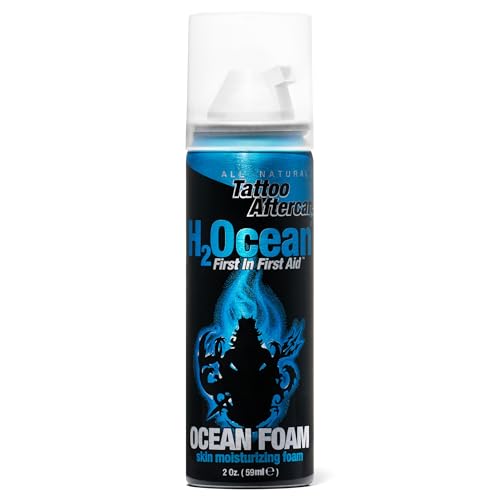
H2Ocean Ocean Foam is a water-based, alcohol-free mousse that delivers moisture through a unique sea-salt solution containing over 82 trace minerals from the Red Sea. The foam format is a smart innovation — it allows you to apply a thin, even layer without rubbing, which matters when the tattoo is still tender and the scabs are forming. It dries down quickly and leaves zero residue, making it the most comfortable option for covering large surface areas throughout the day.
The formula is petroleum-free, fragrance-free, and dye-free, and it will not clog pores. Because it is so lightweight, it works well as a transition product after the initial heavy-ointment phase, helping the skin ease into regular moisturization without the shock of switching to a different texture. The foam also doubles as a treatment for dermatitis and eczema, so it can be a multi-use staple in your skincare rotation after the tattoo heals.
The trade-off is that the 2-ounce bottle depletes quickly, and you may find yourself needing to reapply more often than with a cream or balm. Also, because it is water-based, it does not provide the deep occlusion that some tattoos need during the weepy stage, so it is best reserved for day four onward rather than the initial seal.
Why it’s great
- Foam format allows no-rub application on tender, scabbing skin
- Colorless, odorless, and residue-free for all-day wear
- Sea-salt minerals support natural healing without heavy chemicals
Good to know
- Small 2-ounce bottle runs out fast during frequent application
- Insufficient occlusion for the first 72-hour weepy stage
FAQ
Can I use regular body lotion on a new tattoo?
How often should I apply aftercare lotion on a fresh tattoo?
Why do some artists recommend Aquaphor and others say avoid it?
Is fragrance-free the same as unscented?
Final Thoughts: The Verdict
For most users, the lotion for tattoo aftercare winner is the Ebanel Tattoo Balm because it combines arnica-driven anti-redness with a non-greasy, petrolatum-free base that works across all healing stages. If you want an artist-developed, ultra-light cream that feels like nothing on the skin, grab the Stories & Ink Aftercare Cream. And for a budget-friendly buy that does not sacrifice protection, nothing beats the H2Ocean Ocean Foam for residue-free, lightweight hydration after the first three days.