Choosing a shower scrubber when you have eczema means walking a tightrope between effective cleansing and triggering an angry flare-up. The wrong texture, material, or retained bacteria can undo weeks of careful skincare routine in a single shower.
I’m Emma — the founder and writer behind Baby Bangs. I’ve spent years analyzing the material science behind bath accessories, specifically how fiber type, porosity, and drying speed affect skin conditions like eczema.
After digging into dozens of options, I’ve narrowed down the five bath companions that actually respect sensitive, compromised skin. This guide is your complete walkthrough for finding the absolute best loofah for eczema, with reviews of top-performing natural, hypoallergenic, and ultra-soft options that won’t aggravate your skin barrier.
How To Choose The Best Loofah For Eczema
Eczema skin is a broken barrier. The wrong loofah can physically scrape off the already-compromised stratum corneum, introduce bacterial irritants, or trap moisture that fosters fungal growth. Here are the three non-negotiable filters.
Prioritize Natural Sea Wool Over Plant Loofah or Mesh
Dried Luffa gourd (the classic natural loofah) is too abrasive for eczema — multiple user reviews confirm it works best on feet but leaves arms and legs red and raw. Synthetic mesh puffs are bacteria traps. Sea wool sponges, on the other hand, become silky soft when wet while still offering gentle exfoliation. They are also naturally antimicrobial when dried properly.
Check for Hypoallergenic Certification and Chemical-Free Processing
Eczema reacts to dyes, bleaches, and synthetic fragrances. Look for sponges labeled unbleached, dye-free, and hypoallergenic. Sea wool sponges are naturally off-white or tan — if it’s bright white, it’s likely chemically processed. Plastic-free packaging also matters because the product itself shouldn’t off-gas before use.
Evaluate Drying Dynamics and Lifespan
Moisture trapped inside a dense sponge breeds mold and bacteria, which are direct eczema triggers. Loofahs with a hanging loop that allows complete air circulation dry faster. Thin, flat pads also dry quicker than thick, bulbous sponges. Plan to replace any loofah every 6-8 weeks — even sea wool sponges degrade over time and can harbor microbes after repeated use.
Quick Comparison
On smaller screens, swipe sideways to see the full table.
| Model | Category | Best For | Key Spec | Amazon |
|---|---|---|---|---|
| Baby Buddy Natural Wool Sea Sponge | Premium | Ultra-sensitive newborn & adult skin | 4-inch wet size, ultra-soft wool | Amazon |
| LATHER Natural Sea Wool Sponge | Premium | Silky-soft gentle exfoliation | 4-5 inch wool sponge, hypoallergenic | Amazon |
| Naroa Exfoliating Natural Sponge | Mid-Range | Unbleached, plastic-free bathing | Small sea sponge, unbleached fiber | Amazon |
| Mikimini Bath Loofah Sponge Mitt | Mid-Range | Gentle dual-sided scrubbing | PVC & fabric mitt, 2-in-1 design | Amazon |
| Herbvian Vietnamese Natural Loofah Pads | Budget | Deep exfoliation on tough spots | 100% plant loofah, 2-pack, 6.3″ pads | Amazon |
In‑Depth Reviews
1. Baby Buddy Natural Wool Sea Sponge

This two-pack of sea wool sponges is explicitly designed for newborn skin, which makes it the ideal texture benchmark for adult eczema care. When wet, the wool fibers become so soft that even the most reactive skin finds them soothing rather than abrasive. Users consistently describe the lather as creamy and rich, meaning you get full cleansing power without needing to scrub firmly.
Each sponge measures about 4 inches when fully saturated — a compact size that forces you to use gentle, small circles rather than aggressive back-and-forth motions. The natural fibers are sustainably harvested from Florida coastal waters and are completely biodegradable. The fact that they are hypoallergenic and free of dyes, parabens, and synthetic fragrances removes the chemical irritant variable entirely from your shower routine.
The manufacturer recommends replacing every 8 weeks, and real-world usage reports confirm they hold up well for about 6 months with proper rinsing and air-drying. The 2-count pack gives you a backup while the first sponge air-dries, which is critical for preventing moisture buildup between uses.
Why it’s great
- Ultra-soft wool fibers that turn silky when wet — safe for compromised skin barriers
- Sustainably harvested, biodegradable, and completely free of synthetic chemicals
- Compact 4-inch size encourages gentle, precise washing motion
Good to know
- May feel too soft for users who prefer a scrub sensation
- Natural ocean smell on first use that fades after a few rinses
2. LATHER Natural Sea Wool Sponge
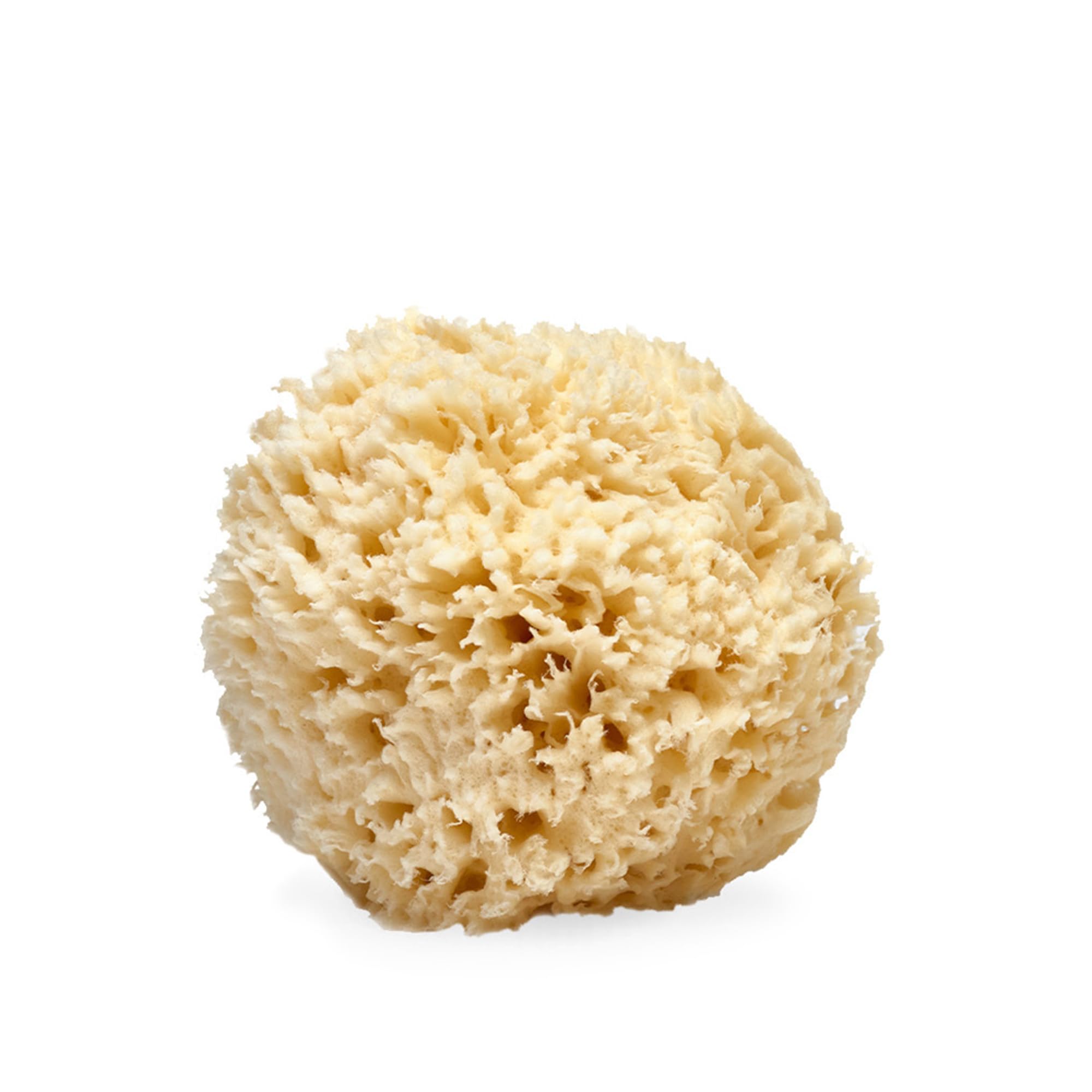
LATHER’s sea wool sponge is harvested from the same Florida coastal waters as the Baby Buddy, but marketed toward adult skincare rather than infant bathing. The key difference lies in the size range — 4 to 5 inches when wet — giving you a slightly larger surface area for full-body use while maintaining the same buttery-soft texture that defines sea wool.
Multiple verified buyers report that this sponge lasts nearly a full year with proper care, outlasting synthetic alternatives by a wide margin. The natural fibers create a rich, creamy lather that glides over skin like silk, which several users explicitly compared to the sensation of a luxury spa treatment. The sponge is ethically harvested, cruelty-free, and free from parabens, sulfates, and synthetic fragrances.
One important caution: because the wool is so exceptionally soft, users accustomed to the abrasive feel of mesh puffs or plant loofahs may initially feel under-cleaned. The real-world solution is to trust the lather volume, not the scrub pressure. Also, some users reported that if the sponge is not wrung out completely after every use and hung in a dry location, mold can develop within a month — a risk for any natural sponge, but one to be aware of.
Why it’s great
- Remarkably soft, silky texture that glides over sensitive skin without irritation
- Large 4-5 inch size suitable for full adult body coverage
- Long-lasting: multiple users report durability of up to a year with care
Good to know
- Requires thorough squeezing and hanging dry to prevent mold growth
- Mild ocean odor present upon first use before normal washing
3. Naroa Exfoliating Natural Sponge

The Naroa sponge takes a different approach — rather than the wool sponge route, it uses a sustainably harvested sea sponge that is hand-cut from the root and prepared through multiple quality checks. The emphasis here is on unbleached, all-natural material with zero plastic packaging, making it a strong contender for the eco-conscious eczema sufferer.
Like sea wool, this sponge becomes soft when wet but retains a slightly more textured surface that provides gentle exfoliation without scraping. This middle ground makes it a useful option for those whose eczema is well-controlled and who want a mild scrub to remove dead, flaky skin without trauma. The small size (roughly 2 to 3 inches dry) expands when saturated and is easy to grip.
The plastic-free packaging is a real differentiator — no poly bags or synthetic wraps touching the sponge before you use it. This eliminates the risk of residual chemical off-gassing that can trigger skin reactions in highly sensitive individuals. However, because the sponge is unbleached, the color and shape vary from piece to piece, which some users may find inconsistent.
Why it’s great
- Unbleached, all-natural sea sponge with no chemical processing
- Completely plastic-free packaging for a zero-waste routine
- Provides mild exfoliation without the abrasiveness of plant loofah
Good to know
- Size and shape vary significantly per piece, which some find disorienting
- May be too textured for severely inflamed or weeping eczema
4. Mikimini Bath Loofah Sponge Mitt

This 2-pack mitt takes a different construction approach than the sea sponges and plant loofahs above. It is a double-sided bath mitt with one flat fabric side and one loofah side. The flat fabric side is made from soft PVC and fabric material that the brand describes as safe and calming for all skin types, including sensitive and eczema-prone skin.
The benefit of the mitt format is that your hand does not directly touch the cleansing surface, which allows you to precisely control pressure. For eczema sufferers, this control is huge — you can use the soft fabric side with gentle circular motions for daily cleansing and reserve the loofah side for occasional gentle exfoliation when your skin is calm. The built-in hanging string promotes quick drying between uses.
Because it is partially synthetic (PVC blended with fabric), it does not offer the same natural antimicrobial properties as sea wool or natural sea sponges. This means it must be thoroughly rinsed and hung in a well-ventilated area to avoid bacterial growth. Replace every 4-6 weeks, especially if you use the loofah side, as the synthetic fibers can harbor microbes after extended use.
Why it’s great
- Dual-sided design gives you both a soft fabric side and a loofah side for versatility
- Mitt format allows precise pressure control — no accidental over-scrubbing
- Budget-friendly 2-pack with hanging string for fast drying
Good to know
- Partially synthetic — not as naturally antimicrobial as sea wool sponges
- Loofah side may still be too rough for active eczema flare-ups
5. Herbvian Vietnamese Natural Loofah Pads
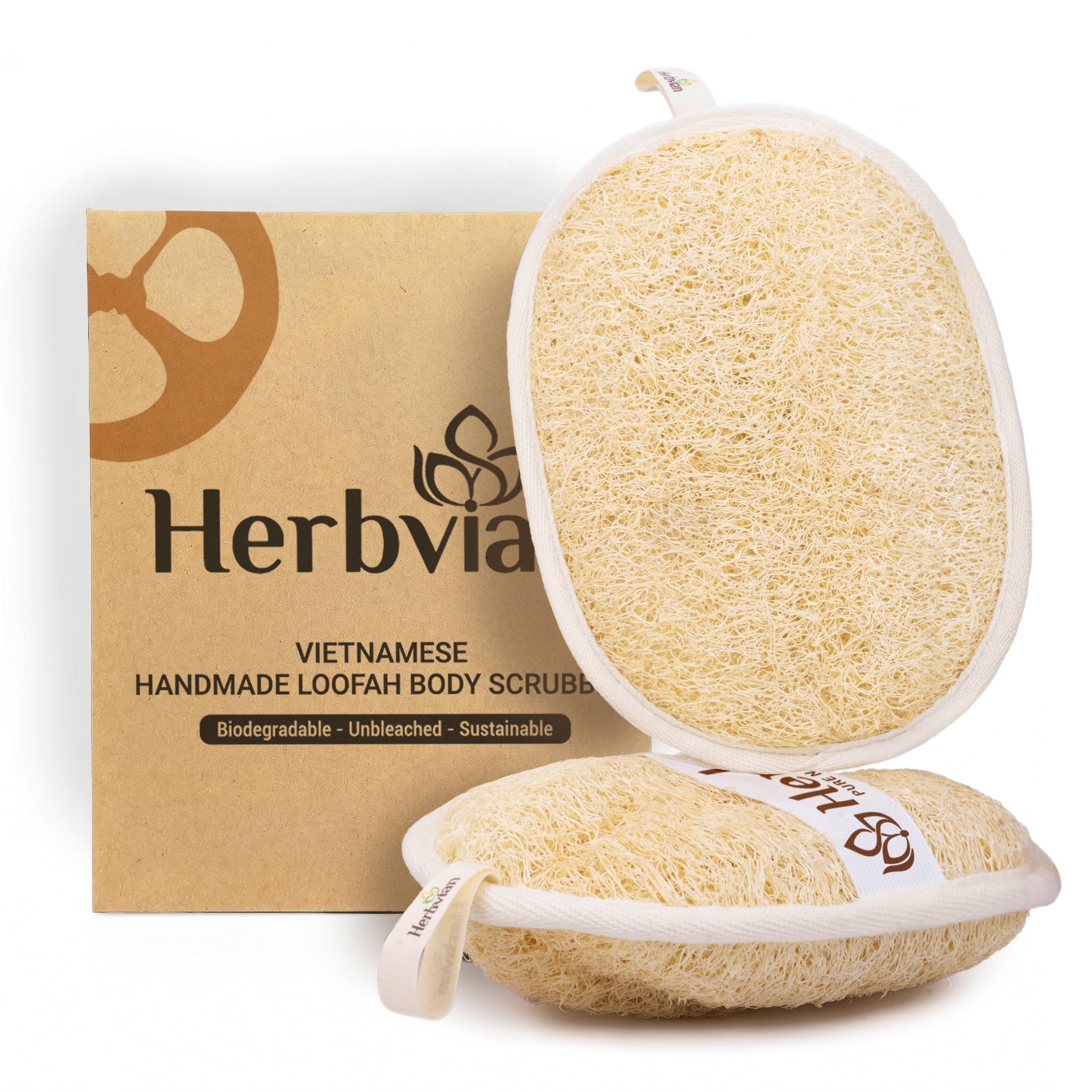
This is the classic plant-based Luffa loofah in a flat pad format. It is made from 100% Vietnamese loofah gourd fibers, and the 2-pack includes two oval pads measuring 6.3 x 4.7 inches. When fully saturated, they expand to about 2 inches in thickness. A cotton hanging loop is attached to each pad for drying.
Customer feedback immediately flags this as a “harsh but effective” tool — one reviewer explicitly warns it is “harsh on skin in my opinion. Great for feet!” Another user notes it works well but is best for deep exfoliation rather than daily use on sensitive areas. If you have eczema, this is not a full-body daily sponge. It is a spot-treatment tool for calloused heels, knees, and elbows where dead skin accumulates without the risk of eczema patches.
On the upside, the flat pad format dries much faster than a bulbous sponge, reducing the risk of mildew. It lathers well and holds its shape after multiple uses, as noted by a reviewer who uses only the rougher side. The price point makes it a low-risk purchase, but for eczema-specific use, it should be relegated to tough spots only — not your primary body sponge.
Why it’s great
- Effective deep exfoliation for calloused feet, knees, and elbows
- Flat pad design dries quickly to minimize mildew risk
- 100% natural plant material with no synthetic additives
Good to know
- Too abrasive for eczema-prone skin on torso, arms, or legs
- Pad is thinner than product photos suggest, per multiple customer reviews
FAQ
Can I use a regular nylon loofah puff with eczema?
How often should I replace a loofah when I have eczema?
Is sea wool sponge safe for active eczema flare-ups?
Can plant-based loofah pads ever be used on eczema skin?
How should I clean my loofah to prevent eczema triggers?
Final Thoughts: The Verdict
For most users, the loofah for eczema winner is the Baby Buddy Natural Wool Sea Sponge because its ultra-soft wool fibers are clinically gentle enough for newborn skin, making them the safest possible texture for eczema-compromised adult skin as well. If you want a slightly larger surface area for full-body speed, grab the LATHER Natural Sea Wool Sponge. And for tough spots like calloused feet that need occasional deep exfoliation, nothing beats the Herbvian Vietnamese Natural Loofah Pads, but use them only on non-eczematous areas.