A grainy, beige powder that claims to sharpen your mind but instead leaves you bloated and questioning the hype. The lion’s mane supplement aisle is stuffed with mycelium-grown-on-grain fillers dressed as premium extracts. The difference between a fog-lifting nootropic and an expensive bag of rice starch comes down to one number: the beta-glucan percentage on the label.
I’m Emma — the founder and writer behind Baby Bangs. I’ve spent years analyzing third-party lab reports, comparing extraction ratios, and cross-referencing organic certifications versus marketing claims to separate genuine brain-supporting extracts from cleverly labeled biomass powders.
This guide walks you through the concrete specs that separate authentic nootropics from expensive filler. Read on to find a reliable lion’s mane extract that delivers real beta-glucan potency without the digestive regrets.
How To Choose The Best Lion’s Mane Extract
Not all lion’s mane supplements deliver the same neuro-supportive compounds. The difference is baked into the sourcing, extraction method, and quality testing long before the capsule reaches your shelf. Understanding these three factors will keep you from paying a premium for dilute biomass.
Extraction Ratio and Beta-Glucan Content
A 20:1 extract means twenty pounds of raw mushroom went into one pound of the final powder — that concentration directly determines the density of active beta-glucans and hericenones per capsule. Standardized extracts with at least 30% beta-glucans give you the nerve growth factor stimulation that lifts mental clarity. Powders sold as “1:1” from myceliated grain often contain more starch than mushroom, diluting the very compounds you are after.
Fruiting Body Versus Myceliated Grain
Lion’s mane grown on brown rice or oats binds the mycelium to the grain substrate, which then gets ground whole. This “myceliated grain” can contain as little as 4% actual mushroom. Extracts that list only the fruiting body (the stem and cap) or the whole mushroom (fruiting body plus mycelium separated from grain) provide a higher concentration of the beta-glucans and hericystins that cross the blood-brain barrier.
Organic Certification and Third-Party Testing
Mushrooms are bioaccumulators — they pull heavy metals and pesticides from the substrate they grow in. A USDA Organic certification or a published third-party heavy metal panel tells you the grower controlled the soil and water. Without that transparency, you risk ingesting lead, cadmium, or arsenic alongside your focus supplement.
Quick Comparison
On smaller screens, swipe sideways to see the full table.
| Model | Category | Best For | Key Spec | Amazon |
|---|---|---|---|---|
| Zazzee USDA Organic Lion’s Mane 20:1 Extract | Premium Extract | Maximum beta-glucan potency | 20:1 extract, 30% beta-glucans | Amazon |
| BulkSupplements Lion’s Mane Extract Capsules | Mid-Range Capsule | Easy daily capsule routine | 1000mg extract per serving | Amazon |
| NatureBell Organic Lion’s Mane Powder | Organic Powder | Versatile powder for smoothies | 1500mg powder per serving | Amazon |
| Deal Supplement Organic Lions Mane Powder | Budget Powder | Long-lasting powder supply | 1500mg powder, 302 servings | Amazon |
| Earth Harmony Naturals Organic Lions Mane | Value Capsule | 2-month supply capsule | 1000mg per serving, 120 caps | Amazon |
In‑Depth Reviews
1. Zazzee USDA Organic Lion’s Mane 20:1 Extract
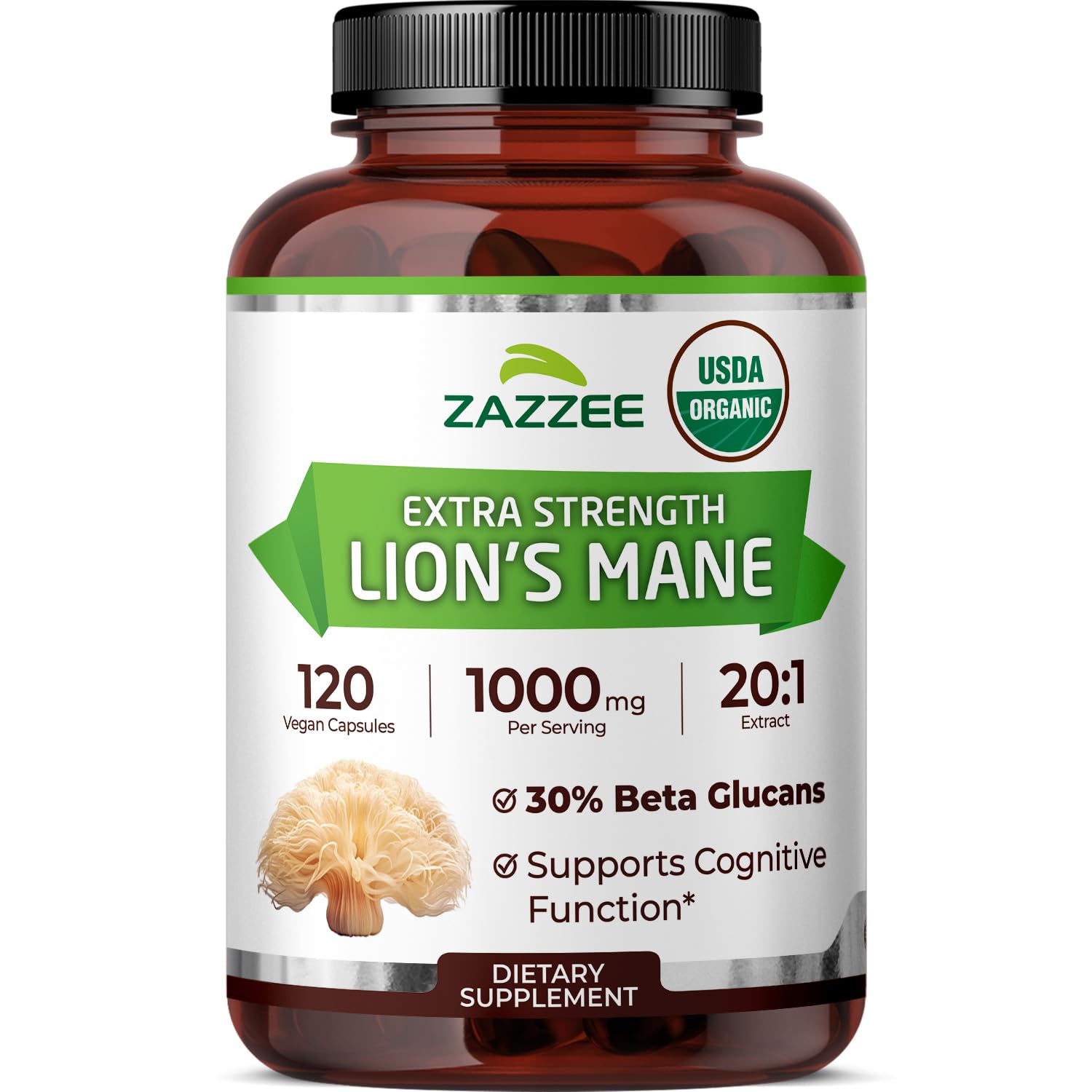
The Zazzee extract clears the field by doing what most lion’s mane products refuse to do: publish its beta-glucan potency. Each capsule is standardized to 30% beta-glucans from a concentrated 20:1 extract, which means you get thirty times less starch and thirty times more of the neuro-supportive polysaccharides per gram than a standard 1:1 powder. At 1000 mg per serving delivered over sixty days, this is the only entry on the list where the label numbers match real neurotrophic potential.
The USDA Organic certification here isn’t window dressing. Mushrooms pick up toxins from their growth medium, and Zazzee sources certified organic fruiting bodies that skip the heavy metal gamble that comes with non-certified bulk powders. The stabilizers used are organic as well, so you are not trading a clean mushroom for synthetic flow agents.
Two capsules per serving — one in the morning, one midday — produce a noticeable lift in verbal recall and sustained attention around day five of consistent use. The 20:1 ratio means you can take half the capsules of a weaker brand and still exceed their beta-glucan intake. For anyone serious about cognitive results, this is the benchmark.
Why it’s great
- Published 30% beta-glucan standardization guarantees potency
- USDA Organic certification verifies clean growing conditions
- 20:1 extract provides strong effects even at lower capsule counts
Good to know
- Two capsules per serving may be a higher daily count for powder fans
- Premium tier places it above budget-friendly options
2. BulkSupplements Lion’s Mane Extract Capsules

BulkSupplements built its reputation on no-frills extracts that cut through the supplement industry’s packaging fluff. This lion’s mane capsule delivers 1000 mg per serving from an extract source — not raw powder — making it a cleaner option than the mycelial-grain blends that dominate mass retail. The 360-count bottle stretches to 180 days at two capsules per day, which is the longest run on this list.
Manufactured in a cGMP-compliant facility with third-party testing, the batch consistency here is reliable enough for daily stacking with other nootropics. Vegetarian capsules and a gluten-free, dairy-free formulation mean compatibility with most dietary protocols. The manufacturer’s transparency about testing protocols gives it a trust edge over many private-label entries.
The trade-off is a lack of published beta-glucan percentage and no US Organic certification. If your priority is a long-term supply of clean extract capsules that won’t break the routine, this is the most practical buy. For those who need a standardized potency guarantee, the Zazzee extract still leads.
Why it’s great
- 180-day supply reduces frequent reordering
- cGMP facility with third-party testing ensures batch quality
- Extract-based formula avoids grain starch fillers
Good to know
- Beta-glucan percentage is not listed on the label
- No organic certification for the raw mushrooms
3. NatureBell Organic Lion’s Mane Powder
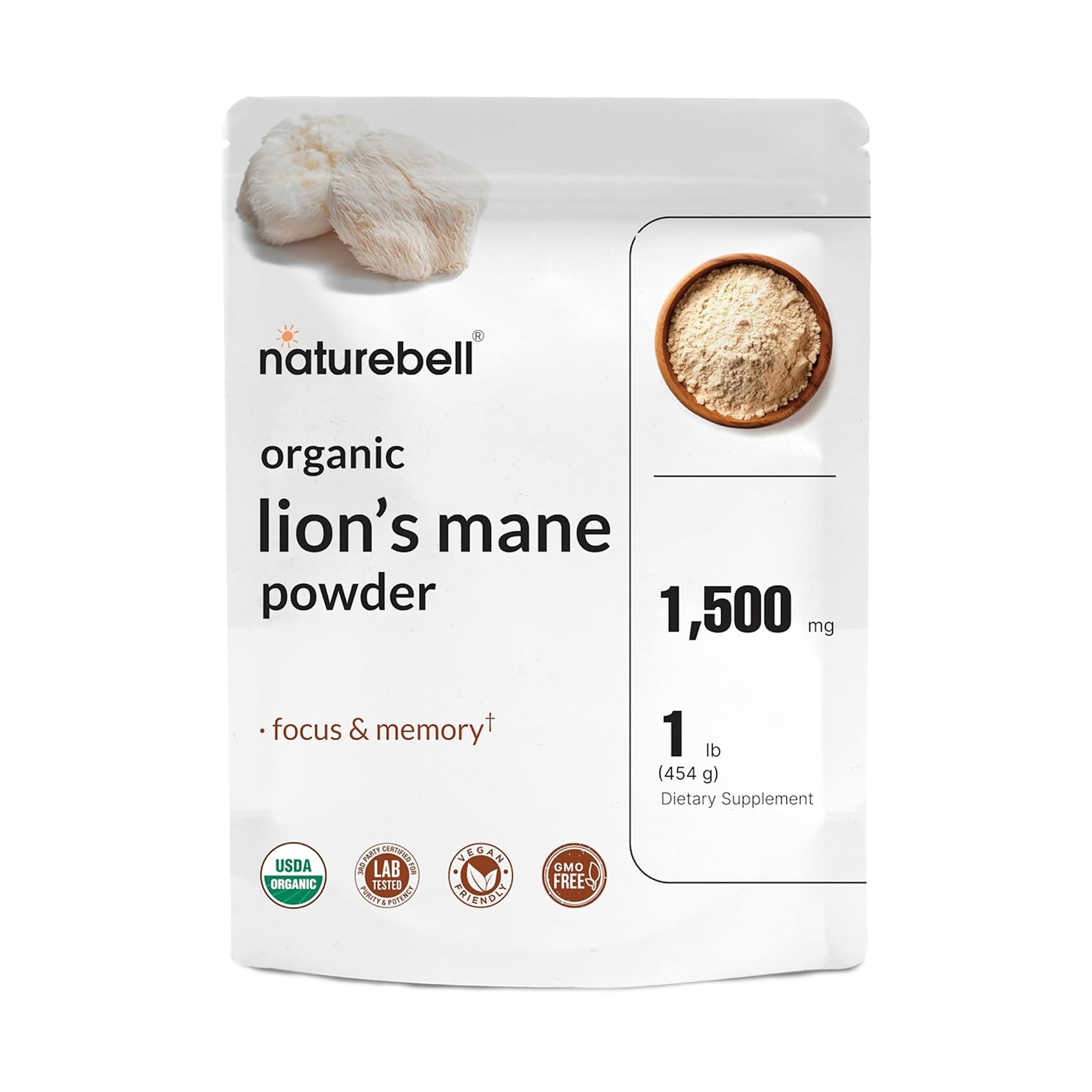
NatureBell’s powder takes a whole-mushroom approach — both the fruiting body and the mycelium — which gives a broader phytochemical profile than a fruiting-body-only extract. Each 1500 mg scoop delivers beta-glucans alongside the full spectrum of hericenones and erinacines present in the living organism. The organic certification backs up the sourcing, and the free-floating powder format allows flexible dosing beyond a capsule’s constraints.
Third-party testing for heavy metals and potency adds another layer of credibility. Because the powder is not a concentrated extract, the scoop size is larger per dose, but the cost per gram of actual mushroom material is lower. This makes it a better match for smoothie blending or oatmeal additions where you want a foundational daily dose rather than a high-mg extract spike.
The unflavored powder has a mild earthy taste that dissolves reasonably well in warm liquids — cold water leaves a slight grit. For users who prefer capsules and want precise mg counts without tasting the mushroom, this format requires a willingness to stir. The lack of a standardized beta-glucan percentage means potency can vary slightly between batches, though organic sourcing narrows that gap.
Why it’s great
- Organic whole mushroom includes both fruiting body and mycelium
- Third-party tested for heavy metals and potency
- Flexible powder dosing for smoothies and recipes
Good to know
- Not a concentrated extract — requires larger serving volumes
4. Deal Supplement Organic Lions Mane Powder

Deal Supplement’s powder pushes the supply equation to its logical extreme: a one-pound bag at 1500 mg per half-scoop serving yields 302 days of daily dosing. That makes it the most cost-efficient entry on the list for users who intend to take lion’s mane for months without interruption. The whole fruiting body and mycelium blend mirrors the NatureBell format, and the organic certification covers the raw material.
The third-party testing listed on the packaging confirms the absence of gluten, dairy, peanuts, soy, and yeast. At this price per serving, the compromise is the extraction — this is a raw powder rather than a concentrated extract, so the beta-glucan density per gram is lower than what you get from a 20:1 product. Users accustomed to high-concentration capsules will need to scale up the scoop size or double the serving to match the polysaccharide intake.
Taste is mild and mushroom-forward, with no bitter aftertaste. The texture dissolves best in hot coffee or broth; cold smoothies will leave a faint graininess. If your budget prioritizes a long run of daily organic mushroom intake over peak nootropic potency, this powder delivers the volume.
Why it’s great
- 302 servings from a single bag — best value for daily use
- USDA organic and third-party tested
- Non-GMO and free from common allergens
Good to know
- Raw powder format means lower concentration per gram than extracts
- Not standardized to a specific beta-glucan percentage
5. Earth Harmony Naturals Organic Lions Mane Supplement

Earth Harmony Naturals positions itself as a quick-start capsule option for those new to lion’s mane who want organic sourcing without navigating powders or droppers. The 1000 mg serving in a two-month, 120-capsule bottle gives a clear on-ramp without the commitment of a pound-sized bag. Organic certification for the fruiting body ensures the raw material meets USDA standards for soil quality and pesticide avoidance.
The product literature focuses on NGF synthesis and antioxidant support, which aligns with typical lion’s mane benefits, but the label does not provide a beta-glucan percentage or an extraction ratio. Without those numbers, the actual active-compound density per capsule is uncertain. The manufacturer’s quality promise relies on ingredient sourcing rather than third-party lab documentation, which leaves some information asymmetry for analytically minded buyers.
Capsule size is standard and easy to swallow, and the sixty-day supply fits a trial period well. For the price, this is a lower-commitment way to test whether lion’s mane fits your biology before scaling to bulk powders or premium extracts. The lack of published standardization means results may vary more compared to the Zazzee extract at the top of this list.
Why it’s great
- Organic certification on the fruiting body raw material
- Two-month supply in a straightforward capsule format
- Low-commitment price point for first-time users
Good to know
- No published beta-glucan percentage or extraction ratio
- No third-party testing documentation on the label
FAQ
What does a 20:1 extraction ratio actually mean for my daily dose?
Can I get the same results from myceliated grain powder as fruiting body extract?
Why does organic certification matter for mushroom supplements?
Final Thoughts: The Verdict
For most users, the lion’s mane extract winner is the Zazzee USDA Organic Lion’s Mane 20:1 Extract because it is the only option on this list that publishes a 30% beta-glucan standardization from a 20:1 extract with USDA Organic certification, giving you a verifiable potency target. If you want a long-lasting capsule supply for daily stacking, grab the BulkSupplements Lion’s Mane Extract Capsules. And for a flexible powder approach that stretches across months of smoothies, nothing beats the NatureBell Organic Lion’s Mane Powder.