Dragging around three extra pounds on each foot by hour six of a twelve-hour shift isn’t just tiring—it’s a direct drain on your energy, posture, and focus. The demand for lightweight work shoes has surged as professionals in healthcare, hospitality, and trade roles realize that protection doesn’t have to come with a leaden sole.
I’m Emma — the founder and writer behind Baby Bangs. I’ve spent the last two years dissecting work footwear specs, cross-referencing ASTM ratings with real-world fatigue reports, and separating the marketing fluff from the materials that actually keep you moving.
After comparing slip resistance, cushioning density, and toe protection across dozens of models, I’ve built this guide to help you find the best pair of lightweight work shoes that balance safety with all-day wearability.
How To Choose The Best Lightweight Work Shoes
The market is flooded with sneakers masquerading as work shoes and boots pretending to be lightweight. The trick is knowing which specs actually cut weight without cutting safety. There are three pillars to evaluate: toe protection type, outsole grip certification, and midsole cushioning quality.
Composite vs. Steel vs. Alloy Toes
A steel toe is heavy, period. For lightweight work shoes, composite toes (made from carbon fiber, Kevlar, or plastic) are the standard because they meet ASTM F2413 impact and compression standards while shaving off a third of the weight. Alloy toes offer a middle ground—slightly lighter than steel but heavier than composite. If your job doesn’t require maximum puncture resistance, composite is the way to go.
Slip Resistance Ratings That Matter
Not all “non-slip” outsoles are equal. Look for shoes tested to ASTM F2913 (the Mark II standard) or SATRA TM144, which use a wet, oily surface to measure traction. A shoe that scores above 0.5 on the Mark II scale provides reliable grip on slick hospital floors or greasy kitchen tiles.
Midsole Density and Energy Return
Lightweight doesn’t mean squishy. The best midsoles use expanded polyurethane (like Fresh Foam or Glide-Step) that absorb shock and return energy without bottoming out after eight hours. EVA foam is lighter but compresses faster; polyurethane blends hold up longer on concrete.
Quick Comparison
On smaller screens, swipe sideways to see the full table.
| Model | Category | Best For | Key Spec | Amazon |
|---|---|---|---|---|
| New Balance Cremorne Fresh Foam | Premium Composite Toe | All‑day standing on concrete | Fresh Foam midsole, 3.48 lbs per pair | Amazon |
| Carhartt FA5016 Sneaker Boot | Premium Lightweight Boot | Job sites with ankle support | Composite toe, FastDry lining | Amazon |
| Airwalk Deuce Composite Toe | Mid-Range Safety Sneaker | Electrical hazard environments | Composite toe, EH rated, non-slip | Amazon |
| Skechers Holdredge Ryker Slip-in | Mid-Range Hands-Free | Quick on/off in healthcare | 1.4 lbs per pair, hands-free entry | Amazon |
| Skechers Glide-Step Pro Slip-ins | Entry-Level Slip-Resistant | Food service / hospitality | Glide-Step foam, slip-resistant outsole | Amazon |
| Columbia Strata Trail Low | Entry-Level Trail-to-Work | Light duty / outdoor work | Trail outsole, low-profile cushion | Amazon |
| Shoes for Crews Everlight | Budget Value Pick | Budget-friendly slip-on shift | Slip-on design, non-slip sole | Amazon |
In‑Depth Reviews
1. New Balance Men’s Composite Toe Cremorne Fresh Foam Work Shoes

The New Balance Cremorne Fresh Foam is the gold standard for lightweight work shoes that don’t compromise on protection. Its composite toe meets ASTM F2413 standards while the Fresh Foam midsole delivers the kind of energy return that actually reduces heel fatigue on concrete floors. At 3.48 pounds per pair, it’s notably lighter than most steel-toe boots—yet it still feels planted and stable when climbing ladders or standing for back-to-back shifts.
The upper uses a breathable mesh-synthetic blend that moves with your foot rather than fighting it, and the outsole’s tread pattern offers reliable grip on smooth factory floors and gravel lots alike. The run small for some users—going up half a size is common advice for wearing with thicker work socks.
Where this shoe truly earns its premium spot is in the midsole durability. Unlike EVA foams that pack out after a few months, the Fresh Foam formulation maintains its rebound well past the hundred-hour mark. For anyone who logs long hours on hard surfaces and needs toe protection, this is the pair to beat.
Why it’s great
- Fresh Foam midsole holds up on concrete without flattening
- Composite toe offers serious protection at a low weight
- Breathable upper reduces heat buildup during long shifts
Good to know
- Runs slightly small—size up half a foot
- Premium pricing may not fit every budget
2. Carhartt Footwear FA5016 Lightweight Sneaker Boot
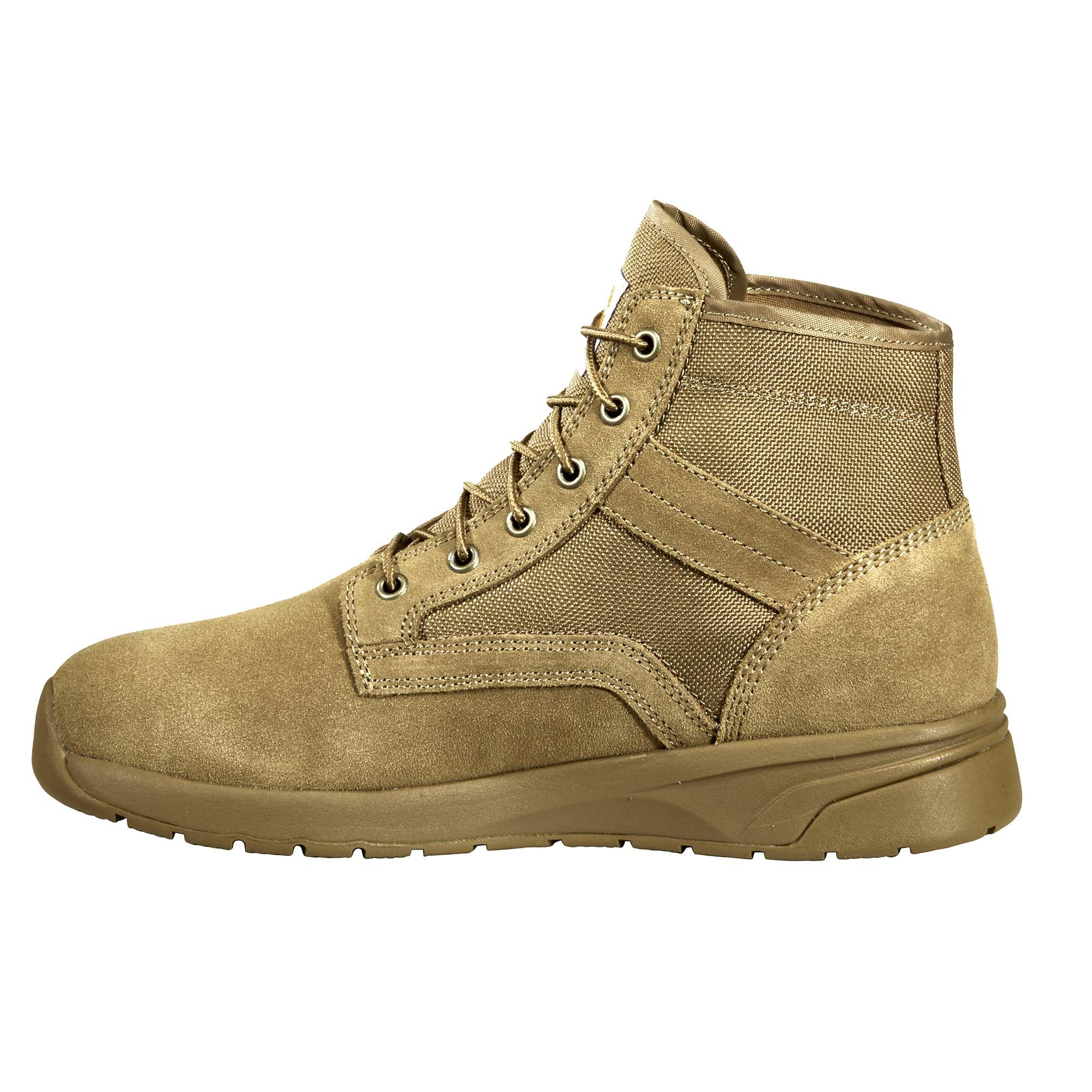
Carhartt’s FA5016 sneaker boot bridges the gap between a full-height work boot and a low-top shoe. It sits higher on the ankle for better protection against debris and minor twists, yet uses a composite toe and a polyurethane midsole to keep the weight in check. The FastDry lining wicks moisture effectively, which makes a big difference when you’re sweating in warm conditions or moving between temperature zones.
The outsole uses a self-cleaning tread pattern that sheds mud and gravel instead of packing them into the grooves—practical for construction sites and warehouse yards. The insole is removable, which lets you swap in custom orthotics if your arches need more tailored support. Some users note the boot runs a bit stiff out of the box, requiring a short break-in period of a few days.
Compared to the New Balance, the Carhartt offers more ankle coverage but slightly less midsole plushness. It’s ideal for tradespeople who want boot-level protection without the heft of traditional steel-toe boots, especially in outdoor environments where water and dirt are constant factors.
Why it’s great
- Ankle-high design adds protection against debris
- FastDry lining keeps feet dry in warm conditions
- Removable insole for custom orthotics
Good to know
- Stiff fresh out of the box—needs a break-in period
- Midsole not as cushioned as sneaker-style work shoes
3. Airwalk Deuce Composite Toe Shoes for Men
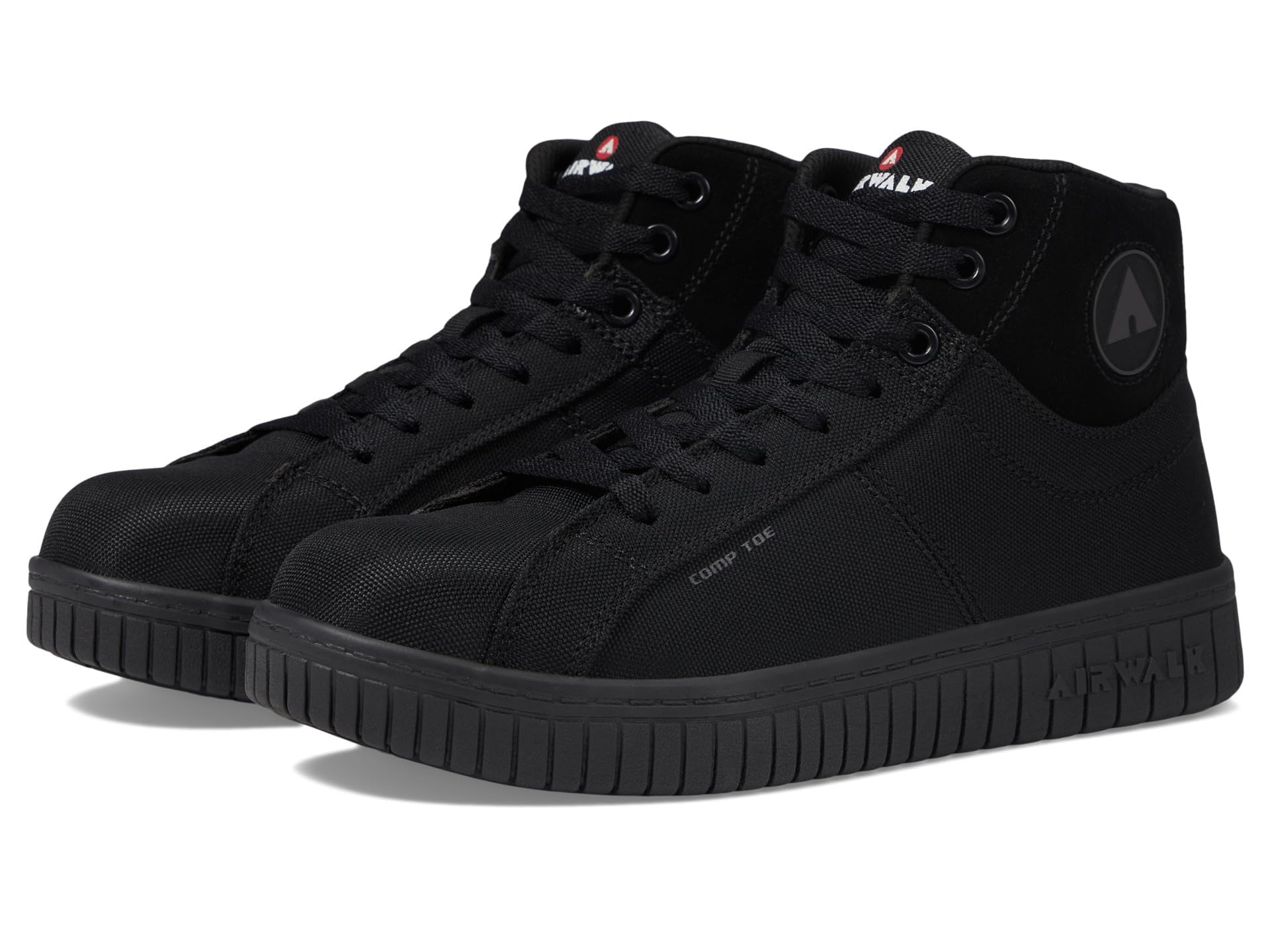
Airwalk positions the Deuce as a safety sneaker with a composite toe and an electrical hazard (EH) rating, meaning it reduces the risk of electrocution if you step on a live wire. That’s a serious spec for electricians, maintenance workers, or anyone in proximity to exposed circuits. But what sets it apart in the lightweight conversation is the outsole: it uses an oil- and slip-resistant rubber blend that scores well on wet surfaces without adding bulk.
The upper is a synthetic leather and mesh combo that breathes better than full-leather work shoes, and the memory foam insole provides decent arch support out of the box. The midsole is EVA-based, which keeps the weight low but may compress faster than polyurethane alternatives—good for daily wear, less ideal for year-round heavy use.
At a mid-range price point, the Deuce is a solid entry into safety-rated lightweight footwear. The main trade-off is that the EVA midsole loses some spring after several months, but for the price per wear, it still delivers strong value for professionals who need EH protection without feeling like they’re wearing armored boots.
Why it’s great
- Electrical hazard rated for circuit-adjacent work
- Oil and slip-resistant outsole grips well on wet floors
- Memory foam insole offers solid arch support
Good to know
- EVA midsole compresses faster than polyurethane blends
- Synthetic upper may not breathe as well as mesh-dominant shoes
4. Skechers Men’s Holdredge Ryker Hands Free Slip-in
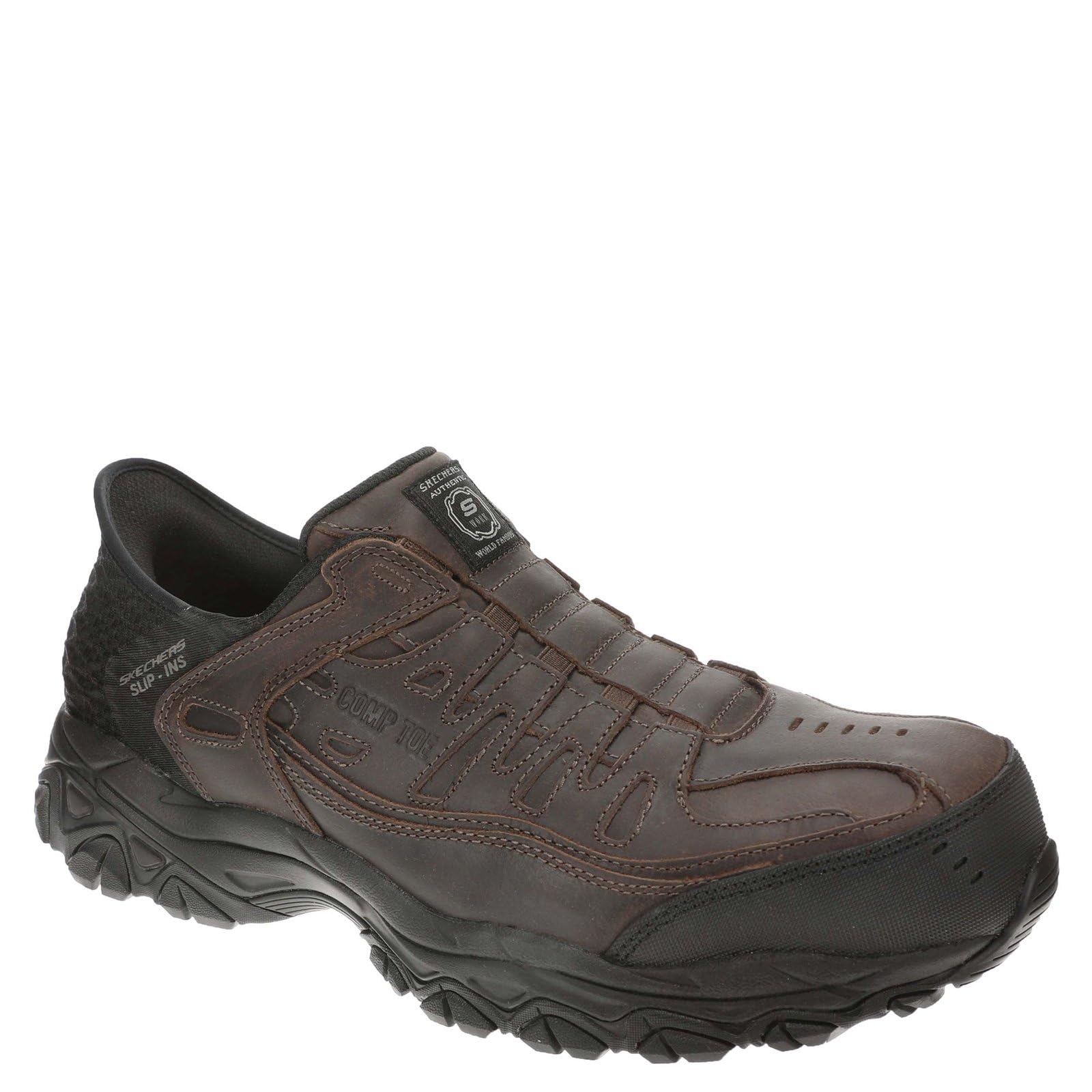
The Skechers Holdredge Ryker is built for one specific pain point: getting in and out of your work shoes fast. The hands-free slip-in design uses a stretch-fit collar and a heel pillow that grabs your foot without needing to pull a tab—ideal for healthcare workers who change in and out of footwear between zones or for anyone who just hates bending over.
At just 1.4 pounds per pair, these are among the lightest options in this list. The midsole uses Skechers’ memory foam cushioning, which feels soft and plush on initial step-in but offers less long-term support than denser foams. The outsole is slip-resistant and performs well on tile and linoleum, though the tread is shallow, so muddy or uneven terrain can feel slippery.
These shoes lack a safety toe, so they’re not suited for jobs requiring impact protection. But for hospitality, retail, or clerical roles where weight and convenience trump toe rating, the Holdredge Ryker delivers a near-slipper feel that still meets basic slip-resistance standards.
Why it’s great
- Exceptionally light at 1.4 pounds per pair
- Hands-free slip-in design saves time and hassle
- Plush memory foam feels great out of the box
Good to know
- No safety toe—only for non-protection roles
- Shallow tread isn’t great for outdoors or uneven ground
5. Skechers Men’s Slip-Resistant Glide-Step Pro Slip-ins Work Sneakers
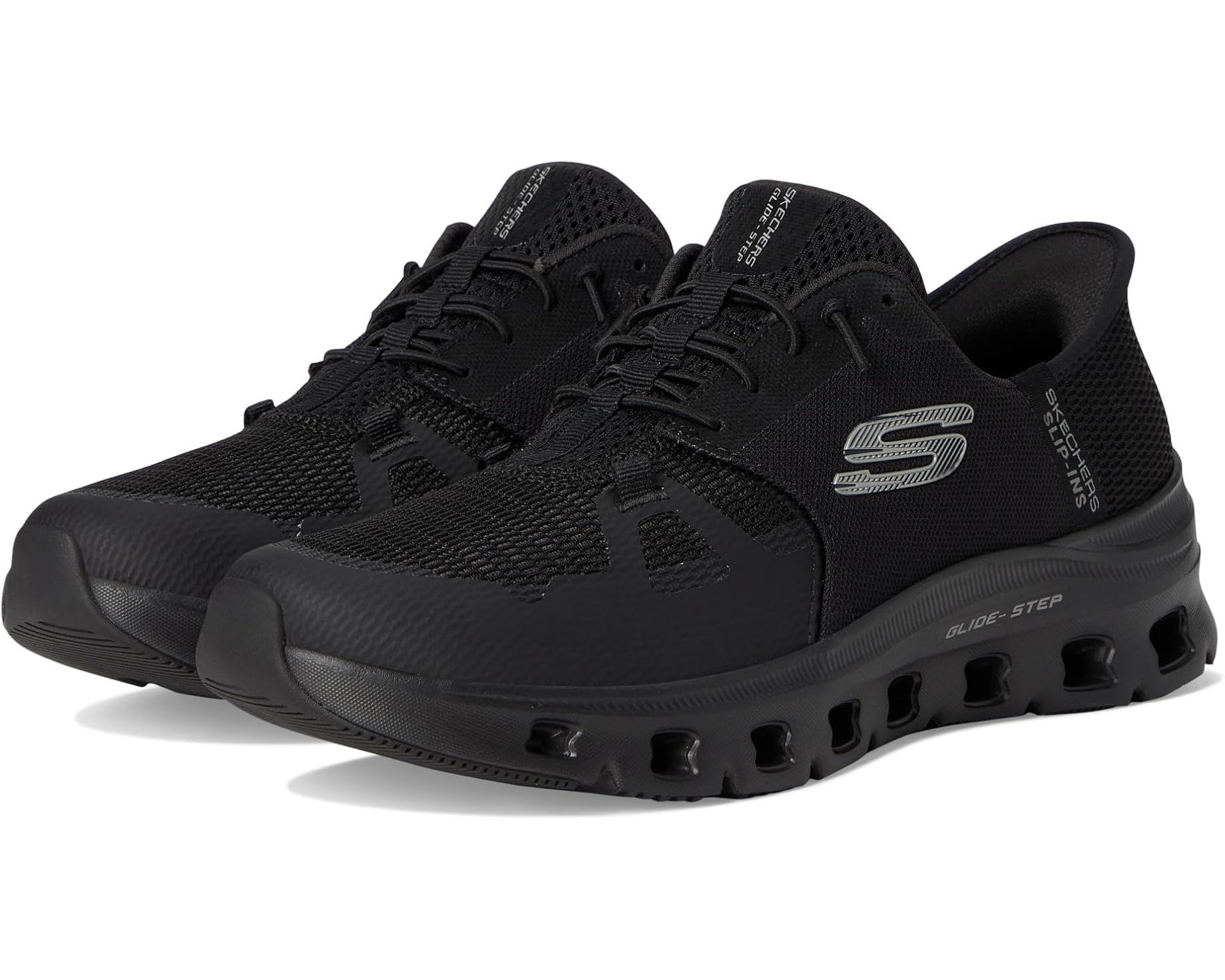
The Glide-Step Pro takes the hands-free platform one step further with a thicker, more responsive foam than the Holdredge Ryker. Skechers’ Glide-Step technology uses a segmented midsole that compresses and rebounds with each step, creating a smooth rolling motion that reduces the shock of heel strikes on hard kitchen or hospital floors.
The upper is a knit-mesh construction that stretches slightly, allowing a snug fit without pressure points, and the outsole is tested to Mark II slip-resistance standards. The insole is removable, which is handy for users who need custom orthotics. The one catch is that the knit upper isn’t waterproof—spills in food service or splashes in healthcare will soak through quickly.
For the price, this is a strong entry-level option if you prioritize cushion over protection. It doesn’t have a safety toe, so it’s best suited for environments where the primary hazard is slippery floors rather than falling objects.
Why it’s great
- Glide-Step foam provides excellent shock absorption
- Mark II tested slip-resistance for wet floors
- Hands-free slip-in collar for quick changes
Good to know
- Knit upper is not waterproof—spills soak in fast
- No safety toe, so not for impact hazard environments
6. Columbia Mens Strata Trail Low
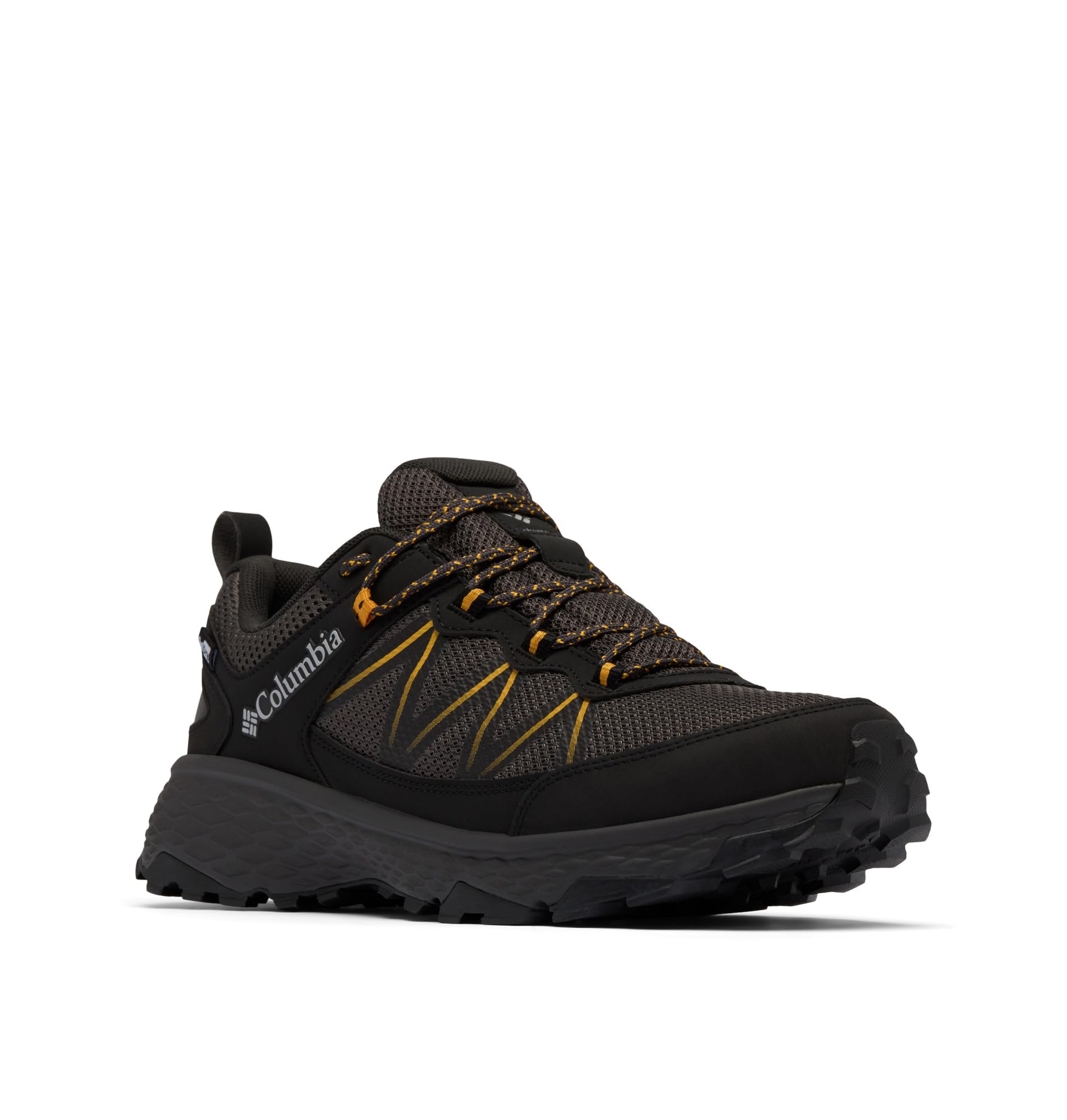
The Columbia Strata Trail Low is not a dedicated work shoe—it’s a hiking-style sneaker that crosses over into light-duty work settings. It lacks a safety toe or formal slip-resistance certification, but it does feature a multi-directional outsole that bites well on loose dirt, grass, and gravel. That makes it a viable option for landscaping, outdoor maintenance, or warehouse roles where terrain varies.
The midsole uses Techlite foam, which is lightweight and responsive but leans more toward trail running than industrial cushioning. The upper is a mesh and synthetic blend with decent ventilation, though it won’t repel water. The fit is true to size and accommodates medium-width feet comfortably.
Where the Strata Trail Low fits into the lightweight work shoe conversation is for those who spend more time on their feet outdoors than indoors, and who don’t need steel or composite protection. It’s an affordable, no-frills option that does the job for light tasks without feeling like a compromise in comfort.
Why it’s great
- Aggressive outsole tread grips well on dirt and gravel
- Techlite foam is lightweight and responsive
- True-to-size fit works well for medium feet
Good to know
- No safety toe or slip-resistance certification
- Mesh upper offers no water protection
7. Shoes for Crews Women’s Slip-Resistant Slip-On Work Sneakers – Everlight

Shoes for Crews built its reputation in food service and healthcare, and the Everlight model is their entry-level slip-on designed for maximum convenience and minimum weight. The slip-on construction uses a stretch panel over the instep, making it easy to kick on and off between shifts. The outsole is the highlight—it uses the brand’s proprietary oil- and slip-resistant rubber that outperforms many competitors on greasy kitchen floors.
The cushioning is modest: a basic EVA footbed that provides some shock absorption but lacks the rebound of premium foams. The upper is a synthetic knit that breathes well but offers little structure, so the shoe may feel flimsy to those accustomed to stiffer work footwear. It is designed specifically for women, with a narrower heel pocket that reduces slipping inside the shoe.
As the most budget-friendly option in this guide, the Everlight is a functional choice for entry-level workers or those who need a dedicated pair for wet environments. The trade-offs are in long-term durability—the EVA midsole will compress faster than denser materials, and the slip-on collar may stretch out over months of daily use.
Why it’s great
- Excellent slip-resistance on oil and wet surfaces
- Easy slip-on design with stretch instep panel
- Lightweight and breathable for long shifts
Good to know
- EVA footbed compresses faster than premium foams
- Slip-on collar may stretch over time
FAQ
Can lightweight work shoes be as safe as heavy boots?
How often should I replace lightweight work shoes?
Do composite toe shoes set off metal detectors?
Final Thoughts: The Verdict
For most users, the lightweight work shoes winner is the New Balance Cremorne Fresh Foam because it combines ASTM-rated composite toe protection with a Fresh Foam midsole that actually supports you on concrete without packing down. If you want more ankle coverage for outdoor job sites, grab the Carhartt FA5016. And for a budget-friendly slip-on with proven slip resistance, nothing beats the Shoes for Crews Everlight.