Lightweight winter boots sit at a frustrating intersection: most models that keep your feet warm rely on thick insulation that makes each step feel like a squat, while so-called lightweight options often sacrifice the thermal protection needed for real snow and ice. This guide cuts through that trade-off by analyzing the insulation layering, outsole rubber compounds, and waterproof membrane construction that actually define a boot’s warmth-to-weight ratio. You will leave with a clear understanding of which builds use advanced materials like Thermaplush, Polar Rubber, and B-Tek Heat to deliver Arctic-level protection without the bulk.
I’m Emma — the founder and writer behind Baby Bangs. I have spent the last four years analyzing winter footwear market data, comparing Gore-Tex and proprietary membrane claims, and tracking how heel-to-toe drop, shaft height, and midsole density affect real-world performance on icy streets and packed snow trails.
This guide analyzes nine cold-weather boots that span entry-level traction to polar-rated expedition builds, comparing insulation systems, outsole grip patterns, and waterproofing technologies to help you find the lightweight winter boots that actually match your local climate and activity level.
How To Choose The Best Lightweight Winter Boots
Winter boots that claim to be lightweight often achieve that by skimping on insulation, which leaves you cold before you finish the first block. The real goal is finding a boot that balances a low gram-per-boot weight with a thoughtful insulation system — one that traps heat without adding inches of foam. Focus on three core areas: the insulation technology, the waterproofing method, and the outsole’s cold-weather traction.
Insulation Layering and Density
Look beyond a single warmth rating. Premium boots often use a removable inner boot with multiple layers — a foam skeleton for structure, a thermal loft sheet for heat retention, and a breathable lining like Thermaplush or PolyWool next to the skin. This multi-layer approach packs more warmth per millimeter than a single thick slab of synthetic fill. Pay attention to whether the insulation is rated for static cold (standing still) or active cold (moving), because a boot that works for snowshoeing may not keep you warm during a long wait at the bus stop.
Waterproofing Membrane and Shell Construction
A waterproof boot is useless if it feels like a plastic bag around your foot. The best lightweight winter boots use a breathable membrane — often a proprietary film bonded to the inner liner — sealed by a rubber shell at the lower section. Check whether the boot uses a seam-sealed construction or relies on a rubber rand that only covers the toe and heel. Full rubber shells, like those using Arctic Rubber, stay flexible in deep cold without cracking, while still shedding moisture from slush and wet snow.
Outsole Compound and Tread Pattern
Standard rubber outsoles harden at freezing temperatures, reducing grip on icy sidewalks. Winter-specific compounds use high-silica or Polar Rubber formulas that remain pliable below zero. Look for deep directional lugs that channel slush away from the contact patch and a heel brake that provides stable downhill traction on packed snow. For extreme conditions, waffle-comb footbeds and aluminum heat-reflecting insoles add extra warmth without affecting the boot’s external profile or weight.
Quick Comparison
On smaller screens, swipe sideways to see the full table.
| Model | Category | Best For | Key Spec | Amazon |
|---|---|---|---|---|
| Baffin Men’s Selkirk Snow Boot | Polar-Rated | Extreme cold expeditions | Multi-layer B-Tek Heat insulation | Amazon |
| Baffin Women’s ICEFIELD Tall | Polar-Rated | Arctic field work & deep snow | Arctic Rubber shell + Polar outsole | Amazon |
| KEEN Revel IV High Polar | Mid Height | Wet slush & urban winter | Waterproof membrane + rubber toe cap | Amazon |
| KEEN Revel 4 Mid Height Polar | Mid Height | Winter hikes & light snow | KEEN.DRY waterproof membrane | Amazon |
| Sorel Women’s Tivoli V | Fashion-Utility | Daily commute & light snow | Removable 9mm recycled insulation | Amazon |
| North Face Women’s Thermoball II | Slim Insulation | Cold city walks & travel | ThermoBall Eco insulation | Amazon |
| Helly Hansen V3 Winter Boots | All-Terrain | All-day traction in mixed conditions | Durable rubber outsole + lace closure | Amazon |
| Columbia Men’s Expeditionist Shield | Budget Traction | Dry snow & light slush | Omni-Grip outsole | Amazon |
| Columbia Women’s Minx Shorty Iv | Entry Level | Mild winter & occasional snow | Techlite lightweight midsole | Amazon |
In‑Depth Reviews
1. Baffin Men’s Selkirk Snow Boot

Baffin’s Selkirk is the definition of overbuilt warmth without ballooning into a moon-boot profile. The multi-layer B-Tek Heat system uses a foam skeleton for structural support, dual thermal lofts for heat trapping, and a DiamondNet aluminum membrane that reflects body heat back toward your foot. The tall 12-inch nylon shaft locks snow out with a drawstring collar, and the Polar Rubber outsole remains flexible in sub-zero temperatures where standard compounds would stiffen into plastic.
At roughly 2 pounds per boot, the Selkirk sits on the heavier end of this list, but every gram serves a function — no wasted padding or decorative bulk. The removable inner boot means you can dry the liner separately after deep snow hikes, and the waffle-comb footbed actively circulates warm air beneath your arch. Men with wide feet will appreciate the generous toe box that does not compress the forefoot during long days on snowshoes.
The trade-off is breathability: the thick insulation layers work so well that active users may find their feet sweating during high-output snow removal. Pair these with a moisture-wicking merino liner sock rather than cotton to keep the climate controlled inside the boot. For anyone facing extended exposure to deep cold — think sub-zero dawn patrols or week-long snow camping — this is the ultimate lightweight-adjacent fortress.
Why it’s great
- Multi-layer B-Tek Heat insulation rated for polar conditions
- Polar Rubber outsole stays grippy in extreme cold
- Removable inner boot speeds up drying time
Good to know
- Runs slightly large — order a half size down if between sizes
- Not breathable for high-output aerobic winter activities
2. Baffin Women’s ICEFIELD Tall Polar-Rated Snow Boots
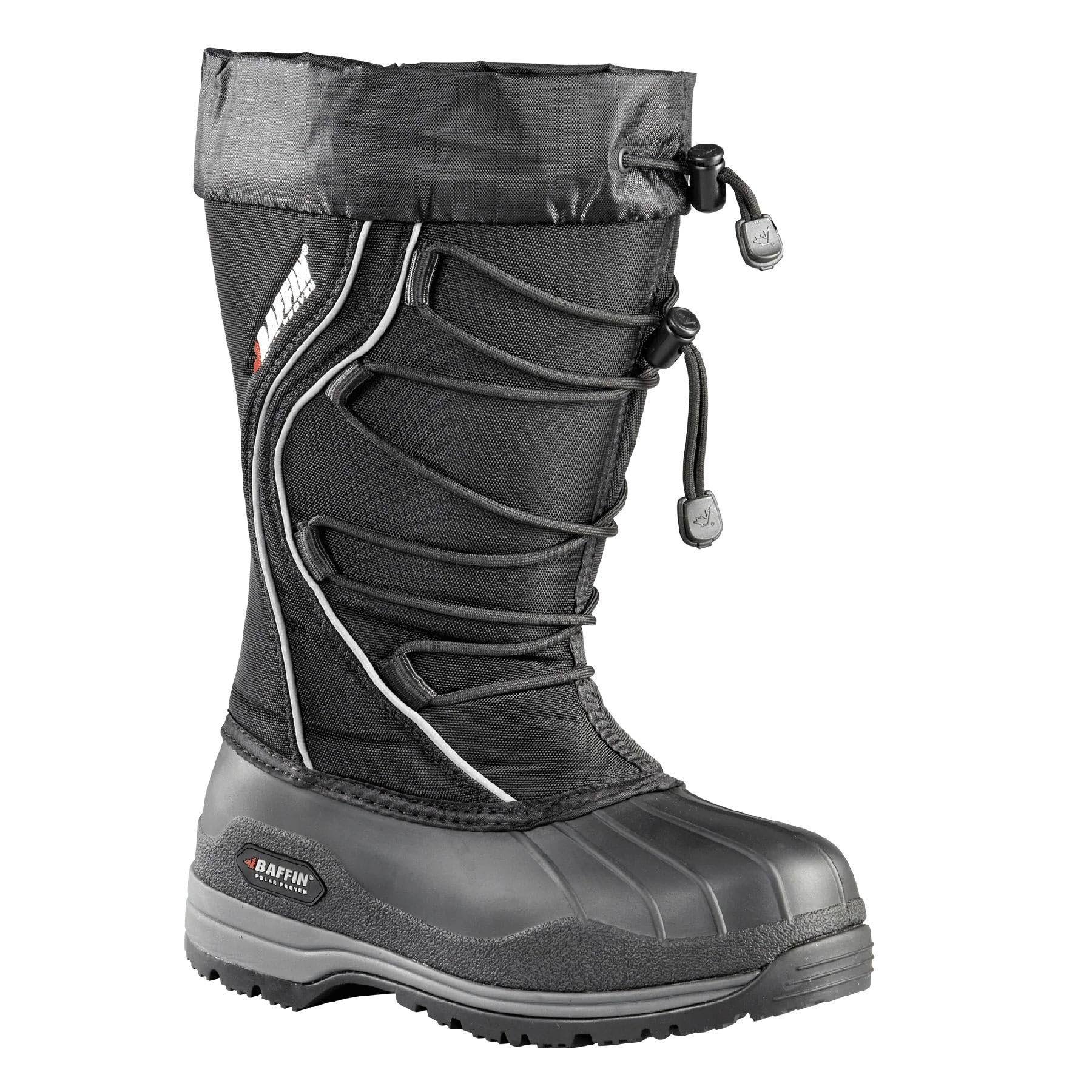
Field-tested at both poles, the Baffin ICEFIELD boots bring genuine expedition-grade protection in a package that still allows practical movement. The shell uses Arctic Rubber — a compound that resists cracking in temperatures that would shatter standard synthetics — paired with a full 12-inch nylon upper that seals out wind and drifting snow. Inside, the removable Comfort-Fit inner boot combines B-Tek Foam structure with dual layers of B-Tek Heat thermal loft, finished with a Thermaplush lining and a PolyWool blend that moves moisture away from the skin.
The boot weighs about 4 pounds total per pair, which is reasonable for a polar-rated build, and the side-to-side toggle lacing plus pull-on design makes getting in and out fast even with thick gloves. The double aluminum insole reflects body heat downward while the waffle-comb footbed traps warm air pockets under the foot. Women with narrow heels will appreciate the locking collar that cinches the shaft to prevent heel lift during uphill strides on packed snow.
These are not boots for casual winter walks. The ICEFIELD is built for stationary cold — ice fishing, snowmobiling, or working a camera in tundra conditions where you are not generating constant body heat. In deep slush or wet snow, the tall shaft keeps moisture away from the calf, but the rubber shell can feel stiff during the first few wear cycles until the Arctic Rubber compound molds to your gait.
Why it’s great
- Genuine polar-level insulation with dual B-Tek Heat layers
- Arctic Rubber shell stays flexible and crack-resistant in extreme cold
- Tall drawstring collar seals out deep snow
Good to know
- Limited color options — available only in standard black
- Stiff Arctic Rubber requires a short break-in period
3. KEEN Revel IV High Polar
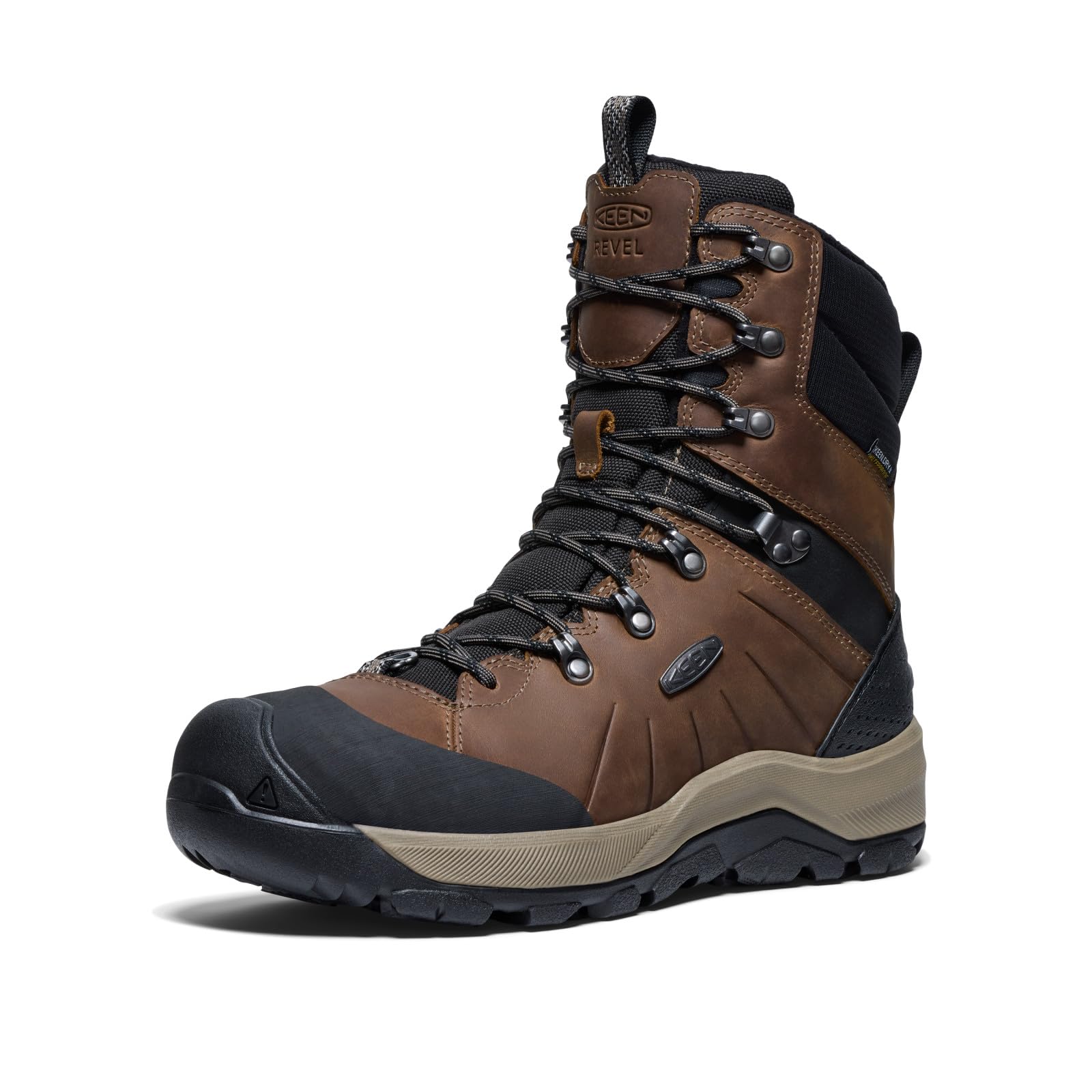
The KEEN Revel IV High Polar strikes a rare balance: it feels like a mid-height hiker but provides insulation rated for serious cold. The KEEN.DRY waterproof membrane keeps slush and puddle water out, while the rubber toe cap protects against curb impacts and rock edges during winter trail walks. The insulation is not as thick as the Baffin’s but is sufficient for urban winters where you spend 15–20 minutes outside between heated buildings.
What sets the Revel apart for daily commuters is the midsole cushioning — a polyurethane foam core that absorbs shock on pavement and does not pack out as quickly as EVA alternatives. The outsole uses KEEN’s Polar Traction rubber, a compound formulated with silica to maintain grip on wet wood, ice patches, and freshly salted sidewalks. The toe box is characteristically KEEN-wide, giving toes room to splay naturally, which improves circulation and warmth during long standing periods.
The boot runs about 2.3 pounds per boot, making it one of the lighter insulated options here. The lace-up closure provides a precise fit around the ankle, and the padded collar prevents snow ingress even without a gaiter. For anyone who needs a single boot that goes from a warm apartment to a slushy train platform to a weekend hike, this is the most versatile mid-range pick available.
Why it’s great
- Wide toe box improves circulation and warmth
- KEEN.DRY membrane is reliable against slush and puddles
- Polar Traction rubber maintains grip on icy surfaces
Good to know
- Insulation is not sufficient for extreme sub-zero static exposure
- Upper can feel bulky for those accustomed to low-cut sneakers
4. KEEN Revel 4 Mid Height Polar Insulated Waterproof
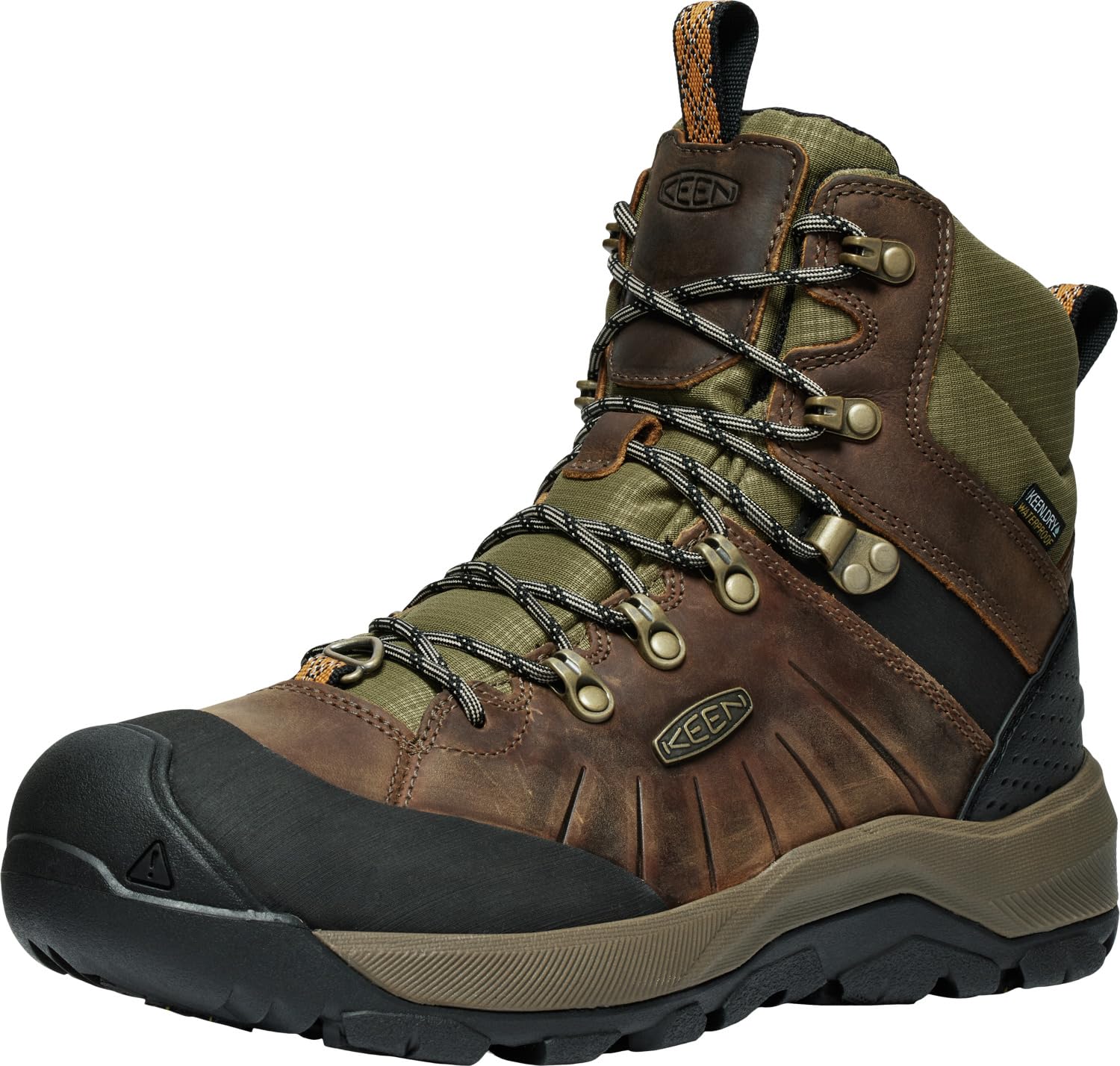
The Revel 4 Mid is the updated version of KEEN’s best-selling winter hiker, and the refinements matter. The mid-height cut reduces the weight slightly compared to the High Polar version while retaining the same KEEN.DRY waterproof membrane. The insulation layer uses a 200g thermal sheet wrapped around the foot, with a focus on the forefoot where blood circulation drops fastest in cold conditions. The Polar Traction outsole lugs are deeper than the previous generation, channeling slush away from the heel strike for cleaner grip on wet pavement.
The removable polyurethane footbed allows users to swap in custom orthotics — a rare feature among winter boots in this price class. The upper combines a nylon mesh with a rubber rand that wraps the entire perimeter, providing scuff resistance against road salt and rough trail debris. Men with high-volume feet will find the lacing system accommodates thicker merino socks without pinching the instep.
Where the Revel 4 loses ground to the Baffin options is in raw cold rating — the 200g insulation is comfortable down to about 20°F during moderate activity but will feel thin if you are standing still in single-digit weather for more than 30 minutes. For hiking, walking the dog, or running errands in freezing drizzle, it is nearly ideal.
Why it’s great
- Removable footbed works with custom orthotics
- Polar Traction with deep lugs excels on slush
- Rubber rand protects against salt and debris
Good to know
- 200g insulation is not enough for static extreme cold
- Nylon upper is not as abrasion-resistant as leather
5. Sorel Women’s Tivoli V Waterproof Boot
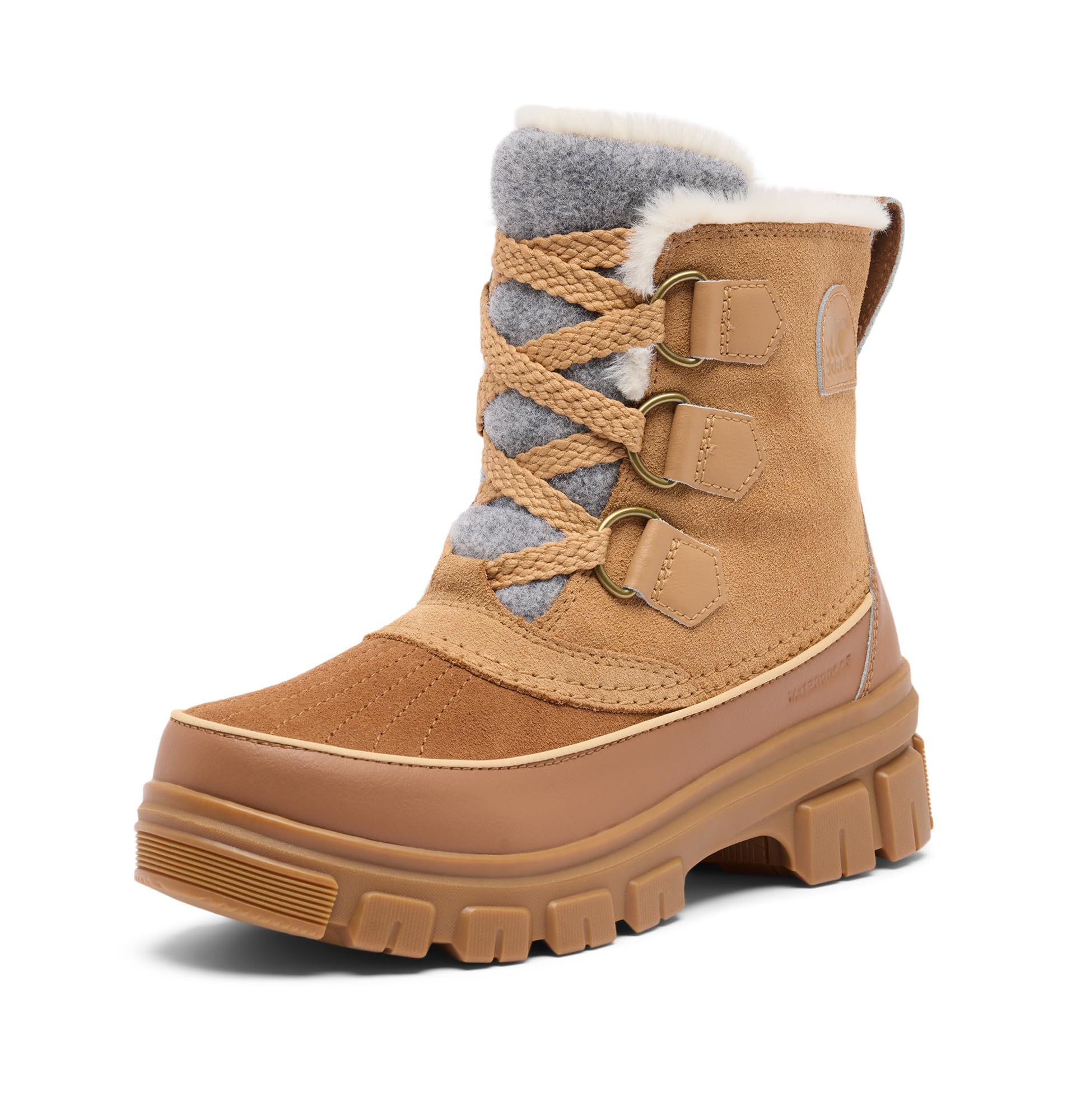
The Sorel Tivoli V is the boot for the person who needs to look put-together at a coffee shop after walking through wet snow. The waterproof shell uses a seam-sealed construction with a recycled felt liner that provides 9mm of insulation — enough for sub-freezing temperatures during short outdoor exposures. The boot sits at 12 inches in shaft height, protecting the calf from drifts, and the molded rubber sole features a herringbone tread pattern that sheds mud and slush efficiently.
At about 3.94 pounds per pair, the Tivoli V is not the lightest on this list, but the weight is distributed well through the midsole, so it does not feel cumbersome during a 15-minute walk to transit. The removable liner is a major convenience — you can pull it out and dry it overnight after a wet day, which extends the boot’s lifespan and prevents odor buildup. The adjustable gusset at the top allows you to tighten the boot around slim calves or leave it loose for layering over thermal leggings.
The Achilles’ heel here is the outsole rubber compound. Compared to the KEEN Polar Traction or Baffin Arctic Rubber, the Sorel’s standard rubber stiffens noticeably below 10°F, reducing grip on glare ice. The boot also lacks a dedicated heel brake, so downhill sections on packed snow require careful foot placement. For mild winters with occasional snow days, the Tivoli V is a durable and stylish choice, but it is not built for serious ice conditions.
Why it’s great
- Removable liner makes drying and maintenance simple
- Tall shaft with adjustable gusset fits various calf sizes
- Recycled felt insulation is warm enough for urban winter
Good to know
- Standard rubber outsole hardens below 10°F
- Limited arch support for long walking days
6. The North Face Women’s Thermoball Progressive Zip Up II

The North Face Thermoball Progressive Zip Up II is built for the traveler who hates bulky luggage but needs reliable cold weather protection. The boot uses ThermoBall Eco insulation — a synthetic fill that mimics down clusters by trapping air in tiny pockets — allowing the boot to maintain warmth even when wet. The zip-up closure, combined with a padded collar, makes entry and exit effortless, which is a clear advantage over lace-up models when you are rushing through an airport or changing at a ski lodge.
The rubber outsole uses TNF’s Winter Grip compound, a silica-infused rubber that performs well on wet asphalt and packed snow. The boot weighs about 1.8 pounds per boot, making it one of the lightest insulated models in this comparison. The midsole is a compression-molded EVA that provides adequate cushioning for urban walking but lacks the long-term resilience of polyurethane found in the KEEN models.
The trade-off is ankle protection. The low-cut profile of the Thermoball II leaves the ankle exposed to deep slush and sharp wind, so it is not ideal for unplowed streets or backcountry snowshoeing. For the person who needs a boot for cold city commutes, airport parking lots, and occasional light snow, the Thermoball is a sleek, packable option that does not compromise on warmth-per-weight.
Why it’s great
- ThermoBall insulation maintains warmth when wet
- Zip-up closure is fast and easy with cold hands
- Very lightweight for insulated winter boot
Good to know
- Low-cut profile does not protect ankles from deep slush
- EVA midsole packs out faster than PU alternatives
7. Helly Hansen V3 Winter Boots

Helly Hansen’s V3 Winter Boot is a no-nonsense snow boot built for men who spend hours outside on mixed terrain. The boot features a durable rubber outsole with multi-directional lugs that bite into soft snow and shed mud cleanly. The lace-up closure runs through heavy-duty eyelets that allow a secure fit even with thick gloves, and the padded tongue prevents snow from leaking through the lacing gap. The boot weighs about 3.1 pounds per pair, which is moderate, but the weight is concentrated in the outsole rather than the upper, so the boot does not feel top-heavy during step-ups.
The shaft height sits at roughly 8 inches, offering good ankle coverage without restricting calf movement. The insulation layer uses Helly’s proprietary 200g synthetic fill, which is warm enough for active use in temperatures down to about 15°F. The outsole rubber compound is denser than typical budget boots, showing less wear after a season of frequent use on salted sidewalks and gravel trails. The toe cap area is reinforced with a rubber overlay that resists scuffing from curb strikes and rock edges.
The V3 lacks a removable inner boot, so drying takes longer after wet days compared to the Sorel or Baffin models. The boot also runs slightly narrow through the midfoot, so men with wide feet should consider a half size up to accommodate thicker winter socks. For snow shoveling, dog walking, and moderate winter hikes, the V3 delivers dependable traction and solid insulation at a fair price point.
Why it’s great
- Multi-directional lugs grip well on soft snow and mud
- Reinforced toe cap resists scuffs and wear
- Heavy-duty eyelets allow secure lacing with gloves
Good to know
- No removable liner makes drying slower
- Narrow midfoot may not suit wide feet without sizing up
8. Columbia Men’s Expeditionist Shield

Columbia’s Expeditionist Shield boots are a budget-conscious entry that still deliver the brand’s signature Omni-Grip outsole technology. The outsole uses a multi-surface traction compound that works well on dry snow, light slush, and wet pavement, though it loses bite on solid ice compared to the Polar Rubber models. The shell uses a seam-sealed construction with a synthetic leather and mesh upper that blocks out light moisture but is not fully submersible for deep puddles.
The boot weighs about 2.2 pounds per boot, which is competitive for its price tier. The Techlite midsole provides lightweight cushioning that feels responsive on pavement but firms up noticeably on uneven trail surfaces. The insulation uses Columbia’s standard 200g synthetic fill, which is adequate for moderate winter activity but will let cold through during stationary exposure below 10°F. The lace-up closure runs through webbing eyelets that allow a quick cinch-and-go workflow.
Where the Expeditionist Shield falls short of the premium options is material refinement. The synthetic upper feels stiff out of the box and takes about a week of daily wear to soften, and the mesh sections can absorb moisture from wet snow if you are walking through deep powder. For dry snow conditions, light trail use, or as a backup boot in moderate climates, the Expeditionist Shield is a solid entry-level option that does not demand a high investment.
Why it’s great
- Omni-Grip outsole provides reliable traction on dry snow
- Lightweight midsole reduces leg fatigue on pavement
- Seam-sealed shell blocks light moisture effectively
Good to know
- Synthetic upper needs a break-in period to soften
- No dedicated ice traction for solid ice patches
9. Columbia Women’s Minx Shorty Iv
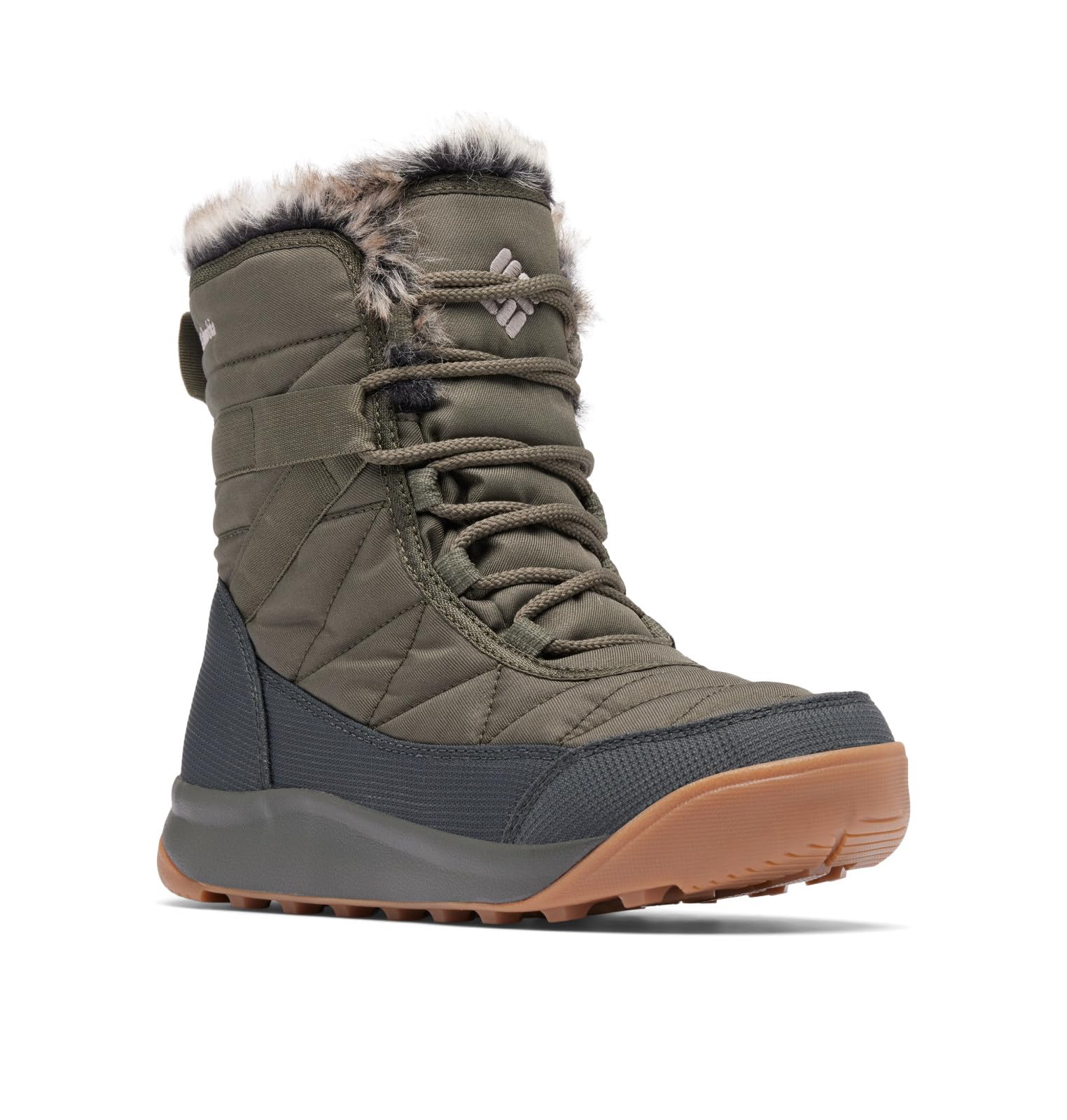
The Columbia Minx Shorty Iv is the most accessible winter boot in this lineup, designed for women who need basic snow protection for mild winters and occasional flurries. The shorty profile sits at about 6 inches in shaft height, providing ankle coverage without the bulk of a full snow boot. The Techlite midsole delivers responsive cushioning that feels close to a sneaker, reducing leg fatigue during all-day wear at theme parks or light snow walks.
The outsole uses Columbia’s standard Omni-Grip compound, which handles dry snow and wet pavement without issue but struggles on solid ice and packed snow slopes. The insulation is a lightweight synthetic fill that is comfortable down to about 20°F during active use but provides minimal protection during stationary cold exposure. The lace-up closure is straightforward, with standard eyelets that accommodate medium-thickness socks without feeling tight.
The main limitation is the boot’s weather resistance. The upper is not seam-sealed, and water can seep through the stitching after prolonged contact with slush or puddle water. This boot is best reserved for dry, cold days where the chance of deep wet snow is low. For its intended use case — casual winter wear in urban areas that see light snow — the Minx Shorty Iv is a cost-effective way to keep feet warm and comfortable.
Why it’s great
- Sneaker-like midsole feel reduces walking fatigue
- Short profile fits easily under snow pants and jeans
- Affordable entry point for mild winter climates
Good to know
- Not seam-sealed — water can seep through stitching
- Minimal traction on solid ice patches
FAQ
How much insulation do I need for single-digit temperatures?
Can lightweight winter boots handle deep snow?
Why do some boots use Arctic Rubber instead of standard rubber?
Are removable inner boots worth the extra cost?
Final Thoughts: The Verdict
For most users, the lightweight winter boots winner is the KEEN Revel IV High Polar because it delivers the best combination of insulation, waterproofing, and walking comfort for daily winter use across varied conditions. If you need polar-rated protection for sub-zero stationary exposure, grab the Baffin Men’s Selkirk. And for a stylish urban commuter boot with a removable liner, nothing beats the Sorel Women’s Tivoli V.