Finding a jacket that keeps you warm without feeling like you’re wearing a sleeping bag is the real needle-in-a-haystack hunt. Most insulated jackets either trap too much heat for active use or cut corners on fill power, leaving you shivering by midday. The balance between thermal efficiency and packable weight defines this entire category.
I’m Emma — the founder and writer behind Baby Bangs. I’ve spent years breaking down insulation types, denier counts, and DWR finishes to find outerwear that actually performs for real-world layering.
This guide helps you sort through fill weights, shell fabrics, and weather resistance to find the right lightweight warm jacket for your daily routine without wasting time on overhyped gear.
How To Choose The Best Lightweight Warm Jacket
The key differentiator in this category isn’t brand hype — it’s the insulation type and shell construction. Down offers superior warmth-to-weight but dies when wet, while synthetic insulation retains heat even when damp but is heavier. Your climate and activity level determine which trade-off you should make.
Decoding Fill Power and Insulation Weight
Fill power (measured in cubic inches per ounce) tells you how much loft a down jacket provides. A 700-fill jacket packs more warmth per gram than a 550-fill jacket. For synthetic jackets, look at the grams of insulation (e.g., 60g, 100g) rather than marketing names — higher gram weights mean more warmth but less packability.
Shell Fabric and Weather Resistance
A lightweight warm jacket needs a shell that balances wind resistance and breathability. A 20-denier (20D) nylon ripstop shell packs tiny but tears easily against brush, while a 40D shell adds durability without much weight gain. Non-PFC DWR finishes repel light rain and snow without the environmental downsides of older chemical treatments.
Fit and Layering Compatibility
Consider whether you’ll wear the jacket as a standalone piece or under a hardshell. A trim fit helps trap warmth better under a shell, while a regular fit gives room for a mid-layer like a fleece or sweater. Sleeve length and collar design also affect how well the jacket seals out drafts during active use.
Quick Comparison
On smaller screens, swipe sideways to see the full table.
| Model | Category | Best For | Key Spec | Amazon |
|---|---|---|---|---|
| MARMOT Men’s Zeus Jacket | Down Insulated | Lightweight packability | 700-Fill Down, Water Resistant | Amazon |
| Helly-Hansen Lifaloft Insulator Jacket | Synthetic Insulated | Active wear in wet conditions | Lifaloft synthetic, Water-Resistant | Amazon |
| THE NORTH FACE Women’s Junction Insulated Jacket | Synthetic Insulated | Everyday commute and layering | 100g HEATSEEKER, Recycled Polyester | Amazon |
| Columbia Women’s Voodoo Falls 590 Turbodown Ii Jacket | Down Blend | Budget-friendly down warmth | Turbodown, 590-Fill | Amazon |
| Columbia mens Powder Lite Ii Jacket | Synthetic Insulated | Cold weather layering | Quilted synthetic, Polyester Shell | Amazon |
| Orolay Women’s Lightweight Packable Down Jacket | Down Insulated | Everyday style on a budget | Down fill, Stand Collar | Amazon |
| The North FaceTHERMOBALL™ Jacket | Synthetic Insulated | Packable synthetic warmth | ThermoBall synthetic insulation | Amazon |
In‑Depth Reviews
1. MARMOT Men’s Zeus Jacket
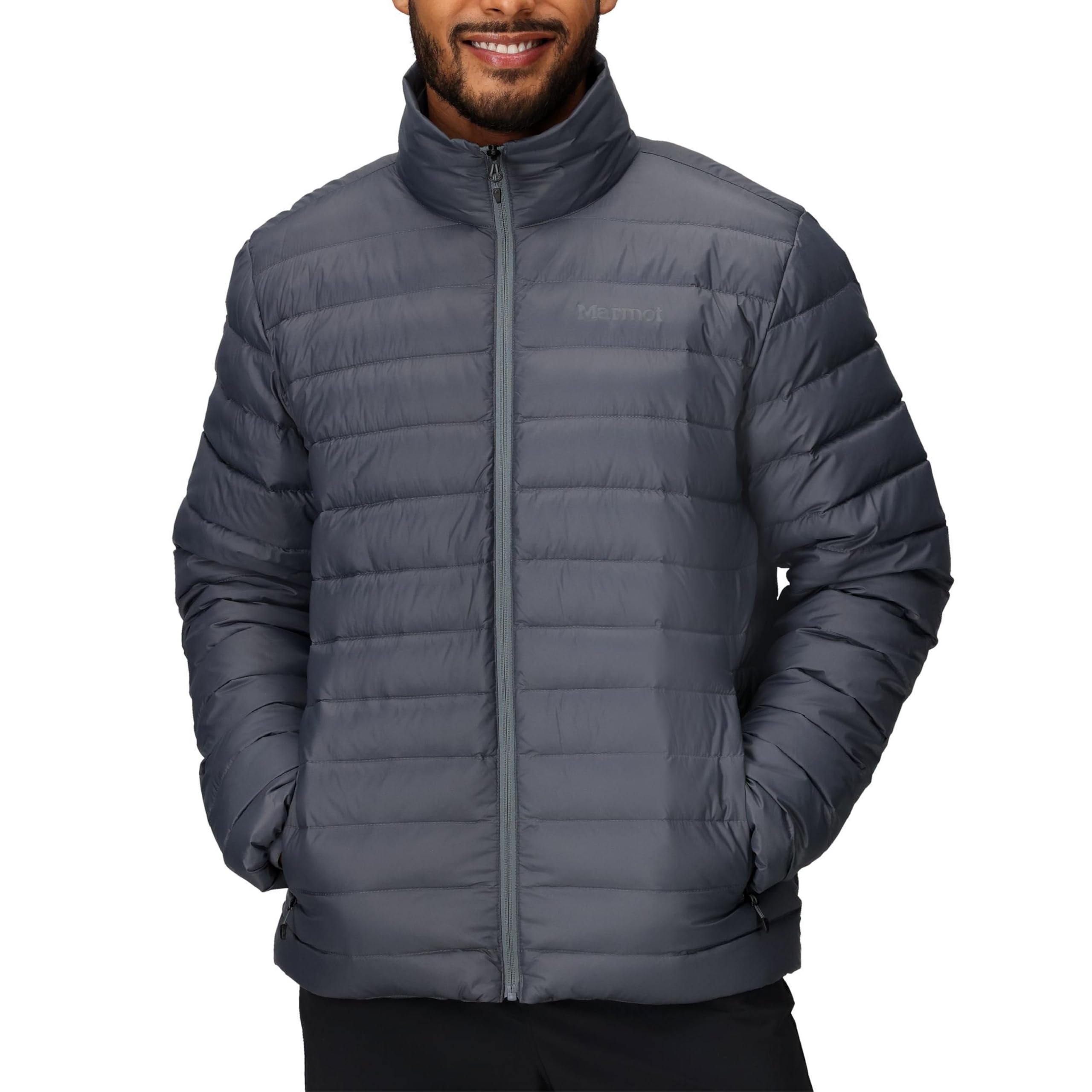
The Marmot Zeus Jacket uses 700-fill power down, which delivers an impressive warmth-to-weight ratio that fewer synthetic alternatives can match. The water-resistant shell adds a layer of protection against light precipitation, making it viable for early morning hikes or urban commutes where you might encounter drizzle. At roughly 12 ounces, it packs down small enough to stuff into its own pocket for carry-on travel.
The nylon ripstop shell at 20 denier keeps the weight low, though you’ll want to handle it with care around rough edges like zippers on backpacks. The Zeus excels as a mid-layer under a hardshell in deep winter, but works fine as a standalone in 40-50°F conditions with a base layer. Marmot’s down treatment adds some moisture resistance, but heavy rain still soaks through quickly.
For the fill power and build quality at this price point, the Zeus punches well above its weight class. It’s not the most breathable jacket for high-output activities like trail running, but for general hiking, camping, and everyday wear, it hits a sweet spot that few jackets in this range achieve.
Why it’s great
- Excellent warmth-to-weight ratio thanks to 700-fill down
- Packs down small for travel storage
- Water-resistant shell handles light moisture
Good to know
- 20D shell is prone to tearing against sharp objects
- Not breathable enough for high-exertion activities
- Down loses all insulation value when fully wet
2. Helly-Hansen Lifaloft Insulator Jacket for Men

The Helly-Hansen Lifaloft Insulator is a premium synthetic jacket that mimics the loft and compressibility of down while keeping its insulating properties even when soaked. The Lifaloft technology uses a proprietary blend of polyester fibers to create a lightweight, breathable barrier against cold air. The shell fabric is treated with a DWR finish that beads up light rain and snow effectively.
At 1.4 pounds, it’s slightly heavier than down competitors, but the trade-off is durability and weather resilience. The athletic cut allows for easy layering over a merino base layer or under a waterproof shell. Windproofing is excellent even in gusty conditions, making it a strong choice for coastal hikes or exposed ridgelines.
Where the Lifaloft shines is in dynamic activity — it vents heat well enough to keep you comfortable during uphill climbs without overheating. The stitch-through baffles prevent the insulation from shifting over time, maintaining consistent warmth across the whole jacket. If you frequently encounter wet weather, this synthetic pick outperforms any down option in the same price tier.
Why it’s great
- Retains insulation value when wet
- Excellent wind resistance for exposed conditions
- Breathable enough for active use
Good to know
- Heavier than comparable down jackets
- Premium price point for synthetic insulation
- Fit runs athletic/slim for some body types
3. THE NORTH FACE Women’s Junction Insulated Jacket
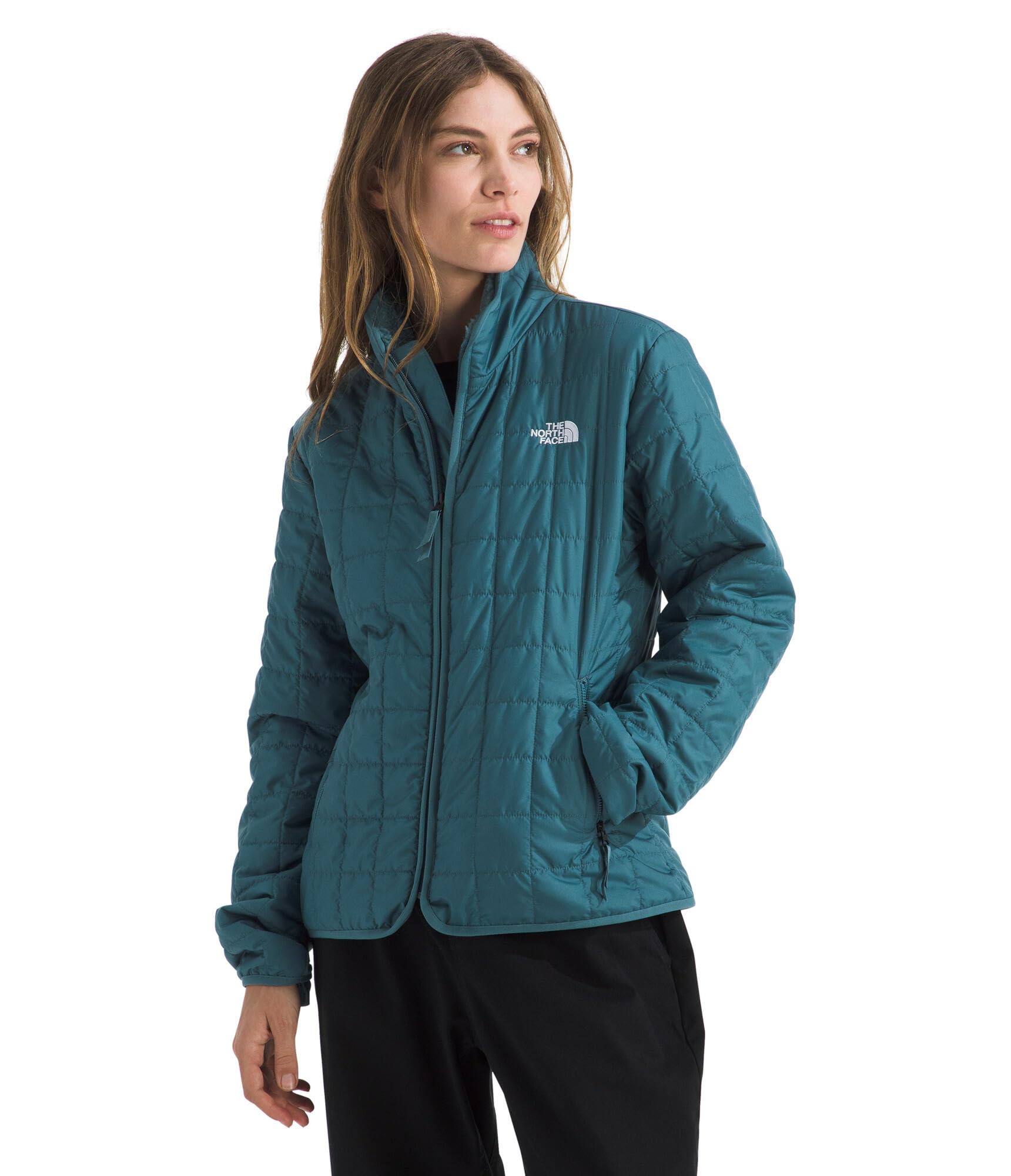
The North Face Junction Insulated Jacket packs 100 grams of HEATSEEKER synthetic insulation into a recycled polyester shell with a non-PFC DWR finish. This combination delivers reliable warmth for fall and winter commuting, with enough insulation to handle temperatures down to the 30s when layered over a fleece. The quilting pattern evenly distributes the synthetic fill and reduces cold spots along the sleeves and torso.
The water-repellent finish holds up well against light rain and wet snow, though sustained downpours will eventually wet through. Secure-zip hand pockets add practicality for daily use, and the internal draft flap behind the front zipper cuts down wind intrusion. The stretch binding on the collar and cuffs improves the seal against drafts during windy days.
Sustainability is a bonus here — the shell is made from at least 75% recycled, regenerative, or responsibly sourced renewable materials. For the eco-conscious commuter who needs a do-it-all insulator that works for both the trail and the train, the Junction delivers consistent performance without breaking the bank.
Why it’s great
- 100g HEATSEEKER provides reliable synthetic warmth
- Non-PFC DWR finish for environmental responsibility
- Durable 40D recycled polyester shell
Good to know
- Not as packable as down alternatives
- Breathability is limited during high exertion
- Runs slightly boxy in the torso
4. Columbia Women’s Voodoo Falls 590 Turbodown Ii Jacket
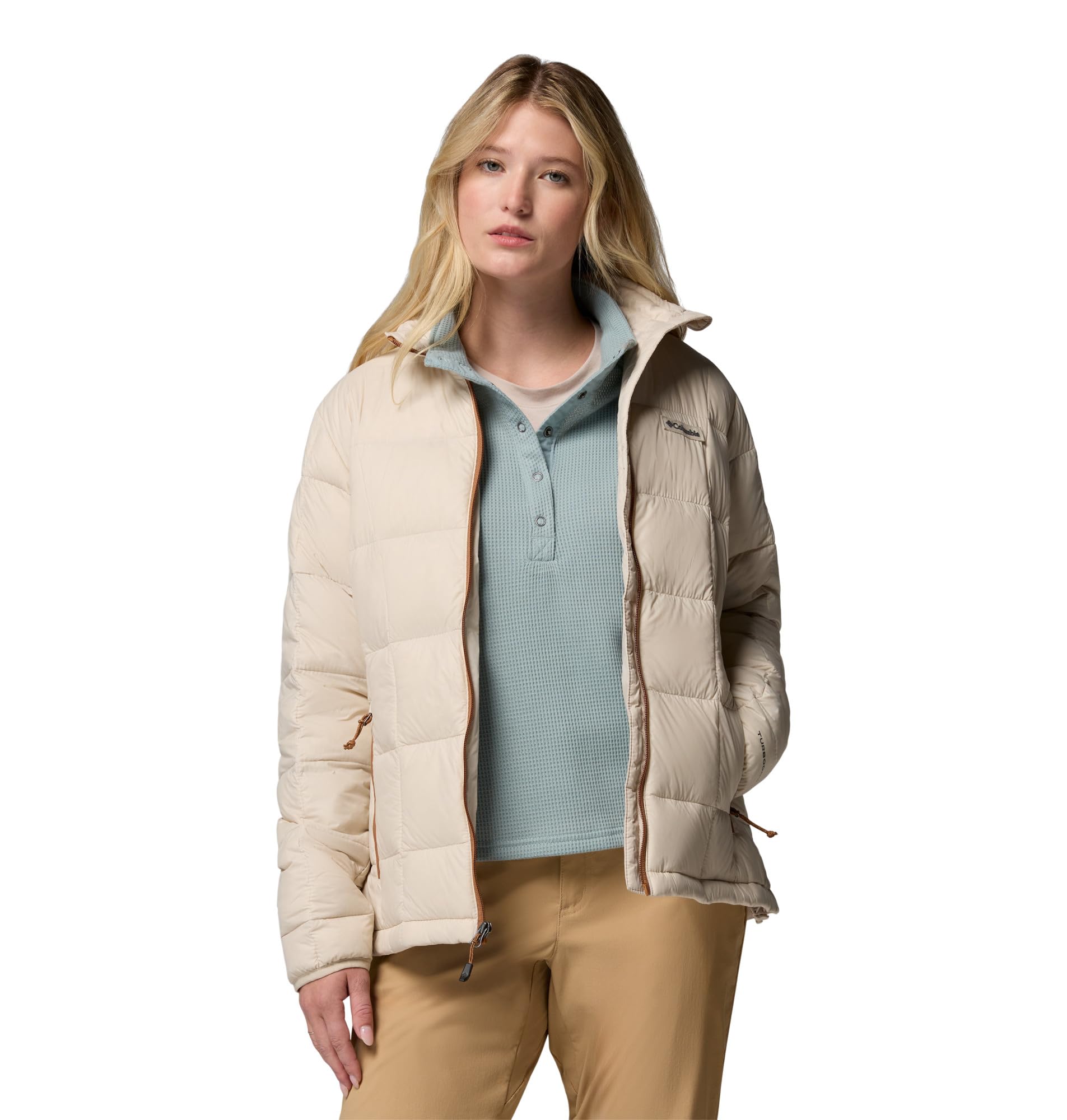
The Columbia Voodoo Falls mixes down insulation with synthetic fibers in a blend Turbodown construction that balances loft and moisture resistance. At 590-fill, it doesn’t match the premium loft of higher-fill down jackets, but it still provides solid warmth for temperatures in the 30s and 40s. The polyester shell has a smooth hand feel that slides easily under a rain shell.
What sets this jacket apart is the combination of down insulation with Columbia’s synthetic water-repellent technology, which helps the fill retain some thermal performance even after light exposure to moisture. The quilted pattern keeps the insulation distributed evenly without the cold spots that plague cheaper alternatives. Arm movement feels unrestricted thanks to the raglan sleeve design.
The Voodoo Falls is a genuine entry-level down jacket that gets the basics right without costing a premium. For someone new to down insulation or shopping on a tighter budget, this jacket delivers warmth and packability that outperforms many synthetic jackets at the same price point, even if the fill power isn’t top-tier.
Why it’s great
- Down-synthetic blend handles light moisture better than pure down
- Quilted baffles prevent insulation shifting
- Raglan sleeves allow full arm mobility
Good to know
- 590-fill power offers lower warmth per ounce than higher fill
- 20D shell fabric is prone to snags
- Limited color options in current season
5. Columbia mens Powder Lite Ii Jacket
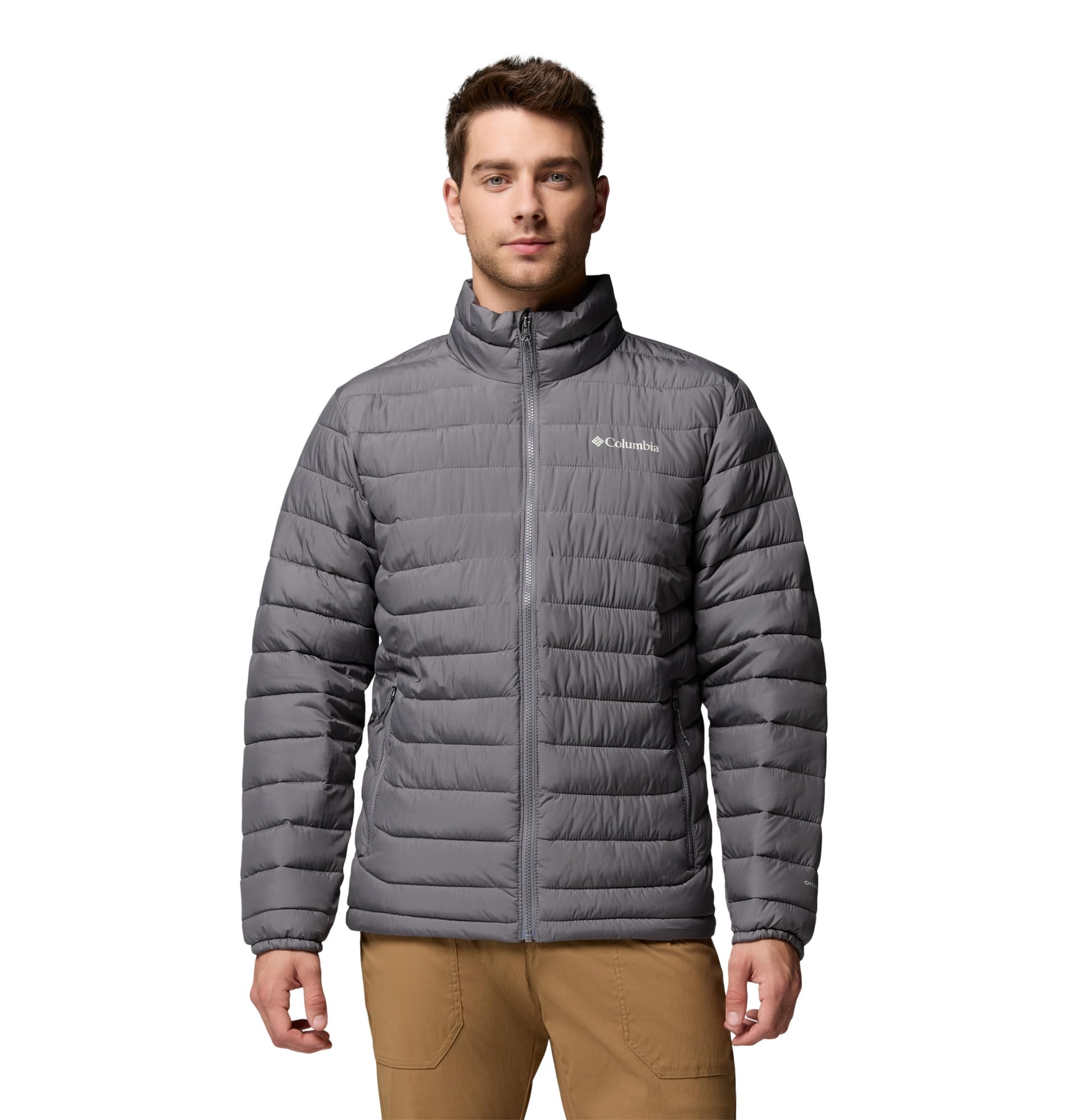
The Columbia Powder Lite II uses a synthetic insulation system inside a quilted polyester shell designed specifically for cold-weather layering. The band collar seals heat around the neck better than a button collar, making it particularly effective on windy days when worn under a hooded shell. The regular fit allows enough room for a mid-weight fleece underneath.
While not as packable as a down jacket, the Powder Lite II compresses moderately well for a synthetic piece. The shell fabric has a matte finish that resists light wind and light snow. Hand pockets are zippered and lined with a soft fleece material that warms your hands quickly after you come inside from the cold.
This jacket is a solid entry-level insulator for someone who primarily needs warmth for short outdoor exposures like walking the dog or commuting to work. It doesn’t have the technical features of premium synthetic jackets, but the price point makes it an accessible option for cold-weather newcomers who don’t want to overspend.
Why it’s great
- Zippered fleece-lined hand pockets warm hands fast
- Band collar seals heat around the neck
- Room for a mid-layer fleece underneath
Good to know
- Less packable than most down alternatives
- Synthetic insulation has lower warmth per weight
- Not designed for high-exertion activities
6. Orolay Women’s Lightweight Packable Down Jacket
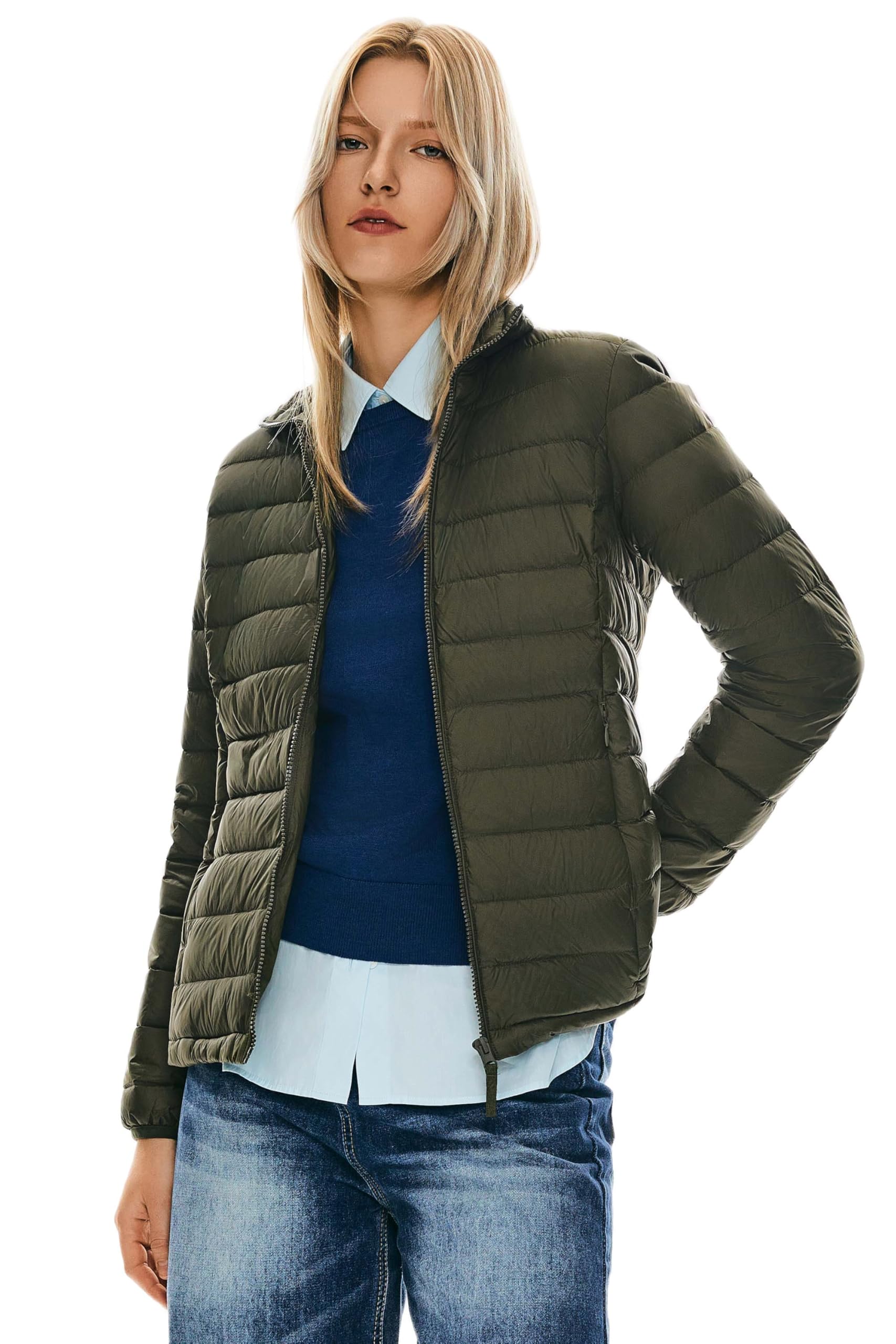
The Orolay Lightweight Packable Down Jacket is a budget-friendly down puffer that prioritizes style and packability for everyday wear. The quilted pattern gives it a classic puffer silhouette, and the stand collar adds a modern touch that looks good unzipped or fully closed. It packs into a small included stuff sack, making it easy to throw into a tote bag for unpredictable weather.
Down fill provides decent warmth for mild winter days in the 30s and 40s, though the fill power isn’t specified, so expect it to fall below 600-fill range. The shell is a ripstop nylon that resists minor snags but won’t hold up well against heavy use or sharp objects. Hand pockets are generously sized to fit a phone and gloves.
For the price, the Orolay is a compelling entry-level option for someone who wants the warmth of down without the premium price tag. It won’t replace a technical mountaineering insulator, but for city walking, grocery runs, and travel, it delivers reliable warmth in a stylish, compressible package.
Why it’s great
- Packs down into included stuff sack for easy travel
- Stand collar offers a modern silhouette
- Ripstop nylon shell resists minor snags
Good to know
- Fill power is not specified and likely low
- Shell fabric feels thin and less durable
- Not suitable for heavy rain or deep cold
7. The North FaceTHERMOBALL™ Jacket
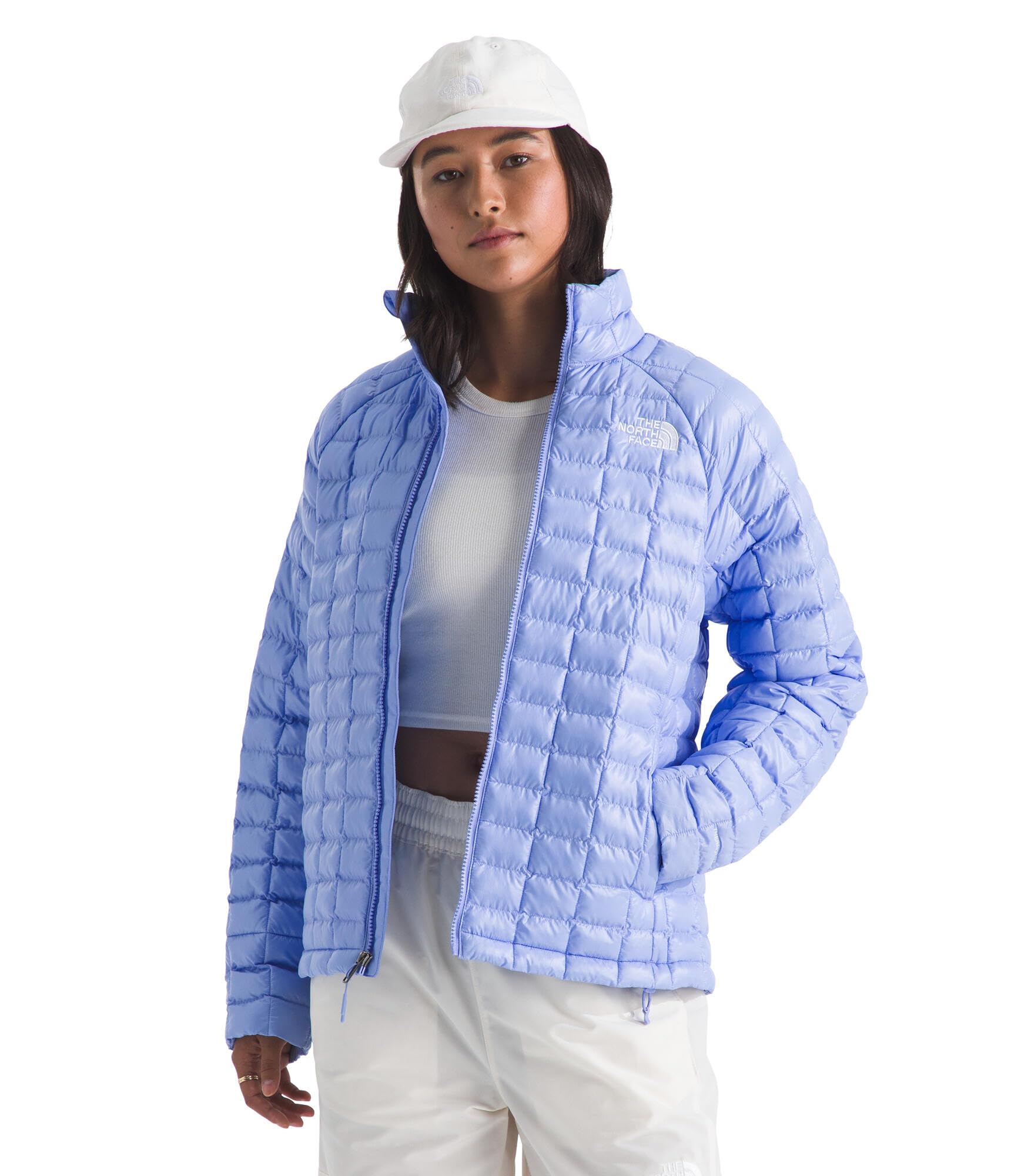
The North Face ThermoBall Jacket uses a proprietary synthetic insulation that mimics the structure of down clusters, trapping air in small pockets for warmth even when wet. This makes it a solid choice for damp climates where down would lose its insulation value. The shell is treated with a DWR finish that beads up light precipitation effectively.
At a weight similar to mid-fill down jackets, the ThermoBall packs moderately well for a synthetic insulator, though it won’t compress as tightly as 700-fill down. The quilting pattern is designed to minimize heat loss through the seams, a common weak point in synthetic jackets. The fit is regular, with enough room for a fleece layer underneath without feeling baggy.
The ThermoBall is best suited for someone who needs a reliable synthetic insulator for variable weather conditions but doesn’t want to pay premium prices for high-end technical jackets. It handles light rain and snow without sacrificing warmth and dries out quickly when it does get wet, making it a practical choice for everyday commuting in wet climates.
Why it’s great
- Retains warmth even when wet, unlike down
- Dries faster than down after getting soaked
- Quilt pattern minimizes heat loss at seams
Good to know
- Not as packable as down jackets with similar warmth
- Warmth-to-weight ratio is lower than 700-fill down
- Less breathable for high-output activities
FAQ
What is the difference between down and synthetic insulation for a lightweight warm jacket?
What fill power do I need for a jacket that works in 30 to 50 degree weather?
How does a DWR finish affect packability and breathability in these jackets?
Final Thoughts: The Verdict
For most users, the lightweight warm jacket winner is the Marmot Zeus Jacket because it delivers premium 700-fill down warmth in a sub-12-ounce package that packs down to nothing. If you need reliable synthetic insulation that works in wet conditions, grab the Helly-Hansen Lifaloft Insulator Jacket. And for an eco-conscious everyday commuter jacket that balances warmth, durability, and price, nothing beats the North Face Junction Insulated Jacket.