A great pair of trekking shoes doesn’t just protect your feet — it saves your knees, keeps you upright on loose gravel, and lets you cover ground without feeling like you’re carrying bricks. The wrong pair, however, will leave you with blisters, sore arches, and that sinking feeling when your foot rolls on an uneven root.
I’m Emma — the founder and writer behind Baby Bangs. I’ve spent years digging into the materials, outsoles, and midsole foams that separate genuine performance footwear from shoes that only look the part on a shelf.
After analyzing weight, traction patterns, and cushioning across dozens of models, I’ve narrowed the field to nine pairs that actually earn their place on rocky descents and long ridgelines. Here is my curated list of the best lightweight trekking shoes for every trail type and foot shape.
How To Choose The Best Lightweight Trekking Shoes
The lightweight trekking shoe category sits between trail runners and beefy hiking boots. The goal is to shed ounces without sacrificing the underfoot protection and torsional stiffness your feet need when you’re carrying a pack over technical terrain. Three factors determine whether a pair will feel like slippers or sad bricks halfway through a long approach.
Midsole Foam and Stack Height
Every gram of foam matters when you’re lifting your foot thousands of times per mile. But low weight alone means nothing if the foam packs out after a hundred miles. Look for shoes that use a denser EVA blend or a dual-density setup — a softer top layer for step-in comfort and a firmer bottom layer for stability. Stack heights between 22 mm and 28 mm offer enough absorption without raising your center of gravity too high for rocky traverses.
Tread and Outsole Compound
Lug depth and rubber compound hardness determine how well you stick to wet slabs, loose scree, and muddy climbs. For lightweight trekking, aim for lugs at least 4 mm deep with a multi-directional chevron pattern near the heel for braking. Softer compounds (around 60 Shore A) grip better on damp rock but wear faster on abrasive granite — a trade-off you need to match to your local terrain.
Fit and Toe-Box Volume
Lightweight shoes can’t rely on thick padding to hold your heel in place; fit must come from the upper geometry and lacing system. A roomy toe box lets your toes splay naturally on descents, preventing black toenails, while a secure heel cup stops slip that causes hot spots. Try on shoes later in the day when your feet are slightly swollen, and always leave a thumb’s width of space from your longest toe to the front.
Quick Comparison
On smaller screens, swipe sideways to see the full table.
| Model | Category | Best For | Key Spec | Amazon |
|---|---|---|---|---|
| Merrell Men’s Speed Strike 2 | Mid-Range | All-day comfort on mixed terrain | 1.5 lb per shoe weight | Amazon |
| Merrell Women’s Speed Strike 2 | Mid-Range | Agile descents with cap toe protection | Abrasion-resistant upper | Amazon |
| New Balance Women’s Dynasoft Tektrel V1 | Mid-Range | Budget-conscious hikers needing cushion | Dynasoft midsole foam | Amazon |
| Columbia Women’s Novo Trail | Value | Easy day hikes and gravel paths | Techlite lightweight midsole | Amazon |
| Columbia Women’s Vertisol Trail | Value | Wide forefoot room on moderate trails | Adapt-Trak outsole rubber | Amazon |
| The North Face Men’s Altamesa 300 | Premium | High-rebound for fast-paced approaches | 30 mm stack with roomy toe box | Amazon |
| ALTRA Men’s Lone Peak 9 | Premium | Natural foot positioning and toe splay | Zero-drop platform design | Amazon |
| Brooks Women’s Cascadia 19 | Premium | Mountain runners wanting lateral stability | TrailTack rubber outsole | Amazon |
| New Balance Men’s Fresh Foam X Hierro V9 | Premium | Maximum cushion on rocky routes | Fresh Foam X midsole | Amazon |
In‑Depth Reviews
1. Merrell Men’s Speed Strike 2

The Merrell Speed Strike 2 hits the sweet spot between weight savings and real trail durability. The upper uses a woven ripstop material that resists abrasion from rocks and roots without adding the bulk of traditional leather or synthetic overlays. At 1.5 pounds per shoe, it’s light enough for fast day hikes but stiff enough in the midfoot to handle a light pack on uneven terrain.
Underfoot, the midsole uses a single-density EVA foam that doesn’t pack out quickly — important for a shoe at this weight class. The outsole features 5 mm chevron lugs that bite well into loose dirt and dry rock, though the rubber compound runs slightly firmer, so expect less grip on wet slabs compared to softer blends. The lace-up closure extends far enough down the forefoot to dial in fit if you have a narrow foot.
The break-in period is practically non-existent because the collar and tongue have minimal padding — a deliberate trade-off for weight that works well for hikers who prefer a more direct connection with the trail. Runners who need plush heel cushion may want to look elsewhere, but for trekking efficiency on mixed-grade terrain, this is the most balanced option in the lineup.
Why it’s great
- Exceptionally low weight with durable upper
- Midfoot stiffness supports light backpack loads
- Quick break-in with no blisters from padding
Good to know
- Firm foam not ideal for road-to-trail transitions
- Tread compound loses grip on wet polished rock
2. Merrell Women’s Speed Strike 2

The women’s version of the Speed Strike 2 shares the same ripstop upper and cap toe reinforcement as the men’s model, but the last is shaped with a slightly narrower heel and a more forgiving forefoot volume for a better anatomical fit. The cap toe is a practical addition for trekking through rocky sections where kicking a ledge or root is inevitable — it prevents the upper fabric from fraying after repeated impacts.
The outsole uses the same multi-directional lug pattern as the men’s edition, delivering confident braking on steep descents and secure edging on side slopes. The midsole foam feels marginally softer out of the box, likely due to a lower durometer formulation tuned for lighter average body weights, which improves comfort on longer days without sacrificing responsiveness. The abrasion-resistant upper also dries quickly if you cross shallow streams or hit morning dew.
Fall-season compatibility is built into the solid-color mesh and synthetic overlays that hold up better than vented trail runners when temperatures drop. If you prefer no-heel geometry and a low-drop platform, this shoe’s neutral profile will feel natural and stable. The only real limitation is the lack of a waterproof membrane — if you need wet-weather protection, you’ll want a separate pair for soggy conditions.
Why it’s great
- Cap toe protects against rock strikes
- Heel-last fit prevents slip on descents
- Quick-drying upper for damp sections
Good to know
- No waterproof membrane for wet hikes
- Firm outsole compound limits wet rock grip
3. New Balance Women’s Dynasoft Tektrel V1 Suede
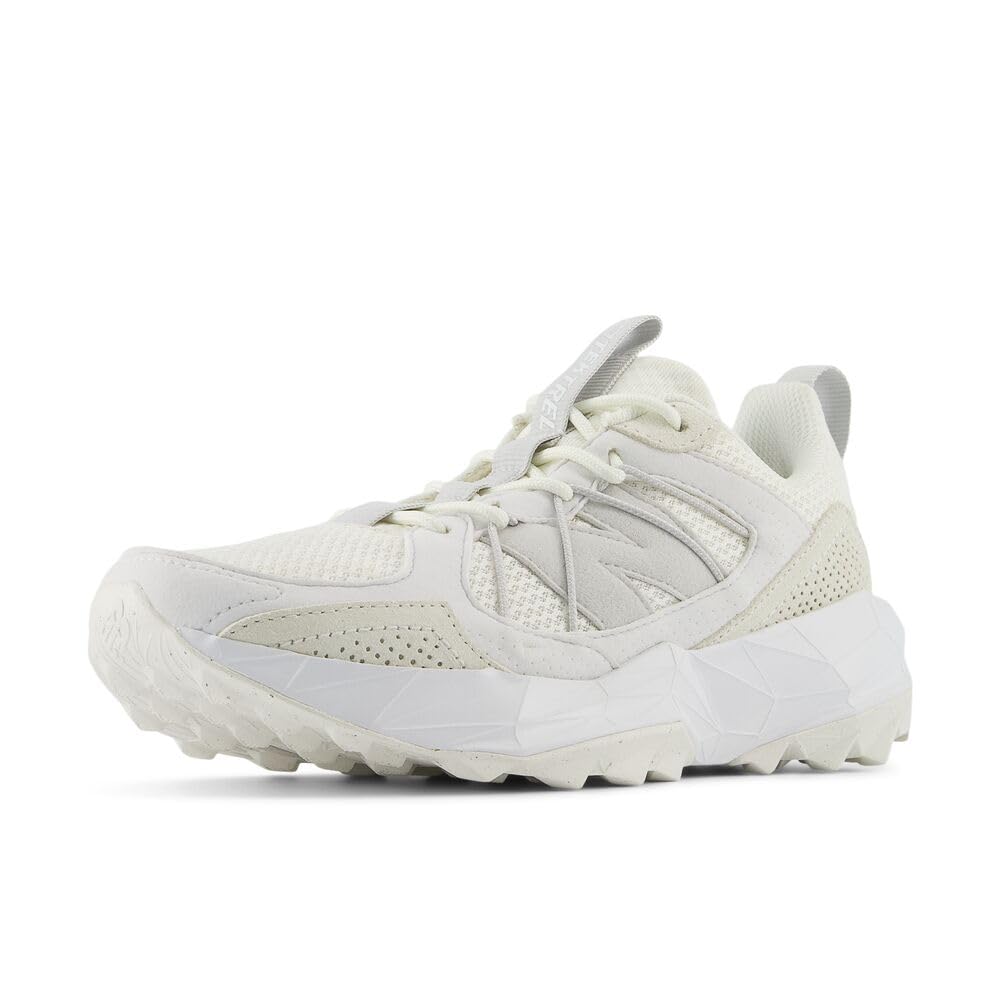
The Dynasoft Tektrel V1 brings a suede-and-mesh upper to the lightweight trekking category, offering a slightly more casual aesthetic that transitions from trailhead to coffee shop without looking out of place. Dynasoft foam is New Balance’s entry-level midsole compound — it’s softer than the firm EVA found in budget hiking shoes, which translates to better step-in comfort on gravel paths and packed dirt.
Traction comes from a lugged outsole with moderate depth — around 3.5 mm — which handles dry trails and packed gravel well but struggles on loose scree or wet roots. The forefoot flex grooves allow a natural walking motion, but the midsole lacks the torsional rigidity needed for heavier packs. This is a shoe best suited for day hikes with minimal gear rather than multi-day trips with a loaded backpack.
The suede panels add a touch of durability to the toe area, though they absorb moisture more readily than synthetic mesh, so expect longer drying times after wet crossings. The fit runs slightly generous in the toe box, which is welcome for hikers with wider forefeet. If you prioritize a cushioned ride over aggressive traction and only hike on well-maintained trails, this shoe offers strong value without feeling cheap.
Why it’s great
- Plush Dynasoft foam for step-in comfort
- Generous toe box accommodates wider feet
- Versatile style works on and off the trail
Good to know
- Shallow lugs slip on loose terrain
- Suede upper holds moisture when wet
4. Columbia Women’s Novo Trail
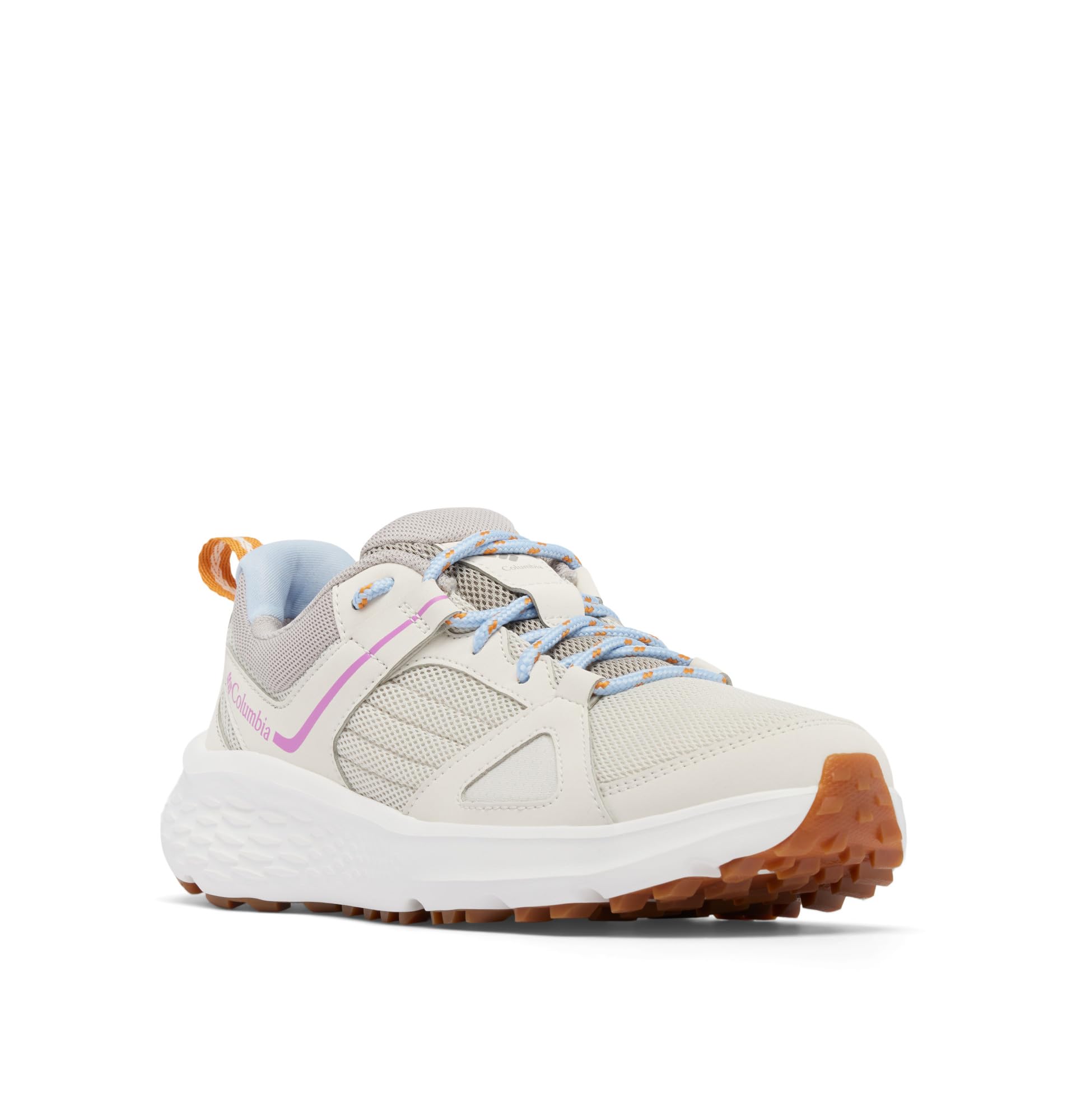
The Columbia Novo Trail is a no-fuss entry into lightweight trekking for those who want a dependable shoe without overthinking midsole chemistry. It uses Columbia’s Techlite foam — a single-density EVA blend that provides adequate cushioning for moderate-length hikes on packed trails. The Omni-Grip outsole uses a multi-terrain rubber compound with lugs spaced widely to shed mud, making it a solid choice for wet, sticky conditions.
The upper is a simple mesh with synthetic overlays that offer basic structure without constricting the forefoot. There’s no aggressive toe cap, so repeated kicks against rocks will wear the mesh faster than shoes with reinforced bumpers. The fit runs true to size with medium volume, and the padded tongue and collar add comfort right out of the box — no break-in required for short hikes.
Weight-wise, the Novo Trail sits in the middle of the lightweight pack — not the featheriest option, but far lighter than any traditional boot. The low drop height (around 8 mm) helps maintain a natural stride on flat-to-rolling terrain. If your daily walks involve gravel paths, fire roads, or mild forest singletrack, this shoe delivers reliable performance without demanding a premium investment.
Why it’s great
- Widely spaced lugs shed mud effectively
- No break-in period for out-of-box comfort
- Low drop promotes natural gait on flat terrain
Good to know
- Thin toe reinforcement limits rock durability
- Techlite foam packs out faster than denser blends
5. Columbia Women’s Vertisol Trail
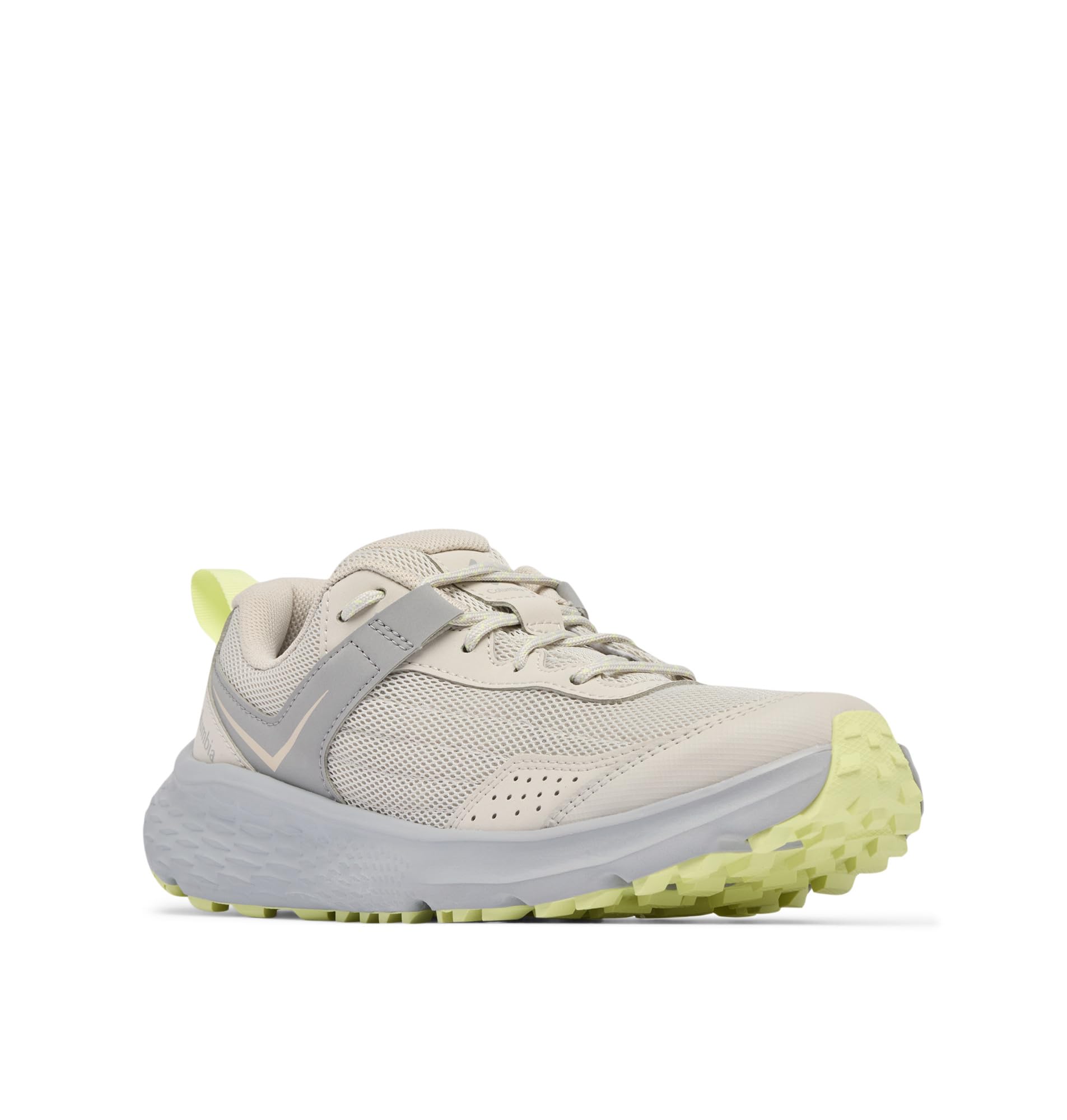
The Vertisol Trail is Columbia’s answer to hikers who need a wider forefoot platform without moving up to a full wide sizing. The toe box gives your toes room to spread naturally on descents, which reduces the jamming that causes black toenails on longer approaches. The Adapt-Trak outsole rubber uses a sticky compound that performs better on wet rock than the standard Omni-Grip found on the Novo Trail.
The midsole uses Columbia’s lightweight foam formulation that feels slightly softer than Techlite, offering a plusher ride for hikers who spend most of their time on moderate grades rather than steep, rocky sections. The upper is a breathable mesh with welded overlays that keep the structure clean without extra stitching that could irritate the top of the foot. The lacing system extends close to the toes, allowing fine-tuned pressure distribution across the instep.
One trade-off with the softer foam is stability — if you’re carrying more than 15 pounds in your pack, the midsole can feel a bit wobbly on off-camber terrain. The outsole lugs measure around 4 mm, providing decent bite on loose dirt but lacking the aggression for technical scrambles. For well-graded trails and casual day hikes where foot comfort is the priority, the Vertisol Trail is a strong contender.
Why it’s great
- Spacious toe box prevents jamming on descents
- Sticky Adapt-Trak rubber grips wet rock well
- Plush foam comfortable for all-day moderate hikes
Good to know
- Soft foam lacks stability under heavy packs
- Lug depth insufficient for technical terrain
6. The North Face Men’s Altamesa 300 Trail Running Shoe
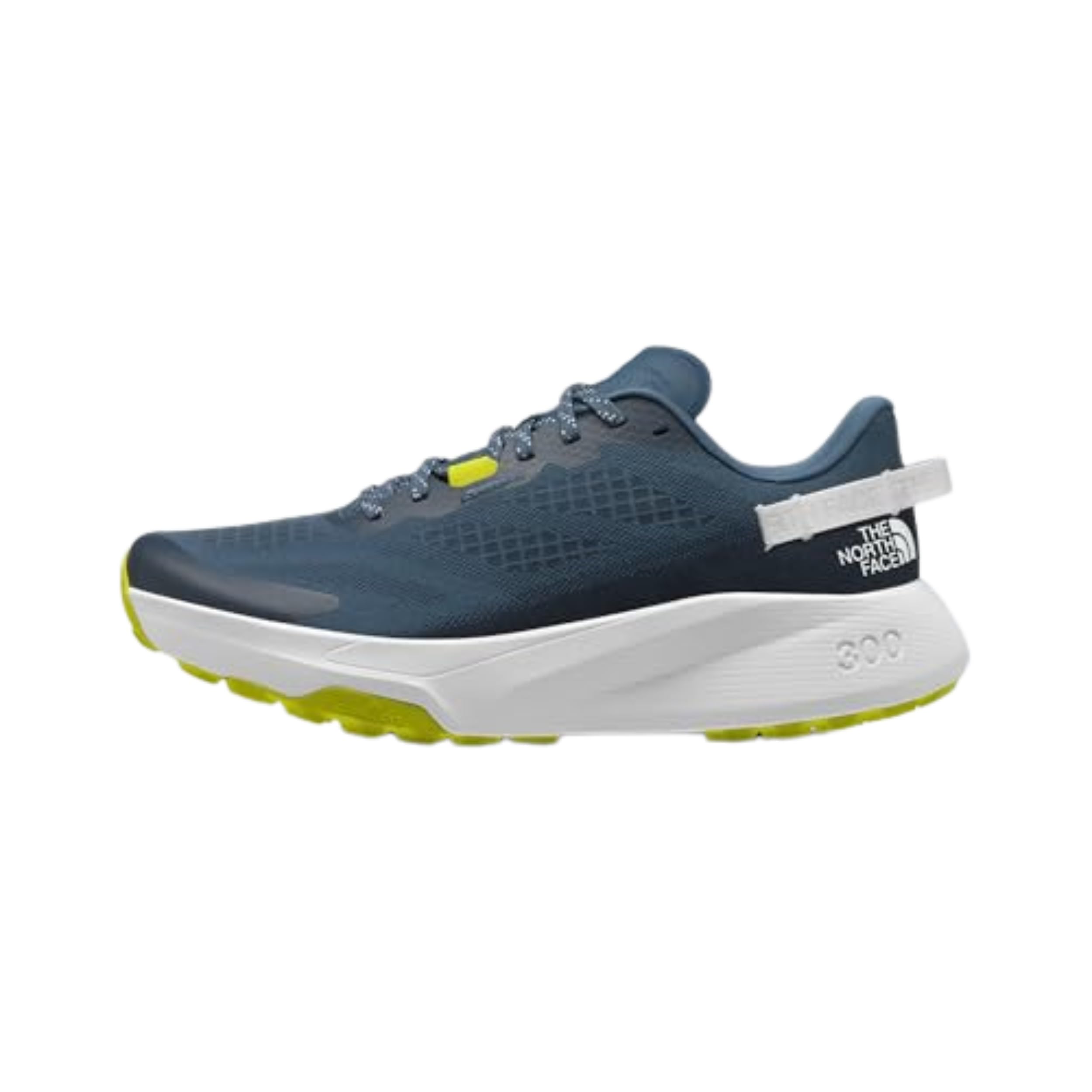
The Altamesa 300 is technically a trail running shoe, but its 30 mm stack height and high-rebound midsole make it a compelling option for fast-paced trekking where you want energy return with every stride. The midsole uses a nitrogen-infused EVA blend that feels springy without being mushy — a rare combination in lightweight hiking footwear. The roomy toe box allows natural splay, reducing fatigue on long descents.
Traction comes from a Surface Control outsole with chevron-shaped lugs that dig into soft surfaces while maintaining a flat contact patch for stability on hardpack. The lugs are about 4.5 mm deep, providing reliable braking on loose dirt and dry grass. The upper uses a breathable mesh with welded TPU overlays that add structure without adding weight, and the internal heel counter holds your foot securely even when the terrain gets technical.
Where this shoe shines is on the transition between running and hiking — if your trek involves fast sections where you break into a jog, the Altamesa 300 rewards that motion. The trade-off is torsional flexibility; at 30 mm stack, there’s noticeable flex in the midfoot under heavy loads, so if you’re carrying a 30-pound pack on rocky trails, you may want a stiffer platform. For lightweight day trips with mixed speeds, it’s tough to beat.
Why it’s great
- Nitrogen-infused foam delivers lively energy return
- Roomy toe box prevents discomfort on descents
- Versatile outsole grips varied terrain well
Good to know
- Midfoot flex compromises stability with heavy packs
- 30 mm stack feels tall for off-camber traverses
7. ALTRA Men’s Lone Peak 9 Trail Running Shoe
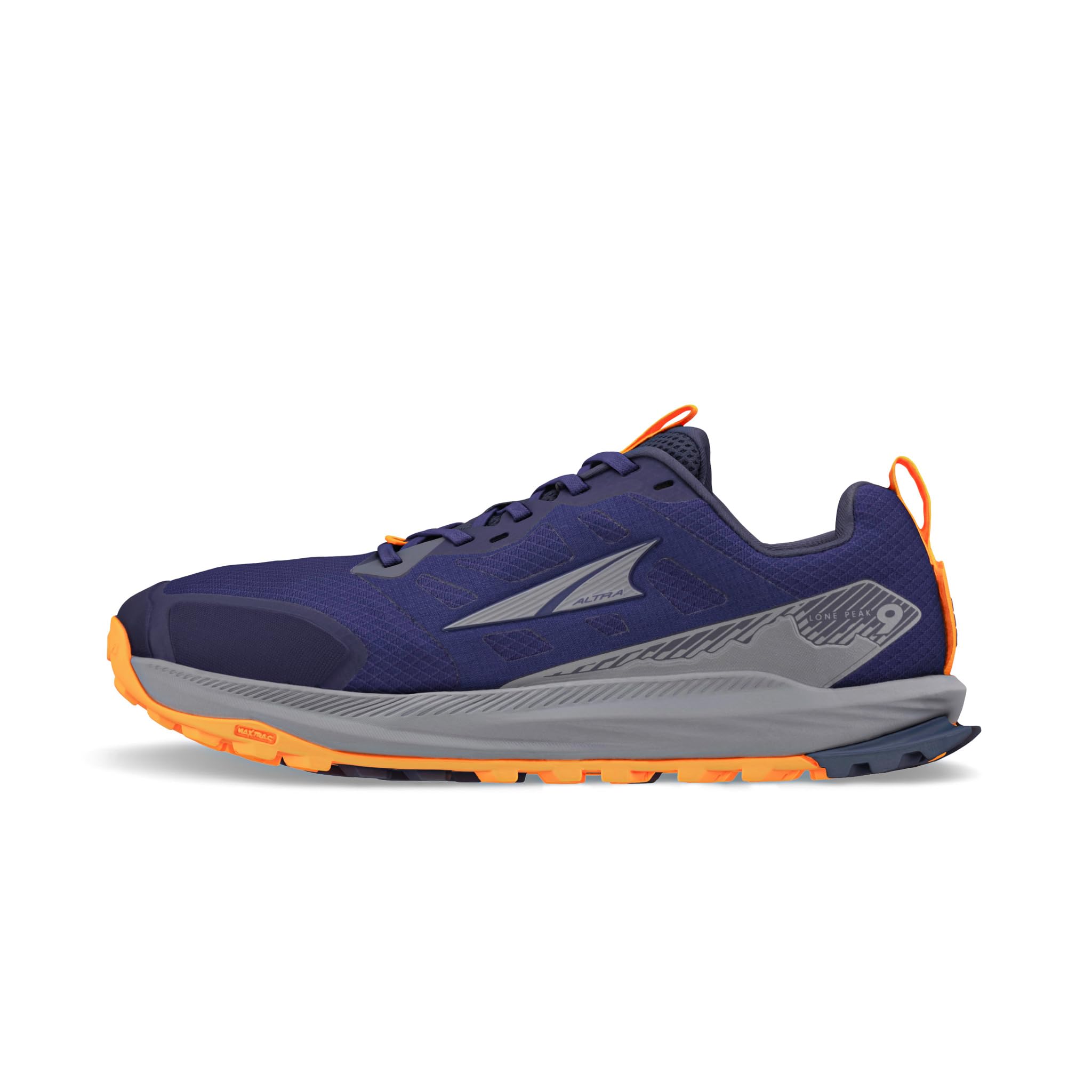
The Lone Peak 9 is the gold standard for hikers who prioritize a natural foot position and wide toe splay. ALTRA’s signature zero-drop platform means your heel and forefoot sit at the same height relative to the ground, which encourages a midfoot strike and reduces stress on the Achilles and calves over long miles. The FootShape toe box is genuinely wide — wider than any other shoe in this review — letting every toe spread for balance on uneven surfaces.
The midsole uses ALTRA’s EGO foam, a nitrogen-infused blend that balances cushioning with responsiveness. It’s softer than the Max-RT foam found in previous versions, which improves comfort on rocky terrain but sacrifices some ground feel. The outsole features MaxTrac rubber with 4.5 mm lugs arranged in a trail-claw pattern at the forefoot for uphill grip and heel braking lugs for controlled descents. The upper uses recycled mesh with a gaiter trap, a nice touch for debris-prone trails.
Transitioning to zero-drop requires a short adaptation period if you’re used to shoes with a 8-12 mm drop. Start with shorter hikes to let your calves adjust. Once adapted, the Lone Peak 9 feels remarkably stable because your foot sits flatter against the trail surface. The lack of drop also makes it easier to scramble over boulders since your weight stays centered. If natural foot mechanics matter to your comfort, this is the best choice available.
Why it’s great
- Zero drop reduces Achilles strain on long hikes
- Wide FootShape toe box allows natural splay
- MaxTrac outsole grips well on varied surfaces
Good to know
- Zero drop requires calf acclimation period
- Softer EGO foam reduces ground feel on rock
8. Brooks Women’s Cascadia 19 Mountain Trail Running Shoe
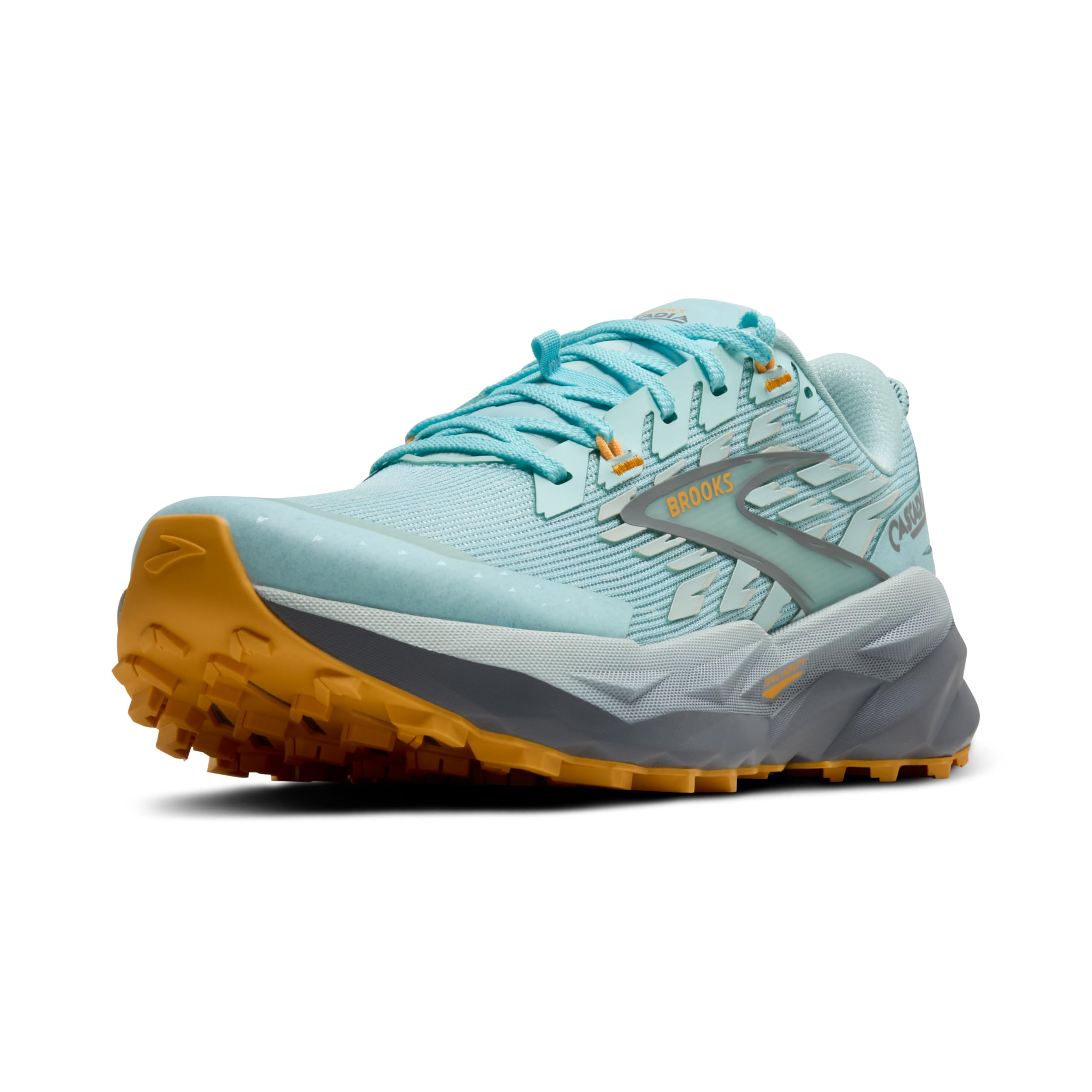
The Cascadia 19 is Brooks’ most accomplished trail shoe for technical mountain terrain, and it works brilliantly as a lightweight trekking shoe for hikers who need lateral stability on side slopes. The midsole uses Brooks’ DNA LOFT v3 cushioning — a blend of rubber and air that delivers soft landings without the instability that often plagues plush shoes. The TrailTack rubber outsole provides aggressive grip on wet rock and loose dirt, with lugs that are shaped to channel mud away from the contact surface.
What sets the Cascadia 19 apart is the integrated stability system: a firmer foam post on the medial side and a saddle-like upper wrap that locks the midfoot without creating pressure points. This makes the shoe feel planted when traversing off-camber scree fields where other lightweight shoes would let your foot roll. The toe box offers adequate room without being overly wide, and the heel pocket is snug enough to eliminate slip even on steep descents.
The upper uses a breathable mesh with a gusseted tongue that keeps debris out, and the toe bumper provides genuine protection against rock strikes. At 1.5 pounds per shoe, it’s not the absolute lightest on the list, but the stability and grip trade-off is worth the ounces for mountainous routes. If your day hikes involve exposed ridgelines and technical rock gardens, the Cascadia 19 instills confidence that cheaper shoes can’t match.
Why it’s great
- Integrated stability post prevents foot roll
- TrailTack rubber grips wet rock extremely well
- Gusseted tongue blocks debris entry effectively
Good to know
- Slightly heavier than dedicated lightweight options
- Snug heel fit may feel tight for wide ankles
9. New Balance Men’s Fresh Foam X Hierro V9
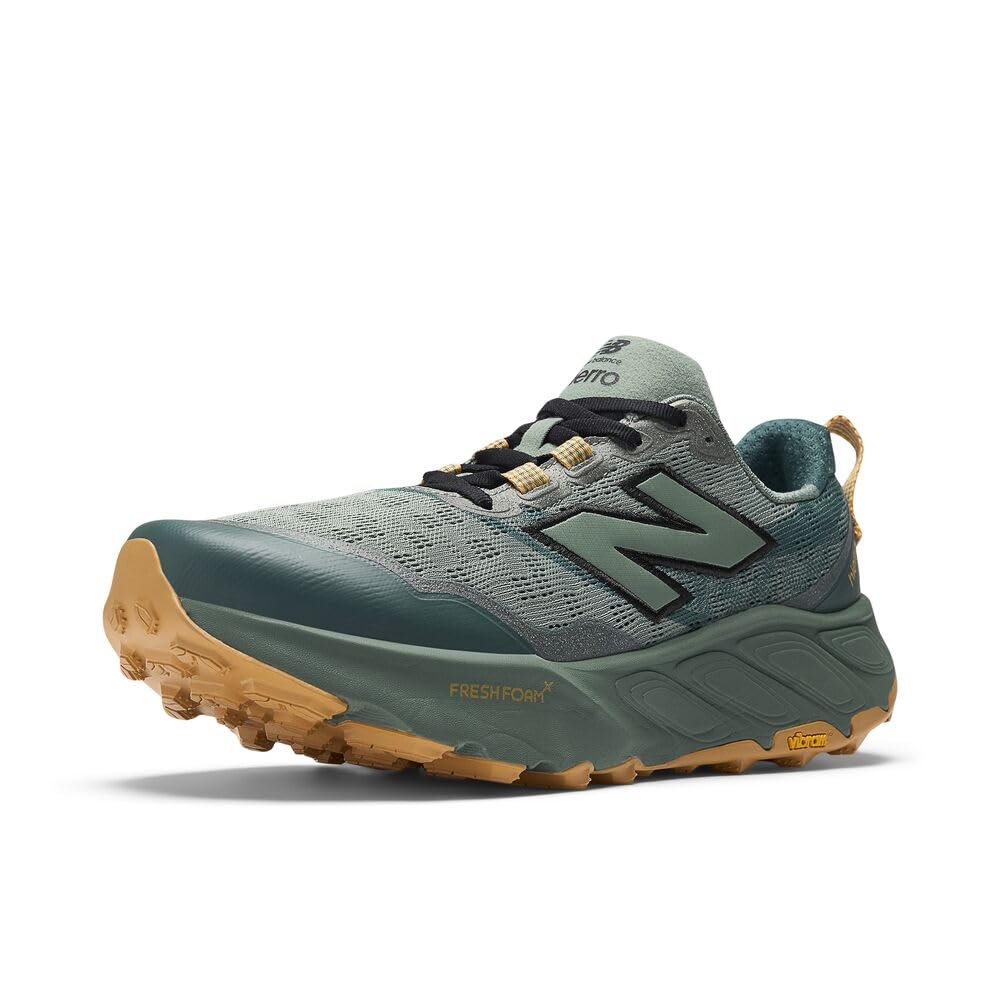
The Fresh Foam X Hierro V9 is the most cushioned shoe in this lineup, using New Balance’s premium Fresh Foam X compound that provides a plush, cloud-like feel underfoot. This level of cushion is a double-edged sword on the trail: it absorbs sharp rocks beautifully on long descents, but the soft foam compromises ground feel and stability on technical terrain. For hikers who prioritize comfort over precision, however, this is a dream shoe for all-day treks on rough surfaces.
The Vibram Megagrip outsole with 4 mm lugs provides reliable traction on wet and dry surfaces alike, and the Rock Stop plate embedded in the forefoot prevents sharp stones from bruising the soles. The upper uses a knit construction with TPU overlays and a gusseted tongue that seals out dirt effectively. The toe bumper is substantial enough to protect against kicks, and the heel counter is reinforced to hold your foot in place despite the thick midsole.
The main trade-off is weight — the Hierro V9 is the heaviest shoe on this list, and that weight becomes noticeable after several hours of climbing. The midsole also runs wide, which can feel unstable if you have narrow feet, especially on uneven ground. For hikers who want maximum shock absorption on rocky trails and are willing to accept a less agile feel, the Hierro V9 delivers unmatched underfoot plushness in the lightweight trekking category.
Why it’s great
- Fresh Foam X provides best-in-class shock absorption
- Vibram Megagrip outsole grips reliably in wet conditions
- Rock Stop plate protects feet from sharp stones
Good to know
- Heaviest shoe in the roundup affects agility
- Wide platform feels unstable for narrow feet
FAQ
What is the ideal weight for a lightweight trekking shoe?
Can I use trail running shoes for lightweight trekking?
How do I know if I need a zero-drop shoe?
Final Thoughts: The Verdict
For most users, the best lightweight trekking shoes winner is the Merrell Men’s Speed Strike 2 because it strikes the best balance between low weight, trail durability, and midfoot support for day hikes with a light pack. If you want a natural foot position with maximum splay, grab the ALTRA Men’s Lone Peak 9. And for technical mountain routes where stability and wet-rock grip are non-negotiable, nothing beats the Brooks Women’s Cascadia 19.