The problem with most hiking boots is that they feel like anchors on your feet long before the trail gets steep. You need the ankle support and rugged outsole for uneven terrain, but you also need to cover miles without your legs burning out from the sheer weight of your footwear. That balance defines the modern lightweight boot category.
I’m Emma — the founder and writer behind Baby Bangs. I have spent years comparing boot construction specs, waterproof membrane performance, and midsole density data to separate boots that shave ounces without sacrificing durability from those that cut corners.
Whether you are tackling a weekend ridge line or a wet Pacific Northwest loop, finding the right pair starts below. We break down nine contenders for the best lightweight hiking boots for men, covering Gore-Tex liners, Vibram outsoles, and the real-world fit differences between them.
How To Choose The Best Lightweight Hiking Boots For Men
Every hiker I talk to wants one thing: a boot that disappears under your foot. That means you need to look past the brand name and focus on three concrete specs that define how that boot feels on the trail hour after hour.
Waterproof Membrane vs. Breathability
A Gore-Tex liner keeps your feet dry in stream crossings and rain, but it also locks in heat on exposed climbs. Modern light boots use thinner membrane layers that shave weight but trade some puncture resistance. If you hike mostly in dry climates, a non-waterproof version lets your feet breathe better and dries faster when wet. If you see rain weekly, a Gore-Tex boot with a sealed tongue gusset is non-negotiable. Some boots on this list use proprietary membranes that claim similar performance at a lower price point — check real user reports on breathability before buying.
Heel-to-Toe Drop and Midsole Cushioning
The drop is the height difference between the heel and forefoot. A 10-12mm drop shifts your weight toward the heel, which feels stable on descents but can encourage heel striking on flats. A 4-5mm drop promotes a more natural midfoot gait that many hikers prefer for long miles. The midsole material matters too — EVA foam is lightweight and compresses over time, while PU or Pebax lasts longer but adds ounces. If you are covering big miles, a boot with a rock plate underfoot protects against sharp stones better than a soft midsole alone.
Outsole Rubber Compound and Lug Geometry
Vibram is the gold standard for a reason — the rubber compound stays grippy on wet rock and wears slowly on gravel. But not all Vibram soles are equal. Look for multi-directional lugs with a self-cleaning pattern that sheds mud rather than packing it. A boot with deeper lugs (4mm or more) grips loose dirt well but feels clunky on pavement. For mixed terrain, a 3-4mm lug depth with a continuous contact area gives you traction without the stiff feel of a mountaineering boot.
Quick Comparison
On smaller screens, swipe sideways to see the full table.
| Model | Category | Best For | Key Spec | Amazon |
|---|---|---|---|---|
| KEEN Targhee 4 Mid | Mid-Range | All-day comfort on varied terrain | KEEN.DRY waterproof membrane | Amazon |
| Adidas Terrex Skychaser Ax5 | Mid-Range | Fast hikes and light scrambling | Gore-Tex + Continental rubber | Amazon |
| Topo Athletic Trailventure 2 WP | Mid-Range | Trail running crossover comfort | 5mm drop + waterproof bootie | Amazon |
| Timberland White Ledge Mid | Budget | Entry-level weekend hikes | Timberland waterproof membrane | Amazon |
| Columbia Benson Mid | Budget | Casual trails and light use | Omni-Tech waterproof breathable | Amazon |
| SCARPA Rush TRK GTX | Premium | Technical terrain and long hauls | Gore-Tex + Vibram Drumlin sole | Amazon |
| La Sportiva Nucleo High II GTX | Premium | Scrambling and uneven rock | Gore-Tex + Vibram Nano outsole | Amazon |
| Lowa Zephyr GTX Mid | Premium | Urban to trail versatility | Gore-Tex + Vibram Evo sole | Amazon |
| ASOLO TPS 520 GV Evo | Premium | Heavy backpacking and alpine | Full-grain leather + Vibram sole | Amazon |
In‑Depth Reviews
1. KEEN Men’s Targhee 4 Mid Height Waterproof Hiking Boots

The Targhee 4 Mid is the fourth iteration of a boot that consistently nails the lightweight hiking brief. KEEN uses its own KEEN.DRY waterproof membrane rather than Gore-Tex, which keeps the weight down and the breathability up for day hikes in mixed conditions. The rubber toe cap extends high enough to protect against rock strikes without adding the stiffness of a full rand.
The midsole uses a dual-density EVA that feels plush underfoot but does not pack out quickly. The outsole is a KEEN-branded rubber with 4mm multi-directional lugs that clear mud well. On wet granite slabs the grip is confident, though the deeper lugs feel slightly less precise on flat pavement than a tighter pattern would.
Fit runs slightly long, which works well for hikers who wear thick socks. The heel pocket is snug enough to prevent lift, and the mid-height collar provides ankle support without restricting dorsiflexion on steep climbs. For an all-around boot that handles damp trails and dry ridges equally well, this is the pair to beat in the mid-range sweet spot.
Why it’s great
- Spacious toe box reduces blister risk on long days
- KEEN.DRY membrane breathes better than many Gore-Tex boots at this weight
- Durable toe cap protects against sharp rocks and roots
Good to know
- Runs slightly long — try a half size down if between sizes
- Outsole lugs can feel bulky on hard-packed trails
2. Adidas Mens Terrex Skychaser Ax5 Mid Top Gore-tex Hiking
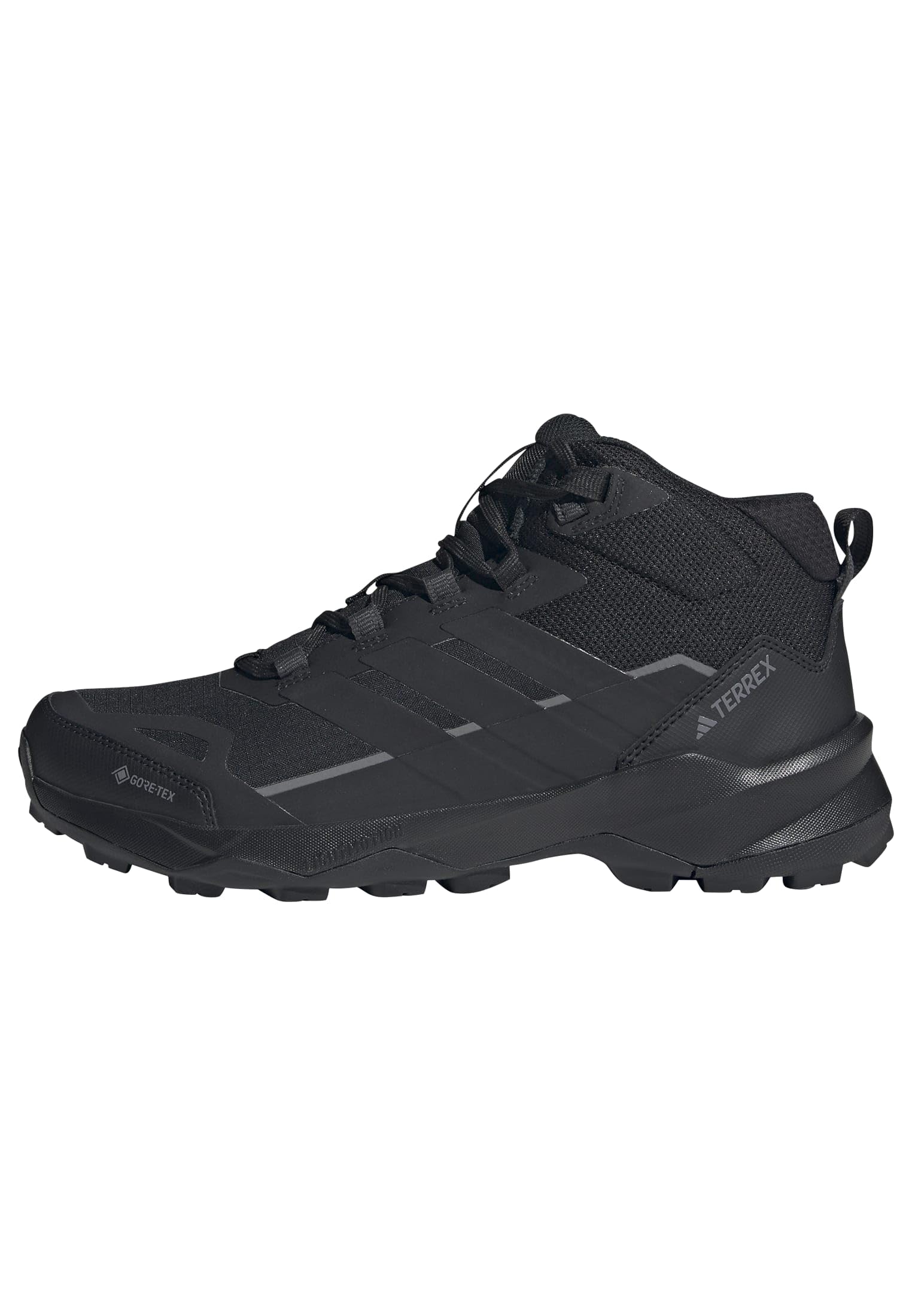
The Terrex Skychaser Ax5 is essentially a trail runner that grew a taller collar. The Gore-Tex liner is thin and flexible, allowing the boot to move naturally with your foot rather than resisting every step. The Continental rubber outsole — borrowed from Adidas road running shoes — provides excellent grip on damp rock and pavement alike.
The midsole is a single-density EVA that feels responsive underfoot. Hikers who prefer a firm platform for load carrying may find it too soft, but for light day packs and fast hiking it delivers a stable yet lively ride. The heel-to-toe drop is a moderate 8mm, which suits both heel strikers on descents and midfoot runners on flat sections.
The upper is a mix of textile and synthetic overlays that breathe well but lack the durability of leather panels. The ankle collar is padded but low profile, so hikers with very narrow heels may experience some heel slip on steep side slopes. For hikers who want a boot that feels more like a shoe, this is a strong contender in the mid-range.
Why it’s great
- Continental rubber grips wet rock and concrete confidently
- Flexible Gore-Tex liner allows natural foot movement
- Lightweight build suitable for fast day hikes
Good to know
- Midsole packs out faster than dual-density EVA options
- Upper materials are less durable than leather or heavy nylon
3. Topo Athletic Men’s Trailventure 2 WP Comfortable Waterproof 5MM Drop Trail Running Boots

The Trailventure 2 WP is built by a company that prioritizes a wide anatomical toe box and a low 5mm heel-to-toe drop. This geometry encourages a natural midfoot strike that many hikers find less fatiguing over long days. The waterproof internal bootie keeps moisture out without the stiffness of a separate liner layer.
The outsole uses Vibram Megagrip with a 3.5mm lug pattern that balances traction on loose dirt with precision on rocky slabs. The midsole is a dual-density EVA that provides a soft landing while maintaining enough structure to resist roll on uneven ground. The boot weighs just under 1.5 pounds per shoe in a size 9, which puts it firmly in the lightweight category.
The main trade-off is in ruggedness. The upper uses a combination of mesh and TPU overlays that breathe well but are less abrasion-resistant than leather. Hikers who frequently bash through scree fields or dense brush should look at the KEEN or SCARPA options instead. For hikers who prioritize foot mechanics and long-mile comfort, this is a specialist pick.
Why it’s great
- Wide toe box allows splay and prevents toe jamming on descents
- Low drop promotes natural gait and reduces calf fatigue
- Vibram Megagrip sole performs well on wet and dry rock
Good to know
- Mesh upper is vulnerable to cuts from sharp rocks
- Not ideal for heavy backpack loads due to softer midsole
4. Timberland Men’s White Ledge Mid Waterproof Hiking Boots

The Timberland White Ledge Mid has been a budget-friendly staple for years because it gets the fundamentals right without expensive add-ons. The waterproof membrane is Timberland’s proprietary layer that keeps feet dry in light rain and damp grass, and the rubber outsole uses multi-directional lugs that handle moderate trail conditions well.
The upper is full-grain leather that breaks in stiffly but gains flexibility with wear. The midsole is a basic EVA foam that provides adequate cushioning for day hikes under 10 miles but compresses noticeably on longer routes. The heel-to-toe drop sits around 10mm, which feels stable on descents but can feel clunky on flat trail sections.
The main limitation is the weight — at roughly 2.5 pounds per pair in a size 10, these are heavier than most modern lightweight boots. They also lack the supportive shank of a premium boot, so carrying a heavy pack for days will fatigue your arches. For weekend warriors on maintained trails at a low entry cost, these remain a solid choice.
Why it’s great
- Full-grain leather upper offers decent abrasion resistance
- Classic styling works for casual wear too
- Waterproof membrane handles damp trail conditions
Good to know
- Heavier than most contemporary lightweight boots
- EVA midsole compresses faster than mid-range options
5. Columbia Men’s Benson Mid

The Columbia Benson Mid is designed for hikers who want a lightweight boot that works well on well-maintained trails and gravel paths. The Omni-Tech membrane provides a waterproof barrier that is more breathable than a heavy rubberized liner, and the Techlite midsole absorbs shock effectively for a boot at this level.
The outsole is Columbia’s own Adapt Trak rubber, which uses a shallow 3mm lug pattern that feels smooth on pavement but lacks the bite for mud or loose scree. The upper combines mesh and synthetic leather, keeping the weight low at under 2 pounds per pair. The fit is true to size with a medium volume that accommodates average-width feet well.
The durability cap is lower than the mid-range KEEN or Timberland options — the mesh panels can tear against sharp rocks and the midsole compresses within a few months of regular use. For hikers who stick to packed trails and want a comfortable, affordable boot that does not require a heavy break-in period, the Benson Mid delivers.
Why it’s great
- Lightweight construction reduces leg fatigue on easy trails
- Quick break-in period, no blisters from stiff leather
- Omni-Tech membrane breathes well for warmer conditions
Good to know
- Shallow outsole lugs lose grip in mud and loose dirt
- Mesh upper lacks the durability of nylon or leather panels
6. SCARPA Men’s Rush TRK GTX Waterproof Gore-Tex Lightweight Hiking Boots

The SCARPA Rush TRK GTX is what happens when a premium Italian boot maker decides to build a lightweight hiker without stripping away technical capability. The Gore-Tex liner extends high up the collar, and the Vibram Drumlin outsole features a climbing zone at the toe that bites into small edges for scrambling sections.
The midsole uses a dual-density PU that holds its shape far longer than EVA foam, making this boot suitable for multi-day backpacking trips with loads up to 40 pounds. The heel-to-toe drop is 12mm, which provides excellent stability on descents and reduces strain on the Achilles on long downhill sections. The boot weighs just over 2 pounds per pair in a size 9, impressive for the support it offers.
The upper combines suede leather and a high-abrasion nylon mesh that resist punctures better than a full mesh boot. The fit is slightly narrow in the midfoot, so hikers with wide feet should size up or try a different model. For hikers who tackle technical third-class terrain and want a boot that supports a heavy pack without weighing them down, this is the premium pick.
Why it’s great
- PU midsole resists compression on multi-day trips
- Climbing toe zone improves scrambling precision
- High ankle collar provides excellent support on uneven terrain
Good to know
- Midfoot runs narrow for some foot shapes
- Higher drop may feel unnatural for midfoot strikers
7. La Sportiva Mens Nucleo High II GTX Waterproof Hiking Boots

The Nucleo High II GTX from La Sportiva is built for hikers who spend as much time scrambling over boulders as they do walking on trails. The Vibram Nano outsole uses a sticky rubber compound that grips polished granite and damp limestone better than any standard hiking boot rubber. The Gore-Tex liner is integrated into the bootie construction, reducing the number of seams that can fail over time.
The midsole uses a combination of EVA and a TPU stabilizer that adds torsional rigidity without making the boot feel plank-like. The heel-to-toe drop is 9mm, a middle ground that suits both downhill and flat sections. The upper combines suede leather with a cushioned collar that locks the heel in place, reducing friction on steep side slopes.
The main drawback is the price point, which places it in the premium tier alongside the SCARPA and Lowa options. The fit is tailored for medium to narrow feet — wide-footed hikers will find the toe box restrictive. For hikers who regularly move cross-country on exposed rock and want a boot that actively assists in climbing moves, this is the specialist choice.
Why it’s great
- Sticky Vibram Nano rubber grips wet rock exceptionally well
- TPU stabilizer adds torsional stiffness for scrambling
- Integrated Gore-Tex bootie reduces seam failure points
Good to know
- Premium cost is a barrier for occasional hikers
- Narrow fit excludes some wide-footed users
8. Lowa Men’s Zephyr GTX Mid Hiking Boot

The Lowa Zephyr GTX Mid is a narrow-profile boot that excels in the crossover zone between city walking and moderate trail use. The Vibram Evo outsole uses a low-profile lug pattern that transitions smoothly from pavement to packed dirt, and the Gore-Tex liner keeps feet dry through puddles and wet grass without the bulk of a mountaineering boot.
The midsole uses a dual-density PU that provides consistent support without packing out, and the heel-to-toe drop is 10mm, which feels natural for hikers who are accustomed to a standard sneaker gait. The upper is a combination of split leather and nylon that breaks in quickly and resists punctures better than a full mesh boot. At roughly 2 pounds per pair, it is one of the lighter options in the premium category.
The main limitation is the outsole lug depth, which is shallow at just 3mm. In deep mud or loose gravel the grip falls off compared to the SCARPA or La Sportiva options. The fit is medium volume with a secure heel cup, suitable for most foot shapes. For hikers who want one boot that handles daily urban life and weekend trail miles, this is a refined choice.
Why it’s great
- Low-profile outsole works well on pavement and packed trails
- PU midsole retains support longer than EVA alternatives
- Quick break-in period with no stiff leather hotspots
Good to know
- Shallow lugs lack grip in mud and loose scree
- Premium cost may not be justified for occasional use
9. ASOLO Men’s TPS 520 GV Evo Waterproof Round Toe Backpacking Boots
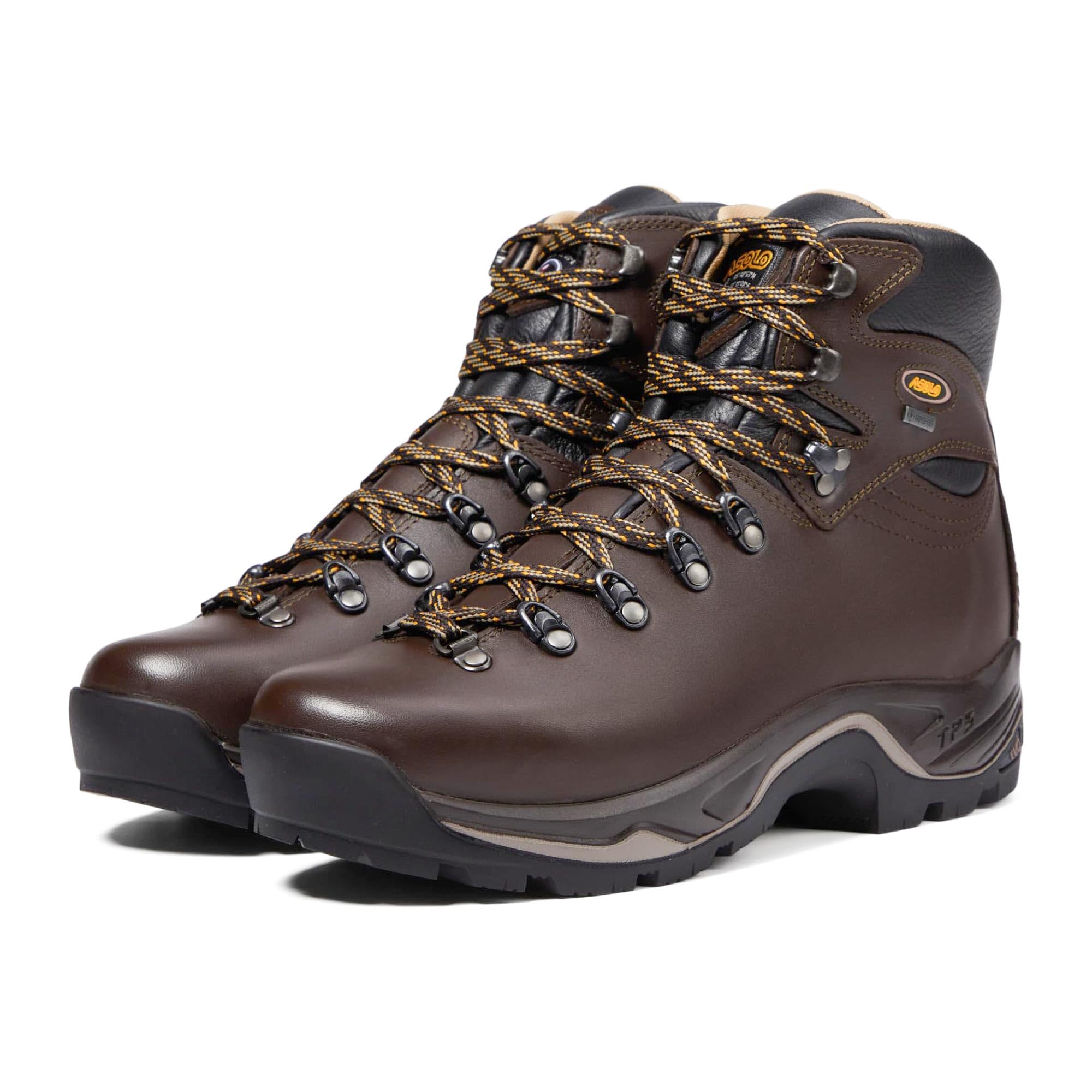
The ASOLO TPS 520 GV Evo is the heaviest boot on this list, but it is also the only one designed for true alpine backpacking with loads exceeding 50 pounds. The full-grain leather upper is single-piece construction, meaning fewer seams to fail and a level of abrasion resistance that mesh boots cannot match. The Vibram sole uses aggressive 5mm lugs that bite into loose talus and wet grass.
The midsole includes a rigid nylon shank that provides excellent support for carrying a heavy pack over uneven ground. The heel-to-toe drop is 12mm, which keeps you stable on steep descents with a loaded pack. The Gore-Tex liner is a full bootie construction that prevents moisture ingress even in prolonged wet conditions. The weight comes in around 3.5 pounds per pair, which is heavy for a lightweight boot category, but appropriate for its intended use.
The downsides are the break-in period, which typically requires 20-30 miles of walking before the leather conforms to your foot, and the price premium, which places it at the top of the range. The fit is medium volume with a generous toe box that accommodates thick socks. For hikers who need a boot that can handle technical alpine terrain with a heavy pack, this is the most capable option available.
Why it’s great
- Single-piece leather upper offers exceptional durability
- Rigid nylon shank supports heavy backpack loads
- Aggressive lugs provide traction on loose alpine terrain
Good to know
- Significantly heavier than other boots in this category
- Requires long break-in period before reaching full comfort
FAQ
How much should a lightweight hiking boot weigh per shoe?
Is a waterproof membrane necessary for summer hiking?
What is the ideal heel-to-toe drop for hiking boots?
Final Thoughts: The Verdict
For most hikers, the best lightweight hiking boots for men winner is the KEEN Targhee 4 Mid because it combines a roomy fit, KEEN.DRY waterproofing, and a all-day-cushioned midsole at a price that makes it accessible. If you want a more nimble feel for fast hikes and scrambling, grab the Adidas Terrex Skychaser Ax5. And for technical terrain or multi-day backpacking loads where support matters more than absolute weight, nothing beats the SCARPA Rush TRK GTX.