Snapping a selfie without filters used to mean accepting uneven patches, post-breakout marks, and a dull complexion that no amount of concealer could fully fix. A formula that actually disrupts melanin overproduction without stripping your moisture barrier is the difference between makeup-hiding and genuinely waking up with a more even, luminous tone.
I’m Emma — the founder and writer behind Baby Bangs. I spend my weeks cross-referencing ingredient studies, analyzing formulation pH levels, and comparing stability packaging to separate legit brightening science from flash-in-the-pan marketing.
After reviewing dozens of formulas on concentration, irritation potential, and real-user texture feedback, I’ve narrowed it down to five standout bottles. This is your complete guide to finding the best lightening serum for face based on your skin’s tolerance and your personal glow goal.
How To Choose The Best Lightening Serum For Face
The most common mistake is buying based on the hero ingredient alone without considering its form, concentration, and supporting complex. A serum that works beautifully on someone’s oily skin can cause stinging, peeling, or paradoxical darkening on a sensitive or dry complexion. Here’s what actually matters.
Active Ingredient Type & Concentration
The three heavy hitters in this category are L-Ascorbic Acid (pure vitamin C), Niacinamide (vitamin B3), and Tranexamic Acid (TXA). L-Ascorbic acid is the gold standard for antioxidant protection and collagen support, but it oxidizes quickly and requires a pH under 4. Niacinamide is more stable, works well at a 10–20% range, and tackles both brightening and pore texture simultaneously. TXA targets stubborn post-inflammatory hyperpigmentation from acne or injury. Formulas that pair two of these three tend to outperform single-actives for overall evening.
Stability & Packaging
Vitamin C, particularly L-Ascorbic acid, begins degrading the moment it contacts light and air. A dark glass or opaque bottle with a pump or dropper that minimizes air exposure is non-negotiable. If the formula turns yellow or brown before you finish the bottle, the active is dead. Niacinamide and TXA are far more forgiving, but they still benefit from airtight containers that protect against contamination.
Barrier Support Ingredients
A brightening serum should never sacrifice your skin barrier. Look for soothing co-factors such as Centella Asiatica (cica), Ceramides, or Hyaluronic Acid in the formula. These ingredients reduce redness, lock in moisture, and help the skin tolerate higher percentages of actives without burning or peeling. A formula that only lists brighteners without any calming agents is a red flag for anyone with reactive skin.
Quick Comparison
On smaller screens, swipe sideways to see the full table.
| Model | Category | Best For | Key Spec | Amazon |
|---|---|---|---|---|
| JUMISO 20% Niacinamide TXA | Mid-Range | Stubborn dark spots & glass skin | 20% Niacinamide + TXA + Glutathione | Amazon |
| CeraVe Vitamin C Serum | Mid-Range | Gentle daily antioxidant support | 10% L-Ascorbic Acid + Ceramides | Amazon |
| RAYA Vitanol – A 501 | Mid-Range | Oily skin & anti-aging combo | Vitamin A + Vitamin C complex | Amazon |
| Innisfree Green Tea Enzyme | Premium | Korean glass skin glow | Green tea enzyme + Vitamin C | Amazon |
| GOODAL Green Tangerine Vita C | Premium | Hydrating brightening for fine lines | 15% Green Tangerine Vitamin C | Amazon |
In‑Depth Reviews
1. JUMISO 20% Niacinamide Dark Spot Serum – TXA + Glutathione

The JUMISO serum packs a triple brightening punch with 20% Niacinamide, Tranexamic Acid, and Glutathione, targeting discoloration from multiple biological pathways. Clinical data from the brand shows up to 27.7% improvement in skin clarity and a 20% reduction in the look of redness within two weeks, making it one of the fastest-acting formulas at this price tier. The addition of TXA addresses stubborn PIH that pure niacinamide sometimes struggles to shift alone.
What sets this apart is the inclusion of a Triple Centella Complex (Asiaticoside, Madecassic Acid, Asiatic Acid) that actively soothes the skin barrier against irritation from the high niacinamide percentage. Users transitioning from lower-strength brighteners usually tolerate the gradual introduction well thanks to these barrier-calming ingredients. The lightweight finish also helps refine pore appearance and control midday shine without pilling under sunscreen or moisturizer.
On the downside, the 20% concentration can feel strong for complete beginners; starting with every-other-night application is sensible. The dropper works cleanly, but the 1.35 fl oz bottle is slightly smaller than some mid-range competitors, so heavy daily users may repurchase faster. For a high-strength brightener that still respects sensitive skin, this is a standout choice.
Why it’s great
- Triple active (Niacinamide + TXA + Glutathione) for multi-level brightening
- Centella complex prevents irritation from high-strength formula
- Visible clinical results in just two weeks
Good to know
- 20% niacinamide can cause purging if used too quickly
- Smaller bottle volume at 1.35 fl oz
2. CeraVe Vitamin C Serum with 10% Pure Vitamin C + Hyaluronic Acid

CeraVe takes a dermatologist-backed approach by pairing 10% pure L-Ascorbic acid with three essential Ceramides and Hyaluronic Acid. The 10% concentration is a sweet spot for beginners: strong enough to brighten and provide antioxidant protection, but low enough to avoid the stinging and instability issues that plague higher-percentage C serums. The protective packaging helps prevent oxidation, which is the main reason many vitamin C serums fail within weeks of opening.
The gel texture absorbs quickly without greasiness, making it a comfortable morning layer under SPF. Because Ceramides make up roughly 50% of the skin’s lipid barrier, this serum actively repairs while it brightens — a benefit most L-Ascorbic formulas neglect. Users with dry or combination skin typically see improvements in both tone evenness and surface hydration within the first bottle.
That said, 10% L-Ascorbic acid is less aggressive than the 15–20% options on the market, so users with very stubborn melasma or deep sunspots may find results slower than desired. The brand also uses a screw-cap dropper instead of a vacuum pump, so careful storage away from sunlight is important to preserve potency. For a budget-friendly, trustable introduction to vitamin C brightening, this is the safest play.
Why it’s great
- Dermatologist-developed formula with barrier-repairing ceramides
- Stable 10% L-Ascorbic acid reduces irritation risk
- Non-comedogenic and fragrance-free for reactive skin
Good to know
- 10% concentration may be too mild for deep pigmentation
- Dropper design increases air exposure
3. RAYA Vitanol – A (501) Serum for Face | Vitamin-A & Vitamin C
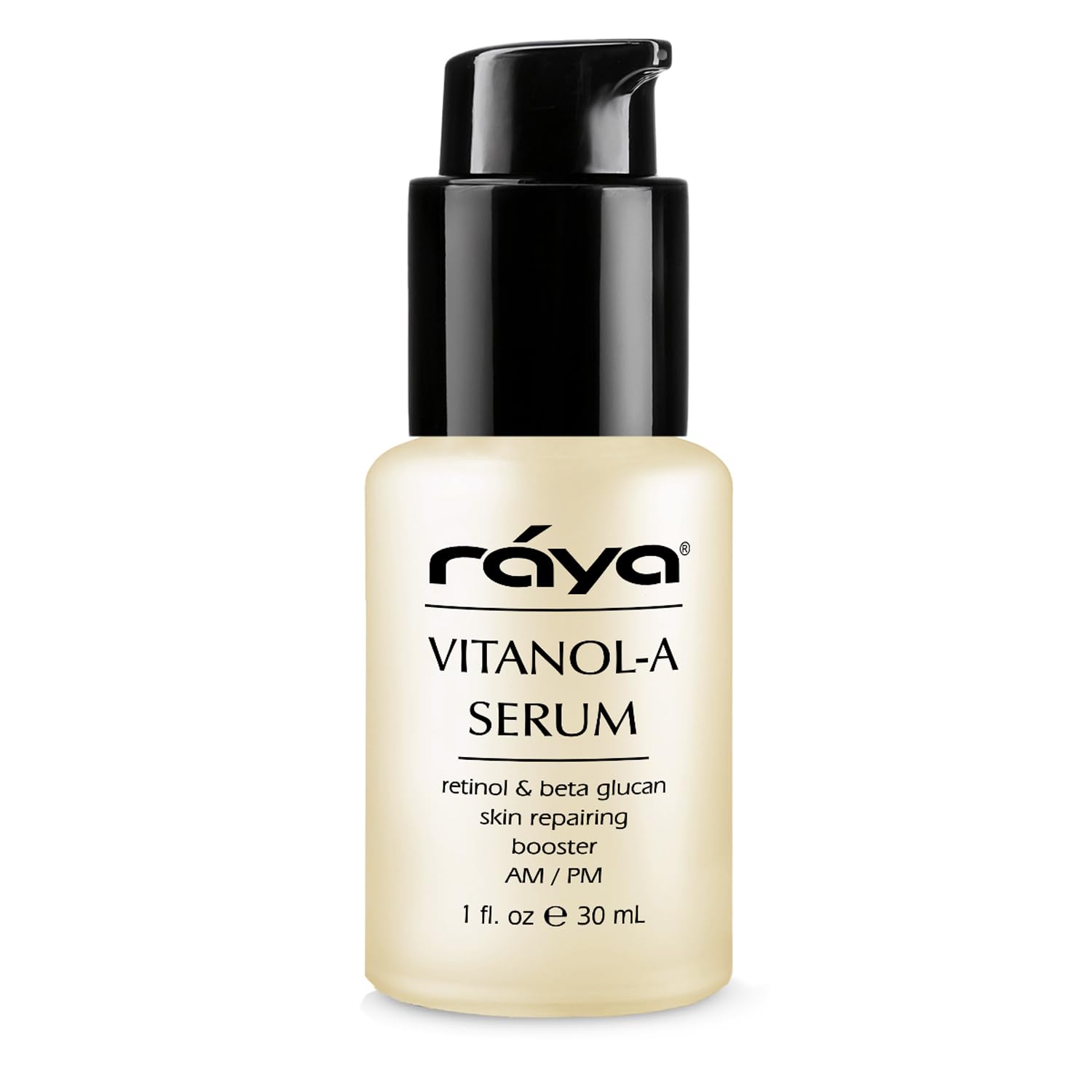
The RAYA Vitanol – A 501 serum takes a different approach by combining Vitamin A (likely a retinoid or retinol-derivative) with Vitamin C in a single formula. This pairing targets both brightening and textural smoothing — vitamin C handles hyperpigmentation and antioxidant defense, while vitamin A accelerates cell turnover to soften fine lines and refine pore congestion. It’s an efficient combo for users who want to reduce steps in their routine without sacrificing results.
The formula is specifically marketed toward oily and combination skin types, likely because the vitamin A component helps regulate sebum production. The lightweight consistency won’t add heaviness, and the inclusion of vitamin C supports the fading of post-acne marks that often accompany oily, breakout-prone complexions. For users comfortable with retinoids, this dual-active streamlines the entire evening regimen into one bottle.
However, the product data is sparse on exact percentages and stabilization methods. Users with dry or sensitive skin should approach carefully since simultaneous vitamin A and C can compound irritation, especially during the retinization period. The packaging details are also minimal, so oxidation stability is a question mark. For oily-skinned users wanting a two-in-one brightener and smoother, this earns a solid mid-range spot.
Why it’s great
- Combines brightening and anti-aging in one step
- Tailored for oily skin and sebum control
- Lightweight feel suitable for layering
Good to know
- Exact concentrations of both actives not listed
- Can cause sensitivity for dry or reactive skin types
4. Innisfree Green Tea Enzyme Vitamin C Serum for Brightening

Innisfree brings its K-beauty heritage into this Green Tea Enzyme Vitamin C serum, using fermented green tea enzymes alongside vitamin C for gentle enzymatic exfoliation while brightening. Enzymes like those derived from green tea provide a mild, non-abrasive way to loosen dead skin cells, which allows the vitamin C to penetrate more evenly across the surface. This dual approach creates a smoother, more reflective finish that K-beauty fans call “glass skin.”
The formula feels silky and absorbs rapidly without leaving a sticky residue, which is a common complaint with thicker brightening serums. Green tea itself is rich in polyphenols that provide additional antioxidant protection against environmental damage, making this a solid daytime choice under sunscreen. It’s particularly effective for users whose skin has lost its natural luminosity due to mild surface buildup rather than deep dermal pigmentation.
On the limiting side, the exact percentage of vitamin C is not disclosed on the product data, making it hard to judge potency versus competitors. Users with extreme hyperpigmentation or melasma may find it too mild as a standalone treatment. It also sits at the higher end of the price spectrum. For someone chasing a radiant, even surface glow without aggressive irritation, this is a premium option worth considering.
Why it’s great
- Enzymatic exfoliation enhances brightener penetration
- Green tea polyphenols provide extra antioxidant defense
- Silky, non-sticky finish ideal for AM layering
Good to know
- Vitamin C concentration not specified on packaging
- May be too gentle for deep pigmentation issues
5. GOODAL Green Tangerine Vita C 15 Ampoule
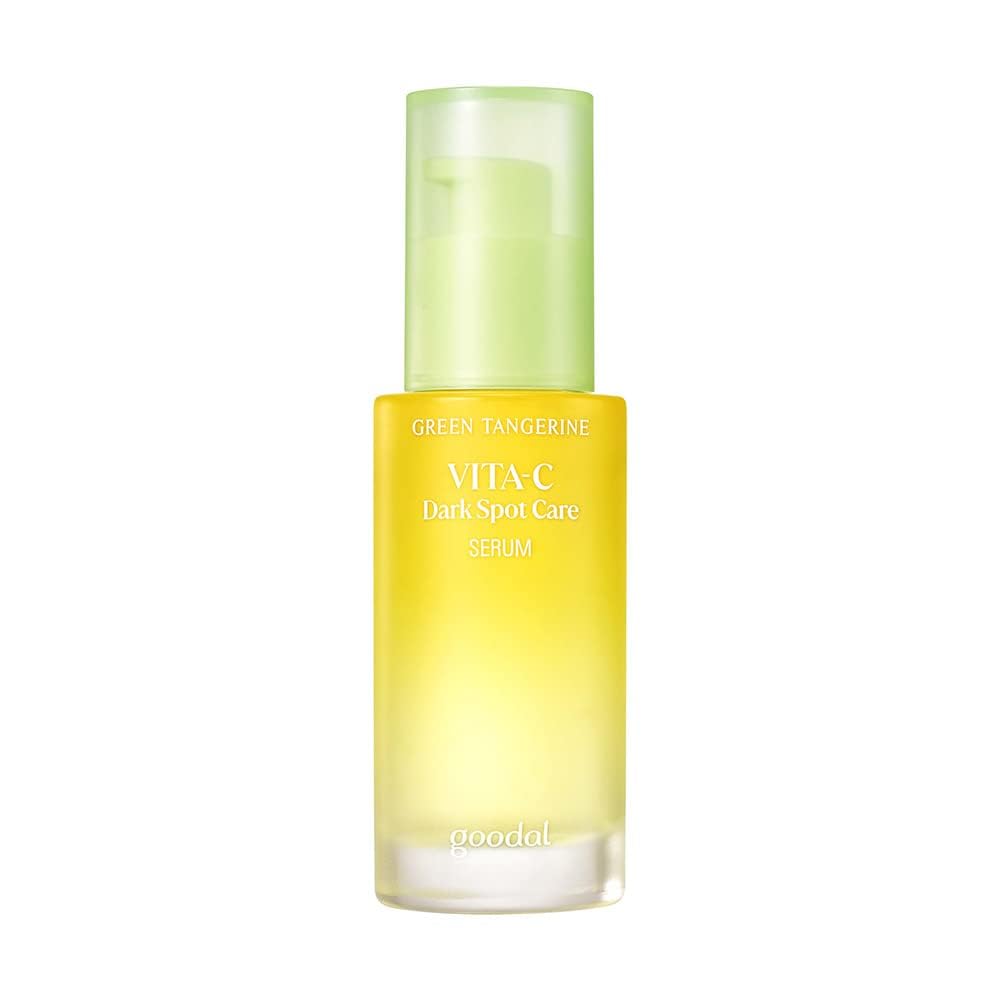
GOODAL’s Green Tangerine Vita C 15 Ampoule uses a 15% vitamin C derivative derived from green tangerines, which is naturally less acidic and therefore gentler than standard L-Ascorbic acid. The formula specifically targets dark circles, post-acne marks, fine lines, and overall dullness, making it versatile for both morning and nighttime routines. It’s a popular K-beauty staple for users who cannot tolerate the tingling of straight ascorbic acid but still want meaningful brightening.
The ampoule format is slightly thicker than a standard serum, offering a hydration boost that helps plump fine lines while the vitamin derivative works on pigmentation. GOODAL is widely trusted among sensitive-skin communities because of its careful formulation approach, and this ampoule includes no alcohol or essential oils that often trigger reactions. Users consistently report a visible reduction in tired-looking dark circles within a few weeks of consistent use.
However, the bottle size at 0.56 fl oz (16g) is significantly smaller than most competitors, making the per-use cost relatively high despite the premium tier price. Users with large surface areas or whole-face application may run through it quickly. Also, while 15% is a strong concentration, derivative vitamin C forms may not be as potent as pure L-Ascorbic for stubborn pigmentation. For gentle brightening with added hydration, this ampoule delivers a premium experience.
Why it’s great
- Gentle vitamin C derivative suited for reactive skin
- Hydrating texture helps plump fine lines
- Targets dark circles and overall dullness effectively
Good to know
- Very small bottle at 0.56 fl oz
- Derivative C may be less potent on deep spots
FAQ
Can I use a lightening serum with retinol in the same routine?
How long does it take to see dark spot fading from a brightening serum?
Why does my vitamin C serum turn yellow or brown inside the bottle?
Final Thoughts: The Verdict
For most users, the lightening serum for face winner is the JUMISO 20% Niacinamide TXA Serum because its triple-active formula delivers clinical-level brightening in two weeks while the Centella complex keeps irritation manageable. If you want a gentler, dermatologist-backed entry into vitamin C brightening, grab the CeraVe Vitamin C Serum. And for a sensitive-skin-friendly, hydrating brightening ampoule that also targets dark circles, nothing beats the GOODAL Green Tangerine Vita C 15 Ampoule.