Hyperpigmentation is stubborn. Whether it’s sun spots, post-acne marks, or melasma, finding a formula that actually penetrates the dermis without causing irritation is the real battle. Many creams simply sit on the surface, offering hydration but zero pigment correction.
I’m Emma — the founder and writer behind Baby Bangs. I’ve spent years dissecting ingredient lists, cross-referencing clinical studies on melanin suppression, and analyzing the bioavailability of active agents like arbutin, tranexamic acid, and kojic acid to separate effective brighteners from expensive moisturizers in a jar.
This guide breaks down the top five contenders I’ve found for a true lightening cream for dark spots, comparing their active percentages, formulation science, and real-world usability so you can buy with confidence and finally see the fade.
How To Choose The Best Lightening Cream For Dark Spots
Choosing a lightening cream isn’t about picking the most expensive jar. It’s about understanding which melanin-blocking agents are in the formula and at what potency. A cream with 2% arbutin works differently than one with 7%, and tranexamic acid targets vascular pigmentation while kojic acid tackles enzymatic melanin production. You need the right inhibitor for your spot type.
Active Ingredient Concentration, Not Just Presence
A brand can list “arbutin” on the label, but if the concentration is unknown, you’re guessing. Look for products that explicitly state percentages — like 70,000ppm arbutin or 3% tranexamic acid. These numbers indicate the formula was built for clinical efficacy, not just marketing flair. Without a disclosed concentration, you risk overpaying for a diluted base cream that hydrates but never lightens.
Spot Treatment vs. All-Over Application
Some creams are designed for targeted dabbing on individual spots using a high-concentration gel or drop. Others are meant to be applied as a full-face or full-body cream to even out overall skin tone. If your issue is isolated dark marks from acne or an age spot, a high-intensity spot cream will give you faster results without exposing healthy skin to potent actives. If you have diffuse melasma or sun damage across your cheeks, a broader cream formula is more practical.
Skin Barrier Safety & pH Compatibility
Active brighteners like alpha-arbutin and kojic acid need a specific pH range (typically 4.0–5.5) to remain stable and effective. A cream that’s too alkaline will degrade these agents before they ever work. Additionally, formulas with niacinamide and vitamin E help buffer irritation, allowing you to use the product daily without burning your moisture barrier. If a cream causes redness within the first two uses, it’s likely too acidic or contains a rough carrier — stop use immediately.
Quick Comparison
On smaller screens, swipe sideways to see the full table.
| Model | Category | Best For | Key Spec | Amazon |
|---|---|---|---|---|
| TOSOWOONG Arbutin 7% Cream | Spot Cream | Intense spot fading | 70,000ppm arbutin | Amazon |
| Remedy for Dark Spots | Correcting Serum | Sensitive skin types | 5-actives complex | Amazon |
| CAROTÏS Brightening Cream | Night Cream | Uneven overall tone | Vitamin A formula | Amazon |
| TruSkin Vitamin C Serum | Brightening Serum | Daily antioxidant layer | Vitamin C + Vitamin E | Amazon |
| EnaSkin Dark Spot Remover | Body Serum | Large body areas | Alpha-Arbutin blend | Amazon |
In‑Depth Reviews
1. TOSOWOONG Arbutin 7% Intensive Spot Cream

This Korean spot cream delivers a massive 70,000ppm of arbutin alongside 3% tranexamic acid and 1% niacinamide. That triple-threat melanin blockade makes it one of the few OTC creams that can genuinely rival clinical-grade fading. The 20ml tube is small, but the product is pure concentrate — you need only a rice-grain dab per spot.
The cream base absorbs quickly without leaving a white cast, which is rare for a high-percentage arbutin formula. It layers clean under sunscreen or moisturizer. Users with stubborn sun spots and old acne marks report visible lightening within two to three weeks when used consistently twice daily.
It is fragrance-free and the pH is clearly optimized for arbutin stability. The only downside is the packaging size — at 0.67 fl oz, it runs out faster than a full-face cream, so reserve it strictly for targeted application.
Why it’s great
- Disclosed high arbutin ppm for proven efficacy
- Triple melanin inhibitors in one formula
- No white cast and fragrance-free
Good to know
- Small tube — not for full-face use
- Requires consistent twice-daily application
2. Remedy for Dark Spots Advanced Discoloration Correcting Serum
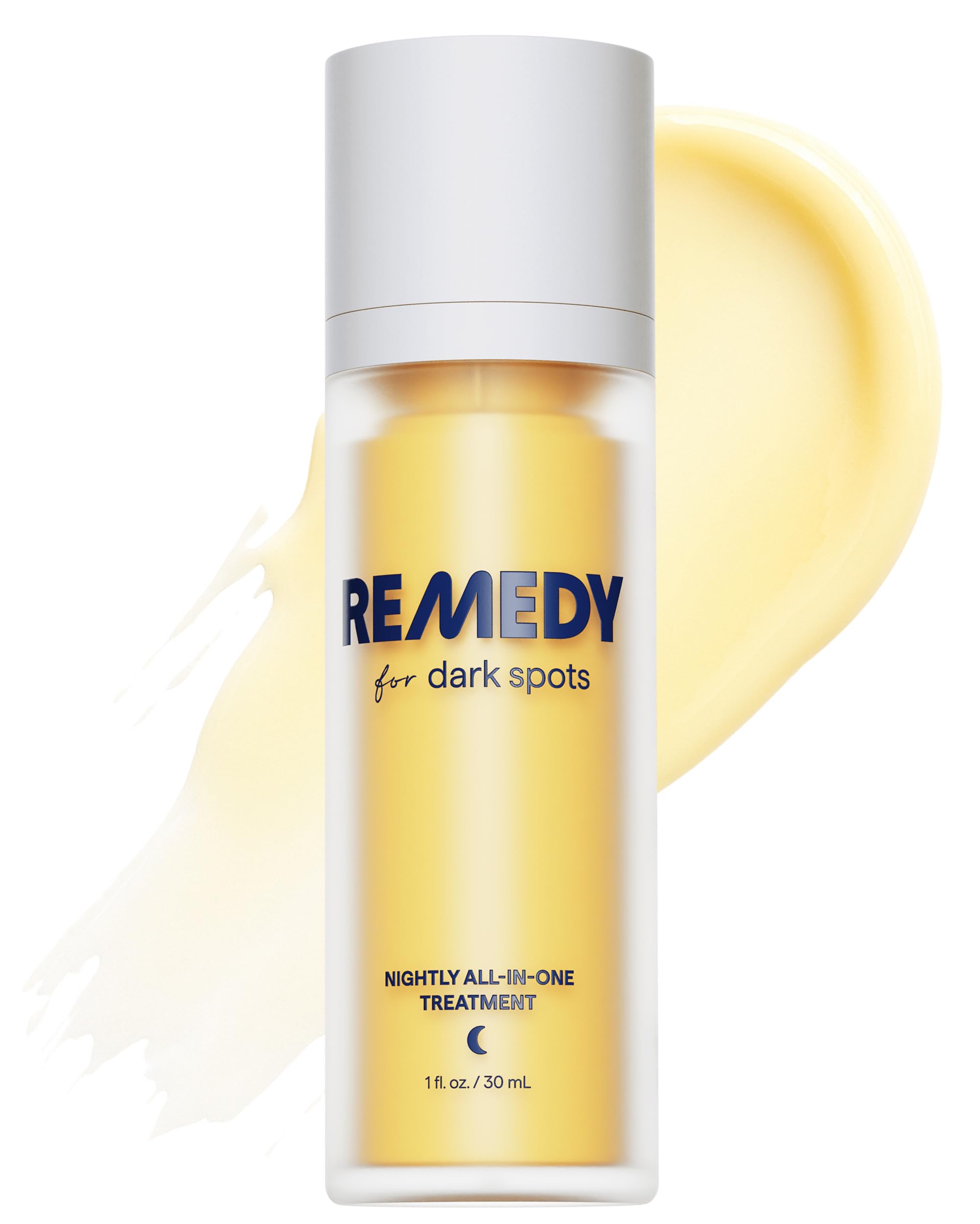
Developed by dermatologist Dr. Shah, this serum bundles retinol, kojic acid, tranexamic acid, niacinamide, and mandelic acid into a single fragrance-free bottle. That five-actives complex covers every major pigmentation pathway while the mandelic acid provides gentle exfoliation without the burn of glycolic acid, making it safe for sensitive and reactive skin types.
The serum texture is a lightweight fluid that sinks in within seconds. You can layer it under a moisturizer without pilling. It is specifically designed for daily AM/PM use, though retinol sensitivity means you should start with every other night for the first week. Users with rosacea-adjacent hyperpigmentation report less irritation here than with kojic acid-only creams.
It arrives at a mid-range entry point that’s more affordable than most clinical peels but with a comparable active ingredient roster. The only catch is that the retinol component makes it pregnancy-incompatible, so check with your doctor if applicable.
Why it’s great
- Five active ingredients target multiple pathways
- Fragrance-free with gentle mandelic acid
- Dermatologist-formulated for safety
Good to know
- Retinol unsuitable during pregnancy
- Needs gradual introduction to avoid irritation
3. CAROTÏS Skin Brightening Cream

CAROTÏS goes big — 300ml is a giant tub compared to the tiny serums typical of this category. It’s marketed as a 7-day night cream aimed at uneven skin tone, relying on Vitamin A (retinol derivative) as its core brightener rather than arbutin or kojic acid. That makes it a retinization approach: gradual cell turnover reveals fresh skin beneath the pigmentation.
The cream texture is rich and emollient, suited for dry or mature skin types. It spreads easily over the entire face and neck, making it ideal for people who want an overall brightening effect rather than spot-dabbing. The large size also makes it a practical choice for body application if you have sun damage on your chest or arms.
Vitamin A creams typically take longer to show spot-fading results than direct melanin inhibitors — expect visible changes in four to six weeks, not two. And because it’s a night cream, it cannot be layered with other retinoids without risking over-exfoliation.
Why it’s great
- Massive 300ml jar — lasts months
- Rich emollient texture for dry skin
- Cell turnover approach prevents new spots
Good to know
- Slower onset for existing spots
- Night-only use limits layering options
4. TruSkin Vitamin C Serum
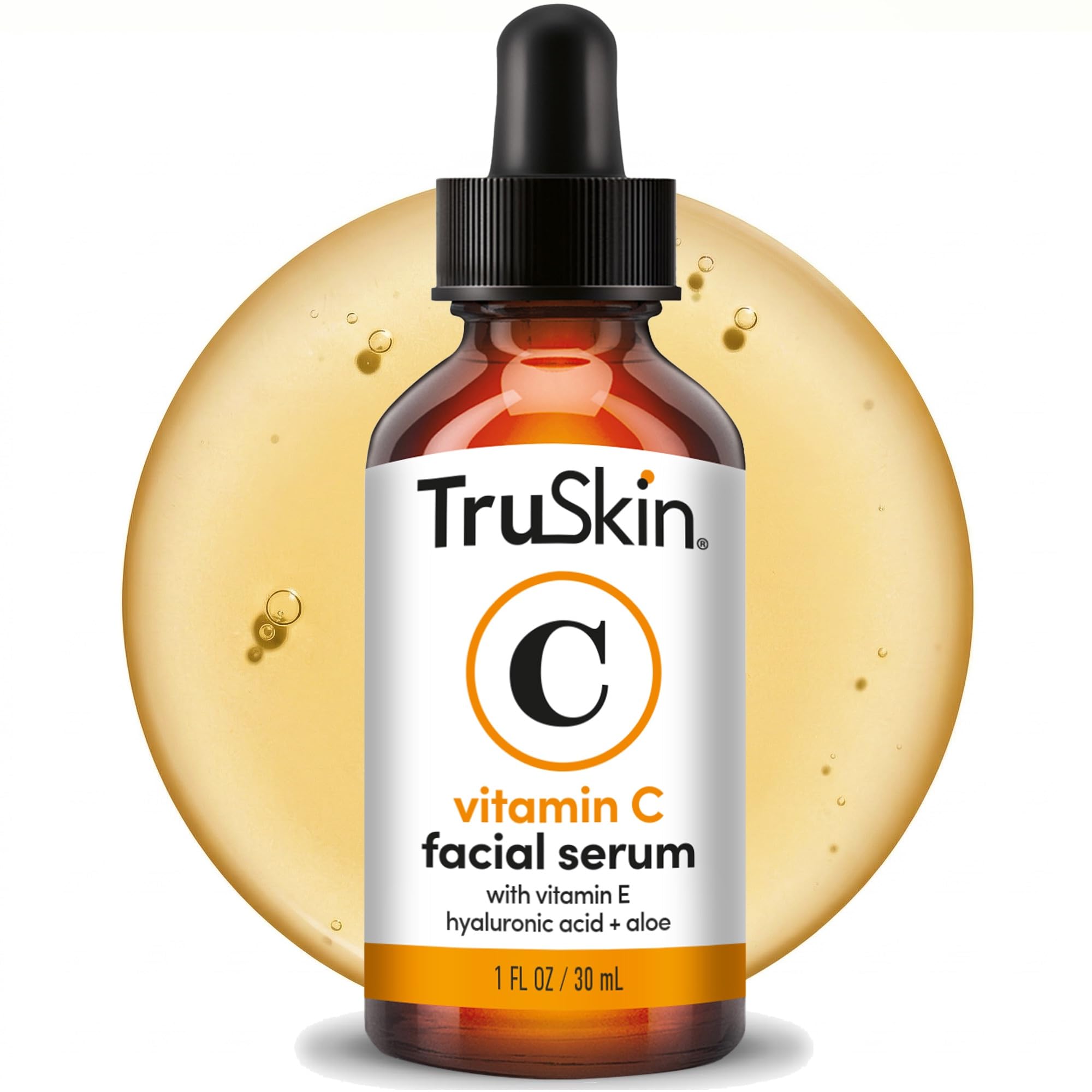
TruSkin built a reputation on this formula: sodium ascorbyl phosphate (a stable Vitamin C derivative) combined with hyaluronic acid and Vitamin E. It’s not a heavy-duty spot lightener, but it functions as an excellent antioxidant layer that prevents future pigmentation while gently fading existing discoloration over time.
The serum has a watery, almost gel-like consistency that absorbs instantly. It’s safe for all skin types, including oily and acne-prone, and won’t clog pores. Users who layer it under sunscreen report that their dark spots stop darkening, which is half the battle. For maintenance between stronger treatments, this is the ideal daily complement.
It lacks the high-percentage arbutin or tranexamic acid found in the TOSOWOONG cream, so it’s not a standalone solution for deep-set melasma or old age spots. But as a pre-treatment primer or a gentle option for first-time brightener users, it delivers consistent value.
Why it’s great
- Stable Vitamin C for daily antioxidant protection
- Non-greasy, fast-absorbing formula
- Prevents new pigmentation effectively
Good to know
- Too gentle for deep-set spots alone
- Needs sunscreen pairing for results
5. EnaSkin Dark Spot Remover Face & Body Serum
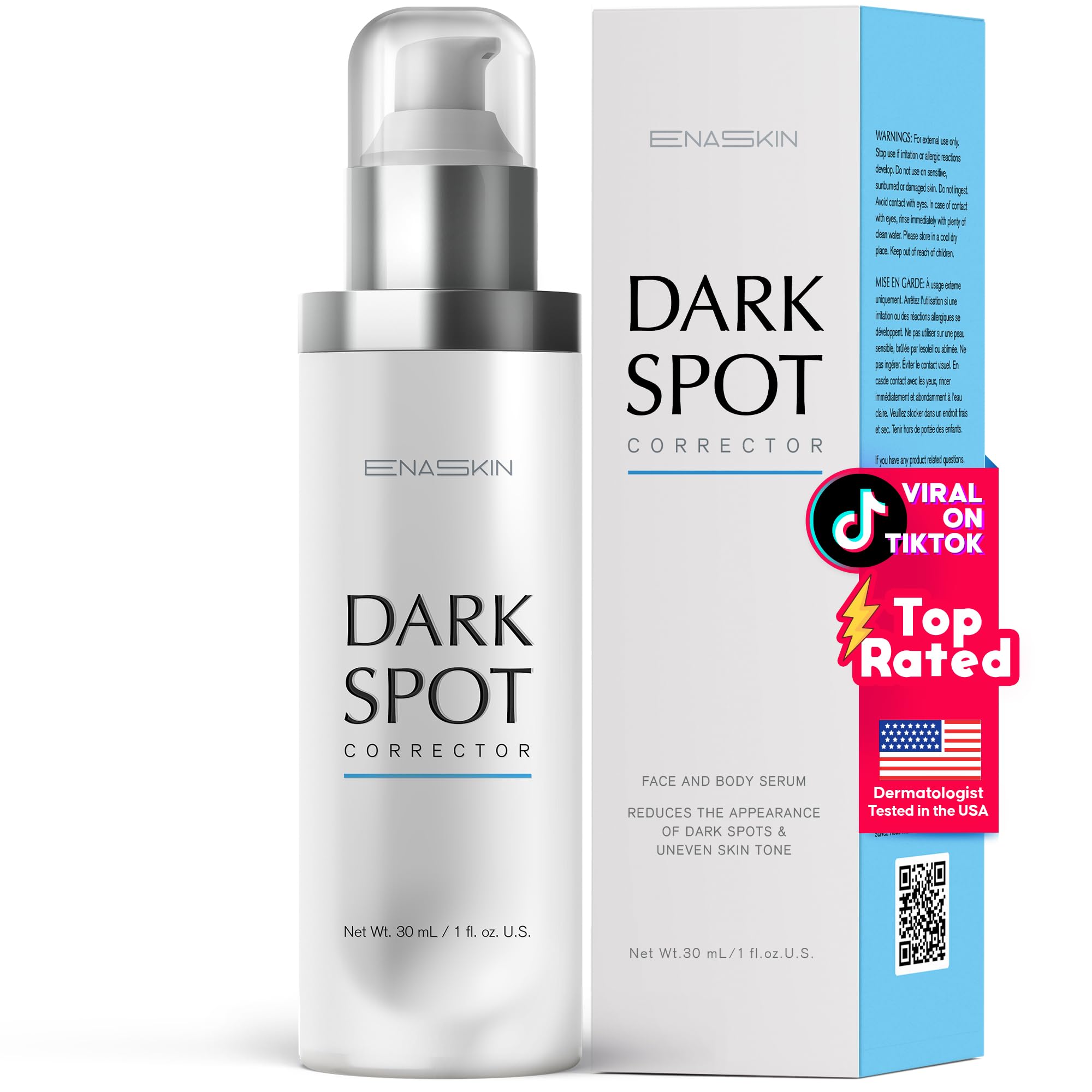
EnaSkin’s formula combines niacinamide, 3-O-ethyl ascorbic acid, alpha-arbutin, and tranexamic acid in a dropper bottle intended for both face and body. This is the most practical pick if you need to treat sun spots on your shoulders, post-acne marks on your back, or melasma patches that extend beyond your jawline. The liquid drop format lets you cover large areas efficiently.
The scent is aloe-based and pleasant, and the texture is thin enough to spread across a forearm without feeling sticky. It’s marketed as safe for all skin types and is free from mineral oils and artificial dyes. Customer timelines suggest visible results in the five-to-six-week range for moderate spots, with deeper marks needing eight weeks.
The bottle is a standard 1 fl oz, which means treating body areas will empty it faster than a face-only routine. For full-body hyperpigmentation, you might need to buy two bottles upfront. Also, because it contains multiple acids, patch testing on a small body area is a smart first step.
Why it’s great
- Designed for both face and body application
- Four brightening agents in one serum
- Fast-absorbing, non-sticky texture
Good to know
- Single bottle empties fast on body
- Multiple acids require a patch test
FAQ
How long does a lightening cream take to fade dark spots?
Can I use a lightening cream during pregnancy?
Should I apply a spot cream all over my face or only on the spots?
Final Thoughts: The Verdict
For most users, the lightening cream for dark spots winner is the TOSOWOONG Arbutin 7% Intensive Spot Cream because its disclosed 70,000ppm arbutin concentration with tranexamic acid provides clinical-grade spot fading in weeks, not months. If you have sensitive skin and need a multi-active but gentle routine, grab the Remedy for Dark Spots Serum. And for overall full-face brightening on a budget, nothing beats the large-format value of the CAROTÏS Skin Brightening Cream.