The right pair of light running shoes shaves seconds off your mile without demanding anything extra from your legs—just a clean, efficient stride. But with dozens of featherweight models flooding the market, the difference between a responsive trainer and a shoe that feels dead on the pavement comes down to a few critical design choices.
I’m Emma — the founder and writer behind Baby Bangs. I’ve spent years digging through midsole foams, outsole rubber placements, and stack height geometries to understand exactly which grams matter for performance and which are marketing fluff.
Whether you’re chasing a 5K PR or just want your daily miles to feel less like a slog, sorting through foam density, drop height, and upper construction can be overwhelming. This guide breaks down the top-rated models to help you confidently pick the best light running shoes for your specific stride and training goals.
How To Choose The Best Light Running Shoes
Light running shoes sit in a sweet spot: they weigh noticeably less than everyday trainers but still cushion enough for double-digit miles. The trade-offs happen in three key areas—foam, fit, and outsole coverage. Understanding how these interact is the shortcut to the right purchase.
Foam Type and Energy Return
The midsole compound is the heart of any light shoe. PEBA-based foams (like Pwrrun PB or FuelCell) offer the highest energy return per gram—meaning you get a snappy, propulsive feel without stacking on ounces. Standard EVA saves money but loses liveliness past mile six. For dedicated speed work, prioritize a shoe with a PEBA or TPU-blend midsole.
Heel-Toe Drop and Stride Naturalness
Light shoes typically run from zero-drop (flat, mimicking barefoot form) to an 8mm drop (traditional heel cushion). A lower drop (0–4mm) encourages a midfoot strike and engages the calf more, while a higher drop (6–8mm) takes pressure off the Achilles. Your history with plantar issues or calf tightness should dictate this choice.
Upper Construction and Lockdown
To trim weight, brands use thin engineered meshes and minimal overlays. A good light shoe upper should wrap the midfoot securely without hot spots. Look for a plush heel collar and a lace-lock eyestay—features that make you forget you’re wearing a shoe that weighs under eight ounces.
Quick Comparison
On smaller screens, swipe sideways to see the full table.
| Model | Category | Best For | Key Spec | Amazon |
|---|---|---|---|---|
| Saucony Endorphin Pro 4 | Racing Flat | Race day & speed sessions | 8mm drop / PEBA foam | Amazon |
| ALTRA Torin 8 | Zero Drop | Natural stride & daily miles | 0mm drop / 28mm stack | Amazon |
| Xero HFS Original | Barefoot | Minimalist feel & form work | Zero drop / 5.5mm stack | Amazon |
| New Balance FuelCell Propel V5 | Daily Trainer | Versatile everyday runs | 6mm drop / PEBA‑blend | Amazon |
| Saucony Ride 18 | Workhorse | High mileage comfort | 8mm drop / Pwrrun foam | Amazon |
| ALTRA Torin 7 | Zero Drop | Foot‑shape fit & cushion | 0mm drop / 28mm stack | Amazon |
| Brooks Hyperion | Lightweight | Budget speed trainer | 8mm drop / DNA Flash foam | Amazon |
In‑Depth Reviews
1. Saucony Men’s Endorphin Pro 4
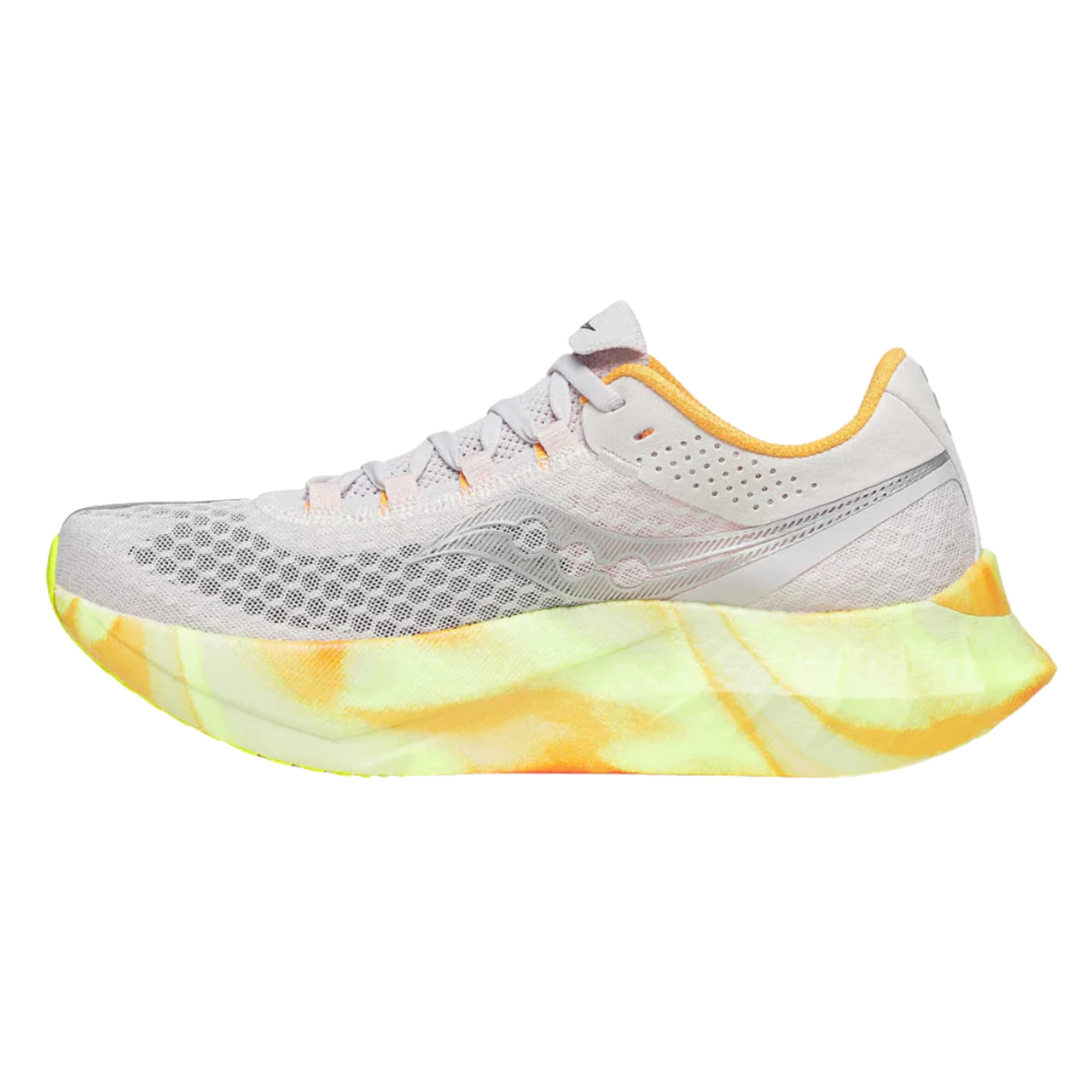
The Endorphin Pro 4 is built for one thing: turning over fast. Its full-length PWRRUN PB midsole blended with a carbon plate delivers a stiff, propulsive feel that rewards a quick cadence. At roughly 6.9 ounces, it’s among the lightest race-legal shoes on the market, making it the obvious choice for 5K to marathon pace work.
The engineered mesh upper feels paper-thin yet surprisingly secure—the lace cage wraps the midfoot with zero distraction. Outsole rubber is placed only in high-wear zones, which keeps weight low but means you’ll want to save these for clean pavement rather than gravel paths.
Durability is the main compromise: the exposed PEBA foam shows wear faster than denser EVA compounds, and the carbon plate can feel aggressive if you’re not already accustomed to a forefoot strike. These are race-day weapons, not your daily rotation.
Why it’s great
- Carbon plate delivers a rockered, forward-leaning toe-off
- PEBA foam offers exceptional energy return with minimal weight
- Lacing system locks the heel well for sharp turns
Good to know
- Minimal outsole coverage shortens lifespan on abrasive roads
- Firm ride may not suit runners accustomed to plush daily trainers
- Premium price pushes it out of budget-friendly reach
2. ALTRA Women’s Torin 8
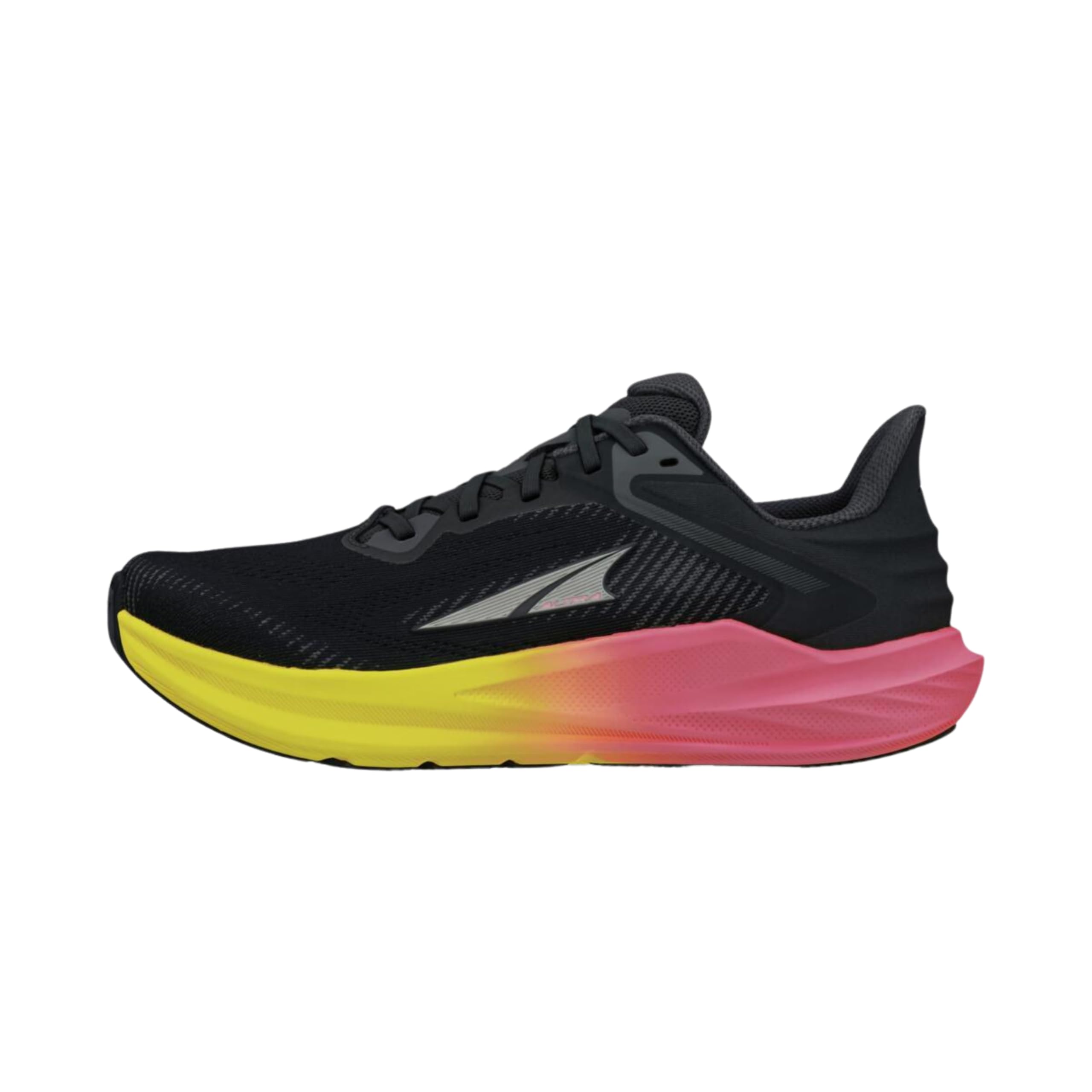
The Torin 8 is Altra’s lightest cushioned zero-drop model, pairing a 28mm stack height with a 0mm heel-toe drop. The new EGO MAX midsole foam feels bouncier than previous Altra formulations—softer landing without sacrificing the ground feel that zero-drop fans love. At 7.2 ounces, it’s light enough for tempo work but cushioned enough for double-digit miles.
Altra’s signature FootShape toe box returns here, allowing the toes to spread fully. The upper uses a breathable mesh with a gusseted tongue that prevents lace bite. Quick transitions feel natural thanks to the balanced cushion and a wide platform that resists wobble on uneven terrain.
The zero-drop geometry demands a strong Achilles and a midfoot strike; runners accustomed to 8mm or higher drops may experience calf soreness during the break-in period. Additionally, the thin outsole rubber can wear through within 200 miles if you frequently run on abrasive asphalt.
Why it’s great
- Foot-shaped toe box allows natural splay for stability
- EGO MAX foam provides responsive cushion at a low weight
- Balanced platform encourages midfoot landing form
Good to know
- Zero drop requires an adjustment period if coming from traditional trainers
- Outsole durability is modest on coarse road surfaces
- Heel lock can be finicky with the thin laces
3. Xero Shoes Women’s HFS Original
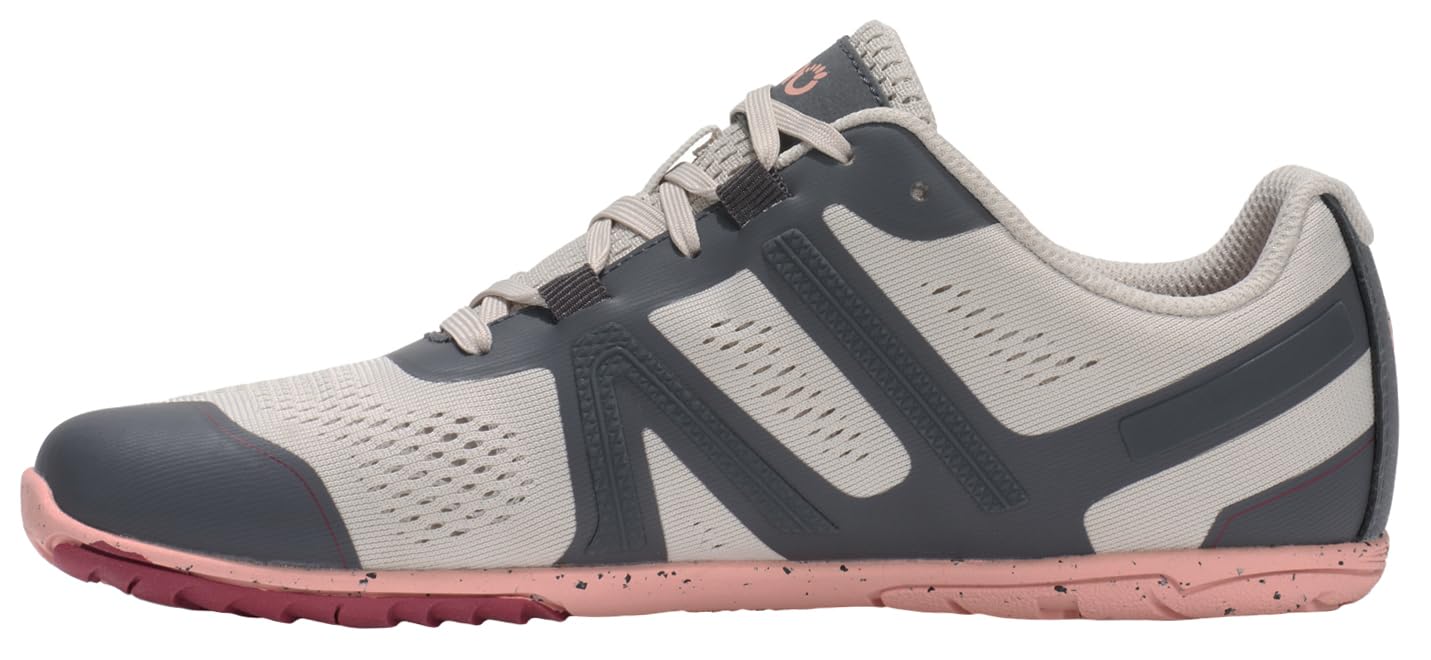
The HFS Original strips everything away. With a 5.5mm stack height and zero drop, it delivers the most ground feedback of any shoe on this list. Each step transmits texture and impact directly to the foot, forcing you to land softly and engage the calf and arch naturally. At barely 6.2 ounces, it disappears on your feet.
The welded-on outsole is a thin layer of rubber placed only under major pressure points, keeping weight minimal while offering surprising grip on dry pavement. The upper is a single-layer mesh with no stiff overlays—flexible but durable enough for daily use. The wide toe box mirrors the barefoot shape without being comically oversized.
This shoe is unforgiving for beginners; if you currently run in 8-10mm drop trainers, switching cold leads to calf strain and bruised heels. There’s also zero arch support—what you bring is what you get. These are best for experienced minimalist runners or as a form-correcting tool.
Why it’s great
- Extremely lightweight and flexible with a true barefoot feel
- Wide toe box allows natural foot expansion during stride
- Encourages a more efficient midfoot strike pattern
Good to know
- Minimal cushioning is punishing on hard surfaces for new users
- Thin sole offers little protection from sharp rocks or debris
- Transition requires weeks of gradual adaptation
4. New Balance Women’s FuelCell Propel V5
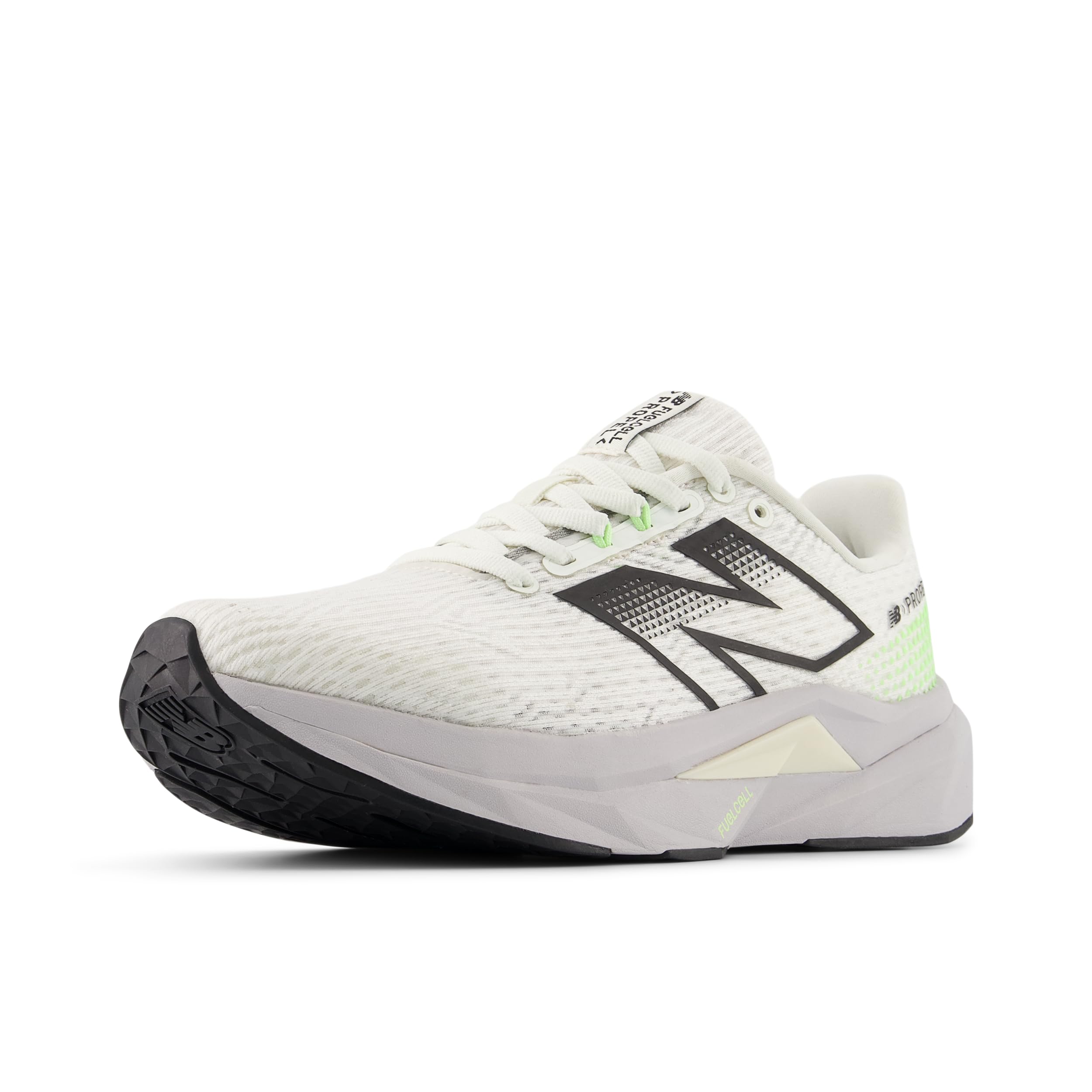
The FuelCell Propel V5 shows that mid-range pricing doesn’t have to sacrifice midsole material. It uses a PEBA-blend FuelCell foam that feels nearly as energetic as the super-shoe foams in far pricier models. The 6mm drop is a versatile middle ground—gentle enough on the calves while still comfortable for heel strikers. At 7.5 ounces, it’s slightly heavier than racers but lighter than any daily trainer in its class.
New Balance gave this shoe a structured knit upper with a padded heel collar that locks the foot without pressure points. The outsole uses blown rubber in a segmented pattern that adds grip on wet surfaces without much weight penalty. It’s built as a do-it-all shoe for 3 to 10 mile runs.
The trade-off shows in long-run energy return: the PEBA-blend foam loses some pop compared to pure PEBA midsole units found in + shoes. The heel counter also feels slightly stiff for some runners during the first few miles. Still, for the price, it’s the best value proposition on this list.
Why it’s great
- PEBA-blend foam offers near‑premium energy return at a mid‑range price
- Versatile 6mm drop works for heel and midfoot strikers
- Structured upper provides reliable lockdown without bulk
Good to know
- Foam loses some bounce over the course of a 10+ mile run
- Heel pocket can feel snug for wider feet
- Outsole rubber placement is sparse on the medial side
5. Saucony Women’s Ride 18
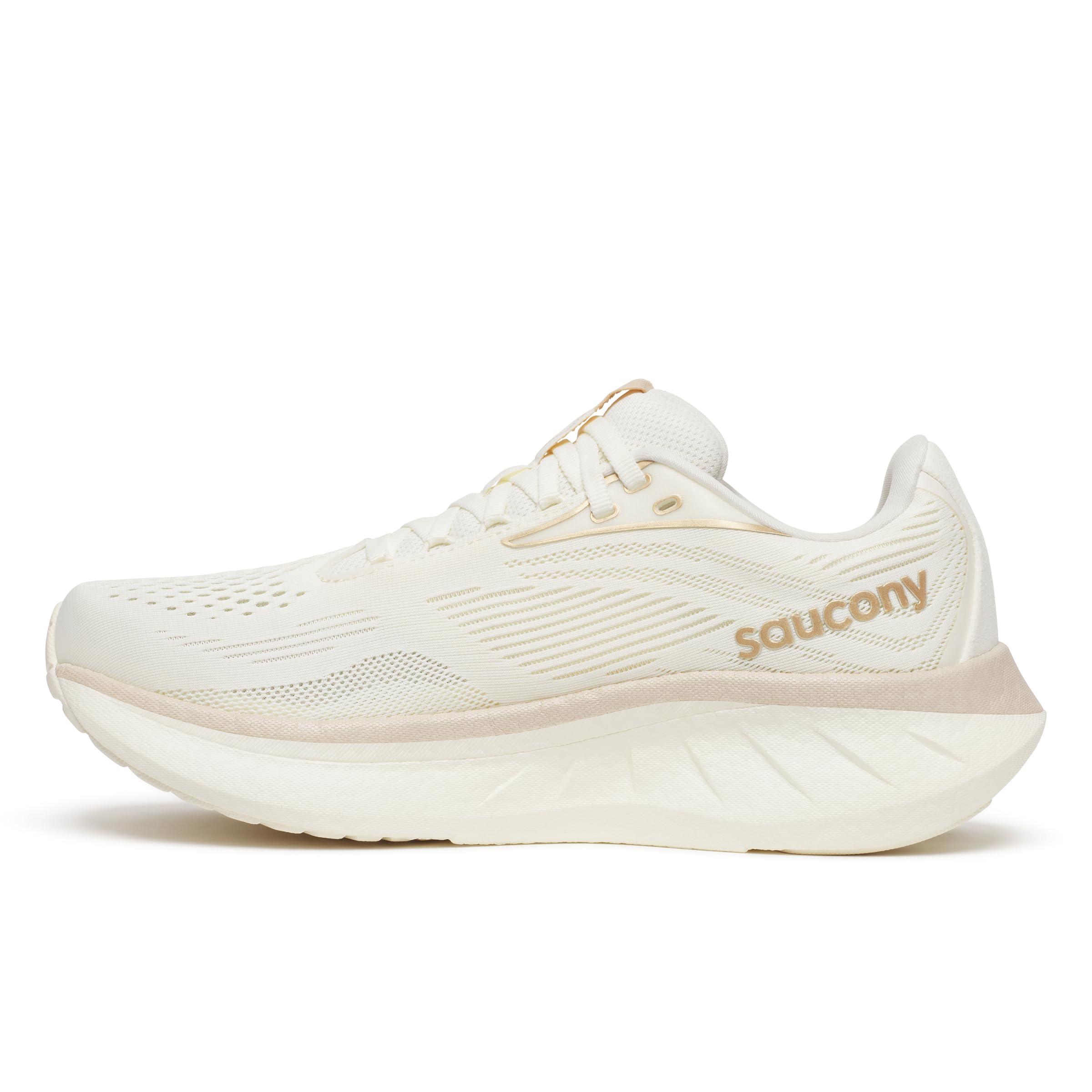
The Ride 18 is Saucony’s standard‑bearer for balanced cushioning that doesn’t weigh you down. Its Pwrrun midsole (EVA-based but refined) offers a consistent, forgiving ride with a modest 8mm drop that appeals to heel strikers who want a touch of roll. At roughly 7.8 ounces, it sits right at the edge of the lightweight category—light enough for daily training but with enough stack to protect joints on recovery runs.
The breathable mesh upper is forgiving on foot volume, and the heel cup is lined with a plush collar that prevents slipping. A generous rubber outsole covers the heel and forefoot, adding durability that many lighter shoes lack. The Ride 18 is designed to log hundreds of miles without wearing out its welcome.
It’s not a snappy shoe—the Pwrrun foam is responsive but lacks the explosive spring of PEBA alternatives. Runners looking for a race-day feel or maximal energy return should look at the Endorphin line. The Ride 18 is built for comfort and consistency, not PRs.
Why it’s great
- Plush, reliable cushioning suited for high weekly mileage
- Durable outsole extends the shoe’s lifespan well past 400 miles
- Breathable upper fits a broad range of foot shapes
Good to know
- Not as lively or springy as PEBA‑foam competitors
- 8mm drop is less ideal for midfoot strikers seeking a flat platform
- Slightly heavier than pure speed-oriented models
6. ALTRA Men’s Torin 7
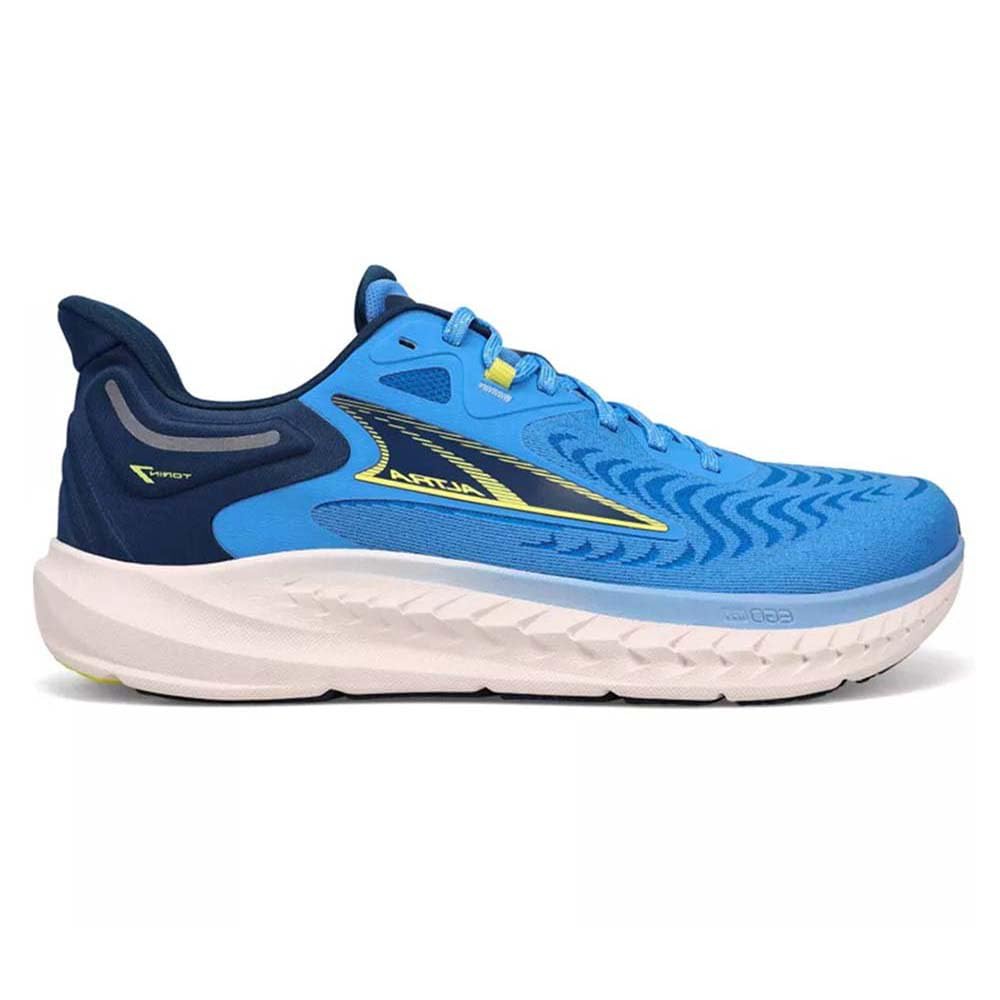
The Torin 7 is the predecessor to the Torin 8 and proves that last year’s technology still performs. Maintaining the same 28mm stack and zero-drop geometry, it uses Altra’s EGO midsole—a dense EVA blend that offers a stable, moderately cushioned ride. At 7.5 ounces, it’s still competitive in the light shoe space while providing ample protection for miles 8 through 12.
Altra’s FootShape toe box remains the standout feature, allowing toes to spread naturally. The engineered mesh upper is supportive but not restrictive, and the heel collar is reinforced to prevent slipping during fast transitions. The outsole uses a continuous rubber strip along the heel and forefoot, addressing the durability issues that sometimes plague minimal outsoles.
The EGO midsole lacks the energy rebound of the newer EGO MAX foam, making the Torin 7 feel firmer underfoot. Runners spoiled by the bouncier Torin 8 may find this model flat in comparison. Still, for zero-drop devotees on a tighter budget, it’s a reliable workhorse.
Why it’s great
- Foot‑shaped toe box reduces blisters and allows natural splay
- Durable outsole withstands frequent road running
- Zero‑drop geometry aids in developing midfoot strike form
Good to know
- EGO foam is firmer and less energetic than newer formulations
- Heel collar may feel slightly loose for narrow feet
- Lacks the soft landing of the Torin 8’s EGO MAX foam
7. Brooks Men’s Hyperion
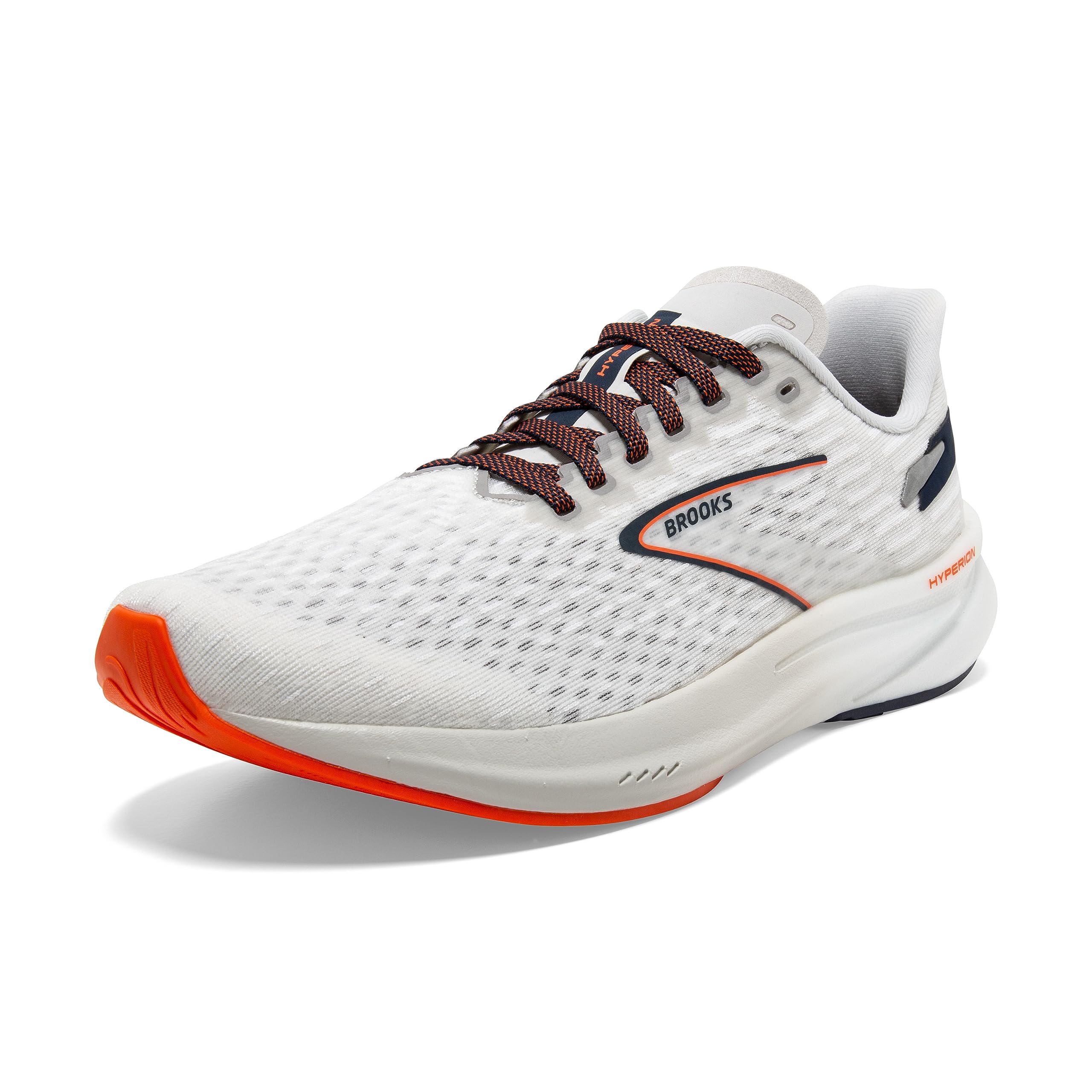
The Brooks Hyperion delivers a fast, no‑frills ride at a price that respects the budget. Its DNA Flash midsole is a nitrogen-infused EVA that feels snappier than standard EVA but not quite as energetic as a pure PEBA foam. At 7.4 ounces, it’s impressively light for a Brooks product and feels nimble during 5K intervals and tempo runs.
The upper uses a perforated mesh with minimal overlays, keeping ventilation high and weight low. Brooks’s lace system integrates a stretch lace for a secure midfoot wrap, and the heel collar uses a soft interior lining that reduces friction. The outsole maps rubber only to the heel and forefoot contact zones, saving grams while preserving durability where it matters most.
Where the Hyperion falls short is long-run comfort—the nitrogen-infused foam loses bounce after the 6-mile mark, transitioning to a firmer, less forgiving ride. The toe box is also relatively narrow, which can be problematic for runners with splay-friendly preferences. It’s a great entry-level speed shoe, not an every‑mile shoe.
Why it’s great
- Lightweight and responsive for speed work and intervals
- Perforated upper ensures excellent ventilation during warm runs
- Stretch lace midfoot wrap improves lockdown security
Good to know
- Foam goes flat on runs longer than 6 or 7 miles
- Narrow toe box may cause discomfort for wider foot shapes
- Minimal outsole coverage wears faster on rough roads
FAQ
What is a good weight for light running shoes?
Can I use light running shoes for daily training?
Do lightweight shoes cause more injuries?
Is a carbon plate necessary in a light shoe?
Final Thoughts: The Verdict
For most users, the best light running shoes winner is the Saucony Endorphin Pro 4 because it delivers a top-tier race experience with a carbon plate and PEBA foam at a weight that disappears on foot. If you want zero-drop cushioning for natural form work, grab the ALTRA Torin 8. And for the best balance of price and performance in a daily trainer, nothing beats the New Balance FuelCell Propel V5.