Managing rosacea-prone skin requires a targeted approach, as the wrong wavelength can aggravate sensitive areas rather than soothe them. Light therapy masks designed for this condition use specific red and near-infrared frequencies to calm inflammation and support the skin barrier.
I’m Emma — the founder and writer behind Baby Bangs. I spend my time analyzing clinical studies on photobiomodulation and comparing the irradiance levels, LED density, and safety certifications on the latest devices hitting the market.
Finding the right device means looking beyond flashy claims. This guide helps you navigate the technical specs to find the light mask for rosacea that fits your specific needs and routine.
How To Choose The Best Light Mask For Rosacea
Rosacea is a chronic condition where the skin’s immune and vascular systems overreact. The right light mask helps calm this response by delivering therapeutic wavelengths directly to the dermis. The wrong mask can waste your money or worsen redness. Here are the critical factors to consider.
Look for Dual Red and Near-Infrared Wavelengths
Red light (630-660nm) works on the surface to reduce inflammation and improve skin barrier function. Near-infrared (810-850nm) penetrates deeper to calm the underlying vascular reactivity and support cellular repair. A mask that offers only one wavelength is less effective for rosacea than a dual-wavelength system. Avoid masks that rely heavily on blue light, as it can be overly stimulating for reactive skin types.
Prioritize Adequate LED Density and Power Output
The number of LEDs dictates coverage, but the irradiance (measured in mW/cm²) determines how much therapeutic energy reaches your skin. A mask with 200 LEDs but low irradiance will deliver poor results. For rosacea, look for a device with at least 300 LEDs and an irradiance above 40mW/cm² to ensure consistent, effective dosing during your 10-20 minute sessions.
Choose a Comfortable, Sanitary Design
A mask that irritates your skin mechanically is counterproductive. Medical-grade silicone is the gold standard—it’s hypoallergenic, easy to clean, and contours to your face without pressure points. Wireless designs with a built-in battery let you move freely, which reduces the chance of overheating or sweating under the mask. Adjustable straps are a must for a secure fit.
Quick Comparison
On smaller screens, swipe sideways to see the full table.
| Model | Category | Best For | Key Spec | Amazon |
|---|---|---|---|---|
| Nanoleaf LED Mask | Premium / Clinical | Clinically-targeted rosacea treatment | 432 LEDs, 7 modes, FDA-cleared | Amazon |
| INIA Glow 4D | Premium | Redness reduction + cooling therapy | 320 LEDs, dual NIR, cooling gel | Amazon |
| iRestore LED Face Mask | Premium | Powerful, fast sessions for sensitive skin | 360 LEDs, triple-wavelength, 10 min | Amazon |
| RENPHO 4D Mask | Mid-Range | Customizable modes for calm and acne | 324 LEDs, 3 light modes | Amazon |
| Avorla Beauty LED Mask | Mid-Range | Entry-level with red + infrared combo | Red & infrared, rechargeable | Amazon |
| BNU Wireless LED Mask | Budget-Friendly | High LED count at an entry price | 400 LEDs, 4 modes, dual battery | Amazon |
| biuufish 8-Color Mask | Budget-Friendly | Exploring multiple light colors | 240 LEDs, 850nm NIR, 8 colors | Amazon |
In‑Depth Reviews
1. Nanoleaf FDA-Cleared LED Light Therapy Face Mask
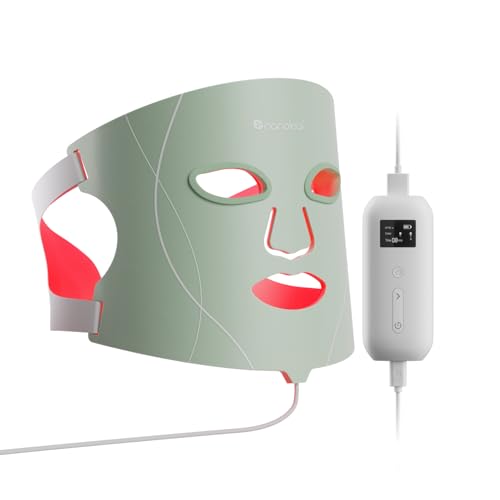
The Nanoleaf mask stands apart with its FDA clearance for treating rosacea, acne, and hyperpigmentation. Its 432 LEDs are arranged to deliver full-face coverage, and the 7 photobiomodulation modes let you dial in a specific treatment: red and NIR for calming inflammation, blue for breakout management, or a custom mix. The protocol is short—just 5-10 minutes per session—making it easy to maintain consistency.
Built from medical-grade silicone, the mask is ultra-flexible and conforms closely to the face for even light distribution. The controller is attached to the mask and includes a built-in battery, so there’s no need for an external wire or app. The clinically supported wavelength combination provides a level of specificity that general wellness masks can’t match.
It is worth noting that the mask is designed primarily for targeted treatment rather than passive relaxation—it has a functional fit rather than a plush one. Users with larger face shapes may need the free strap extender available from the manufacturer. This is the most technically precise option for those managing rosacea as a medical concern.
Why it’s great
- FDA-cleared specifically for rosacea and facial rhytids
- 432 high-intensity LEDs provide dense, consistent coverage
- Short 5-10 minute treatment protocol is easy to adhere to
- Medical-grade silicone is comfortable and hygienic
Good to know
- Fit may feel functional rather than plush for some users
- Larger face shapes may require the free strap extender
- Premium investment compared to basic wellness masks
2. INIA Glow 4D Wireless Red Light Therapy Mask
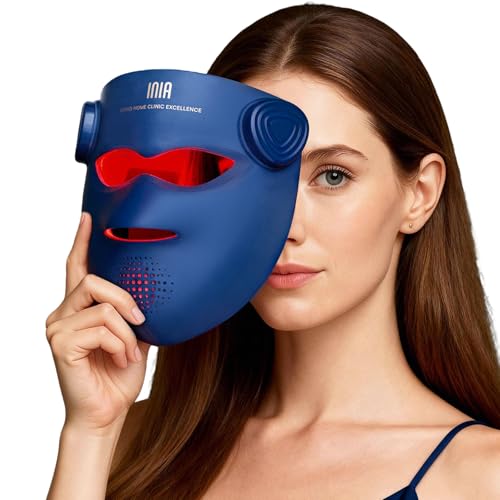
The INIA Glow 4D integrates a feature uniquely helpful for rosacea: an under-eye cooling gel pad. This magnetic attachment directly targets redness and puffiness around the eyes, providing immediate soothing relief alongside the long-term benefits of light therapy. The mask uses 320 LEDs and a dual near-infrared channel system to work at multiple skin depths.
Four treatment modes let you isolate red light for surface calming, amber for even tone, blue for acne support, or a combo mode for comprehensive care. Wireless operation and flexible medical-grade silicone make it easy to wear while relaxing, reading, or working. The mask is designed to deliver visible improvements in brightness and smoothness within 2-4 weeks of consistent use.
The cooling element is a separate gel pad that needs to be kept chilled, adding a small step to your routine. The pad is positioned only over the under-eye area, not the cheeks or nose where rosacea typically appears. For those whose primary concern is facial flushing across the T-zone, the pad offers limited direct coverage, but the 4D light delivery still covers the full face effectively.
Why it’s great
- Magnetic cooling gel pad soothes under-eye redness immediately
- Dual NIR technology targets inflammation at multiple depths
- Four specific modes let you tailor treatment
- Wireless, flexible silicone fits comfortably
Good to know
- Cooling pad requires refrigeration before use
- Pad only covers under-eye area, not the full rosacea zone
- Results typically require 2-4 weeks of consistency
3. iRestore LED Face Mask for Youthful Skin
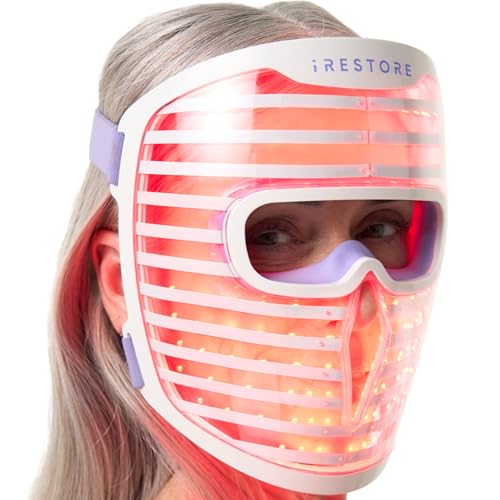
iRestore brings 20 years of photobiomodulation research into a face mask that delivers high power in quick sessions. With 360 LEDs split across Red (635nm), Infrared (830nm), and Blue (415nm), you can select a specific mode for calming rosacea without irritating the skin. The design prioritizes efficiency: sessions are just 10 minutes, 3-5 times per week, making it one of the fastest options for consistent use.
The mask is built with a dual-strap system that hovers slightly over the face, preventing direct pressure on sensitive areas. It blocks direct light from the eyes and allows you to multitask during treatment. The enclosure is lightweight but sturdy, and the triple-wavelength technology allows for targeted treatment plans—using red and infrared for inflammation, or blue only if your rosacea is accompanied by acne symptoms.
As a premium device, the price point reflects the brand’s clinical heritage and dermatologist recommendation. The mask is large enough for most face shapes, but the hover fit means it may not be as discreet or portable as a flexible silicone model. For those who prioritize scientific backing and session speed, this is a strong contender.
Why it’s great
- Quick 10-minute treatment sessions fit busy schedules
- Triple-wavelength technology allows selective rosacea targeting
- Dual-strap hover design avoids pressure on sensitive skin
- Dermatologist-recommended brand with strong clinical backing
Good to know
- Premium pricing reflects brand pedigree and research
- Hover-style fit is less portable than flexible silicone masks
- Larger head size may require adjustment for a comfortable fit
4. RENPHO 4D Red Light Therapy Mask for Face
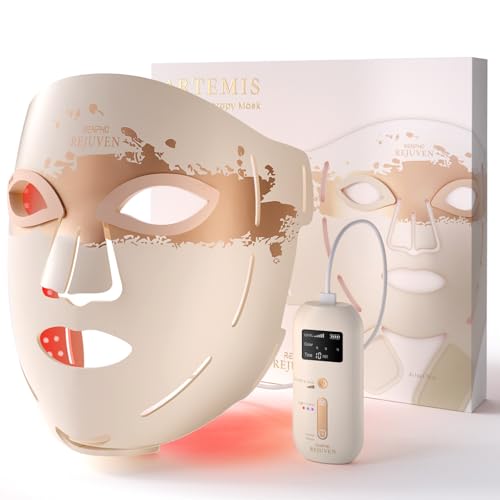
The RENPHO 4D mask hits a sweet spot with 324 LEDs arranged for targeted coverage across the forehead, cheeks, jaw, and chin. Its 3-in-1 mode system includes a dedicated red + infrared mode for calming inflammation, which is the primary mode for rosacea management. The mixed light mode broadens the treatment scope for those who also deal with occasional breakouts.
Crafted from ultra-light, skin-friendly silicone, this mask is designed for everyday wear with minimal discomfort. It includes protective eye cups to shield your eyes from direct light, and the cordless operation lets you move freely during sessions. RENPHO positions this as a home alternative to salon treatments, and the build quality reflects a durable, mid-range premium feel.
While it includes a blue light mode for acne, it lacks a dedicated amber or yellow mode, which some users find helpful for surface redness. The mask is also slightly heavier than some competitors due to the integrated battery. For those who want a reliable, mid-range option with good coverage and simple controls, this mask delivers.
Why it’s great
- 324 LEDs offer dense, full-face coverage
- Dedicated red + infrared mode for inflammation
- Lightweight silicone is comfortable for daily wear
- Protective eye cups are included for safety
Good to know
- Lacks a yellow/amber mode for surface redness
- Heavier than some silicone competitors
- Blue light mode may be unnecessary for pure rosacea
5. Avorla Beauty LED Mask
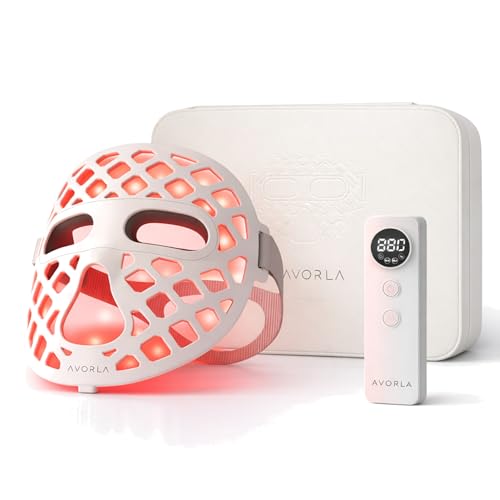
The Avorla Beauty LED Mask is a solid entry point for those new to light therapy for rosacea. It combines red light and upgraded near-infrared in a single device, offering the core therapeutic wavelengths needed for calming skin. The contoured silicone design is lightweight and flexible, providing a comfortable fit that follows facial curves without pressure points.
This mask is rechargeable and wireless, allowing hands-free use during daily activities. The design uses red and infrared light to target both surface concerns and deeper tissue, which is effective for general calming and collagen support. Avorla offers a 30-day free return policy and a 1-year warranty, reducing the risk for first-time buyers.
The mask does not offer multiple color modes or advanced controls—it is a simpler, more focused device. The LED count is not specified in the product details, so energy density is less clear than with more documented competitors. For someone looking to test whether light therapy works for their rosacea without a large upfront investment, this is a reasonable place to start.
Why it’s great
- Combines red and infrared for dual-action calming
- Contoured silicone fits comfortably without pressure
- Easy return policy and 1-year warranty for new users
- Wireless and rechargeable for simple daily use
Good to know
- LED count and irradiance specs are not provided
- No advanced modes or multi-color customization
- Best as a low-risk trial device, not a long-term clinical tool
6. BNU Wireless Red Light Therapy for Face
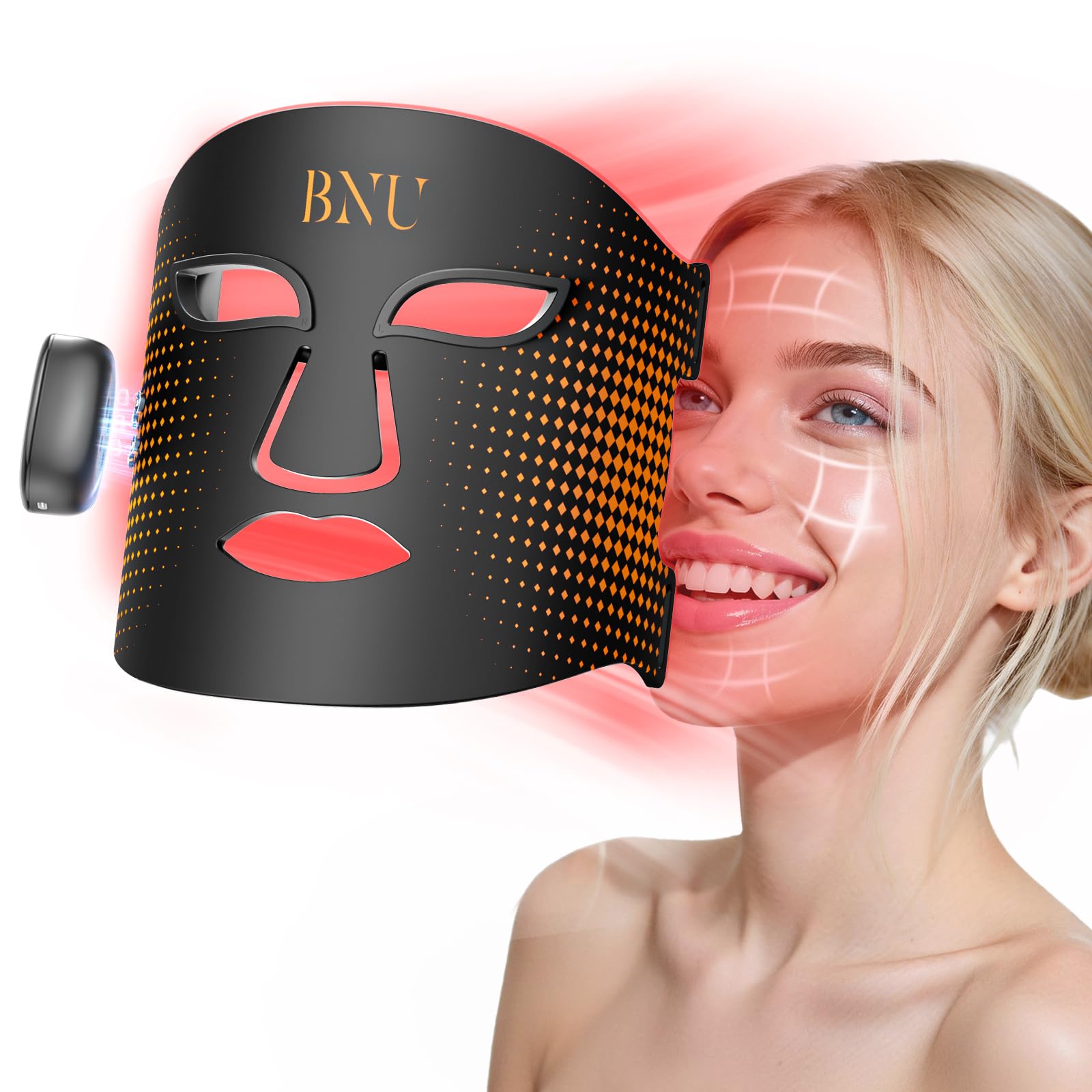
The BNU mask stands out with 400 LED beads, offering more coverage than many mid-range competitors. It includes four light modes—red for collagen, near-infrared for tightening, blue for acne, and yellow for brightness and reducing redness. The yellow mode is directly relevant for rosacea, as it targets surface-level redness and evens skin tone.
Dual 1000mAh batteries provide up to 120 minutes of continuous use per charge, which is excellent for travel or sessions without cords. The mask is made from soft silicone that is waterproof and easy to clean. It includes a mini remote control for easy mode switching during a session, and the adjustable head straps keep the mask secure.
While the yellow mode is a plus for redness, the mask does not come with FDA clearance or published irradiance levels, so you are relying on brand claims for energy delivery. The high LED count is impressive, but if the density is spread across the face, the effective power per area could be lower than a more concentrated design. This is best for those who want many options at a budget-friendly price.
Why it’s great
- 400 LEDs provide extensive facial coverage
- Yellow mode specifically targets surface redness
- Dual battery system offers long, cordless sessions
- Includes a remote control for easy operation
Good to know
- No FDA clearance or published irradiance specs
- High LED count may dilute effective power density
- Blueprinting relies on brand claims rather than clinical data
7. biuufish 8-Color LED Face Mask
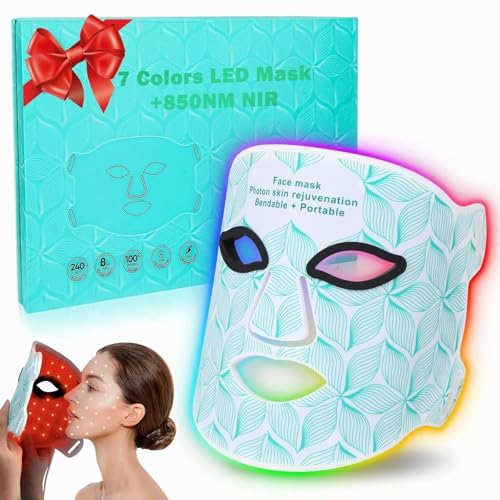
This mask from biuufish is the most affordable option on the list, offering 8 light colors with 240 LED beads and 850nm near-infrared. The 8-color system includes red, blue, green, yellow, cyan, purple, white, and near-infrared, allowing you to experiment with different wavelengths to see what works for your skin. The 850nm NIR targets deep tissue repair.
It features 3 adjustable intensity levels and a maximum irradiance of 58mW/cm², which is a solid energy output for a budget device. The mask is made from soft, skin-friendly silicone with adjustable straps for a comfortable fit. It has multiple safety certifications and includes an auto-timer from 10-30 minutes for peace of mind during use.
The sheer number of colors can be confusing for a rosacea patient—using the wrong wavelength might not help. The 240 LED count is on the lower end, so coverage may be less uniform than denser masks. It also lacks built-in eye protection, so you will need to use the included eye covers. This is best for those who want maximum flexibility at the lowest cost and are willing to experiment to find their ideal setting.
Why it’s great
- Affordable entry point with 8 color options for experimentation
- 850nm NIR included for deep tissue therapy
- Decent 58mW/cm² irradiance for the price tier
- Multiple safety certifications and adjustable intensity
Good to know
- 240 LED count is lower, potentially reducing coverage
- 8-color system can be confusing without a clear protocol
- No integrated eye protection included
FAQ
Can red light therapy make rosacea worse?
How long until I see results with a light mask for rosacea?
Is a mask with blue light bad for rosacea?
Final Thoughts: The Verdict
For most users, the light mask for rosacea winner is the Nanoleaf LED Mask because it is the only device on this list with specific FDA clearance for rosacea, backed by clinical data and supported by 432 high-intensity LEDs. If you want an integrated cooling feature to soothe under-eye redness, grab the INIA Glow 4D. And for a scientifically grounded, fast-session premium option, nothing beats the iRestore LED Face Mask.