A pair of light hiking shoes can turn a slog into a glide. The wrong pair, though, leaves you with bruised heels, wet socks, and a blister that screams ten miles in. The difference between a great day on the trail and an agonizing one comes down to three things: how the shoe sheds weight, how the sole grips wet rock, and whether the upper keeps debris out without turning your foot into a steam bath.
I’m Emma — the founder and writer behind Baby Bangs. I’ve spent years digging into trail footwear specs, from outsole rubber compounds to midsole density curves, to separate the shoes that actually perform from the ones that just look the part.
Every review below is based on real construction details and user feedback for the most reliable light hiking shoes on the market right now, so you can match your next pair to the terrain you actually walk.
How To Choose The Best Light Hiking Shoes
Light hiking shoes sit in a narrow sweet spot between trail runners and heavy boots. You want enough support to handle uneven ground but not so much structure that each step feels like lifting a brick. The key specs to weigh before buying are weight, outsole grip, waterproofing type, and midsole stiffness.
Weight and Flexibility
Every ounce above 14 ounces per shoe adds cumulative fatigue on a six-mile hike. Lighter shoes (under 12 ounces) feel like trail runners — fast and nimble — but offer less lateral support. Heavier options (14–16 ounces) trade speed for stability when you’re carrying a pack on rocky slopes. Decide where your day sits on that spectrum before you even look at colors.
Outsole Rubber and Lug Pattern
A Vibram or equivalent outsole with 3.5–5 mm lugs gives you bite on loose dirt and wet rock. Shallower lugs (under 3 mm) shed mud faster but slip on slick surfaces. Deeper lugs (over 5 mm) grip well but can feel clunky on flat sections and pavement approaches. The rubber compound hardness also matters — softer compounds (around 60 Shore A) grip better but wear faster on hard-packed trails.
Waterproof vs. Breathable Uppers
A Gore-Tex or Outdry membrane keeps puddles and morning dew out, but it traps heat and moisture inside, leading to sweaty feet on warm days. Mesh uppers breathe freely and dry quickly after stream crossings, but they let dust and water in. For wet climate day hikes, go waterproof. For dry, hot trails or long mileage under a pack, prioritize breathable mesh and accept the occasional splash.
Quick Comparison
On smaller screens, swipe sideways to see the full table.
| Model | Category | Best For | Key Spec | Amazon |
|---|---|---|---|---|
| Merrell Accentor 3 | Mid-Range | All-day comfort on mixed terrain | 2.0 lb total pair weight | Amazon |
| ALTRA Lone Peak 8 | Premium | Wide toe box for technical trails | 10.5 oz per shoe | Amazon |
| Columbia Konos TRS Outdry | Premium | Women’s waterproof day hikes | Outdry waterproof membrane | Amazon |
| adidas Terrex Skychaser Ax5 | Premium | Gore-Tex wet weather traction | Gore-Tex membrane | Amazon |
| ALTRA Lone Peak 9 | Premium | Women’s natural foot shape | 10.8 oz per shoe | Amazon |
| Oboz Bozeman Low Leather | Mid-Range | Leather durability with low weight | Leather upper | Amazon |
| Merrell Speed Strike 2 | Mid-Range | Fast-paced trail running hybrids | 1.5 lb total pair weight | Amazon |
| KEEN KS86 Lea | Budget | Retro casual with hiking DNA | Lace-up closure | Amazon |
| Columbia Strata Trail Low WP | Budget | Entry-level waterproof hiking | Waterproof construction | Amazon |
In‑Depth Reviews
1. Merrell Men’s Accentor 3 Hiking Shoe
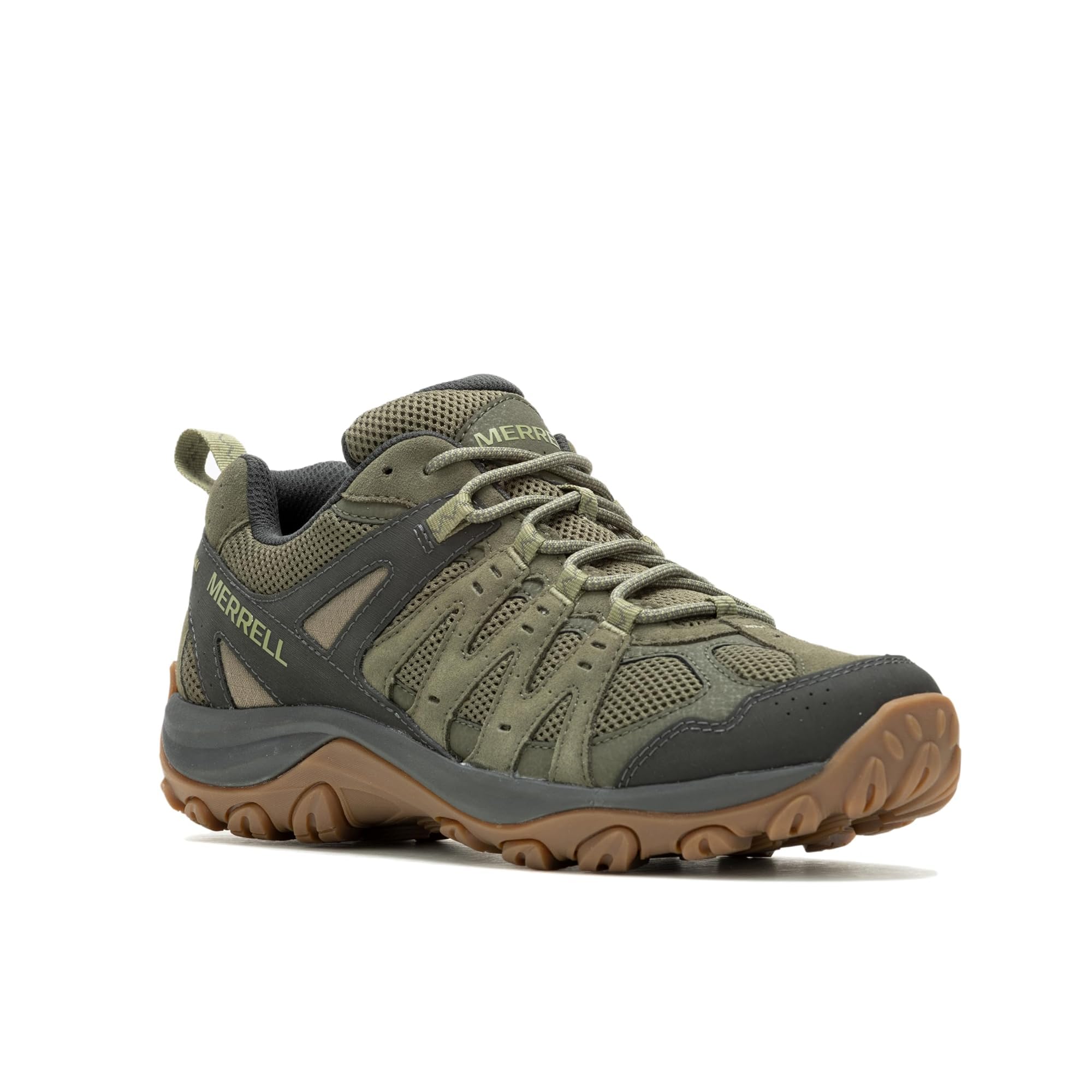
The Merrell Accentor 3 hits the sweetest spot in the light hiking shoe category: it weighs under two pounds per pair yet still packs a supportive midsole that handles rocky descents without foot fatigue. The outsole uses Merrell’s own Air Cushion technology in the heel, which absorbs shock on hard-packed trails without adding the bulk of a full rock plate. The mesh-and-suede upper breathes well during warm-weather hikes, and the toe cap offers respectable protection against root stubs.
Where this shoe excels is the all-day comfort envelope. The arch support is pronounced enough for flat-footed hikers who need structure, yet the overall flex is forgiving enough that you can wear them on a casual neighborhood walk without feeling like you’re strapped into a boot. The lacing system extends far enough down the tongue to let you dial in a secure heel lock, which matters when you’re walking sidehill on uneven ground.
On the downside, the waterproofing is absent — this is a non-waterproof shoe by design, so morning dew and shallow puddles will soak through. The outsole lugs are moderate at around 4 mm, giving reliable grip on dry dirt and gravel but less purchase on wet slickrock. If your primary trails are dry, this is the most versatile mid-range option on the list.
Why it’s great
- Sub-two-pound pair weight reduces leg fatigue on long days
- Air Cushion heel absorbs shock without rock-plate stiffness
- Breathable mesh-suede upper handles warm conditions well
Good to know
- Not waterproof — avoid wet grass and puddles
- Outsole grip on wet rock is average, not excellent
2. ALTRA Men’s Lone Peak 8 Trail Running Shoe
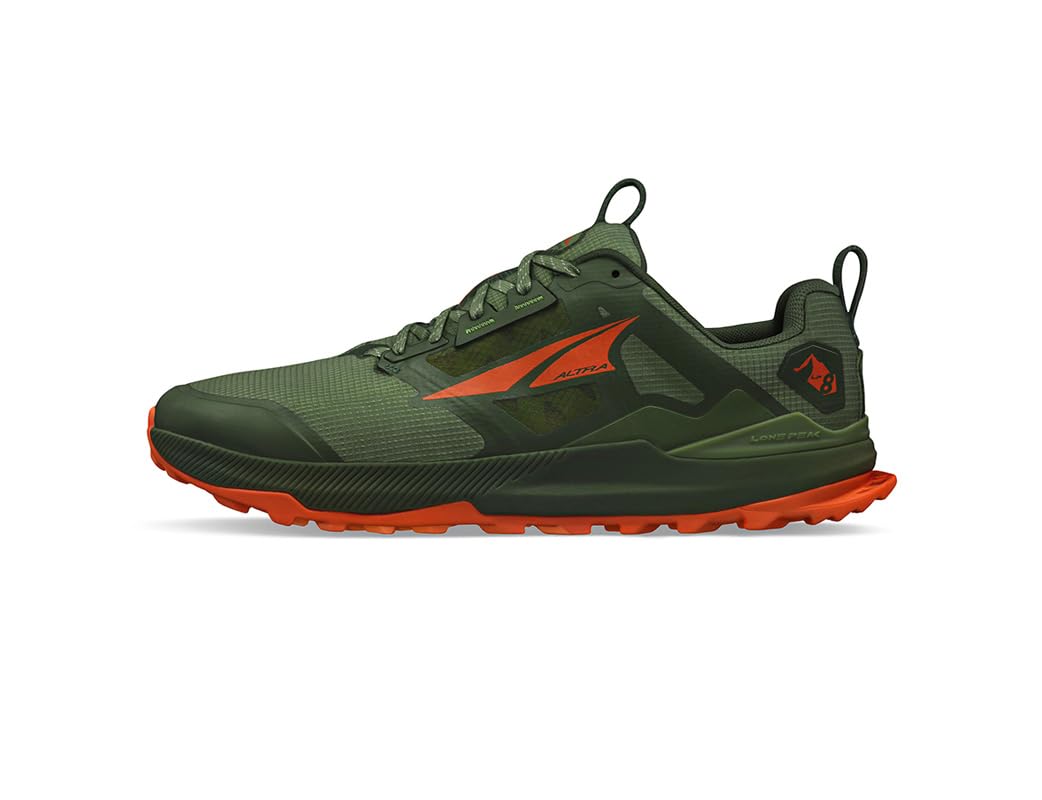
The ALTRA Lone Peak 8 is the lightest shoe in this roundup at 10.5 ounces per shoe, blurring the line between trail runner and hiking shoe. Its defining feature is the FootShape toe box, which allows your toes to splay naturally on technical terrain, reducing blister risk on long descents. The MaxTrac outsole uses a sticky rubber compound with 4 mm lugs that grip well on loose scree and damp forest floor.
The zero-drop platform (heel and toe at the same height) encourages a midfoot strike, which feels efficient on flat-to-rolling trails but takes about a week of adjustment if you’re used to a dropped heel. The midsole uses ALTRA’s Quantic foam, which is softer than previous EVA formulations, giving a plush feel underfoot that still manages to return energy on long miles. The upper is a breathable mesh with welded overlays, so it dries fast after stream crossings.
The trade-off for that light weight is reduced lateral stability. If you’re carrying a heavy overnight pack or navigating boulder fields, the Lone Peak 8 can feel a bit tippy. The toe bumper is also thinner than on a dedicated hiking shoe, so sharp rocks can be felt through the front. This shoe is best for fast-and-light day hikers who prioritize foot feel over armor.
Why it’s great
- Toe splay friendly design prevents blisters on technical terrain
- Sticky MaxTrac outsole grips loose and damp surfaces
- Fast-drying mesh upper ideal for stream crossings
Good to know
- Zero-drop platform requires a short adaptation period
- Lateral support is limited for heavy pack loads
3. Columbia Women’s Konos TRS Outdry
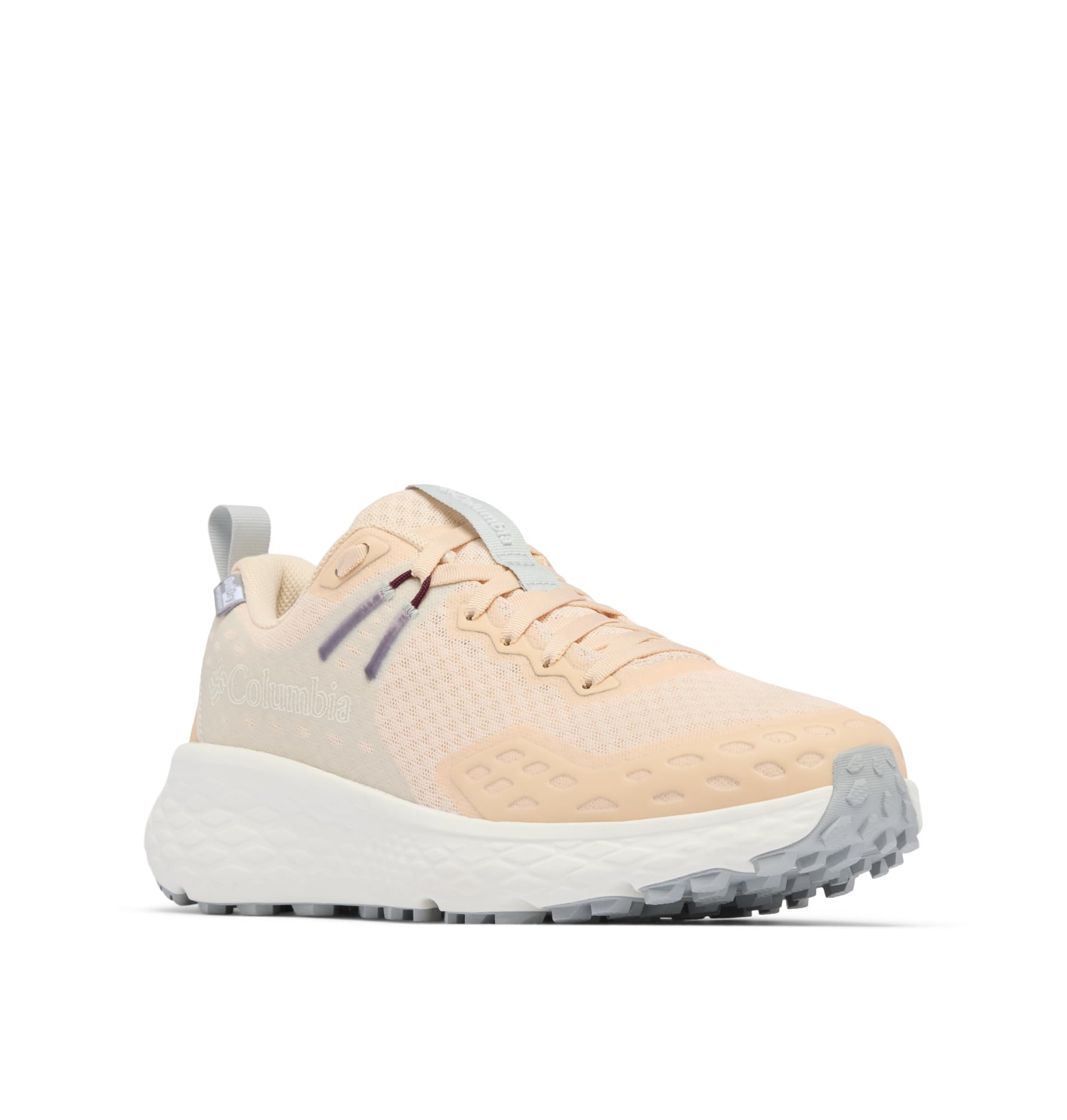
The Columbia Women’s Konos TRS Outdry uses Columbia’s proprietary Outdry membrane, which is bonded directly to the upper rather than layered as a separate liner. This construction makes the shoe lighter and more flexible than traditional Gore-Tex designs while still delivering reliable waterproofing for wet trails and morning dew. The white peach colorway also adds a rare pop of style in a category dominated by grays and blacks.
The Techlite+ midsole provides moderate to high cushioning that feels stable underfoot on packed dirt and gravel paths. The Omni-Grip outsole uses a lug pattern tailored for hiking — 4 mm depth with a directional tread that sheds mud reasonably well. The pull-on closure system (no laces) means you can slip these on quickly, though the fit is less customizable than a lace-up, especially if you have a narrow heel.
Where the Konos TRS falls short is in breathability. The Outdry membrane keeps water out effectively, but on warm days, your feet will run hot. The shoe is also slightly heavier than mesh-based competitors, tipping the scales at about 13 ounces per shoe. For women who hike primarily in wet fall or spring conditions, the trade-off is worth it.
Why it’s great
- Bonded Outdry membrane offers reliable waterproofing without bulk
- Techlite+ midsole delivers stable, moderate-to-high cushioning
- Quick slip-on design with no laces to manage
Good to know
- Less breathable than mesh uppers — feet may overheat
- Pull-on closure limits heel lockdown customization
4. adidas Men’s Terrex Skychaser Ax5 Gore-tex Hiking Shoes
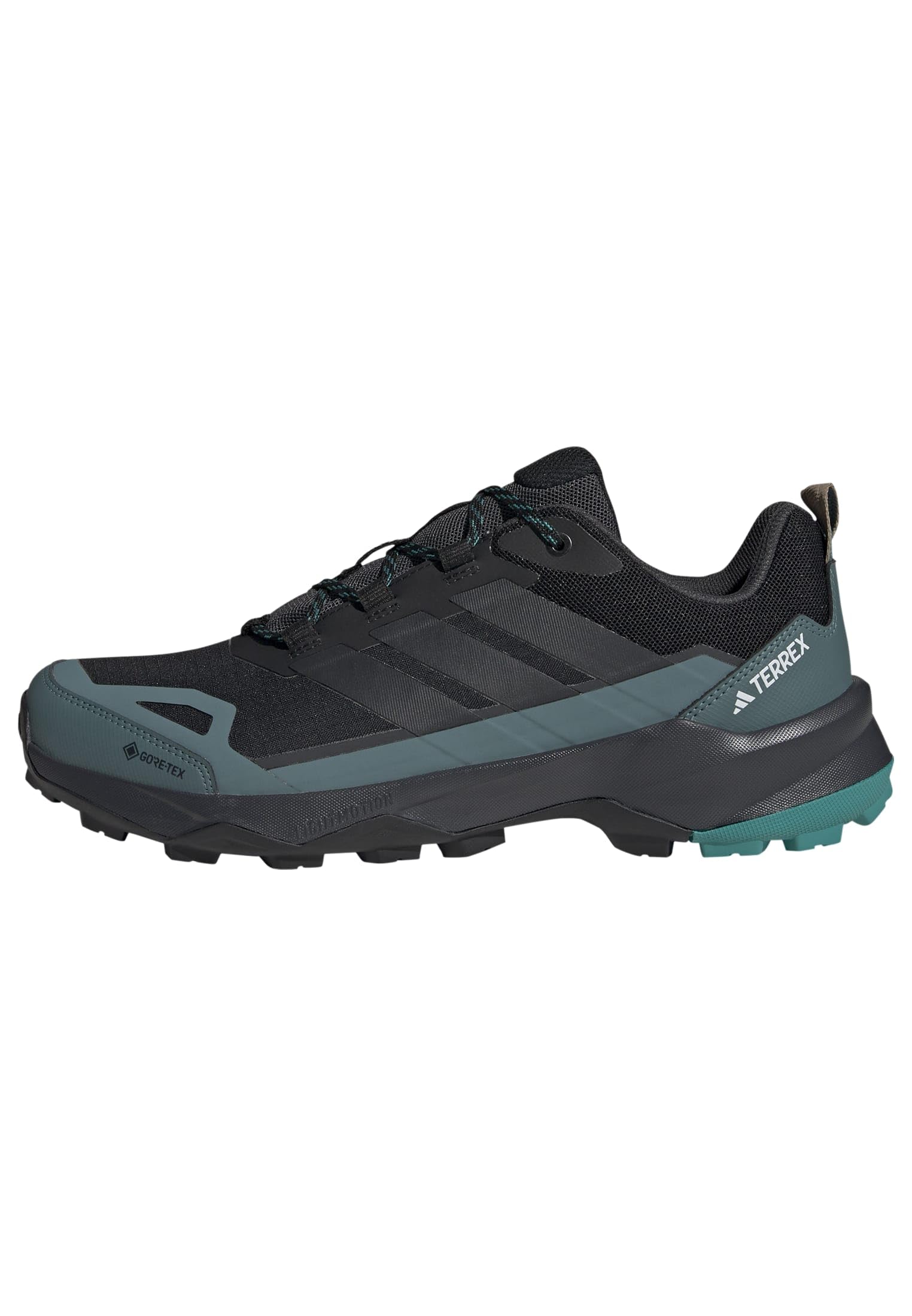
The adidas Terrex Skychaser Ax5 brings genuine Gore-Tex waterproofing in a package that weighs roughly 13 ounces per shoe — lighter than most traditional waterproof hikers. The Continental rubber outsole is borrowed from adidas’s road-running lineage, and it provides better wet-surface grip than many dedicated hiking outsoles. The lugs are shallow at around 3.5 mm, which means less self-cleaning in mud but solid bite on wet rock and pavement.
The midsole uses a full-length EVA foam that feels firmer than the plush ALTRA Quantic foam, giving you more ground feel and better energy transfer on fast-paced hikes. The upper is a combination of mesh and synthetic overlays with a welded construction that reduces stitching points where blisters can form. The heel counter is rigid enough to lock your foot in place without causing pressure points on steep climbs.
Where this shoe loses points is in width — it runs narrow compared to Merrell or ALTRA, so hikers with wider feet may feel pinched in the forefoot. The toe box is also tapered, which can lead to toe jamming on extended descents. If you have a narrow foot and hike in consistently wet conditions, this is a capable choice.
Why it’s great
- Continental rubber outsole excels on wet surfaces
- Gore-Tex membrane is reliable without excessive weight
- Rigid heel counter locks the foot on steep terrain
Good to know
- Runs narrow in the forefoot
- Tapered toe box risks jamming on descents
5. ALTRA Women’s Lone Peak 9 Trail Running Shoe

The ALTRA Women’s Lone Peak 9 is the latest iteration of ALTRA’s most popular trail shoe, refining the already excellent Lone Peak 8 with a slightly more durable upper and a more breathable mesh. The weight remains impressively low at 10.8 ounces per shoe, making it one of the lightest options in this guide. The FootShape toe box is maintained, giving women’s feet the anatomical splay room that reduces toe overlap and black toenails on long downhills.
The midsole uses the same Quantic foam as the men’s version, giving a soft but responsive feel underfoot. The MaxTrac outsole lug depth has been slightly increased to 4.2 mm, offering better bite on loose-over-hard surfaces than the previous model. The heel collar is padded generously, which helps prevent Achilles irritation on steep ascents. The overall fit is true to size for women with medium-to-wide feet, and the lace-up closure allows precise tensioning from toe to ankle.
Like the men’s Lone Peak, the zero-drop platform requires an adjustment period. The upper is also more delicate than a hiking shoe’s — the mesh can snag on sharp brush if you’re bushwhacking off-trail. For women who stick to maintained trails and want a shoe that feels like a fast, natural extension of the foot, the Lone Peak 9 is the top pick.
Why it’s great
- Anatomical toe box prevents black toenails on descents
- Quantic foam midsole is soft yet responsive
- MaxTrac outsole with 4.2 mm lugs grips loose terrain
Good to know
- Zero-drop platform takes time to adjust to
- Mesh upper is less durable than synthetic leather
6. Oboz Men’s Bozeman Low Leather Hiking Shoe

The Oboz Men’s Bozeman Low Leather Hiking Shoe brings old-school construction to the lightweight category — a full-grain leather upper that weighs less than you’d expect, combined with a nylon shank for torsional rigidity. This isn’t a shoe for ultralight fastpacking, but it’s the choice for hikers who want leather’s abrasion resistance and water beading without the weight of a traditional leather boot. The Oboz B-DRY waterproof membrane keeps feet dry through puddles and drizzle.
The midsole uses a dual-density EVA that is firmer under the heel and softer in the forefoot, which provides a stable platform for carrying gear while still allowing a natural rocker on flat sections. The insole is Oboz’s own O Fit Plus, which offers a molded arch that supports medium-to-high arches well. The outsole uses a Granite Peak rubber compound with an aggressive 5 mm lug pattern, giving good bite on loose dirt and soft trails.
The downside is the break-in period — the full-grain leather requires about 15–20 miles of walking before it molds to your foot. The shoe is also heavier than mesh competitors, at roughly 15 ounces per shoe. If you value longevity and leather’s ability to repel light moisture over a long lifespan, this is a solid investment.
Why it’s great
- Full-grain leather upper resists abrasion and sheds light moisture
- Nylon shank provides torsional rigidity for uneven terrain
- Aggressive 5 mm lugs grip loose and soft surfaces
Good to know
- Requires a break-in period of 15–20 miles
- Heavier than mesh-based hiking shoes
7. Merrell Men’s Speed Strike 2

The Merrell Men’s Speed Strike 2 is a hybrid that leans heavily into trail-running DNA while retaining enough support for day hikes. At a measured 1.5 pounds per pair, it sits on the lighter end of the spectrum, using a synthetic mesh upper with welded overlays to minimize weight without sacrificing durability. The FLEXconnect dual-direction flex grooves in the midsole let the shoe bend naturally with your foot, reducing fatigue on long, flat stretches.
The Vibram TC5+ outsole is the star here — it uses a sticky rubber compound with a multi-directional lug pattern that grips well on both dry rock and wet roots. The lugs are shallow at 3.5 mm, so mud sheds quickly but grip on loose gravel is less aggressive than deeper-lugged options. The heel cup is lightly padded, and the ankle collar sits low, giving a trail-runner feel that works well for fast-paced day hikers.
The compromise is in protection — there’s no rock plate in the forefoot, so sharp stones can be felt through the sole. The toe cap is also minimal, offering less protection against kicked roots than a full hiking shoe. For runners or fast hikers on smooth-to-moderate trails, the Speed Strike 2 is a compelling choice.
Why it’s great
- Vibram TC5+ outsole sticks well on wet roots and dry rock
- FLEXconnect grooves allow natural foot flexion
- Very light at 1.5 pounds per pair
Good to know
- No rock plate — sharp stones felt underfoot
- Minimal toe cap protection
8. KEEN KS86 Lea
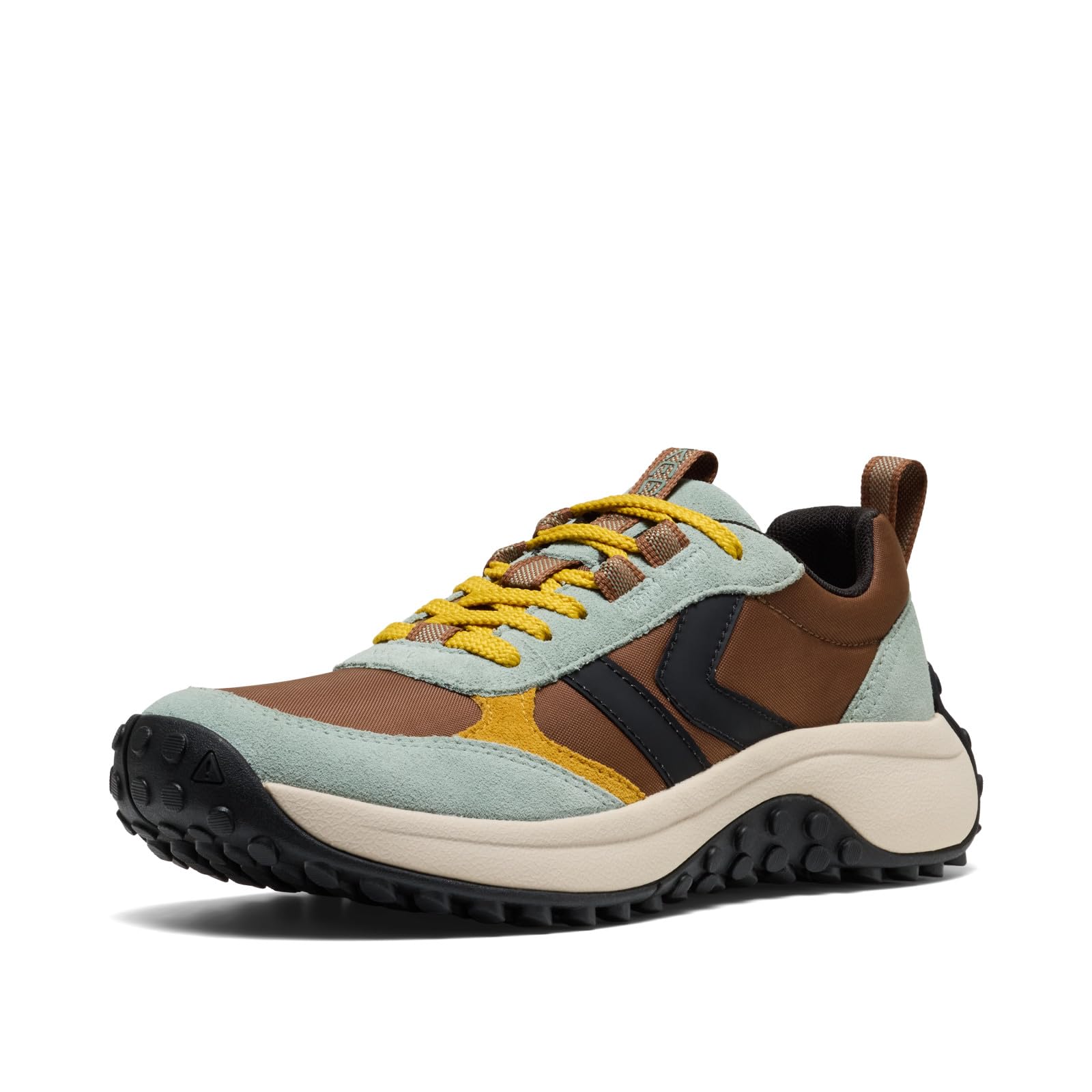
The KEEN KS86 Lea leans into retro aesthetics — a classic lace-up hiker silhouette with a solid color pattern and bison iceberg green colorway that looks more at home at a brewery than on a strenuous ridge line. This shoe is built for light-duty trails, gravel paths, and casual walking rather than technical terrain or all-day mileage. The outsole uses a low-profile tread pattern that lacks the deep lugs of dedicated hiking shoes, making it more suited to hard-packed trails and pavement transitions.
The upper is a combination of leather and textile, giving moderate durability with a relaxed fit. The closure uses traditional laces, which allow decent lockdown, though the lack of a heel lock or eyelet for lacing tricks limits ankle stability on uneven ground. The shoe is not water-resistant, so moisture from wet grass or light rain will soak through quickly. For a budget-conscious hiker who primarily walks maintained trails and wants a casual look that transitions into town, the KS86 Lea works.
On more demanding terrain, the KS86 Lea falls short — the midsole lacks the stiffness to support a pack over uneven ground, and the outsole grip is insufficient for loose scree or wet rock. This shoe is best for entry-level hiking or secondary use as a comfortable walking shoe.
Why it’s great
- Classic retro look that transitions well to casual wear
- Comfortable relaxed fit for light walking
- Leather-textile upper offers decent durability
Good to know
- Outsole grip is insufficient for technical or wet terrain
- Midsole lacks stiffness for pack support
9. Columbia Men’s Strata Trail Low Waterproof Hiking Shoes
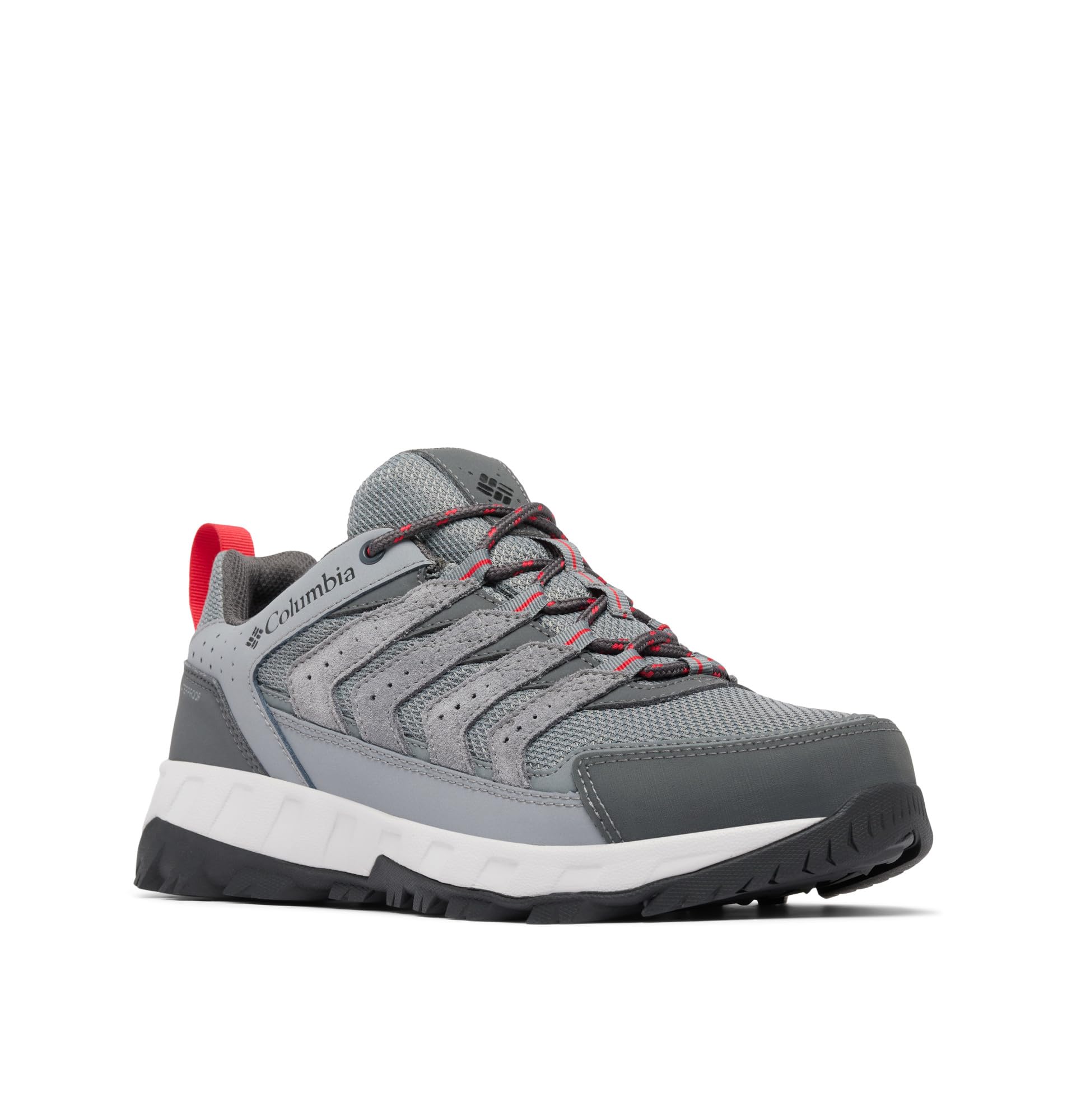
The Columbia Men’s Strata Trail Low Waterproof Hiking Shoes bring a sealed membrane to the budget end of the light hiking shoe market. Columbia uses its own Omni-Tech waterproofing, which keeps feet dry in puddles and light rain without the premium cost of Gore-Tex. The upper is a mix of synthetic leather and mesh, which balances durability and breathability adequately for the price point. The tread is a standard Columbia Omni-Grip pattern with moderately deep multi-directional lugs.
The midsole uses Techlite foam, which offers decent cushioning for light trail use but compresses noticeably under heavier loads or longer distances. The shoe fits true to size with a medium width, and the lace-up closure provides solid customization. The heel collar is well-padded, reducing the risk of heel slip on moderate grades. For a hiker who hits maintained trails a few times a month and wants waterproofing without breaking the bank, this is a functional entry point.
The limitations become apparent on extended hikes — the midsole lacks the rebound of premium foams, leading to a dead feeling after about five miles. The outsole also wears more quickly than Vibram or Continental rubber compounds, especially on abrasive surfaces like decomposed granite. For occasional day hikes, the Strata Trail is a capable, affordable choice.
Why it’s great
- Omni-Tech membrane keeps feet dry in light wet conditions
- Good value for budget-conscious waterproof hikers
- Well-padded heel collar reduces slip
Good to know
- Midsole feels dead after five miles of hiking
- Outsole rubber wears quickly on abrasive surfaces
FAQ
How much lighter are light hiking shoes compared to traditional boots?
Can I use light hiking shoes for trail running?
Do light hiking shoes need a break-in period?
Are waterproof light hiking shoes worth it for dry climates?
Final Thoughts: The Verdict
For most hikers, the best light hiking shoes winner is the Merrell Accentor 3 because it strikes the ideal balance of low weight, all-day comfort, and versatile grip for mixed terrain without breaking the budget. If you want a natural foot shape with toe splay for technical trails, grab the ALTRA Lone Peak 8. And for waterproof protection in wet conditions at a premium level, nothing beats the adidas Terrex Skychaser Ax5.