Compressible soles rob force transfer, round heels invite instability, and excessive cushioning turns heavy squats into a balancing act. Standard athletic trainers prioritize running and jumping, making them a liability under a loaded barbell. The right construction, by contrast, provides a rigid platform that lets you drive through your heels with zero energy loss.
I’m Emma — the founder and writer behind Baby Bangs. I’ve spent years analyzing biomechanics reports and comparing sole rigidity, heel elevation, and outsole grip patterns across dozens of lifting-specific footwear models to identify the pair that actually supports progressive overload.
Whether you are chasing a new one-rep max or refining technique in the snatch, choosing the right gear matters. This guide breaks down the top contenders for best lifting sneakers based on construction, stability, and real-world training demands.
How To Choose The Best Lifting Sneakers
Picking a dedicated pair means weighing trade-offs between heel elevation, sole stiffness, and intended lift type. A hybrid trainer that excels in box jumps may feel spongy under a heavy squat, while a pure Olympic shoe with a high heel becomes awkward for deadlifting. Understanding these distinctions prevents an expensive mismatch.
Heel Height and Material
Elevated heels reduce ankle dorsiflexion demand, allowing a more upright torso during deep squats. Typical heights range from 0.6 to 1.0 inches. A wooden or TPU heel provides a non-compressible base, while EVA foam heels sacrifice stability for cushion. Serious lifters gravitate toward rigid heels for consistent foot-to-floor contact.
Outsole Grip and Platform Width
A broad, flat outsole increases the stable contact area, crucial for uneven surfaces or rubber gym mats. Look for a rubber compound with a herringbone or siped pattern that resists rubber-shedding on concrete. Lifters with wider feet often prefer a platform that extends slightly beyond the foot’s width, preventing rollover during lateral movements.
Strap and Closure System
Velcro straps across the midfoot lock the heel in place, reducing foot slide inside the shoe during heavy pulls. Some models use a single wide strap, while others combine a secondary strap near the toe for additional lockdown. Lace-up closure with eyelets reinforced by webbing adds durability under repeated tension.
Quick Comparison
On smaller screens, swipe sideways to see the full table.
| Model | Category | Best For | Key Spec | Amazon |
|---|---|---|---|---|
| adidas Men’s Adipower Weightlifting III | Premium | Olympic weightlifting | 0.8-inch TPU heel | Amazon |
| Reebok Legacy Lifter III | Premium | Heavy squats & clean & jerk | 1.0-inch TPU heel | Amazon |
| Nike Women’s Metcon 9 | Mid-Range | CrossFit & HIIT | Flat, wide heel | Amazon |
| Inov-8 Fastlift 360 | Premium | Powerlifting & Olympic lifts | 0.6-inch Rope-Tec heel | Amazon |
| adidas Unisex Powerlift 5 | Mid-Range | Entry-level weightlifting | 0.6-inch TPU heel | Amazon |
| Reebok Nano X5 | Mid-Range | Versatile gym training | Flat, low-profile rubber | Amazon |
| Otomix Men’s Warrior | Mid-Range | Boxing & bodybuilding | Flexible non-slip sole | Amazon |
| Under Armour TriBase Reign 6 | Mid-Range | Functional fitness & lifting | TriBase grip sole | Amazon |
| Nordic Lifting VENJA | Entry-Level | Budget-conscious lifters | 0.6-inch rubber heel | Amazon |
In‑Depth Reviews
1. adidas Men’s Adipower Weightlifting III

The Adipower III is the gold standard for serious Olympic lifters. Its 0.8-inch TPU heel provides a non-compressible, elevated platform that significantly reduces ankle mobility demands, allowing a deep squat with a near-vertical shin. The dual Velcro straps across the midfoot and forefoot lock the foot in place securely, eliminating any heel slip during maximal effort pulls.
Materials include a textile and synthetic upper that breathes well during long training sessions, plus a flat heel type that maximizes ground contact. The lace-up closure with hook-and-loop reinforcement keeps tension even. This is purpose-built for snatch, clean and jerk, and heavy back squats where absolute stability is non-negotiable.
On the downside, the elevated heel feels awkward for deadlifting or any movement where you want your foot flat to the floor. The 1-pound weight is light for a lifting shoe, but the rigid sole means zero cushion for walking between stations — these are strictly for the platform.
Why it’s great
- Non-compressible TPU heel provides an ultra-stable base
- Dual strap system delivers exceptional heel lockdown
- Breathable upper stays comfortable during long sessions
Good to know
- Elevated heel is not ideal for deadlifting
- Minimal cushioning limits walking comfort
- Premium price point may deter casual lifters
2. Reebok Legacy Lifter III
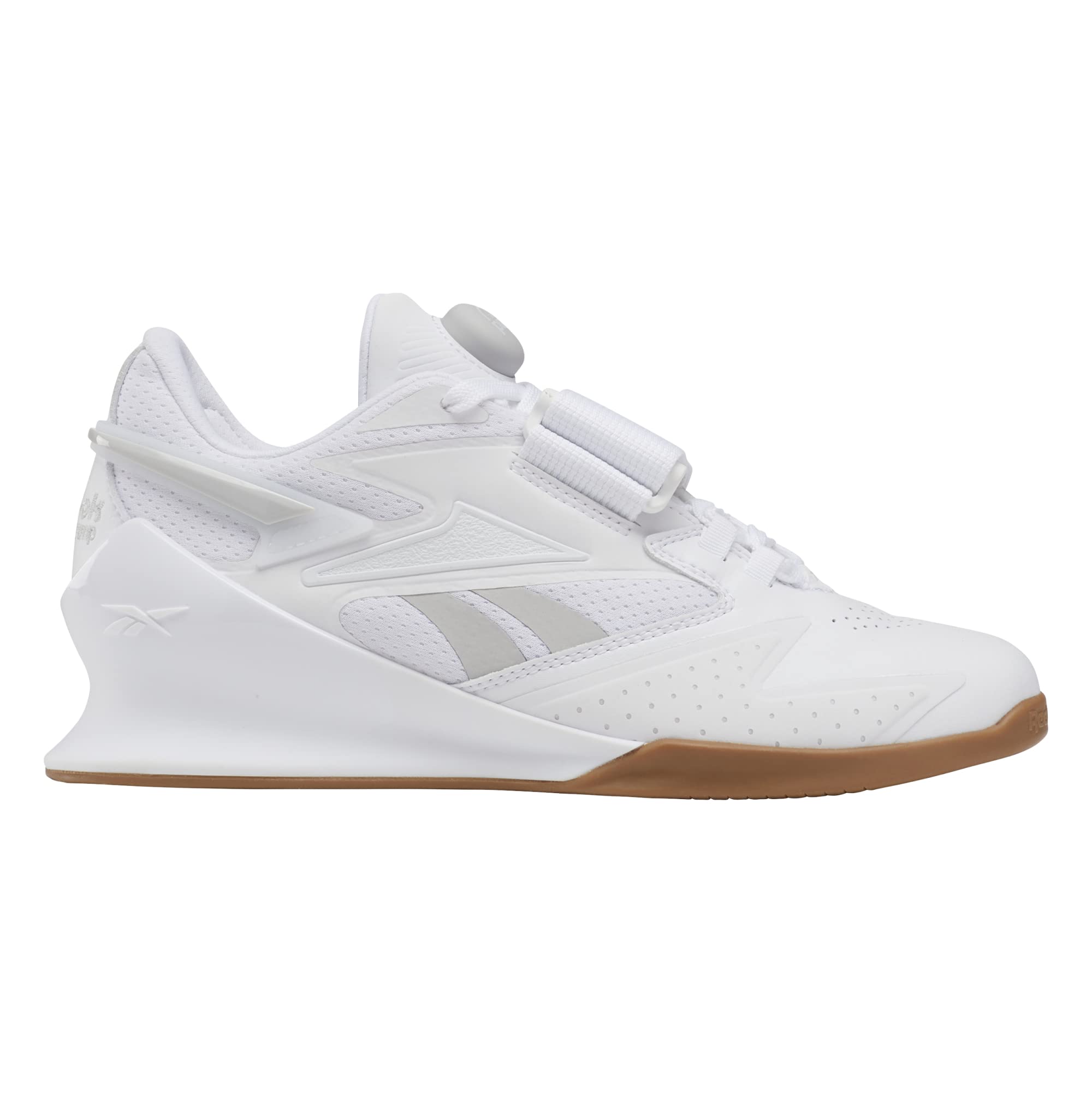
The Legacy Lifter III offers the highest heel elevation on this list at a full 1.0 inches, making it a favorite for female lifters and those with limited ankle dorsiflexion. The full TPU heel is rock-solid and does not compress under heavy loads, giving you a consistent foot angle for every rep. The woven metatarsal strap wraps the midfoot tightly, reducing foot splay during the catch phase.
The outsole uses a hard rubber compound that grips aggressively on rubber gym mats, though the wide platform encourages a stable stance. Heavier lifters appreciate the reinforced lateral posts that prevent the shoe from rolling over during cleans or snatches. This shoe is built specifically for squatting and Olympic lifting — not cross-training.
The women’s sizing runs true to a narrower foot profile. Some users note the toe box feels snug, especially if you have a wider forefoot. The high heel also makes walking feel unnatural between sets, so plan to keep these on only while under the bar.
Why it’s great
- Highest heel elevation aids ankle mobility limited lifters
- Woven strap locks in the midfoot securely
- Reinforced lateral posts enhance rollover stability
Good to know
- Toe box may be narrow for wide-footed athletes
- Premium price reflects specialized design
- Unnatural walking feel between sets
3. Nike Women’s Metcon 9
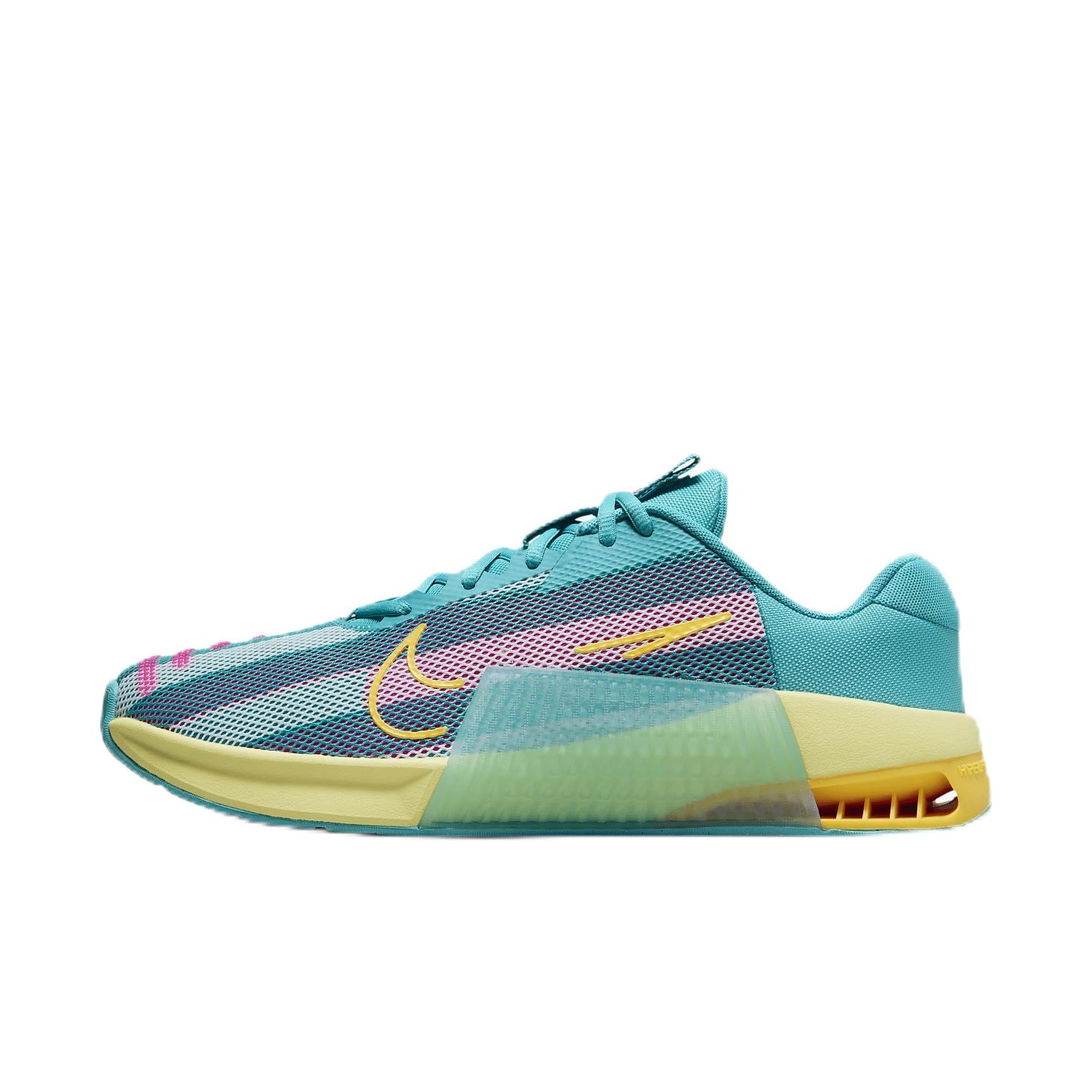
The Metcon 9 balances lifting stability with metcon versatility, featuring a flat heel design that stays low to the ground for deadlifts while offering enough rigidity for moderate squatting. The rubber heel clip adds a small raised section that improves grip during wall walks and handstand push-ups without compromising the flat base for barbell work.
The upper is a durable mesh that resists rope burns, and the wide footbed accommodates natural splay during stance-based movements. Nike integrates a subtle internal heel counter that limits heel slip during fast directional changes. It handles box jumps, rowing, and burpees better than any dedicated lifting shoe.
The trade-off is that the flat sole lacks the heel elevation needed for deep front squats or high-volume Olympic lifting. Lifters with limited ankle mobility may struggle with depth. The women’s last runs slightly narrow, so those with wider feet should try a half-size up.
Why it’s great
- Flat heel works well for deadlifts and box jumps
- Rope-resistant upper adds durability
- Wide footbed enables natural splay
Good to know
- No heel elevation for deep squats
- Women’s fit may be snug for wide feet
- Less stable than dedicated Olympic shoes
4. Inov-8 Fastlift 360
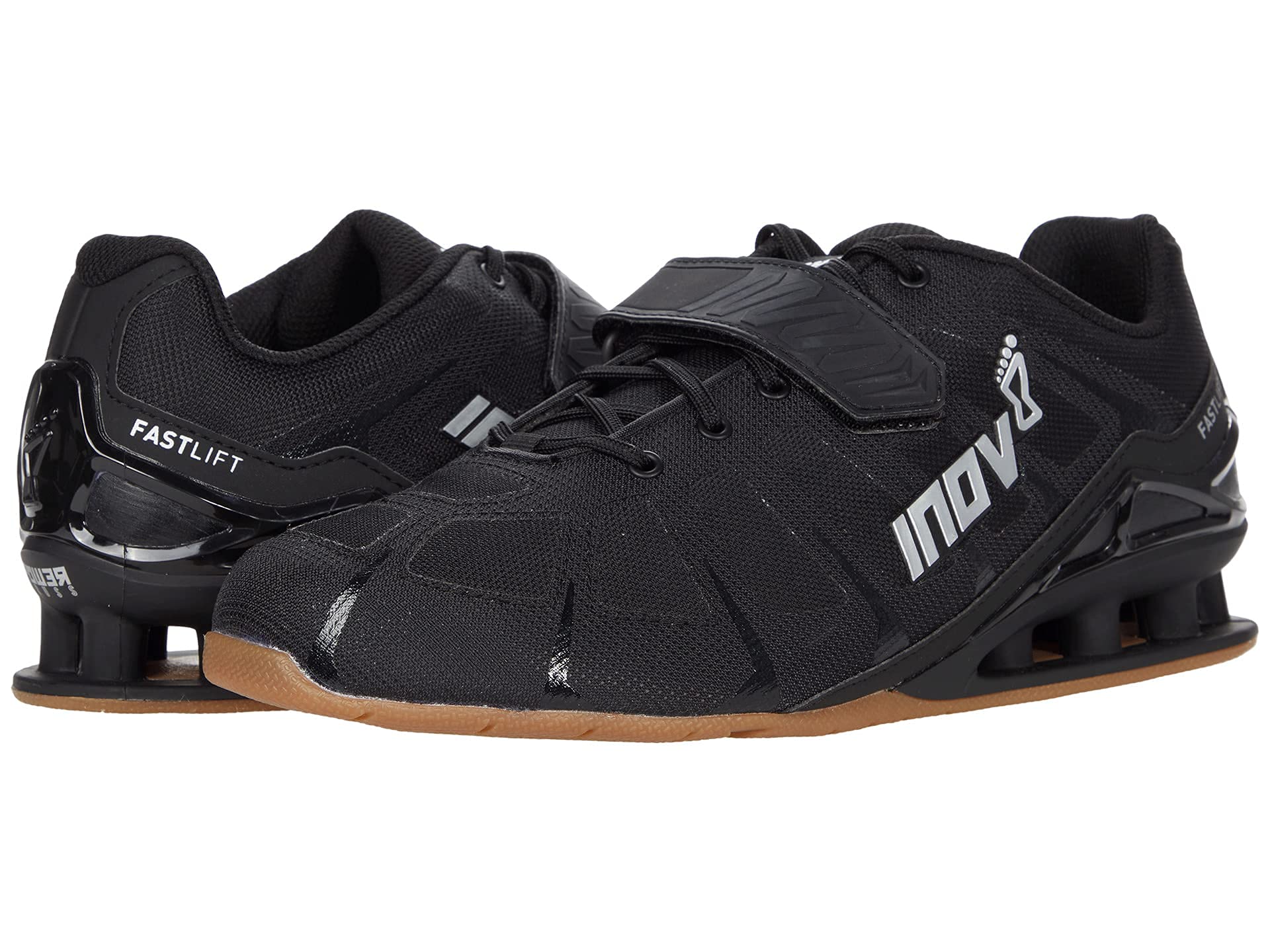
The Fastlift 360 combines a 0.6-inch TPU heel with a flexible Meta-Flex groove that subtly allows the forefoot to bend, making it more comfortable for dynamic lifts like power cleans and push jerks. The heel is still rigid under compression, but the additional forefoot relief helps during the catch and recovery phases. The leather and mesh upper offer a snug fit with minimal stretch.
The Rope-Tec outsole grips aggressively on both rubber and rope surfaces, though the primary use remains Olympic lifting. The heel width is slightly narrower than the Legacy Lifter, which may appeal to lifters with narrower feet. Heavier lifters (over 200 pounds) report the shoe feels planted during 500-plus pound deadlifts, despite the moderate heel.
Where it falls short is in pure squatting depth for those who rely on a high heel. The 0.6-inch elevation helps but does not match the 1.0-inch platforms. The lace system uses six eyelets that provide good tension, but the Velcro strap can loosen over repeated use if not pressed down firmly.
Why it’s great
- Meta-Flex groove improves mobility during cleans
- Rope-Tec outsole grips varied surfaces
- Snug leather upper limits stretch over time
Good to know
- Lower heel may not suit high-elevation fans
- Velcro strap may loosen over time
- Narrower heel width for some foot shapes
5. adidas Unisex Powerlift 5
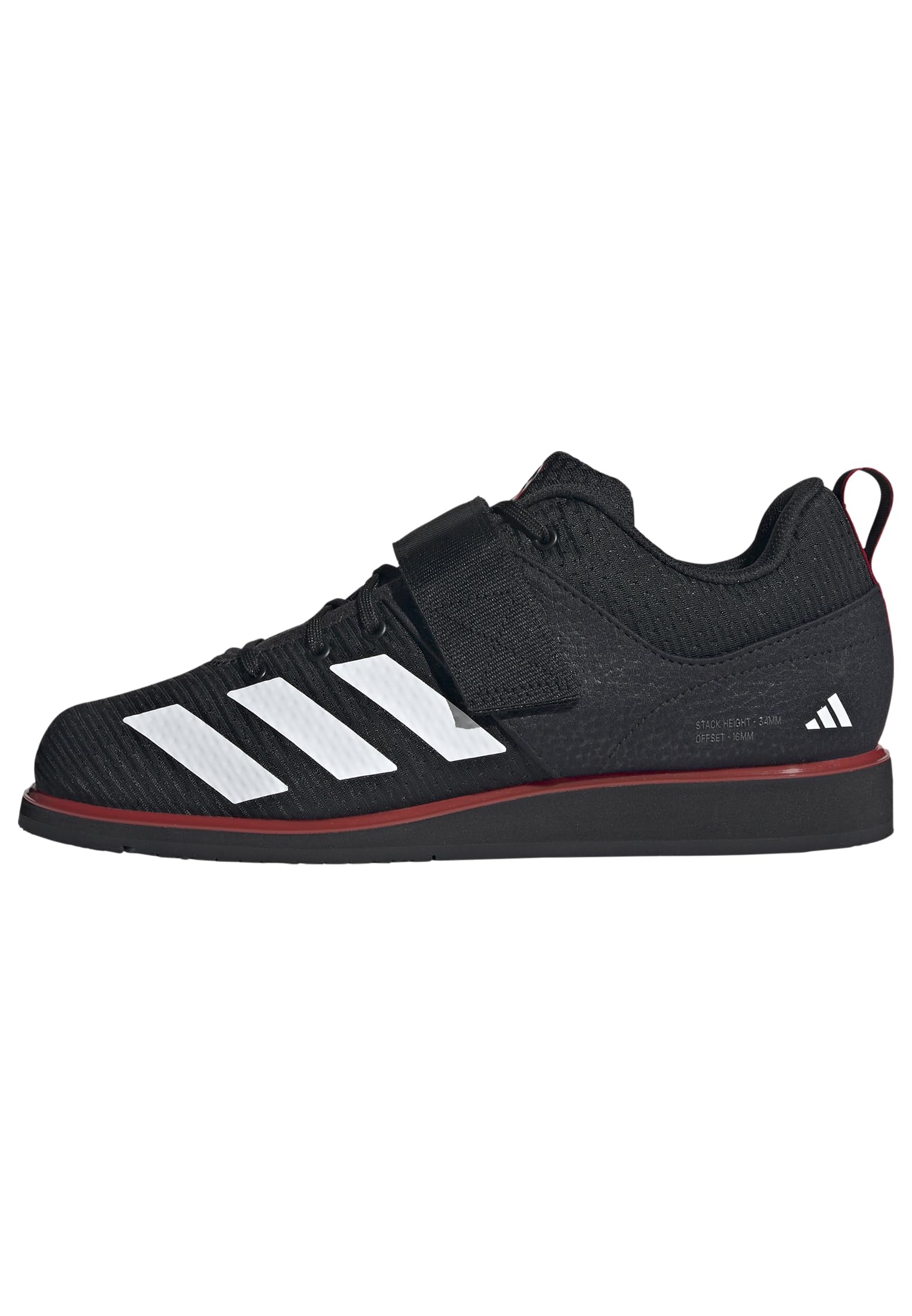
The Powerlift 5 is adidas’ entry-level weightlifting shoe, offering a 0.6-inch TPU heel that provides a noticeable improvement in squat depth over flat trainers without the premium price tag. The unisex sizing makes it accessible for both men and women, though you will need to consult the size chart carefully. The single Velcro strap across the midfoot does a fair job of reducing foot slide.
The upper is a combination of textile and synthetic materials that feel breathable but less durable than leather. The outsole rubber is decent on gym mats, though the heel width is narrower than the Adipower line, which may feel less stable for very heavy loads. This is a great starting point for someone transitioning from running shoes to dedicated lifting footwear.
Heavier lifters (over 250 pounds) may notice slight compression in the heel under maximal loads. The limited strap system cannot lock down the forefoot as effectively as dual-strap designs, so some lateral micro-movement occurs during split jerks. It is best suited for beginners or intermediate lifters with lighter training maxes.
Why it’s great
- Affordable entry into dedicated weightlifting shoes
- Noticeable squat depth improvement over flat trainers
- Breathable upper for comfort
Good to know
- Narrower heel may feel less stable under heavy loads
- Single strap does not lock forefoot fully
- TPU heel can compress under very high weight
6. Reebok Nano X5
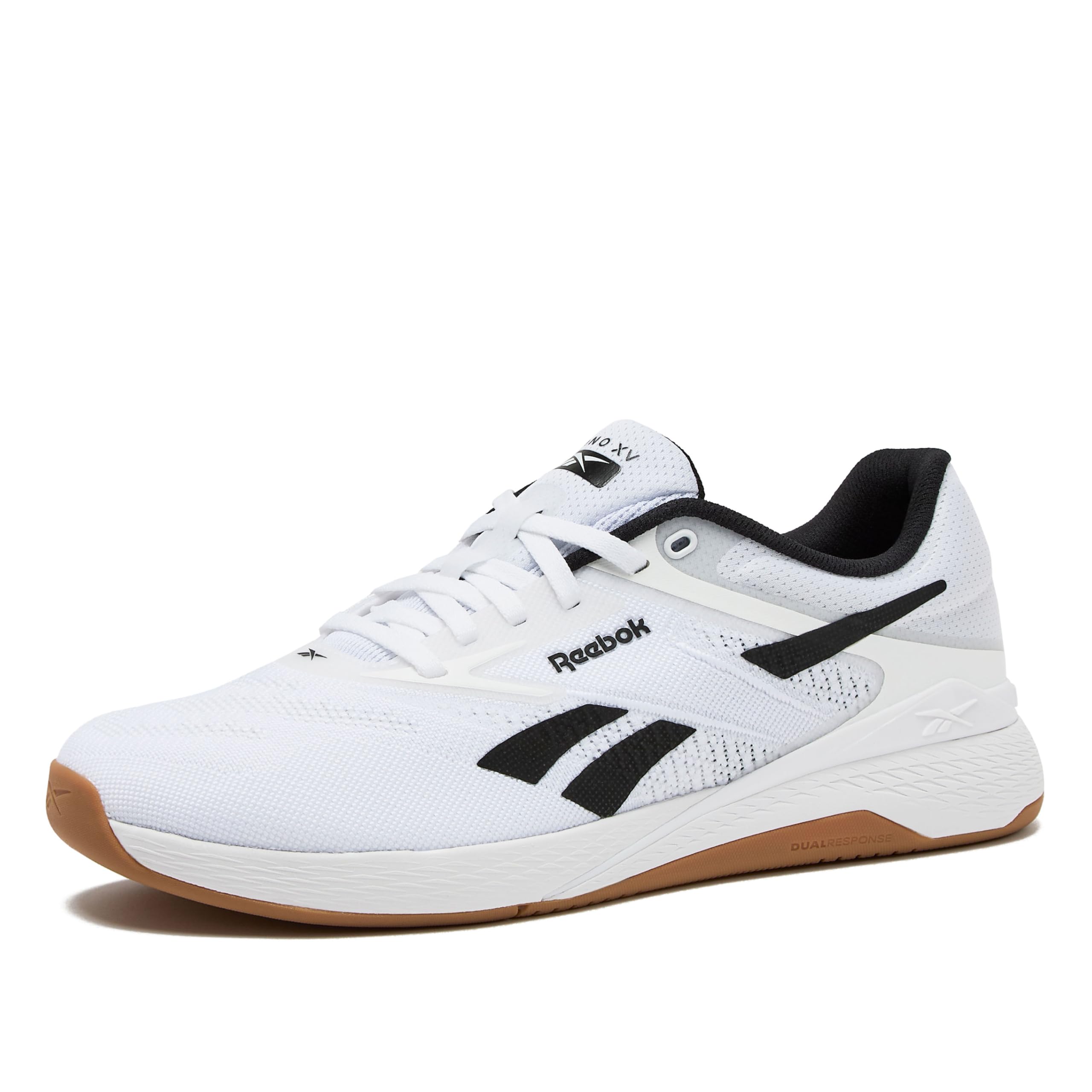
The Nano X5 is Reebok’s latest cross-training shoe that keeps a flat, low-profile rubber sole ideal for both lifting and HIIT circuits. The Flexweave upper offers a sock-like fit that reduces bulk while maintaining durability during rope climbs. The heel is reinforced with a TPU clip to resist compression during heavy squats, though it still has some give compared to a dedicated lifting shoe.
The outsole pattern uses a multi-directional tread that grips well on both hardwood and rubber floors. The toe box is generous enough for natural splay during deadlifts, and the lace-lock system keeps tension even during box jumps. It handles a 400-pound squat comfortably, though the subtle heel compression will be noticeable to advanced lifters.
Where it falls short is in Olympic weightlifting — the flat sole lacks the heel elevation needed for deep clean and jerk positions. The unisex adult sizing runs slightly large, so ordering a half-size down may improve the fit for narrower feet.
Why it’s great
- Flat sole works well for deadlifts and functional movements
- Flexweave upper resists abrasion from rope climbs
- Low-profile design for natural foot position
Good to know
- Not enough heel elevation for Olympic lifts
- Heel compression noticeable under very heavy loads
- Unisex sizing may require half-size adjustment
7. Otomix Men’s Warrior

The Otomix Warrior differs from most lifting shoes by prioritizing flexibility over rigidity. The sole uses a thin, non-slip rubber that allows full foot articulation, making it a favorite in bodybuilding and boxing circles where ankle mobility is key. The lightweight construction (well under a pound per shoe) makes it comfortable for long periods of lunges, split squats, and dynamic warm-ups.
The upper is a breathable knit that stretches to accommodate wider feet, and the heel features a subtle wedge that does not provide the same lift as a dedicated weightlifting shoe. This design works for moderate weight work up to around 300 pounds, but the flexible sole lacks the stability needed for maximal effort squats.
CrossFit athletes may find the Otomix useful for gymnastic movements and box jumps, but the minimal heel lift means it cannot replace a proper Olympic shoe for cleans and snatches. The outsole rubber wears faster on rough concrete compared to thicker compounds.
Why it’s great
- Extremely flexible sole for dynamic movements
- Lightweight and breathable for long sessions
- Accommodates wider feet naturally
Good to know
- Flexible sole lacks stability for heavy squats
- Minimal heel lift unsuitable for Olympic lifting
- Outsole wears relatively quickly on concrete
8. Under Armour TriBase Reign 6
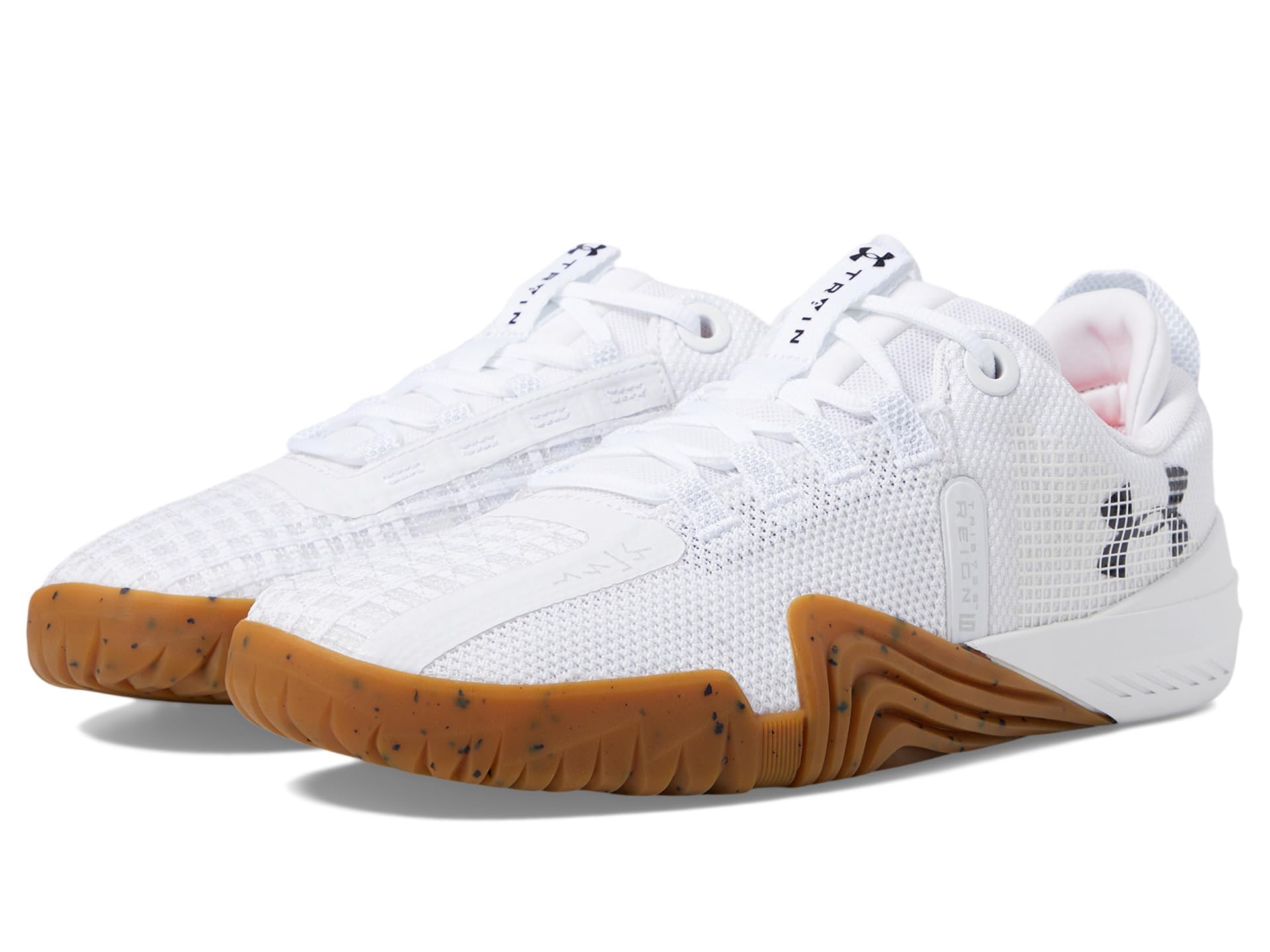
The TriBase Reign 6 focuses on a wide, flat base inspired by the natural tripod foot position, which aids stability for deadlifts and squats. The TriBase rubber outsole uses a unique tread pattern that spreads the foot’s contact points, encouraging ground feel and force transfer. The UA Wrap technology uses a molded heel counter that locks the heel in place without excessive strap pressure.
The upper is a durable engineered mesh that resists stretching, and the lace system includes webbing eyelets that distribute tension evenly. It handles moderate Olympic lifting up to around 350 pounds, but the flat sole lacks the heel elevation that experienced lifters want for overhead squats or snatches. The toe box is roomy enough for natural splay during stance work.
Some users report that the midsole feels slightly stiffer than the previous Reign 5, which improves stability but reduces comfort for walking or dynamic movements like lunges. The outsole grips well on rubber mats but may slide on polished concrete if wet.
Why it’s great
- Wide TriBase sole enhances ground contact
- Molded heel counter locks the foot in place
- Roomier toe box for natural splay
Good to know
- Flat sole lacks a heel lift for deep squats
- Stiff midsole reduces walking comfort
- Outsole may slip on wet polished floors
9. Nordic Lifting VENJA

The Nordic Lifting VENJA is a budget-friendly entry into the world of dedicated weightlifting shoes, featuring a 0.6-inch rubber heel that provides some elevation over flat trainers. The rubber compound is not as rigid as TPU, but it holds up well for intermediate loads up to around 300 pounds. The single Velcro strap across the midfoot adds extra lockdown, and the outsole uses a diamond-grip pattern for decent traction on gym mats.
The upper is a synthetic leather that feels stiff initially but breaks in after a few sessions, offering a snug fit that prevents heel slippage. The toe box is slightly tapered, which may pinch wider feet during longer sets. The construction is surprisingly durable for the price point, with reinforced stitching around stress areas.
The main drawback is the rubber heel, which can compress slightly under heavy loads, reducing the intended elevation. The sizing runs about a half-size small, so ordering up is recommended. This is a solid choice for newcomers who want to test a lifting shoe without a major financial commitment.
Why it’s great
- Affordable entry into dedicated weightlifting shoes
- Rubber heel improves squat depth
- Durable synthetic leather upper
Good to know
- Rubber heel compresses under heavy loads
- Toe box is narrow for wider feet
- Sizing runs small — order a half-size up
FAQ
Can I use running shoes for weightlifting?
What is the ideal heel height for a beginner lifter?
Do I need a dual strap system?
Final Thoughts: The Verdict
For most users, the best lifting sneakers winner is the adidas Men’s Adipower Weightlifting III because its 0.8-inch TPU heel and dual strap system deliver uncompromising stability for heavy squats and Olympic lifts. If you want a flat, versatile platform for CrossFit and HIIT, grab the Nike Women’s Metcon 9. And for a budget-friendly entry into dedicated lifting shoes, nothing beats the Nordic Lifting VENJA.