Finding a shoe that locks your heel during a heavy squat yet still feels snappy on a five-mile run is the biggest gear headache in fitness. Most trainers sacrifice stability for cushioning or turn your run into a slog. The right balanced design changes your session entirely.
I’m Emma — the founder and writer behind Baby Bangs. I’ve spent years analyzing the biomechanics and material science of this specific cross-training category to separate genuine hybrid performers from marketing fluff.
Whether you’re a CrossFitter, a weekend warrior, or a lifter adding cardio, the best lifting running shoes blend a supportive platform for iron work with responsive foam to handle tempo miles without foot fatigue.
How To Choose The Best Lifting Running Shoes
Hybrid shoes live in a narrow sweet spot. Too much stack height and you lose ground feel for deadlifts. Too little cushion and your knees ache after a three-mile warm-up. Prioritize these factors before clicking buy.
Heel-to-Toe Drop and Stability
A 4mm to 8mm drop is the Goldilocks zone for general hybrid training. Zero-drop mimics a deadlift slipper but strains calves on runs. Above 10mm tilts you forward, compromising squat depth. Mid-range drops let your heel sit low enough for a stable press while still encouraging a midfoot strike on pavement.
Midsole Density and Energy Return
Single-density EVA beds are too soft for overhead pressing or heavy carries. The best hybrids layer a firmer carrier foam (often a TPU blend) around the perimeter for lateral stability with a softer core for heel-strike absorption. Look for phrases like “dual-density” or “carrier foam wrap” in the construction details.
Outsole Rubber and Grip Pattern
A smooth bottom slides on a wooden box or a slick gym floor. Deep lugs, conversely, catch awkwardly on a barbell knurling or a plyo box. The right hybrid tire uses flat, wide rubber under the metatarsals and heel for platform grip, with shallow flex grooves in the forefoot to let the shoe roll naturally during a run.
Upper Architecture and Lockdown
A knit upper breathes well on a run but stretches under lateral load during a side shuffle or a renegade row. Woven mesh with fused TPU overlays provides directional stretch — it gives where you need flex but locks the midfoot when you brace under a bar. Heel counters should be stiff enough to resist collapse during a heavy kettlebell swing.
Quick Comparison
On smaller screens, swipe sideways to see the full table.
| Model | Category | Best For | Key Spec | Amazon |
|---|---|---|---|---|
| Under Armour TriBase Reign 6 | Premium | Heavy compound lifts + short runs | 4mm drop, dual-density foam | Amazon |
| Nike Free Metcon 5 | Premium | Hybrid metcon + daily runs | 6mm drop, flex-groove outsole | Amazon |
| Nike MC Trainer 3 | Mid-Range | Multi-directional gym work | 5mm drop, carrier foam wrap | Amazon |
| Under Armour Project Rock 5 | Mid-Range | Durable daily training | 6mm drop, UA TriBase outsole | Amazon |
| ASICS Gel-Excite 11 | Mid-Range | Long runs with light lifting | 8mm drop, rearfoot Gel unit | Amazon |
| Reebok Nano | Mid-Range | CrossFit WODs and sprints | 7mm drop, rope-guard upper | Amazon |
| New Balance 608 V5 | Budget | Walkable cross-training on a budget | 12mm drop, ABZORB heel | Amazon |
In‑Depth Reviews
1. Under Armour Men’s TriBase Reign 6 Trainer
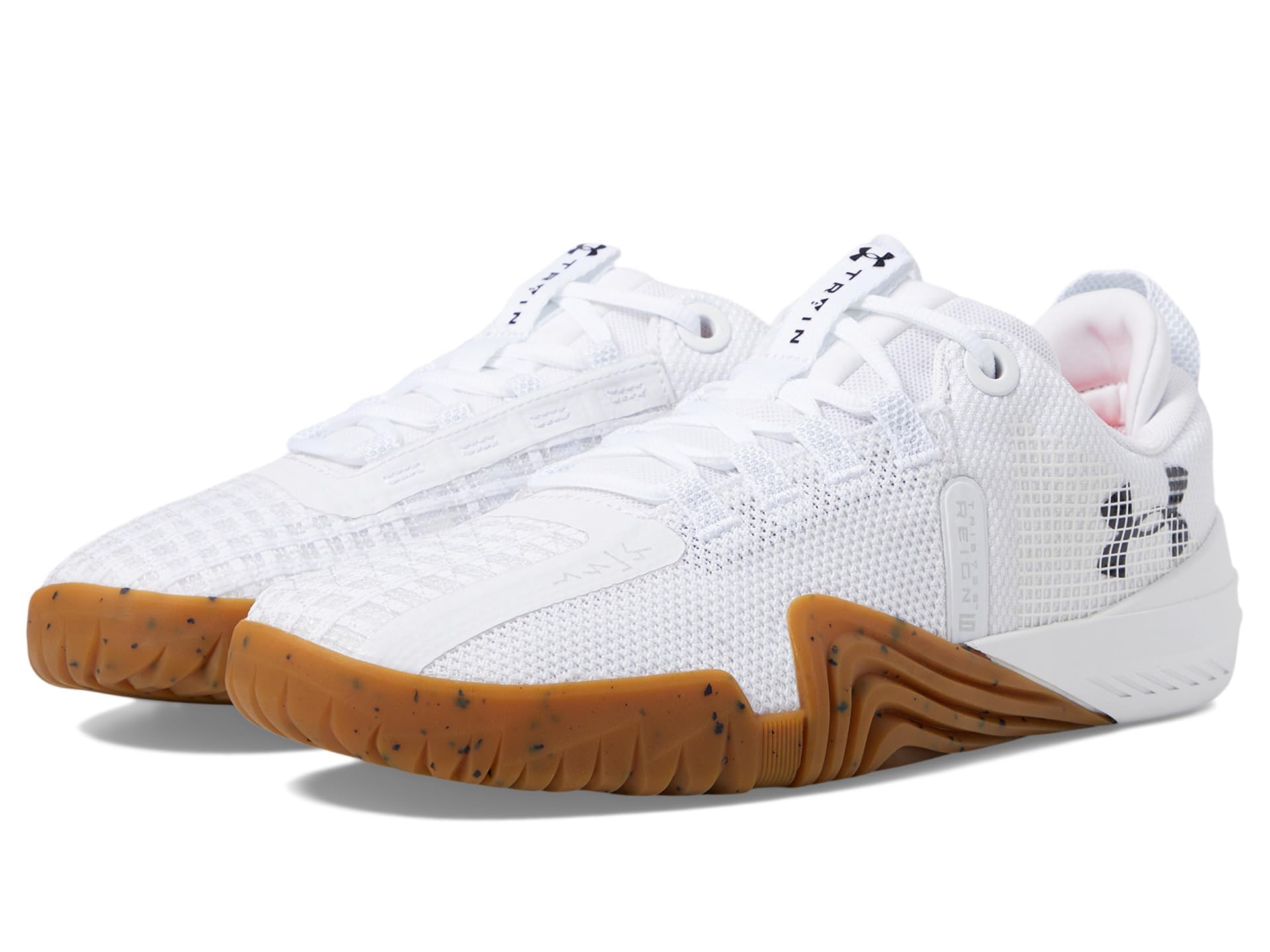
The TriBase Reign 6 is the truest hybrid in this set. Its 4mm drop sits right at the boundary where squats feel planted — you don’t rock forward under a front squat — yet the firmer carrier foam around the perimeter still absorbs enough impact for a mile or two of easy running. The dual-density midsole uses a soft inner core for heel strike and a stiffer outer wrap to resist rollover during lateral moves like a sled push or a cossack squat.
UA built the outsole with a flat, wide rubber footprint under the forefoot that grabs a wooden platform without catching awkwardly during a broad jump. The knit upper integrates TPU overlays around the lace eyelets so the midfoot doesn’t deform under a heavy hex bar carry. At 11.2 ounces per shoe (men’s 10.5), it’s light enough for a short run but sturdy enough for a 405-pound deadlift.
The heel counter is reinforced without being rigid — it holds your calcaneus in place during a single-leg RDL but doesn’t create hot spots during a five-minute row. Some lifters prefer a wider toebox for splaying, but the Reign 6’s shape is standard D-width, which works for most foot shapes. If you do heavy barbell work with short conditioning bursts, this is your everyday shoe.
Why it’s great
- Truly flat platform for deadlifts and squats
- Dual-density foam balances stability and run cushion
- Flat outsole grips wood platforms without catching
Good to know
- Toebox is standard D-width, not wide-foot friendly
- Breathability is average for longer runs in heat
2. Nike Mens Nike Free Metcon 5

Nike’s Free Metcon line has been the gold standard for athletes who run more than they lift. The Metcon 5 retains the signature flex-groove outsole that lets the forefoot bend naturally during a run — a feature pure lifting shoes lack entirely. Those grooves are deeply cut but narrow enough not to compromise stability on a box squat platform.
Compared to the Reign 6, the Metcon 5 has a slightly higher 6mm drop that encourages a midfoot strike when you pick up the pace. The midsole uses a softer Cushlon foam core wrapped by a firmer carrier that prevents the foot from sinking during a heavy kettlebell swing. Weight comes in at about 10.8 ounces for a men’s 10, making it one of the lighter options here for longer runs.
The upper is a stretch-woven mesh with fused sections around the toe cap for durability during toe-drag exercises like burpees. The heel clip is external and wraps around the Achilles, which some runners find snug. The outsole rubber is less aggressive than a dedicated trail shoe but grips gym floors and asphalt equally well. For runners who want one shoe for metcon circuits and daily miles, this is the closest true hybrid.
Why it’s great
- Flex-groove outsole for natural running gait
- Lightweight at under 11 ounces per shoe
- Cushlon core softens heel strike without instability
Good to know
- Snug heel fit may bother wide-ankle runners
- Less lateral support than a dedicated trainer
3. Nike Men’s MC Trainer 3
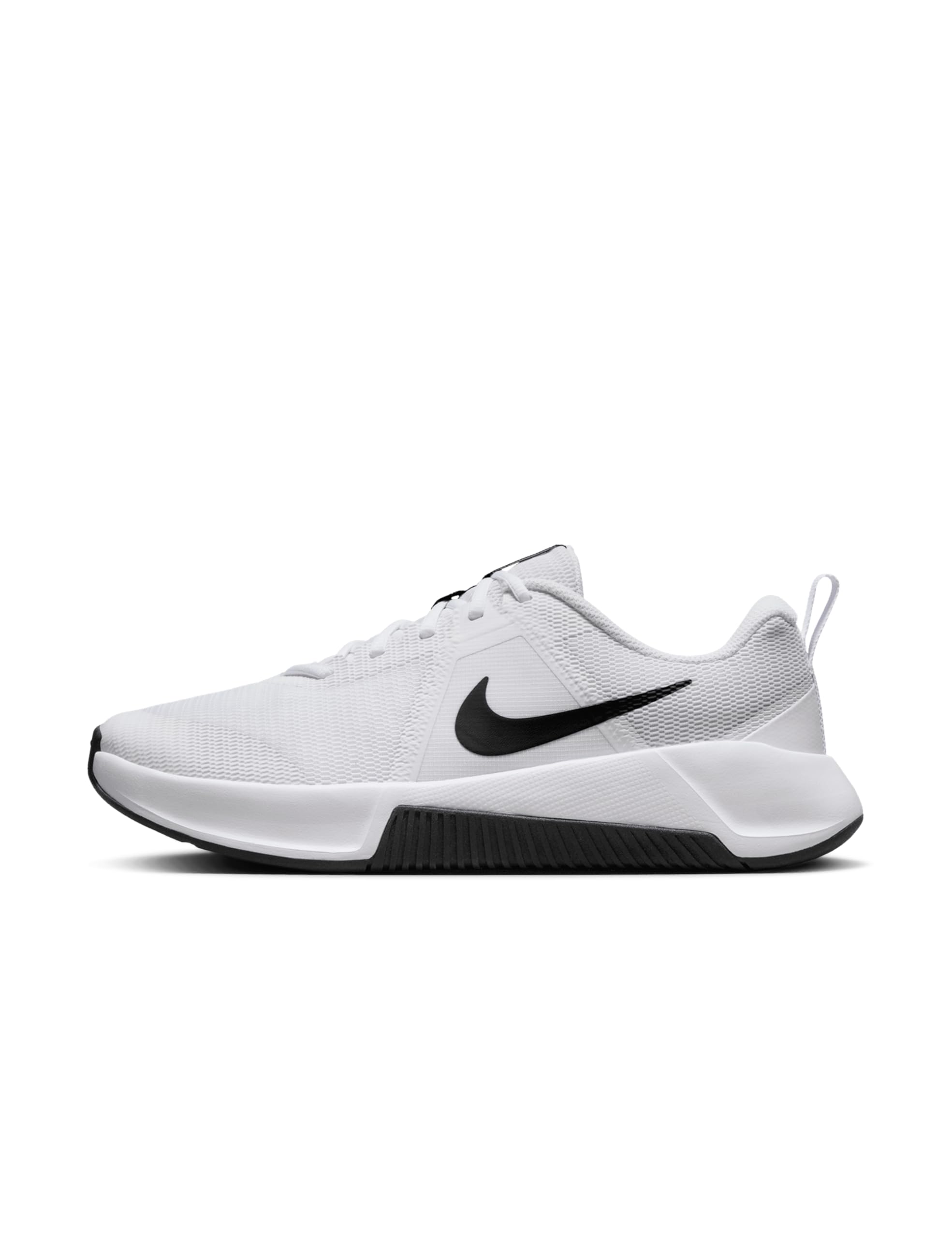
The MC Trainer 3 is built for athletes who move in every plane — lateral slides, rotational lunges, and agility work. Its 5mm drop is neutral enough for squats but the real standout is the carrier foam wrap that encircles the midfoot. This wrap stiffens the sidewalls, preventing the foot from spilling over the edge during a lateral lunge or a side plank walkout.
The midsole uses a dual-density setup: a softer internal foam for impact under the heel and a denser perimeter for platform stability. The outsole pattern is a hybrid between flat sections under the ball of the foot for deadlift grip and shallow flex grooves at the toes for running. It’s not as run-optimized as the Free Metcon 5, but for short sprints and shuttle runs it performs well.
The upper is a mesh-and-synthetic blend that breathes better than the Reign 6’s knit. The lace system extends down to the midfoot with flat laces that stay tied during explosive movements. The heel counter is rigid and lined with a soft inner sleeve to prevent slipping. The trade-off is a slightly thicker feel underfoot — 24mm stack at the heel — which reduces ground feel for advanced deadlifters.
Why it’s great
- Carrier foam wrap for superior lateral stability
- Breathable mesh upper for sweaty training
- Flat outsole sections for deadlift grip
Good to know
- Thicker heel stack reduces deadlift ground feel
- Not ideal for runs longer than 2 miles
4. Under Armour Men’s Project Rock Blood Sweat Respect 5
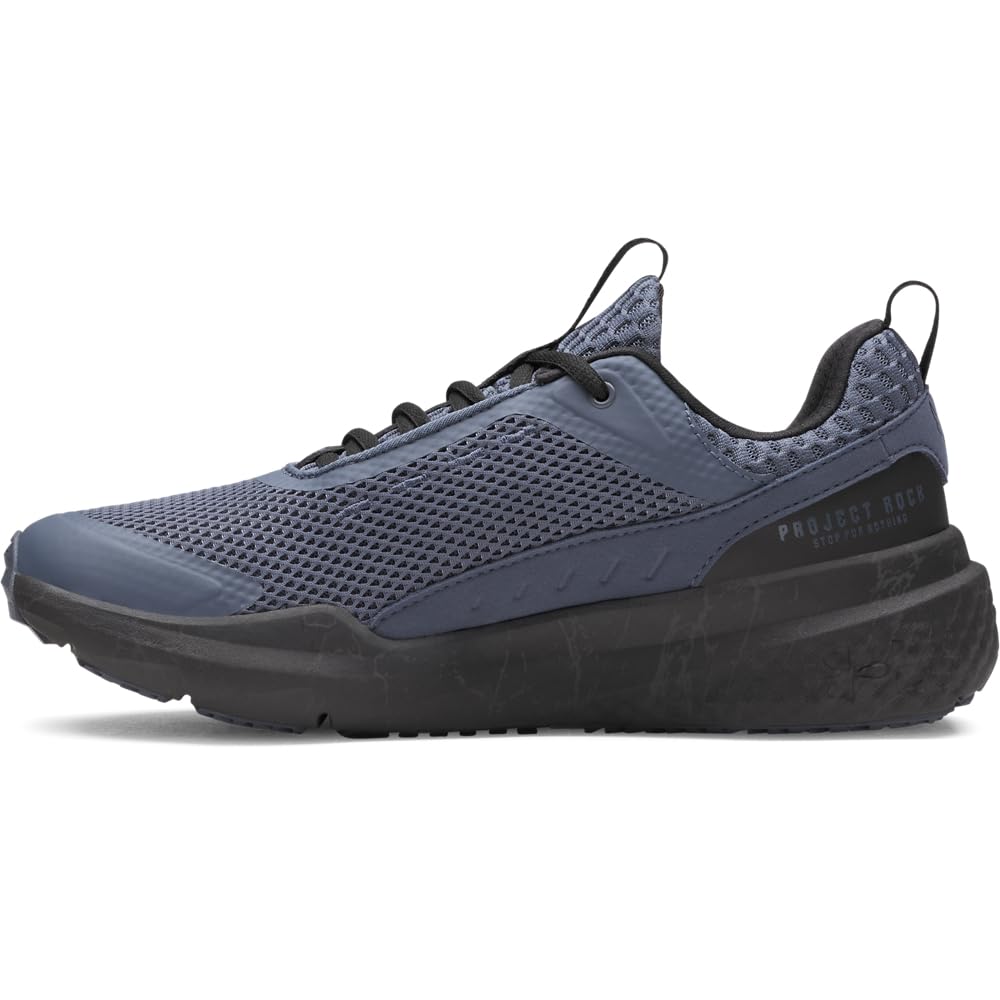
The Project Rock 5 is the durable, no-nonsense option for high-volume training. The UA TriBase outsole uses a wide, flat rubber footprint with vertical siping — essentially tiny slits — that let the rubber flex naturally during heel-to-toe transition while maintaining a stable platform under load. This is the same outsole tech found in the TriBase line but tuned for more rugged use.
The 6mm drop is neutral enough for squats but the midsole is firmer than the Reign 6 — less bounce, more rigidity. That firmness pays off during lateral shuffles and heavy carries where you need the shoe not to compress unevenly. The upper is a thick knit with fused TPU overlays that hold shape well even after repeated wear in the cage or on the platform.
Weight sits at around 12.5 ounces per shoe, which is on the heavier side for running. The Project Rock 5 isn’t built for speed work — it’s built for longevity. The heel counter is thickly padded and the toe cap has a rubber rand that protects against drag during burpees or bear crawls. For lifters who train five or six days a week and want a shoe that will last two seasons, this is the pick.
Why it’s great
- Extremely durable upper and outsole construction
- Flat, stable platform for heavy compound lifts
- Rubber toe rand protects against drag wear
Good to know
- Heavier than other options at 12.5 ounces
- Firm midsole lacks bounce for running
5. ASICS Men’s Gel-Excite 11
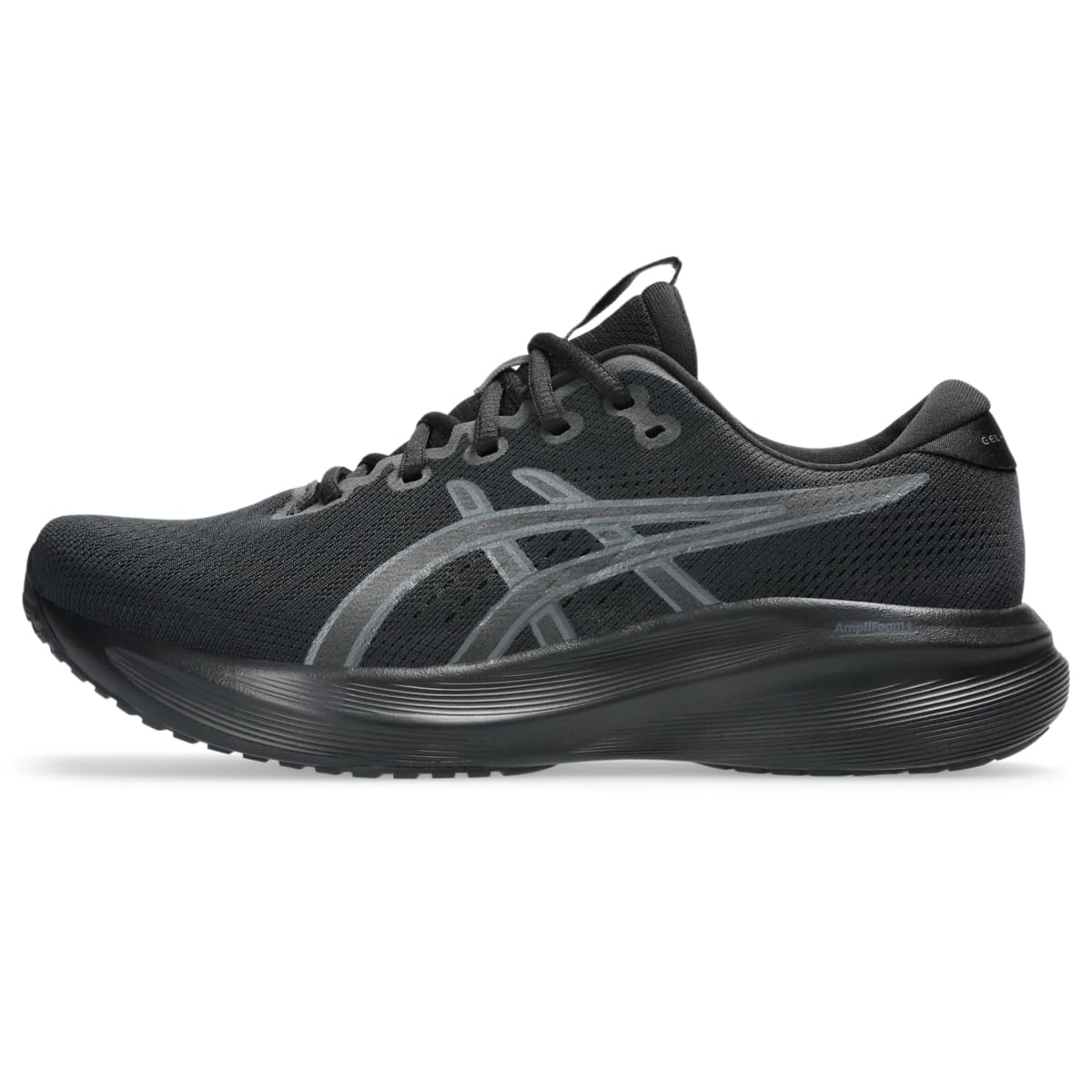
The Gel-Excite 11 is first a running shoe, then a hybrid. Its 8mm drop and rearfoot Gel unit make it the most cushioned option in the list — ideal for longer runs but less stable under heavy squats. The Gel unit sits in the heel specifically to attenuate shock during heel-striking gait, which benefits runners transitioning to hybrid training.
The midsole uses AmpliFoam Plus, a proprietary EVA blend ASICS tunes for softness rather than energy return. That softness means you lose ground feel on deadlifts, but for lunges, split squats, and bodyweight work it’s perfectly fine. The outsole is ASICS’s AHAR rubber compound, which is durable over high mileage on asphalt and concrete but lacks the flat sections needed for platform grip.
Weight is around 9.8 ounces for a men’s 10, making it the lightest shoe here for running. The upper is an engineered mesh that breathes exceptionally well — good for long runs in warm weather. If your training is 70% running and 30% light-to-moderate lifting, the Gel-Excite 11 is a smart, affordable choice. It is not designed for heavy compound lifts or olympic weightlifting.
Why it’s great
- Excellent cushioning for runs of 3+ miles
- Lightweight at under 10 ounces
- Breathable mesh upper for hot conditions
Good to know
- Soft midsole compresses under heavy squats
- Outsole not optimized for platform grip
6. Reebok Mens Nano Gym Sneakers
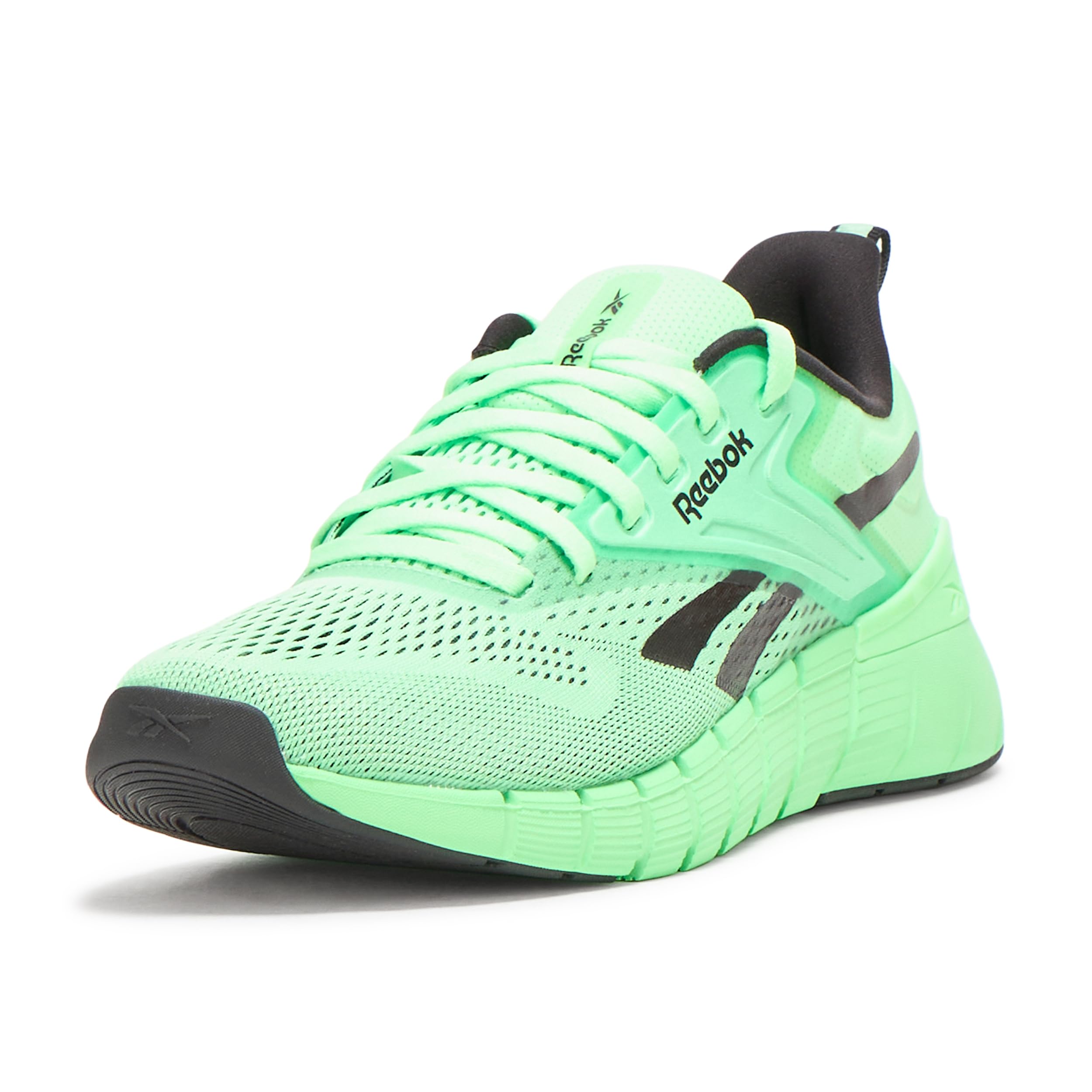
The Reebok Nano has been the CrossFit go-to for years, and this latest iteration continues the legacy. The 7mm drop sits higher than the Reign 6 but the platform is still wide enough to feel stable under a snatch or a pistol squat. The rope-guard upper — a reinforced mesh section across the top of the foot — protects against abrasion during rope climbs, a specific need the other shoes here don’t address.
The midsole uses a Floatride Energy foam blend that balances softness and responsiveness. It’s not as stable as the Reign 6’s carrier foam wrap for side-to-side moves, but the wider heel base compensates. The outsole is a full-coverage rubber with a herringbone pattern that grips both gym floors and concrete, but the pattern is slightly too aggressive for smooth platforms — it can catch during a lateral slide.
The upper is a flexweave knit that stretches where needed and is stiff around the heel for lockdown. The Nano runs slightly long, so sizing down a half is common. At around 11.5 ounces, it’s average weight for the category. For CrossFit athletes who do rope climbs and heavy WODs, this shoe remains the benchmark.
Why it’s great
- Rope-guard upper for abrasion protection
- Wide heel base for squat stability
- Herringbone outsole for general grip
Good to know
- Runs long, sizing down is advised
- Herringbone pattern can catch on smooth platforms
7. New Balance Men’s 608 V5 Casual Comfort Cross Trainer
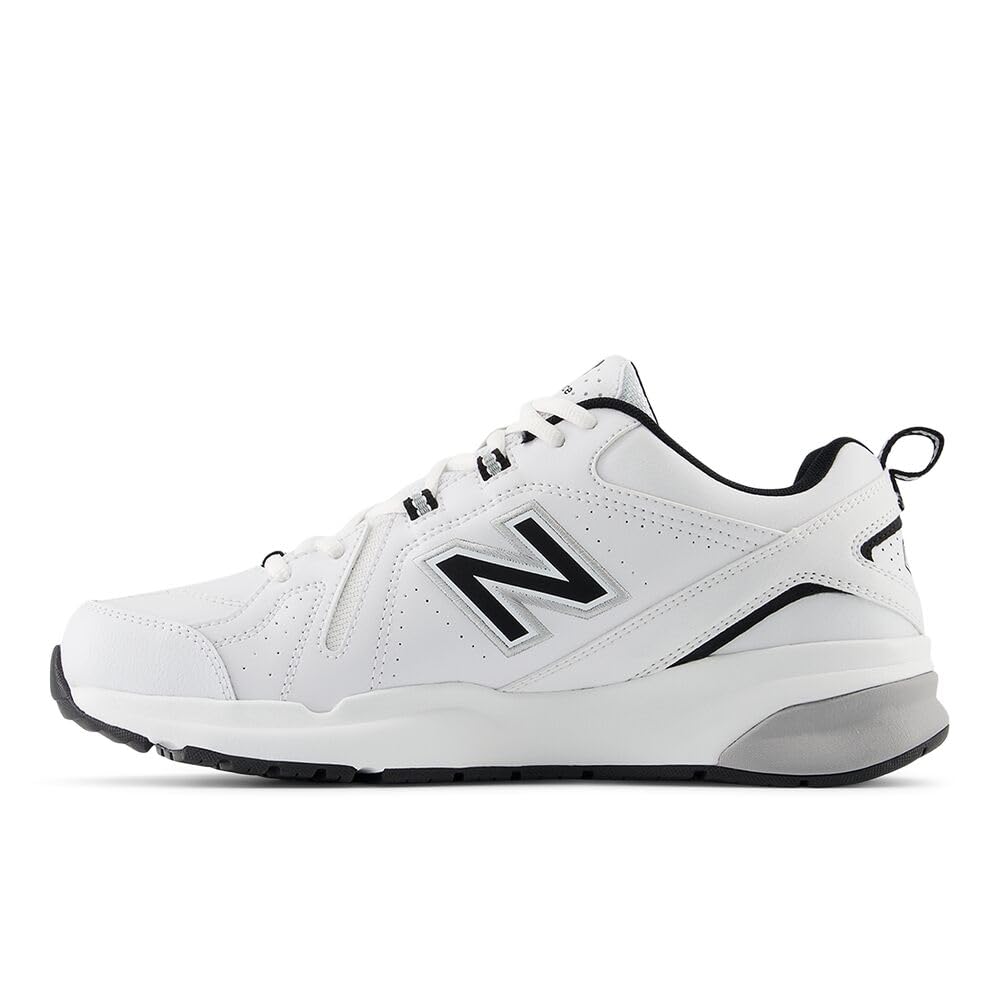
The 608 V5 is the budget entry that prioritizes casual comfort over hybrid performance. Its 12mm drop is the highest in the list, which tilts the foot forward slightly — fine for walking and light jogging but problematic for squats where a level foot is essential. The ABZORB heel insert provides decent shock absorption for daily wear but compresses noticeably under moderate loads.
The midsole is a single-density EVA without any firmer carrier wrap, so the foot rolls laterally during side lunges or when carrying a dumbbell in one hand. The outsole is a solid rubber slab with minimal flex grooves, making it stiff for running but stable for casual walking. The upper is a leather-and-mesh combination that lacks the breathability of modern knit trainers but offers durability for everyday use.
Weight is higher at around 14 ounces per shoe for a men’s 10.5. The 608 V5 works for someone who lifts light to moderate weights two or three times a week and walks or jogs short distances. For heavy barbell work or serious running, the compromises become apparent quickly. It’s a solid value for the price-conscious beginner who isn’t pushing max loads or long mileage.
Why it’s great
- Durable leather-and-mesh upper for everyday wear
- ABZORB heel cushion for walking comfort
- Very accessible price point for beginners
Good to know
- 12mm drop tilts foot forward for squats
- Single-density foam lacks lateral stability
- Heavy at 14 ounces per shoe
FAQ
Can I use these shoes for both heavy deadlifts and daily running?
What is the ideal heel-to-toe drop for a lifting running shoe?
How do I know if a hybrid shoe has enough lateral stability for heavy lifts?
Are knit uppers durable enough for gym floor contact?
Final Thoughts: The Verdict
For most users, the best lifting running shoes winner is the Under Armour TriBase Reign 6 because its 4mm drop, dual-density midsole, and flat outsole deliver the most balanced platform for both squats and short runs. If you want a more run-focused hybrid, grab the Nike Free Metcon 5. And for long runs with light-to-moderate lifting on the side, nothing beats the ASICS Gel-Excite 11.