A youth life vest that shifts or rides up turns a safety device into a hazard. The difference between a vest that works and one that fails comes down to three things: material density, strap geometry, and weight-range accuracy. Below is a breakdown of the seven most-considered options on the market, ranked by fit integrity and construction quality.
I’m Emma — the founder and writer behind Baby Bangs. I research youth life vests by analyzing foam composition, weld seam durability, buckle failure points, and fit tolerances across dozens of models each season.
This guide helps parents find a vest that actually stays put during active water play. Here is my curated list of the life vest for youth options that pass real-world fit tests for kids from toddler to teen.
How To Choose The Best Life Vest For Youth
A youth life vest has one job: keep the child’s airway clear and the vest on the torso. The features below separate vests that float from vests that fail under real water conditions.
USCG Type II vs Type III
Type II vests have a built-in neck float that rotates an unconscious child face-up. Type III vests rely on the child being conscious to keep their head above water. For young children or weak swimmers, Type II offers a critical safety margin. Type III works well for confident swimmers doing watersports.
Closed Sides and Crotch Straps
Closed-side vests prevent the vest from riding up over a child’s head when they hit the water. Vests with an open side should always include a crotch strap. Crotch straps connect the front and back panels between the legs, anchoring the vest low on the torso so it cannot slide upward. A vest without either feature is a risk for any child under 50 pounds.
Weight Range Fit Tolerance
Youth vests are sold by weight range, but chest circumference matters just as much. A child at the bottom of a weight range may not fill the vest’s torso cavity, allowing the vest to shift. A child at the top of the range may compress the foam panels, reducing buoyancy. Measure chest size and compare it to the vest’s fit notes for a proper seal.
Quick Comparison
On smaller screens, swipe sideways to see the full table.
| Model | Category | Best For | Key Spec | Amazon |
|---|---|---|---|---|
| Hyperlite Elite Youth | Premium | Watersports & active movement | Biolite foam, 50-90 lbs | Amazon |
| Airhead ORCA Kwik-Dry NeoLite Flex | Premium | All-day wear with fast drying | Neolite foam, 50-90 lbs | Amazon |
| Owntop Swim Vest Youth | Mid-Range | Budget-friendly neoprene comfort | Neoprene, 50-125 lbs | Amazon |
| O’Neill Child Superlite | Mid-Range | Boating with minimal bulk | Polyethylene foam, 30-50 lbs | Amazon |
| STEARNS Type III Youth (50-90 lbs) | Mid-Range | Multi-activity versatility | Nylon shell, 50-90 lbs | Amazon |
| Stearns Type II Child (30-50 lbs) | Mid-Range | Head-up flotation for safety | PE foam, 30-50 lbs | Amazon |
| SwimWays Bluey Life Jacket | Budget | Learning to swim with character appeal | Polyester shell, 33-55 lbs | Amazon |
In‑Depth Reviews
1. Hyperlite Elite Youth Life Jacket
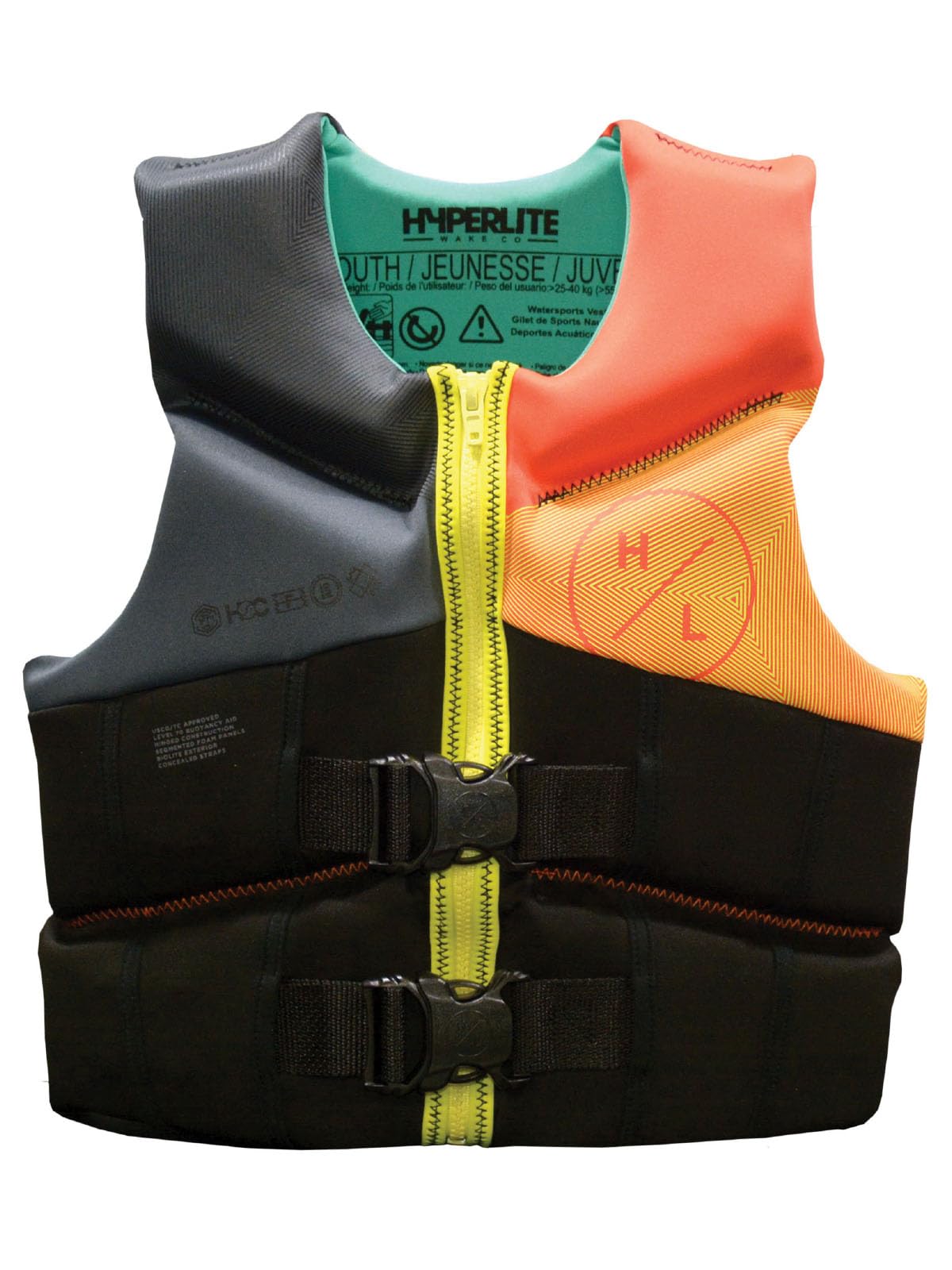
The Hyperlite Elite uses Biolite foam — a lighter, more responsive foam than standard PE blocks — combined with Truefit Technology and Fluidflex cut patterns. This construction delivers a range of motion unusual for a USCG-approved vest. At 50-90 pounds, the zip-fit closure requires the zipper to fully close for a proper fit, which acts as a visual confirmation that the vest is snug enough. The contoured foam panels reduce bulk under the arms, so kids can paddle, wakeboard, or tube without shoulder fatigue.
Breathability is a standout trait here. The foam panels are segmented with mesh-like channels that allow airflow, preventing the clammy heat buildup common in cheaper youth vests. The outer neoprene lining wicks moisture away from the skin and dries fast when the vest is hung up. The zipper track is reinforced with a fabric flap that resists snagging, a failure point on many zipper-only vests.
The Hyperlite does not include a crotch strap. For children near the bottom of the weight range (50-60 pounds), the vest may shift upward during a fall from a tube or wakeboard. Parents should test fit with a full-range arm raise and water entry simulation before use. For active watersports kids, this vest earns its premium spot through unmatched mobility.
Why it’s great
- Exceptionally flexible Biolite foam allows full arm and shoulder movement
- Breathable panel design reduces heat buildup during active use
- Zip-fit serves as a clear, binary fit check
Good to know
- No crotch strap — may ride up on lighter children
- Size runs snug; measure chest before purchase
2. Airhead ORCA Kwik-Dry NeoLite Flex Youth Life Jacket
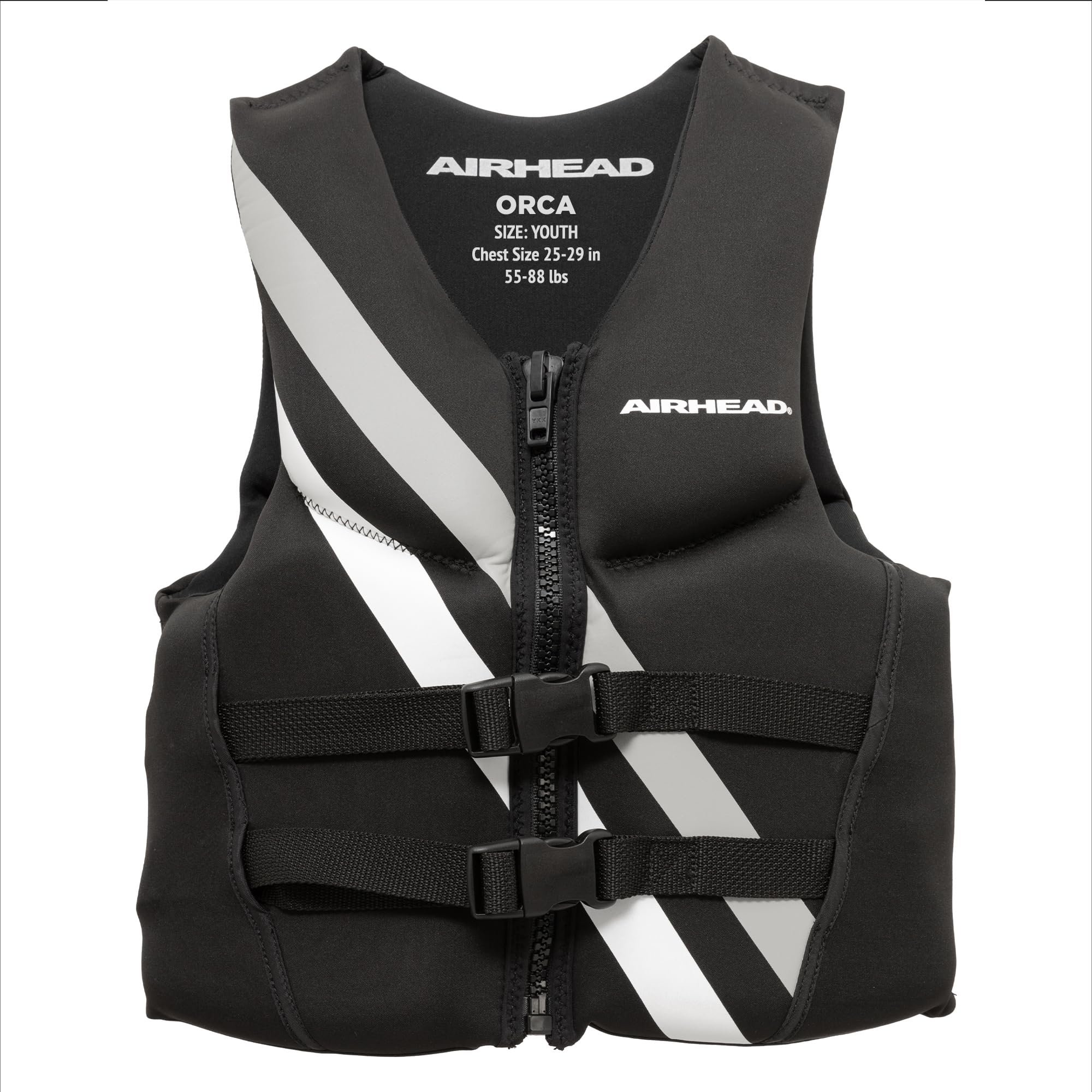
The Airhead ORCA uses Neolite, a closed-cell foam wrapped in a perforated nylon shell that sheds water dramatically faster than conventional PVC foam. A wet ORCA vest loses less than five percent of its buoyancy compared to a dry one, which matters for kids who spend hours in and out of the water. The youth version (50-90 pounds) features closed sides with a front zipper and two hidden through-the-body straps terminating in quick-release buckles.
Through-the-body straps, as opposed to side-release belts, wrap around the torso underneath the foam panels. This design prevents the strap from slipping off the shoulder and keeps the vest anchored to the ribcage rather than floating up toward the neck. The neoprene lining inside the armholes and neck edge is soft enough to avoid chafing after prolonged wear, a common complaint with cheaper nylon-only vests.
The Airhead runs snug. The manufacturer notes that the Neolite foam compresses slightly with use, so a child on the upper end of the weight range may find the vest tight after a few outings. The through-body buckles need to be threaded correctly each time, which adds a small step to the donning process. For families who stay on the water all day, the quick-dry fabric and secure strap system make this a top choice.
Why it’s great
- Kwik-Dry Neolite foam retains buoyancy even when wet
- Through-the-body straps keep the vest anchored to the torso
- Soft neoprene lining prevents chafing during extended wear
Good to know
- Runs snug — size up if child is near the upper weight limit
- Strap threading adds setup time before each use
3. Owntop Youth Swim Vest
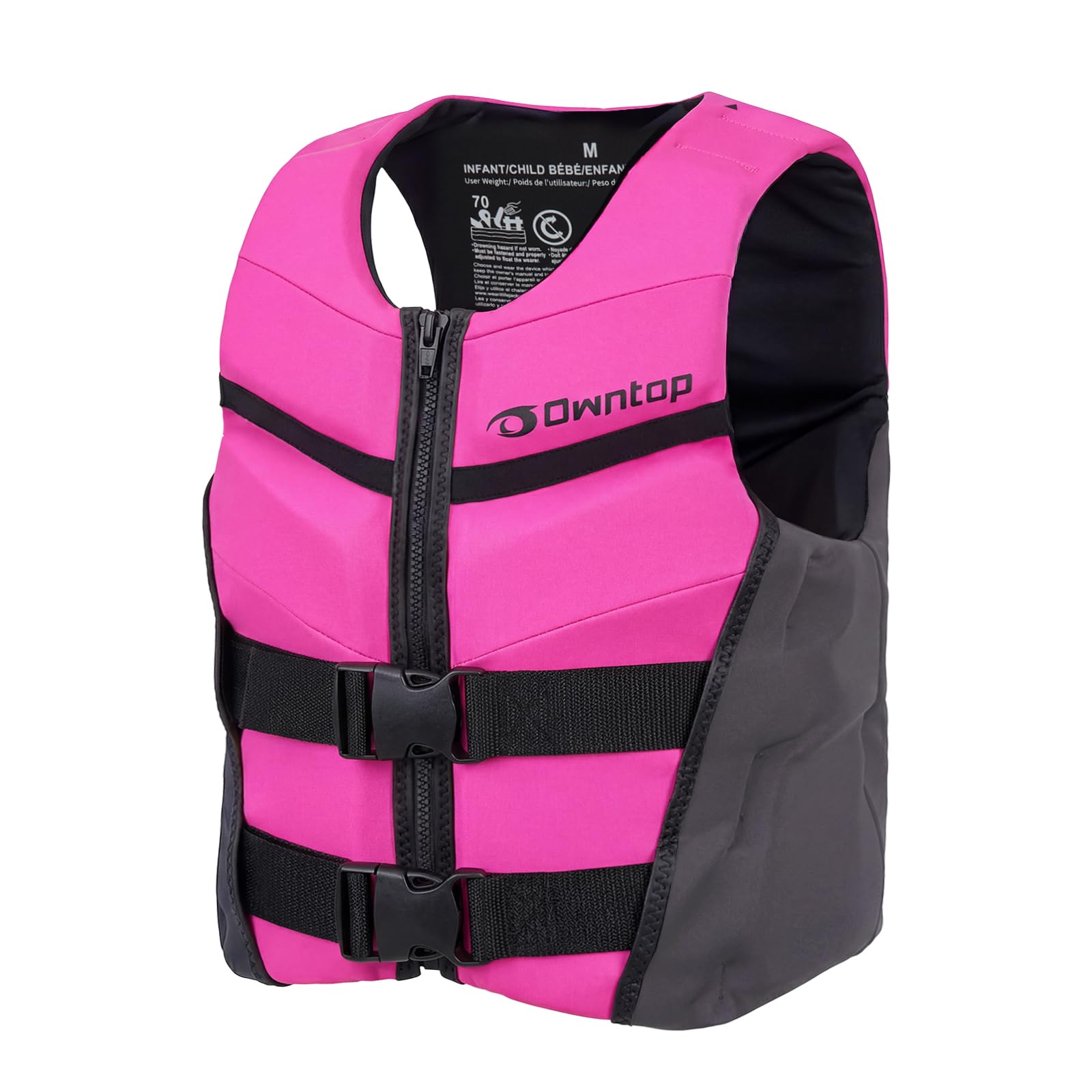
The Owntop covers a 50 to 125-pound range, which is unusual — most youth vests cap near 90 pounds. The expandable back panel uses a gusseted neoprene section that stretches to accommodate different torso depths without losing hold. This makes it one of the few vests that can fit a lean 60-pound child and a stocky 100-pound teen with the same unit. The double-buckle system plus a front zipper offers triple closure redundancy.
Neoprene provides a soft next-to-skin feel that polyester shells cannot match, and the Owntop uses a 3mm neoprene layer that balances comfort with structure. The foam panels are sewn into the neoprene rather than being loose inside a fabric sleeve, which eliminates bunching when the vest is wet. The armholes are cut wide enough to allow freestyle stroke movement without the vest riding up.
The Owntop is not USCG approved — it is designed as a swim training aid, not a life-saving device. This matters: if Coast Guard certification is a requirement for your situation (lake boating, open water, unsupervised areas), this vest does not meet that standard. For pool use and supervised swimming, the neoprene comfort and weight range flexibility make it a strong mid-range option.
Why it’s great
- Expands from 50 to 125 pounds, fitting a wide range of youth sizes
- Soft neoprene material reduces irritation on bare skin
- Triple closure system (buckle + buckle + zipper) for a secure hold
Good to know
- Not USCG approved — for swim training, not open-water safety
- Expandable panel may loosen over time with heavy use
4. O’Neill Child Superlite USCG Life Vest

The O’Neill Superlite is a Type II vest for children 30-50 pounds, using anatomically cut lightweight polyethylene foam panels that are thinner than standard Type II designs. The coated polyester outer shell resists snags from boat hardware and dock edges. The 1-inch webbing belts with quick-release buckles are wider than typical youth straps, distributing pressure better across the child’s chest and reducing the red-mark effect after removal.
The “Superlite” name is earned. At under 12 ounces, this vest adds negligible weight, making it a strong choice for boating where the child will wear the vest for extended stretches without complaining. The neck float is integrated into the collar area with a scooped back that does not push the child’s head forward when looking around. The closed-side design plus leg strap prevents the vest from riding up.
O’Neill explicitly warns that the Superlite runs small and may not fit all children within the stated weight range. The chest circumference recommendation is up to 24 inches. A child with a larger chest or broader shoulders at the upper end of the weight band may not zip fully. Measure your child’s chest around the widest part before ordering. For slim children within the range, this is among the most comfortable Type II vests available.
Why it’s great
- Very lightweight at under 12 ounces for comfortable long-wear boating
- Wide 1-inch webbing straps distribute pressure evenly
- Closed-side design with leg strap prevents riding up
Good to know
- Runs small — chest must be under 24 inches for proper fit
- Neck float is less pronounced than bulkier Type II models
5. STEARNS Type III Youth Life Jacket (50-90 lbs)
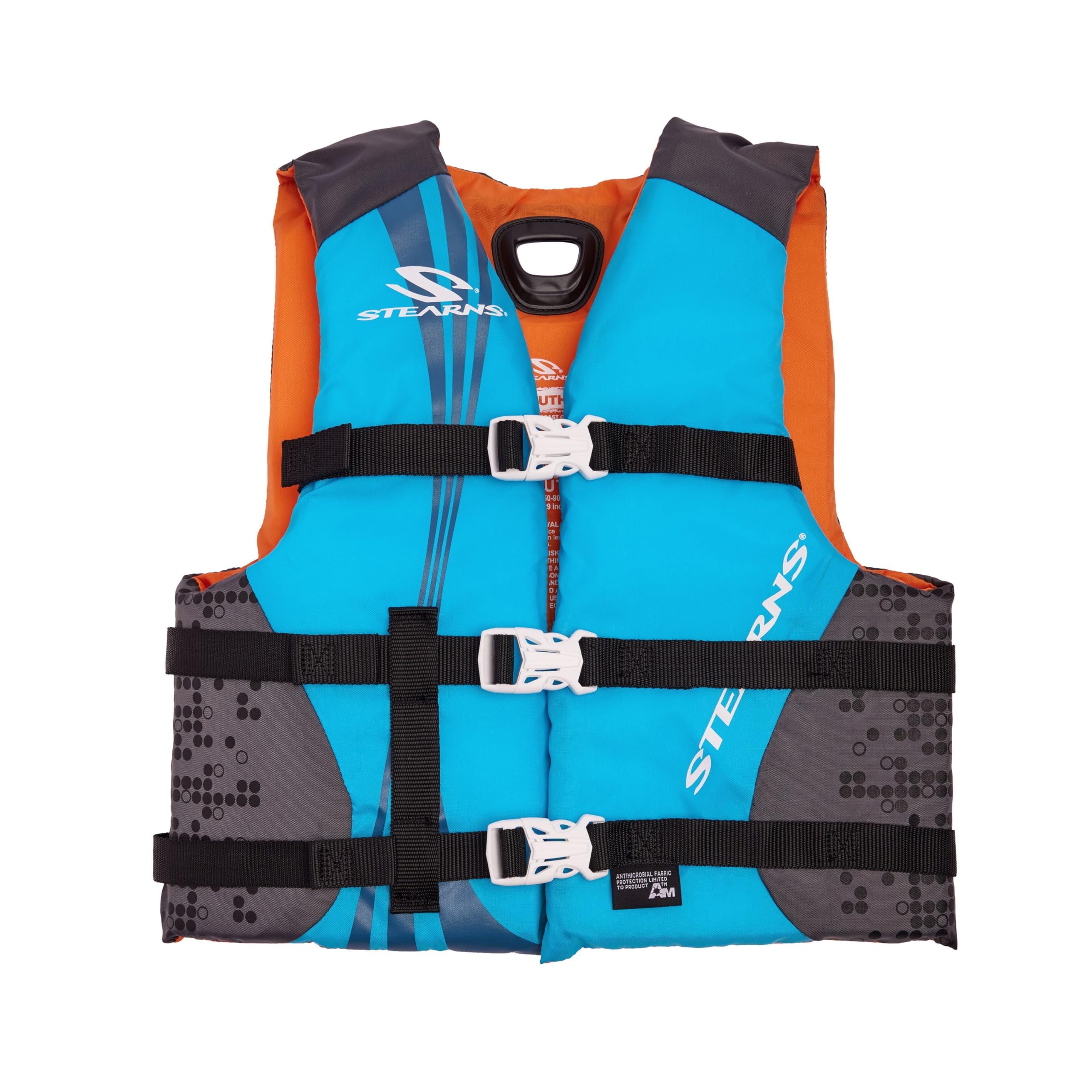
The STEARNS Type III Youth jacket is a straight-forward, no-surprises PFD for children 50-90 pounds. The nylon shell is tough enough to survive being dragged across a boat deck or dropped on a dock without tearing. The foam panels are enclosed in a protective layer that resists the mildew odor that develops when a vest is stored damp, a common issue with budget foam vests that sit in a boat locker.
Fit is managed through adjustable side belts and a front zipper. The cut is roomier than the O’Neill and Airhead models, which helps kids who are broader in the chest or shoulders fit comfortably. The armholes are cut generously, allowing unrestricted movement for tow sports like tubing or water skiing. The vest has a front rescue loop on the collar for emergency retrieval and a hanging loop for storage.
The Type III designation means this vest relies on the child being conscious to maintain face-up positioning. It lacks the neck float of a Type II vest. For weak swimmers, this is a limitation. The vest is best suited for children who are confident in the water and need flotation for buoyancy support during active watersports. The loose cut may allow a slim child to shift inside the vest during a hard fall.
Why it’s great
- Durable nylon shell withstands rough use on boats and docks
- Roomier fit accommodates broader chests and shoulders
- Odor-protective layer prevents mildew smell during storage
Good to know
- Type III — no neck float; not ideal for weak swimmers
- Loose cut may allow slim children to shift inside during falls
6. Stearns Child Life Jacket Type II (30-50 lbs)

The Stearns Type II Child jacket is engineered specifically for the youngest children in the youth category, with a built-in neck float collar that causes the vest to rotate an unconscious child face-up. This passive safety feature is the defining differentiator between Type II and Type III vests, and for children under 50 pounds who cannot reliably self-right, it is a critical design element. The soft nylon shell and lightweight PE foam keep the vest manageable for small bodies.
Secure fit comes from multiple adjustment points: quick-release buckles on the chest, adjustable side straps, and a lined crotch strap. The crotch strap is padded where it contacts the inner thigh, reducing the chafing that unlined straps cause when a child sits in a boat or floats for long periods. The high-visibility green/gray color scheme includes a top rescue loop that doubles as a hanging storage point.
The 30-pound weight minimum is inflexible. A child below the threshold may slip through the leg openings or have the vest ride up to chin level. The vest only covers up to 50 pounds, which means a growing child will outgrow it relatively quickly. For parents of toddlers and small children who need true passive flotation, this is the safest Type II option in the mid-range tier.
Why it’s great
- Type II neck float passively rotates child face-up if unconscious
- Padded crotch strap reduces chafing during extended wear
- High-visibility colors with rescue loop for quick retrieval
Good to know
- Strict 30-pound weight minimum — smaller children will not fit safely
- 50-pound upper limit means rapid outgrowth for most kids
7. SwimWays Bluey Life Jacket (33-55 lbs)

The SwimWays Bluey vest combines a traditional life jacket with a pair of attached arm floaties, creating a 2-in-1 trainer system for children 33-55 pounds. The arm floaties provide extra lateral buoyancy that helps young swimmers maintain horizontal body position while learning to kick. The polyester shell is printed with Bluey characters, which significantly reduces resistance from toddlers who refuse to wear plain safety gear.
The adjustable back buckle is positioned where the child cannot reach it, preventing self-removal during pool time. The fabric exterior is softer than bare foam, reducing skin irritation on the neck and underarms. The vest is USCG approved for the stated weight range, which places it in a small group of character-themed vests that carry a real safety certification rather than a toy label.
The arm floaties add bulk that interferes with natural arm movement for children at the top of the weight range. Kids closer to 55 pounds may find the floaties ride up on their biceps rather than providing meaningful support. The vest is also only available in one size (33-55 pounds), with no larger youth option in the Bluey line. For young fans who need a safety-approved training vest, the character appeal solves the compliance problem.
Why it’s great
- USCG approved with popular Bluey characters to encourage wear
- Back buckle is child-proof to prevent self-removal
- Soft polyester shell reduces neck and underarm irritation
Good to know
- Arm floaties add bulk that restricts natural arm movement
- Single size range — no option for larger children
FAQ
Should I buy a life vest one size up for my child to grow into?
Why do some youth vests specify a maximum chest measurement in inches?
Can my child wear a youth life vest for waterskiing or wakeboarding?
What does it mean when a life vest is rated for 50-90 pounds but says it runs snug?
Final Thoughts: The Verdict
For most users, the life vest for youth winner is the Airhead ORCA Kwik-Dry NeoLite Flex because it combines through-body straps, lightweight Neolite foam, and fast-drying construction in a USCG-approved package that stays put during active use. If you want a vest optimized for watersports mobility and breathability, grab the Hyperlite Elite. And for young children under 50 pounds who need passive flotation safety, nothing beats the Stearns Type II Child with its integrated neck float and padded crotch strap.