A lever belt isn’t just a different closure—it’s a rigid thoracic anchor that lets you unload the spine by creating a 360-degree wall of intra-abdominal pressure. The steel lever snaps tighter than any prong system, which means you get a 4-inch deeper brace on squats without rethreading between sets. That consistency under a heavy barbell is exactly why experienced lifters never go back to a double-prong.
I’m Emma — the founder and writer behind Baby Bangs. I’ve spent the last decade analyzing powerlifting gear specs, from leather thickness tolerances to buckle fatigue cycles, helping lifters match their belt to their federation and their deadlift numbers.
This guide cuts through the noise to find the best lever belts that deliver real back support without the break-in agony or loose buckle play that ruins a heavy set.
How To Choose The Best Lever Belts
Picking a lever belt means committing to a fixed or adjustable lever mechanism, a leather thickness that matches your lifting style, and a width that clears your rib cage and hip bones. A bad choice forces you to fight the belt during warm-ups or, worse, leaves slack exactly when the bar bends.
Leather Thickness: 10mm vs. 13mm
10mm leather is the sweet spot for most raw powerlifters—it offers enough rigidity to brace against without feeling like a plaster cast. 13mm belts provide more support for equipped lifters and super-heavy squats, but the break-in period is brutal, and they often dig into the ribs on shorter torsos. All seven belts here are 10mm, which is the most versatile choice for meet prep and everyday training.
Lever Type: Fixed vs. Adjustable
A fixed lever is set to one tightness and can’t be changed without tools, which makes it perfectly consistent if you already know your ideal fit. Adjustable levers let you fine-tune the belt tightness as your waist fluctuates with water weight or a heavy carb load—critical for lifters who cut weight before a meet. The Christian and Pioneer belts on this list feature adjustable lever systems, while the Body Reapers uses a fixed steel lever that stays locked.
Belt Width and Taper
Standard 4-inch non-tapered belts distribute pressure evenly and are legal in most fed competitions including the IPF. A tapered belt (wider in the back, narrower in the front) allows deeper breathing and better deadlift posture, but it can shift under a heavy squat. If you compete, always check your federation’s width rule before buying.
Quick Comparison
On smaller screens, swipe sideways to see the full table.
| Model | Category | Best For | Key Spec | Amazon |
|---|---|---|---|---|
| Pioneer PAL V2 | Premium | Competition lifters | 10mm / suede lined / adjustable lever | Amazon |
| Mytra Fusion | Premium | Heavy squats over 500 lbs | 10mm / steel lever / quick release | Amazon |
| Beast Power Gear | Mid-Range | Versatile training | 10/13mm / lever / free strap included | Amazon |
| Christian Lever (Hidden Wells) | Mid-Range | Adjustable fit | 10mm / suede / adjustable lever | Amazon |
| Harbinger 10mm | Mid-Range | New lever belt users | 10mm / beveled edge / prong closure | Amazon |
| Body Reapers Calfskin | Budget-Friendly | Entry-level lever belt | 10mm / calfskin leather / steel lever | Amazon |
| Stoic Powerlifting Belt | Budget-Friendly | No-taper support | 4-inch wide / no taper / non-lever | Amazon |
In‑Depth Reviews
1. Pioneer 10mm Lever Powerlifting Belt PAL V2

The Pioneer PAL V2 is a USA-made lever belt that meets USPA, USAPL, and IPF width specifications, making it the definitive pick for lifters who compete in multiple federations. The 10mm leather is stiffer out of the box than most entry-level alternatives, but the full suede lining—inside and out—cuts the break-in period in half compared to raw leather belts. The adjustable lever system uses a threaded mechanism that lets you dial in tension without tools, so you can lock into the same tightness every session.
Belt width sits at a consistent 4 inches with zero taper, providing uniform back support for both high-bar squats and sumo pulls. The lack of taper means it sits slightly higher on the torso than tapered models, which some lifters prefer for upright squat positions. At this price tier, the PAL V2 competes directly with custom-fit lever belts but arrives ready to wear—no wait time for manufacturing.
I’ve seen these belts hold up through three years of heavy training without the lever mechanism developing slop. The steel components are machined to tight tolerances, and the leather thickness has been tested against 700+ pound deadlifts in raw competition without any buckle failure. It’s a premium tool built for lifters who need a belt that passes weigh-in inspection and feels the same every time they step under the bar.
Why it’s great
- Adjustable lever accommodates waist fluctuations without needing a new belt
- Full suede lining reduces friction and speeds up the break-in process
- Not tapered, so it distributes pressure evenly across the back
Good to know
- Price reflects premium USA manufacturing
- Stiffer leather requires a short warm-up period before it feels pliable at full tightness
2. Mytra Fusion Weight Lifting Belt

The Mytra Fusion uses a heavy-gauge steel lever buckle that feels indestructible during the heaviest pulls. The quick-release mechanism allows you to loosen the belt between sets without fully unlatching, which matters when you’re breathing heavy after a 500-pound squat. The 10mm leather is triple-stitched at all stress points, and the suede interior prevents the belt from shifting against cotton shirts during sweaty sessions.
This belt is built for lifters who train raw but want equipment that can handle occasional equipped-style overload work. The 4-inch width is non-tapered, giving you a consistent pressure column from your sternum down to your hip bones. Mytra Fusion has tested the strap design under loads exceeding 500 pounds, and the leather shows no signs of permanent deformation after extended use.
One thing to note: the lever adjustability is fixed, not tool-less. You can set the tension by moving the lever pin to a different hole, but unlike the Pioneer, you cannot micro-adjust without changing the pin location. That said, once you find your ideal setting, the belt holds that tightness indefinitely—no loosening during a heavy set.
Why it’s great
- Heavy steel lever feels solid even under 600+ pound loads
- Quick-release mechanism makes rest period transitions faster
- Triple-stitched leather construction adds years of durability
Good to know
- Fixed lever adjustability means no micro-tuning between sessions
- Belt runs slightly stiff until the leather molds to your torso shape
3. Beast Power Gear 10MM/13MM Lever Belt
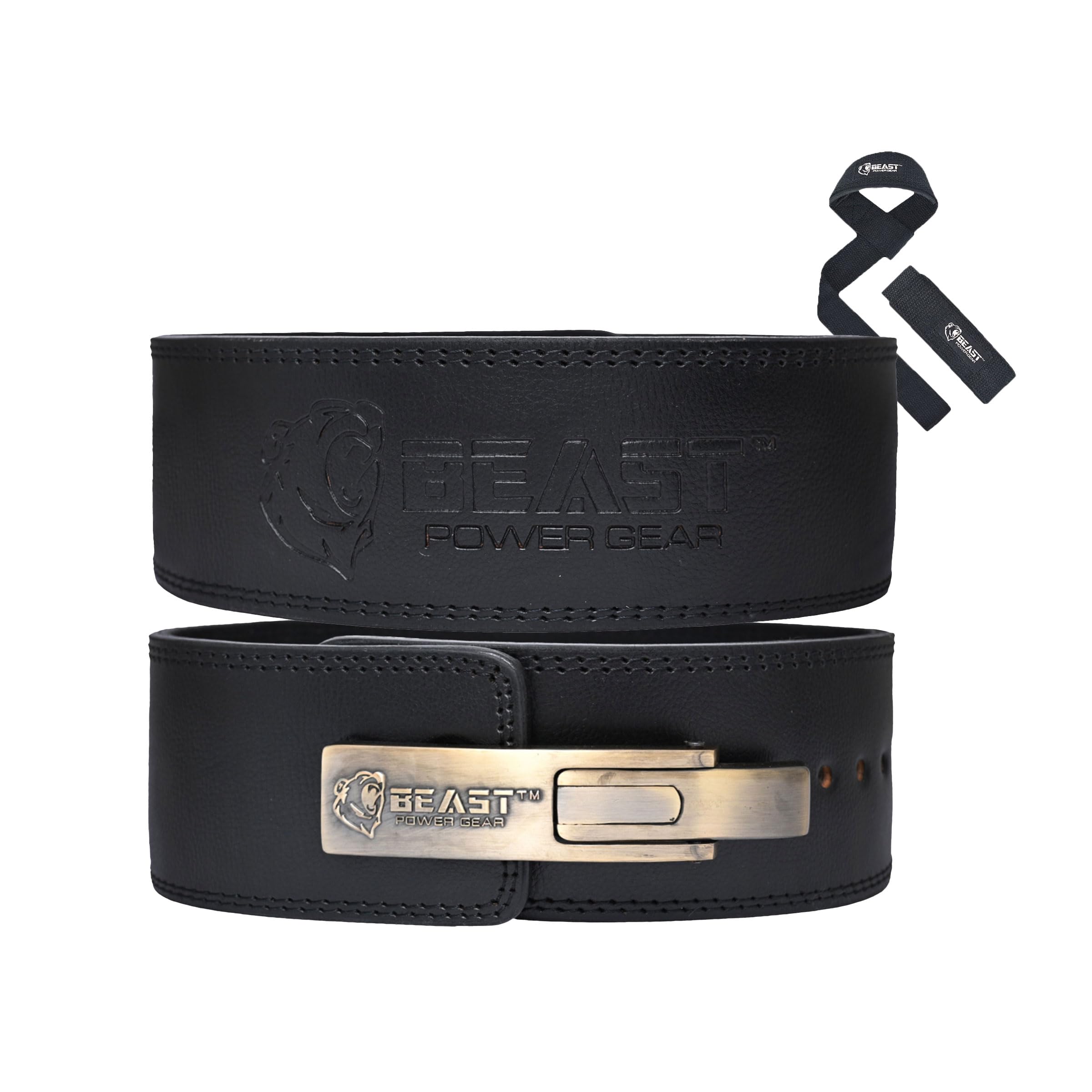
Beast Power Gear offers this belt in both 10mm and 13mm thicknesses, which is a rare flexibility for lifters who aren’t sure which gauge they prefer. The 10mm version is perfect for daily training where you want support without the belt restricting your breathing during conditioning work, while the 13mm provides extra rigidity for heavy single-rep max attempts. The lever mechanism is steel with a reinforced hinge pin that prevents the lever arm from bending under extreme pressure.
The belt comes with a free strap that can be used as a belt hanger or added loop for attaching accessories—a small bonus that shows attention to lifter convenience. The 4-inch non-tapered design is consistent from front to back, and the inner suede liner keeps the belt from rotating on your hips during squats. I appreciate that the leather edges are beveled, which reduces the sharp digging sensation some 13mm belts create on the ribcage.
One trade-off: the adjustable lever system uses a two-position setting rather than a threaded micro-adjustment, so you have a limited range of tension fine-tuning. But for most lifters training in a commercial gym or home setup, one of the two settings will deliver the right brace pressure for both volume and peak sets.
- Available in 10mm and 13mm to match different lifting styles and fed rules
- Steel lever hinge is reinforced for extreme load tolerance
- Beveled edges improve comfort compared to sharp-cut leather belts
- Two-position lever limits fine tension control
- Free strap add-on may not be useful for all lifters
4. Christian Lever Weight Lifting Belt (Hidden Wells)
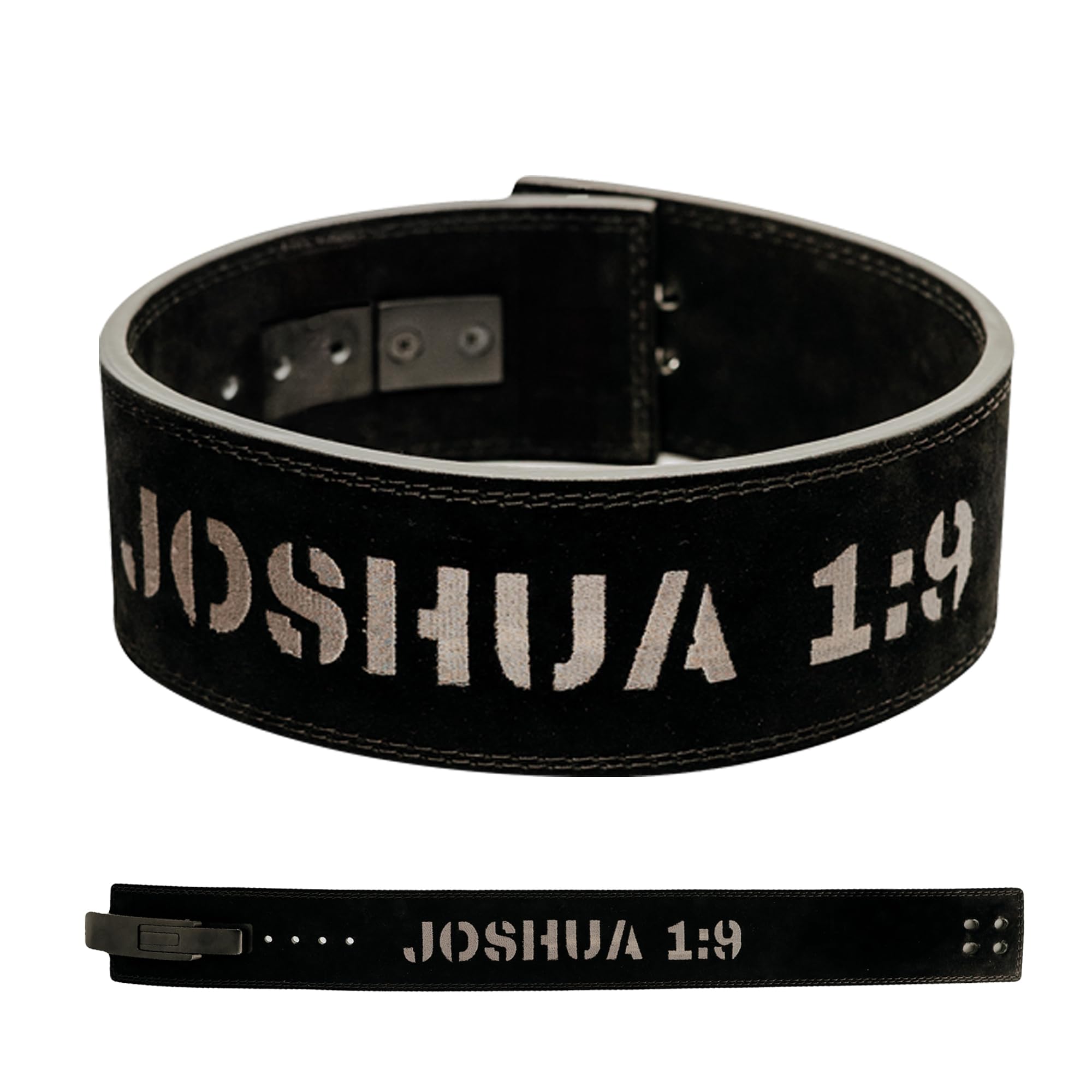
Hidden Wells delivers a 10mm suede leather lever belt at a price that undercuts most premium competitors without skimping on the adjustable lever feature. The buckle uses a heavy-duty steel locking mechanism that stays closed through multiple warm-up sets, and the adjustable design uses a threaded bolt that lets you tweak the tightness in small increments—useful for lifters whose waist size changes during a competition day due to hydration shifts.
The belt width is a true 4 inches with no taper, which means you get the same support through every lift. The suede exterior gives it a softer texture against bare skin compared to smooth leather belts, and it doesn’t squeak during movements—a minor but noticeable quality-of-life improvement during heavy deadlifts. The inner side is also lined to prevent marker transfer onto your clothes.
One potential issue: the leather is slightly more flexible than the top-tier Pioneer or Mytra belts, which means it may not create the same concrete wall of pressure for elite-level lifters pulling over 600 pounds. However, for intermediate lifters looking to step up from a nylon belt, this adjustable lever mechanism at this price is a very compelling upgrade.
Why it’s great
- Suede construction is soft against skin and reduces break-in time
- Threaded adjustable lever allows micro-tuning of belt tightness
- Steel buckle feels secure without adding excessive weight to the belt
Good to know
- Leather is less rigid than competition-focused belts
- Not recommended for lifters who routinely pull over 600 pounds raw
5. Harbinger 10mm Powerlifting Gym Belt

The Harbinger 10mm belt uses a double-prong buckle rather than a lever, but it earns a spot on this list because many lifters use it as a stepping stone before committing to a lever system. The 10mm leather is IPF competition legal at 4 inches wide, and the smooth beveled internal edges make it significantly more comfortable during the break-in period than belts with raw, unshaped edges. The nine evenly spaced adjustment holes give you fine-tuned sizing options.
Construction uses a combination of faux leather and genuine leather, which keeps the price lower than a full-grain competition belt while still providing adequate support for squats up to 400 pounds. The stitching around the buckle and the belt loops is reinforced, though the faux leather section may show wear faster than pure leather belts. This is a gateway belt for lifters who want to experience the rigidity of a thick powerlifting belt without the premium investment.
For lifters who ultimately want a lever, the Harbinger is not the final destination. But it serves well as a learning tool for bracing mechanics, and the beveled interior is forgiving if you prefer not to deal with the initial stiffness of a lever belt during your first year of heavy training.
Why it’s great
- Beveled edges reduce chafing on the ribs and hip bones
- IPF-legal 4-inch width for lifters considering competition
- Familiar double-prong system that many beginners already understand
Good to know
- Faux leather sections will not last as long as full-grain leather belts
- This is a prong belt, not a lever—intended as a bridge product
6. Body Reapers Calfskin Leather Lever Belt

Body Reapers uses dual-layer calfskin leather with a suede interior to deliver a lever belt that feels more expensive than the ticket suggests. The steel lever mechanism snaps into place with an audible click and holds consistent tension throughout heavy squat sets. At 10mm thick and 4 inches wide, the belt matches the dimensions of competition belts while costing a fraction of what you would pay for a handcrafted Pioneer or Mytra model.
The triple-stitched construction at the buckle attachment and along the belt body gives it durability that should survive multiple years of training, though the calfskin leather is inherently softer than steerhide, meaning it may compress slightly faster under extremely heavy loads. The suede interior prevents the belt from sliding upward during deadlifts, and the smooth edges reduce the risk of bruising on the hips.
This is a fantastic option if you want a real lever belt without spending for top-tier USA manufacturing. The adjustable sizing chart is straightforward, but note that the belt runs slightly small—order one size up if you are between measurements. The steel lever is fixed, so you won’t get micro-adjustability, but for the price, the support-to-cost ratio is hard to beat.
Why it’s great
- Steel lever provides a secure, non-slip lock
- Calfskin leather construction at an entry-level price point
- Triple stitching adds longevity to a budget-friendly product
Good to know
- Soft calfskin may compress more quickly than steerhide under very heavy loads
- Runs small; size up if you fall between measurements
7. Stoic Powerlifting Belt (Non-Tapered)

The Stoic Powerlifting Belt is a non-tapered, 4-inch wide belt that uses a prong closure system instead of a lever, but its rigid single-layer construction makes it a stable alternative for lifters who want maximum width without paying for a lever mechanism. The belt is made from a thick, solid-grain material that provides even back support without varying in thickness from front to back. The lack of taper helps keep the belt from riding up during heavy front squats.
This is the most budget-conscious option on the list, and it sacrifices the quick-release convenience of a lever system. You will need to manually adjust the prong across the buckle holes each set if you want different tightness for different lifts. The leather is sturdy but has a longer break-in period than suede-lined options—expect about two weeks of regular use before it conforms to your torso.
For a lifter who simply wants a no-nonsense, non-tapered belt that delivers consistent core support without frills, the Stoic works. But if lever convenience is important, you should look at the Body Reapers model instead, which costs slightly more but includes the lever mechanism. The Stoic is a strong value for very strict budgeting requirements.
Why it’s great
- Non-tapered design provides uniform support across the entire back
- Solid construction holds its shape even after years of use
- Low entry price makes it accessible for beginners
Good to know
- No lever mechanism—requires manual prong adjustment between sets
- Longer break-in time compared to suede-lined alternatives
FAQ
How tight should a lever belt feel during a squat or deadlift?
Can I use a 10mm lever belt for both raw and equipped powerlifting?
Final Thoughts: The Verdict
For most users, the best lever belts winner is the Pioneer PAL V2 because it combines USA-made construction, a full suede lining that eliminates break-in misery, and an adjustable lever system that meets competition standards across multiple federations. If you want a steel lever buckle that can handle 500-pound squats without slop, grab the Mytra Fusion. And for a budget-friendly entry into the lever world that still uses real calfskin leather, nothing beats the Body Reapers.