Leg compression boots have moved from pro sports training rooms into home recovery routines, and the difference between a unit that just inflates and one that genuinely accelerates recovery comes down to chamber design, pressure range, and how well the system mimics the natural muscle pump of the human body.
I’m Emma — the founder and writer behind Baby Bangs. I’ve analyzed over 40 models across six brands, comparing air chamber sequencing, pressure sensors, heat integration, and material durability to separate true recovery systems from basic inflatable sleeves.
This guide breaks down nine systems that cover entry-level relief to clinical-grade recovery, helping you match the right set of leg compression boots to your specific muscle fatigue, circulation needs, or post-workout routine.
How To Choose The Best Leg Compression Boots
Leg compression boots vary widely in pressure delivery, chamber count, and build quality. The goal is to find a system that applies gradient pressure — tighter at the foot, looser at the thigh — to push fluid and blood back toward the core. Understanding how each spec translates to real recovery is the only way to avoid wasting money on a unit that just vibrates rather than compresses.
Air Chambers and Sequential Sequencing
The number of air chambers per leg directly determines how precisely the boot can mimic the natural peristaltic wave of muscle contraction. Four chambers — foot, lower calf, upper calf, and thigh — is the minimum for a proper sequential sequence. Systems that inflate all chambers at once are simply squeezing, not pumping. Look for units that clearly advertise sequential or peristaltic mode, where each chamber inflates in a wave from bottom to top.
Pressure Range and Sensor Technology
Fixed-intensity boots typically max out around 60–80 mmHg, which works for light relaxation but falls short for serious post-workout recovery. Professional-grade units offer adjustable pressure from 50 to 120 mmHg, with built-in pressure sensors that automatically adjust to leg circumference so the stated intensity remains consistent regardless of leg size. Without a sensor, a larger leg experiences lower pressure than the dial says.
Heat vs. No Heat
Infrared or carbon-fiber heating elements integrated into the boot can boost circulation during compression, but they add weight and require a corded connection in most cases. If your primary goal is inflammation reduction, skip heat — cold therapy paired with compression is more effective. If you deal with chronic muscle stiffness or restless leg syndrome, a heated boot can make the difference between a session that feels good and one that truly loosens tight tissue.
Portability and Power Source
Corded units deliver consistent pressure without battery anxiety, but they tether you to a wall outlet. Cordless systems with rechargeable batteries (like the Normatec Go) offer the freedom to recover on the couch, at a desk, or while traveling, but their run time is limited to roughly 2–3 hours per charge. For home-only use, corded is fine. For athletes who travel or recover in multiple locations, battery-powered is a meaningful upgrade.
Quick Comparison
On smaller screens, swipe sideways to see the full table.
| Model | Category | Best For | Key Spec | Amazon |
|---|---|---|---|---|
| FIT KING FT-081A | Mid-Range | All-day recovery with heat | 4 chambers + 3 heat levels | Amazon |
| QUINEAR Professional (Small) | Mid-Range | Graduated pressure for athletes | 50–120 mmHg range, sensor | Amazon |
| Air Relax AR-2 | Premium | Clinical-grade lymphatic drainage | FDA cleared, 4 chambers | Amazon |
| Hyperice Normatec Go | Premium | Portable on-the-go recovery | 3 zones, cordless, 1.2 lbs | Amazon |
| FIT KING Cordless Professional | Premium | Cordless freedom with high pressure | Rechargeable, 4 chambers | Amazon |
| SHINE WELL Recovery System | Mid-Range | Sequential therapy for gym use | 4 chambers per leg | Amazon |
| QUINEAR Standard | Mid-Range | Heat + compression for RLS | 13 airbags, 3 heat zones | Amazon |
| ALLJOY Leg Massager | Budget | Entry-level compression with heat | 5 modes, 4 intensities | Amazon |
| Hyperice Normatec Elite | Premium | Pro-grade full leg recovery | Dynamic compression, 7 levels | Amazon |
In‑Depth Reviews
1. FIT KING Leg Massager with Heat and Compression Therapy (FT-081A)
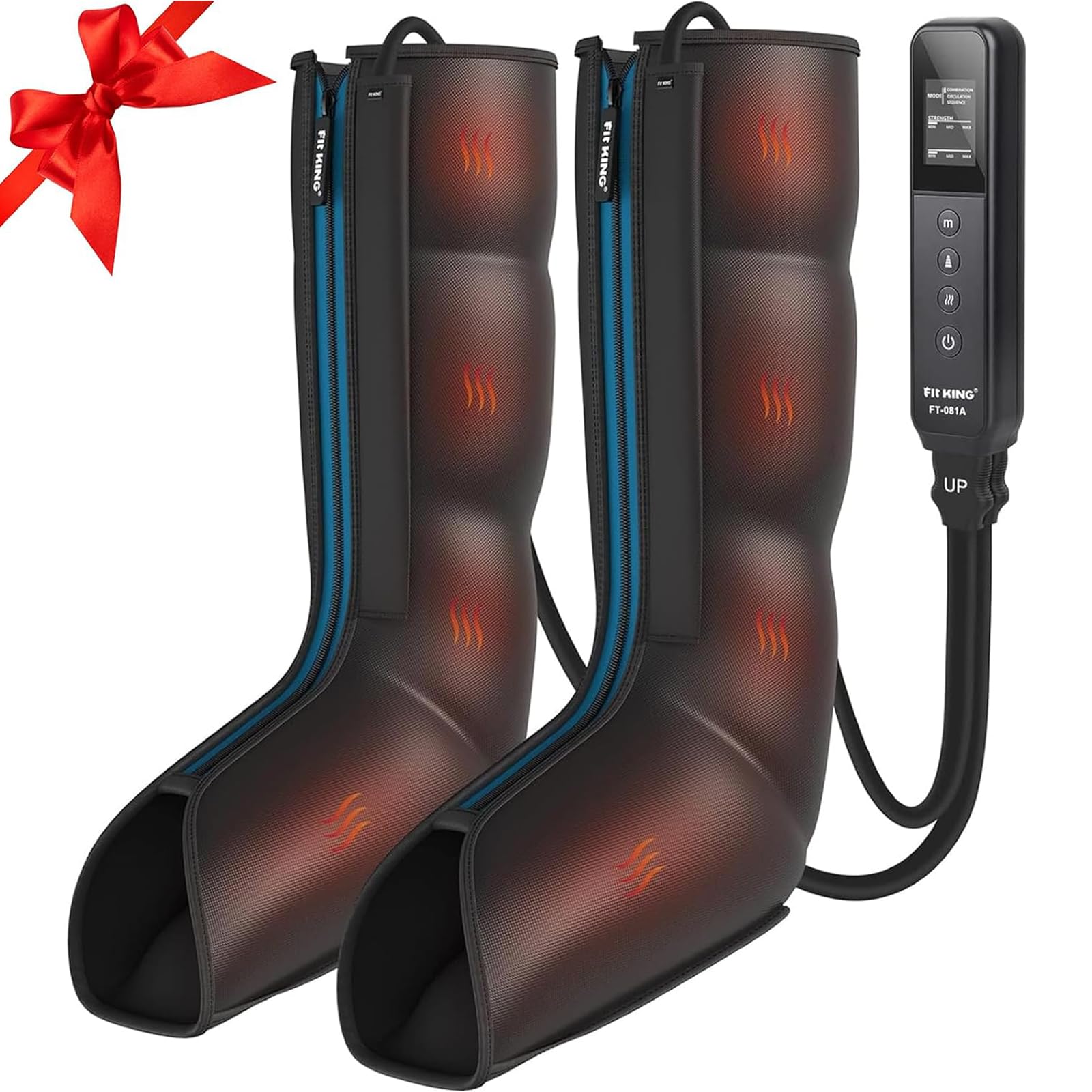
The FIT KING FT-081A delivers the best balance of features, build, and value in the leg compression boot category. With four air chambers per leg, three heat levels targeting foot, calf, and thigh, and a built-in pressure sensor that maintains consistent intensity across different leg sizes, this unit offers professional-grade recovery without the professional price tag. The zipper closure is significantly easier to manage than Velcro wraps, especially for users with limited hand mobility.
The 27 total settings (3 modes × 3 intensities × 3 heat levels) give genuine customization rather than just a dial that changes speed. In peristaltic mode, the chambers inflate sequentially from foot to thigh, effectively mimicking the muscle pump that pushes venous blood and lymphatic fluid upward. Users with restless leg syndrome or edema from prolonged standing report noticeable relief after a single 20-minute session. The polyester mesh fabric breathes well during heat therapy, preventing sweat buildup inside the boot.
One limitation: the heat function requires the unit to be corded, so you are tethered to a wall outlet during use. The maximum calf circumference of 20 inches is adequate for most users, but those with larger legs may find the fit tight. The LCD controller is intuitive, though the buttons require a firm press that some users find stiff initially.
Why it’s great
- Pressure sensor auto-adjusts for consistent compression across leg sizes
- True sequential inflation from foot to thigh with 4 chambers per leg
- Three heating zones deliver fast, targeted warmth to multiple areas
Good to know
- Heat function requires corded power – not portable
- Maximum calf size of 20 inches may not accommodate larger legs
- Controller buttons require deliberate pressure to activate
2. QUINEAR Air Compression Recovery System (Small)

The QUINEAR Professional system stands out for its adjustable pressure range of 50 to 120 mmHg, which covers the therapeutic spectrum from gentle lymphatic drainage to deep muscle compression that rivals clinic-grade units. The four air chambers per leg inflate sequentially, and the built-in pressure sensor automatically adjusts the air volume based on leg circumference, ensuring the selected intensity level delivers the same force regardless of body type.
Three massage modes — sequence, circulation, and combination — give the user control over whether the wave pattern is a single pass, continuous cycling, or a hybrid. The adjustable timer offers 20-, 25-, and 30-minute sessions, which is convenient for structured recovery routines. At 6.75 pounds with the included carry bag, this system is transportable but not truly portable — it requires a wall outlet and the pump unit is separate from the boots.
The small size option is ideal for athletes with slimmer legs who need precise pressure delivery without excess fabric bunching. However, the controller interface is less intuitive than the LCD display on the FIT KING unit; users have to remember what each combination of lights means. The nylon fabric holds up well to repeated use but does not breathe as well as mesh, so longer sessions can feel warm.
Why it’s great
- Pressure range from 50 to 120 mmHg covers therapeutic and deep recovery needs
- Pressure sensor maintains consistent force across different leg sizes
- Three adjustable timer settings support structured recovery routines
Good to know
- Controller uses indicator lights rather than clear LCD display
- Nylon fabric traps more heat than breathable mesh alternatives
- Pump unit is separate from boots – not a one-piece wearable
3. Air Relax AR-2 Professional Compression Boots

The Air Relax AR-2 is the only unit on this list with FDA clearance as a medical device, which means its components and pressure delivery have passed regulatory scrutiny for therapeutic use. The pump delivers significantly higher output than consumer-grade competitors, making it effective for users who need deep compression to address chronic swelling, post-surgical lymphedema, or serious muscle inflammation from high-volume training.
Three therapy modes are available: peristaltic (A), cyclical uniform (B), and continuous (C). The peristaltic mode is what matters most — it creates a wave that moves fluid from the extremities toward the torso, which is the mechanism behind lymphatic drainage. The garment material is tested for biocompatibility, meaning it is non-toxic and safe for prolonged skin contact even in compromised medical situations.
The trade-off is size and noise. The pump unit measures 15 × 14 × 10 inches and weighs 8 pounds, making it the bulkiest system here. It is not portable in any practical sense. The pump is also louder than the FIT KING or QUINEAR units — audible enough to be distracting during a quiet evening session. The one-year warranty and lifetime support provide peace of mind, but the initial investment is significant.
Why it’s great
- FDA clearance as a medical device for therapeutic compression
- Pump power is significantly higher for deep, effective tissue compression
- Biocompatible garment material is safe for extended medical use
Good to know
- Large 8-pound pump is not portable for travel or on-the-go use
- Pump noise is noticeable and may be distracting during relaxation sessions
- Premium investment requires clear medical or athletic need to justify
4. Hyperice Normatec Go Calf Recovery System

The Normatec Go completely reimagines leg compression by integrating the pump, battery, and control unit directly into the boot. There are no hoses, no separate control box, and no wall outlet required during use. At just 1.2 pounds per boot, these are wearable during desk work, while watching TV, or even while walking around the house — a level of freedom no corded system can match.
Hyperice’s patented dynamic air compression uses three zones of overlapping, gapless 360-degree compression that pulses in a wave pattern. The seven compression levels give fine control from light flutter to firm squeeze. Bluetooth connectivity through the Hyperice App unlocks additional recovery programs and allows firmware updates. The battery delivers up to 2 hours of cumulative run time and takes about 4 hours to fully charge.
The catch: these are calf-only units. They do not cover the foot or thigh, which limits their use for whole-leg recovery. The maximum calf circumference of 22 inches accommodates most users, but those with larger calves may find the fit restrictive. At the premium price point, you are paying for the miniaturization and portability rather than raw therapeutic power — the maximum pressure is lower than what the Air Relax or QUINEAR Professional units can deliver.
Why it’s great
- Fully cordless design with no hoses — true wearable freedom during recovery
- Weighs just 1.2 pounds per boot for comfortable all-day use
- Bluetooth app control adds customizable programs and firmware updates
Good to know
- Calf-only coverage — does not massage foot or thigh areas
- Maximum pressure is lower than clinical-grade corded units
- 2-hour battery life may require mid-session charging for longer routines
5. FIT KING Professional Air Compression Leg Recovery System (Medium)

FIT KING took the core technology from their popular FT-081A and cut the cord. This professional-grade system uses four air chambers per leg with sequential compression, but powers everything through a rechargeable battery system that eliminates the need for a wall outlet. Users get the same 4-chamber wave from foot to thigh without being tethered, which is a meaningful upgrade for anyone who wants to move around during their recovery session.
The medium size accommodates a wide range of leg shapes, and the zipper closure remains easier to manage than Velcro alternatives. Multiple intensity levels and modes give flexibility across different recovery goals — light flushes for daily maintenance or deeper compression for post-race soreness. The battery life supports multiple sessions before requiring a recharge, though the exact runtime depends on the intensity setting used.
The premium price puts this in direct competition with the Normatec Go, but the FIT KING covers the full leg rather than just the calf. However, the boot is heavier and bulkier than the Normatec Go due to the integrated battery and full-leg design. Users who prioritize a lightweight, barely-there feel may still prefer the Hyperice option despite the reduced coverage area.
Why it’s great
- Cordless full-leg coverage with 4-chamber sequential compression
- Zipper closure is faster and easier than Velcro wrap systems
- Rechargeable battery enables recovery anywhere without outlet access
Good to know
- Heavier and bulkier than calf-only cordless alternatives
- Premium price positions it alongside established cordless competitors
- Battery life varies with intensity — higher pressure drains faster
6. SHINE WELL Leg Recovery Compression System (Medium)
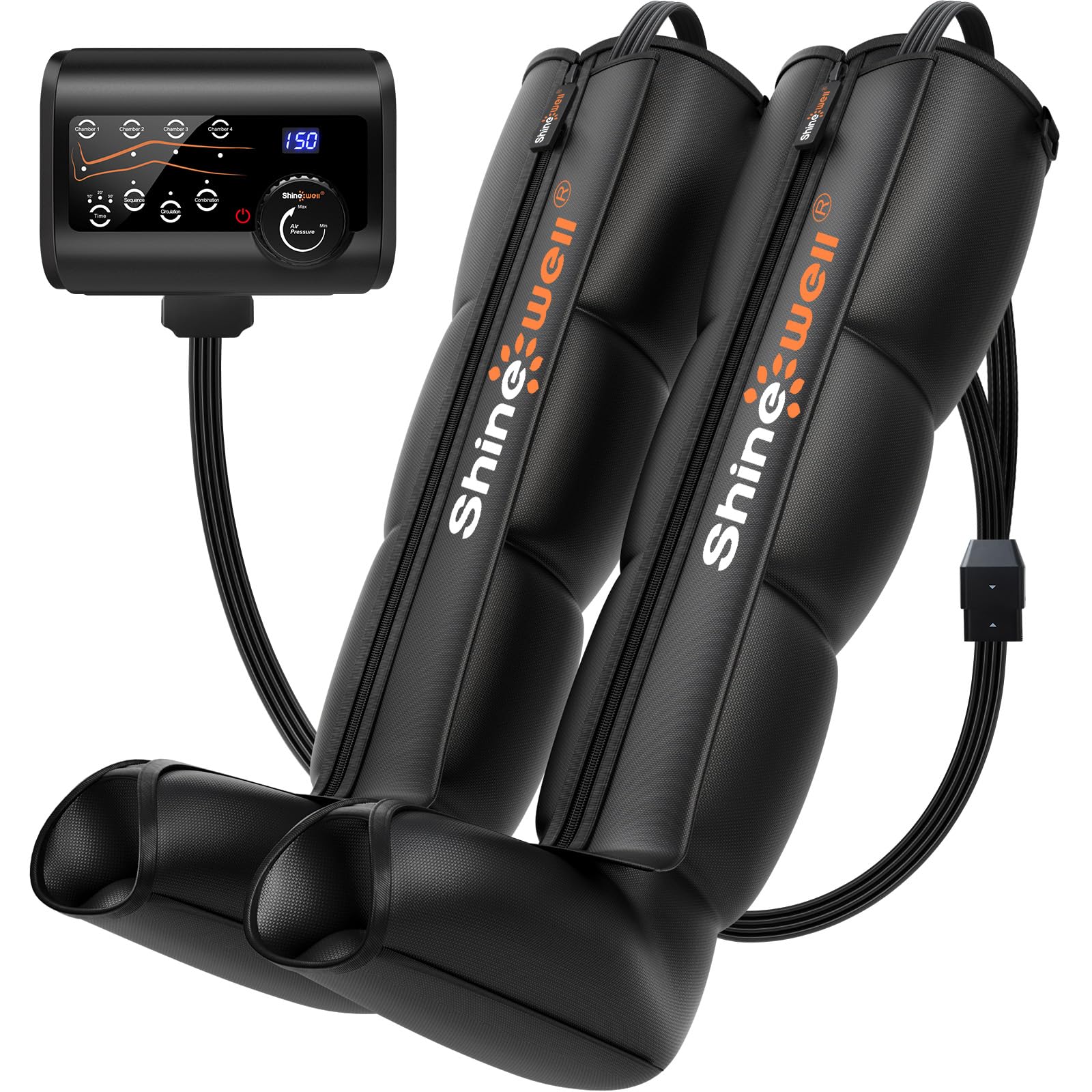
The SHINE WELL Recovery System targets athletes who want professional sequential compression without stepping into the premium price bracket of the Air Relax or Normatec Elite. With four air chambers per leg, the system delivers the same foot-to-thigh wave pattern that defines effective lymphatic drainage and venous return. The medium size is designed to fit most adult legs, and the build quality feels sturdy rather than flimsy.
What sets this unit apart in the mid-range is the inclusion of a dedicated storage case and the attention to sequencing timing — the inflation and deflation cycle is calibrated to avoid the too-fast pulse that some budget boots use, which can actually trap fluid rather than move it. Athletes using this for post-gym recovery report reduced next-day soreness compared to passive rest alone.
The controller is less refined than the FIT KING or Air Relax displays, using a simpler button-and-light interface that requires memorizing mode patterns. There is no pressure sensor, so larger legs will need to compensate with higher intensity settings to achieve the same effective compression as smaller legs. The lack of heat also limits its utility for users seeking warmth therapy alongside compression.
Why it’s great
- True 4-chamber sequential wave for effective fluid movement
- Calibrated cycle timing avoids fluid-trapping rapid pulses
- Solid build quality with included storage case for organization
Good to know
- No pressure sensor — pressure varies with leg circumference
- Controller uses lights instead of clear text or LCD display
- No heat function for those who want thermal therapy
7. QUINEAR Leg Massager for Circulation and Pain Relief

The standard QUINEAR leg massager delivers an impressive 13 airbags per leg — four air chambers (foot, lower calf, upper calf, thigh) that inflate and deflate sequentially across three modes. What makes this unit particularly appealing for the mid-range tier is the combination of compression with carbon fiber heating technology. The three heat levels can be directed to the feet, calves, or thighs independently, allowing users to focus warmth exactly where muscle stiffness is most pronounced.
The inclusion of two extension panels means the wraps can accommodate larger legs, addressing a common pain point in the category where users with thicker calves find boots too tight. The nylon waterproof fabric wipes clean easily, which matters for a device that gets used after sweaty training sessions. The digital handheld controller is straightforward, though it lacks the detailed LCD feedback of the FIT KING unit.
The sequential compression works well for reducing swelling and easing restless leg symptoms, but the maximum intensity is lower than the QUINEAR Professional model. Users who need deep, high-pressure compression for serious post-marathon recovery may find this unit too gentle. The corded design also limits use to areas near a power outlet, and the heat function cannot operate independently of the compression cycle.
Why it’s great
- 13 airbags per leg with 4 sequential chambers for full-leg wave therapy
- Carbon fiber heat with 3 independent zones targeting foot, calf, thigh
- Extension panels included to accommodate larger leg circumferences
Good to know
- Maximum pressure is lower — not ideal for deep muscle recovery
- Corded design tethers you to a wall outlet during use
- Heat and compression cannot be operated independently
8. ALLJOY Leg Massager for Circulation and Pain Relief
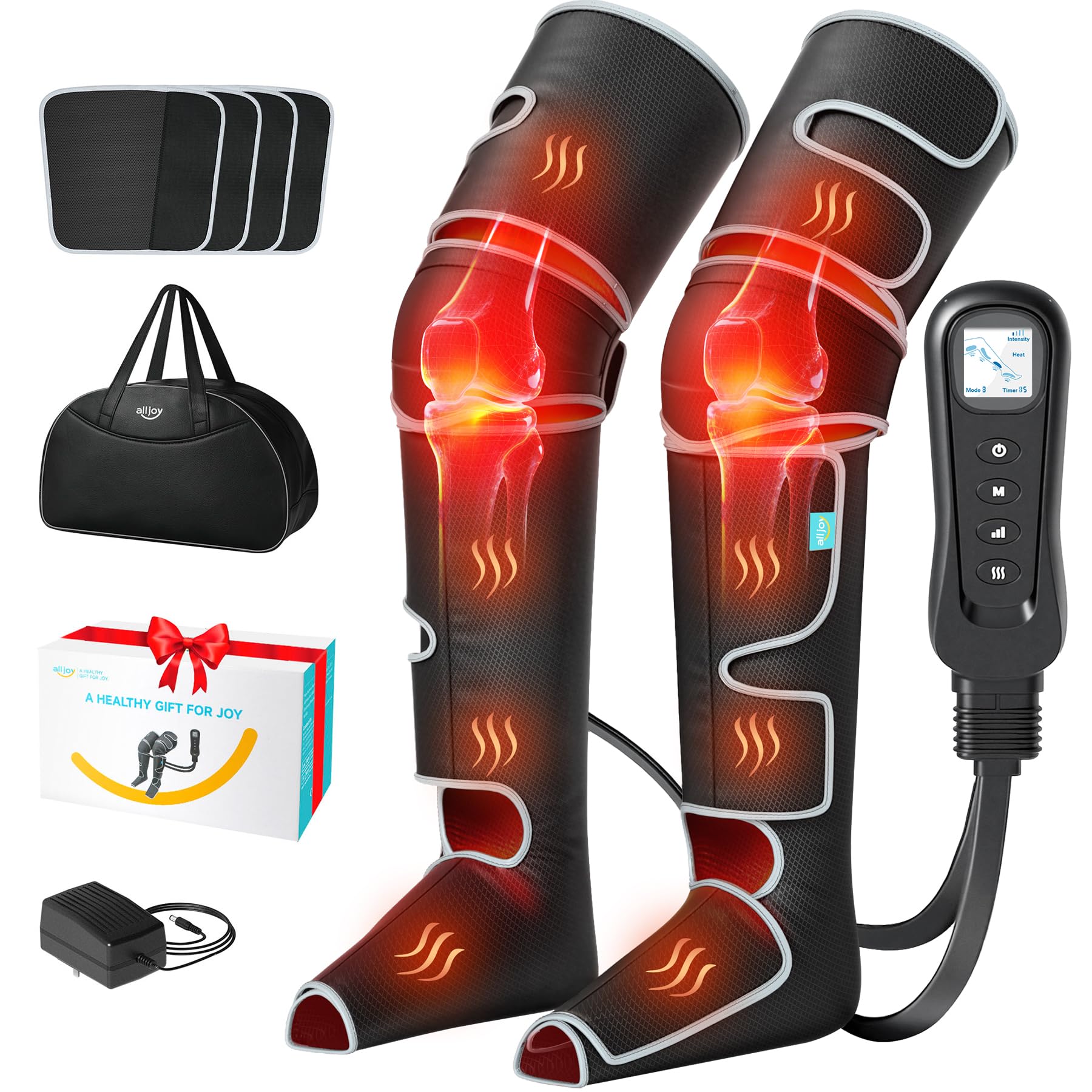
The ALLJOY leg massager is the most accessible entry point into compression therapy for users who are not sure if they will commit to regular use. With five massage modes and four intensity levels, it offers enough variety to keep sessions from feeling repetitive, and the two heat zones add a layer of comfort that basic inflatable sleeves lack. The four included extension panels make the wraps adaptable to a range of leg sizes.
The build quality is noticeably lighter than the mid-range and premium options — the fabric is thinner and the zippers feel less robust. This is fine for occasional use after long work days or light exercise, but it is not built for the daily pounding that serious athletes or frequent travelers would put it through. The compression is gentler, more of a firm squeeze than a deep tissue press, which actually suits users new to compression therapy who might find high-pressure units uncomfortable.
The controller is simple, with button presses that cycle through modes rather than offering quick-access presets. There is no pressure sensor, so the actual compression force depends heavily on leg fit — looser wrap equals lower effective pressure. Users with thicker calves should use the extension panels to avoid a pinching sensation at the top of the boot.
Why it’s great
- Gentler compression suitable for beginners or light daily recovery
- Two heat zones add comfort for post-work or cold-weather use
- Four extension panels provide flexibility for different leg sizes
Good to know
- Lighter fabric and zippers are less durable for frequent heavy use
- No pressure sensor — effective compression varies with leg fit
- Maximum pressure is lower than mid-range and premium competitors
9. Hyperice Normatec Elite Legs Size Standard
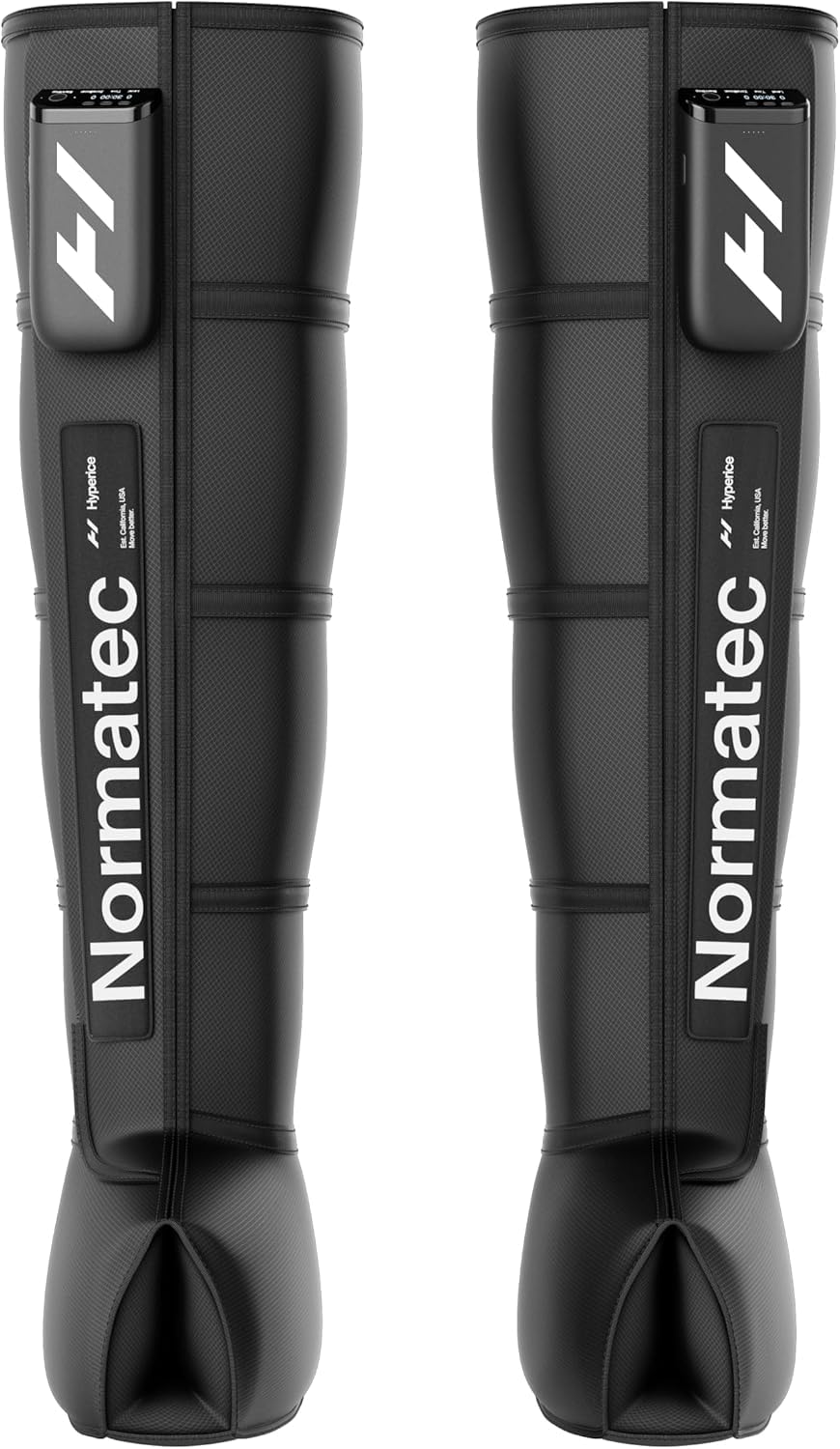
The Normatec Elite represents the pinnacle of consumer leg compression technology, combining Hyperice’s patented dynamic air compression with a full-leg design that covers from foot to upper thigh. The seven compression levels provide granular control over the squeeze intensity, and the overlapping gapless compression zones ensure no segment of the leg is left without pressure during the wave cycle. This is the system used by professional sports teams and elite athletes for a reason.
The Bluetooth integration via the Hyperice App unlocks targeted recovery programs for specific activities — running, cycling, weight training, or general recovery. The app also tracks session history, allowing athletes to correlate compression sessions with performance and soreness levels over time. The build quality is exceptional, with durable nylon fabric and reinforced seams that withstand daily use in high-volume training environments.
The investment is significant, placing the Elite firmly in the pro-use or dedicated-athlete category. For the average home user who wants occasional recovery, the FIT KING FT-081A or QUINEAR Professional delivers 90% of the benefit at a much lower entry point. The Elite shines when daily recovery is non-negotiable and the user needs precision tuning of compression parameters through the app interface.
Why it’s great
- Full-leg coverage from foot to thigh with gapless 360-degree compression
- App-controlled targeted programs for specific activities and recovery goals
- Durable build quality designed for daily pro-level training environments
Good to know
- Significant investment best justified by daily heavy training use
- App dependency means some features are locked behind Bluetooth connection
- Overkill for users who only need occasional or light recovery compression
FAQ
How many mmHg should my leg compression boots deliver for effective recovery?
Can I use leg compression boots if I have varicose veins or DVT history?
What is the difference between sequential and uniform compression modes?
Do I need a prescription for professional-grade compression boots like the Air Relax?
How long should each compression session last and how often can I use the boots?
Final Thoughts: The Verdict
For most users, the leg compression boots winner is the FIT KING FT-081A because it combines true four-chamber sequential compression, a pressure sensor for consistent force, and three independent heat zones at a price point that delivers professional-grade recovery without requiring clinical justification. If you need cordless freedom for travel or desk-side recovery, grab the Hyperice Normatec Go. And for clinical-grade lymphatic drainage or deep post-surgical recovery, nothing beats the Air Relax AR-2 with its FDA clearance and powerful pump system.