The difference between a red light panel that actually works and one that just glows warm comes down to irradiance measured in milliwatts per square centimeter. Too many entry-level units deliver weak output that never penetrates the dermis deep enough to stimulate mitochondrial function.
I’m Emma — the founder and writer behind Baby Bangs. I’ve spent months cross-referencing spectral output charts, dual-chip LED counts, coolant fan noise levels, and manufacturer irradiance claims to build a buying guide that separates clinical-grade hardware from glorified nightlights.
Whether you are targeting joint recovery, facial collagen synthesis, or post-workout muscle repair, the right led red light panel delivers specific wavelengths at sufficient power density to produce measurable cellular response within weeks.
How To Choose The Best LED Red Light Panel
An effective panel balances three factors: wavelength variety, power density, and build quality. Most beginners over-focus on LED count while ignoring the irradiance number that actually determines whether photons reach the mitochondria.
Wavelength Coverage
The therapeutic window for red light therapy spans roughly 630nm to 850nm. Red wavelengths around 630nm and 660nm target superficial tissue — ideal for skin tone, collagen, and surface-level recovery. Near-infrared wavelengths at 810nm, 830nm, and 850nm penetrate deeper into muscles and joints. A panel covering at least 660nm and 850nm covers the core needs of most users.
Irradiance and Distance
Irradiance — measured in milliwatts per square centimeter at a given distance — determines whether a session delivers clinical-level energy. A panel should produce at least 60mW/cm² at 6 inches to deliver meaningful photobiomodulation. Higher irradiance means shorter session times.
LED Quality and Cooling
Dual-chip LEDs output higher power per diode compared to single-chip alternatives. Panels running multiple dual-chip LEDs generate more heat, so passive cooling alone is rarely enough. A built-in cooling fan with quiet operation keeps the unit stable during longer sessions.
Quick Comparison
On smaller screens, swipe sideways to see the full table.
| Model | Category | Best For | Key Spec | Amazon |
|---|---|---|---|---|
| Hooga PRO300 | Mid-Range | Daily wellness & skin | 60 dual-chip LEDs, 660/850nm | Amazon |
| Mito Red MitoMID 2.0 | Premium | Half-body coverage | 60 high-power LEDs, 660/850nm, 19″ panel | Amazon |
| BestQool Pro100 | Premium | Modular expandable setup | 100 dual-chip LEDs, 4 wavelengths, 170W | Amazon |
| BestQool Pro300 | Premium | Full body high-power | 300 dual-chip LEDs, 4 wavelengths, 500W | Amazon |
| EXESAS 1008LED Full Body | High-End | Clinical-grade full body | 1008 dual-chip LEDs, 4 wavelengths, 73″ tall | Amazon |
| BONTANNY BO-300 | Mid-Range | Multi-wavelength therapy | 60 dual-chip LEDs, 5 wavelengths, 131mW/cm² @ 6″ | Amazon |
| LifePro BioHeal | Mid-Range | Portable daily use | 90 LEDs, 660/850nm, 203mW/cm² @ 3″ | Amazon |
| VEVOR 80W Panel | Budget | Targeted recovery | 60 dual-chip LEDs, 660/850nm, 100mW/cm² @ 6″ | Amazon |
| Portable 6-Mode Panel | Budget | Facial & small-area use | 6 light modes, goggles & timer included | Amazon |
In‑Depth Reviews
1. Hooga Red Light Therapy Panel PRO300

The Hooga PRO300 hits the sweet spot between power density and price without cutting corners on build. Its 60 dual-chip LEDs push 660nm red and 850nm near-infrared wavelengths with consistent irradiance across the treatment area — no hot spots or dim zones that leave half your session wasted.
The built-in stand allows you to angle the panel for face or body sessions, and the integrated timer eliminates guesswork. At roughly 9.5 pounds, it is heavy enough to feel solid but light enough to move between rooms. Users running sessions three times per week report noticeable changes in skin texture and recovery speed within a month.
Hooga skips gimmicky extra wavelengths in favor of the two clinically validated ones, which keeps power density high. Flicker-free operation and a durable aluminum frame reinforce the sense that this is a permanent addition to your routine, not a first-gen experiment.
Why it’s great
- Flicker-free dual-chip LEDs deliver consistent output across the panel
- Well-built stand supports both face and body positioning
- Strong customer support and reliable build quality
Good to know
- No remote control — timer is panel-mounted
- Only two wavelengths may feel limited to users wanting deeper spectrum variety
2. Mito Red Light MitoMID 2.0
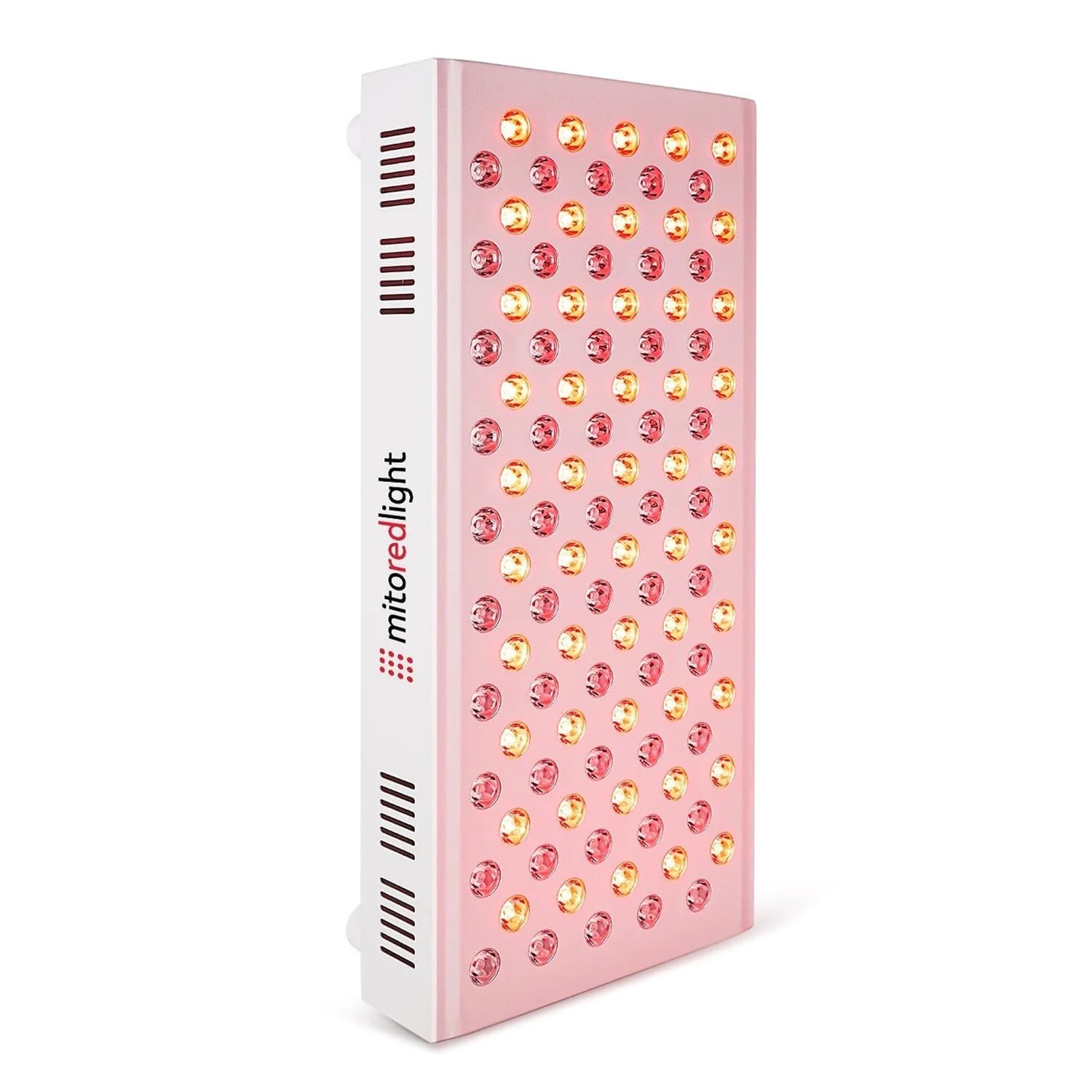
Mito Red Light built the MitoMID 2.0 around a simple premise: deliver 37,500 joules per 10-minute session from a 19-inch panel that covers half the body in one pass. The 60 diodes pulse 660nm red and 850nm near-infrared light at verified power levels, confirmed by independent third-party testing.
The digital control panel lets you switch between Red Only, NIR Only, or Both modes. Whisper-quiet cooling fans mean you can run sessions during a podcast or while reading without distraction. FSA and HSA eligibility makes the upfront investment easier to swallow if you hold a flexible spending account.
Weighing 14.2 pounds, the MitoMID 2.0 is heavier than many mid-range panels, largely due to the thicker aluminum housing and premium internal driver. The trade-off is a build that feels like medical equipment rather than a consumer gadget.
Why it’s great
- Third-party tested power output for verified irradiance
- FSA/HSA eligible, lowering out-of-pocket cost
- Three independent modes for targeted therapy
Good to know
- Heavier than comparable mid-range panels
- Premium pricing places it above entry-level budgets
3. BestQool Red Light Therapy Panel Pro100

BestQool’s Pro100 packs 100 dual-chip LEDs across four wavelengths — 630nm, 660nm, 850nm, and 940nm — into a 170-watt panel that measures roughly 20 inches long. The modular design uses proprietary connection plates so you can link multiple Pro100 units into a larger array over time.
At 109mW/cm² at three inches, the irradiance supports shorter session durations than many comparably sized panels. The 60-degree beam angle spreads light evenly, reducing the need to shift position mid-session. Three operating modes let you select red-only, NIR-only, or full combo output.
The 6.6-pound frame is impressively light for a panel of this power. A smart control system manages heat dissipation through a low-noise fan. Users building a full-body wall of panels will appreciate the expandable ecosystem more than someone buying a single unit.
Why it’s great
- Modular connectors enable multi-panel expansion
- Four wavelengths provide broader spectrum coverage
- Lightweight frame at under 7 pounds
Good to know
- Connection plates are proprietary to BestQool
- No remote included — controls on panel only
4. BestQool Red Light Therapy Panel Pro300

The Pro300 is BestQool’s answer to full-body coverage without requiring a multi-panel setup. Three hundred dual-chip LEDs spread across four wavelengths — 630nm, 660nm, 850nm, and 940nm — produce irradiance exceeding 106mW/cm² at three inches. The 30-degree beam angle concentrates energy more tightly than the Pro100’s 60-degree design.
At 36 inches long and 19.1 pounds, this panel requires dedicated floor or wall space. The built-in cooling fan runs efficiently enough to keep the unit stable during 20-minute sessions. Modular connection points remain compatible with the Pro100 system, allowing hybrid arrays.
The 940nm wavelength is notably absent from most competitor panels in this tier. While 940nm penetrates very deep, clinical research on its effectiveness is less documented than 810nm or 830nm. Users targeting superficial skin benefits may find the 630nm and 660nm modes more immediately rewarding.
Why it’s great
- High irradiance enables short, effective sessions
- Full-body coverage without modular linking
- 940nm wavelength included for deep penetration
Good to know
- Heavy unit at 19 pounds — not easily portable
- Narrow 30-degree beam requires precise positioning
5. EXESAS Full Body Red Light Therapy Panel
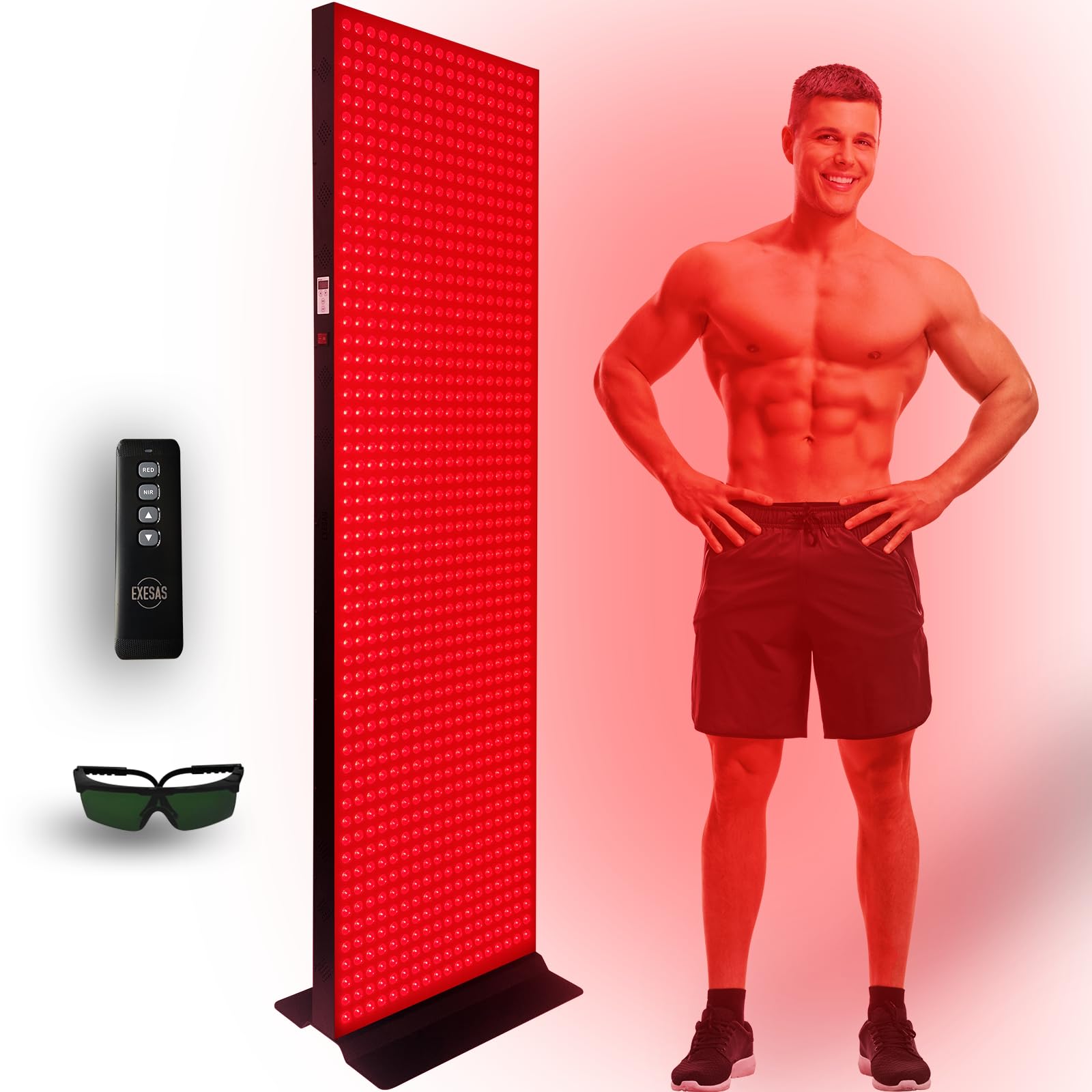
The EXESAS 1008LED panel is the largest unit in this comparison at 73 inches tall — essentially a full-body door. It packs 1008 dual-chip LEDs across 630nm, 660nm, 810nm, and 850nm wavelengths. Meanwell LED drivers, the same brand used in professional medical devices, power the array for stable current delivery.
A remote control and LCD control panel let you separate red and infrared outputs or combine them. Built-in cooling fans manage the thermal load during extended sessions. The brushed metal finish and sturdy stand give it a lab-grade appearance rather than a consumer aesthetic.
Zero EMF emissions and a 100,000-hour LED lifespan make this a long-term investment for serious users. The 2-year manufacturer warranty provides additional security. For most individual buyers, however, the sheer size and premium investment will only make sense if you are treating multiple people or want simultaneous whole-body exposure.
Why it’s great
- 100,000-hour LED lifespan with Meanwell drivers
- Remote control with separate RED/IR mode selection
- Zero EMF for sensitive individuals
Good to know
- Requires significant floor space at 73 inches tall
- Heavy — not designed for room-to-room portability
6. BONTANNY Red Light Therapy BO-300

BONTANNY’s BO-300 stands out in the mid-range segment by offering five wavelengths — 630nm, 660nm, 810nm, 830nm, and 850nm — from 60 dual-chip LEDs. The addition of 810nm and 830nm, wavelengths heavily researched for brain and deep-tissue therapy, makes this panel unusually versatile for its price tier.
Irradiance measures 131mW/cm² at six inches, which is well above the therapeutic threshold. A remote control and intelligent operation panel let you choose between three preset modes and adjust session time from one to 30 minutes. The 60-degree beam angle provides even coverage across a 14×12-inch area at six inches.
The included adjustable stand, eye protection, and cooling fan mean you are ready to use the panel right out of the box. At 13.2 inches wide, it fits comfortably on a desk or dresser. Users who want clinical wavelength variety without jumping to premium pricing will find the BO-300 a compelling middle-ground option.
Why it’s great
- Five wavelengths including 810nm and 830nm for deep tissue
- 131mW/cm² at 6 inches is strong for this size
- Remote control adds convenience during sessions
Good to know
- Remote requires a 23A 12V battery not included
- Smaller coverage area than larger panels
7. LifePro Red Light Therapy for Body Panel BioHeal
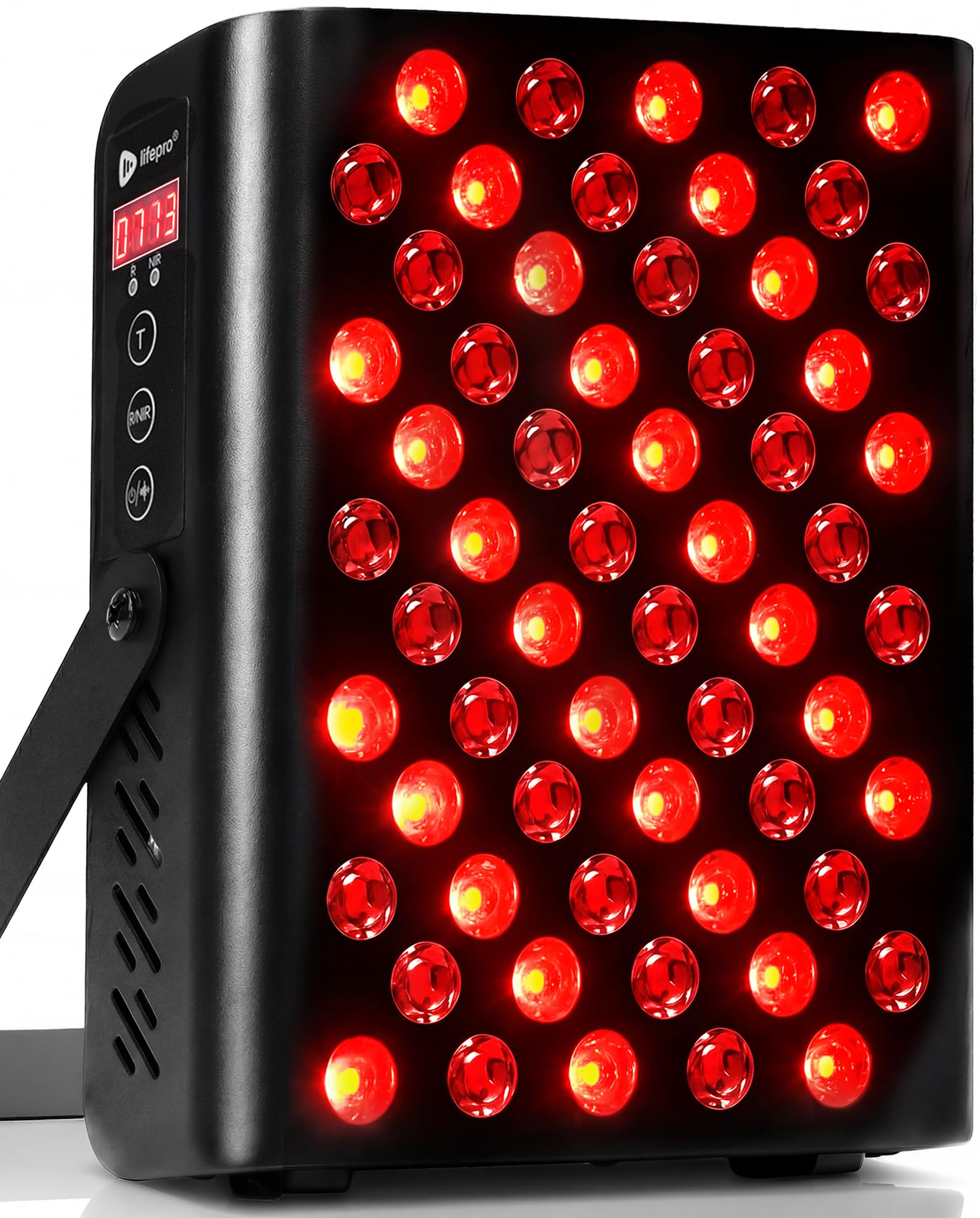
LifePro’s BioHeal panel uses 90 dual-chip LEDs emitting 660nm and 850nm light. The standout spec is 203mW/cm² of irradiance at three inches — one of the highest density outputs available at this price point. If shorter sessions are your goal, this panel delivers concentrated energy quickly.
The panel supports three light modes and a timer adjustable from one to 30 minutes. Its lightweight 5.73-pound frame and included hanging kit mean you can mount it on a door or use it standing on a flat surface. The pulses-per-second feature (10 Hz) adds a dimension that some users report feels more energizing than constant output.
LifePro includes lifetime customer support, which adds peace of mind for a device you will likely use daily. The 10-minute auto-timer brightness recall is a small but thoughtful touch for routine users. The main compromise is the smaller LED count compared to similarly priced competitors.
Why it’s great
- Very high irradiance at 3 inches for short sessions
- Lightweight and includes hanging kit for mounting
- Lifetime customer support from manufacturer
Good to know
- Lower total LED count than some mid-range peers
- Pulsed output at 10 Hz may not suit everyone
8. VEVOR Red Light Therapy for Body Face 80W

VEVOR’s entry-level 80W panel delivers 60 dual-chip LEDs at 660nm and 850nm with a 30-degree focusing design that concentrates light into a narrower beam than most panels at this tier. The result is 100mW/cm² irradiance at six inches — respectable for a budget-targeted unit and sufficient for targeted joint or spot therapy.
The panel is FDA and FCC registered, which provides baseline trust in safety and electromagnetic compliance. A built-in cooling fan prevents overheating during extended sessions. The included stand allows placement on desks, nightstands, or floor positions, though the smaller 8.7-inch width means you will need to reposition for larger body areas.
At 6 pounds, it is light enough to move between rooms easily. The primary use case is users who want a no-frills introduction to red light therapy without a large upfront commitment. Expect to reposition the panel multiple times per session to treat larger zones.
Why it’s great
- FDA and FCC certified for safety compliance
- 30-degree focusing design increases local power density
- Budget-friendly entry into validated wavelengths
Good to know
- Small coverage area requires frequent repositioning
- No remote or advanced control features
9. Portable Red Light Therapy Panel 6 Modes
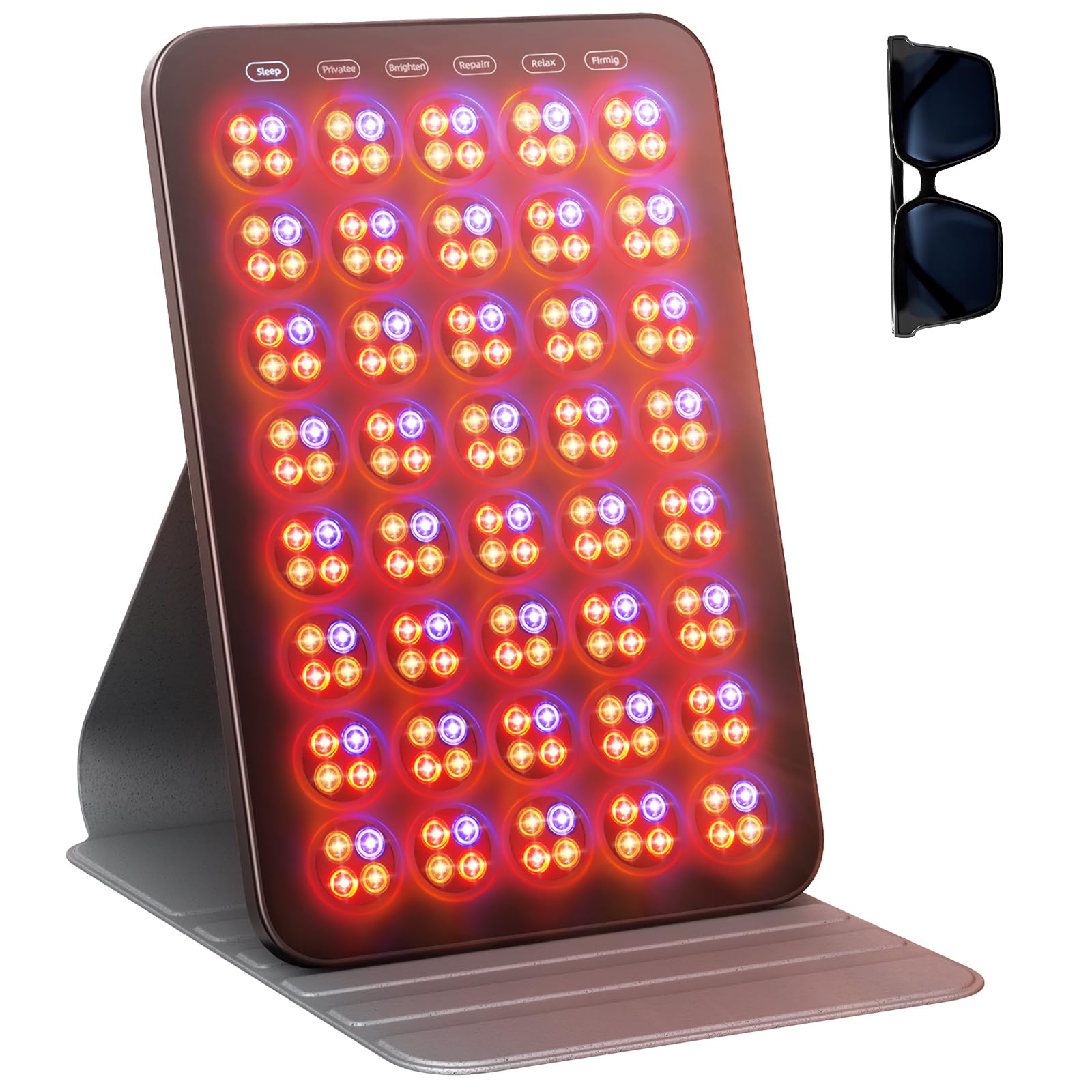
This compact brown panel targets users who want to test red light therapy for face treatment without investing in a larger setup. Six selectable modes provide variety, and the included protective goggles and built-in timer handle basic session management. Its small footprint fits easily on a nightstand or vanity.
Because this unit does not publish irradiance numbers or specific LED counts, its therapeutic depth is harder to evaluate compared to the data-heavy panels above. It is best approached as a trial device to gauge whether you respond positively to red light exposure before upgrading to a higher-output panel.
For purely cosmetic use — spot-treating a small area of the face — the multi-mode flexibility allows some experimentation with different light combinations. Users expecting measurable muscle recovery or joint pain relief will likely outgrow this unit quickly and should consider the VEVOR or BONTANNY panels as a more capable starting point.
Why it’s great
- Very compact design for facial spot treatment
- Six modes offer variety for experimentation
- Protective goggles and timer included
Good to know
- No published irradiance or LED count for comparison
- Limited power for body or deep-tissue applications
FAQ
How close should I sit to my LED red light panel?
Do dual-chip LEDs really outperform single-chip LEDs?
Can I use a red light panel every day?
Final Thoughts: The Verdict
For most users, the led red light panel winner is the Hooga PRO300 because it delivers verified dual-chip output across the two core wavelengths at a price point that does not force compromises on build quality or power density. If you want five wavelengths including clinical 810nm and 830nm, grab the BONTANNY BO-300. And for full-body coverage from a single massive panel, nothing beats the BestQool Pro300.