Walk into any toy aisle and you’re buried in flashing plastic and empty promises—most “learning” toys are just noise dressed up as education. The real test is whether a toy makes your child think, create, or solve without a screen guiding every move. That’s where the best learning toys earn their keep.
I’m Emma — the founder and writer behind Baby Bangs. I’ve spent years digging through the difference between a toy that entertains for five minutes and one that builds real cognitive skills, from phonics recall to spatial reasoning.
Whether you’re shopping for a preschooler mastering letter sounds or an older kid wiring circuits, the right pick balances open-ended play with a clear learning goal. This guide breaks down five of the top learning toys across building, phonics, art, and STEM categories.
How To Choose The Best Learning Toys
The best learning toy doesn’t have to be the most expensive or the flashiest. It needs to match your child’s current developmental needs while offering room to grow. Three factors matter most: the skill it builds, how it engages the child, and how long it holds their interest.
Match the Objective to the Age
Phonics posters and magnetic easels work beautifully for ages 2-4 because they target letter recognition and fine motor control. Building block sets with 100+ pieces suit ages 3-8 as they encourage spatial planning and creativity. Circuit kits shine for kids 8 and up who are ready for cause-and-effect reasoning. Always check the manufacturer’s minimum age — a toy that’s too advanced leads to frustration, not learning.
Material Safety and Assembly
ABS plastic is the gold standard for blocks because it’s BPA-free, non-toxic, and resists cracking. Paper-based posters need laminated surfaces to survive sticky fingers. Easels should have rounded edges and a stable base to prevent tipping. Avoid toys with small parts for any child under three, regardless of the box’s marketing claim.
Open-Ended vs. Structured Play
Kits with step-by-step instructions (like circuit sets or guided building projects) teach following directions and problem-solving. Open-ended play (like loose blocks or a blank whiteboard) fosters creativity and independent thinking. A well-rounded collection includes one of each—start with structured if your child needs guidance, and rotate to open-ended as their confidence grows.
Quick Comparison
On smaller screens, swipe sideways to see the full table.
| Model | Category | Best For | Key Spec | Amazon |
|---|---|---|---|---|
| Juboury 1054Pcs Building Toy | Building Blocks | Open-ended creativity & spatial reasoning | 1,054 pieces, 130 shapes, ABS plastic | Amazon |
| LEARNING BUGS Phonics Poster | Phonics & Reading | Letter-sound recognition ages 3–5 | 5 modes, auto-off, 23.4 x 16.5 in | Amazon |
| Qirptey 186 Pcs STEM Building Blocks | STEM Building | Guided model building (robots, cars) | 186 pieces, idea booklet, storage box | Amazon |
| Basytodio Kids Easel | Art & Drawing | Double-sided drawing & magnetic play | Chalkboard + whiteboard, adjustable height | Amazon |
| National Geographic Circuit Maker Kit | Electronics & STEM | Circuit projects for ages 8+ | 120 projects, snap-together wires | Amazon |
In‑Depth Reviews
1. Juboury 1054Pcs Building Toy

With 1,054 pieces spread across 130 distinct shapes, this kit offers more variety than most building sets at twice the price. The bars and connectors allow kids to build flat geometric patterns or lift structures into 3D forms like Ferris wheels and animals. That range from 2D to 3D construction is what makes it a legitimate STEM tool — kids naturally learn about structural stability and symmetry without being told.
Each piece is molded from ABS material with round edges that snap together firmly. The connection holds well enough that a child can lift a completed model without it crumbling, which is the biggest frustration with cheaper blocks. A storage box and an idea booklet come included, so clean-up is manageable and there’s a starting point for kids who need direction.
The age minimum is 36 months, but the small connector pieces mean you should supervise younger children closely. Some parents note that the box doesn’t have compartments, so sorting by color or shape requires an extra bin. Still, for pure creative volume and durability, this kit delivers more play-per-dollar than nearly anything in the category.
Why it’s great
- Massive piece count offers near-endless building possibilities
- ABS plastic feels solid and pieces stay connected during play
- Storage box and idea booklet included for organization and guidance
Good to know
- No internal dividers in the box — pieces mix together
- Small connectors require supervision for children under 4
2. National Geographic Circuit Maker Kit

This kit from the National Geographic brand, developed by Blue Marble, packs 120 electrical projects into a single box designed for kids 8 and up. The projects range from simple light-up circuits to a working keyboard mode and a voice amplifier system. Every component connects with snap-together wires, so there’s no soldering, no tools, and no frustration for young fingers learning polarity and continuity.
The included illustrated guide is clear, but the real differentiator is the QR code linking to video instructions. Kids who struggle with static diagrams can watch each step in motion, which dramatically reduces the “I don’t get it” moments. The components themselves are sturdy plastic with metal snap terminals that hold up to repeated builds and disassembly.
Batteries are required but not included, and kids who burn through the 120 projects will want expansion packs if they’re truly hooked. A few parents mentioned that the sound-based projects can get loud, but that’s part of the fun. For an introduction to circuitry that actually works the first time, this kit sets a high standard.
Why it’s great
- 120 projects progress from simple to complex, building real circuit knowledge
- Snap-together connections require no tools and hold securely
- Video instructions via QR code help visual learners
Good to know
- Requires alkaline batteries (not included)
- Sound projects can be loud — consider earplugs for sensitive ears
3. Basytodio Kids Easel

This easel rotates 360 degrees and carries a magnetic blackboard on one side and a dry-erase whiteboard on the other — giving toddlers two completely different creative surfaces in one unit. The included accessories (6 chalks, 8 markers, 4 magnets, an eraser, and a chalk holder) mean you can start drawing and writing immediately without buying extras. The paper clip on the whiteboard side even supports watercolor painting.
Safety is handled well here: the frame uses high-strength plastic with no sharp edges, and the base is wide enough to resist tipping during active play. Assembly requires no tools — the plastic screws are detachable and easy enough that a parent can have it set up in under ten minutes. Height adjustment is managed by swapping the feet, which extends the usable age range from about 2 up to 6 years old.
The lightweight build means kids can move the easel themselves, but that also means it can slide on smooth floors during vigorous drawing. A few users wished the marker tray was larger. Still, for the price, this is one of the few learning toys that actively teaches both fine motor control and creative expression without batteries or screens involved.
Why it’s great
- Double-sided design (chalkboard + whiteboard) doubles creative options
- Tool-free assembly and adjustable height grow with your child
- Includes all accessories — ready out of the box
Good to know
- Lightweight frame can slide on tile or hardwood floors
- Marker and chalk trays are small — refills may spill
4. LEARNING BUGS Press to Learn Phonics Poster
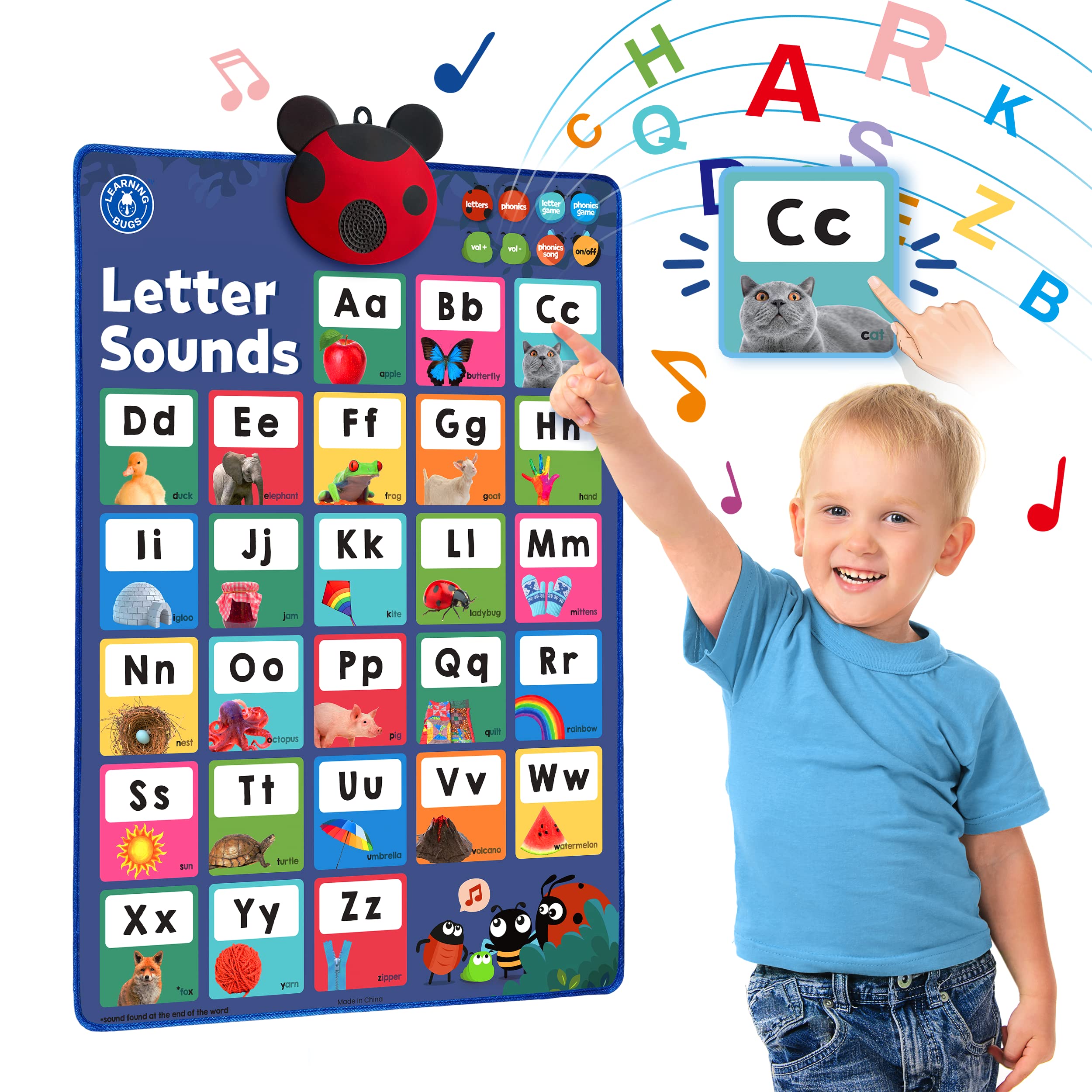
This wall-mounted poster uses interactive audio to teach letter sounds, phonics, and simple words through five distinct modes: letters, phonics, games, phonics songs, and kids songs. The screen-free design is deliberate — kids focus on the voice and the visual letter without animated distractions, which builds better auditory processing and attention span. Measuring 23.4 x 16.5 inches, it hangs easily on a wall or door and takes up zero floor space.
Pressing a letter triggers immediate audio feedback, and the game mode quizzes kids by asking them to find the correct letter sound. This repetition-with-reward structure is exactly what pre-reading brains need. The auto-off feature saves battery life, and the adjustable volume means it won’t drive parents crazy during extended play sessions. It’s rated for ages 3 and up, with a maximum recommended age of 5 years.
The poster is paper-based with a laminated surface, which holds up well to gentle presses but won’t survive rough handling. A few parents mentioned that the game mode questions repeat quickly, so kids may memorize patterns instead of learning sounds. Rotating between modes solves this. For a focused, space-efficient phonics tool, this poster punches above its weight.
Why it’s great
- Screen-free design encourages auditory focus and letter recognition
- Five modes prevent boredom and reinforce learning through variety
- Wall-mounted format saves floor space and requires no cleanup
Good to know
- Paper construction isn’t very durable against aggressive pressing
- Game mode questions can become predictable quickly
5. Qirptey 186 Pcs STEM Building Blocks
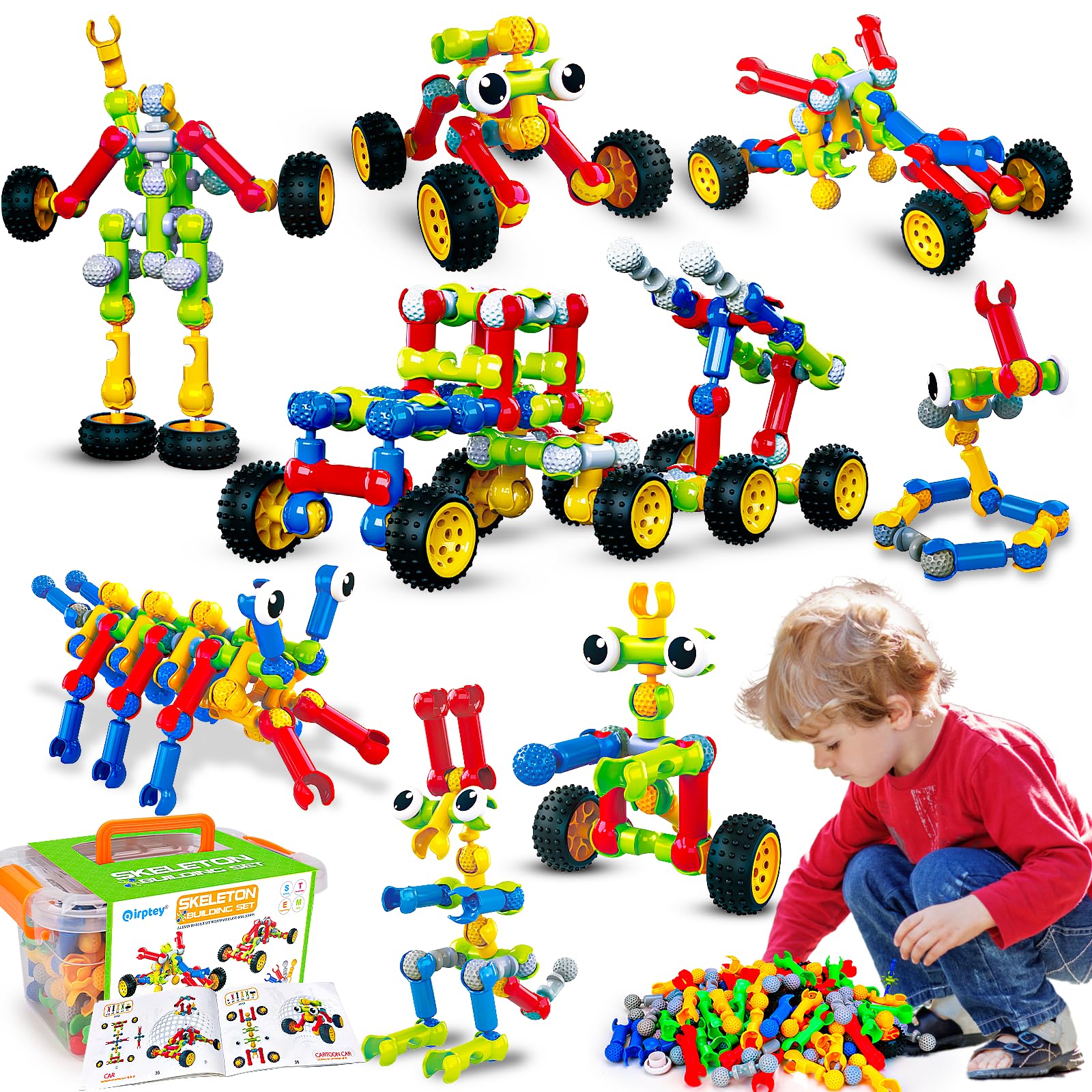
This 186-piece building set bridges the gap between free-form block play and guided STEM learning. The included idea booklet provides step-by-step instructions for building specific models — race cars, robots, trucks, and dinosaurs — which helps kids who need a structured goal before they dive into open-ended creation. The pieces are brightly colored and made from non-toxic, odorless plastic with rounded edges that won’t cut little hands.
The kit is designed for a wide age range (3 to 8+ years), and the instructions scale in difficulty. Younger kids can build simple shapes while older children tackle multi-step assemblies. The pieces are compatible with most standard building block systems, so if you already own blocks at home, you can integrate them immediately. A sturdy storage box is included, which encourages kids to clean up after themselves.
At 186 pieces, this kit is smaller than the Juboury set, so ambitious builders may outgrow it faster. The instructions are printed in a booklet rather than on a fold-out poster, so you’ll need to flip pages during assembly. But for a focused STEM kit that delivers guided projects and free play in one box, this is a solid mid-range choice that works well for classroom settings or family play.
Why it’s great
- Guided instruction booklet teaches model-building skills step by step
- Non-toxic, rounded plastic pieces are safe for younger kids
- Compatible with standard building block systems for expansion
Good to know
- 186-piece count limits large-scale builds
- Booklet-based instructions require page-flipping during assembly
FAQ
What age is best for a 1,054-piece building block set?
Can a phonics poster replace a preschool reading curriculum?
How many hours of play can I expect from a circuit kit?
Is a double-sided easel worth the extra floor space?
Final Thoughts: The Verdict
For most families, the learning toys winner is the Juboury 1054Pcs Building Toy because its huge piece count, 130 unique shapes, and durable ABS plastic support open-ended creativity and spatial reasoning for years. If you want a focused skill-builder for pre-reading, grab the LEARNING BUGS Phonics Poster. And for older kids ready to understand how electricity works, nothing beats the National Geographic Circuit Maker Kit.