Lead doesn’t belong in your glass. Unlike chlorine or sediment, lead is a neurotoxin that accumulates in the body over time, making a filter that targets it a health necessity rather than a taste preference. The category has moved far beyond basic carbon blocks — today’s best options carry third-party certifications like NSF/ANSI Standard 53, which specifically validates lead reduction to below 10 ppb.
I’m Emma — the founder and writer behind Baby Bangs. I’ve spent years analyzing water filtration hardware, comparing certification data, and reading test reports to separate genuine lab-verified performance from marketing fluff.
After comparing certified lead-reduction specs, flow rates, and filter lifespans across seven leading models, the lead filter that delivers the best balance of verified performance and everyday convenience comes down to a clear winner for most households.
How To Choose The Best Lead Filter
Not every water filter removes lead, and not every filter that claims lead removal is certified to do so. The difference comes down to specific certifications, filter media, and the physical design of the system. Here’s what to look for before you buy.
Certification Is Everything — Look for NSF/ANSI 53
Standard 53 is the only widely recognized certification that specifically tests lead reduction to a maximum of 10 parts per billion. A filter without this certification may still reduce some lead, but there’s no third-party verification backing the claim. Always check the certification list, not just the product title.
Filter Lifespan vs. Real-World Water Quality
Manufacturers often advertise filter life in months, but the real metric is gallons. Hard water, high sediment levels, or high initial lead concentrations can shorten a filter’s effective life well before the advertised timeline. Products that include a TDS meter or a clog indicator give you a concrete way to monitor performance instead of guessing.
Installation Type and Flow Rate
Under-sink systems offer the highest flow rate and the most discreet installation but require plumbing tools and space under the cabinet. Faucet-mount filters are easier to install but can slow down your stream significantly. Pitchers require no installation but need frequent refilling and take up counter space. Match the form factor to your kitchen setup and your patience for maintenance.
Quick Comparison
On smaller screens, swipe sideways to see the full table.
| Model | Category | Best For | Key Spec | Amazon |
|---|---|---|---|---|
| Clearly Filtered Pitcher | Pitcher | Broad contaminant coverage | 365+ contaminants targeted | Amazon |
| Aquasana AQ-MF-1 | Under-Sink | Permanent under-sink setup | 78 contaminants, 99% reduction | Amazon |
| AO Smith Claryum | Under-Sink | PFAS and lead combo | PFAS, lead, chlorine reduction | Amazon |
| WINGSOL Faucet Filter | Faucet-Mount | Mineral pH+ water | 99.6% lead, 250 gallons | Amazon |
| Waterdrop ED02B | Electric Pitcher | Rechargeable convenience | 200 gallons, 14 cups | Amazon |
| Waterdrop ED04B-L | Electric Pitcher | Large capacity electric | 200 gallons, 27 cups | Amazon |
| ZeroWater 4-Pack | Replacement Filter | Zero TDS output | 5-stage ion exchange, 15 gallons | Amazon |
In‑Depth Reviews
1. Clearly Filtered Filtered Water Pitcher
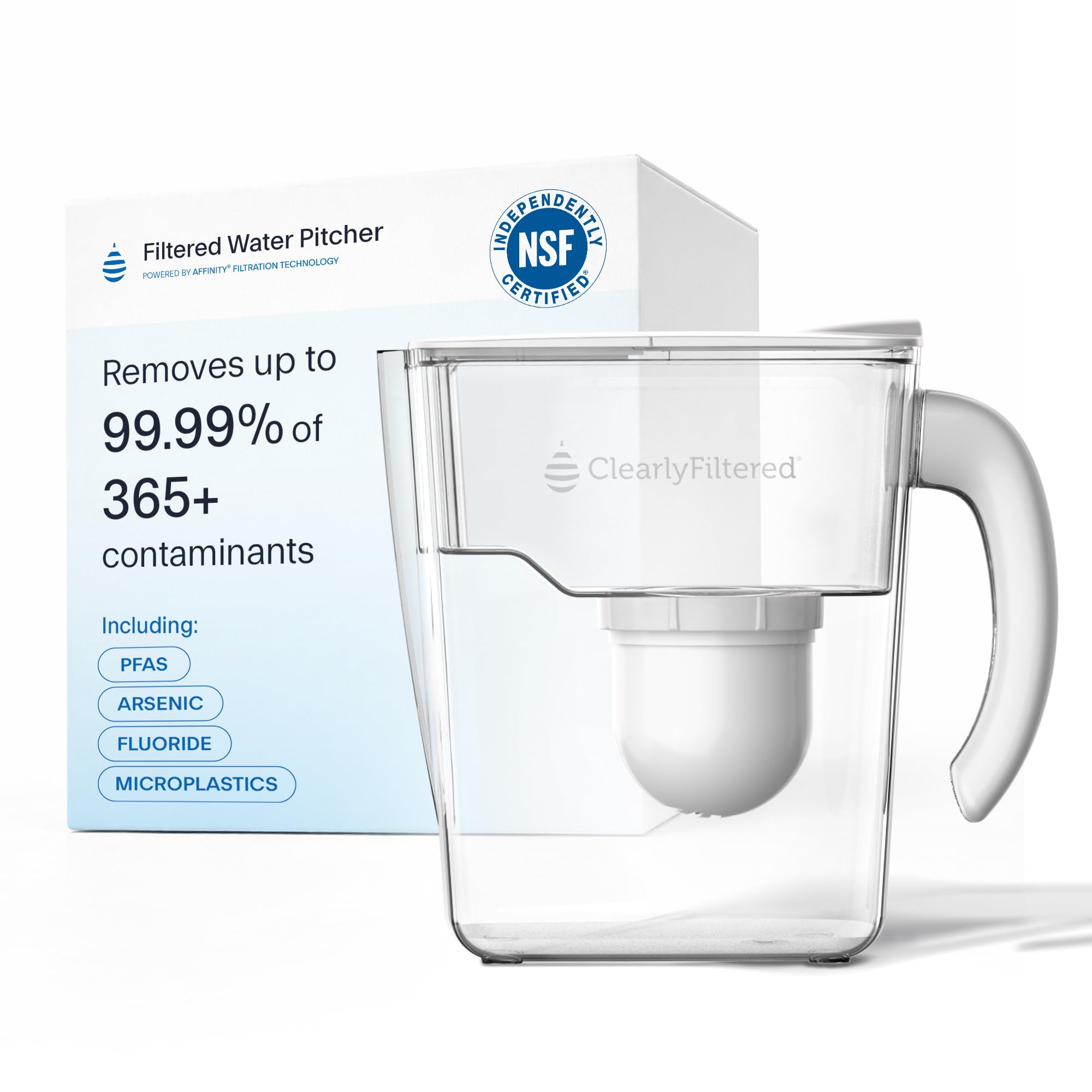
The Clearly Filtered Pitcher targets more than 365 contaminants, including lead, fluoride, PFAS, and microplastics, backed by NSF certifications that cover Standard 53 for lead. Its 80-ounce capacity (10 cups) is practical for daily drinking without hogging counter space, and the BPA/BPS-free construction matches the health-first intent of the purchase.
Unlike many pitcher filters that rely solely on activated carbon, Clearly Filtered uses a multi-layer media bed that includes an ion exchange stage specifically designed for heavy metal reduction. The water flow remains reasonable throughout the filter’s lifespan, so you’re not waiting minutes for a single glass.
The trade-off is the premium price point for both the pitcher and replacement filters. While the initial cost is higher than budget pitcher options, the real-world performance and third-party verification make it the most trustworthy choice for households that want proven lead reduction without an under-sink installation.
Why it’s great
- NSF-certified for lead under Standard 53
- Targets the broadest contaminant range in this review
- Sturdy, BPA-free build with a comfortable handle
Good to know
- Higher upfront and replacement cost than standard pitchers
- 10-cup capacity means more frequent refills for larger families
2. Aquasana Water Filter AQ-MF-1

The Aquasana Claryum Direct Connect installs under your sink without drilling a new hole, using a dedicated faucet that fits most standard countertops. It reduces 99% of 78 contaminants, including lead, chlorine, and mercury, with an NSF certification that covers Standard 53 for lead reduction. The direct-connect design means no messy tubing or saddle valves to tighten.
The filter life is rated at 600 gallons or about 12 months for the average household, which is competitive for an under-sink system in this class. The water flow is noticeably faster than any pitcher on this list, making it ideal for filling large pots or reusable bottles without waiting.
The main drawback is the installation complexity compared to a pitcher or faucet-mount unit. You need basic hand-tool skills and access under the sink. The replacement filters cost less than some premium pitcher replacements per gallon, but the initial setup requires more commitment.
Why it’s great
- NSF 53 certified for lead with 78 contaminant coverage
- Fast flow rate for an under-sink unit
- No drilling or complex plumbing required
Good to know
- Requires under-sink space and basic installation effort
- Dedicated faucet may not match all sink aesthetics
3. AO Smith Claryum Under Sink Water Filter

The AO Smith Claryum AO-US-200 is a two-stage under-counter system that targets PFAS (PFOA/PFOS), lead, and chlorine in a compact housing that fits most kitchen cabinets. The first stage uses a sediment pre-filter to extend the life of the main carbon block, which carries NSF certification for lead reduction under Standard 53.
What sets this unit apart is its focus on PFAS alongside lead — a combination that’s increasingly relevant as concerns about forever chemicals in municipal water grow. The installation uses standard 3/8-inch compression fittings, and the filter change takes under a minute once the unit is mounted.
The 2-stage design means replacement filters are slightly more expensive than single-stage units, and the housing is bulkier than some competing under-sink models. But for households that want verified lead reduction plus PFAS removal in a single system, this is the most targeted option available at a mid-premium price point.
Why it’s great
- Specifically designed for both lead and PFAS reduction
- Compact under-sink housing fits small cabinets
- Tool-free filter replacement after initial mount
Good to know
- Two-stage filters cost more per replacement
- Installation requires some plumbing know-how
4. WINGSOL Stainless Steel Faucet Water Filter
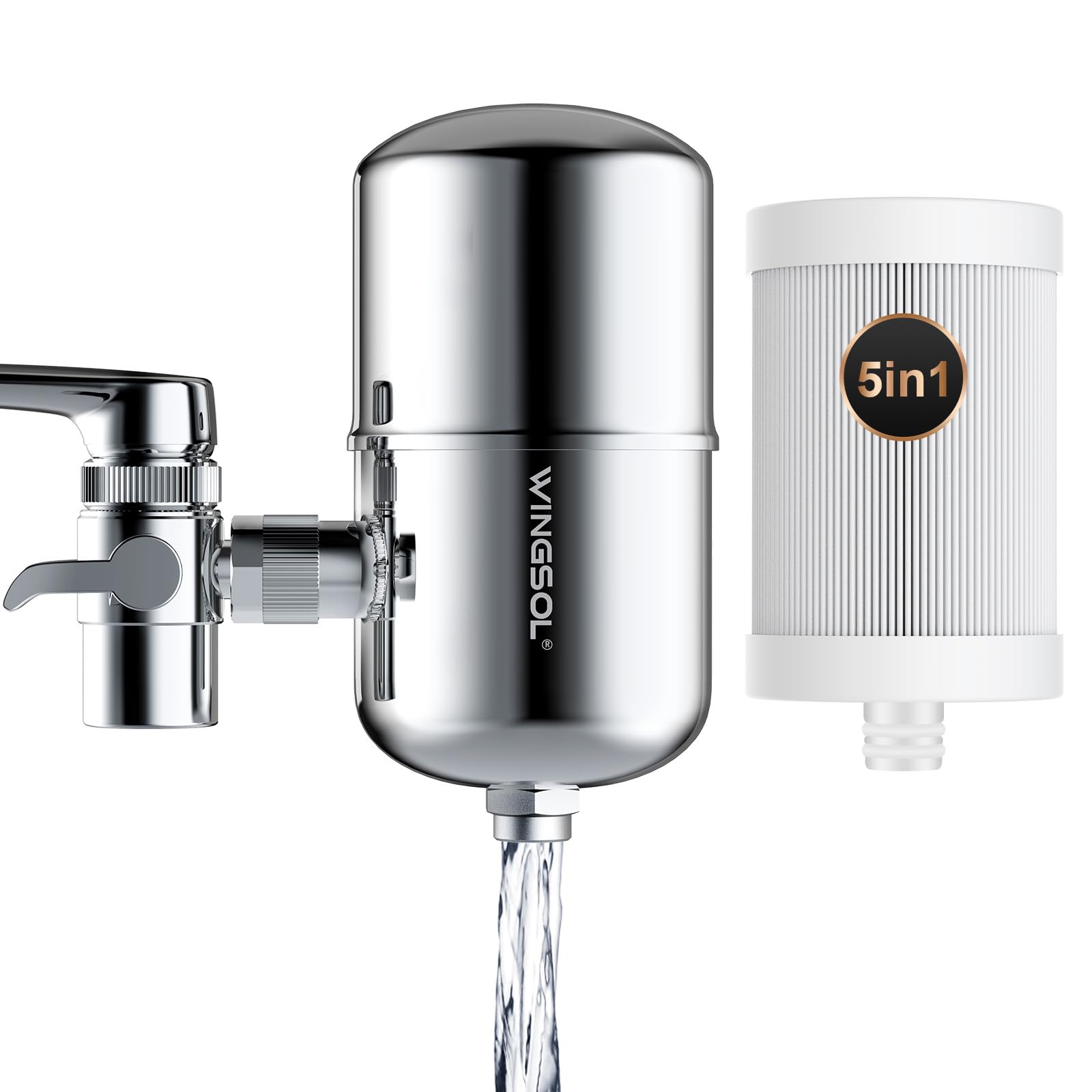
The WINGSOL faucet-mount filter claims a 99.6% lead reduction rate with NSF/ANSI 42 and 53 certifications, housed in a stainless steel body that feels more robust than the plastic alternatives in this category. The 360-degree rotating head lets you swivel the filtered stream or switch back to unfiltered water for washing dishes.
A secondary feature that sets it apart is the mineral pH+ stage, which raises the pH of filtered water slightly. While this doesn’t affect lead removal performance, it appeals to buyers who want slightly alkaline water without buying a separate system. The filter lifespan is rated at 250 gallons, which is reasonable for a faucet-mount unit.
The main practical concern is compatibility with specific faucet thread sizes — while most standard faucets work, some pull-down or touchless models may not accept the adapter. Also, the 360-degree swivel adds height, so check clearance between your faucet and upper cabinets.
Why it’s great
- Stainless steel housing is more durable than plastic mounts
- NSF 53 certified lead reduction with mineral pH+ benefit
- Easy switching between filtered and unfiltered water
Good to know
- Faucet thread compatibility can be hit or miss
- Added height may not fit under low cabinets
5. Waterdrop ED02B Compact Electric Water Filter Pitcher

The Waterdrop ED02B breaks from the passive pitcher mold by using a rechargeable electric pump to push water through its filter faster than gravity-fed models. It holds 14 cups and is rated for 200 gallons of filtration per filter, with NSF/ANSI certifications covering Standards 42, 53, 401, and 372 for lead, chlorine, and PFOA/PFOS reduction.
The electric boost means you can fill a standard glass in seconds compared to the minutes-long wait of conventional pitchers. The compact footprint takes up less counter space than a traditional 14-cup pitcher, and the rechargeable battery lasts through roughly two full tanks before needing a charge. The unit does not reduce TDS, so dissolved solids remain in the water.
The electric motor adds complexity — there’s an internal pump that could fail, and you need to keep the battery charged. If the unit dies mid-pitcher, you’re left with water that hasn’t been fully filtered. It’s best suited for someone who values speed over simplicity and doesn’t mind a small maintenance routine.
Why it’s great
- Fast electric dispensing eliminates gravity-fed wait times
- NSF 53 certified for lead reduction
- Compact design saves counter space
Good to know
- Requires occasional battery charging and pump maintenance
- Does not reduce TDS (total dissolved solids)
6. Waterdrop ED04B-L Mega Electric Water Filter Dispenser
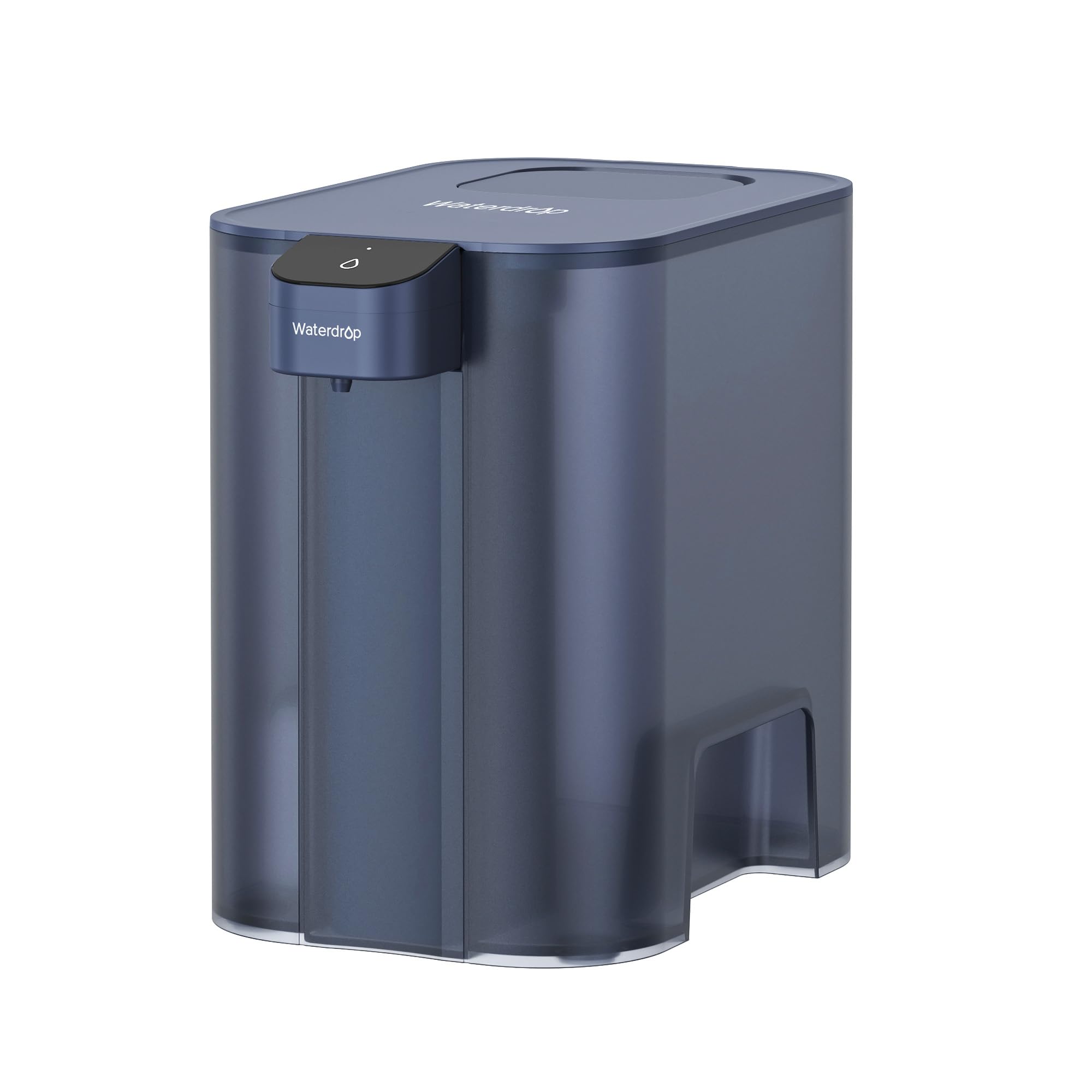
The ED04B-L is the larger sibling of the ED02B, holding 27 cups (over 200 ounces) while using the same rechargeable electric dispensing mechanism and NSF certifications for lead, chlorine, and PFOA/PFOS. The 200-gallon filter life matches the compact version, but the bigger tank means fewer refills for households that drink more water throughout the day.
The electric pump works identically to the ED02B, providing fast flow without waiting for gravity to pull water through the filter. The larger footprint takes up more counter space, but the capacity is closer to a small water cooler than a standard pitcher. The NSF/ANSI 53 certification gives confidence in lead reduction, though again, TDS remains unchanged.
The same electric pump risks apply — battery life management and potential motor failure. The larger tank also means more weight when full, so the base needs a stable surface. For families or households that drink a lot of filtered water and dislike the slow drip of conventional pitchers, the ED04B-L trades simplicity for speed and volume.
Why it’s great
- Massive 27-cup capacity suits larger households
- Electric pump dispenses filtered water quickly
- NSF certified for lead and PFAS reduction
Good to know
- Takes up more counter space than standard pitchers
- Electric pump adds maintenance and potential failure points
7. ZeroWater Official Replacement Filter 4-Pack

ZeroWater’s replacement filters use a five-stage ion exchange system that pulls virtually all dissolved solids (TDS) from water, resulting in a 0 TDS reading when used with a compatible ZeroWater pitcher. The IAPMO certification verifies reduction of lead, chromium, mercury, and PFOA/PFOS, making it one of the few pitcher-style filters that goes beyond basic carbon adsorption for heavy metals.
Each filter is rated for approximately 15 gallons, which is less than many competing filters — but the trade-off is the purity level. The included TDS meter allows you to test the water and know exactly when the filter is exhausted (change at 006 ppm). The 4-pack provides a four-filter supply for roughly 60 gallons of filtered water.
The main limitation is compatibility — these filters only work with ZeroWater systems and not the newer Culligan ZeroWater models. The frequent filter changes (about every 2-3 weeks for average use) mean ongoing cost and more waste compared to longer-lasting options. For those who prioritize absolute water purity and don’t mind the replacement cycle, this is a proven solution.
Why it’s great
- Ion exchange reduces lead and other heavy metals effectively
- Includes TDS meter to monitor filter life
- IAPMO certified for multiple contaminants
Good to know
- Short 15-gallon filter life requires frequent replacements
- Only compatible with ZeroWater pitchers (not Culligan)
FAQ
Will a standard carbon filter remove lead from my tap water?
How do I know if my tap water actually contains lead?
Do under-sink filters work better than pitcher filters for lead?
Final Thoughts: The Verdict
For most users, the lead filter winner is the Clearly Filtered Pitcher because it combines NSF certification for lead reduction with the broadest contaminant coverage in a no-install package. If you want a permanent under-sink solution that also targets PFAS, grab the AO Smith Claryum. And for fast dispensing without the gravity-fed wait, nothing beats the Waterdrop ED02B.