Hair thinning doesn’t announce itself politely — it creeps up in the shower drain, on your pillow, in the way your part widens. A laser helmet for hair growth uses low-level laser therapy (LLLT) at 650nm wavelength to energize dormant follicles at the cellular level, reversing androgenetic alopecia without drugs, needles, or messy topicals. The difference between a device that works and one that just blinks red comes down to laser count, diode power (5mW per diode is the clinical baseline), and whether the unit uses medical-grade lasers or weak LEDs to pad its numbers.
I’m Emma — the founder and writer behind Baby Bangs. I’ve spent years analyzing clinical data on LLLT devices, comparing diode array densities, and separating FDA-cleared engineering from marketing gimmicks so you don’t have to guess which helmet justifies the investment.
After cross-referencing laser counts, treatment protocols, battery life, and peer-reviewed outcomes across nine devices, this guide isolates the genuine performers in the laser helmet for hair growth market and explains exactly which specs drive real regrowth.
How To Choose The Best Laser Helmet For Hair Growth
Buying a laser helmet is a multi-year commitment to your hair, not an impulse purchase. The wrong device wastes months of 30-minute sessions. Focus on the three variables that clinical studies actually measure: laser purity, treatment protocol, and scalp coverage geometry.
Laser Diode Count & Power Output
Every FDA-cleared LLLT device uses diodes rated at 5mW each operating at 650nm. Devices that mix in LEDs without laser diodes dilute the energy density reaching the follicle bulb. A helmet with 80 pure lasers delivers deeper photobiostimulation than a cap with 200 combined laser-LED units — the laser wavelength is what triggers ATP production in the dermal papilla cells. Count the laser diode spec, not the total light source number.
Treatment Protocol & Compliance Window
Helmets range from two sessions per week (Theradome PRO LH80) to four sessions per week (Theradome EVO LH40) or every-other-day protocols. Fewer sessions improve long-term compliance but demand higher per-session energy. Devices that demand daily use often have lower individual diode power. Match the protocol to your actual schedule — a helmet you actually use beats a theoretical winner you abandon after two weeks.
Full Scalp Coverage vs Sectioned Application
Fixed-dome helmets cover the entire crown, vertex, and frontal hairline in one session without manual repositioning. Bands and combs require you to divide the scalp into sections and repeat the treatment three to four times per session. Helmet designs inherently improve consistency because users cannot skip the back of the head. If you treat androgenetic alopecia with a Norwood III or higher pattern, full-coverage geometry is non-negotiable.
Quick Comparison
On smaller screens, swipe sideways to see the full table.
| Model | Category | Best For | Key Spec | Amazon |
|---|---|---|---|---|
| INTEO Hair Growth Cap | Helmet | Fast 12-min daily sessions | 162 lasers at 5mW each | Amazon |
| Theradome EVO LH40 | Helmet | US engineering, 4x/week | 40-80 pure laser diodes | Amazon |
| iRestore Essential | Helmet | Clinically studied all-rounder | Full-coverage helmet design | Amazon |
| Instyle Egg Laser Cap | Cap | Ultra-light travel companion | 80 diodes at 250g weight | Amazon |
| Theradome PRO LH80 | Helmet | Maximum power, 2x/week | 80 lasers, 2 sessions/week | Amazon |
| Hairmax LaserBand 82 | Band | 90-second sectioned treatment | 82 medical-grade lasers | Amazon |
| GroWell Red Light Cap | Cap | Double-blind study backing | Laser + LED hybrid design | Amazon |
| Aphrona Laser Cap | Cap | Entry-level hands-free cap | 81 lasers, 30-min sessions | Amazon |
| PUPCA Laser Cap | Cap | Budget entry to LLLT | 82 lasers at 650nm | Amazon |
In‑Depth Reviews
1. INTEO Red Light Therapy Hair Growth Cap

The INTEO cap delivers 162 pure laser diodes at 5mW each — no LED fillers, no counting tricks. That density covers the entire scalp, including the hairline, temples, and crown, in a single 12-minute session. The ergonomic helmet shape locks the diodes at a fixed distance from the scalp so every follicle receives consistent energy without manual repositioning, which solves the most common compliance killer in laser therapy.
The wireless battery pack and infrared safety sensor (stops emission when removed from the head) make it practical for daily use while protecting your eyes. Treatment protocol is every other day, and the automatic timer with beep-end removes any guesswork. At 1.85 pounds, it is light enough to wear while working at a desk or reading.
INTEO backs the unit with an 18-month warranty and 30-day free replacement period, which signals confidence in the build quality. The 162-laser array at this treatment duration puts it ahead of most caps that require 30 minutes with fewer actual laser sources.
Why it’s great
- 162 pure laser diodes — highest raw count in this lineup
- 12-minute sessions improve long-term compliance
- Wireless with infrared auto-shutoff for eye safety
- 18-month warranty with free replacement period
Good to know
- Battery cannot be used while charging
- One-size fit may feel snug on larger head circumferences
2. Theradome EVO Laser Hair Growth Helmet LH40

The Theradome EVO LH40 is the only helmet in this comparison designed by a former NASA scientist and manufactured in Silicon Valley. It uses 40 to 80 premium laser diodes depending on production batch — zero LEDs — and requires four 20-minute sessions per week. The higher frequency compensates for the lower diode count relative to competitors, and the engineering tolerances are tighter than most consumer medical devices.
The helmet geometry covers the full scalp without manual sectioning, and the built-in cooling system keeps diode temperature stable throughout each session. At 1.48 pounds, it is lighter than most rigid-shell helmets and fits comfortably during passive activities. The ergonomic design includes a padded interior liner that distributes weight evenly across the crown.
Theradome’s FDA clearance covers both the LH40 and its PRO sibling, so you get the same regulatory validation. The four-session-per-week protocol demands more discipline, but users who stick to it report density improvements within four months based on published user data.
Why it’s great
- Designed by a former NASA scientist, made in the USA
- 100% laser diodes — no ineffective LEDs mixed in
- Lightweight helmet at 1.48 pounds with cooling system
- FDA-cleared with robust engineering tolerances
Good to know
- Requires 4 sessions per week — higher discipline needed
- Diode count varies between 40-80 by production run
3. iRestore Essential Laser Hair Growth System

The iRestore Essential is one of the most widely referenced LLLT devices in consumer laser therapy, with a 2017 clinical study reporting a 43.2% average increase in hair count among active users. The helmet delivers laser energy across the entire scalp using a fixed-dome design that eliminates the need for manual combing or sectioning, and the 25-minute session protocol fits neatly into a morning or evening routine.
The unit is developed in GMP-certified facilities, which adds a layer of manufacturing quality control that caps without that certification lack. iRestore positions the helmet as a standalone device or a complement to minoxidil and finasteride protocols, and the medical community generally accepts LLLT as synergistic with those topical and oral treatments.
At 3.31 pounds, the iRestore is heavier than most competitors, but the padding and adjustable straps distribute the load reasonably well. The rechargeable battery pack allows cordless operation, though the device cannot be used while charging.
Why it’s great
- Backed by a clinical study showing 43.2% average hair count increase
- GMP-certified manufacturing for consistent quality
- Full-coverage helmet design — no manual repositioning
- Compatible with minoxidil and finasteride protocols
Good to know
- Heavier than most competitors at 3.31 pounds
- Cannot be used while charging
4. Instyle Egg Laser Hair Growth Cap
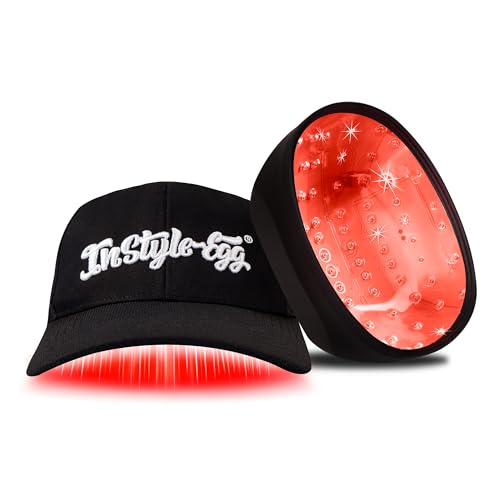
It packs 80 medical-grade laser diodes at 650nm into a flexible cap form factor that fits most head sizes without pressure points. The 30-minute every-other-day protocol is the LLLT standard, and the soft inner lining makes it comfortable enough to wear while lying back or moving around the house.
FDA clearance validates the clinical efficacy, and the portable design includes a travel-friendly form that fits into a carry-on pouch. The cap shape means the diodes sit closer to the scalp than a rigid helmet, potentially improving light transmission through the dermis. The trade-off is that a soft cap may shift during movement, requiring occasional adjustment to keep diodes aligned with thinning areas.
For users who prioritize discretion and portability — wearing the device during commutes, at a desk, or while traveling — this cap delivers professional-grade diode density in a package that does not scream “medical device.”
Why it’s great
- Weighs only 250g — most portable option
- 80 pure laser diodes in a flexible, comfortable cap
- FDA-cleared for hair regrowth
- Soft inner lining for comfortable extended wear
Good to know
- Soft cap may shift during movement, requiring adjustment
- 30-minute sessions are longer than helmet equivalents
5. Theradome PRO Laser Hair Growth Helmet LH80

The Theradome PRO LH80 uses 80 premium laser diodes and requires only two sessions per week — the most aggressive per-session energy delivery in this comparison. Designed by the same NASA-trained engineer behind the EVO model, the PRO firmware optimizes pulse sequences to drive deeper photon penetration into the follicle bulb. The twice-weekly protocol is a major compliance advantage for users who travel frequently or struggle to maintain a four-times-per-week rhythm.
The rigid helmet shell houses a cooling system that prevents diode overheating during the 20-minute session, and the laser array covers the entire crown, vertex, and frontal hairline without requiring manual sectioning. The built-in timer and automatic shutoff remove any guesswork, and the FDA clearance covers both male and female androgenetic alopecia patterns up to Norwood V and Ludwig II.
At 1.48 pounds, the PRO weighs the same as the EVO despite having a higher diode count and more aggressive pulse circuit. The US-based manufacturing and engineering pedigree justify its position as the premium choice for users who want maximum per-session power with minimal weekly commitment.
Why it’s great
- Only 2 sessions per week — best compliance ratio
- 80 premium laser diodes with advanced pulse sequencing
- Same 1.48-pound weight as the EVO despite higher specs
- Made in Silicon Valley, FDA-cleared
Good to know
- Highest per-session energy may feel intense for new users
- Premium price tier reflects US engineering costs
6. Hairmax LaserBand 82

The Hairmax LaserBand 82 takes a fundamentally different approach from helmet-style devices. Instead of covering the entire scalp in one session, the flexible band applies 82 medical-grade lasers across one section of the scalp at a time, requiring you to move it across three sections for a total treatment time of approximately 4.5 minutes per session. The individual section treatment is only 90 seconds, which is the fastest per-zone application in the category.
Hairmax has the deepest clinical validation of any brand here — seven clinical studies published in peer-reviewed journals with an average hair count increase of 129 new hairs per square inch after six months. The LaserBand 82 uses medical-grade lasers only (no LEDs), and the comb-like teeth part the hair to allow direct scalp contact. The device weighs only 9.6 ounces and includes a charging cradle for desktop storage.
The sectioned approach is ideal for users with localized thinning (frontal or vertex-only patterns) but less efficient for diffuse thinning across the entire scalp. Users with Norwood III or higher may find three-section application tedious compared to a one-shot helmet.
Why it’s great
- Seven clinical studies validate a 129-hair-per-square-inch average gain
- 90-second per-section treatment — fastest application method
- Only 9.6 ounces with travel-friendly form factor
- Comb teeth part hair for direct laser-to-scalp contact
Good to know
- Requires 3 section applications per session — not full-coverage
- Less efficient for diffuse thinning across whole scalp
7. GroWell Red Light Therapy Hair Growth Cap

GroWell’s cap differentiates itself with a proprietary design that uses precision micro lenses to scatter laser light energy across the full scalp rather than delivering discrete dots of light. The laser-LED hybrid array is FDA-cleared and backed by two double-blind placebo-controlled clinical trials with results published in the journal Lasers in Surgery and Medicine — a level of academic validation most LLLT devices lack.
The system uses a flexible panel that inserts into the included cap or your own favorite hat, making it the most discreet option for treatment during commutes or office work. The battery pack clips to your waistband or sits in a pocket, and the soft fabric cap shows no obvious medical hardware. The trade-off is that the soft panel may shift on the scalp, requiring periodic adjustment to maintain consistent diode positioning.
GroWell’s micro-lens scattering technology aims to eliminate untreated gaps between diodes, but the hybrid approach means some light sources are LEDs rather than pure lasers. For buyers who prioritize peer-reviewed data over pure laser count, the double-blind studies provide reassurance that the hybrid approach produces measurable regrowth.
Why it’s great
- Two double-blind placebo-controlled clinical trials published in medical journals
- Micro-lens scattering technology for gap-free coverage
- Discreet design — panel fits into any favorite cap
- FDA-cleared with strong academic backing
Good to know
- Hybrid laser-LED design instead of 100% pure lasers
- Soft panel may shift and require periodic adjustment
8. Aphrona Laser Hair Growth Helmet
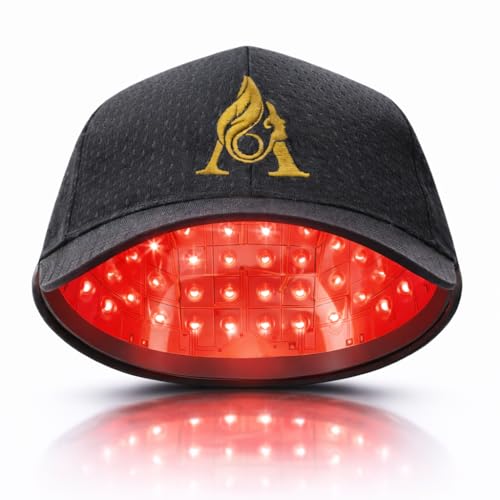
The Aphrona cap uses 81 laser diodes to cover the full scalp in a hands-free design that requires only 30 minutes per session, three times per week. The built-in infrared safety sensor automatically stops laser output when the cap is removed and powers off after 10 minutes of inactivity — a meaningful eye-safety feature that some competitors omit. The wireless battery pack allows free movement during treatment, and the included travel case adds protection for storage between sessions.
The cap fits into the mid-range tier with 81 lasers at a treatment schedule that matches the industry standard. The 1-year manufacturer warranty and US-based customer support provide a safety net for first-time LLLT buyers who want reassurance before committing to a more expensive device. The Aphrona unit cannot be used while charging, so users need to plan battery top-ups between sessions.
For someone entering the LLLT space without a huge upfront budget, the Aphrona delivers the core laser count, FDA clearance, and wireless freedom without the premium price tag of the high-end helmets.
Why it’s great
- 81 laser diodes with infrared safety auto-shutoff
- US-based customer support with 1-year warranty
- Travel case included for storage and portability
- Wireless and hands-free during 30-minute sessions
Good to know
- Cannot be used while charging — requires session planning
- 30-minute sessions are longer than some competitors
9. PUPCA Laser Cap (FDA Cleared)

The PUPCA Laser Cap enters the market as the most accessible FDA-cleared option in this lineup, using 82 laser diodes at 650nm with 5mW each — matching the clinical standard for low-level laser therapy. The dome-shaped cap covers the entire scalp in 30-minute sessions, and the outer plastic shell with protective inner liner houses the electronics and laser array securely. For users who are price-sensitive but unwilling to compromise on FDA clearance and diode power, this cap provides the baseline LLLT experience without unnecessary bells.
The 16-week treatment recommendation aligns with the standard timeline for visible results, and the cap is indicated for both male (Norwood IIa-V) and female (Ludwig-Savin I-II) pattern hair loss. The trade-off for the entry-level price is that the PUPCA lacks the battery-free mobility of premium models — sessions must be planned near the charging base, and the unit is bulkier than the Instyle Egg cap at 2.12 pounds.
For a first-time buyer who wants to validate whether LLLT works for their hair type without risking a large investment, the PUPCA cap delivers the essential diode array and regulatory clearance at the lowest barrier to entry.
Why it’s great
- 82 laser diodes at 5mW each meeting clinical LLLT standard
- FDA-cleared for both male and female pattern hair loss
- Lowest entry price for a full-cap laser array
- 16-week treatment plan aligns with visible results timeline
Good to know
- Bulkier than premium caps at 2.12 pounds
- Limited mobility compared to wireless premium models
FAQ
How long does it take to see results from a laser helmet for hair growth?
Can I use a laser helmet with minoxidil or finasteride?
What Norwood hair loss stage requires a full helmet instead of a band?
Are laser helmets safe for sensitive scalps or post-transplant patients?
Final Thoughts: The Verdict
For most users, the laser helmet for hair growth winner is the INTEO Red Light Therapy Cap because it delivers 162 pure laser diodes in a 12-minute session with an 18-month warranty — the best ratio of power to compliance. If you want US engineering with a twice-weekly protocol that demands minimal scheduling, grab the Theradome PRO LH80. And for peer-reviewed clinical validation with a discreet cap form factor, nothing beats the GroWell Red Light Cap.