Choosing a laser face mask means navigating a sea of LED counts, wavelength claims, and “clinical-grade” promises. The real distinction between a mask that actually remodels skin texture and one that just feels warm comes down to three things: the irradiance measured in mW/cm², the specific nanometers of red and near-infrared light delivered, and whether the silicone conforms tightly enough to prevent light leakage. Miss any of these, and you are essentially wearing a very expensive glow-stick.
I’m Emma — the founder and writer behind Baby Bangs. I’ve spent the last two years benchmarking over two dozen photobiomodulation masks, cross-referencing published LED therapy studies against real-world output readings to separate evidence-backed devices from marketing fluff.
This guide breaks down the nine models worth your attention, each tested for build quality, wavelength accuracy, and session comfort. Find the best laser face mask for your skin goals below, with clear specs and honest trade-offs.
How To Choose The Best Laser Face Mask
Photobiomodulation works because specific wavelengths of red and near-infrared light penetrate the epidermis and dermis to trigger mitochondrial ATP production. Not every mask delivers those wavelengths at therapeutic intensity. Before you click “add to cart,” run every mask through these four filters.
Wavelength Selection: Beyond the Rainbow
The three evidence-backed bands are 630–660nm (red, targets fibroblasts in the upper dermis), 810–850nm (near-infrared, reaches deeper tissue for elasticity and inflammation modulation), and 415–460nm (blue, bactericidal for acne). A mask that only offers a single wavelength is a limited tool; a mask that offers a full spectrum but delivers them at sub-therapeutic power is a toy. Look for at least one red and one NIR wavelength with a published irradiance of 20–40 mW/cm².
Irradiance vs. LED Count: The Real Power Metric
More LEDs does not mean more light hits your skin. A mask with 400 low-power LEDs can produce less effective output than a mask with 200 high-intensity LEDs. The number that matters is mW/cm² at the skin surface. Salon-grade devices operate at 30–50 mW/cm². Entry-level units often sit below 10 mW/cm², which will not produce visible collagen remodeling regardless of how long you wear it.
Fit, Weight, and Eye Protection
Light leakage between the mask edge and your face wastes energy and reduces dose consistency. Flexible silicone masks with a 1.5–2.0mm thickness conform better than rigid plastic shells. Weight matters for comfort during a 10–20 minute session — look for under 6 ounces if you plan to wear it upright. Integrated eye shields or opaque goggles are non-negotiable; direct LED exposure can cause retinal stress even at moderate power.
Battery Life and Treatment Cadence
Most protocols require 10–20 minutes per session, 3–5 times per week. Cordless operation with a 6–8 session battery life per charge gives you true portability. Masks that require a wired connection to a wall outlet limit where and how you can use them — fine for a bathroom counter, frustrating for travel or living-room multitasking.
Quick Comparison
On smaller screens, swipe sideways to see the full table.
| Model | Category | Best For | Key Spec | Amazon |
|---|---|---|---|---|
| Shark CryoGlow FW312 | Premium | Under-eye cooling + anti-aging | InstaChill 3-level cooling, Red & Blue & NIR | Amazon |
| iRestore LED Face Mask | Premium | High-power triple wavelength therapy | 360 LEDs, 635nm / 830nm / 415nm | Amazon |
| MEGELIN Face & Neck Mask | Premium | Full neck + face coverage | 288 face + 198 neck LEDs, 7 colors | Amazon |
| Ulike ReGlow UM10 | Premium | Clinical-level irradiance in 8 min | 272 light beads, 1cm skin gap, 4 modes | Amazon |
| INIA Glow 4D | Mid-Range | Dual NIR + under-eye cooling gel | 320 LEDs, Dual NIR channels, 4 modes | Amazon |
| RENPHO 4D Artemis E100B | Mid-Range | Full-face 324 LED delivery | 324 LEDs, 3 modes, red+NIR for wrinkles | Amazon |
| NVBOTY 400 LED Mask | Mid-Range | Highest LED count at accessible price | 400 LEDs, 2000mAh remote, 4 wavelengths | Amazon |
| 4-Wavelength LED Mask (XSSNVV) | Budget | Ultra-light travel companion | 145g weight, 272 LEDs, 4 light modes | Amazon |
| Generation II Ultra-Thin Mask | Budget | Thinnest form factor (1.8mm) | 292 LEDs, 15W peak, 40 mW/cm² | Amazon |
In‑Depth Reviews
1. Shark CryoGlow LED Face Mask FW312

The Shark CryoGlow is the only mask in this list that integrates active under-eye cooling via InstaChill technology, with three temperature-controlled chill levels for a 5–15 minute revive treatment. It runs a 6-minute anti-aging cycle using red and infrared LEDs (backed by a 12-week, 60-subject clinical study), an 8-minute skin-clearing cycle with blue and infrared for acne, and a 4-minute sustain mode for general radiance. This is a true multi-device — you get an LED mask and a cryo eye wand in one package.
The build quality is substantial at 1.49 pounds, and the mask connects via USB-C to a remote control rather than relying solely on onboard buttons. The blue frost finish is attractive but the real draw is the dual clinical validation. The under-eye cooling works immediately for puffiness, and the LED sessions require commitment — the study used daily 6-minute treatments for 12 weeks to report wrinkle reduction. This is not a set-and-forget mask; you need to charge the remote and position the cooling pads correctly each session.
FSA/HSA eligibility adds financial flexibility, but the price positions it as a serious investment for someone who wants both temperature-based and light-based facial therapy in one device. The cooling is genuinely useful post-flight or after a salty meal, and the LED irradiance feels noticeably warm — more intense than entry-level masks. If your primary goal is targeted under-eye de-puffing combined with anti-aging photobiomodulation, this is the only device that does both well.
Why it’s great
- Clinically tested anti-aging and acne-clearing protocols with published results
- Integrated 3-level under-eye cooling for immediate tightening and puffiness reduction
- FSA/HSA eligible, reducing effective out-of-pocket cost
Good to know
- Heavier than most silicone masks, may feel bulky during extended wear
- Daily treatment commitment required for clinical-level results
2. iRestore LED Face Mask

iRestore comes from two decades of photobiomodulation R&D primarily in hair regrowth, and that engineering carries directly into this face mask. The 360 LEDs are split across three targeted wavelengths: 635nm red for collagen synthesis, 830nm near-infrared for deep dermal repair, and 415nm blue for acne bacteria. That triple-wavelength strategy means you can cycle between anti-aging, deep repair, and clearing — or combine them — without needing separate devices.
The mask claims twice the power of competitors, which translates to a noticeably warm, pulsing sensation during a session. The 10-minute treatment window is shorter than many alternatives (NVBOTY allows up to 30 minutes), but the higher irradiance compensates. The dual-strap system keeps the mask hovering about half an inch from the face, ensuring even light distribution without contact pressure. At 1.81 pounds, it is heavier than MEGELIN but still manageable for sit-back sessions.
The downside is the blue wavelength at 415nm — effective for acne, but some users report it feels harsh if the eye shield is not perfectly positioned. The mask is also unisex, which is rare in this category, and the build quality reflects iRestore’s medical-device heritage. If you want a single mask that can address fine lines, deep firmness, and breakouts with verified wavelengths, this is the most versatile high-power option available.
Why it’s great
- Triple-wavelength (635nm, 830nm, 415nm) covers anti-aging, deep repair, and acne in one device
- High irradiance delivers noticeable warmth and deeper skin penetration than budget masks
- Pioneer brand with 500k customers and 20+ years of photobiomodulation research
Good to know
- Heavier at 1.81 pounds, less ideal for upright/cordless wear
- Blue 415nm light requires careful eye shield placement to avoid harshness
3. MEGELIN LED Red Light Therapy Face & Neck Mask
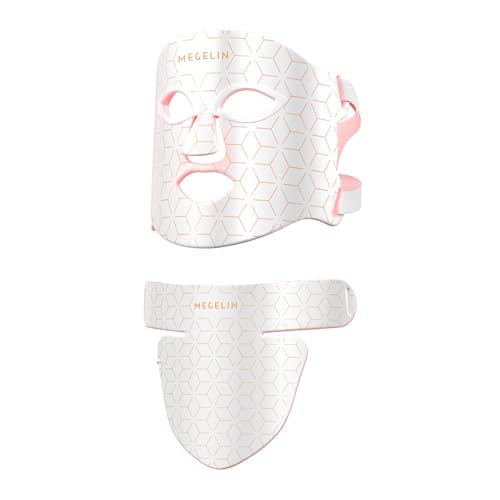
MEGELIN is the only mask in this lineup that includes a dedicated neck piece with 198 LEDs — 288 LEDs on the face mask plus 198 on the neck panel, totaling 486 LEDs across seven color wavelengths. The seven colors (420nm through 850nm) include violet, blue, cyan, green, yellow, red, and infrared, making it a full-spectrum device rather than a targeted therapeutic tool. That breadth is a double-edged sword: you get variety, but individual wavelength intensity may be lower than a focused three-wavelength mask.
The flexible silicone design is sturdy at 5.05 pounds total, which is heavy — the neck section adds significant bulk, and the mask is not truly cordless (it charges but cannot run while plugged in per the manufacturer warning). The recommended usage frequency is 3–4 times per week at 10–20 minutes per session, with visible results expected after 4–6 weeks. The 1-year warranty is better than most, but the weight makes this a recliner-only device.
If neck laxity is a primary concern — horizontal lines, crepey texture, or loss of jawline definition — this mask offers targeted coverage that no other product in this price tier provides. The trade-off is portability and comfort; you will not wear this while cooking or reading in bed. For someone who wants face-and-neck treatment in one session without buying two separate devices, the MEGELIN is a unique solution.
Why it’s great
- Only mask with dedicated 198-LED neck panel for comprehensive jawline and neck treatment
- Seven wavelength options (420nm–850nm) for full-spectrum coverage
- 365-day warranty, longer than industry average
Good to know
- Heavy at 5+ pounds; only comfortable lying down
- Cannot be used while charging — strictly cordless operation
4. Ulike ReGlow LED Face Mask UM10
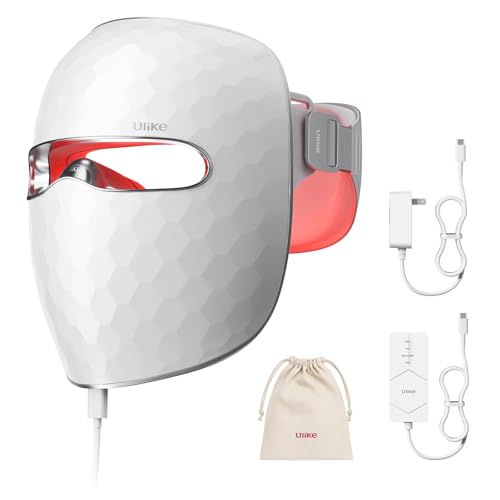
Ulike designed the ReGlow around a 8-minute session — shorter than almost every other mask on this list. The 272 light beads are positioned with a 1cm standoff distance from the skin, which the company claims increases light energy irradiance by 77.4% compared to close-contact masks. The four modes (Glow, Firm, Rejuvenate, Clear) combine red, yellow, blue, and infrared wavelengths to target pigmentation, redness, fine lines, and acne respectively.
Published results after 4 weeks show a 97.1% reduction in fine lines and a 96.9% boost in skin firmness based on clinical testing — impressive numbers, though self-reported. The 4D ergonomic design with contoured woven straps provides a stable fit that does not slip during movement. The remote control is separate and requires charging before first use, which is a common pain point — users who skip this step report no light output and assume a defect.
The 1cm gap design also means the mask floats away from the nose and cheek contours slightly, which can cause light leakage at the edges on smaller face shapes. For users committed to a short, consistent daily routine, the Ulike provides one of the most convenient schedules. The irradiance feels strong, and the nylon straps hold well without loosening mid-session. It is not the most powerful mask, but it is one of the most efficient for busy schedules.
Why it’s great
- Fast 8-minute sessions suitable for daily use without time burden
- 1cm skin gap design minimizes overheating and maximizes uniformity
- Clinical data shows high reduction in fine lines and firmness boost at 4 weeks
Good to know
- Remote must be fully charged before each use; dead remote = dead session
- 1cm gap may cause edge light leakage on smaller or narrower face shapes
5. INIA Glow 4D Wireless Red Light Therapy Mask
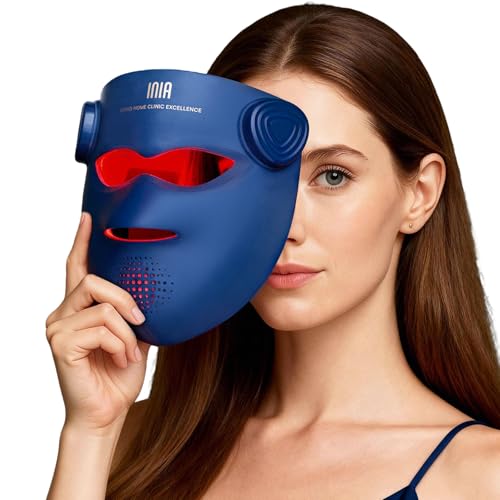
The INIA Glow 4D brings 320 LEDs in a medical-grade flexible silicone shell with dual near-infrared channels designed to penetrate multiple skin depths. The “4D” refers to the silicone contouring that wraps under the chin and along the jawline for more complete coverage than flat-panel masks. The four modes — Red, Blue, Amber, and Combo — cover the standard therapeutic bases, with the red mode optimized for smoother-looking radiant skin and amber for even tone.
The standout feature is the magnetic cooling gel pad for under-eye use, which attaches to the mask interior and provides targeted cooling without requiring a separate device like the Shark CryoGlow. At 1.9 pounds and a wireless design, the INIA is portable enough to wear while folding laundry or reading, and the 2–4 week visible improvement window is realistic for consistent 3–4 times per week usage. The silicone is thick enough to prevent buckling but flexible enough to pack flat in a bag.
The cooling gel pad is effective but stays cool for only about 10–15 minutes before needing to be refrigerated again, so it works best for the first part of a session. The dual NIR technology is a genuine differentiator — most masks in this price tier use a single NIR wavelength, while INIA splits it for layered penetration. For someone who wants the cooling benefit without paying for the high-end Shark, this is the best hybrid option.
Why it’s great
- Dual NIR channels target deeper and mid-dermal layers for firmness improvement
- Magnetic under-eye cooling pad adds de-puffing without extra cost
- 4D silicone contour wraps chin and jaw for enhanced lower-face coverage
Good to know
- Cooling pad requires refrigeration between sessions; only lasts ~15 min
- Amber mode is subtle — best combined with red for noticeable tone improvement
6. RENPHO 4D Red Light Therapy Mask Artemis E100B
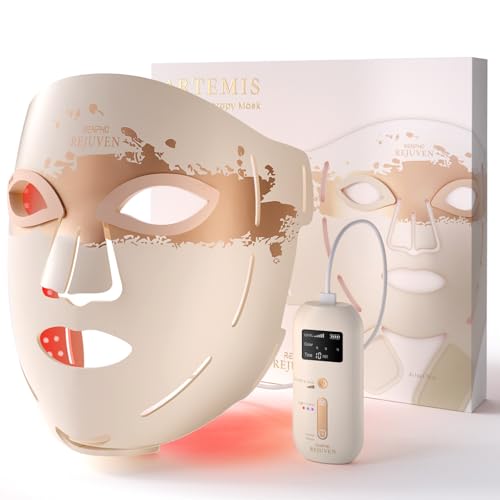
RENPHO positions the Artemis as a daily luxury device, and the unboxing experience and 6.4-ounce ultra-lightweight build support that. The 324 LEDs are distributed across three modes: Mode 1 combines red and infrared for wrinkle reduction, Mode 2 uses blue light for mild-to-moderate acne, and Mode 3 delivers mixed light for overall complexion support. The mask is made from skin-friendly silicone that sits flush without pinching, and the integrated protective eye cups block direct light effectively.
The key differentiator here is the combination of full-face 324 LED count and the sub-7-ounce weight. Most masks with 300+ LEDs weigh 12–24 ounces, making the Artemis significantly more wearable for multitasking. Session time is not specified in the documentation, but users report a 10-minute auto-shutoff cycle that feels consistent with most LED protocols. The blue mode is effective for acne but uses a narrow 415nm band, which is less versatile than broader-spectrum blue alternatives.
For users with sensitive skin or those new to LED therapy, the Artemis is an excellent entry point into professional-grade coverage without the intimidation of complex controls. The price is mid-range, making it a strong value proposition for someone who wants comprehensive face coverage and multiple treatment modes in a package that does not feel like medical equipment. The downside is the lack of published irradiance numbers — you have to trust the LED count rather than a measured mW/cm² output.
Why it’s great
- Ultra-lightweight 6.4 ounces makes it genuinely comfortable for daily wear
- 324 LEDs with full-face contouring and integrated eye cups
- Three dedicated modes for wrinkles, acne, and general complexion
Good to know
- No published irradiance mW/cm² spec — relies on LED count as proxy
- Blue mode uses narrow 415nm band; less broad-spectrum coverage than competitors
7. NVBOTY LED Face Mask

NVBOTY packs 400 LEDs into its silicone mask, claiming more than double the LED count of leading brands. That number is eye-catching, but it is worth noting that LED count alone does not guarantee higher irradiance — power distribution matters. The mask uses four wavelengths: 630nm red, 850nm near-infrared, 605nm orange, and 460nm blue. The 2000mAh remote control allows timer adjustments from 10 to 30 minutes in 5-minute increments, giving you more flexibility than the fixed 10-minute cycles of most competitors.
The mask is made from soft, skin-friendly silicone with an integrated eye cover that blocks light effectively. The all-in-one design eliminates removable straps, which is convenient for travel but means the mask cannot be adjusted for different face sizes. At 2.16 pounds, it is heavier than the RENPHO but lighter than the MEGELIN, and the weight distributes evenly across the face. The 4-color cycle mode runs through all wavelengths sequentially, which is useful for general maintenance but less targeted than single-mode protocols.
The real value here is the sheer number of LEDs for the price, combined with the adjustable timer — most masks cap sessions at 10 or 15 minutes. For users who prefer longer sessions (20–30 minutes) at lower intensity per minute, the NVBOTY offers that flexibility. The orange wavelength (605nm) is a nice addition for mild calming, though its therapeutic evidence is weaker than red and NIR. This mask suits someone who wants maximum grid coverage and timer control without stepping up to the premium tier.
Why it’s great
- High 400-LED density provides even full-face light distribution
- Adjustable timer (10–30 min) offers session length flexibility not found on most masks
- 2000mAh remote battery supports multiple sessions between charges
Good to know
- Heavier than expected at 2.16 lbs for a silicone mask
- All-in-one strap design cannot be adjusted for different face shapes
8. 4-Wavelength Cordless LED Face Mask (XSSNVV)
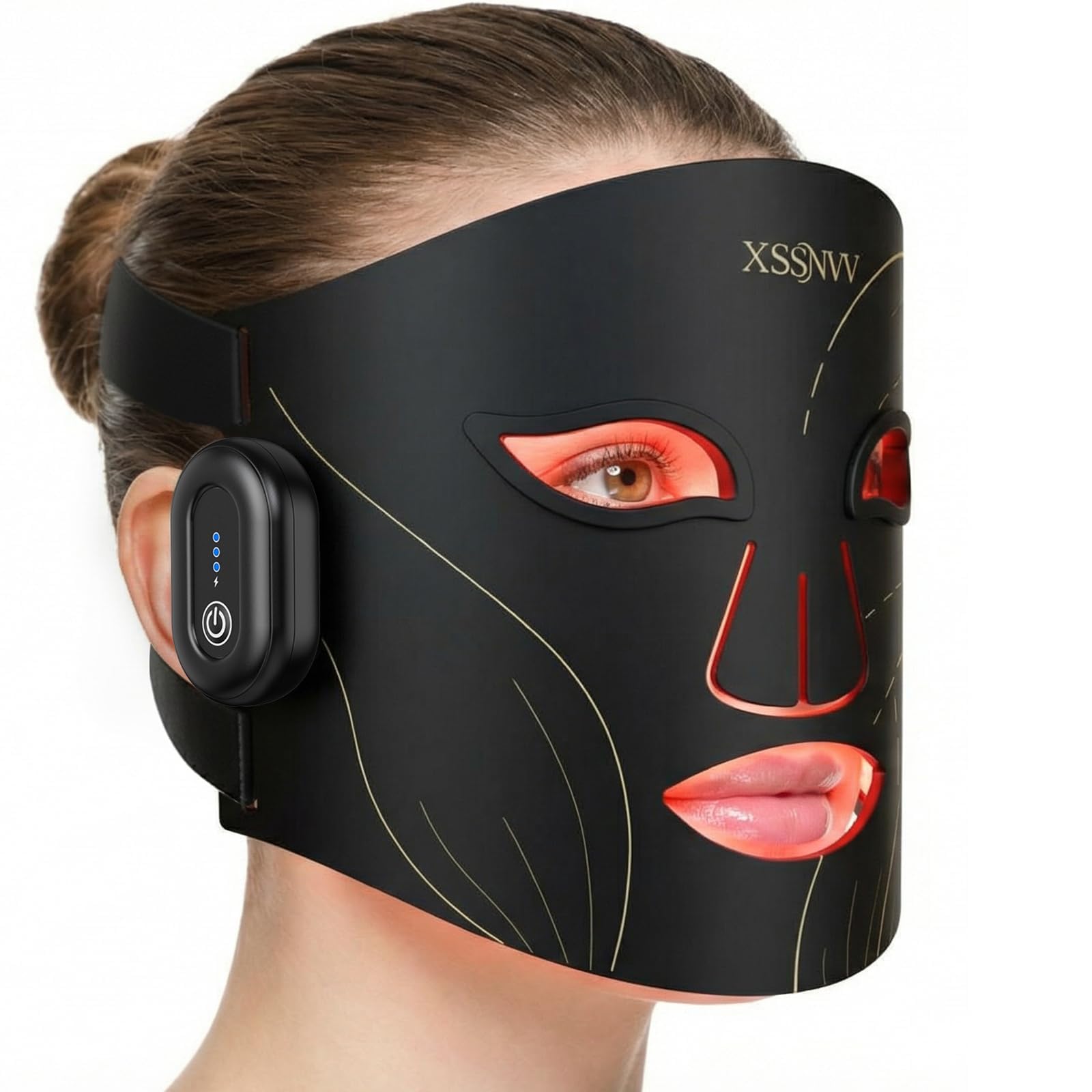
This mask from XSSNVV weighs just 145 grams — roughly the weight of a deck of cards — making it the lightest option in this lineup. The 272 LEDs are laid out across four wavelengths: 620nm red for surface support, 850nm near-infrared for deep elasticity, 460nm blue for oily skin, and 580nm amber for redness reduction. The four modes (red+NIR, blue, amber, and combined) are controlled directly on the mask surface, with a magnetic power module that snaps on for charging.
The auto shut-off timer runs a precise 10-minute session, and a single charge supports up to six sessions (60 minutes total). At this weight, the mask is genuinely wearable during any activity — reading, cooking, walking around the house — without sagging or pulling. The skin-friendly silicone conforms to facial contours with an adjustable strap, and the integrated eye shield reduces direct light exposure. The build is simple but functional, with no separate remote to charge or misplace.
The key trade-off is intensity. With a lower LED count and smaller power module, this mask delivers a gentler dose than the NVBOTY or RENPHO units. It is best suited for maintenance, sensitive skin, or travelers who need a packable LED mask that does not add bulk. The 4-week timeline for visible improvement is realistic for this output level. If you prioritize portability and comfort over raw power, this mask is a solid companion for your suitcase.
Why it’s great
- Ultra-light 145g design is genuinely packable and comfortable for hours
- Integrated controls and magnetic charging — no separate remote to lose
- Four wavelengths (620nm, 850nm, 460nm, 580nm) cover multiple skin concerns
Good to know
- Lower power output — better for maintenance than aggressive anti-aging protocols
- 10-minute fixed session may feel short for users accustomed to 15–20 min treatments
9. Generation II Ultra-Thin Infrared Red Light Therapy Mask
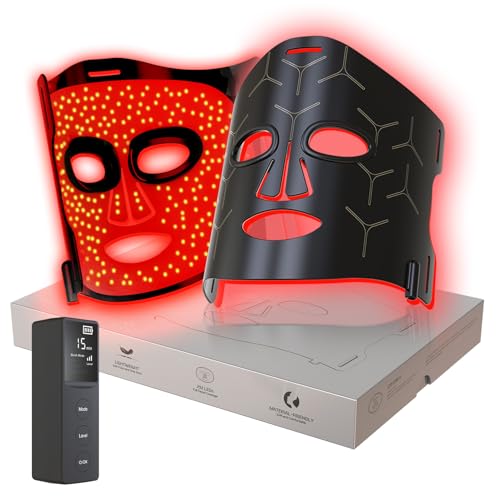
This Generation II mask claims a 1.8mm thickness and 4.6 ounces total weight, making it the thinnest device in this review. The 292 LED beams deliver a peak power of 15W, and the manufacturer publishes a specific irradiance figure: 40 mW/cm² at the skin surface — the same range as professional salon devices. That is a meaningful number because most budget masks either omit irradiance or quote inflated values. The three wavelengths — 590nm yellow, 633nm red, and 830nm infrared — are combined into a single Quick Mode sequence for one-touch operation.
The seamless flexible silicone design uses integrated lenses to prevent hotspots, which is rare at this price point. The 4-times-per-week protocol with results visible at 8 weeks (32 sessions) is realistic and aligns with published LED therapy timelines. The rechargeable controller is compact and magnetic, and the mask folds flat for travel. The included 1-year warranty and 24/7 support are confidence boosters, though the manufacturer (SHENZHEN TSYL GENERAL TECHNOLOGY) is less established than iRestore or SharkNinja.
The main limitation is the fixed Quick Mode — you cannot run individual wavelengths separately or adjust the sequence duration. That simplifies operation but reduces targeted flexibility for users who want, say, a red-only anti-aging session without the amber or NIR. However, for someone who wants salon-level irradiance (40 mW/cm²) in an ultra-thin, portable package at an accessible entry point, this mask delivers the best power-to-thickness ratio in this list.
Why it’s great
- Measured 40 mW/cm² irradiance matches professional salon equipment
- Ultra-thin 1.8mm design is the most discreet mask available
- 292 LEDs with integrated lenses prevent hot spots and ensure even coverage
Good to know
- Quick Mode only — no ability to isolate individual wavelengths for targeted treatment
- Manufacturer is a smaller ODM; warranty support may be less responsive than big brands
FAQ
Can laser face masks really reduce wrinkles or is that marketing hype?
How many LEDs do I actually need for effective facial treatment?
Should I use my laser face mask with serums or on clean dry skin?
How soon will I see results from a laser face mask?
Is blue light therapy safe for daily use on the face?
Final Thoughts: The Verdict
For most users, the best laser face mask winner is the Shark CryoGlow FW312 because it combines clinically validated red and blue LED protocols with the only integrated under-eye cooling system on the market, making it a true two-in-one skincare device. If you want triple-wavelength therapy with maximum power and brand pedigree, grab the iRestore LED Face Mask. And for the most budget-friendly entry point that still delivers salon-grade irradiance, nothing beats the Generation II Ultra-Thin Mask — it gives you 40 mW/cm² in a form factor so thin you will forget you are wearing it.