Low-level laser therapy has moved from dermatology clinics to your living room, but choosing between diode counts, wavelength claims, and FDA clearance levels can stall the one decision that matters—starting treatment. The best device for you isn’t the most expensive one; it’s the one you’ll actually wear consistently across the 12-to-24-week window clinical studies require for visible regrowth.
I’m Emma — the founder and writer behind Baby Bangs. I’ve spent the last year dissecting the engineering behind LLLT caps, comparing diode arrays, power outputs, and the real clinical trial data that separates medical-grade hardware from overhyped lighting panels.
This guide breaks down nine contenders with concrete specs on laser counts, wavelengths, and treatment protocols so you can pick the laser cap for hair loss that matches your hair type, schedule, and budget without wasting time on gadgets that under-deliver.
How To Choose The Best Laser Cap For Hair Loss
Every laser cap on this list delivers LLLT to your scalp, but the real-world results depend on three variables: the quality of the laser diodes, how evenly they cover your hairline and crown, and whether the device fits well enough to wear consistently for the full 16-week treatment cycle. Let’s isolate the specs that actually drive regrowth.
Laser Diode Count vs. Power Density
More lasers don’t automatically mean better outcomes. A cap with 80 medical-grade diodes each outputting a stable 5mW at 650nm can outperform a 162-diode design if those diodes flicker or drift in wavelength. The key metric is total optical power delivered to the scalp—measured in milliwatts—and how uniformly that energy spreads across the treatment area. A matrix arrangement of laser diodes provides consistent coverage, while clustered layouts can leave patches of the crown or temples under-treated.
Wavelength Accuracy and Penetration Depth
The therapeutic window for LLLT in hair restoration sits between 650nm and 680nm. Red light at 650nm penetrates the scalp to reach the dermal papilla of the hair follicle without causing thermal damage. Devices that supplement lasers with LEDs often shift their peak output outside this window, reducing the energy that actually reaches the follicle. Stick to caps that specify a single narrow wavelength for their laser diodes and avoid units that mix unregulated LEDs without independent wavelength testing.
Treatment Protocol and Compliance
Most FDA-cleared devices recommend three sessions per week for 12 to 24 weeks. A cap that requires manual movement—like a comb or brush—breaks your focus and makes it harder to stay consistent. Hands-free helmets with built-in timers and automatic shutoff increase compliance because you can wear them while reading, walking, or watching a show. Choose a device whose session length and frequency fit your actual weekly rhythm, not the aspirational one you hope to adopt.
Fit, Weight, and Portability
A laser cap that shifts during treatment leaves gaps in coverage. Look for an adjustable strap or soft inner lining that molds to your head shape without pressing the diodes against the scalp—contact isn’t required for LLLT, but consistent distance is. If you travel, a cordless rechargeable battery and a compact case make it possible to keep your schedule on the road. A device that weighs more than two pounds can cause neck fatigue during 30-minute sessions, so lighter designs have a real advantage for daily use.
Quick Comparison
On smaller screens, swipe sideways to see the full table.
| Model | Category | Best For | Key Spec | Amazon |
|---|---|---|---|---|
| iRestore Elite | Premium | Maximum power and triple wavelength coverage | 500 lasers & LEDs, 2500mW total power | Amazon |
| Theradome PRO LH80 | Premium | 100% laser design, no LEDs, made in the USA | 40-80 medical-grade laser diodes | Amazon |
| Hairmax LaserBand 82 | Premium | Fast 90-second treatments, clinical track record | 82 medical-grade lasers, 1230mW output | Amazon |
| iRestore Essential | Mid-Range | Clinically proven 43.2% hair count increase | Hands-free helmet, GMP-certified facility | Amazon |
| GroWell Red Light Cap | Mid-Range | Double-blind clinical validation, soft cap design | Laser-LED blend with precision micro lenses | Amazon |
| INTEO 162 Laser Cap | Mid-Range | High diode count at a mid-tier price point | 162 laser diodes, 12-minute session timer | Amazon |
| Instyle Egg Laser Cap | Premium Light | Ultra-lightweight (250g) for travel and portability | 80 diode lasers at 650nm, weighs 0.55 lbs | Amazon |
| Aphrona Laser Helmet | Mid-Range | 81 lasers with built-in infrared safety sensor | 81 lasers, 30-min sessions, cordless battery | Amazon |
| PUPCA Laser Cap | Budget | Entry-level LLLT with 82 diodes at 650nm | 82 laser diodes, 5mW each, dome-shaped cap | Amazon |
In‑Depth Reviews
1. iRestore Elite

The iRestore Elite sits at the top of the power pyramid with 500 combined lasers and LEDs delivering a total optical output of 2500mW across three wavelengths: 625nm, 655nm, and 680nm. This triple-wavelength approach targets different depths of the follicle—the 625nm works closer to the scalp surface while the 680nm penetrates deeper into the dermal papilla, which may benefit users with more advanced thinning who need stimulation at multiple tissue layers.
The treatment session is just 12 minutes, and the medical-grade padding keeps the helmet comfortable during use. The Elite covers the hairline, temples, sides, and lower crown without requiring manual repositioning, which is a significant upgrade from laser combs that miss the occipital region entirely. The 43.23% average hair count increase cited in the company’s dermatologist-led study is consistent with the higher power density this unit delivers.
At four and a half pounds, this is the heaviest cap on the list, so neck fatigue is a real concern during longer sessions. The Elite is also the most expensive unit here, placing it squarely in the premium tier for users who want maximal power density and are willing to commit to a heavier, more substantial device for their routine.
Why it’s great
- Highest total optical power among all reviewed caps
- Triple wavelength technology targets multiple follicle depths
- Full crown and temple coverage without manual movement
Good to know
- Weighs over 4 lbs, may cause neck strain during longer use
- Premium price positions it outside mid-range budgets
2. Theradome PRO LH80

The Theradome PRO LH80 is engineered by a former NASA scientist and manufactured in Silicon Valley, California, which gives it a pedigree rare in the LLLT consumer space. The key differentiator is its laser-only architecture—there are no LEDs in this cap, just 40 to 80 medical-grade laser diodes that maintain a tight wavelength band for consistent photobiostimulation. This matters because lasers produce coherent, collimated light that penetrates deeper than the diffuse output from LEDs.
The ergonomic helmet design covers the hairline, temples, and crown hands-free, and the treatment schedule is just twice per week—less frequent than most competitors, which require three sessions. The cap runs cool during operation, which reduces the risk of scalp irritation during extended use. The aluminum-backed diodes are positioned to maximize light energy absorption without hot spots.
The PRO LH80 weighs only 1.48 pounds, making it significantly lighter than the iRestore Elite while still delivering a full laser array. The trade-off is a lower total diode count compared to the high-density units, so users with very advanced Norwood-Hamilton V or VI thinning may need the extra power from a higher-output cap.
Why it’s great
- Pure laser array with no LEDs ensures coherent light delivery
- Twice-weekly treatment schedule is easier to maintain
- Lightweight at 1.48 lbs, comfortable for long sessions
Good to know
- Lower total diode count may be insufficient for very advanced thinning
- Higher price per diode compared to mid-range competitors
3. Hairmax LaserBand 82

Hairmax has the deepest clinical portfolio in the category with seven published studies and 6 peer-reviewed articles supporting its technology. The LaserBand 82 uses 82 medical-grade lasers with a comparative energy output of 1230mW, and the unique ComfortFlex band design adapts to different head shapes without a rigid helmet shell. The 90-second treatment time—three times per week, applied across three scalp sections—makes this the fastest protocol of any cap reviewed.
The band weighs just 9.6 ounces, so it’s almost unnoticeable during use. Hairmax uses only medical-grade lasers, not LEDs, and the clinical data shows an average increase of 129 new hairs per square inch after six months. The device targets Norwood-Hamilton IIa-V in men and Ludwig-Savin I-II in women, so it is appropriate for moderate thinning but may not reach the entire crown in larger head sizes without multiple passes.
The charging cradle and compact form factor make this an excellent travel companion, but the band design requires you to manually move it across three sections of the scalp, unlike a full helmet that covers everything at once. Users who prefer a fully hands‑off experience may find the three-position protocol slightly less convenient than a single‑piece helmet.
Why it’s great
- Fastest treatment time in the category at 90 seconds per session
- Strong clinical evidence with 7 published studies
- Extremely lightweight and portable at 9.6 oz
Good to know
- Requires manual repositioning across three scalp sections
- Band design may not cover the entire crown in a single pass
4. iRestore Essential

The iRestore Essential is the mid-range workhorse that holds one of the strongest single‑study data points in the industry: a 2017 clinical trial showed 100% of active users experienced visible hair growth with an average increase of 43.2% in hair count. The system is FDA-cleared and manufactured in GMP-certified facilities, which adds an extra layer of quality assurance for users concerned about manufacturing consistency.
The hands‑free helmet design covers the hairline, temples, and crown in a single session without manual movement. The battery pack allows cordless operation, so you can walk around or work during the treatment. The device weighs about 3.3 pounds, which places it in the middle of the weight range—heavier than the LaserBand but significantly lighter than the Elite model from the same brand.
The Essential lacks the triple‑wavelength technology and higher diode count of the Elite, so it operates with a single wavelength for its laser array. Users with very dense or resistant hair may find the lower total power takes longer to stimulate deeper follicles, though the clinical data suggests consistent use over 3 to 6 months still delivers strong results for most Norwood-Hamilton profiles.
Why it’s great
- 100% of active users saw visible growth in clinical study
- GMP-certified manufacturing adds quality control rigor
- Hands‑free helmet with cordless battery for mobility
Good to know
- Single wavelength array limits depth penetration vs triple‑wavelength models
- Mid‑range weight at 3.3 lbs may feel heavy during extended sessions
5. GroWell Red Light Cap

GroWell differentiates itself with two double-blind, placebo-controlled clinical trials that were peer‑reviewed and published in the Lasers in Surgery and Medicine journal—a level of scrutiny that not all FDA-cleared devices can claim. The proprietary design uses precision micro lenses to scatter laser and LED energy across the scalp in a continuous blanket rather than the discrete dots produced by standard diode arrays. This approach ensures that no follicle sits in an untreated gap between light sources.
The cap system uses a flexible red light panel that can be inserted into the included cap or swapped into your own favorite hat, making it the most discreet option in this guide. The battery pack provides cordless operation for full mobility, and the adjustable soft cap fits snugly without shifting during movement. The entire unit weighs 5.3 pounds in the package, but the panel itself is lighter once separated from the cap and case.
The GroWell blends lasers with LEDs, which reduces the coherence of the light output. While the micro-lens technology compensates by distributing energy more evenly, purists who want 100% laser light may prefer the Theradome or Hairmax for direct diode penetration. The cap design also requires you to wear an additional outer layer, which adds a step to the routine compared to a rigid helmet.
Why it’s great
- Peer‑reviewed double‑blind clinical trials validate regrowth claims
- Micro‑lens technology provides uniform energy blanket across the scalp
- Discrete cap design fits under your own hat for private use
Good to know
- Blends lasers with LEDs, reducing coherent light penetration
- Requires wearing a separate outer cap, adding a layer to the routine
6. INTEO 162 Laser Cap

The INTEO cap packs 162 laser diodes into a helmet design with a matrix arrangement that distributes light evenly across the hairline, temples, and top of the head—no manual repositioning needed. Each diode is rated at 5mW and 650nm, and the array covers the entire crown in a single 12-minute session, which is shorter than the 30-minute protocols required by many competitors.
The wireless design includes an infrared safety sensor that stops laser output when the cap is removed, protecting your eyes from accidental exposure. The remote control allows you to pause and resume sessions, and the device auto‑shuts at the end of the treatment cycle. The 1.85‑pound weight makes it one of the lighter full‑helmet options, reducing neck strain during daily use.
The manufacturer claims 162 laser lights, but without third‑party verification of diode power consistency, the actual delivered energy per session may vary from unit to unit. The brand offers an 18‑month warranty, which provides some confidence, but the clinical data backing is less robust than the Hairmax or GroWell trials.
Why it’s great
- 162 laser diodes provide high‑density coverage across the full scalp
- Short 12‑minute sessions fit easily into a busy schedule
- Lightweight helmet design at 1.85 lbs minimizes discomfort
Good to know
- No published clinical trials specific to this model
- Diode power consistency unverified by independent testing
7. Instyle Egg Laser Cap
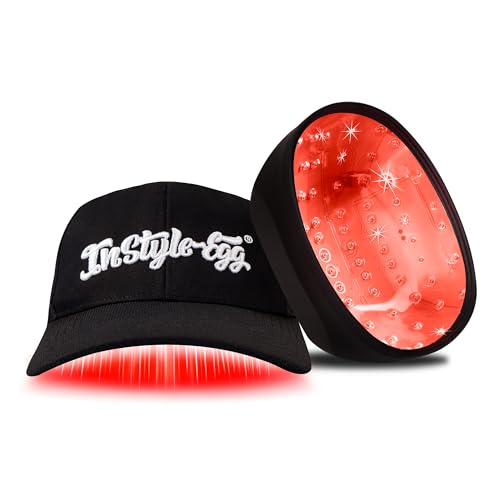
The Instyle Egg cap redefines portability in the LLLT category at just 250 grams—roughly the weight of a smartphone—making it the lightest laser cap in this guide. The 80 laser diodes operate at 650nm and deliver low‑level laser therapy across the entire scalp in 30‑minute sessions scheduled every other day. The soft inner lining and flexible one‑size structure adapt to different head shapes without hard pressure points.
The hands‑free design allows you to wear it while reading, working, or relaxing, and the cordless battery eliminates cord tangling. The 3.22‑pound shipping weight includes packaging, but the cap itself is barely noticeable during use, which is a genuine advantage for users who intend to maintain a consistent routine over several months.
The Instyle Egg carries FDA clearance, but the clinical documentation provided by the manufacturer is less detailed than the Hairmax or GroWell studies. Users who prioritize peer‑reviewed evidence may want to cross‑reference with the published LLLT literature before committing. The 80‑diode count is also on the lower end of the range, so those with extensive crown thinning may need a higher‑density cap.
Why it’s great
- Ultra‑lightweight at 0.55 lbs, nearly unnoticeable during wear
- FDA‑cleared LLLT with 80 medical‑grade laser diodes
- Soft, flexible fit adapts to most head shapes comfortably
Good to know
- Limited published clinical data specific to this cap
- 80‑diode density may be insufficient for very advanced thinning
8. Aphrona Laser Helmet
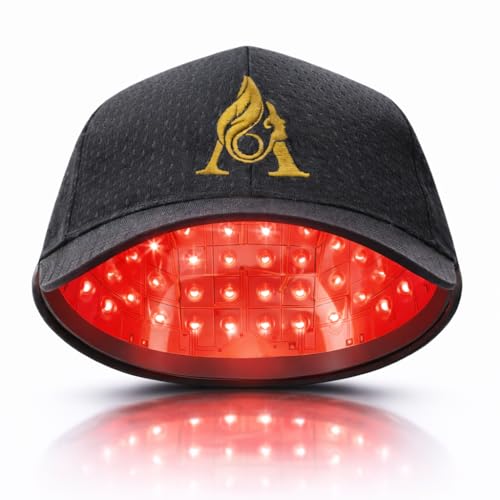
The Aphrona Laser Helmet is an FDA-cleared device that uses 81 lasers to stimulate hair follicles in a hands-free, cordless format. The 30-minute sessions three times per week follow the standard LLLT protocol, and the built‑in infrared safety sensor automatically stops laser output when the cap is removed, then powers off after 10 minutes for added protection—a thoughtful safety feature for distracted users.
The rechargeable battery pack provides freedom of movement during treatment, and the included travel case makes it easy to maintain your routine on the road. The 2.2‑pound weight places it in the mid‑range for helmet‑style devices, comparable to the iRestore Essential but lighter than the GroWell package. The Aphrona is backed by a 1‑year warranty and U.S.-based customer support, which adds reassurance for first‑time LLLT buyers.
The 81‑laser count is moderate compared to the high‑density 162‑laser caps, and the device relies on a single wavelength without the triple‑wavelength advantage of premium models. The company does not publish independent clinical trial data specific to this model, so efficacy claims rely on the general body of LLLT research rather than proprietary studies.
Why it’s great
- Infrared safety sensor prevents accidental eye exposure
- Cordless design with travel case supports routine consistency
- U.S.-based customer support with 1‑year warranty
Good to know
- No published proprietary clinical trial data for this model
- Moderate laser count may not be ideal for advanced thinning
9. PUPCA Laser Cap

The PUPCA Laser Cap is the most accessible entry point into the LLLT category, offering 82 laser diodes at 650nm and 5mW each in a dome-shaped cap that distributes light across the entire scalp. The device is FDA-cleared for androgenic alopecia in men with Norwood-Hamilton IIa-V and women with Ludwig-Savin I-II, which covers the most common pattern hair loss profiles.
The treatment protocol is a straightforward 30 minutes per day for 16 weeks, and the cap is designed with an outer plastic cover and a protective inner liner that contains the electronics and laser array. The 2.12‑pound weight is comparable to other mid-weight caps, and the cordless design means you can move freely during sessions.
The PUPCA lacks the higher diode counts and proprietary lens technology of the premium models, and the manufacturer does not provide independent clinical trial data specific to this cap. The build quality reflects the budget-friendly positioning—users should expect a functional but less refined experience compared to the premium helmets from iRestore or Theradome.
Why it’s great
- Entry-level pricing makes LLLT accessible for first-time users
- FDA-cleared for male and female pattern hair loss
- Simple 30‑minute daily protocol with no manual movement required
Good to know
- No proprietary clinical trial data to support efficacy claims
- Basic build quality without advanced features like infrared sensors
FAQ
How soon will I see results from a laser cap for hair loss?
Can I use a laser cap with minoxidil or finasteride?
Does the cap need to touch my scalp for the lasers to work?
How do I clean and maintain my laser cap?
Final Thoughts: The Verdict
For most users, the laser cap for hair loss winner is the iRestore Essential because it balances a strong clinical track record, comfortable full-helmet coverage, and a treatment protocol that fits a realistic weekly schedule. If you want the most portable, lightweight option for travel or discreet use, grab the Instyle Egg Laser Cap. And for the highest power density and deepest follicle penetration, nothing beats the iRestore Elite with its triple-wavelength array and 500 light sources.