Wearing the wrong shoe with flat feet turns every step into a nagging reminder of fallen arches — heel pain, plantar fascia strain, and that hollow feeling where support should be. The fix isn’t a random cushioned sole; it’s a shoe built with a structured medial post, a contoured footbed, and a heel cup that locks your foot in place.
I’m Emma — the founder and writer behind Baby Bangs. I’ve spent years analyzing biomechanics, arch support geometry, and midsole density data to separate the shoes that actually stabilize overpronation from the ones that just feel soft in the store.
This guide breaks down the specific construction features that matter most for flat feet, from cradle depth to outsole rigidity, so you can confidently choose among the best ladies shoes for flat feet without falling for marketing fluff.
How To Choose The Best Ladies Shoes For Flat Feet
Flat feet change your gait — your arch collapses inward, your heel tilts, and your knees absorb rotational stress. The right shoe counteracts that motion with targeted structure rather than just squishy foam. Here are the three non-negotiable elements to check before you buy.
Stability Features: Medial Post vs. Guide Rails
A medial post is a firmer density of foam or plastic built into the inner midsole — it slows down pronation by creating a ramp your foot can’t roll past. Guide rails, popularized by brands like Brooks, extend upward from the heel and midfoot to cradle your foot and keep it centered. Either approach works, but guide rails tend to be less intrusive for walkers who don’t need aggressive correction.
Arch Support Profile and Contour Depth
Flat feet need a footbed that fills the void under the arch — not a flat slab of foam. Look for shoes with a pronounced medial arch shelf built into the insole or the midsole itself. The support should feel gradual, not like a golf ball under your foot. Removable insoles are a bonus: they let you swap in custom orthotics if your arch needs deeper cradling.
Heel Cup Rigidity and Outsole Geometry
A floppy heel counter lets your foot slide outward with every step, defeating arch support. Squeeze the back of the shoe — it should resist deflection. On the outsole, look for a wide platform and a heel that’s flared slightly outward. That extra ground contact area gives your flat foot a stable base and reduces wobble during push-off.
Quick Comparison
On smaller screens, swipe sideways to see the full table.
| Model | Category | Best For | Key Spec | Amazon |
|---|---|---|---|---|
| Brooks Adrenaline GTS 25 | Stability | Aggressive pronation control | Guide rail system + DNA Loft v3 midsole | Amazon |
| Brooks Ghost 17 | Neutral Cushion | All-day wear with mild arch support | DNA Loft v3 cushioning + segmented crash pad | Amazon |
| Vionic Hayes Skimmers | Orthopedic Flat | Casual flats with built-in arch | Orthopedic footbed with deep arch contour | Amazon |
| Ryka Devotion X Max RS | Walking | Fitness walking with pronation support | RE-ZORB midsole + medial stability post | Amazon |
| Skechers Arch Fit Roslyn | Max Cushion | High-mileage walking on hard surfaces | Arch Fit removable insole + Ultra Go cushioning | Amazon |
| Skechers Max Cushioning Endeavour | Ultra Soft | Budget-friendly cushioned walking | Max Cushioning platform + relaxed fit | Amazon |
| New Balance Fresh Foam Arishi V4 | Lightweight | Daily casual wear and light jogging | Fresh Foam midsole + no-sew upper | Amazon |
In‑Depth Reviews
1. Brooks Women’s Adrenaline GTS 25
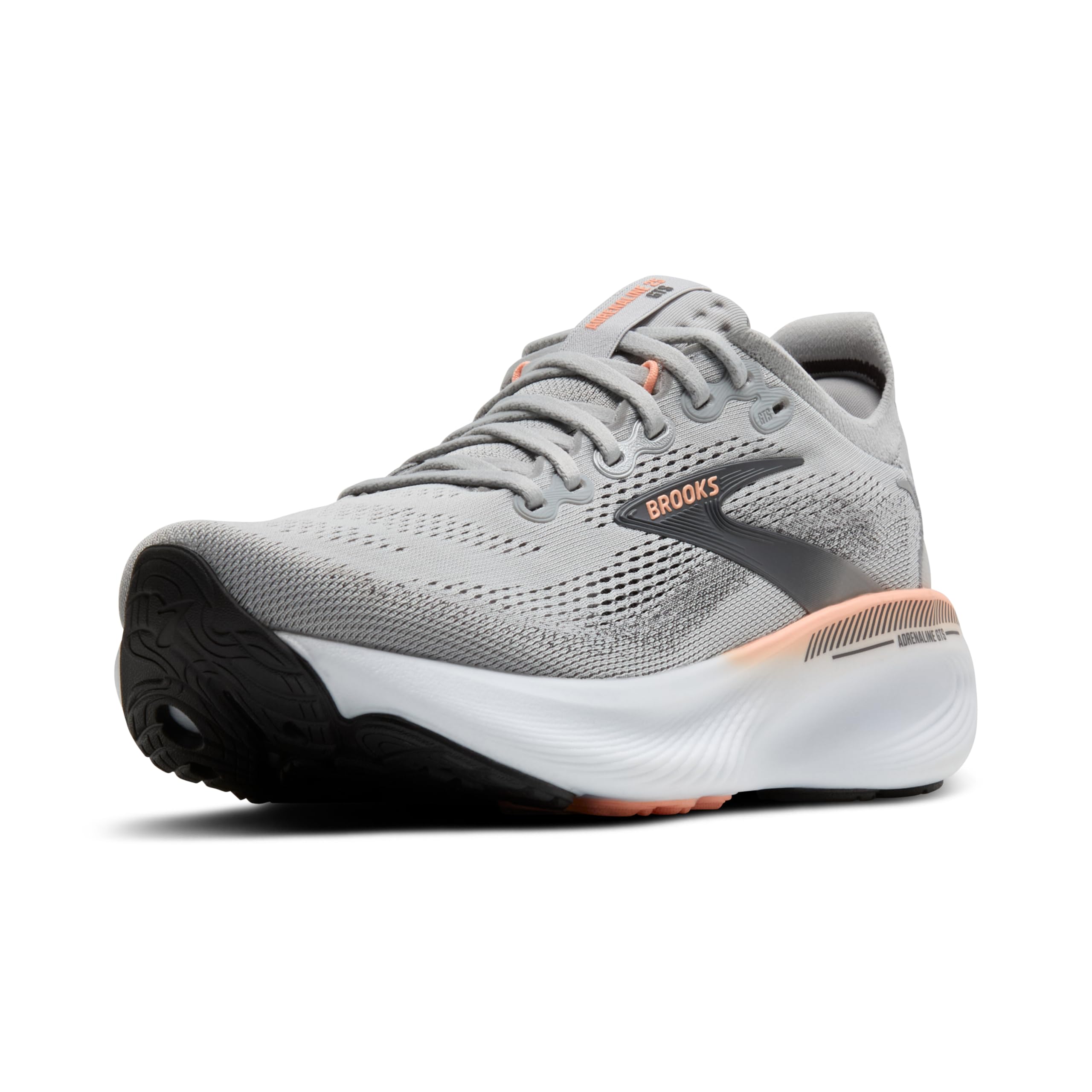
The Adrenaline GTS 25 is the gold standard for flat feet that overpronate aggressively. Brooks’ Guide Rails system wraps around the heel and midfoot, physically blocking your foot from rolling inward — it feels like a gentle nudge rather than a hard brace. The DNA Loft v3 midsole balances softness under the heel with firmer foam along the medial edge, which is exactly what flat arches need: cushion where you land, structure where you roll.
At roughly one and a half pounds, it’s not the lightest shoe on this list, but the weight pays off in stability. The engineered mesh upper breathes well and accommodates medium to wide feet without pinching the bunion area. Runners and walkers both report immediate relief from arch fatigue after switching to this model, especially those who previously relied on aftermarket insoles in neutral shoes.
The outsole uses a blown rubber compound with flex grooves that match the foot’s natural stride. The heel is flared just enough to create a stable landing platform, and the toe-off feels smooth rather than clunky. If you’ve tried cheaper “stability” shoes and found them stiff or ineffective, this is the upgrade that actually changes your gait.
Why it’s great
- Guide Rails provide reliable pronation control without feeling intrusive
- DNA Loft v3 delivers plush heel cushioning with medial firmness
- Wide toe box option reduces pressure on bunions and wide feet
Good to know
- Heavier than neutral trainers — around 10 ounces for a size 8
- Break-in period of about 15-20 miles for full Guide Rail adaptation
2. Brooks Women’s Ghost 17
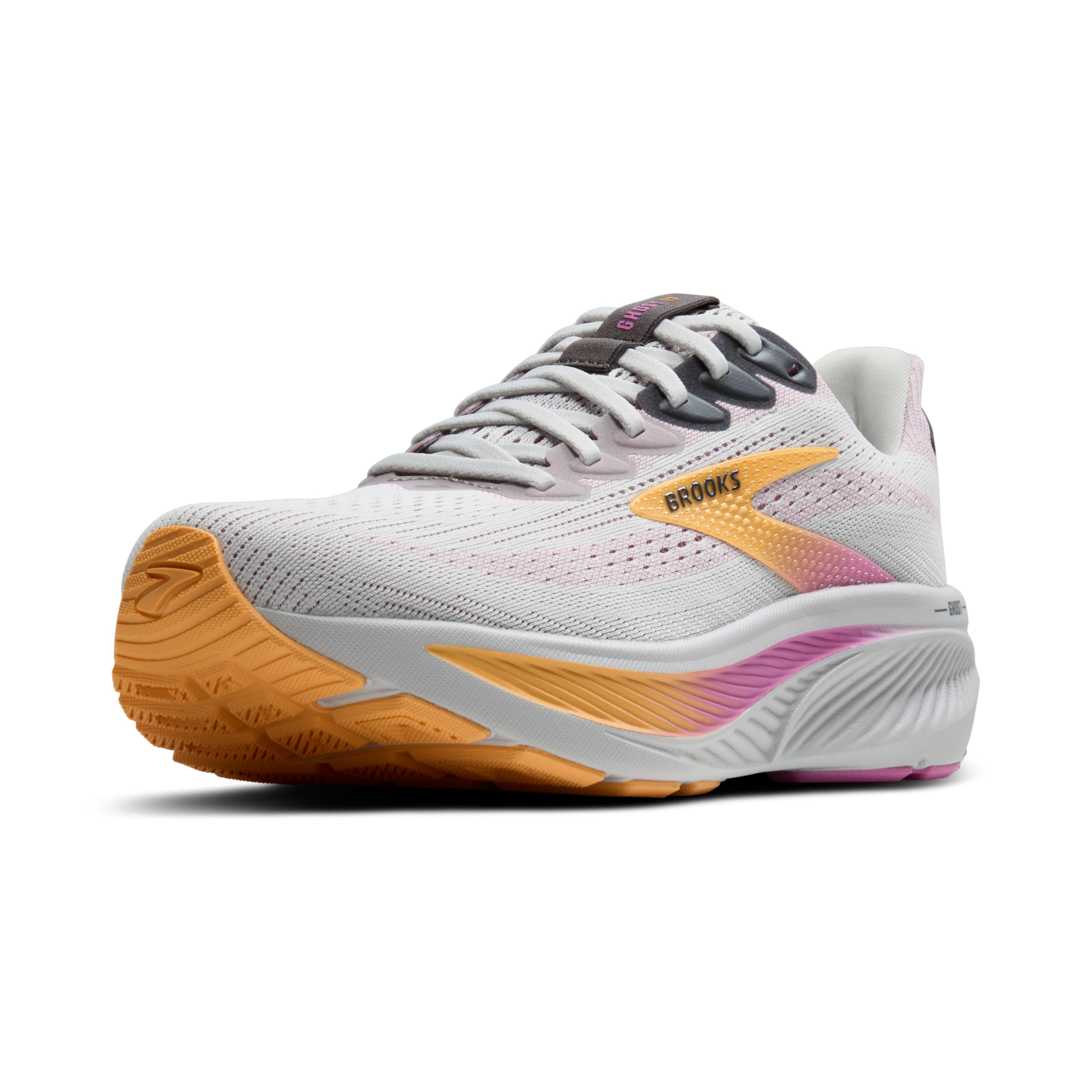
The Ghost 17 is Brooks’ neutral-cushioning workhorse, and while it doesn’t have Guide Rails, it works well for flat feet with mild to moderate pronation who prefer a softer landing. The DNA Loft v3 midsole stacks generously under the heel and forefoot, giving you a cloud-like step that reduces impact on sore arches. The segmented crash pad — a series of independent flex pods under the heel — lets your foot transition smoothly even with a collapsed arch.
Where this shoe shines for flat feet is the interior volume. The forefoot is wide enough to let splayed toes relax, and the heel counter, while not rigid, has a molded internal wrap that holds the heel in place better than most neutral shoes. Testers with plantar fasciitis report that the Ghost 17 reduces morning pain because the foam doesn’t bottom out even after eight hours on concrete floors.
The outsole pattern uses a combination of carbon rubber and blown rubber — durable under the heel, grippy under the forefoot. The Ghost 17 runs slightly long, so consider sizing down half a size if you’re between sizes. It’s a premium shoe that earns its reputation through consistency: every iteration improves the ride without abandoning the fit that loyalists depend on.
Why it’s great
- Segmented crash pad smooths heel-to-toe transition for flat arches
- Spacious forefoot allows natural toe splay during walking
- DNA Loft v3 doesn’t pack out quickly — maintains cushion over 400+ miles
Good to know
- No built-in medial post — not suitable for severe overpronation
- Runs slightly long; half-size down recommended for a snug fit
3. Vionic Women’s Hayes Skimmers
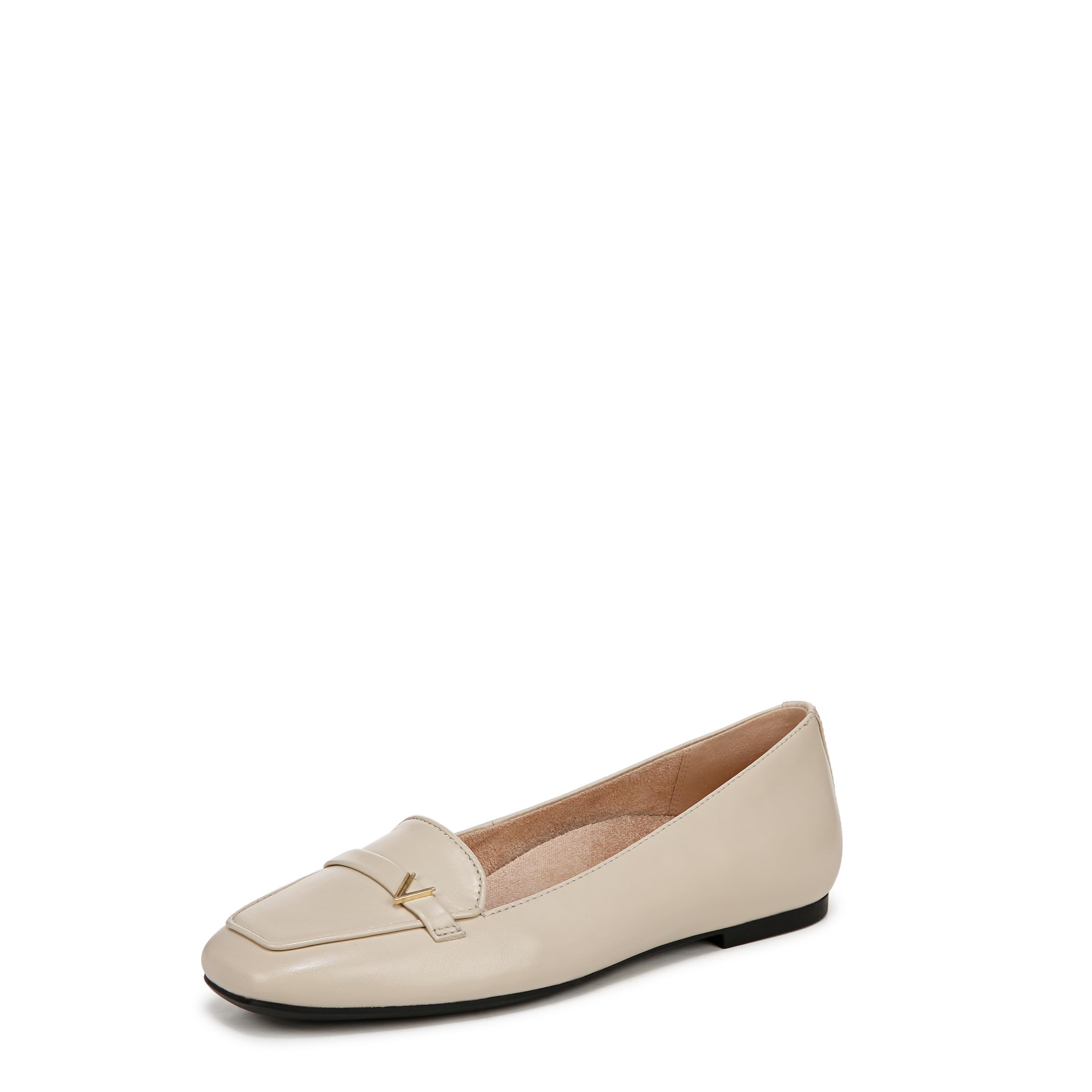
The Hayes Skimmers are a rare breed: a stylish flat that actually supports a fallen arch. Vionic builds a deep orthotic-grade footbed into the shoe, with a pronounced medial arch shelf that cradles the navicular bone and prevents the foot from collapsing inward. The square toe gives your toes room to spread, and the leather upper adapts to the shape of your foot over the first week of wear.
Unlike athletic shoes that rely on a thick midsole for support, these skimmers keep a low profile — the support comes from the footbed contour, not from foam stack height. The outsole is a flexible rubber with subtle traction, suitable for office floors, casual errands, and short walks. The heel features a slight internal counter that keeps your calcaneus centered, which is unusual for a shoe in this category.
The trade-off is that the arch support is aggressive — if you’ve never worn orthotic-style shoes, your arch might feel overstimulated for the first few wears. Vionic recommends a gradual break-in of two hours per day. The pull-on design lacks a stretch panel, so getting them on takes a moment, but once seated, the heel grip is secure enough that you won’t slip out while walking.
Why it’s great
- Orthopedic footbed with aggressive arch support rivals custom insoles
- Square toe box allows natural toe alignment without pinching
- Leather upper molds to foot shape over time for a personalized fit
Good to know
- Arch support may feel intense for first-time orthotic users
- No stretch panel — requires some effort to slide on initially
4. Ryka Devotion X Max RS Walking Shoes
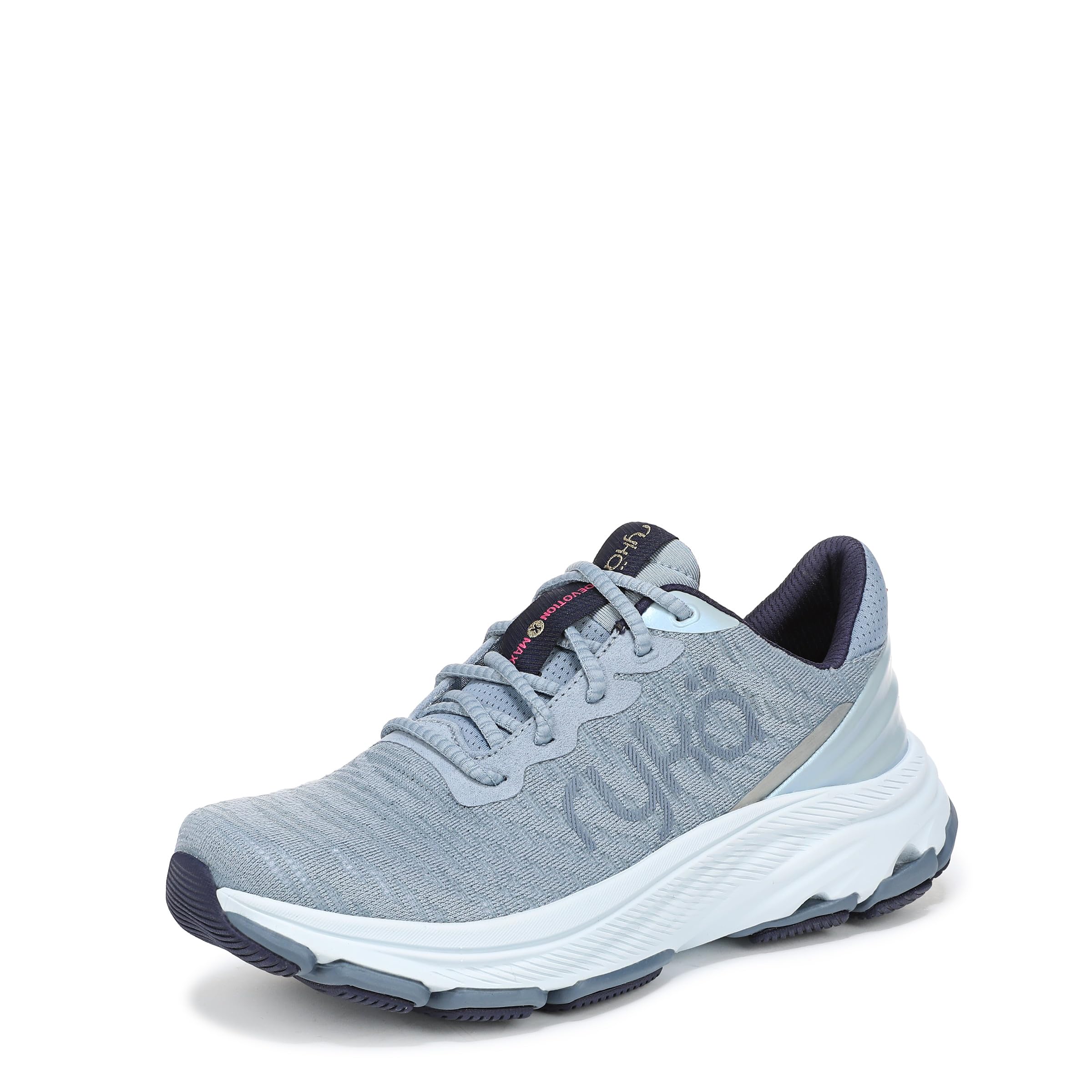
Ryka builds women-specific lasts with a narrower heel and a wider forefoot, and the Devotion X Max RS puts that geometry to work for flat feet. The RE-ZORB midsole uses a dense foam core paired with a medial stability post that runs from the heel through the midfoot — it’s not as aggressive as Brooks’ Guide Rails, but it effectively slows inward roll for mild to moderate overpronators who walk three to five miles daily.
The outsole features a split heel design with diagonal flex grooves that encourage a natural gait cycle, and the rubber compound provides solid grip on pavement and light trails. The insole is removable, which is a significant plus if you need to drop in custom orthotics for deeper arch support. The mesh upper is breathable and features a padded collar that locks the heel without causing blistering.
Testers note that the Devotion X Max RS runs true to size and requires almost no break-in — the foam softens after about five miles but retains its structural integrity. The biggest complaint is that the colorways lean conservative, with few bright options. For the price, this is the most walking-specific stability shoe on the list, built for motion control rather than casual lifestyle wear.
Why it’s great
- Women-specific last with narrower heel reduces heel slip
- Removable insole accommodates custom orthotics easily
- Medial stability post effectively controls mild to moderate pronation
Good to know
- Limited color options — mostly neutral and dark tones
- Not designed for running or high-impact activities
5. Skechers Women’s Max Cushioning Arch Fit Roslyn
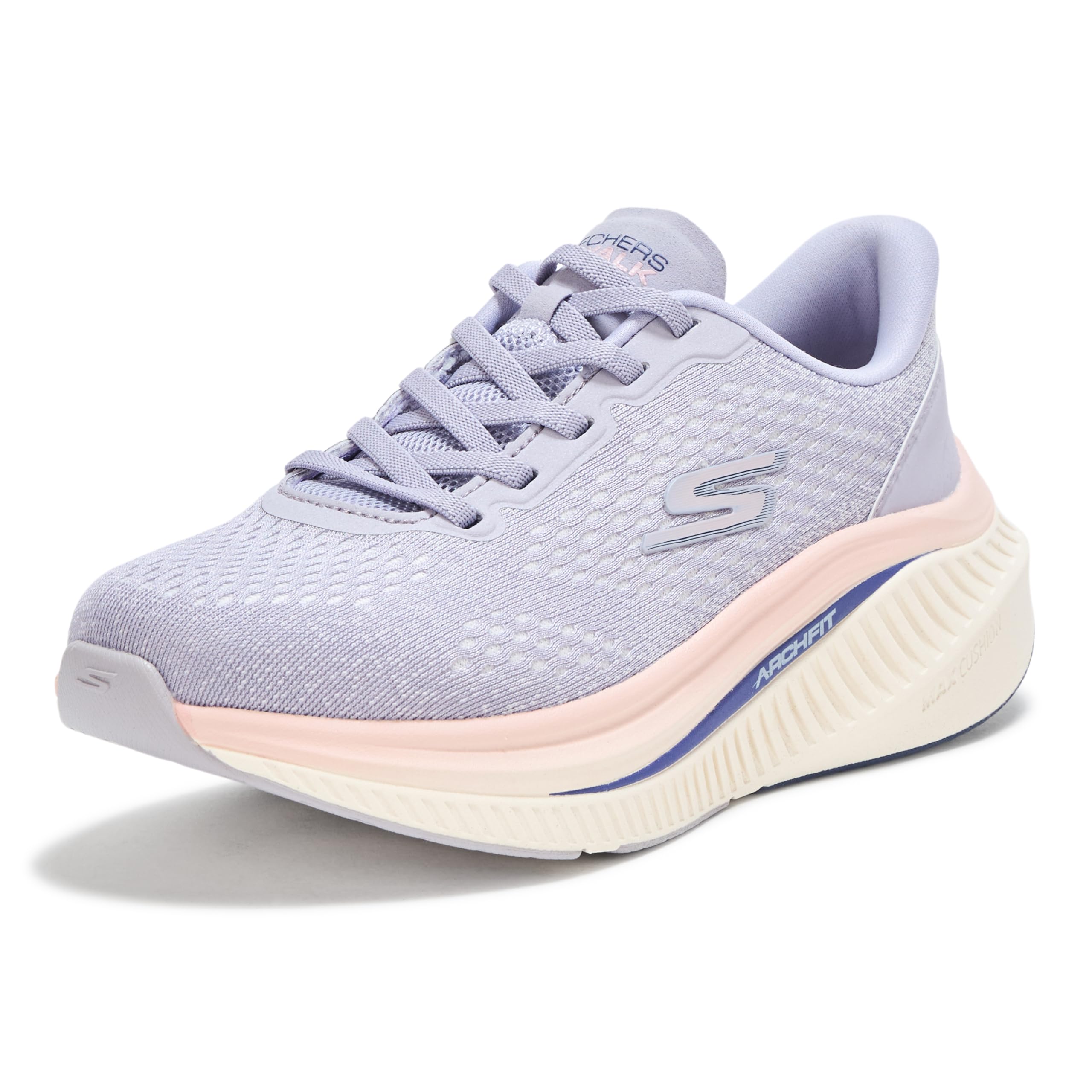
The Arch Fit Roslyn combines Skechers’ thickest cushioning platform with a podiatrist-designed insole that contours to the arch. The Ultra Go foam stack is massive — you stand about two inches off the ground — which provides exceptional impact absorption for walkers who spend hours on hard surfaces like tile or concrete. The insole is removable and certified by the American Podiatric Medical Association, with a deep arch pocket that supports flat feet without forcing an unnatural curve.
Where this shoe differs from traditional stability models is the approach: instead of a rigid medial post, the Arch Fit Roslyn relies on the insole contour and a wide base to reduce pronation. It works well for walkers with flexible flat feet who don’t need aggressive motion control but do need fatigue reduction over long distances. The mesh upper is stretchy and accommodates swelling feet, which is common during extended standing shifts.
The outsole uses a zigzag traction pattern with a rocker geometry that propels you forward with less effort. The trade-off is that the foam compresses noticeably under heavier loads — above 180 pounds, the medial side may show wear after 200 miles. For lightweight to average-weight walkers, the Arch Fit Roslyn is a plush, forgiving shoe that makes flat feet feel less fatigued at the end of the day.
Why it’s great
- APMA-certified Arch Fit insole provides deep, targeted arch support
- Ultra Go foam stack absorbs shock effectively on hard surfaces
- Stretchy upper accommodates foot swelling during long wear
Good to know
- Heavy users may compress the foam prematurely on the medial side
- Not suitable for severe overpronation — lacks a rigid medial post
6. Skechers Women’s Max Cushioning Endeavour Canova
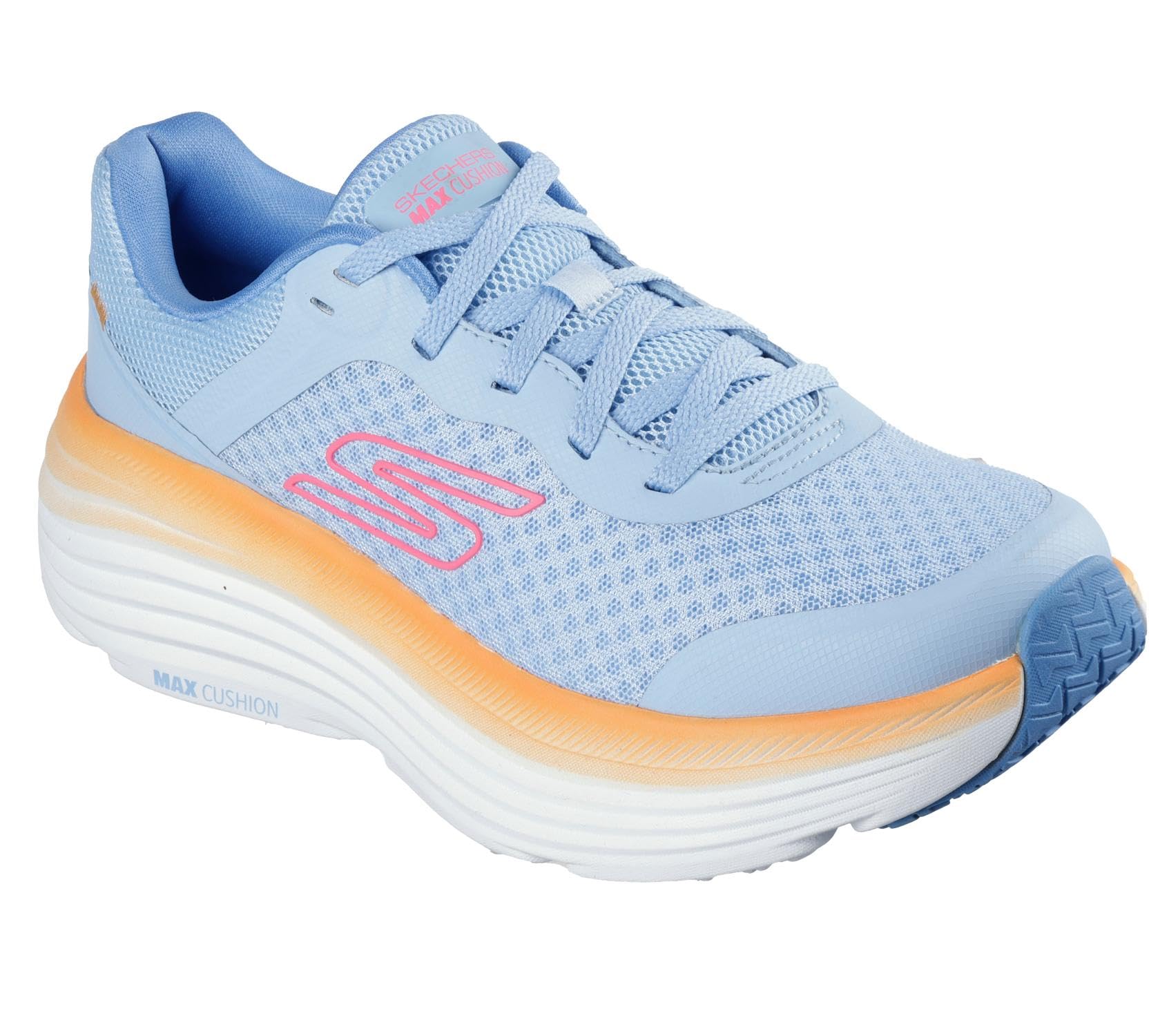
The Max Cushioning Endeavour Canova is the entry-level option for flat feet that just need more foam and a relaxed interior. The sole uses Skechers’ thickest cushioning slab, which delivers a soft, bouncy ride that reduces heel strike impact. The Relaxed Fit upper — wider in the toe box and midfoot — gives flat, splayed feet room to breathe without compression points.
There’s no built-in arch support or medial post, so this shoe won’t correct overpronation on its own. But for flat feet with mild pronation or for users who already own custom orthotics, the Endeavour Canova works as a roomy, lightweight shell. The insole is removable, and the interior volume is generous enough to accommodate a thick orthotic without squeezing the sides. The outsole uses a multi-directional traction pattern that grips well on wet pavement.
The biggest limitation is durability: the Max Cushioning foam starts to show compression creases around the heel after 150-200 miles, and the upper’s knit material lacks structure for lateral support. This is a budget-friendly shoe that prioritizes softness and space over stability. It’s ideal for casual wear, short walks, and standing work where arch support is handled by an insert rather than the shoe itself.
Why it’s great
- Generous Relaxed Fit upper accommodates wide feet and orthotics
- Thick Max Cushioning sole provides excellent impact absorption
- Removable insole allows customization with aftermarket arch supports
Good to know
- No built-in medial stability — relies entirely on inserts for arch control
- Foam compresses faster than premium alternatives, reducing longevity
7. New Balance Women’s Fresh Foam Arishi V4

The Fresh Foam Arishi V4 is a lightweight daily trainer that prioritizes a smooth, cushioned ride over active stability. The Fresh Foam midsole uses a single-density compound with a molded heel cup that provides moderate rearfoot control, but there’s no medial post or guide rail to correct pronation. This makes it a better match for flat feet that remain neutral during gait — or for walkers who pair it with an over-the-counter arch support insert.
The upper is constructed with a no-sew engineered mesh that reduces irritation points and wraps the foot without tight spots. The lace-up closure allows micro-adjustments across the instep, which is useful for flat feet that need a snug midfoot lock without pressure over the arch. The outsole uses a combination of solid and blown rubber with flex grooves, providing decent traction and a flexible toe-off.
The Arishi V4 weighs just under nine ounces, making it the lightest shoe on this list — a significant advantage for travelers or gym-goers who pack multiple pairs. The trade-off is structural: the foam softens quickly, and the upper lacks the lateral support of heavier stability shoes. For flat feet that don’t overpronate aggressively and want a featherweight option for casual wear or light jogging, the Arishi V4 delivers a clean, no-fuss ride.
Why it’s great
- Very lightweight at under nine ounces — ideal for travel and gym bags
- Fresh Foam midsole offers a smooth, consistent ride
- No-sew upper eliminates hot spots and pressure points
Good to know
- No stability features — flat feet need an insert for pronation control
- Midsole compresses faster than premium foams, reducing long-term support
FAQ
Can I wear neutral running shoes if I have flat feet?
How do I know if a shoe has enough arch support for my flat foot?
Should I buy stability shoes or add orthotic inserts to neutral shoes?
How often should I replace shoes for flat feet?
Final Thoughts: The Verdict
For most users, the ladies shoes for flat feet winner is the Brooks Adrenaline GTS 25 because its Guide Rails system provides reliable pronation control while the DNA Loft v3 midsole keeps the ride comfortable for all-day wear. If you want a neutral shoe with exceptional cushioning for long miles on hard pavement, grab the Brooks Ghost 17. And for casual flats that pack serious orthotic support into a low-profile silhouette, nothing beats the Vionic Hayes Skimmers.