The problem with most athletic shoes is they force you to choose between cushioned heel drops for running and stiff flat platforms for lifting. Your cross-training workout demands both, and generic trainers sacrifice one for the other, leaving you unstable under a barbell or jarred during box jumps.
I’m Emma — the founder and writer behind Baby Bangs. I’ve spent years dissecting the material science of hybrid training footwear, analyzing stack heights, toe-spring angles, and rubber compound durability across the mid-range and premium tiers of the market.
This guide breaks down the seven most important models vetted for lateral stability, heel lockdown, and midfoot torsional rigidity, helping you find your perfect pair of ladies cross training shoes.
How To Choose The Best Ladies Cross Training Shoes
Cross training is multi-directional by nature. You squat, lunge, jump, sprint, and side-shuffle in a single session. A running shoe’s soft midsole compromises stability under load, while a lifting flat lacks the shock absorption for box jumps. You need a shoe engineered for all of it.
Heel-to-Toe Drop: The Hybrid Sweet Spot
The drop describes the height difference between the heel and forefoot. Running shoes typically have an 8mm-12mm drop, which shifts your weight forward. Lifting demands a flatter platform, usually 0mm-4mm, to keep your foot grounded. The best cross trainers sit between 4mm-6mm. This range offers enough forefoot cushion for impact without lifting your heel so high that you lose squat stability.
Midsole Stiffness and Torsional Rigidity
Twist the shoe laterally. If it bends easily from side to side, it lacks the rigidity needed for lateral lunges and side planks. Look for a shoe with a TPU midfoot shank or a reinforced chassis. This stops the shoe from collapsing during lateral cuts and keeps the midfoot stable under heavy loads.
Outsole Pattern and Rubber Compound
The outsole is your contact patch. A flat, full-length rubber outsole with multi-directional traction lugs grips the floor during dynamic moves. Avoid road-running outsoles with raised, soft pods. They wear down fast inside the gym and slip on polished weight-room floors.
Upper Construction and Toe-Box Volume
Your foot expands during lifting. A narrow toe-box compresses toes and reduces stability. Look for a seamless mesh upper with a TPU cage that wraps the midfoot without pinching. The mesh should breathe but the overlay structure must lock the heel and prevent the foot from sliding forward during burpees.
Quick Comparison
On smaller screens, swipe sideways to see the full table.
| Model | Category | Best For | Key Spec | Amazon |
|---|---|---|---|---|
| adidas Womens Dropset 3 Training | Premium | Heavy lifting & high-impact plyo | 4mm drop, TPU arch plate | Amazon |
| Nike Women’s in-Season Tr 14 | Premium | HIIT & studio classes | 8mm drop, rubber wrap up the sidewall | Amazon |
| Reebok Nano Gym | Premium | CrossFit & functional fitness | 0mm drop, rope-climb guard | Amazon |
| Nike Womens Free Metcon 6 | Mid-Range | Speed work & agility drills | 6mm drop, flexible forefoot | Amazon |
| Reebok Nanoflex TR 2.0 | Mid-Range | Budget-friendly gym rotation | 6mm drop, slip-resistant outsole | Amazon |
| Under Armour Women’s Project Rock 4 | Mid-Range | Durable everyday training | Lightweight mesh, lace-up closure | Amazon |
| PUMA Women’s Softride Sera | Budget | Casual gym & light routines | Soft foam midsole, low-top knit | Amazon |
In‑Depth Reviews
1. adidas Womens Dropset 3 Training
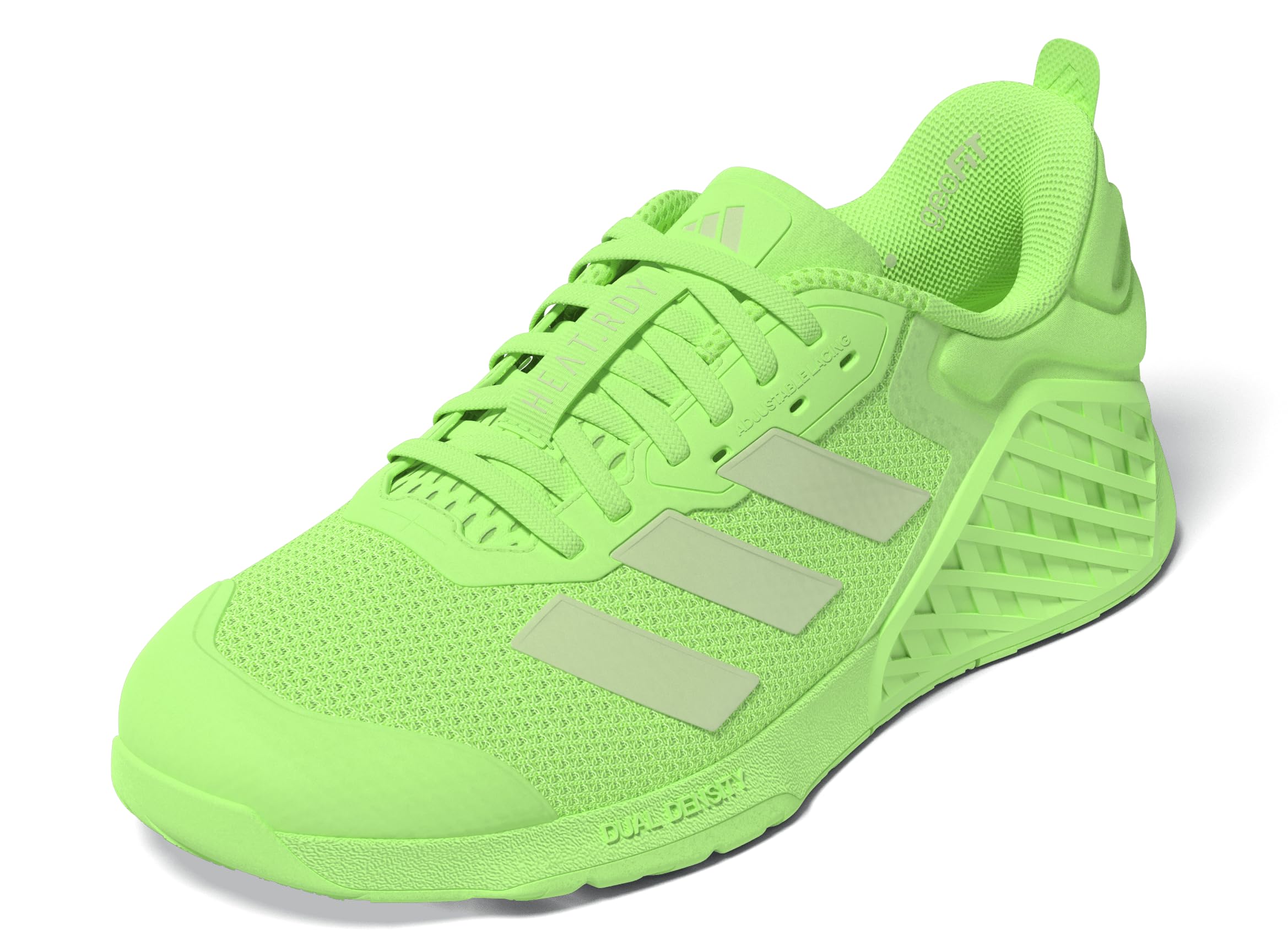
The Dropset 3 sits at the top because it nails the hybrid balance. A 4mm heel drop keeps your hips low under a squat while the TPU midfoot arch plate locks your foot flat on deadlifts. The full-length rubber outsole uses a directional tread pattern that bites hard on polished gym floors during lateral slides.
Adidas built the upper with a dual-layer mesh. The inner layer wicks moisture, the outer TPU cage wraps the midfoot without digging into the instep. The heel counter is rigid foam — not plastic — so it holds your heel down during box jumps without creating hot spots. The toe-box gives enough lateral room for toe splay during heavy split squats.
Runners transitioning to cross training will notice the firmer midsole. This is not a cloud-like step. It transmits ground feel so you can push off with intent. The trade-off is less rebound for running, but the stability during lifting more than compensates for that gap.
Why it’s great
- TPU plate creates an immovable base for squats and deadlifts.
- Multi-directional outsole pattern grips during side cuts.
- Breathable mesh with precise heel lock.
Good to know
- Firmer than most casual gym shoes — takes a session to adapt.
- Not ideal for runners who want high energy return.
2. Nike Women’s in-Season Tr 14
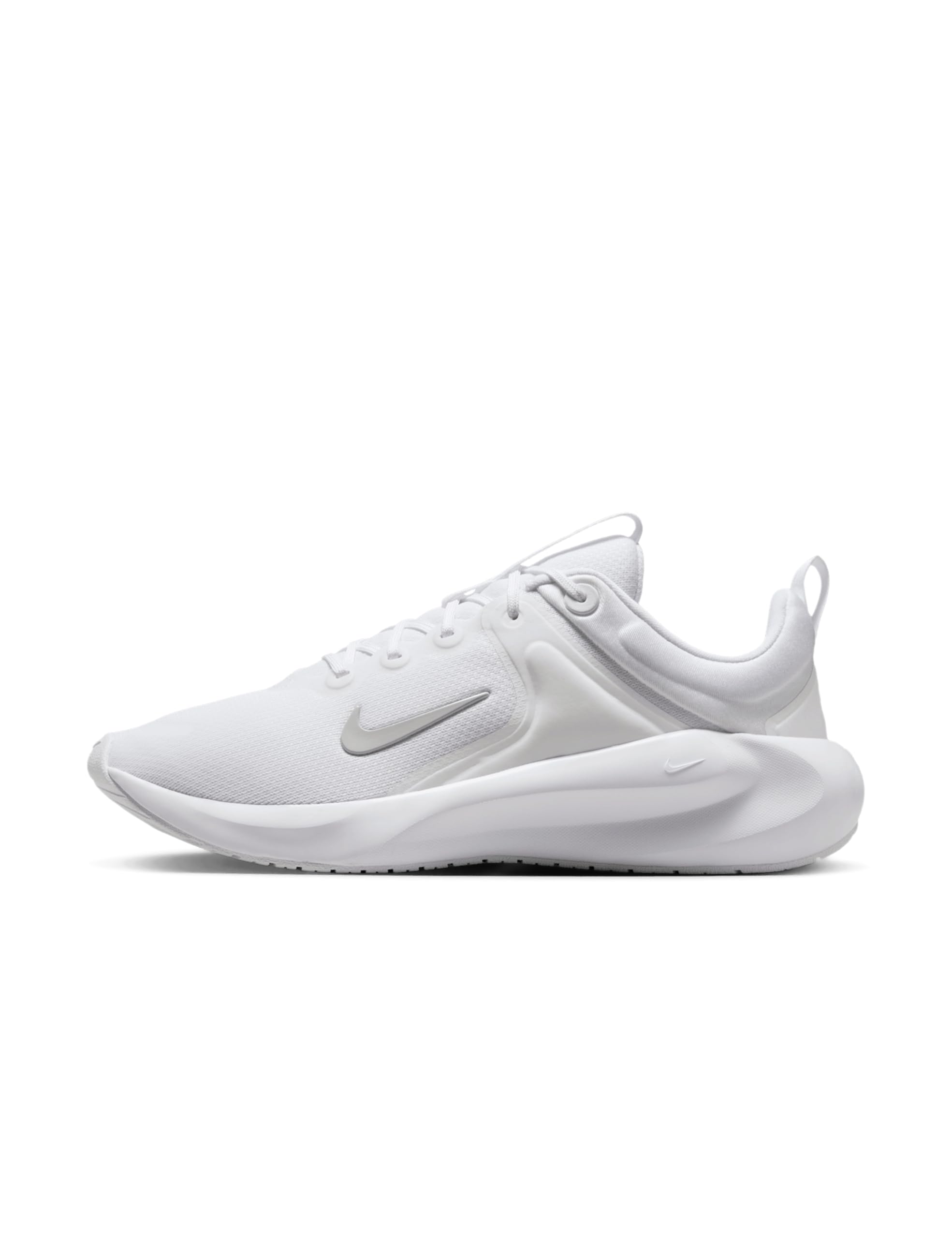
The in-Season Tr 14 targets the HIIT studio athlete. An 8mm heel drop offers more cushion than the Dropset, making it better for jumping rope, burpees, and agility ladder work. Nike wraps the rubber outsole partway up the sidewall, so when you cut hard laterally the exposed foam does not compress into instability.
Nike uses a stretch-woven upper with targeted zones of density. The forefoot mesh flexes freely for sprint starts, while the midfoot area has stiffer thread density to resist stretch when you brace for a squat. The heel pocket is padded and contoured to match a woman’s narrower Achilles angle, reducing slip during high-rep overhead work.
The midsole uses a dual-density foam — firmer around the heel landing zone, softer under the forefoot for push-off. This design makes it a specialist for interval-based training but less stable for 1-rep max deadlifts. The toe-box also runs slightly tapered, so women with wider feet may need to half-size up.
Why it’s great
- Sidewall rubber wrap for lateral cut stability.
- Cushion-heavy midsole softens high-impact landings.
- Good ankle collar support for multi-planar moves.
Good to know
- 8mm drop is high for heavy barbell work.
- Narrow toe-box may crowd wide feet.
3. Reebok Nano Gym
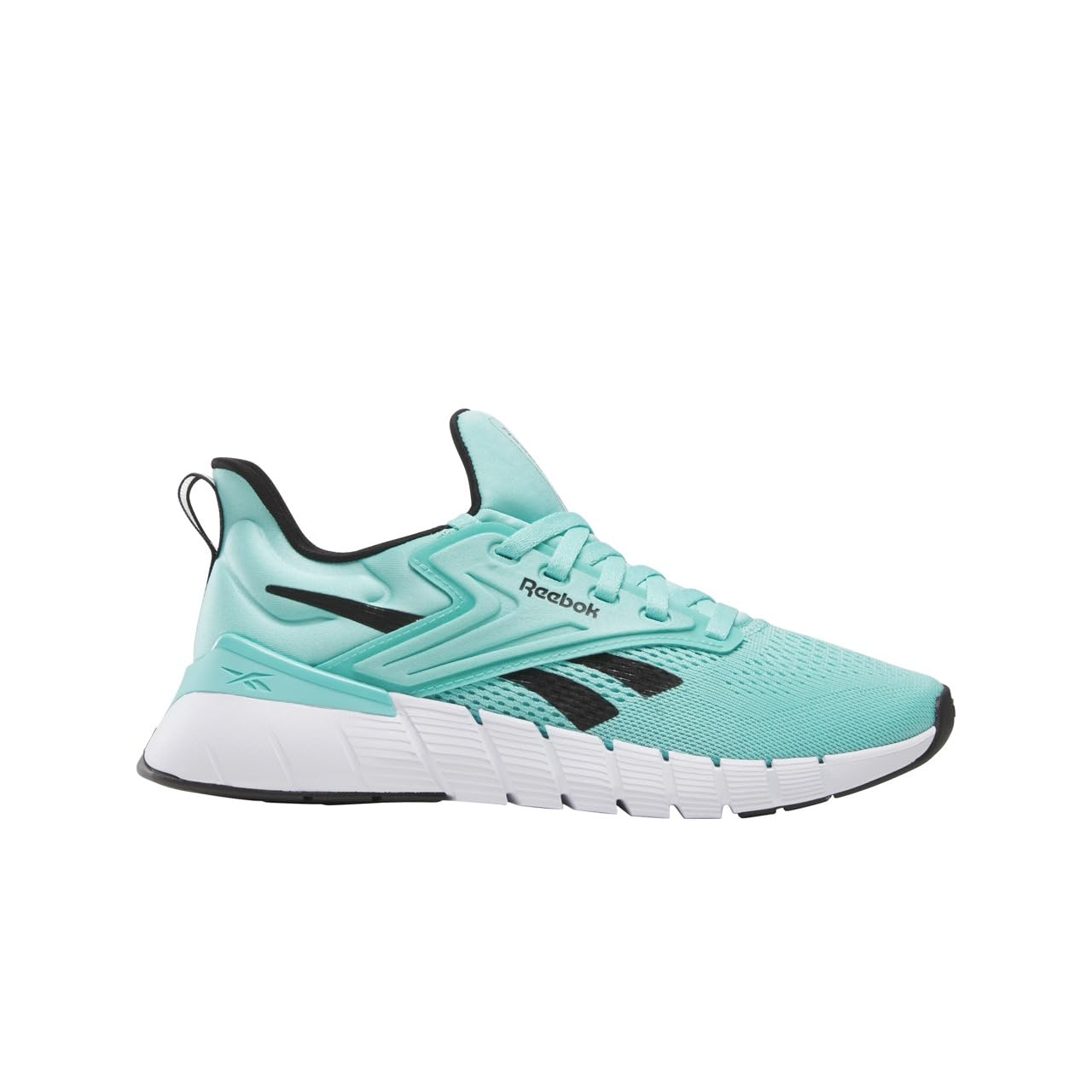
Reebok built the Nano Gym specifically for functional fitness. The 0mm drop places your foot flat on the floor — the same geometry as a traditional lifting flat, but with enough midsole foam to absorb drop landings from a 20-inch box. The outsole is flat and wide, spreading your base of support for overhead squats.
The upper features a reinforced rope-climb guard that runs from the medial midfoot to the top of the toe cap. This woven TPU layer resists abrasion from 10-foot rope ascents. The interior is seamless and uses a bootie construction that pulls the midfoot in without a bulky tongue. The heel counter is low profile to avoid rubbing during ankle flexion in deep squats.
This shoe sacrifices forefoot flexibility for stability. It feels stiff during walking lunges compared to the Free Metcon. But for anyone doing climbing, heavy clean-and-jerks, or wall balls, the stiff platform and flat outsole translate every watt of force directly into the floor.
Why it’s great
- Zero-drop platform for optimal lifting mechanics.
- Durable rope-climb guard extends shoe life.
- Wide flat outsole aids balance under load.
Good to know
- Stiff upper makes walking transitions less fluid.
- Lacks forefoot flex for running bursts.
4. Nike Womens Free Metcon 6

The Free Metcon 6 splits the difference between a running shoe and a lifting shoe. The 6mm drop is the mid-range gold standard. Nike’s Free sole uses deep flex grooves across the forefoot that allow natural toe splay during lunges and sprints, while a firmer foam block under the heel provides stable landing for jump rope.
The upper is a single-layer engineered mesh with a minimal TPU wrap at the lace line. This makes the shoe lighter than both the Dropset and the Nano, which is a real advantage during agility drills and sprint intervals. The heel counter is internal and flexible but still holds your foot when you drop into a squat.
The primary compromise is lateral rigidity. Twist it and the forefoot flex grooves allow more torsion than the Nano or Dropset. This makes it less ideal for heavy lateral shuffling or side plank walks. But for women who mix light lifting with a lot of speed work, this is the lightest option that still supports moderate loads.
Why it’s great
- Flex grooves allow natural foot motion during sprints.
- Lightweight upper reduces fatigue in long HIIT sessions.
- Versatile 6mm drop works for lifting and running.
Good to know
- Less lateral stability than the Dropset or Nano.
- Forefoot cushion is thin for heavy box jumps.
5. Reebok Nanoflex TR 2.0
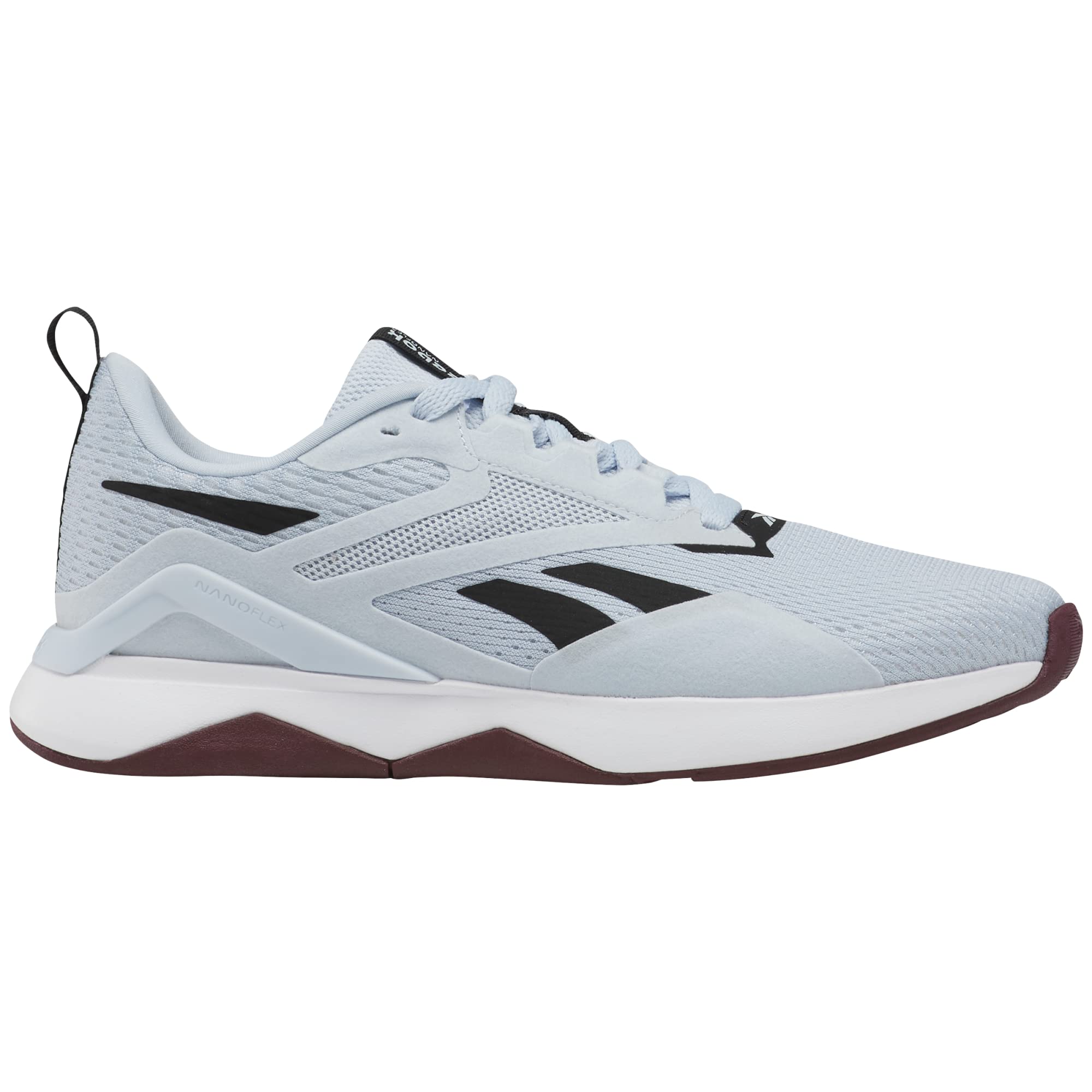
The Nanoflex TR 2.0 brings a 6mm drop and a slip-resistant outsole to a mid-range price point. It is the training flat for women who want the Nano’s DNA without spending for the full gym-specific platform. The outsole uses geometric traction lugs oriented diagonally to catch the floor during lateral lunges.
Reebok uses a knit upper with fused overlay panels instead of a separate TPU cage. This keeps the price lower and delivers decent breathability. The midfoot gets support from internal webbing that tighten when you cinch the laces.
The midsole foam is a standard EVA blend. It feels responsive out of the box and softens over 50 sessions. It lacks the dense foam of the Nano, so heavy deadlifts at 80 percent of your max will compress the heel more than you want. But for general circuit training and bodyweight workouts, the Nanoflex offers real cross-training capability at a real savings.
Why it’s great
- Affordable entry into the Reebok training platform.
- Diagonal outsole lugs grip lateral movements.
- Comfortable knit upper suits all-day wear.
Good to know
- Midsole compresses under heavy loads.
- Less lateral support than premium trainers.
6. Under Armour Women’s Project Rock Blood Sweat Respect 4
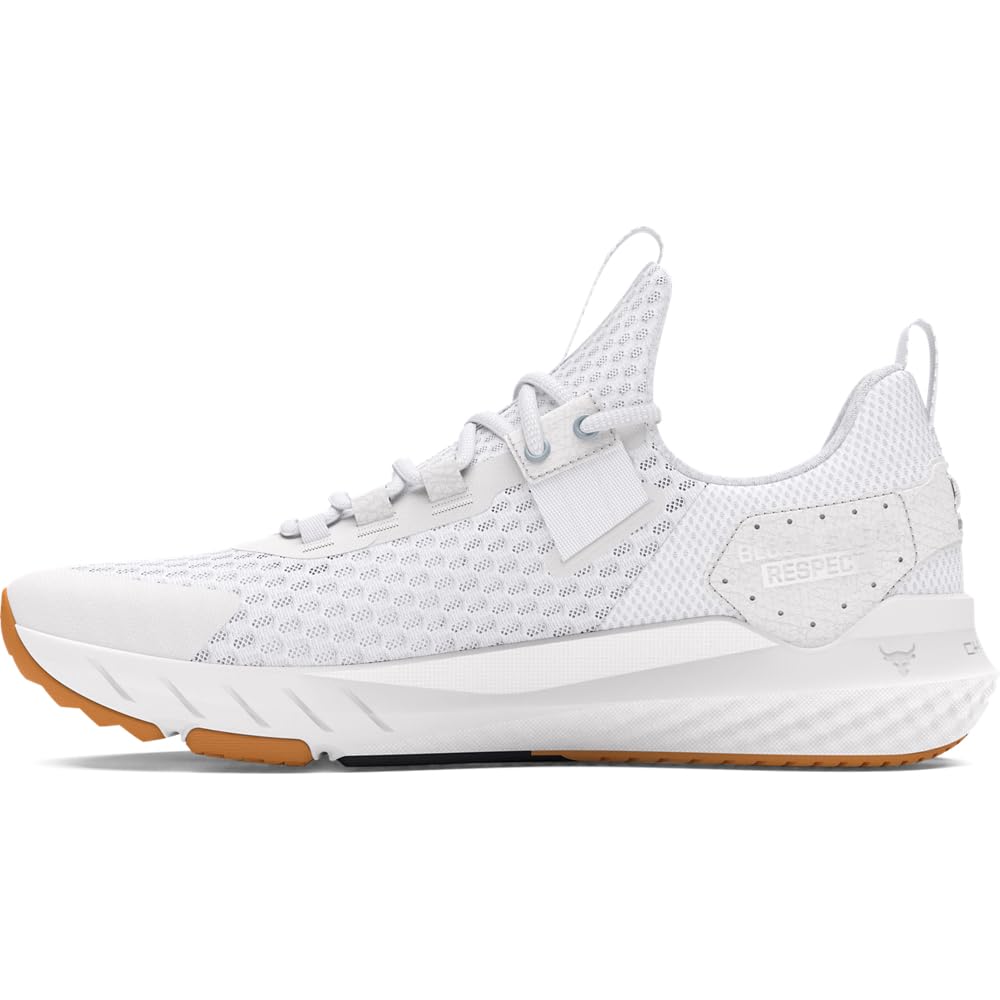
The Project Rock 4 is designed by Dwayne Johnson for heavy, gritty training. The upper uses a lightweight engineered mesh reinforced with fused TPU threads rather than separate panels — this makes the shoe resistant to tearing during rope climbs and wall balls. The lace system runs through a standard eyelet row, giving you good midfoot tension adjustment.
Under Armour beds a full-length Micro G foam midsole that sits on a firm EVA carrier. The stack is moderate, landing in the 8mm-10mm drop range, which gives you more heel cushion than the Nanoflex or Dropset. It absorbs high-impact landings well, but the heel compression under a heavy squat is noticeable — the foam is built for comfort first.
The outsole is a high-abrasion rubber with a multi-directional tread pattern. It holds on dusty floors and chalk-slick patios. The toe-box offers good vertical space for toe splay. The heel counter is external and stiff, which stops unwanted movement during hill sprints. This shoe values durability and cushion over pure lifting stability.
Why it’s great
- High-abrasion outsole extends lifespan.
- Engineered mesh resists tears from equipment.
- Thick cushioning softens heavy landings.
Good to know
- Heel drop is high for optimal squat form.
- Foam compresses under maximal loads.
7. PUMA Women’s Softride Sera
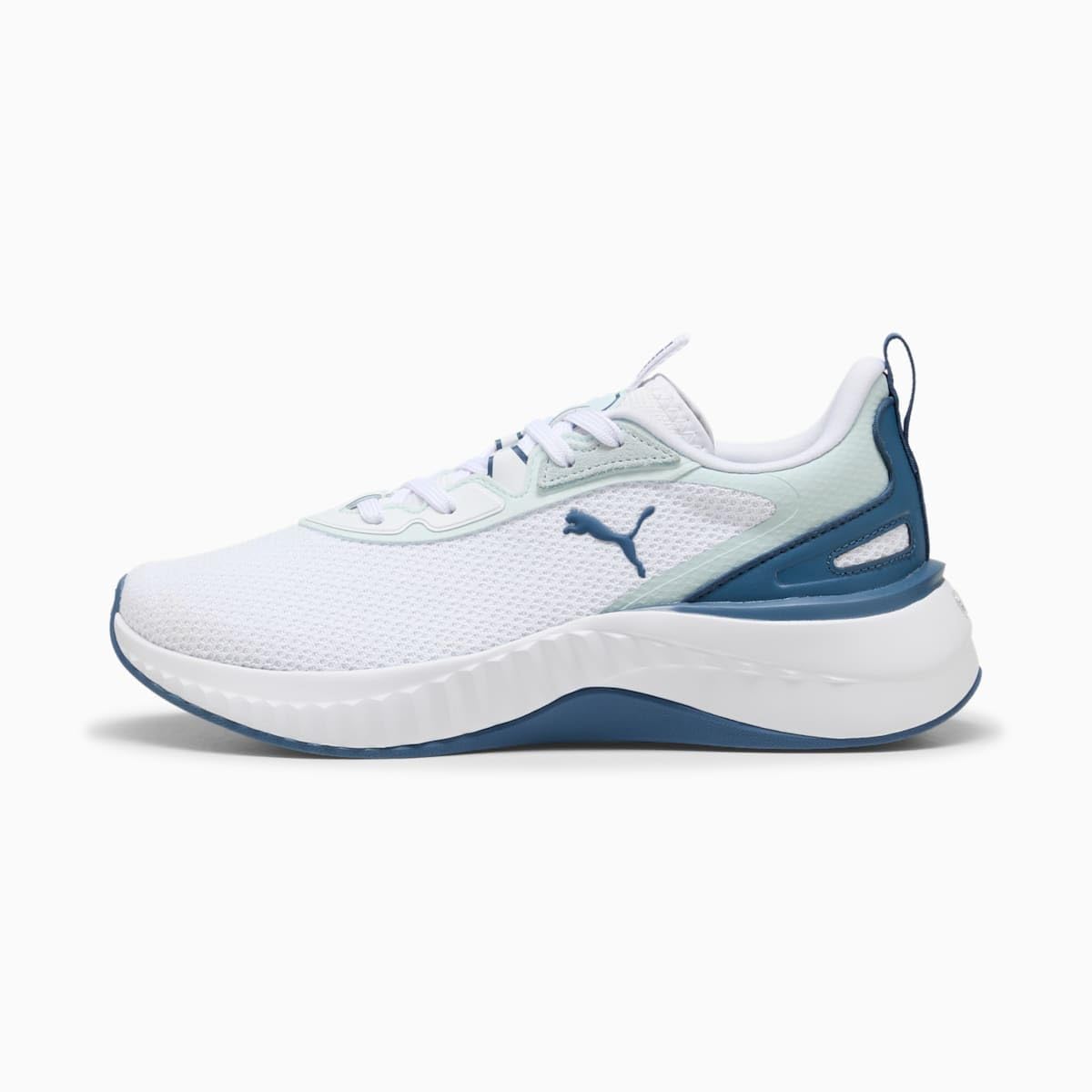
The Softride Sera is the entry-level option for women who want a gym shoe for moderate circuit classes and cardio machines. PUMA uses a proprietary Softride foam midsole that feels plush under the heel — it compresses noticeably with each step, giving you a soft landing on treadmills and ellipticals. The 8mm drop leans toward the running shoe spectrum.
The upper is a low-top knit with a thin woven overlay at the lace eyelets for structure. It is flexible and light, which helps during walking lunges and step-ups, but it lacks the lateral containment needed for fast side shuffles or agility ladder footwork. The outsole uses a segmented rubber pattern that grips well on dry surfaces but leaves the midfoot exposed EVA.
Do not buy this shoe for heavy Olympic lifting or CrossFit. The soft midsole compresses too much under a loaded barbell, and the knit upper does not lock the foot for lateral cuts. But for women starting their training journey, doing 30-minute HIIT circuits or treadmill intervals, the Softride Sera gives a comfortable ride at the most accessible price point.
Why it’s great
- Plush foam midsole softens treadmill impact.
- Flexible knit upper suits walking-dominant routines.
- Low-starting price point for beginning gym users.
Good to know
- Foam compresses under heavy loads — not for lifting.
- Minimal lateral support for agility work.
FAQ
What heel drop is best for women who squat and run in the same session?
Can I use running shoes for cross training at the gym?
How do I know if a shoe has enough lateral support for side-to-side drills?
Final Thoughts: The Verdict
For most users, the ladies cross training shoes winner is the adidas Womens Dropset 3 Training because its 4mm drop and TPU arch plate deliver stable lifting while still offering enough cushion for high-impact plyo. If you prioritize speed work and light lifting, grab the Nike Womens Free Metcon 6. And for CrossFit and heavy barbell cycles, nothing beats the Reebok Nano Gym.