Finding a dependable kitchen knife that doesn’t demand a second mortgage on your home is the real test of a smart cook. The best options cut cleanly, hold that edge through a week of meal prep, and balance comfortably in your hand without forcing you into a tough financial corner.
I’m Emma — the founder and writer behind Baby Bangs. I’ve spent years breaking down the practical differences between stamped and forged construction, steel grades, and handle ergonomics to find the real winners for your kitchen.
Whether you are stocking a first apartment or upgrading a starter block, the current market for knives under $50 is packed with surprisingly capable steel that rewards careful research and honest expectations.
How To Choose The Best Knives Under $50
In this price range, manufacturers achieve affordability through stamped construction, plastic or molded handles, and simpler edge geometries. That isn’t a weakness — it means you can get a sharp, functional blade for everyday tasks if you know which compromises are safe. The trick is to prioritize steel quality, handle security, and overall blade balance over flashy extras or lofty blade counts in a set.
Steel Quality and Edge Retention
High-carbon stainless steel is the baseline you want. It resists rust better than plain carbon steel and takes a finer edge than standard stainless. A blade stamped from a single sheet of this steel, then hardened properly, will hold its edge for weeks of normal use. Avoid novelty stainless blends that feel lightweight and dull quickly after a few onions.
Handle Ergonomics and Grip
Your hand will thank you for a handle that provides texture and a secure pinch grip. Look for Santoprene (rubberized), Pakkawood, or contoured plastic with finger points. A smooth, round plastic handle often rotates in the palm and causes fatigue during longer prep sessions. Also consider the handle-to-blade weight ratio — a front-heavy blade requires more wrist effort to control.
Construction: Stamped vs. Forged
True forged knives are rare below the $50 mark. Most options here are stamped, meaning the blade is cut from a rolled sheet of steel, then heat-treated. A properly heat-treated stamped blade can be very sharp, but it will generally be thinner and more flexible than a forged one. That flexibility matters for delicate slicing but can be a downside for heavy chopping. A full tang (the steel runs through the whole handle) adds heft and balance — a strong indicator of quality at any price.
Quick Comparison
On smaller screens, swipe sideways to see the full table.
| Model | Category | Best For | Key Spec | Amazon |
|---|---|---|---|---|
| Sunnecko 8 Inch Chef Knife | Chef Knife | Precision slicing and all-day prep | 12-15° edge angle, Pakkawood handle | Amazon |
| EWFEN 14-Piece Knife Set | Knife Set | Complete kitchen with built-in sharpener | Forged blades, full tang, 14 pieces | Amazon |
| Mercer Culinary Millennia 8-Inch | Chef Knife | Professional-grade daily workhorse | High-carbon Japanese steel, Santoprene grip | Amazon |
| Amazon Basics 14-Piece Set | Knife Block Set | First kitchen or rental starter | Full tang, pinewood block, sharpener | Amazon |
| Amazon Basics 12-Piece Set | Color-Coded Set | Budget-friendly color-coded prep | Non-stick coating, 6 blade covers | Amazon |
In‑Depth Reviews
1. Sunnecko 8 Inch Chef Knife

The Sunnecko stands out for its hand-sharpened 12-15 degree edge, which is noticeably more acute than the standard 20-degree bevel found on most blades near this price. That translates to effortless push cuts through tomato skins and raw meat without compression. The high-carbon stainless steel is forged rather than stamped, giving it a denser feel and better edge retention for prolonged prep sessions.
Pakkawood handle adds a warm, dry grip that improves with moisture — the opposite of slick plastic handles. The steel bolster provides proper weight balance for the pinch grip technique, reducing wrist fatigue. It comes with a fitted PVC sheath, which is rare at this price level and helps protect that fragile acute edge in storage.
The thinner edge geometry means you should avoid twisting the blade in hard vegetables or using it on bones. Hand washing is mandatory to preserve the Pakkawood finish and fine edge. It’s a single-purpose tool — a chef’s knife that does 90% of tasks beautifully but does not replace a serrated bread or boning knife.
Why it’s great
- Exceptional 12-15° edge angle for premium slicing performance
- Pakkawood handle stays grippy even when wet
- Full tang and steel bolster for balanced weight distribution
Good to know
- Thin edge requires careful use; avoid twisting or bone contact
- Not dishwasher safe; needs hand washing and drying
- Single chef knife only — need separate tools for bread or boning tasks
2. EWFEN 14-Piece Kitchen Knife Set with Block
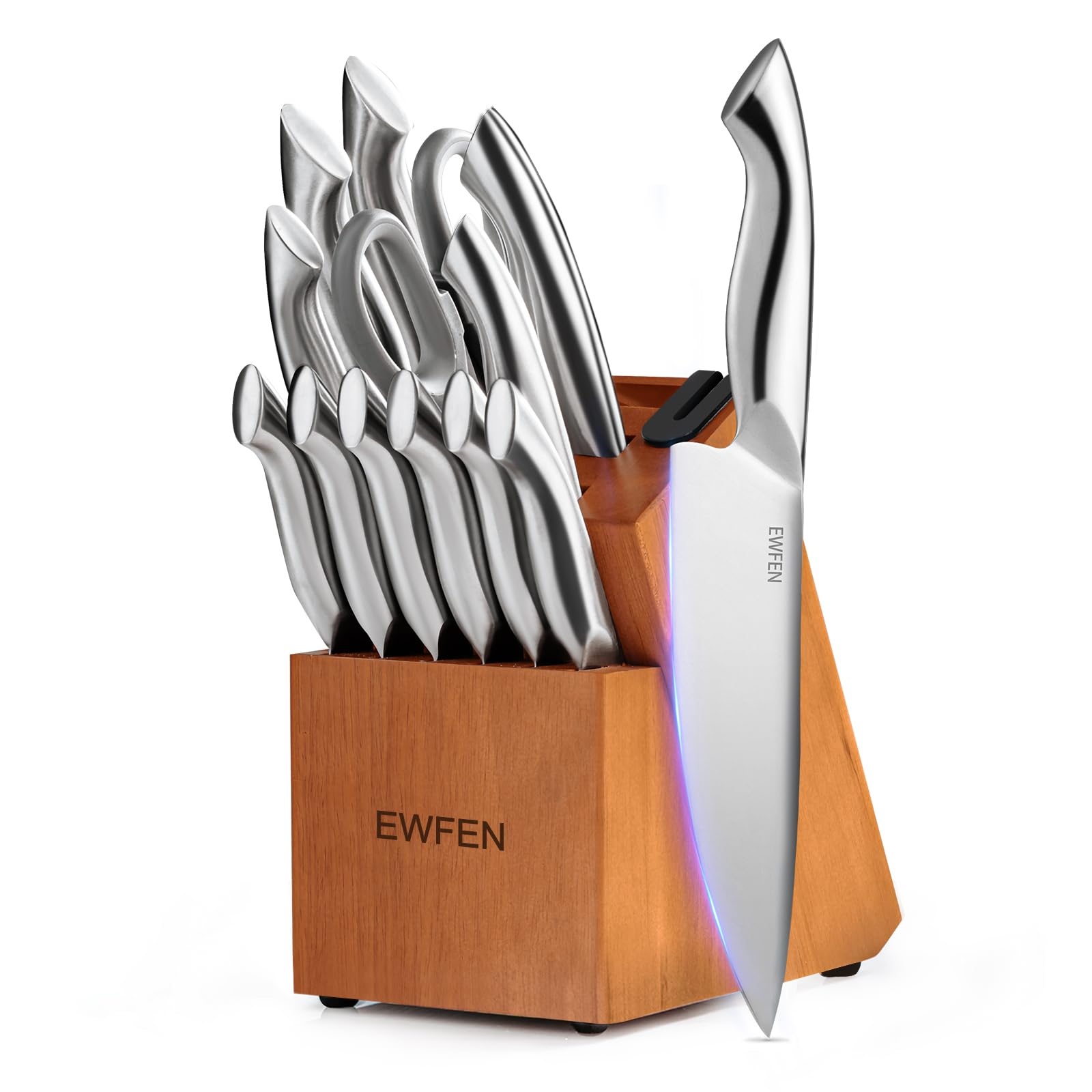
EWFEN packs a 14-piece set that includes chef, santoku, slicing, bread, utility, paring, six steak knives, and shears — all housed in a block with a built-in sharpener. The blades are forged from high-carbon stainless steel with full tang construction, which is rare for a set at this price point. The forged process gives the blades a denser structure and a slightly heavier feel than stamped alternatives.
The built-in sharpener slots are a genuine convenience for households that don’t own separate honing rods or whetstones. Pull the blade through a few times and you restore a workable edge. The curved ergonomic handles use stainless steel bolster and a full tang, making each knife feel balanced in hand.
While the sharpener is convenient, it removes more metal than a proper whetstone, so the blades will need replacement sooner than if you maintained them manually. The wooden block can trap moisture if not aired out regularly. The set covers every kitchen need in one box, but each individual knife lacks the precision feel of a dedicated chef’s knife like the Sunnecko or Mercer.
Why it’s great
- Forged, full tang blades at an accessible price
- Built-in sharpener extends usability without extra tools
- Comprehensive 14-piece set covers all kitchen cutting tasks
Good to know
- Built-in sharpener removes more metal than manual methods
- Wooden block needs periodic air-drying to prevent moisture buildup
- Individual knives lack the specialized balance of a premium single blade
3. Mercer Culinary Millennia 8-Inch Chef’s Knife
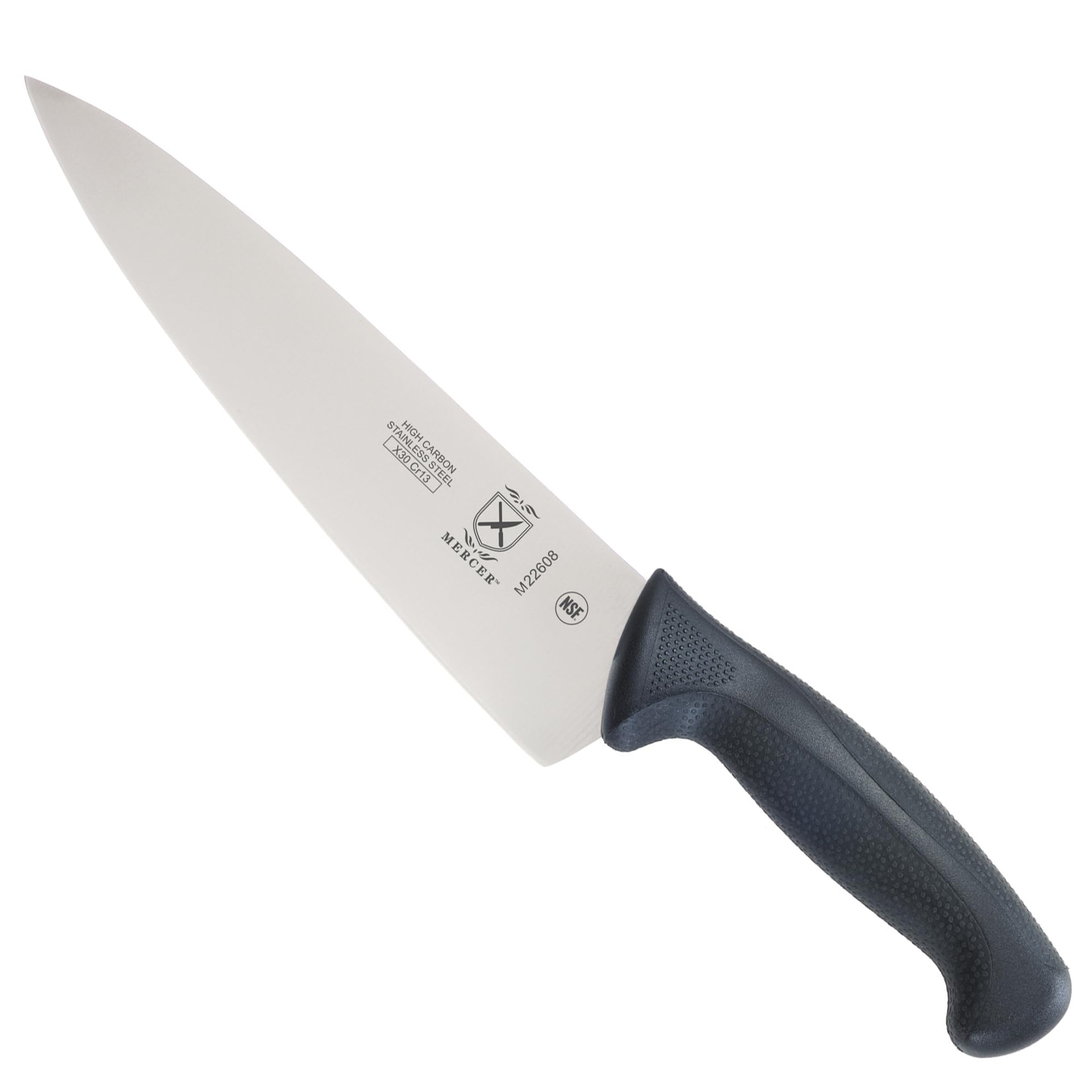
The Mercer Millennia is a standard-bearer for culinary school students and line cooks who need a blade that takes abuse without complaint. It uses one-piece high-carbon Japanese steel, which is easier to sharpen than cheaper stainless and holds a working edge through a full shift of prep. The stamped construction keeps weight low, but the steel composition ensures edge retention outperforms many forged knives that cost more.
Santoprene handle with textured finger points provides a secure, non-slip grip even when your hands are wet or oily. The handle-to-blade balance is neutral, making it comfortable for prolonged chopping, dicing, and mincing. At 6.7 ounces, it feels nimble and fast — ideal for thin slicing or brunoise work where precision matters.
The blade is not dishwasher safe despite some retailers claiming otherwise; hand washing is required to preserve the edge and handle integrity. The plain edge at a standard 20-degree bevel won’t glide through tomato skin quite as effortlessly as the Sunnecko’s acute angle, but it holds up better to twisting motions and general wear in a busy kitchen.
Why it’s great
- High-carbon Japanese steel with excellent edge retention
- Santoprene textured handle stays secure with wet hands
- Lightweight and balanced for prolonged prep without fatigue
Good to know
- Standard 20-degree edge less acute than premium alternatives
- Stamped blade can feel flexy under heavy chopping pressure
- Single chef knife only; no included sheath or guard
4. Amazon Basics 14-Piece High Carbon Stainless Steel Knife Set

Amazon Basics offers a 14-piece set that surprisingly includes full tang, triple-riveted handles and a solid pinewood block — features normally found on sets priced higher. The blades are high-carbon stainless steel, which resists corrosion better than plain stainless and takes a reasonable edge. The set covers eight blade shapes plus kitchen shears and a sharpening rod.
The full tang construction gives each knife a pleasant heft, but the stamped blades are thinner than the forged options in this guide. The sharpening rod included is a basic honing steel, not a true sharpener — it realigns the edge rather than grinding new metal. The ergonomic handles use plastic with a metallic finish, which can feel slightly slippery compared to Santoprene or Pakkawood.
The pinewood block is a decent space-saving solution but requires monthly air-drying to avoid musty smells. Hand washing is recommended despite the block’s convenience. This set is a solid choice for a first apartment or rental kitchen where you need variety without investing heavily, but expect the blades to dull faster than the premium single knives listed above.
Why it’s great
- Full tang construction across all knives for better balance
- Includes pinewood block and sharpening rod
- 14-piece variety covers nearly every cutting need
Good to know
- Stamped blades dull faster than forged alternatives
- Plastic handles can feel slippery when greasy
- Block requires regular air-drying to prevent moisture damage
5. Amazon Basics 12-Piece Color-Coded Knife Set

This color-coded set is the most affordable entry point on the list, targeting cooks who want to organize prep by type of food — red for meat, green for veg, blue for fish, and so on. The six blades come with matching blade guards, making drawer storage safer. The stainless steel blades feature a non-stick color coating that prevents food from clinging during slicing.
The coating does reduce drag through sticky ingredients like raw chicken or cheese, but it also blunts the blade geometry slightly. These knives are stamped from thin stainless steel, so they lack the heft and rigidity of fuller blades. The plastic handles are ergonomically shaped but smooth, which reduces grip security during wet cutting.
While the color-coded system is clever for reducing cross-contamination, the practical edge life is shorter than any other blade here. Hand washing is required despite the coating. This set works best for occasional cooks, dorm rooms, or as a temporary backup set. It won’t satisfy a serious home cook looking for real cutting performance.
Why it’s great
- Color-coded system reduces cross-contamination risk
- Non-stick coating helps with sticky foods
- Includes matching blade guards for safe drawer storage
Good to know
- Thin stamped blades lack durability for heavy chopping
- Smooth plastic handle can be slippery when wet
- Edge dulls faster than high-carbon steel alternatives
FAQ
Can I sharpen a knife with a non-stick coating?
Is a stamped blade worse than a forged blade?
Why should I avoid dishwasher-safe claims for budget knives?
Does a higher blade count in a set mean better value?
Final Thoughts: The Verdict
For most users, the knives under $50 winner is the Sunnecko 8 Inch Chef Knife because its acute 12-15 degree edge and balanced Pakkawood handle deliver performance that punches above its modest price bracket. If you want a complete kitchen solution with a built-in sharpener, grab the EWFEN 14-Piece Set. And for a rugged, no-nonsense workhorse that survives professional-style abuse, nothing beats the Mercer Culinary Millennia.