Nothing ruins a day on the water faster than a knife that tears through flesh instead of slicing cleanly, leaving mangled fillets and wasted meat on the cutting board. The difference between a frustrating hack job and a smooth, yield-maximizing cut comes down to one tool: a dedicated blade designed to follow the contours of the fish’s spine without resistance.
I’m Emma — the founder and writer behind Baby Bangs. I’ve spent years analyzing blade geometry, steel hardness ratings, and handle ergonomics across hundreds of kitchen and outdoor knives to separate marketing fluff from real performance.
This guide breaks down the seven most effective options on the market so you can confidently choose the right knife for cutting fish that matches your skill level and the species you target most frequently.
How To Choose The Best Knife For Cutting Fish
Selecting the right blade for the job isn’t about brand loyalty or aesthetics — it’s about matching blade geometry and steel composition to the specific fish you clean. Panfish, walleye, salmon, and large tuna each demand different flex patterns and edge angles to maximize yield.
Blade Flexibility and Length
Flexibility determines how well the knife follows the rib cage without digging into bone. Short, stiff blades work for small panfish and bait preparation, while a medium-flex 7-to-9-inch blade handles trout, bass, and salmon. Ultra-flex blades are best for skinning thin fillets off flatfish like flounder. Match blade length to the average size of your target species — a 9-inch blade on a 12-inch fish gives you almost no control.
Steel Hardness and Edge Retention
Harder steel, measured by the Rockwell C scale, holds a sharper edge longer but becomes brittle and harder to sharpen in the field. Soft stainless around 54-56 HRC is easy to hone with a rod but dulls faster. Premium steels in the 60-62 HRC range, like VG-MAX or 10Cr15CoMoV, stay sharp through multiple fish but require diamond stones to maintain. For most anglers, a mid-range stainless steel around 56-58 HRC offers the best balance of edge life and field-sharpening convenience.
Handle Ergonomics and Grip
Wet hands and fish slime turn slick plastic handles into safety hazards. Look for textured thermoplastic rubber, contoured wood with a satin finish, or full-tang designs with textured scales. A finger guard or raised bolster prevents your hand from sliding onto the blade during a forceful cut. The handle shape should fill your palm without forcing your wrist into an awkward angle — trigger-grip grooves help maintain alignment during repetitive filleting sessions.
Quick Comparison
On smaller screens, swipe sideways to see the full table.
| Model | Category | Best For | Key Spec | Amazon |
|---|---|---|---|---|
| Victorinox Fibrox 8″ Fillet | Mid-Range | All-around freshwater filleting | 8-inch, stamped with flexible blade | Amazon |
| KastKing Intimidator Kit | Mid-Range | Multi-knife versatility on trips | G4116 German steel, 4-piece set | Amazon |
| Rapala Fish’n Fillet 7″ | Budget-Friendly | Entry-level precision filleting | Full-tang stainless, birch handle | Amazon |
| BUBBA Ultra Flex 6″ | Mid-Range | Detail work and skinning | 8Cr13MoV steel, ultra-thin blade | Amazon |
| KastKing Speed Demon Pro | Premium | High-volume electric filleting | Cordless, 1h40m runtime | Amazon |
| HOSHANHO Damascus 7″ | Premium | Sashimi-grade precision cuts | 67-layer Damascus, 62 HRC | Amazon |
| Shun Classic 6″ Boning | Premium | Kitchen-grade boning and filleting | VG-MAX core, Damascus cladding | Amazon |
In‑Depth Reviews
1. Victorinox Fibrox 8-Inch Fillet Knife
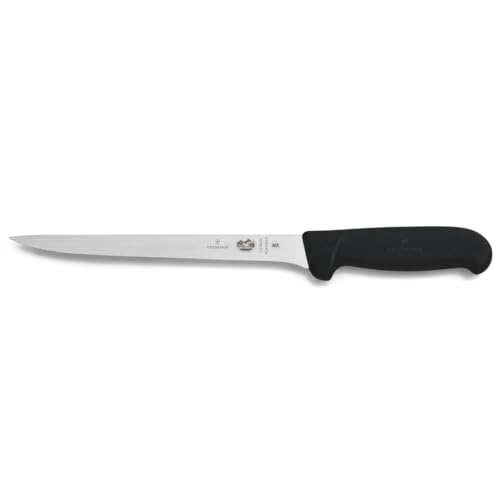
The Victorinox Fibrox has earned its reputation as the default choice for anglers who want a reliable, no-nonsense blade that just works. The 8-inch stamped stainless steel blade offers a medium flexibility that handles everything from bluegill to salmon without feeling flimsy or overly stiff. The thin profile glides under the skin and follows the rib cage cleanly, reducing wasted meat on every fillet.
The thermoplastic rubber handle is the standout feature here — it provides excellent grip even when your hands are coated in fish slime and water. The textured surface and slight finger groove keep your hand locked in position during repetitive cuts. At just 3.2 ounces, this knife disappears in your hand and won’t fatigue your wrist during long cleaning sessions on the dock or in the kitchen.
Edge retention is solid for a stamped blade at this level — you’ll want to hit it with a honing steel after every few fish, but it takes a fresh edge quickly. The Fibrox is also dishwasher safe, which makes post-trip cleanup effortless compared to wood-handled knives that require hand washing. For the combination of price, performance, and ease of maintenance, this is the benchmark other fish knives are measured against.
Why it’s great
- Excellent wet-grip handle outperforms many premium competitors
- Lightweight and balanced for fatigue-free filleting
- Dishwasher safe, making cleanup fast after messy sessions
Good to know
- Stamped blade dulls faster than forged options
- No included sheath for storage or transport
2. KastKing Intimidator Bait Knife and Filet Knives

The KastKing Intimidator set solves the problem of needing multiple blade profiles for different fish prep tasks. You get a 5-inch stiff bait knife with a serrated top edge for cutting frozen bait, a 7-inch and a 9-inch fillet knife with thin flexible blades, and a 9-inch steaking knife. The G4116 German stainless steel holds an edge noticeably longer than basic 420 steel, and the 62 HRC hardness means fewer stops to resharp during a heavy fishing trip.
The ergonomic handle design includes an index finger trigger grip that provides exceptional control, especially when making the precise cuts required for removing the rib cage without puncturing the belly cavity. The asymmetrical blade edge on the fillet knives combines a flat grind on one side with a slight convex on the other, which helps the blade steer along the bone rather than digging in. This geometry is particularly effective on larger fish like redfish and stripers.
The included honing rod and durable storage bag add real value — the bag keeps the blades separated and protected inside a tackle box or boat compartment. The knives are not dishwasher safe, so expect to hand wash and dry immediately to prevent any spotting on the German steel. For anglers who clean a variety of species and want dedicated blades for each step, this kit removes the need to buy knives individually.
Why it’s great
- Four specialized blades cover bait prep, filleting, and steaking
- German steel with higher hardness for longer edge life
- Index finger trigger grip improves blade control during detailed cuts
Good to know
- Hand wash only to protect the blade edges
- Storage bag is functional but not heavily padded
3. Rapala 7″ Fish’n Fillet Knife
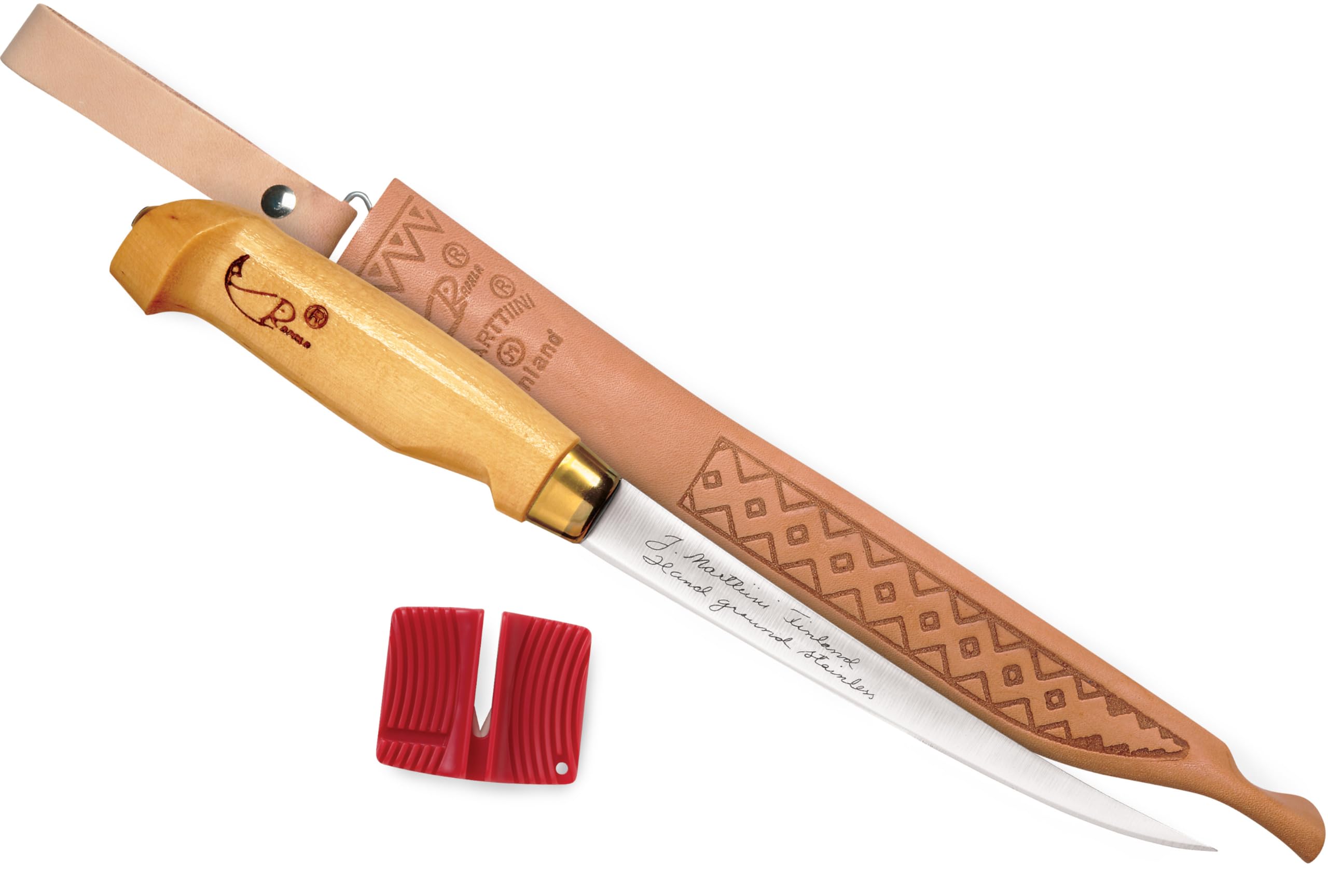
Rapala built their reputation on fishing gear, and this 7-inch fillet knife reflects that angler-first design philosophy. The full-tang stainless steel blade extends through the entire birch wood handle, giving the knife a balanced heft that feels more substantial than its price suggests. The tapered blade geometry allows smooth, straight cuts through the belly and along the backbone without excessive force.
The reinforced birch handle offers a classic, warm feel that plastic handles can’t match, though it does become slippery when wet. Rapala addresses this with a slight contour and a satin finish that provides acceptable grip for short cleaning sessions. The included single-stage sharpener is simple to use and restores the edge quickly, which is useful because the stainless steel at this price point loses its bite after cleaning a cooler full of fish.
The high-quality sheath with a belt loop makes this knife easy to carry on the water or store safely in a kitchen drawer. The 7-inch blade length is ideal for panfish, trout, and smaller bass but feels short for larger salmon or walleye. For the beginner angler or someone who cleans fish only a few times a season, this package delivers everything needed without overspending.
Why it’s great
- Full-tang construction adds durability and balance
- Includes sharpener and sheath for complete readiness
- Classic birch handle looks and feels great
Good to know
- Handle gets slippery when wet compared to rubber grips
- 7-inch blade is short for large fish species
4. BUBBA 6 Inch Ultra Flex Tapered Fillet Knife

The BUBBA Ultra Flex is purpose-built for the angler who values precision over speed. The 6-inch blade is exceptionally thin and flexible, allowing it to conform to the tight curves of a fish’s rib cage and produce clean fillets with almost no meat loss. The 8Cr13MoV high-carbon stainless steel takes a razor edge and retains it longer than the basic steel found on entry-level knives.
The non-slip grip handle features a trigger finger groove and a safety guard that protects your hand from both the blade and the sharp spines of fish like catfish and perch. The textured rubber surface provides outstanding grip security even when your hands are soaked, and the lanyard hole lets you attach a wrist strap for added security on a boat. The synthetic sheath is rigid enough to protect the thin blade during transport without adding bulk.
The ultra-thin blade does require careful handling — it can bend if you try to pry apart joints or cut through bone. This knife is designed exclusively for slicing and following contours, not for heavy-duty chopping. The 6-inch length makes it ideal for detailed skinning and trimming, but you’ll want a longer blade for initial cuts on large fish. It makes an excellent secondary knife to pair with a longer 8 or 9-inch model.
Why it’s great
- Ultra-flexible blade minimizes meat waste on delicate fillets
- Superior wet-grip handle with safety guard and trigger groove
- High-carbon steel holds a sharp edge well
Good to know
- Thin blade can bend under heavy pressure or prying
- 6-inch length is too short for primary filleting of large fish
5. KastKing Cordless Electric Fillet Knife Speed Demon Pro

The KastKing Speed Demon Pro changes the game for anglers who process large quantities of fish at once. The 12.6-volt lithium-ion battery delivers up to 1 hour and 40 minutes of continuous runtime, which is enough to clean multiple coolers of fish on a single charge. The high-torque motor drives the blades through thick skin and bone without bogging down, making quick work of salmon, tuna, and large catfish.
The kit includes a 7-inch finesse blade and a 9-inch talon flex blade, both made from 420 stainless steel with a titanium vapor deposition coating that resists corrosion from saltwater. The blades are serrated, which helps them bite into skin without slipping, though the serrations make sharpening more complex than plain-edge knives. The ergonomic TPR handle is soft and grippy, reducing vibration transfer to your hands during extended use.
The custom-molded EVA carry case keeps everything organized and fits easily into boat compartments or luggage. The battery level indicator prevents surprise shutdowns mid-fillet. The main consideration is weight — at over 3 pounds with the battery installed, this knife is significantly heavier than any manual option, and the cordless freedom comes with the responsibility of keeping the battery charged between trips. Best for the serious angler who wants speed and volume capacity.
Why it’s great
- Long battery life handles high-volume cleaning sessions
- Titanium-coated serrated blades resist saltwater corrosion
- Soft TPR handle reduces vibration fatigue
Good to know
- Serrated blades are difficult to sharpen at home
- Heavier than all manual alternatives
6. HOSHANHO 7 Inch Damascus Fillet Knife

The HOSHANHO Damascus fillet knife brings true Japanese cutlery craftsmanship to the fish cleaning station. The core is forged from 10Cr15CoMoV super steel clad with 67 alternating layers of damascus steel, creating a blade that reaches 62 HRC — hard enough to hold a laser-sharp edge through multiple fish without needing a touch-up. The hand-sharpened 12-degree edge on each side produces clean, precise cuts that glide through flesh without tearing.
The olive wood handle is treated with a special process that makes it resistant to heat and moisture, which is critical for a knife that sees frequent contact with water and fish slime. The ergonomic contour fills the hand naturally and provides good control for detailed tasks like removing the Y-bones from a walleye or slicing raw fish into sashimi-grade portions. The tapered trailing point blade shape allows the tip to maneuver around small bones with ease.
This is not a knife for rough duty — the high hardness makes the edge prone to chipping if twisted against bone or used for prying. The blade requires hand washing and immediate drying to prevent the damascus pattern from developing rust spots. It comes in an elegant gift box that feels appropriate for the price, but the real value is in the cutting performance for the angler who appreciates fine steel. Use it for final trimming and presentation cuts, not initial rough work.
Why it’s great
- Extremely hard 62 HRC steel holds a refined edge
- Hand-sharpened 12-degree bevel for surgical precision
- Moisture-resistant olive wood handle won’t crack
Good to know
- Hard steel is prone to chipping if misused
- Not dishwasher safe and requires careful drying
7. Shun Classic 6″ Boning/Fillet Knife

The Shun Classic 6-inch boning and fillet knife is the gold standard for kitchen-grade fish preparation. The VG-MAX core steel, clad with 68 layers of damascus stainless steel, delivers an edge that starts at 16 degrees per side and maintains its bite far longer than any stamped blade on this list. The curved edge profile allows a rocking motion that makes skinning fillets and separating flesh from bone feel almost effortless.
The D-shaped Pakkawood handle is a work of ergonomic art — the shape fills your palm and locks your grip into a neutral position that reduces strain during extended prep sessions. The handle is suitable for both left and right-handed users, and the smooth finish provides adequate grip for kitchen use, though it can become slippery when wet compared to rubber handles. Each knife is handcrafted in Japan, and the fit and finish reflect that level of attention.
The 6-inch blade length is shorter than what most anglers prefer for field filleting, but it excels at boning out cooked fish, removing pin bones, and trimming portions in the kitchen. The edge is delicate and requires a ceramic or diamond sharpener to maintain — a standard steel rod won’t touch VG-MAX steel. This is a specialist tool for the home cook who processes fish at the kitchen sink rather than on a boat. Treat it with respect and it will last a lifetime.
Why it’s great
- VG-MAX core delivers exceptional edge retention
- D-shaped Pakkawood handle offers superior comfort
- Handcrafted Japanese construction with premium fit and finish
Good to know
- Requires specialized sharpening tools for maintenance
- 6-inch blade is short for field filleting of large fish
FAQ
What blade length is best for filleting most freshwater fish?
Can I use a regular chef’s knife for cutting fish?
How often should I sharpen a fish fillet knife?
Final Thoughts: The Verdict
For most users, the knife for cutting fish winner is the Victorinox Fibrox 8-Inch Fillet Knife because it delivers the best balance of edge performance, wet-grip security, and ease of maintenance at a price that leaves budget for other tackle. If you want the depth of four specialized blades for different prep stages, grab the KastKing Intimidator Kit. And for the home cook who processes fish in the kitchen and values precision above all else, nothing beats the Shun Classic 6-inch Boning Knife.