Standard yoga mats leave your knees, wrists, and elbows ground into an unforgiving floor, turning a restorative practice into a jolt of pain every time you drop into a low lunge or kneel for a pose. A dedicated cushion changes that immediately, giving you the thick isolation your joints need without sacrificing stability.
I’m Emma — the founder and writer behind Baby Bangs. I’ve spent the last season cross-referencing foam densities, thickness measurements, and anti-slip traction patterns to find the pads that actually stay put and absorb impact.
Whether you’re rehabbing an old injury, protecting sensitive knees, or just tired of feeling every floorboard under your mat, this breakdown of the top knee pads for yoga will help you land on the right pair for your exact practice.
How To Choose The Best Knee Pads For Yoga
Not all foam cushions are the same. The three variables that matter most are thickness, material composition, and surface grip. A pad that slips during a downward dog or compresses to nothing under your kneecap has failed its job. Let’s fix that.
Thickness vs. Stability
A pad that is too thin offers no relief, but a pad that is too thick can destabilize balancing poses like Half Moon or Tree. For kneeling poses, look for ¾ inch to 1 inch of foam. That range absorbs the impact between your patella and the floor while keeping your hips stacked and your alignment true.
Foam Material: NBR vs. EVA
Nitrile Butadiene Rubber (NBR) has a slightly spongier, more cushioned feel and better durability under repeated compression. Ethylene Vinyl Acetate (EVA) is firmer, lighter, and dries faster but can feel hard under bony knees. If you have sensitive kneecaps or old injuries, lean toward NBR. If you sweat heavily or practice in humid rooms, EVA won’t absorb moisture or smell.
Grip and Floor Contact
The underside of the pad needs to anchor itself to your mat or floor without sliding when you shift weight. Look for textured or ribbed bottoms rather than smooth surfaces. If the pad itself slides, you’ll constantly re-adjust mid-flow, and that kills your rhythm and your focus.
Quick Comparison
On smaller screens, swipe sideways to see the full table.
| Model | Category | Best For | Key Spec | Amazon |
|---|---|---|---|---|
| Impulse Yoga Knee Pad | Premium | Maximum cushion with joint rehab support | 1 inch / NBR foam | Amazon |
| Yes4All Pair | Mid-Range | Two-pad set for knees and elbows | 13/16 inch / foam core | Amazon |
| Kinesis Yoga Knee Pad | Mid-Range | Balanced thickness for pain-free kneeling | 15 mm / dense foam | Amazon |
| Yoga Knee Pad Folding | Premium | Foldable design for travel and storage | 1/2 inch / folding foam | Amazon |
| Hungdao 6-Piece Set | Budget-Friendly | Multi-pad set for group or total-body use | 2 cm thick / EVA foam | Amazon |
In‑Depth Reviews
1. Impulse Yoga Knee Pad
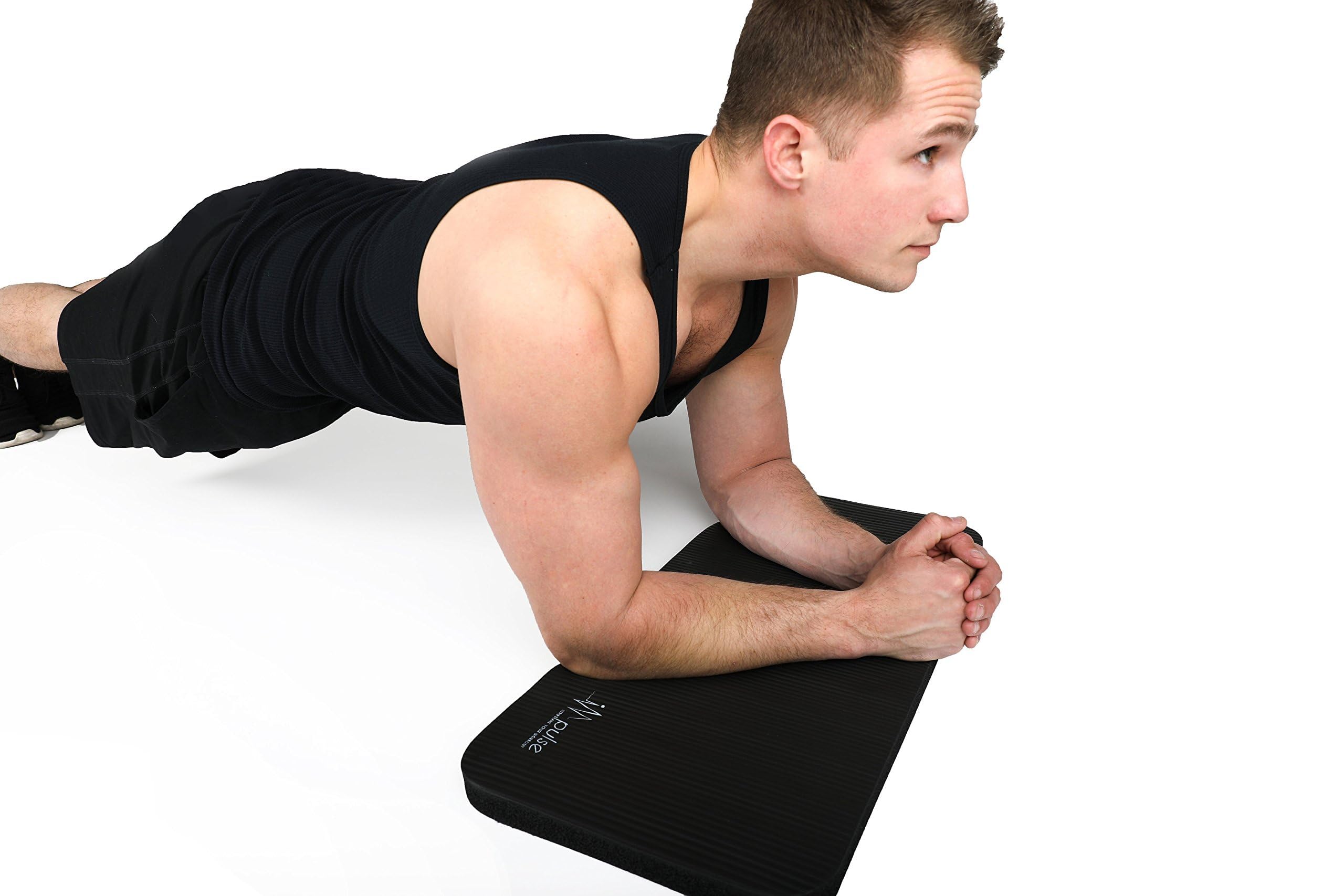
At a full 1 inch of NBR foam, the Impulse pad delivers the deepest cushion of any pad in this roundup, and it shows the moment you drop into a kneeling pose. The foam doesn’t bottom out under your knees during extended holds, and the 24 x 12 inch surface is large enough to catch your elbows during plank or forearm stand without repositioning. Impulse also stripped the old Velcro system and now ships a breathable mesh bag, which is exactly the kind of quality-of-life upgrade you want for a pad you’ll take to the studio.
The NBR material has a slightly springy but stable feel — it compresses gently under weight but springs back immediately without permanent dents. I also appreciate that the rubber compound provides real traction against both hardwood floors and standard yoga mats; the pad stayed planted during an aggressive Vinyasa sequence where my mat itself was sliding. This is the pad you reach for when your knees already ache and you need a reliable barrier between bone and floor.
It is heavier and bulkier than flat foldable pads, so if you carry a minimalist bag, the footprint may feel large. But for home practice, studio sessions, or rehab floor work, the trade-off in carrying size is more than worth the comfort gain.
Why it’s great
- Full 1-inch NBR foam provides industry-leading joint relief
- Non-slip bottom grip stays put on any surface
- Large surface works for knees, elbows, and wrists simultaneously
Good to know
- Bulky when rolled — not ideal for small bags
- Limited to a single pad, so you still need a mat underneath
2. Yes4All Yoga Knee Pads Pair

The Yes4All pair gives you two separate pads rather than one long rectangle, which is a smart design choice if you want independent placement for both knees or one for your knees and one for your elbows during push-up drills. The 13/16-inch thickness sits just shy of the full inch mark, but in practice it still feels substantial under kneeling poses — your patella won’t grind into the floor during extended Child’s Pose or low lunges.
The foam core has a medium density that balances softness with support, so you don’t sink so deep that it compromises alignment in standing-to-kneeling transitions. The surface texture is smooth but the bottom has a mild grip pattern that holds well against a yoga mat. The pair format also makes this a strong option for partners who share a practice space or for anyone who wants spares without buying two separate products.
These pads are not designed for wrist support during plank because they are smaller individual circles rather than a long mat extension. For the price point, you’re getting solid all-day cushioning for your knees without the premium bulk of the Impulse pad, making them a reliable everyday choice for home practice.
Why it’s great
- Two pads included for dual knee or knee/elbow coverage
- Medium density foam supports joints without excessive sink
- Good anti-slide grip on standard mats
Good to know
- Round shape smaller than full-length pad
- Not ideal for wrist support in plank pose
3. Kinesis Yoga Knee Pad Cushion

The Kinesis pad hits a sweet spot at 15 mm (roughly 0.6 inch) of dense foam — thick enough to eliminate pain during kneeling poses but thin enough to maintain stability in transitional flows. It targets the specific pressure point under the kneecap with a contoured shape that cradles the joint rather than just laying a flat slab under your legs. That anatomical approach makes a real difference for anyone with chronically tender knees or light arthritis.
The surface is smooth and easy to clean with a damp cloth, which matters if you practice hot yoga or sweat heavily during vinyasa. The pad also stays put during quick transitions — I didn’t experience the sliding that cheaper flat pads sometimes exhibit when you shift weight from one knee to the other during a low lunge sequence. It’s compact enough to toss into a weekend bag without taking up much room.
The downside is that it is a single pad, so you’re covering one knee at a time or laying it across both knees, which can feel awkward if your knees are wide apart in a pose like Frog. It also lacks the extra length to double as an elbow or wrist pad, so consider this a dedicated knee solution rather than a multi-use cushion.
Why it’s great
- Contoured shape cradles the kneecap for targeted pain relief
- Dense foam doesn’t compress completely under heavy weight
- Quick-clean surface resists sweat and odor
Good to know
- Single pad covers one knee at a time
- Not long enough for wrist or elbow cushioning
4. Yoga Knee Pad Cushion Folding
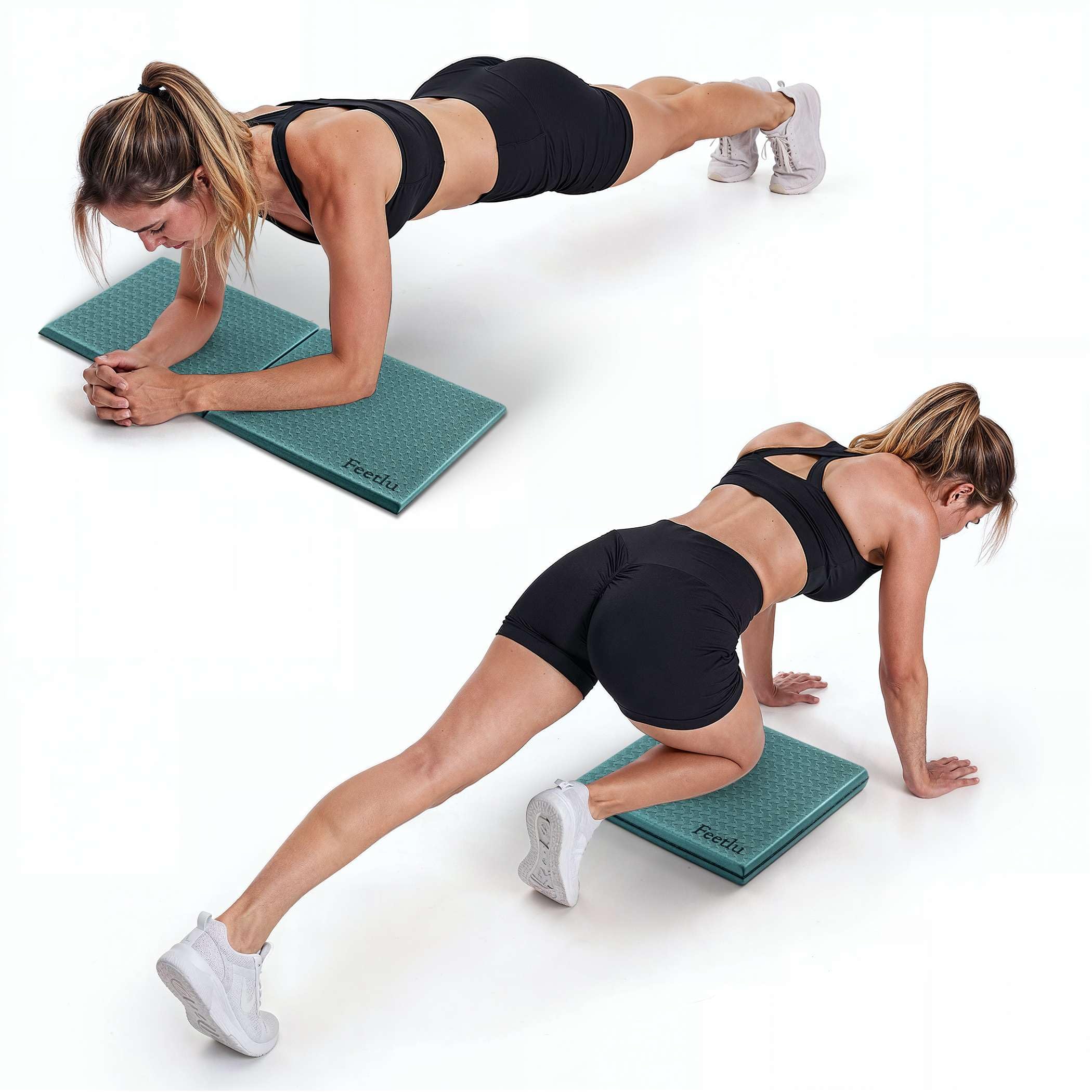
If your priority is portability — you fly to retreats, pack your bag for the office gym, or want something that disappears into a tote — this folding pad from the premium tier wins on convenience. At ½-inch thick, it is noticeably thinner than the Impulse and Yes4All pads, but the foam structure is dense enough to still absorb direct floor pressure under the knee if you’re on a mat. It folds flat rather than rolling, which means it fits into tight compartments without fighting the curl memory of a rolled pad.
The 24 x 12 inch surface provides full coverage for both knees side-by-side, and the texture on the bottom prevents drift during movement. I found it works well for kneeling postures but also as a wrist cushion during plank — the flat fold design means you can slide it under your hands without it rolling up at the edges. For light restorative practice or meditation that requires long sits, this pad delivers enough comfort without the bulk.
The trade-off is obvious: half the thickness means less impact absorption for people with significant knee sensitivity or bony patellas. If you only need a buffer between your mat and the floor, this is an elegant solution. If you have existing pain or need rehab-level cushion, the Impulse pad is the better call.
Why it’s great
- Folds flat for ultra-compact storage and travel
- Full 24-inch length covers both knees or wrists
- Dense thin foam still provides usable cushion on mats
Good to know
- Only half-inch thickness — less forgiving for sensitive joints
- Not suitable as standalone floor pad without a mat
5. Hungdao 6-Piece Knee Pad Set

For the lowest entry point in this list, the Hungdao set gives you six individual pads in three color pairs (blue, purple, black) — enough to share with family, keep spares at work, or use as cushions under elbows, head, and hands simultaneously. Each pad measures roughly 8 inches square with a thickness of 2 cm (about 0.79 inch), which is thicker than the folding pad but still less cushioned than the Impulse or Yes4All options. The center of each pad features a concave indent designed to cradle the knee or elbow, which adds a level of anatomical fit that flat squares lack.
The material is EVA foam, which is firmer and less spongy than NBR. That means you get more direct surface feel — you won’t sink in — but the trade-off is that pressure point relief is not as deep as with softer foams. The EVA also resists water and dries quickly, so wiping sweat off is trivial, and the pads don’t hold odors. The sunken center truly works for anchoring the knee during kneeling poses — it keeps the pad positioned under your joint without sliding.
The main drawback is that the EVA foam feels hard under bony elbows or wrists during floor poses like plank or side plank. These pads are best used as dedicated knee cushions or for gentle pressure points. The small size also means they don’t provide coverage for your whole lower leg during tabletop pose — your shins will still contact the mat. But for the sheer quantity and the knee-cradling design, this is a smart budget grab.
Why it’s great
- Six pads for the price of one premium pad — great value
- Concave center cradles the kneecap for stability
- EVA foam dries fast and resists odor
Good to know
- EVA foam is firmer and less forgiving on bony joints
- Small 8-inch squares don’t cover full shins or elbows
FAQ
Can I use these knee pads directly on hardwood without a yoga mat?
What thickness do I need if I have sensitive kneecaps from an old injury?
How do I clean foam knee pads without damaging them?
Final Thoughts: The Verdict
For most users, the knee pads for yoga winner is the Impulse Yoga Knee Pad because its 1-inch NBR foam delivers uncompromising joint protection and the non-slip base holds firm in any practice. If you want a two-pad system for independent knee and elbow cushioning, grab the Yes4All Pair. And for a budget-conscious household or anyone who needs multiple pads for shared use, nothing beats the value of the Hungdao 6-Piece Set.