After a total knee replacement, every degree of extension you reclaim is a victory, but the wrong recovery aid can actually set you back. The gap between a pillow that cradles your surgical knee and one that forces it into a bent, painful position is defined by specific foam density, wedge angle, and height adjustability.
I’m Emma — the founder and writer behind Baby Bangs. I’ve spent hundreds of hours cross-referencing post-surgery rehab aids, analyzing foam compression ratings, ergonomic wedge angles, and patient recovery protocols to identify which products actually support the zero-degree extension that surgeons demand.
Whether you need passive elevation for swelling or an active tool for flexion exercises, this guide breaks down the top contenders for the best knee pads after total knee replacement based on measurable build quality and rehab-specific design.
How To Choose The Best Knee Pads After Total Knee Replacement
Not every pillow in this category is designed for the specific mechanics of a fresh prosthesis. General leg pillows often allow the knee to drift into a flexed position, which can stall extension gains. Focus on three variables when evaluating your options.
Foam Density and Support Profile
Low-density foam (under 20D) collapses under the weight of your thigh and calf, creating a hammock effect that lets the knee bend overnight. Look for at least 25D high-density foam or a layered construction with memory foam on top for comfort and a firmer base layer for structural support. The BoneFoam Zero Degree Knee uses a rigid, medical-grade foam that does not compress under gravity, actively holding the knee in passive extension.
Height Adjustability and Elevation Angle
Your leg needs to be elevated above heart level to drain fluid and reduce swelling — typically 7 to 10 inches of lift. Fixed-height wedges that are too tall can hyperextend the knee or create pressure behind the popliteal space. Adjustable two-piece designs, like the KingPavonini and ROYALAY models, let you dial in the exact height that keeps your knee straight without overstretching the capsule.
Active Rehab Features vs. Passive Rest
A passive elevation pillow is fine for sleep and TV, but if your physical therapist has prescribed heel slides or active range-of-motion work, a dedicated rehab tool like the KneeSled is necessary. The KneeSled uses a guided track to control heel-slide motion, preventing the uncontrolled sliding that can irritate the surgical site. Decide whether you need a rest-only wedge, an exercise tool, or both.
Quick Comparison
On smaller screens, swipe sideways to see the full table.
| Model | Category | Best For | Key Spec | Amazon |
|---|---|---|---|---|
| BoneFoam Zero Degree Knee | Rehab Foam | Passive extension during rest | Rigid medical-grade foam, zero compression | Amazon |
| KneeSled | Exercise Tool | Heel slides and flexion rehab | Guided track, adjustable rope, one size fits all | Amazon |
| ROYALAY Leg Elevation (Handle Model) | Elevation Wedge | High-leg elevation with easy repositioning | 25D high-density sponge, crystal velvet cover | Amazon |
| ROYALAY Leg Elevation (Adjustable Height) | Elevation Wedge | Two-height positioning above heart level | Two-piece stack, 7.9″ or 9.8″ height | Amazon |
| KingPavonini Adjustable Leg Elevation | Memory Foam Wedge | Ergonomic groove with anti-slip base | Memory foam + gel, 7.1″ or 9.8″ height | Amazon |
| Kehangte Leg Elevation Pillow | Adjustable Wedge | Budget-friendly adjustable height | 4-height adjustable system | Amazon |
| SCFOAMZAI Knee Replacement Pillow | Firm Foam Wedge | Zero-degree extension at an entry-level price | 30D high-density foam, 9.45″ height | Amazon |
In‑Depth Reviews
1. BoneFoam Zero Degree Knee

The BoneFoam Zero Degree Knee is a purpose-built rehabilitation device, not a general leg pillow. Its rigid, medical-grade foam does not compress under body weight, which means your knee is held in a true zero-degree extension position throughout the night. This passive, gravity-assisted stretch is exactly what surgeons prescribe to regain terminal extension after total knee arthroplasty.
The foam block is firm enough that it does not require a wedge angle — it simply prevents the knee from falling into flexion. The surface is flat and wide, accommodating most leg lengths without the need for height adjustment. The graphics may vary between units, but the core foam density remains consistent; it is made in the USA and built to withstand daily rehab use without sagging.
There is no removable cover, so cleaning is limited to spot treatment, and the foam is not designed for side-sleeping or general lounging. This is a single-purpose tool for extension-only recovery. If your PT has specifically ordered passive extension work, this is the most mechanically reliable option on the market.
Why it’s great
- Non-compressing medical foam locks in zero-degree extension
- Gravity-assisted stretch works even during sleep
- Made in the USA with consistent foam quality
Good to know
- No machine-washable cover — spot clean only
- Not suitable for elevation or side-lying use
2. KneeSled

The KneeSled is the only product on this list that is not a static pillow — it is an active rehabilitation tool for heel slides and controlled knee flexion. After total knee replacement, achieving 90 to 120 degrees of flexion is as critical as extension, and the KneeSled provides a guided track that prevents your foot from drifting sideways during the slide, protecting the surgical site from rotational stress.
The adjustable rope accommodates any leg length, and the sled glides smoothly on carpet or a yoga mat. It targets the quadriceps, hamstrings, and hip abductors in a single motion, which is more efficient than using a towel or belt. The construction is lightweight and portable, making it easy to use during PT homework or while watching TV.
This is not a sleep aid or an elevation wedge; it is purely an exercise tool. If you already have a wedge for elevation and need a dedicated flexion trainer to hit your PT milestones, the KneeSled fits that slot precisely. The one-size-fits-all design works, but very tall users may find the track length slightly short for full-extension slides.
Why it’s great
- Controlled heel-slide motion protects surgical knee from torque
- Adjustable rope fits any adult leg length
- Lightweight and portable for daily PT homework
Good to know
- Not a wedge — does not provide elevation or sleep support
- Requires a non-carpet surface for smoothest glide
3. ROYALAY Leg Elevation Pillow with Handle
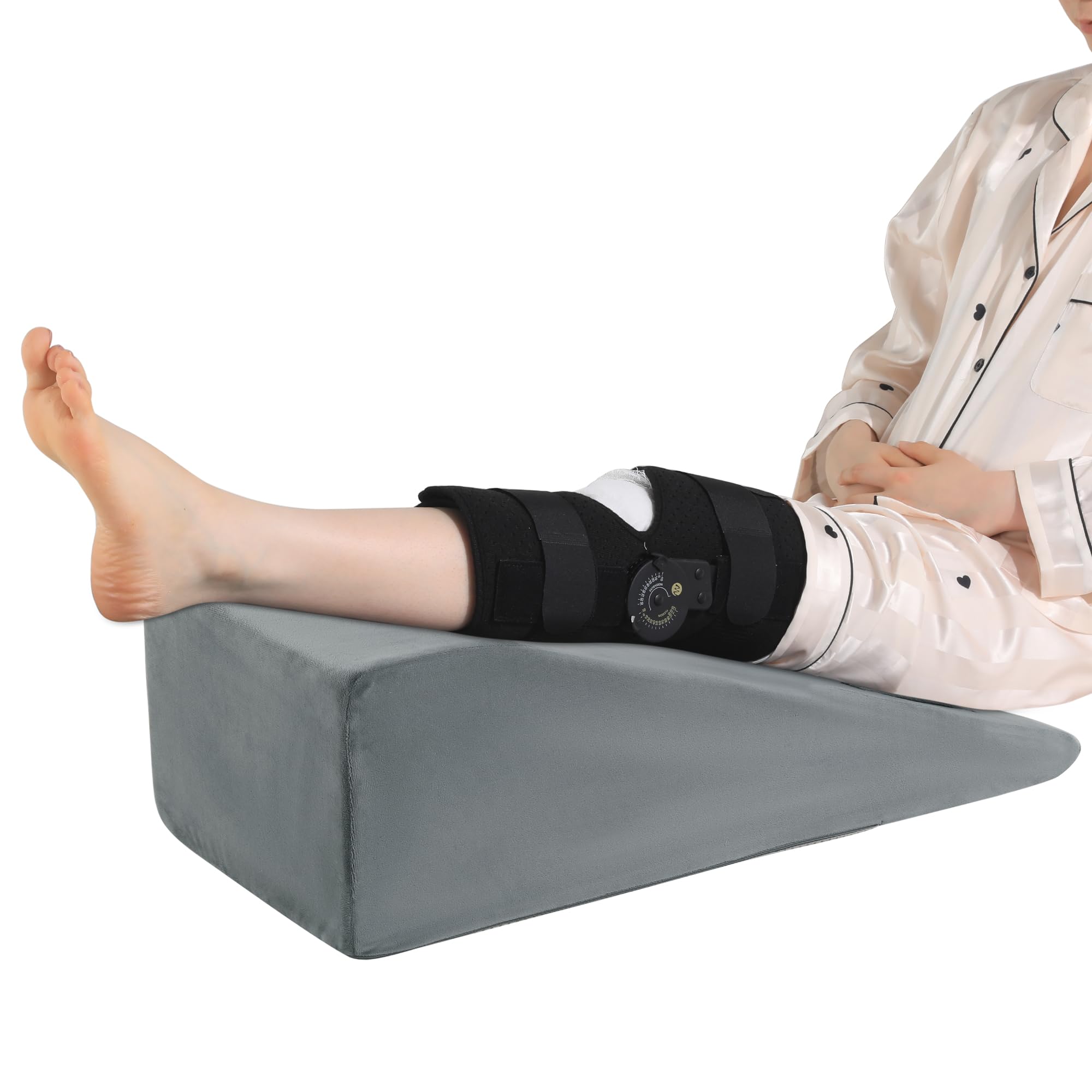
This ROYALAY leg elevation pillow uses a 25D high-density sponge core that resists sagging over months of nightly use, maintaining the 9.5-inch elevation needed to keep the knee above heart level. The crystal velvet cover is soft enough for direct skin contact, which matters when your surgical site is sensitive and you cannot tolerate rough textures rubbing against the incision.
The most practical feature is the pair of integrated handles on the sides. After surgery, repositioning a foam wedge can require bending or twisting that strains the hip and lower back. The handles let you pull the pillow into a new position without shifting your whole body. The non-slip bottom keeps the wedge in place on a bed or sofa during restless sleep.
The foam is not layered — it is a single-density block — so the firmness is uniform from top to bottom. This works well for elevation but does not offer the graduated support of a memory-foam top layer. The zippered cover removes for machine washing, a clear hygiene advantage for long recovery periods. For a clean, no-fuss elevation wedge, this is a strong mid-range pick.
Why it’s great
- Side handles allow easy repositioning without bending
- 25D high-density foam resists sagging during extended use
- Soft crystal velvet cover is comfortable against sensitive skin
Good to know
- Single foam density — no soft top layer for pressure relief
- Fixed 9.5-inch height may be too tall for shorter users
4. ROYALAY Leg Elevation Pillow (Adjustable Height)
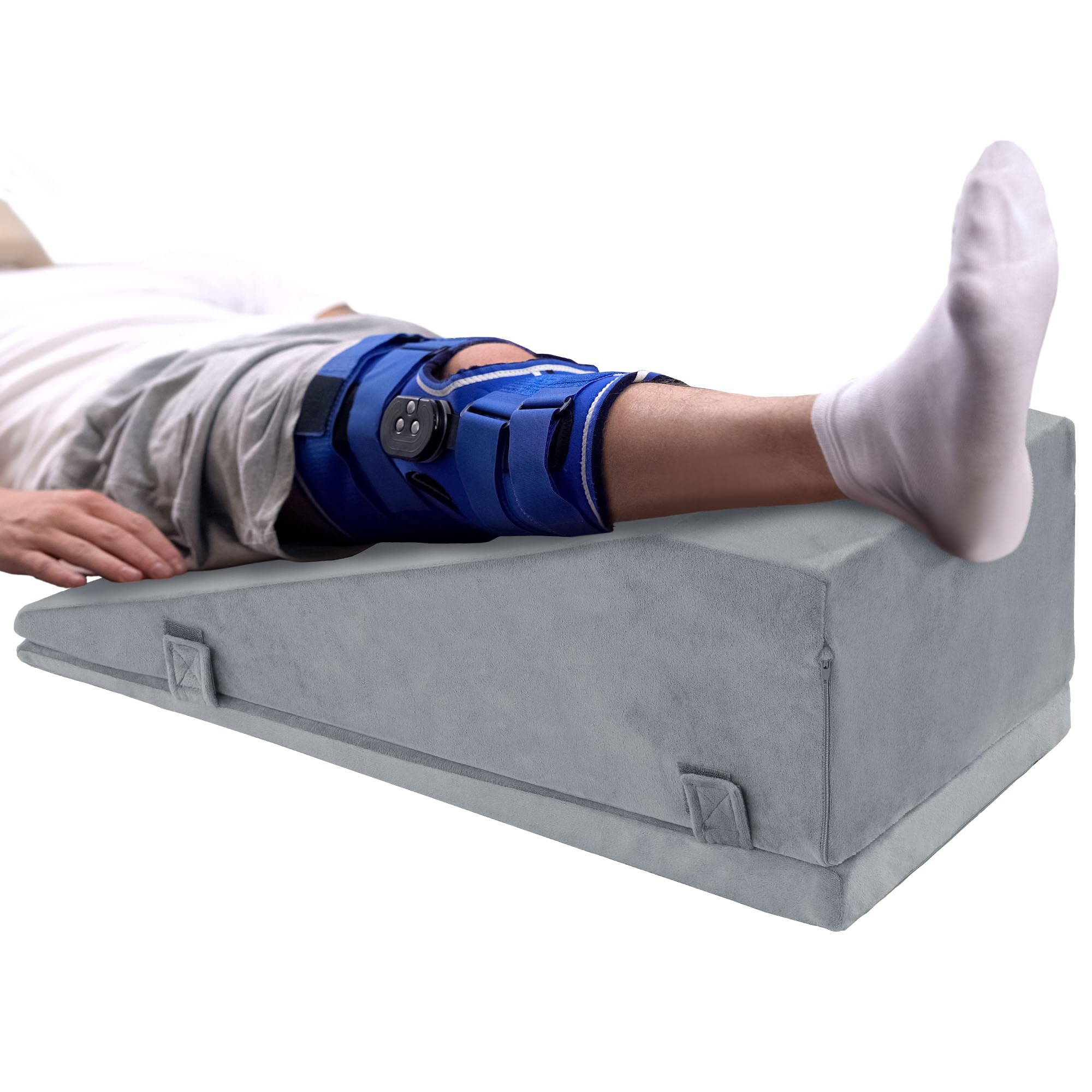
This ROYALAY wedge addresses the biggest complaint about fixed-height pillows: one height does not fit all recovery stages. The two-piece stack lets you choose 7.9 inches for lighter elevation during daytime rest or 9.8 inches for the higher lift that promotes venous drainage overnight. The hook-and-loop fasteners between the layers keep the stack stable, preventing the top piece from sliding off during sleep.
The 25D high-density sponge used here matches the non-adjustable ROYALAY model, but the ergonomic curve of the top piece is designed specifically to prevent the knee from rolling outward — a common issue with flat wedges that can cause hip rotation. The bottom surface is non-slip, and the crystal velvet cover is zippered for machine washing.
At 29.5 inches long, this wedge accommodates taller users better than shorter pillows. The trade-off is weight — the two-piece design is heavier than a single block, though the handles on each layer mitigate that somewhat. If you need the flexibility to adjust elevation as swelling fluctuates across your recovery weeks, this adjustable ROYALAY is a practical step up.
Why it’s great
- Two height settings (7.9 and 9.8 inches) for variable swelling control
- Hook-and-loop grip keeps layers aligned during use
- Ergonomic curve prevents external hip rotation
Good to know
- Heavier than single-piece wedges due to two-layer construction
- Top piece can shift if the hook-and-loop grip wears over time
5. KingPavonini Adjustable Leg Elevation Pillow

The KingPavonini wedge distinguishes itself with a wavy groove channel that lifts the forefoot higher than the heel. This subtle angle naturally encourages the knee to straighten into extension, which is exactly what you need during the first weeks after total knee replacement. The raised toe end prevents the foot from falling into a dropped position that can tighten the Achilles and pull the knee into flexion.
The top layer is memory foam infused with gel particles — the gel helps dissipate heat so your leg does not sweat during prolonged elevation. The bottom two layers are high-density foam that provides the core support. At 7.1 or 9.8 inches of adjustable height, it covers the same range as the ROYALAY adjustable model, but the memory foam top makes it noticeably softer against the calf and ankle.
Two front handles pull the pillow into position, and the anti-slip bottom prevents migration on smooth surfaces. The washable cover is easy to remove. Some users report that the memory foam top layer compresses more than they expect under heavier legs, reducing the effective height slightly. For lightweight users or those who prefer a softer feel against the surgical leg, this is an excellent value-adjusted wedge.
Why it’s great
- Wavy groove lifts the forefoot to enforce knee extension
- Memory foam + gel top layer stays cool and soft
- Two height settings with non-slip base on each layer
Good to know
- Memory foam top may compress noticeably under heavy legs
- Front handles are less useful for side-sleeping repositioning
6. Kehangte Leg Elevation Pillow

The Kehangte leg elevation pillow offers four stacking levels, giving you more granular height options than the two-step competitors. Early recovery often requires higher elevation to manage significant swelling, and as fluid recedes you can peel off a layer to maintain comfort without buying a separate pillow. This modular approach is practical for the full rehab arc from week one through month three.
The pillow is designed specifically for post-surgery recovery, including knee replacement, ankle surgery, and foot procedures. The top surface has a slight contour to cradle the calf, and the cover is machine-washable. The hook-and-loop attachments between layers are wider than some budget models, reducing the chance of the stack shifting during restless sleep.
The foam density is not specified in the product details, which is a notable gap for buyers comparing firmness. Early user reports suggest it is slightly softer than the 25D ROYALAY foam, so heavier individuals may find it compresses more than expected. For the price point, the adjustability range is unmatched, but the lack of density transparency makes it a cautious pick for users who need maximum support.
Why it’s great
- Four height settings allow precise elevation adjustment
- Modular stacking adapts as swelling decreases during recovery
- Machine-washable cover with wide hook-and-loop attachments
Good to know
- Foam density not disclosed — may compress more than specified firmer models
- Contour depth is shallow; may not secure the leg for side-sleepers
7. SCFOAMZAI Knee Replacement Pillow
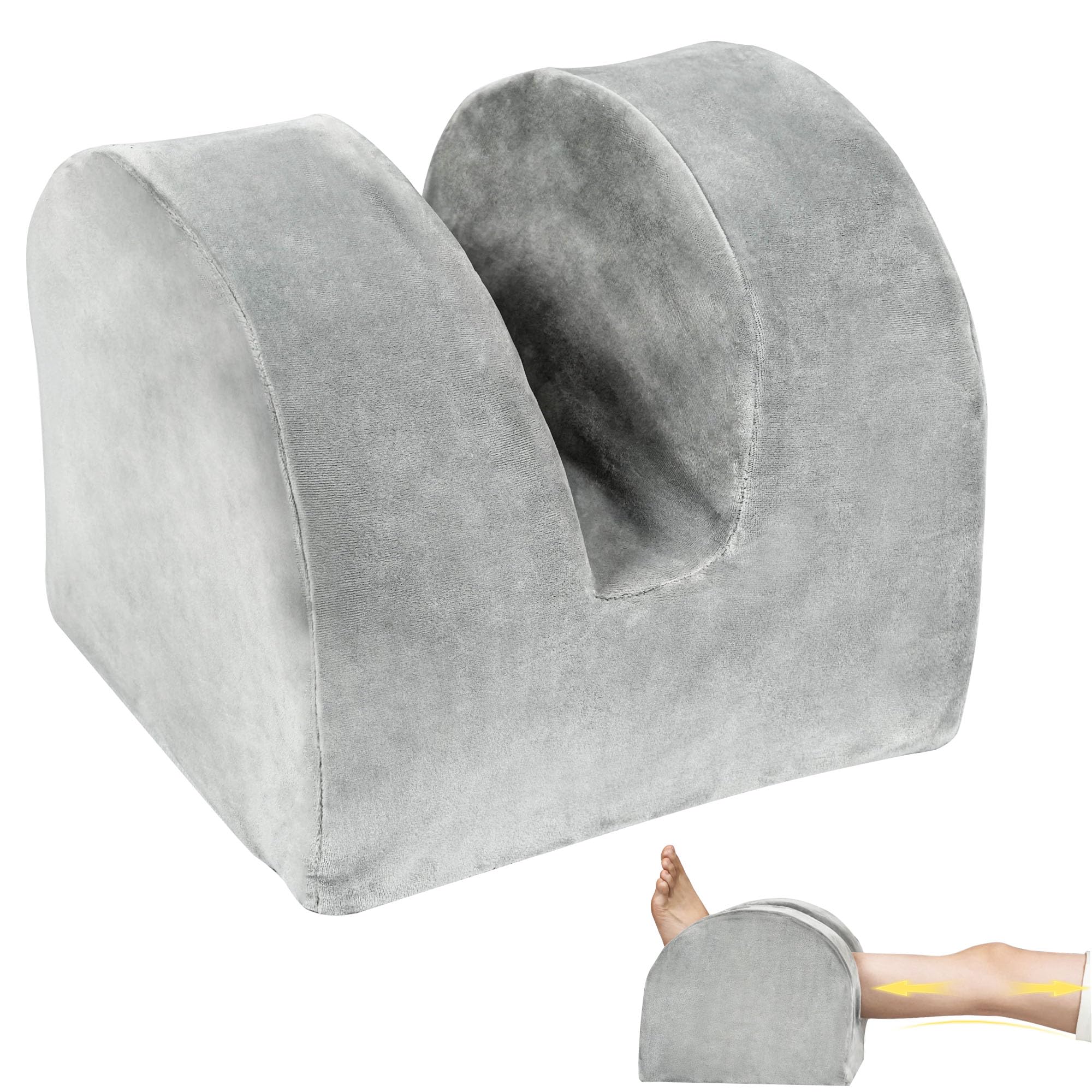
The SCFOAMZAI pillow uses 30D high-density foam — the densest foam in this comparison — which provides the most resistance to sagging under sustained weight. This density is critical for total knee recovery because it maintains the zero-degree knee extension position without the pillow collapsing into a U-shape that would let the knee fall into flexion during sleep.
The raised side cushions are designed to prevent the leg from rolling outward, which protects against the external hip rotation that can refer stress down to the surgical knee. At 9.45 inches of fixed height, it falls in the middle of the elevation range — adequate for most users to keep the leg above heart level, though shorter individuals may find it too tall for comfortable side sleeping.
The grey plush cover is removable and machine-washable, and the 11 x 11 x 9.5-inch footprint is compact enough to travel with. The foam requires 12 to 24 hours to fully expand after unpacking, so plan ahead. For an entry-level price, you get uncompromising foam density that rivals premium models, though you lose the adjustability of multi-layer wedges.
Why it’s great
- 30D high-density foam is the most sag-resistant in this comparison
- Raised side cushions prevent external hip rotation
- Removable, machine-washable cover for hygiene
Good to know
- Fixed 9.45-inch height lacks adjustability
- Compact footprint may not support taller users’ full calf
FAQ
Should I sleep with a wedge pillow after total knee replacement every night?
Can a leg elevation pillow replace the need for a continuous passive motion machine?
Is it safe to use a heating pad or ice pack on top of the wedge pillow?
How long should I keep my leg elevated above my heart on a wedge each day?
What is the difference between a wedge pillow and a knee pad after total knee replacement?
Final Thoughts: The Verdict
For most users, the knee pads after total knee replacement winner is the SCFOAMZAI Knee Replacement Pillow because its 30D high-density foam delivers uncompromising sag resistance at an entry-level price, giving you the zero-degree extension support your knee needs without forcing you to pay for adjustability you may not use. If you want active flexion therapy for your home rehab routine, grab the KneeSled. And for adjustable elevation that adapts as your swelling changes, nothing beats the ROYALAY Adjustable Height Wedge.