The hard court doesn’t give back. Every twist, every sudden stop for a drop shot, every lunge for a wide forehand drives force through your knee’s meniscus and MCL. Without the right support, you are one misstep away from weeks on the sideline instead of holding match point.
I’m Emma — the founder and writer behind Baby Bangs. I’ve spent years analyzing hardware specifications across sport-medical gear, tracking which hinge designs actually lock down the joint during lateral cutting movements and which sleeves simply shift sweat.
This guide walks you through the seven most serious contenders. Between the neoprene wraparounds and the aluminum-hinged stabilizers, you will learn exactly where to place your trust in a knee brace for tennis that keeps your game sharp and your meniscus protected.
How To Choose The Best Knee Brace For Tennis
Tennis demands a brace that does three things simultaneously: resist medial collapse during a split-step, allow full knee flexion for a low slice backhand, and stay put through sweat and three-set matches. A general gym brace fails on at least two of these counts. Here is exactly what to check before you buy.
Hinge Type and Material
Polycentric aluminum hinges track your knee’s natural rotation better than mono-centric plastic ones. If you have a history of MCL sprains from lateral movement, rigid metal side bars with a 0–90 degree stop keep you from collapsing inward during a recovery step to the ad court. Avoid flimsy silicone stays — they provide visual support, not mechanical resistance.
Patella Cutout and Bulk Behind the Knee
An open-patella brace relieves pressure on the kneecap when you go deep into a lunge. Equally important: the material thickness behind the knee. A brace that bunches behind the popliteal fossa (the back of the knee) will limit your flexion exactly when you need to bend for a low volley. Look for braces using two thin crossing straps or low-profile neoprene panels in that area.
Strap Configuration and Fit Adjustability
Four-point strap systems distribute compression around the entire knee joint rather than cinching one strap tight over the mid-patella. The best tennis braces let you independently tension the upper thigh strap, the lower calf strap, and the crossed patellar straps. This adjustability prevents slippage during the explosive start-stop movements that define a baseline rally.
Quick Comparison
On smaller screens, swipe sideways to see the full table.
| Model | Category | Best For | Key Spec | Amazon |
|---|---|---|---|---|
| EXOUS BODYGEAR EX-701 | Premium Wraparound | Lateral stability with full adjustability | 4-point strap system, 3.5mm neoprene | Amazon |
| NEENCA Professional Hinged | Premium Hinged | MCL/ACL recovery with rigid support | X-Strap fixing system, metal hinges | Amazon |
| Incrediwear Knee Sleeve | Circulation Sleeve | Daily recovery and swelling control | Carbon-infused fabric, no hinges | Amazon |
| McDavid Hinged Knee Brace | Mid-Range Hinged | Hyperextension prevention during play | Aluminum hinges, 3D-fit frame | Amazon |
| Bodyprox Hinged Brace | Value Hinged | ACL/Meniscus post-injury stability | Dual side stabilizers, adjustable straps | Amazon |
| NEVVIS Patellar Stabilizing | Budget Patellar | Runner’s knee and jumpers for baseline play | Patellar stabilizing pad, compression sleeve | Amazon |
| Nike Patella Support | Entry-Level Sleeve | Mild patellar tendinitis on serve | Neoprene sleeve, gel pad insert | Amazon |
In‑Depth Reviews
1. EXOUS BODYGEAR Knee Brace EX-701

The EXOUS BODYGEAR uses a patented four-strap attachment system that anchors at the upper thigh and lower calf with two crossed straps over the patella, creating a mechanical buttress effect that resists lateral collapse. This design directly addresses the tennis-specific need for stability when pushing off the outside foot for a forehand. At 3.5mm neoprene thickness, it provides substantial compression without turning your knee into a sweat sponge during three-set matches.
The wraparound closure eliminates the need to pull the brace over your foot, which matters when you are already gassed between changeovers. The open-patella design keeps pressure off the kneecap during deep lunges. Customer feedback consistently notes less need to readjust mid-match compared to two- or three-strap braces — the mechanical advantage of four anchor points actually holds position through lateral shuffles.
One trade-off: the sizing is precise. The upper thigh strap maxes out at 20 inches three inches above the knee, so larger leg builds may find the fit restrictive. The neoprene also demands hand-wash and air-dry care to maintain elasticity. But for a player who needs reliable wraparound support that stays put through a baseline rally, this is the premium pick that earns its weight on court.
Why it’s great
- Four-point strap system provides true mechanical stabilization against MCL lateral collapse.
- Open-patella design and dual thin straps behind the knee preserve flexion for low volleys.
- Wraparound design means no awkward foot threading in the locker room.
Good to know
- Thigh circumference limit of 20 inches may exclude larger players.
- Neoprene material requires hand-wash and air-dry care after every session.
2. NEENCA Professional Hinged Knee Brace

The NEENCA Professional is built around a patented X-Strap fixing system that runs a stabilizing band diagonally across the back of the knee, then wraps around the thigh and calf in a figure-eight pattern. This X geometry mirrors the natural tension lines of the hamstring and quadriceps, giving you rigid lateral control without the brace rotating around your leg when you change direction on the baseline. The aluminum hinges are polycentric, meaning they track the knee’s rotation more naturally than a simple single-axis hinge.
This is the brace you reach for when you are returning from an MCL sprain or meniscus tear and need maximum confidence in your planted foot. The medical-grade construction meets FSA/HSA eligibility, which signals a higher standard of materials than generic sleeves. The hinge arms extend further up the thigh and down the calf than most mid-range options, distributing the load of a sudden plant-and-pivot over a larger area.
The cost sits at the high end of the spectrum, and the added hinge bulk means this brace is best worn under loose tennis shorts, not compression tights. For players who prioritize joint protection over low-profile aesthetics, the NEENCA delivers the most structural support in this comparison. The X-Strap system also requires a few minutes of setup the first time to dial the tension correctly — once set, it stays locked in.
Why it’s great
- X-Strap fixing system prevents rotational slippage during lateral cutting movements.
- Polycentric aluminum hinges track natural knee biomechanics better than plastic alternatives.
- FSA/HSA eligible, indicating medical-grade material standards.
Good to know
- Hinge bulk requires looser shorts; does not fit under compression tights.
- Initial strap tension setup takes a few minutes for optimal fit.
3. Incrediwear Knee Sleeve

The Incrediwear sleeve takes a different approach: instead of mechanical hinges and straps, it uses carbon-infused fabric that the brand claims interacts with body heat to increase blood flow and reduce inflammation. This is a recovery sleeve, not a stabilization brace. For tennis, you wear this after a match or on rest days to speed circulation through the patellar tendon and surrounding soft tissue after repeated impact on hard courts.
The sleeve provides light compression that helps with proprioception — your brain’s awareness of joint position — which can improve your landing mechanics when you jump for an overhead. The seamless knit design eliminates pressure points behind the knee, making it the most comfortable option for long wear. It does not have side stabilizers, so it will not prevent an MCL tear during a sudden lateral stop, but it can reduce post-match swelling in players with chronic patellar tendinitis.
The price point is premium for a sleeve with no hinges, and the claims around carbon-infused fabric fall into the realm of wearable wellness rather than hard biomechanics. For players who already own a hinged brace for match play and want a separate recovery option, this fills a specific niche. Do not expect it to stabilize your knee during a competitive match — this is for the cool-down, not the rally.
Why it’s great
- Carbon-infused fabric targets circulation and swelling reduction after hard-court matches.
- Seamless knit design eliminates pressure points behind the knee for all-day comfort.
- Light compression improves proprioception for better landing mechanics.
Good to know
- No hinges or stabilizers — provides zero mechanical protection against lateral collapse.
- Premium price for a sleeve without structural support.
4. McDavid Hinged Knee Brace

The McDavid Hinged brace is a classic design that has been trusted by basketball and tennis players for years, primarily because of its aluminum hinge system that provides a hard stop against hyperextension. When you plant your front foot for a forehand and your knee tries to push past straight, the polycentric hinges catch the movement before your ligaments do. The 3D-fit frame contours around the quadriceps and calf more naturally than a flat brace, reducing the need to constantly yank it back into place.
For tennis, the open-patella design and the low-profile hinge allow a functional range of motion for serving and split-stepping. The four adjustable straps let you dial in compression at the thigh, above the knee, below the knee, and the calf independently. This adjustability is a direct advantage over fixed-size sleeves because you can tighten the calf strap if it starts to slide during long rallies. The neoprene blend wicks moisture better than pure neoprene, which helps during humid outdoor summer play.
One limitation: the hinge cams add slight bulk around the medial and lateral knee, which can catch against the opposite knee if you have a narrow stance. For players with thick thighs or a close-footed stance, the hinge housing may dig in at the contact point. Still, for athletes who need hyperextension protection during serve and overhead movements, the McDavid delivers reliable mechanical resistance.
Why it’s great
- Polycentric aluminum hinges provide a hard mechanical stop against hyperextension.
- Four independent straps allow precise compression tuning at each leg segment.
- Open-patella design and moisture-wicking neoprene work well in hot court conditions.
Good to know
- Hinge cams add bulk that may rub against the opposite knee in narrow stances.
- Neoprene blend still requires hand-wash care to maintain elastic integrity.
5. Bodyprox Hinged Knee Brace

The Bodyprox Hinged Knee Brace brings dual side stabilizers and adjustable straps at a price point that appeals to players testing the waters of rigid knee support without committing to premium brands. The stabilizers are metal-reinforced and run the full length of the brace, offering resistance against MCL and LCL strain during lateral shuffles. The four-strap system — two above the knee, two below — gives you similar adjustability to the higher-priced EXOUS but with a slightly less refined fit around the popliteal area.
This brace works best for players who need support after an ACL or meniscus injury and are still early in their return-to-play timeline. The hinge action is mono-centric rather than polycentric, meaning it rotates on a single axis rather than tracking the knee’s natural multi-axis movement. For basic lateral protection during a recreational doubles match, this limitation rarely matters. For high-level singles with aggressive corner-to-corner movement, the mono-centric hinge may feel restrictive on deep flexion.
The neoprene construction is standard thickness, so expect it to trap more heat than the EXOUS. The sizing runs true to thigh and calf measurements, but the hinge casings are slightly larger than the McDavid’s, creating more bulk in the knee bend. For a player on a budget who needs mechanical stabilizers and strap adjustability, the Bodyprox delivers the core function without the premium features.
Why it’s great
- Metal-reinforced dual stabilizers provide genuine MCL/LCL resistance during lateral cuts.
- Four adjustable straps deliver customizable compression across the thigh and calf.
- Entry- to mid-range price makes hinged support accessible for recreational players.
Good to know
- Mono-centric hinge does not track the knee’s natural multi-axis rotation during deep bends.
- Hinge casings are bulkier than premium models, adding material behind the knee.
6. NEVVIS Patellar Stabilizing Knee Brace
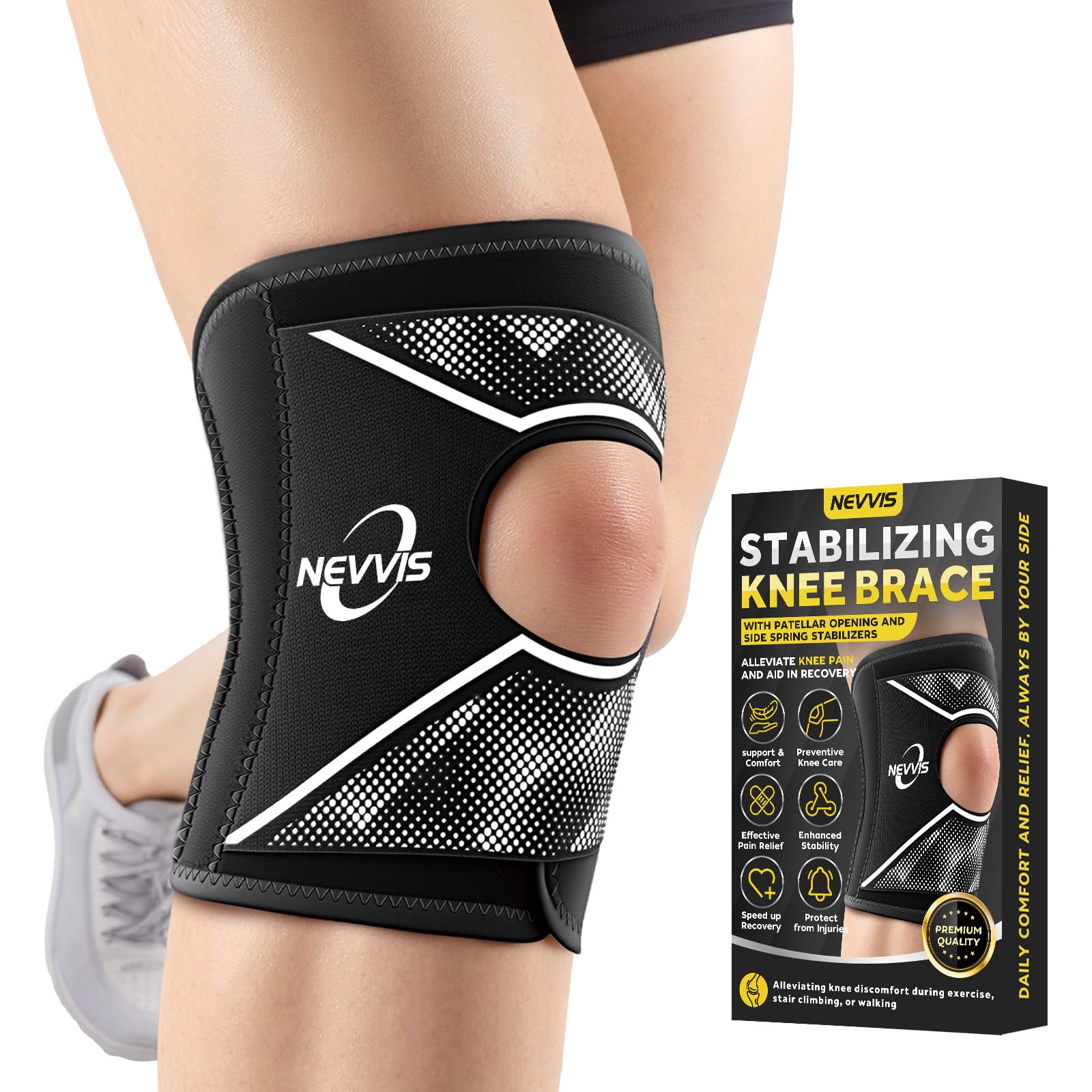
The NEVVIS brace focuses on patellar stabilization — a specific need for tennis players who develop jumper’s knee from the repeated loading of serve and overhead motions. The brace features a thick patellar stabilizing pad that sits around the kneecap, keeping it tracking properly in the trochlear groove during deep knee bends. This pad design is more aggressive than the simple gel insert found in entry-level sleeves, offering real mechanical guidance for the patella.
For players whose primary concern is anterior knee pain rather than MCL instability, this brace provides targeted support without the weight and bulk of hinged stabilizers. The compression sleeve material is breathable and holds tension well through a two-hour practice session. The strap tension adjusts via a single cinch strap that wraps behind the knee and crosses over the pad, creating a firm but not restrictive hold on the patella.
The limitation is clear: there are no side stabilizers, so this brace does nothing to protect against a lateral ligament tear. It also does not address hyperextension. For a player with healthy MCLs and ACLs who just needs patellar tracking support for serve-heavy game styles, this is an efficient, low-bulk solution. The single strap design means less adjustability than the multi-strap braces, so fit depends heavily on choosing the correct size from the sizing chart.
Why it’s great
- Thick patellar stabilizing pad actively guides kneecap tracking during deep bends.
- Breathable compression sleeve wicks sweat and stays in place during extended play.
- Low bulk profile fits easily under tennis shorts without restriction.
Good to know
- No side stabilizers — offers zero protection against MCL or ACL lateral injury.
- Single strap limits adjustability; sizing must be precise for proper fit.
7. Nike Unisex Patella Knee Support
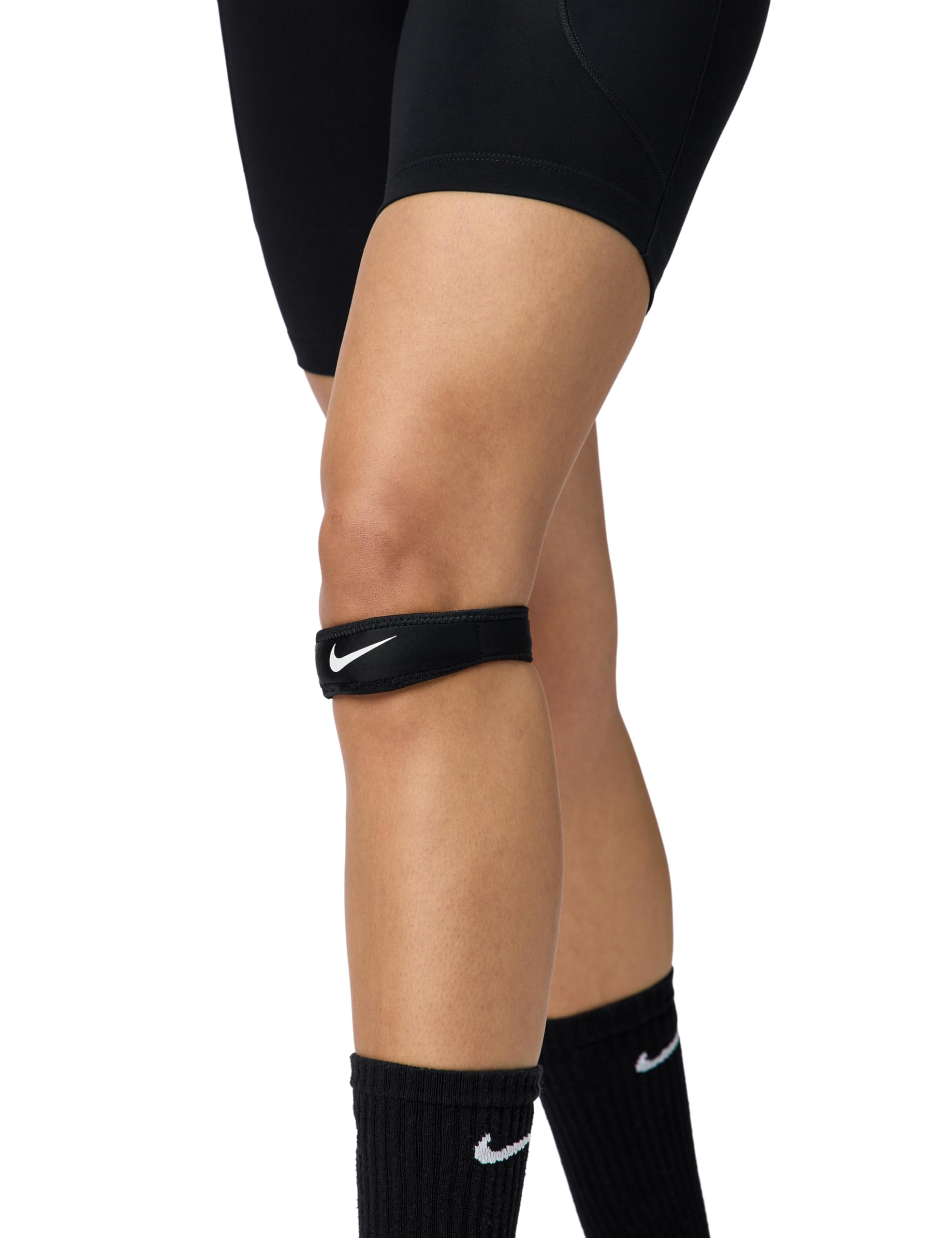
The Nike Patella Support is the simplest option in this group: a neoprene sleeve with a gel pad insert designed to place pressure around the patellar tendon. It is the brace for the player who does not have a diagnosed knee injury but feels minor patellar ache after a long weekend of serving practice. The gel pad sits in a pocket sewn into the sleeve and can be removed or repositioned slightly, though the adjustment range is limited compared to dedicated patellar straps.
The sleeve construction is standard Nike quality — the neoprene is durable through multiple washes, and the stitching holds up to the stretch of sliding it on and off. The unisex sizing runs slightly looser than medical-grade braces, so players with narrower knees may find the compression insufficient for any real stabilization. The sleeve provides basic warmth and compression that can reduce post-match soreness, but it will not prevent the knee from collapsing laterally or the patella from subluxing under load.
At the entry-level price, this is a reasonable first step for a player who is not ready for the complexity of straps and hinges. It fits under shorts easily and works for warm-up or cool-down wear. But for competitive singles or doubles where you are covering the full court, this sleeve lacks the mechanical support needed to protect against the forces generated by tennis-specific movement patterns.
Why it’s great
- Gel pad insert targets patellar tendon pressure for minor ache relief.
- Durable neoprene construction from a trusted athletic brand.
- Low-profile sleeve fits under tennis shorts with zero bulk restriction.
Good to know
- No hinges or stabilizers — provides no mechanical protection against ligament injury.
- Compression is mild; insufficient for players with wider or looser knee joints.
FAQ
Should I wear a hinged brace during tennis if I have no prior knee injury?
Can I wear a knee brace under tennis compression tights?
How tight should I strap my knee brace for baseline play?
Final Thoughts: The Verdict
For most users, the knee brace for tennis winner is the EXOUS BODYGEAR EX-701 because the four-point strap system and 3.5mm neoprene deliver the best balance of lateral stabilization and low-bulk fit for court movement. If you want rigid mechanical hinge protection for returning from an MCL injury, grab the NEENCA Professional Hinged. And for recovery days when you need circulation support without mechanical resistance, nothing beats the Incrediwear Knee Sleeve.