A twelve-hour double shift on a slick tile floor covered in grease, spilled stock, and ice melt isn’t a test of will — it’s a test of outsole grip and foot fatigue. Choose the wrong kitchen shoe and you’re fighting your own feet by hour four. The right pair becomes invisible, letting you focus on the pass, not the pain in your arches.
I’m Emma — the founder and writer behind Baby Bangs. I’ve spent years digging into work footwear construction, analyzing tread patterns, midsole compounds, and slip-test certifications to separate marketing claims from real kitchen-floor performance.
This guide breaks down the top contenders in the kitchen work shoes category by comfort, durability, and safety features so you can clock out without aching soles.
How To Choose The Best Kitchen Work Shoes
Choosing the wrong pair means replacing them every three months or, worse, slipping on a greasy surface and injuring yourself. Focus on three specific specs: outsole slip rating, midsole support type, and toe protection material. Every shoe on this list meets a minimum threshold for all three, but the details determine which one fits your feet and your kitchen.
Slip Resistance Ratings — The Real Benchmark
Look for ASTM F2913-11 or Mark II testing. A generic “oil-resistant” label doesn’t guarantee grip on wet quarry tile. Shoes that score a .5 or higher coefficient of friction on wet tile are the only ones worth your time in a commercial kitchen. The tread pattern also matters — deep, multidirectional channels channel grease away from the contact patch.
Arch Support and Midsole Cushioning
A flat, thin midsole transfers every impact from concrete subflooring up through your knees and lower back. Shoes with removable, orthotic-friendly insoles — or those with memory foam or EVA midsoles — reduce fatigue dramatically. Zero-drop platforms align the heel and toe at the same height, which helps with posture but requires an adjustment period if you’re used to elevated heels.
Toe Protection — Steel vs Composite vs Alloy
Steel toes are heavy and conduct cold and heat, making them uncomfortable in dish pits or near ovens. Composite toes (carbon fiber, Kevlar, or plastic) are lighter and thermally neutral. Alloy toes offer a middle ground — lighter than steel but still metallic. For most kitchen work, a composite toe provides adequate drop protection without the weight penalty.
Quick Comparison
On smaller screens, swipe sideways to see the full table.
| Model | Category | Best For | Key Spec | Amazon |
|---|---|---|---|---|
| HEYDUDE Wally Work CT | Premium | All-day comfort with composite toe | Composite toe, water-repellent | Amazon |
| Skechers Work Cessnock | Premium | Relaxed fit with memory foam | Memory foam insole | Amazon |
| Non-Slip Work Shoes w/ Arch Fit | Mid-Range | Arch support and waterproofing | Orthopedic arch support | Amazon |
| HI-TEC Revival SR Low Mesh | Mid-Range | Waterproof and breathable | Waterproof mesh upper | Amazon |
| Shoes for Crews Freestyle II | Mid-Range | Lightweight slip resistance | Slip-resistant outsole | Amazon |
| SHULOOK Non-Slip Work Shoes | Mid-Range | Mesh breathability with arch support | Arch support, mesh upper | Amazon |
| WHITIN Food Service Shoes | Budget | Zero-drop platform and lightweight feel | Zero-drop sole, 9.9 oz | Amazon |
In‑Depth Reviews
7. HEYDUDE Men’s Wally Work CT
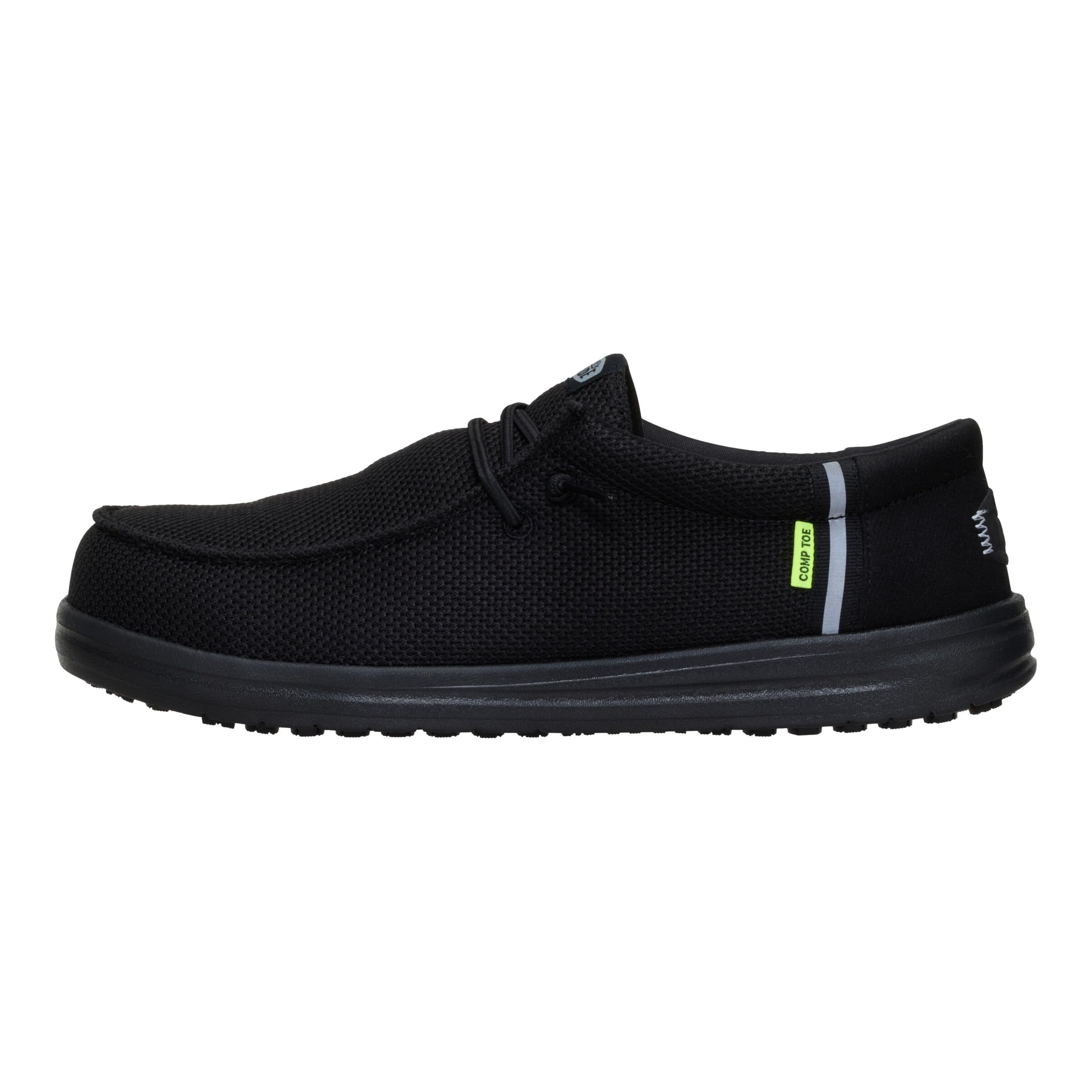
The HEYDUDE Wally Work CT hits the sweet spot for kitchen pros who need composite toe protection without the heavy, clunky feel of a traditional work boot. At just over a pound, the metal-free composite toe deflects drops from sheet pans and heavy stock pots while remaining thermally neutral — no cold transfer from walk-in freezer floors and no heat soak near the flattop. The water-repellent upper resists thin liquids and splashback, though it won’t survive standing water immersion.
The slip-resistant outsole uses a multidirectional tread pattern that channels oil and water away from the contact patch, giving you reliable grip on wet quarry tile. The removable insole is generously cushioned and sits flat — no raised heel — which makes it a natural transition if you’ve been wearing zero-drop shoes. The lace-up closure allows a snug midfoot lock, and the stretchy collar makes entry easy even if you’re in a rush during a busy service.
HEYDUDE’s design language prioritizes casual comfort over heavy-duty construction. The upper fabric is breathable but not puncture-resistant. If you’re constantly kneeling on metal shelving or dragging your feet across sharp floor drains, this shoe may scuff faster than a full-leather alternative. For the vast majority of line cooks, prep chefs, and front-of-house staff, this is the most balanced package of weight, protection, and grip on the list.
Why it’s great
- Lightweight composite toe adds zero foot fatigue over a double shift
- Water-repellent upper handles spills and splashes without soaking through
- Slip-resistant outsole holds firm on greasy, wet kitchen tile
Good to know
- Upper fabric shows scuff marks from shelving and floor drains
- Not fully waterproof — standing water will eventually soak through
5. Skechers Men’s Work Cessnock Food Service Shoe
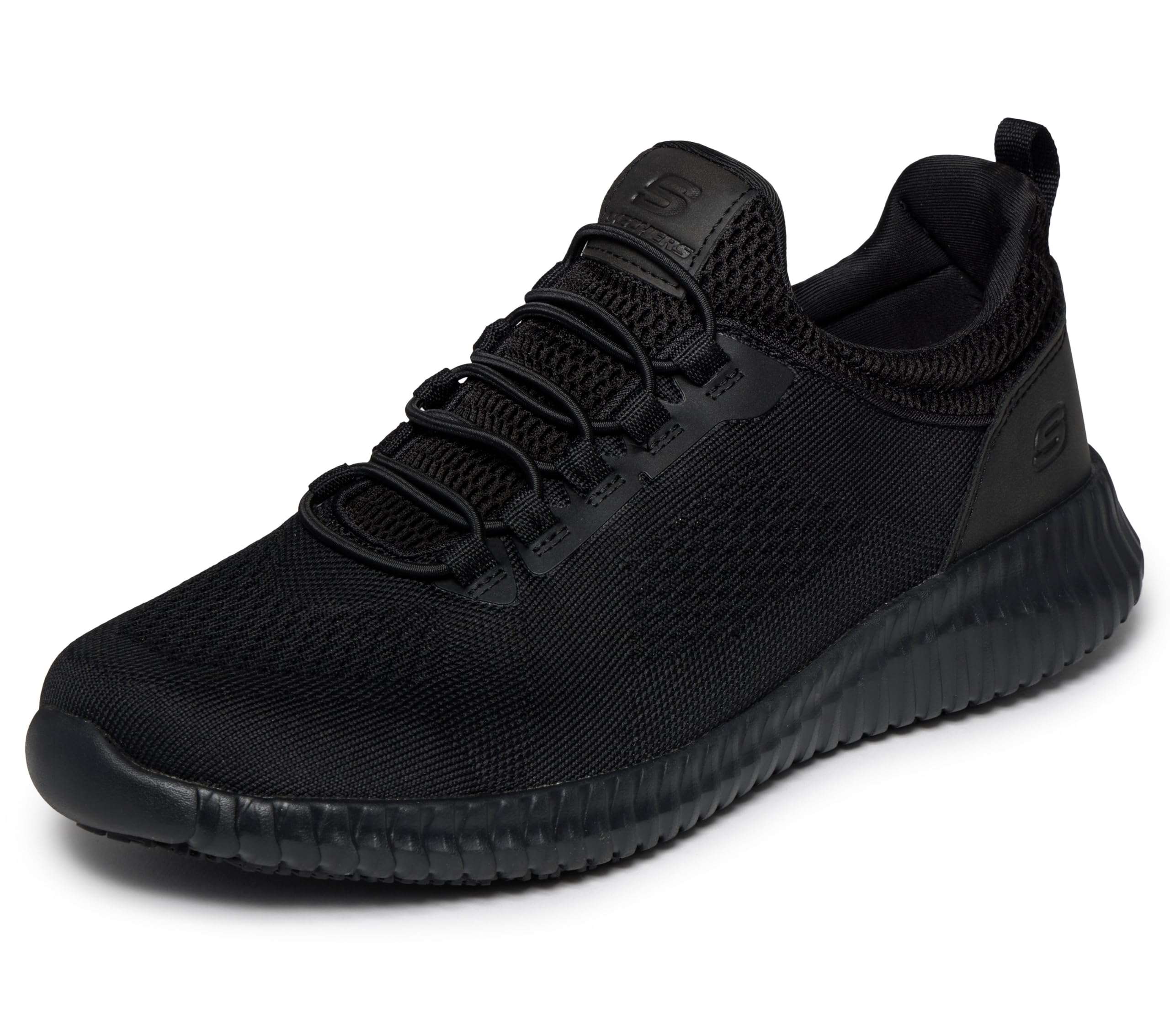
The Skechers Work Cessnock is a veteran in the food service footwear space, and for good reason — the memory foam insole molds to your foot’s specific pressure points after just a few shifts. This shoe doesn’t rely on a high-tech midsole; instead, it uses a thick slab of Skechers’ proprietary foam that absorbs shock from standing on concrete subflooring for hours. The relaxed fit allows extra room in the toe box, which is critical if you’re prone to foot swelling during a long service.
The outsole is oil-resistant and features a slip-resistant tread pattern that meets most restaurant industry standards. The upper is a combination of synthetic leather and mesh, making it easy to wipe down after a shift. Skechers keeps the design simple — no composite toe, no waterproof membrane — just a straightforward, cushioned shoe that works on the line. At six ounces lighter than most competitors, this shoe also reduces fatigue during the final hour of a busy dinner rush.
The trade-off is protection. Without a reinforced toe, this shoe won’t save your foot from a dropped cast-iron skillet. The mesh sections are breathable but not puncture-resistant. If you’re working in a kitchen with heavy falling objects or sharp debris on the floor, this shoe is best for lighter-duty roles like prep, pastry, or front-of-house. For those who prioritize comfort above all, the Cessnock delivers.
Why it’s great
- Memory foam insole conforms to your foot for personalized cushioning
- Ultra-lightweight design reduces fatigue during double shifts
- Easy-to-clean synthetic leather and mesh upper
Good to know
- No toe protection — not suitable for kitchens with heavy drop hazards
- Mesh sections can snag on sharp edges or shelf brackets
6. Non-Slip Work Shoes with Arch Fit Support
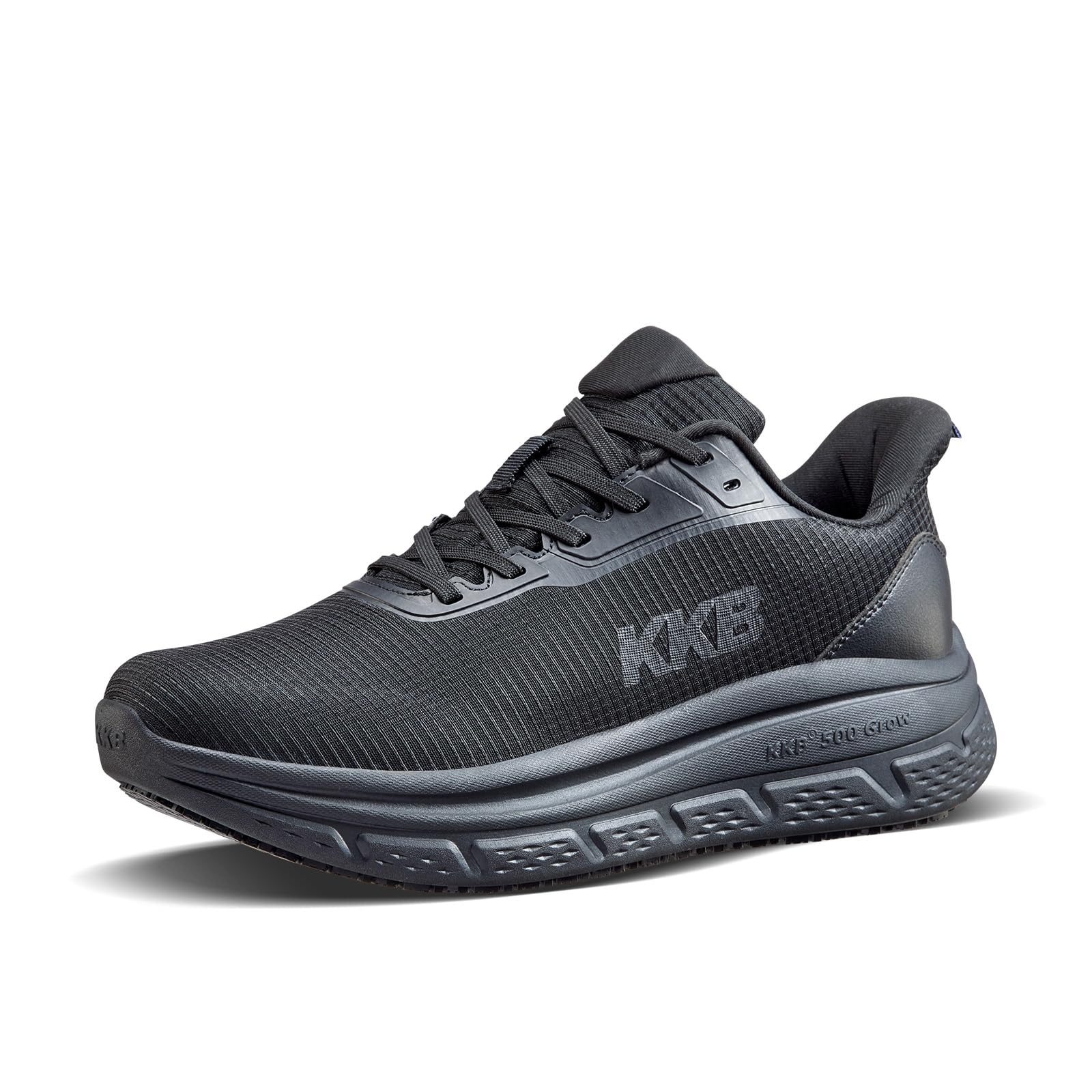
This shoe is built explicitly for kitchen workers who suffer from flat feet, plantar fasciitis, or general arch fatigue. The orthopedic arch support is built directly into the midsole — not a removable afterthought — and provides consistent medial support that prevents the foot from pronating on hard tile. The outsole uses a deep, aggressive tread pattern with wide channels designed to expel oil and water, giving it a solid grip on the greasiest kitchen floors.
The upper is made from a waterproof synthetic material that resists liquid absorption, making it a strong candidate for dish pit rotation or any role that involves frequent water exposure. The easy slip-on design uses a stretch collar and a rear pull tab, so you can kick them on and off quickly during a busy shift. The insole is also removable if you prefer to swap in custom orthotics, which is a rare feature in this price tier.
The trade-off for the deep outsole tread is weight — these shoes are heavier than the mesh-based competitors, which adds a noticeable drag over a 12-hour day. Also, the waterproof membrane reduces breathability, so your feet may run warmer than with a ventilated mesh shoe. If you’re on your feet in a wet environment and need arch support, this is a strong mid-range contender.
Why it’s great
- Integrated orthotic arch support reduces foot fatigue for flat-footed cooks
- Waterproof upper handles dish pit and prep sink splashes
- Easy slip-on design with stretch collar for quick changes
Good to know
- Heavier than mesh-based alternatives — noticeable after 10+ hours
- Waterproofing limits breathability, leading to warmer feet
4. HI-TEC Revival SR Low Mesh Black
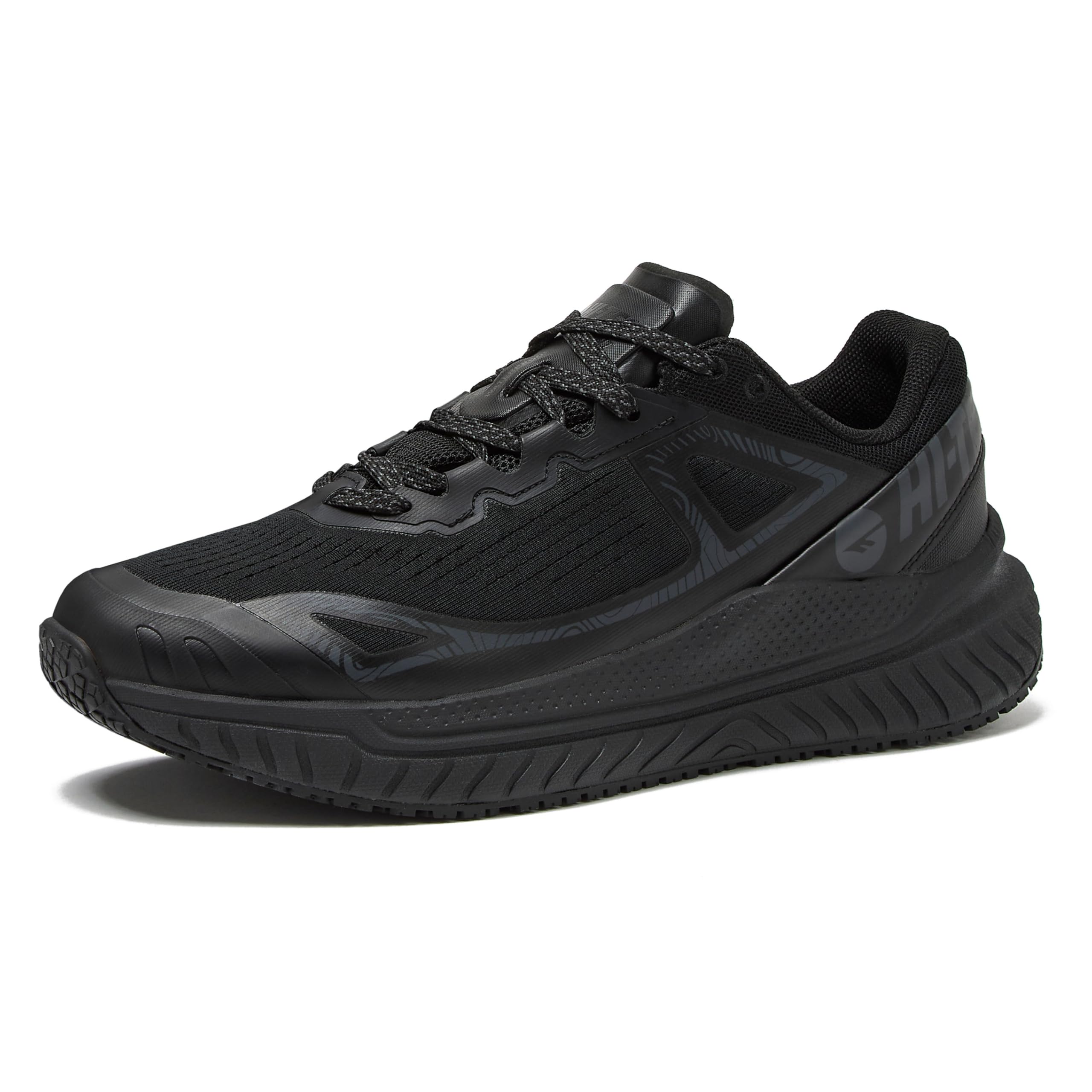
HI-TEC brings a unique combination of waterproofing and breathability to the kitchen floor with the Revival SR Low Mesh. The upper uses a waterproof mesh that resists liquid ingress while still allowing air exchange, keeping your feet dry from both external spills and internal sweat. This is a rare spec — most waterproof shoes trap moisture, leading to blisters and fungal issues after repeated use.
The outsole is slip-resistant with a directional tread pattern that performs well on greasy tile and wet concrete. HI-TEC engineered the midsole with an EVA foam core that provides a soft landing without the mushy feel of low-density foams. The lace-up closure offers a secure fit, and the padded collar prevents heel slip during fast lateral movement on the line. Sizing runs up to size 15, making it one of the few options for larger-footed kitchen workers.
On the downside, the waterproof mesh is not as durable as full synthetic leather — repeated exposure to acidic ingredients like tomato sauce or citrus juice may degrade the mesh fibers over time. The shoe also lacks a reinforced toe, so it’s not ideal for kitchens where heavy equipment is frequently dropped. For cooks who sweat heavily or work in hot, humid kitchens, this is the most breathable waterproof option available.
Why it’s great
- Waterproof mesh allows airflow while blocking liquid absorption
- EVA midsole delivers soft cushioning without bottoming out
- Available in extended sizes up to 15 for larger feet
Good to know
- Mesh upper may degrade faster with acidic kitchen spills
- No toe protection — not suitable for heavy drop zones
3. Shoes for Crews Freestyle II

Shoes for Crews has been a staple in the food service industry for decades, and the Freestyle II carries that reputation forward with a lightweight, low-profile design. The slip-resistant outsole is engineered with the brand’s proprietary tread compound that has been tested on wet and oily surfaces in commercial kitchens. At under 10 ounces, this shoe feels more like a casual sneaker than a work shoe, which reduces fatigue significantly over the course of a shift.
The upper is made from a water-resistant synthetic material that sheds light splashes and spills, and the mesh lining provides modest airflow. The insole is removable, allowing you to replace it with your own orthotic if needed. The lace-up design allows a secure fit, and the padded tongue reduces lace bite pressure across the top of the foot. This shoe is particularly well-suited for front-of-house roles or lighter prep tasks where heavy protection isn’t required.
The Freestyle II is not designed for heavy-duty environments. There is no composite or steel toe, and the upper lacks puncture resistance. The outsole, while excellent on greasy tile, can pick up small debris like cracked peppercorns or spilled garnish that gets embedded in the tread grooves. For cooks who prefer a featherlight shoe with proven slip resistance, this is a great entry-level option.
Why it’s great
- Proven slip-resistant outsole from a decades-old industry leader
- Ultra-lightweight build reduces fatigue on long shifts
- Removable insole accommodates custom orthotics
Good to know
- No toe protection — avoid in heavy drop zones
- Tread grooves may pick up small debris on the floor
2. SHULOOK Non-Slip Work Shoes
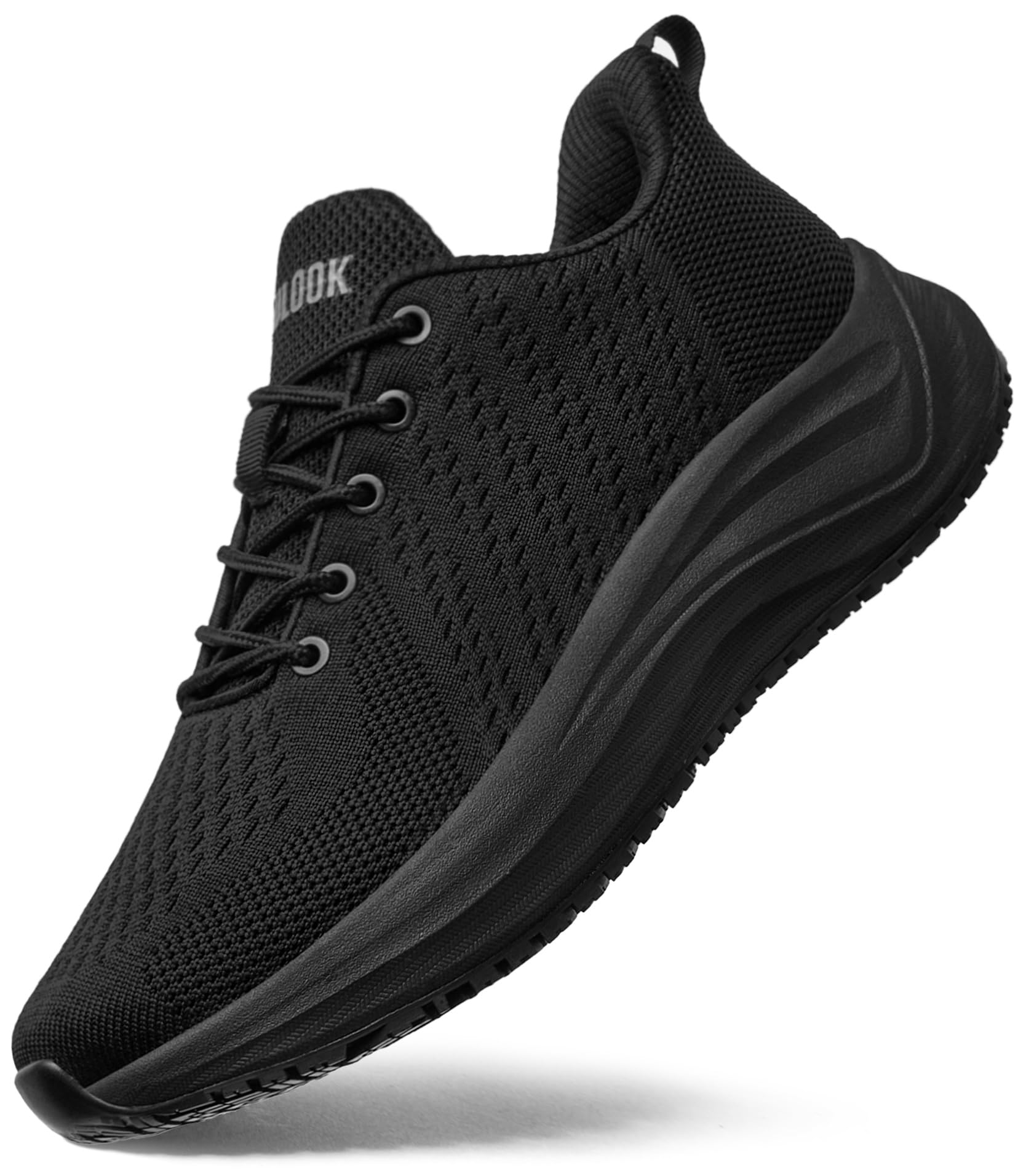
The SHULOOK Non-Slip Work Shoe blends breathable mesh construction with integrated arch support, creating an option that works well for cooks who prioritize airflow and foot stability simultaneously. The upper is a ventilated mesh that allows air to circulate, preventing sweat buildup during hot line work. The midsole includes an arch-support structure that holds the foot in a neutral position, reducing strain on the plantar fascia over long shifts.
The outsole is designed with a slip-resistant tread pattern that performs reliably on wet and greasy surfaces. The lace-up closure with a padded tongue provides a customizable fit, and the heel counter has a reinforced external stabilizer that reduces heel slip during quick lateral movements. The shoe is water-resistant but not fully waterproof — it handles splashback from washing dishes or a spilled sauce but will soak through if you step into standing water.
The mesh upper is the main vulnerability here. It breathes well but offers little resistance against sharp objects like broken glass or metal shelving edges. The shoe also lacks a reinforced toe, so it’s best suited for prep, pastry, or front-of-house roles. For line cooks in hot environments who need arch support and breathability, this is the best mesh-based option on the list.
Why it’s great
- Breathable mesh upper prevents foot sweat in hot kitchens
- Arch-support structure reduces strain on the plantar fascia
- Slip-resistant outsole grips well on greasy tile
Good to know
- Mesh upper offers limited puncture protection
- Not fully waterproof — standing water will soak through
1. WHITIN Food Service Shoes

The WHITIN Food Service Shoe stands out for its zero-drop sole platform — the heel and forefoot sit at the same height, which promotes a more natural walking gait and reduces knee and hip strain over time. It also weighs only 9.9 ounces per shoe, making it one of the lightest kitchen-specific footwear options available. The slip-resistant outsole features a flat tread pattern that works well on dry and moderately wet tile but struggles on heavily oil-slicked surfaces.
The upper is made from a lightweight synthetic material with a lace-up closure that allows a secure fit. The insole is removable, and the interior volume is generous enough to accommodate thicker orthotic inserts if needed. The shoe is labeled waterproof, but in practice it resists light moisture — standing water or heavy splashes will eventually penetrate the seams. This is a good choice for cooks making the transition from casual sneakers to dedicated work shoes.
The biggest limitation is the outsole grip on industrial grease. The flat tread pattern lacks the deep, multidirectional channels needed to channel away thick oil film. On a clean, mopped floor, it grips fine — but in a greasy pizza kitchen or a fast-food fry station, you may feel micro-slip underfoot. The zero-drop platform also requires a short adjustment period if you’re used to shoes with a raised heel. For the budget-conscious cook with dry floors, this is a solid starter shoe.
Why it’s great
- Zero-drop sole promotes natural gait and reduces joint strain
- Ultra-light at under 10 ounces per shoe
- Removable insole fits custom orthotics
Good to know
- Flat tread pattern lacks grip on thick grease films
- Water resistance is light — not for standing water exposure
FAQ
How often should I replace kitchen work shoes?
Can I use running shoes instead of kitchen work shoes?
Are composite toes safe for kitchen work?
Final Thoughts: The Verdict
For most users, the kitchen work shoes winner is the HEYDUDE Wally Work CT because it combines lightweight composite toe protection, a water-repellent upper, and reliable slip resistance into a package that works for both line cooks and front-of-house staff. If you want maximum arch support for flat feet, grab the Non-Slip Work Shoes with Arch Fit Support. And for breathability in hot, humid kitchens, nothing beats the HI-TEC Revival SR Low Mesh.