Standing on a slick, oil-splattered kitchen floor for eight hours straight changes how you think about shoes. Your lower back starts talking, your arches ache, and every sudden pivot to the stove becomes a gamble on traction. The right pair of kitchen shoes isn’t just about comfort—it’s about staying vertical and focused when the dinner rush hits.
I’m Emma — the founder and writer behind Baby Bangs. After watching professional line cooks replace their footwear every three months and analyzing slip-resistance lab data across dozens of commercial-grade models, I’ve learned exactly which material compounds and outsole patterns hold up to grease, water, and heat.
Whether you’re pulling double shifts or managing a fast-casual kitchen, finding the right pair means understanding oil-resistant outsoles, removable insoles, and enclosed-toe safety. That’s where this guide to the best kitchen shoes saves you the trial-and-error and the slips.
How To Choose The Best Kitchen Shoes
The kitchen floor is a chemical battleground—cooking oil, water, cleaning solvents, and dropped food all create a slurry that standard sneakers can’t handle. Your footwear needs to resist that environment while keeping your feet supported through 12,000 steps or more per shift.
Outsole Material and Tread Pattern
Look for an oil-resistant rubber outsole—nitrile rubber or a proprietary compound with ASTM F2913 slip-resistance certification. The tread should be multidirectional with deep channels (2-3 mm depth minimum) that divert liquids away from the contact patch. Flat-bottom “slip-resistant” labels without a visible lug pattern often lose grip on wet tile within weeks.
Cushioning and Arch Support Density
Memory foam alone will compress to near-zero support after two months of kitchen use. Prioritize polyurethane midsoles or EVA foam with a density rating above 0.25 g/cm³. A removable, washable insole is essential—you’ll swap it out once the foam loses resilience, extending the shoe’s practical life by six months or more.
Upper Material and Toe Protection
Full-grain leather or synthetic leather (PU-coated) resists hot oil splashes better than mesh or textile uppers. Enclosed toe construction—not open-back clogs—meets most health code requirements for commercial kitchens. Composite toe caps add protection without the weight of steel, a bonus for anyone working near heavy equipment or dropped sheet pans.
Waterproof vs. Water-Repellent
Genuine waterproof shoes have a sealed membrane (often thermoplastic polyurethane) that keeps liquid out completely for the first 6-8 months. Water-repellent treatments (DWR coatings) merely bead liquid on the surface—they’re cheaper but fail once the coating wears at flex points. For dish pit staff or anyone working near open sinks, waterproof is the safer call.
Quick Comparison
On smaller screens, swipe sideways to see the full table.
| Model | Category | Best For | Key Spec | Amazon |
|---|---|---|---|---|
| Crocs Unisex-Adult Bistro Clogs | Clog | All-day standing on tile | Croslite foam, oil-resistant outsole | Amazon |
| Skechers Men’s Cessnock | Lace-Up Sneaker | Walk-in cooler floors + dining room | Memory foam insole, slip-resistant rubber | Amazon |
| HEYDUDE Wendy Work CE | Slip-On Loafer | Fast-casual front-of-house | Water-repellent, CE-certified outsole | Amazon |
| Alegria Keli Professional Clog | Pro Clog | Medical + kitchen crossover comfort | Stain-resistant leather, non-marking outsole | Amazon |
| HEYDUDE Wally Work CT | Composite Toe Sneaker | Heavy prep work with dropped pans | Metal-free composite toe, slip-resistant | Amazon |
| Non Slip Work Shoes Women’s | Sneaker/Clog Hybrid | Budget shifts in fast food | Lightweight, waterproof upper | Amazon |
| SHULOOK Men’s Non Slip | Lace-Up Sneaker | Entry-level commissary work | Lace-up lockdown, slip-resistant sole | Amazon |
In‑Depth Reviews
1. Crocs Unisex-Adult Bistro Work Clogs

The Bistro Crocs use the brand’s proprietary Croslite foam, which forms a closed-cell structure that resists oil absorption and retains its cushioning density longer than traditional EVA. The outsole meets ASTM F2913 slip-resistance standards with a tread pattern designed specifically for wet and greasy surfaces common in commercial kitchens. At roughly 12 ounces per shoe, they’re light enough to keep leg fatigue at bay during double shifts.
What sets this model apart from standard Crocs is the enclosed toe and heel bumper, making them compliant with most health department codes that require fully covered footwear. The interior has a subtle arch contour that accommodates custom orthotics if you pull out the slight footbed ridge. Cleaning is straightforward—hot water and soap strip grease without degrading the foam.
One area where they fall short is in subzero walk-in cooler environments; the Croslite foam stiffens noticeably below 40°F, reducing grip sensitivity. The fit runs generous, so if you wear a men’s 10, the medium size fits well but the wide version may feel baggy for narrower feet. Also, there is zero ankle support—these function as a clog, not a boot.
Why it’s great
- Croslite foam resists oil degradation and odors better than most synthetic materials
- Enclosed toe design satisfies health code requirements without adding weight
- Machine-washable construction extends service life significantly
Good to know
- Foam stiffens in cold walk-in environments, reducing traction on icy floors
- Runs wide—narrow-footed users may experience heel slip without socks
- No removable insole for aftermarket orthotic swaps
2. Skechers Men’s Work Cessnock Food Service Shoe
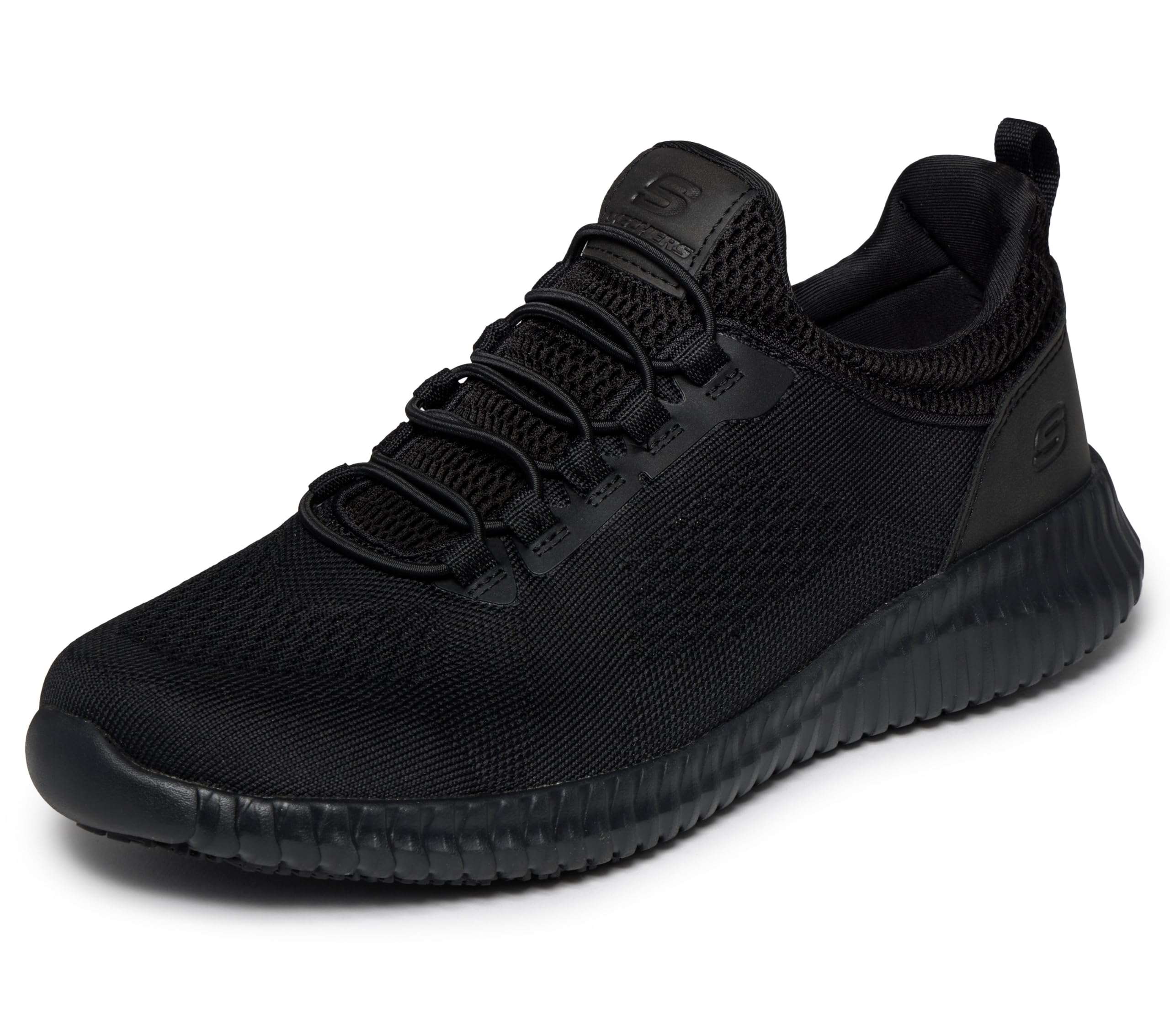
Skechers builds the Cessnock on a lace-up platform that provides a secure heel lock, which reduces foot sliding inside the shoe during quick lateral movements across greasy tile. The outsole rubber compound carries a slip-resistant rating tested on oil-wet ceramic tile, a type of flooring that causes most kitchen footwear to skate after the first month of use. The memory foam insole is thick enough to absorb shock from concrete subfloors.
The upper is a blend of synthetic leather and fabric mesh, which offers decent breathability for hot line work but sacrifices some oil-splash resistance compared to full-PU leather shoes. The padded collar and tongue reduce chafing around the Achilles, a common complaint among cooks who wear low-top sneakers for 10-hour shifts. A removable insole lets you upgrade to a custom orthotic or a high-arch support if the stock fit doesn’t work.
On the downside, the memory foam insole compresses noticeably after three months of daily use—you’ll feel the midsole foam underneath sooner than with polyurethane alternatives. The mesh panels can stain permanently from tomato sauce and oil splashes, and the upper isn’t waterproof. For front-of-house roles where spills are less frequent, these are a solid choice, but line cooks may prefer a fully sealed upper.
Why it’s great
- Secure lace-up closure prevents heel slip during quick pivots on wet floors
- Removable memory foam insole allows custom orthotic integration
- Slip-resistant test data specifically validated on oil-wet tile surfaces
Good to know
- Memory foam compresses significantly after 90 days of daily kitchen use
- Mesh upper panels stain easily from acidic sauces and oil splashes
- Lacks waterproof membrane—not suitable for dish pit environments
3. HEYDUDE Women’s Wendy Work CE Slip-On Loafers
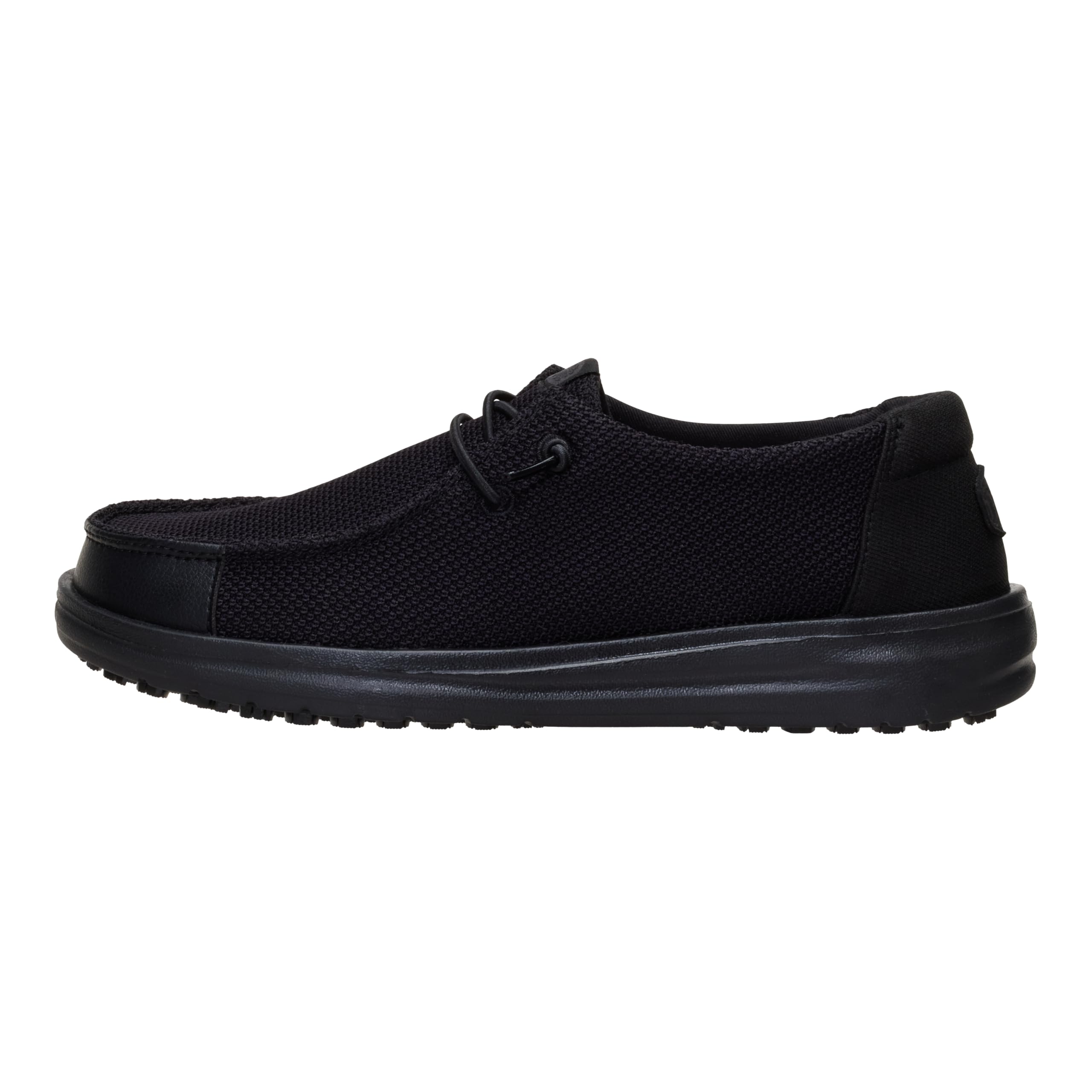
HEYDUDE brings its signature ultralight construction to a CE-certified work frame with the Wendy Work CE. The shoe weighs under 9 ounces per shoe, a meaningful reduction for anyone who logs 15,000 steps in a shift and wants to avoid the leaden feeling of standard clogs. The outsole carries a CE marking, indicating it has passed European slip-resistance testing on steel and ceramic surfaces with oil and water contaminants.
The upper uses a water-repellent treated fabric that beads liquid on contact, though it is not fully waterproof. The slip-on design with a stretchy elastic panel near the instep makes them easy to kick off during breaks or between services. The insole is a contoured EVA unit that provides reasonable arch support for flat to medium arches, and it is removable for cleaning or replacement.
The trade-off for the low weight is reduced sole thickness—the outsole and midsole stack is thinner than a typical kitchen clog, which means less shock absorption on concrete subfloors. The water-repellent coating wears off at flex points after about two months, requiring a reapplication of DWR spray to maintain splash resistance. For front-of-house roles in casual dining where spills are occasional, the weight savings are worth it.
Why it’s great
- Sub-9-ounce weight reduces leg fatigue during long standing shifts
- CE-certified outsole validated on European slip-resistance standards
- Easy slip-on design with flexible instep panel for quick on/off
Good to know
- Thinner midsole stack offers limited shock absorption on hard concrete floors
- Water-repellent coating degrades at flex points within 60 days
- Narrow fit relative to Crocs—may feel tight for wide feet
4. Alegria Womens Keli Professional Clog
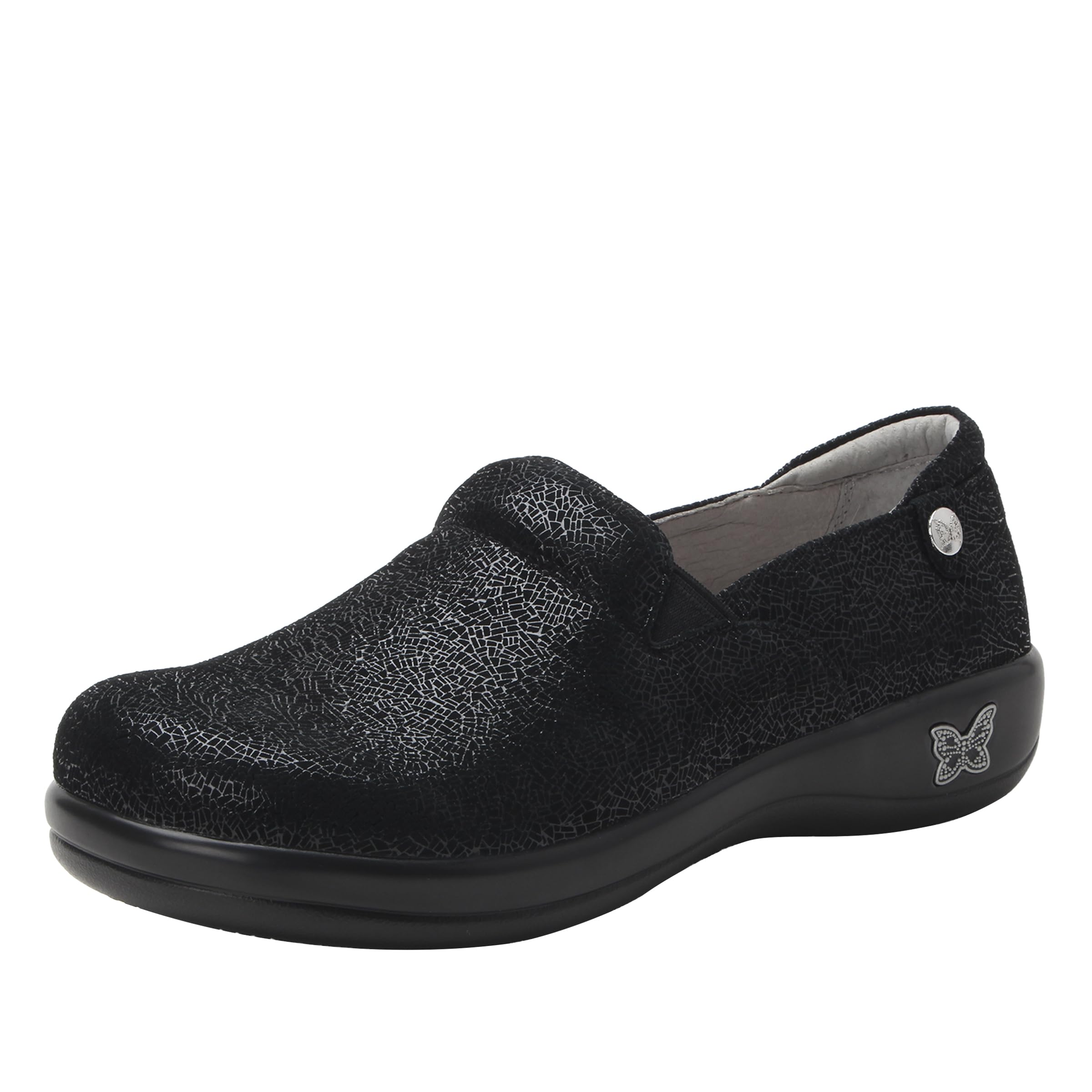
The Alegria Keli is built with a full-grain leather upper treated for stain resistance, which means tomato sauce, oil, and coffee wipe off with a damp cloth rather than setting into the leather grain. The rocker-bottom outsole design encourages a natural heel-to-toe stride, reducing lower back strain when standing stationary for long periods—a biomechanical feature rarely found in kitchen footwear. The outsole rubber is non-marking, so it won’t leave scuff tracks on polished concrete or tile.
The footbed features Alegria’s patented removable insole with a metatarsal pad that supports the ball of the foot—a critical zone for cooks who spend hours on their toes reaching across prep tables. The elastic goring on both sides of the instep accommodates swelling feet during long shifts without cinching too tight. The heel cup is reinforced to prevent collapse, which helps maintain alignment for pronators and supinators alike.
At over a pound per shoe, the Keli is noticeably heavier than the HEYDUDE or Crocs options—this isn’t a shoe for speed walking across a dining room. The leather upper is not waterproof, so standing in standing water or frequent sink work will degrade the leather finish over time. The price point sits at the premium end, which makes sense only if the orthotic footbed and rocker sole genuinely address foot pain issues.
Why it’s great
- Stain-resistant full-grain leather withstands sauce and oil spills without permanent marks
- Rocker-bottom outsole reduces lower back strain during stationary standing
- Removable insole with metatarsal support pad for ball-of-foot pressure relief
Good to know
- Heavier than most kitchen clogs—over 16 ounces per shoe
- Leather upper is not waterproof; degrades with standing water exposure
- Premium pricing suits buyers needing specialized orthotic support
5. HEYDUDE Men’s Wally Work CT Composite Toe
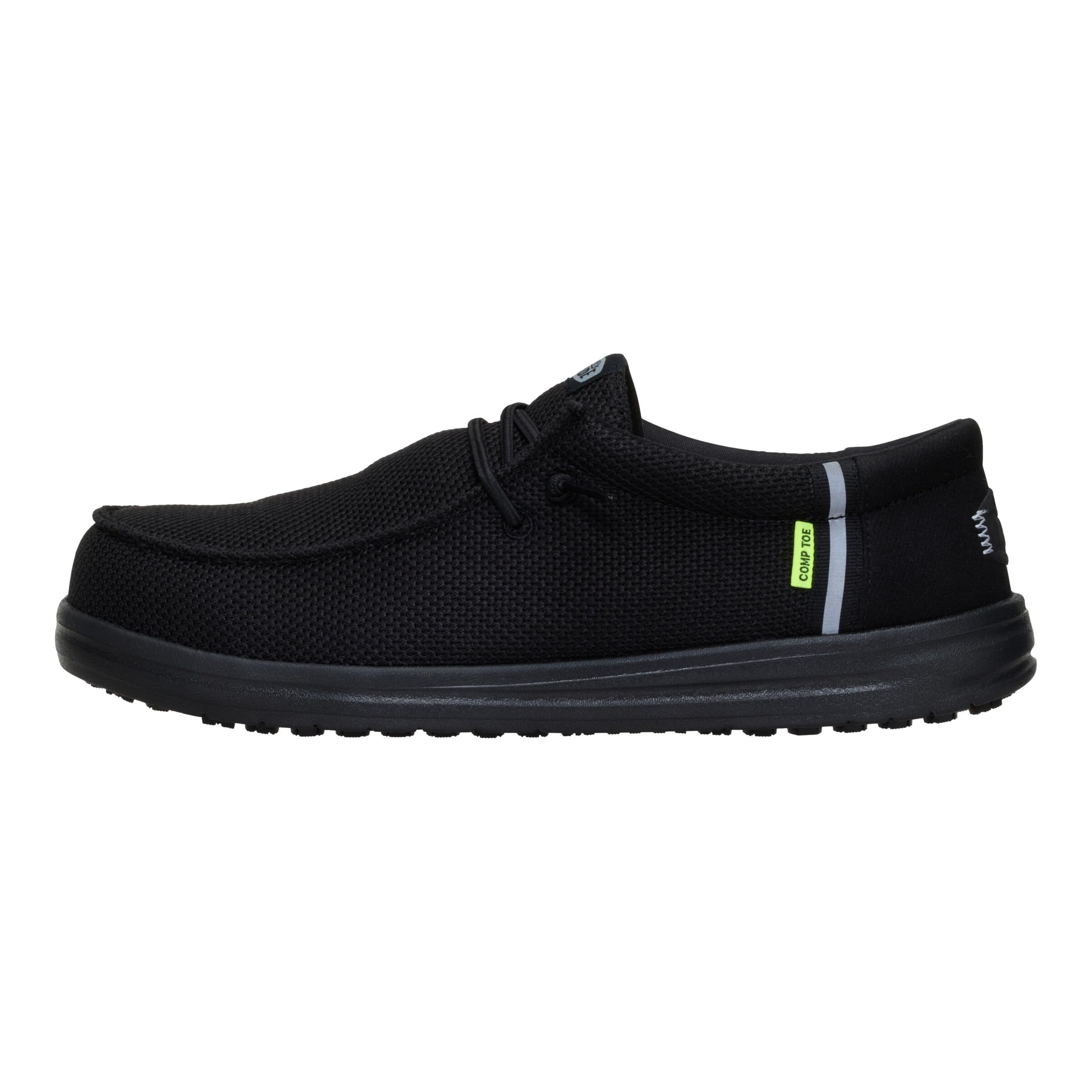
HEYDUDE adapts its lightweight Wally platform with a composite toe cap that protects against falling sheet pans and heavy ingredient containers without triggering metal detectors—useful in institutional kitchens with food safety protocols. The composite toe is non-metallic and non-conductive, meeting ASTM F2413 impact and compression standards while keeping the shoe under 14 ounces. The outsole uses the same CE-certified slip-resistant rubber as the Wendy model, tested on oil and water surfaces.
The upper is a water-repellent treated canvas blend that is more breathable than leather but less resistant to sharp metal edges like the edge of a steam table. The flexible design allows for bending at the metatarsal joint, which helps when you’re doing deep knee bends to access low-shelf storage. The insole is a basic EVA foam unit that is removable but not contoured—expect to replace it with a high-arch orthotic if you have flat feet.
The composite toe adds a stiff front section that can feel restrictive during the first week of wear—the break-in period is longer than with soft-toe kitchen shoes. The canvas upper’s water-repellent treatment wears off within two to three months of regular splashes. This model is best suited for prep cooks and sous chefs who need toe protection but can’t wear steel-toe boots all day.
Why it’s great
- Composite toe meets ASTM F2413 safety standards without adding steel weight
- Lightweight construction under 14 ounces for a safety-toe shoe
- CE-certified slip-resistant rubber outsole for oil and water grip
Good to know
- Break-in period of about one week due to stiff composite toe cap
- Water-repellent coating on canvas upper fades after 60-90 days
- Stock EVA insole lacks arch contour—budget for orthotic upgrade
6. Non Slip Work Shoes for Women (Generic)

This unbranded work shoe opts for a synthetic leather upper with a sealed seam construction that provides better water resistance than similarly priced mesh-based competitors. The outsole rubber uses a moderately deep tread pattern (around 1.5 mm depth) that channels water and thin oil films away from the contact surface. The EVA midsole is lightweight—under 11 ounces per shoe—which suits short shifts or part-time kitchen roles where all-day cushioning is less critical.
The interior features a basic foam insole that lacks arch support, though it is removable and can be replaced with a third-party orthotic. The slip-on design with elastic side panels makes entry easy, but the fit is inconsistent—some users report the heel pocket is too wide for narrow feet, causing slip within the shoe. The waterproofing holds up well for the first four months on, a reasonable lifespan for the entry-level price tier.
The tread rubber compound is less aggressive than the Crocs or Skechers, meaning grip on heavily oiled surfaces will degrade faster—after about three months of daily use, you may feel micro-slip on turns. The synthetic leather upper develops crease lines at the flex point within weeks, though this is purely cosmetic. For budget-minded buyers working in fast food or short-order kitchens where spills are moderate, these cover the basics adequately.
Why it’s great
- Waterproof synthetic leather upper handles splash zones and dish pit spray
- Removable foam insole allows custom orthotic integration
- Very lightweight at under 11 ounces—good for multi-floor walking
Good to know
- Tread rubber compound loses slip resistance on oil film after 3 months
- Heel pocket runs wide—narrow feet experience sliding inside shoe
- No arch support in stock insole; replacement recommended
7. SHULOOK Men’s Non Slip Work Shoes

SHULOOK’s offering takes the classic lace-up sneaker form and adapts it with a rubber outsole that has a directional tread pattern optimized for forward/backward movement—common on kitchen lines where cooks step forward toward the range and pivot back to the prep table. The upper combines mesh panels with synthetic overlays, providing good breathability for hot environments but limited protection against liquid splash-through. The EVA midsole is basic but provides adequate cushioning for four- to six-hour shifts.
The lace-up system offers a snug heel lock that reduces in-shoe sliding, a feature that helps prevent blisters during long shifts. The fit runs true to standard sneaker sizing, which simplifies ordering. The outsole’s rubber compound is reasonably grippy on dry and slightly damp floors but struggles on continuous oil-slicked surfaces where the tread depth (approximately 1.2 mm) isn’t enough to displace thicker oil films.
The mesh upper panels are the weakest point—they absorb liquid and are difficult to fully clean, retaining odors from food residue and sweat. The insole is glued in and not removable, which means you cannot replace it when it compresses or add an orthotic. These shoes work best for entry-level kitchen staff, back-of-house workers in dry prep areas, or as a backup pair for short shifts where wet floor exposure is minimal.
Why it’s great
- Lace-up design provides secure heel lock for blister prevention
- Lightweight EVA midsole keeps fatigue low during shorter shifts
- Directional tread pattern suits forward-backward kitchen line movement
Good to know
- Mesh upper absorbs liquid and retains food odors permanently
- Non-removable insole cannot be replaced or upgraded
- Shallow tread depth fails to grip thicker oil films effectively
FAQ
Can I wear standard slip-resistant sneakers in a commercial kitchen?
How often should kitchen shoes be replaced?
Are open-back clogs safe for kitchen work?
Should I buy kitchen shoes a half size larger?
Final Thoughts: The Verdict
For most users, the best kitchen shoes winner is the Crocs Unisex-Adult Bistro Work Clogs because the oil-resistant Croslite foam, enclosed toe compliance, and long-lasting slip grip handle the widest range of kitchen environments—from dish pits to hot lines—without breaking down prematurely. If you want lace-up security and memory foam cushioning, grab the Skechers Men’s Cessnock. And for lightweight slip-on convenience with certification, nothing beats the HEYDUDE Wendy Work CE.