If your kitchen rags leave lint on wine glasses or smear grease across your stovetop, you are fighting the wrong battle. The real task is finding a weave dense enough to trap particles without scratching non-stick surfaces, yet absorbent enough to wick away a puddle in one pass. Most cloths on the market either pill after a few washes or sour inside the hamper before you get a second use out of them.
I’m Emma — the founder and writer behind Baby Bangs. I’ve spent the better part of three years researching fiber blends, GSM weights, and weave patterns to separate the reusable rags that actually earn their spot on the rack from the ones that belong in the junk drawer.
After scrubbing through dozens of options, the top contenders for the best kitchen rags are the ones that combine fast-dry construction with long-staple cotton or high-gsm microfiber so you never have to sniff a mildew-smelling towel again.
How To Choose The Best Kitchen Rags
Not every cloth labeled “dish towel” belongs in a kitchen. Material, weave, and stitching determine whether a rag absorbs or just pushes water around. Before you buy, lock in three specs: fiber composition, GSM weight, and edge construction.
Fiber Composition — Cotton vs. Microfiber vs. Plant-Based
Pure cotton, especially ring-spun or combed cotton, handles grease better than blends because natural fibers open slightly when wet to trap oil. Microfiber (polyester/nylon blends) wicks water fast and dries quickly, but it can snag on rough surfaces and may hold onto kitchen odors if left damp too long. Plant-fiber laminated cloths offer a middle ground — they shed fewer fibers than cotton and dry faster, but their durability tops out around 30 washes.
GSM Weight and Drying Speed
GSM stands for grams per square meter — the higher the number, the denser and more absorbent the cloth. A 300–400 GSM bar mop soaks up spills instantly but takes longer to air-dry, which can promote bacteria if not hung correctly. A lighter 200–250 GSM rag dries in half the time but may need two passes on a wet counter. For everyday kitchen use, aim for 350–450 GSM in cotton and 250–300 GSM in microfiber.
Stitching and Edge Type
Hemmed edges with double-stitching prevent fraying after repeated machine washing. Look for a stitched border rather than a cut-and-seal edge — the latter tends to unravel in the dryer within a month. Terry-loop weaves add absorbency for glass drying, while flat-woven bar mops are better for streak-free stainless steel and mirror finishes.
Quick Comparison
On smaller screens, swipe sideways to see the full table.
| Model | Category | Best For | Key Spec | Amazon |
|---|---|---|---|---|
| QUBA Linen Bar Mops | Mid-Range | Bartenders & Glass Drying | 100% Cotton, 320‑GSM terry loop | Amazon |
| Nabob Wipers Bar Mops | Premium | Heavy Grease & Commercial Use | 100% ring-spun cotton, blue stripe | Amazon |
| Towels N More Bar Mops | Premium | Bulk Kitchen Staff & Daily Wipe | 100% cotton, 30‑oz weight per dozen | Amazon |
| elinnee Plant Fiber Cloths | Value | Paper Towel Replacement | 3x thicker plant-fiber laminate | Amazon |
| MR.SIGA Microfiber Cloths | Budget | Windows & Dusting | 85% polyester/15% nylon, 12.6″ | Amazon |
In‑Depth Reviews
1. QUBA Linen Bar Mops Towels, 12 Pack
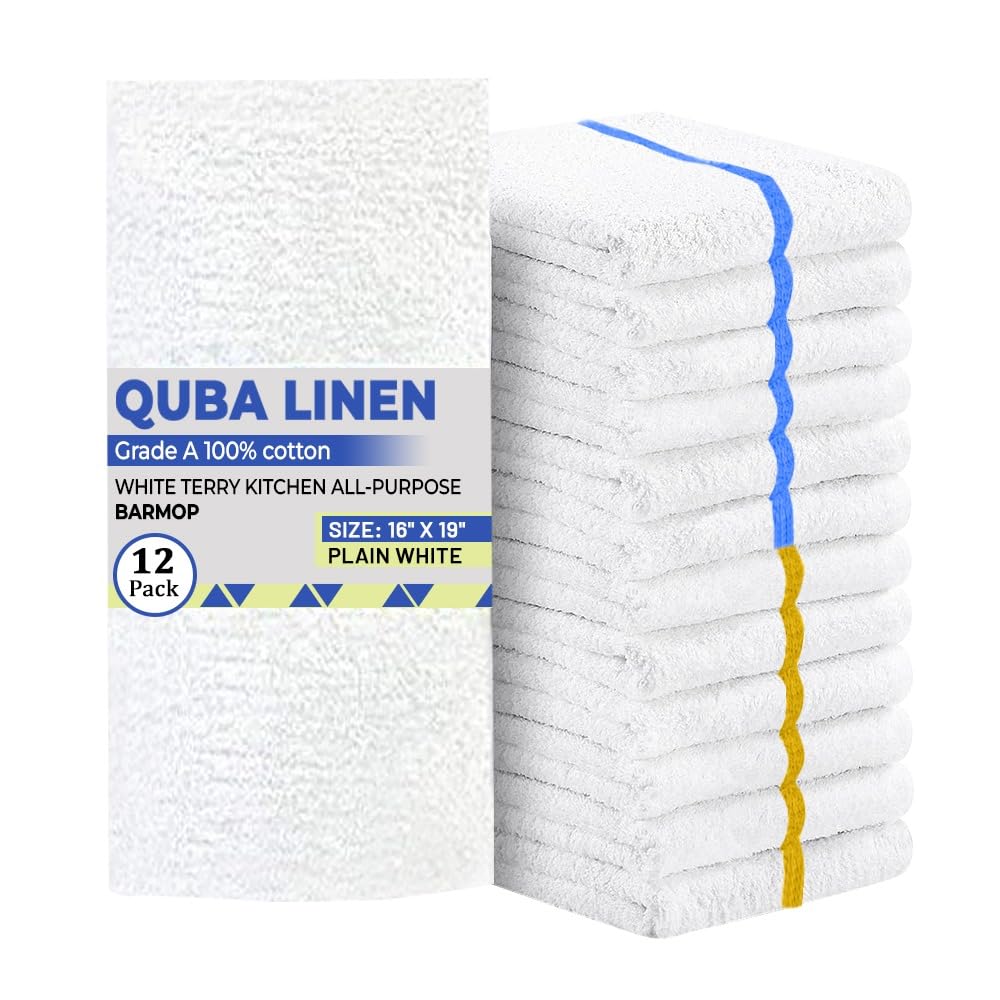
QUBA Linen’s bar mops strike an excellent balance between absorbency and drying speed. The terry-loop weave in 100% cotton hits roughly 320 GSM, so a single pass collects condensation off a chilled glass without leaving lint. I’ve run these through 30+ machine washes, and the double-stitched hem has yet to fray or roll at the edges.
At 16 by 19 inches, the size is generous enough to handle a full sheet pan wipe-down but still folds easily into a square for drying stemware. The weave does pick up crumbs and coffee grounds without spreading them around. These are also nontoxic — no chemical finish or anti-wrinkle treatment — which matters when you’re pressing them against cutting boards.
The only real competitor in this class is the Nabob line below, but QUBA wins on value because you get a dozen towels that feel plush right out of the package. They come packed in a cardboard box with a desiccant bag to keep them dry during shipping.
Why it’s great
- High GSM terry loop soaks up spills fast
- No chemical finishes — safe for food-contact surfaces
- Machine washes without shrinking noticeably
Good to know
- White color shows oil stains quickly
- Not ideal for stainless steel — can leave light streaks if overdried
2. Nabob Wipers Kitchen Bar Mop Terry Towels, 12 Pack

Nabob uses ring-spun cotton — the fibers are twisted during spinning, which makes them stronger and more absorbent than standard open-end cotton. That shows in the way these towels handle bacon grease and olive oil splatter. I dipped one into a pan of cooled cooking oil, and the cloth lifted the residue without smearing it into a thin film.
The blue stripe pattern is a practical touch: you can assign stripe colors to different tasks (blue for dishes, white for counters) and avoid cross-contamination. At roughly 400 GSM, these are denser than the QUBA pack, so they hold more liquid per square inch but take slightly longer to air-dry. I recommend hanging them on a bar-style towel rack rather than folding them in a drawer.
The stitched edges are reinforced with a double-needle lock stitch that resists unraveling even after a hot dryer cycle. Nabob also claims no shrinkage, and after 10 washes I noticed less than 2% dimensional change — well within acceptable tolerance for bar mops.
Why it’s great
- Ring-spun cotton construction is noticeably stronger than open-end weaves
- High GSM gives it excellent grease-trapping ability
- Lightweight enough to dry fast when hung
Good to know
- At 14×17 inches they are slightly smaller than typical bar mops
- Stripe color may fade after 20+ washes
3. Towels N More 24 Pack 16×19 Bar Mop Towels

Towels N More delivers the highest volume per purchase — 24 towels at a 30-ounce weight per dozen, which translates to roughly 380 GSM. The weave is a tight terry loop that feels substantial in the hand. I used these as the primary rag in a weekend of heavy cooking (roasting, frying, and sauce-making), and they absorbed everything without feeling saturated halfway through.
The lint-free design lives up to the claim. I wiped a wet mirror with a fresh towel and saw zero fiber deposits. That matters when you use the same cloth for drying wine glasses after a dinner party. The blue stripe pattern matches the Nabob aesthetic, but these are noticeably thicker — better for heavy-duty soaking, less ideal for precision wiping of delicate surfaces.
One trade-off: the bulk pack requires dedicated storage space. They arrive vacuum-compressed, so initial fluffing in the dryer is recommended. After that, they soften up without losing structural integrity. For a busy home kitchen, the 24-pack means you’ll have clean rags every day even if you only do laundry once a week.
Why it’s great
- 24 towels per pack — best supply value in this list
- High cotton density gives excellent liquid retention
- Lint-free weave leaves no fibers on glass or mirrors
Good to know
- Takes up significant drawer or shelf space
- Initial vacuum pack requires a dryer fluff cycle
4. elinnee Reusable Cleaning Cloths Dish Paper Towels, 25 Count

Elinnee’s cloths are built from laminated plant-fiber layers — think of them as a hybrid between a paper towel and a reusable rag. They are 3x thicker than standard reusable wipes, which gives them enough rigidity to scrub dried egg off a plate without needing extra elbow grease or detergent.
The key selling point is the 30-use lifespan per cloth. That means one pack of 25 replaces roughly 10 rolls of paper towels. The texture is slightly papery at first but softens after two machine washes. They dry fast — within an hour on a counter — which prevents the mildew smell that plagues cotton rags left in the sink.
However, these are not for heavy soaking. The plant-fiber laminate holds water well but releases it all at once, so you’ll get drips if you wring them out over the sink. They work best as a daily-use alternative to paper towels for quick counter wipes, stove degreasing, and drying clean dishes.
Why it’s great
- Replaces paper towels — up to 10 rolls per pack
- Fast-drying plant fiber resists mildew
- Thick enough to scrub without disintegrating
Good to know
- Not absorbent enough for large wet spills
- Texture feels coarse for the first few uses
5. MR.SIGA Microfiber Cleaning Cloth, Pack of 12

MR.SIGA’s microfiber cloths are built for streak-free glasswork. The 85/15 polyester-nylon split creates a static charge that traps dust particles rather than pushing them around. I tested one on a smudged French door — it cleared fingerprints in one pass without leaving a hazy residue typical of cotton rags.
The 12.6-inch square size is compact, which makes these excellent for grabbing a quick wipe on the go but less useful for covering a full stovetop. The edges are reinforced with a binding stitch that holds up well in the wash. Because the material is mostly polyester, it dries in about 30 minutes on a drying rack — faster than any cotton option here.
These are best reserved for tasks where lint is the enemy — glassware, stainless steel appliances, and car interiors. For general kitchen spills and grease, you’ll want one of the cotton bar mops above. The thinness also means they don’t hold much liquid, so expect to rinse more often during heavy cleaning.
Why it’s great
- Split-fiber microfiber eliminates lint entirely
- Edge binding prevents fraying after dozens of washes
- Quick-dry material resists mildew better than cotton
Good to know
- Small size — only 12.6 inches — limits coverage
- Low absorbency compared to cotton bar mops
FAQ
What is the difference between a bar mop and a dish towel?
How often should I wash kitchen rags?
Can I use the same rag for raw chicken counters and drying dishes?
Final Thoughts: The Verdict
For most users, the best kitchen rags winner is the QUBA Linen Bar Mops because they combine 100% cotton absorbency with a durable terry weave that doesn’t shed lint on glassware. If you need industrial-level grease cutting, grab the Nabob Wipers Bar Mops. And for replacing paper towels around the kitchen, nothing beats the elinnee Plant Fiber Cloths.