Kids sunglasses usually fail in one of two ways — the arms snap at the hinge during a soccer throw-in, or the lenses offer zero real UV defense despite a shiny sticker that claims otherwise. Sorting through the bright colors and cartoon character decals, you need shades that survive the playground tumble while actually blocking 100% of UVA and UVB radiation.
I’m Emma — the founder and writer behind Baby Bangs. I’ve spent hundreds of hours reviewing children’s eyewear frames, lens materials, and fit data to find pairs that active kids won’t rip off and parents can trust.
After testing dozens of entries across flexible frames, polarized lenses, and sport-specific wraps, the current field of contenders for the best kids sunglasses balances shatterproof polycarbonate with comfortable TR90 or TPEE frames that avoid the pinch-point breakage common in cheap toys.
How To Choose The Best Kids Sunglasses
The rack at the store might look the same, but the gap between a genuine kids sun pair and a colored novelty item is wide. Nailing the right option for your child means checking three concrete areas: lens protection certification, frame flex durability, and a fit that won’t slide off the first time they run.
UV400 and Polarization — The Real Eye Safety Markers
Look for the UV400 label stamped on the lens or packaging. This standard blocks 99–100% of UVA and UVB rays up to 400 nanometers. Sunglasses without this rating — even expensive ones from boutique brands — leave children’s developing eyes exposed to cumulative solar damage. Polarization is a separate layer: it cuts horizontal glare off water, pavement, or car windows, which reduces squinting and makes colors feel sharper. You want both, not one or the other, for active outdoor kids.
Frame Material and Flex Resistance
Standard acetate or brittle plastic frames cannot survive being sat on, thrown into a backpack, or folded backward during a fall. TR90 (a thermoplastic memory material) and TPEE (a thermoplastic polyester elastomer) are the two standout materials in this category. TR90 weighs roughly 18-20 grams for a youth frame and flexes back to shape repeatedly. TPEE offers similar bend but with a slightly softer touch against the temples. Both resist cracking in cold weather and feel lighter than traditional plastic molds.
Lens Impact Resistance
Polycarbonate lenses are the default for any kids sports or everyday pair. They are shatterproof — meaning they chip or crack rather than shatter into sharp shards — and they naturally block UV without needing a heavy coating layer. Lens thickness for kids should be at least 1.2mm to handle drops from head height onto concrete. The mass-market alternatives made from CR-39 or standard acrylic can still offer UV400, but they lack the impact resilience polycarbonate provides.
Quick Comparison
On smaller screens, swipe sideways to see the full table.
| Model | Category | Best For | Key Spec | Amazon |
|---|---|---|---|---|
| 3PACK Kids Sunglasses | 3-Pack | Multi-outfit rotation | TR90 frame, 18.6g | Amazon |
| COCOSAND Kids Sunglasses | Flexible Frame | Toddler comfort | Flexible TPEE frame | Amazon |
| Polarized Kids Sunglasses Youth | Premium | High-impact sports | UV400 polycarbonate | Amazon |
| VcarsianKids Sunglasses | Youth Sports | Baseball and softball | Wrap-around design | Amazon |
| DEAFRAIN Kids Polarized | Adventure | Cycling and hiking | TPEE round frame | Amazon |
In‑Depth Reviews
1. 3PACK Kids Sunglasses for 6-14 (CMBJJU)

This three-pair set from CMBJJU covers the bases for parents who want a spare for the beach bag, the school backpack, and the car console. Each pair uses TR90 frames that weigh just 18.6 grams — light enough that kids forget they are wearing them. The lenses carry the UV400 rating with a polarized coating, and the shape follows a wraparound flame design that keeps sunlight from entering through the sides.
The shatterproof polycarbonate lenses are rated for baseball, cycling, and climbing, which means they can handle errant throws and the occasional face-plant on the asphalt. The included lanyards and cleaning cloths add convenience, though the storage bag is thin. The color variety — black/blue, white/blue, and blue/pink — works for unisex rotations across siblings.
Fit is marked for ages 6–14, but the medium bridge and adjustable temple arms fit smaller faces better; larger 13-year-olds may find the width snug. The lenses scratch easier than premium glass alternatives, but at this price per pair, the trade-off is acceptable for seasonal replacement.
Why it’s great
- Three pairs for multi-outfit use and backup
- Ultralight TR90 frame reduces nose pressure
- Polarized UV400 lenses with shatterproof polycarbonate
Good to know
- May feel tight for upper age range of 13–14
- Lenses scratch more easily than premium alternatives
2. COCOSAND Kids Sunglasses
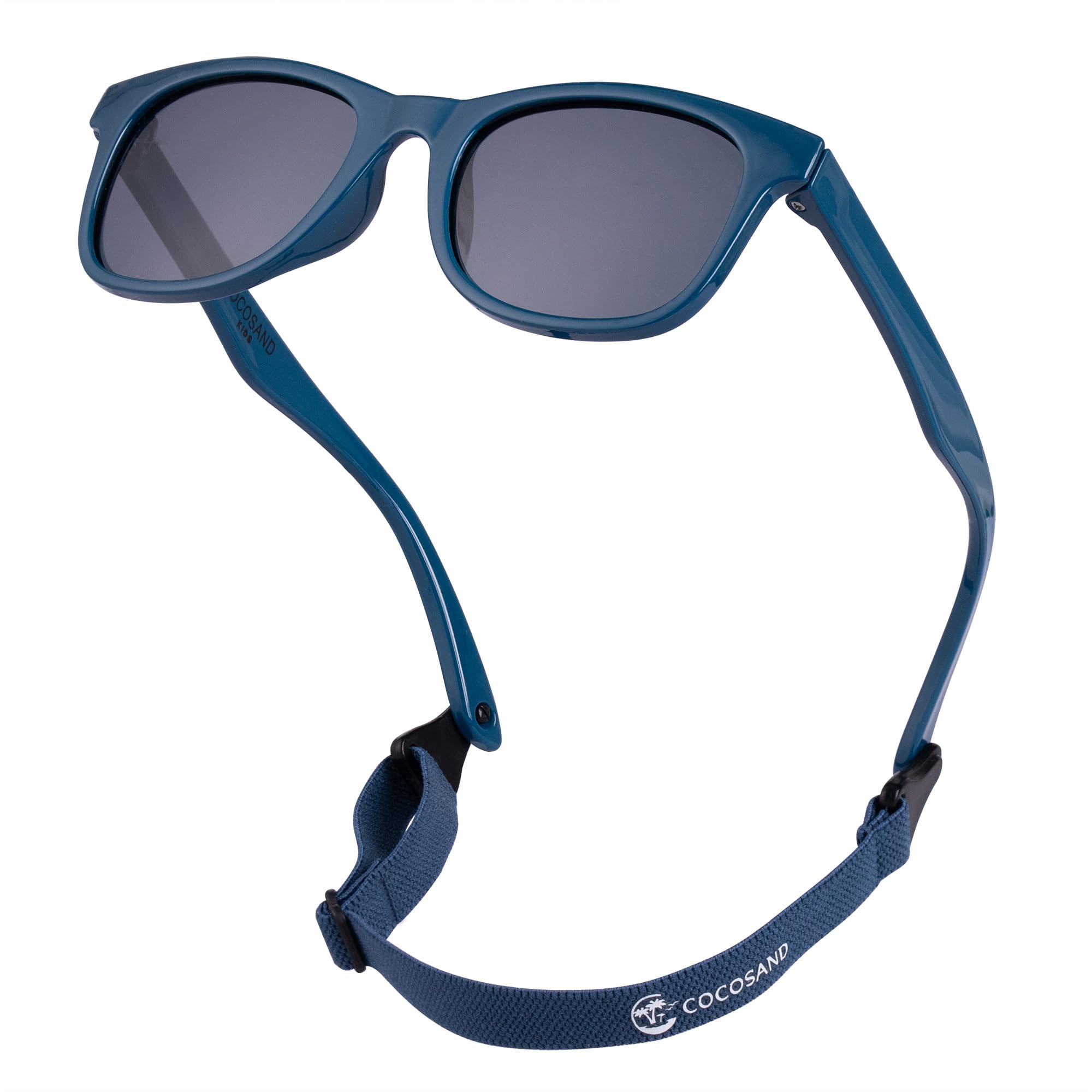
COCOSAND targets the toddler-to-elementary gap (ages 4–10) with a frame built from flexible TPEE material. TPEE bends significantly without cracking — useful for parents who have watched a child grab the temples and fold them flat. The polarized UV400 lenses sit inside a full-frame wrap that seals against peripheral light, a common weak point in budget children’s sunglasses.
The arms are coated with a soft-touch finish that resists slipping during active play, and the spring hinges reduce the chance of permanent distortion. The frame flexes enough to survive being stuffed into a backpack corner, though the hinge tension feels slightly loose after repeated aggressive folding. The color options lean toward neutral tones that appeal to both boys and girls.
The nose bridge is low-profile and works well for children with flatter nasal bridges without leaving red marks. Sizing runs true toward the younger end of the range — a 9-year-old with a wider head may find the temples reach only to the mid-ear. The storage case is a basic pouch, so consider reinforcing protection for backpack travel.
Why it’s great
- Highly flexible TPEE frame resists breakage
- Soft-touch temple arms reduce slipping
- Full-frame coverage blocks side glare
Good to know
- Best fit for younger children in the 4–10 range
- Hinges feel looser after repeated bending
3. Polarized Kids Sunglasses Youth

This pair is built for high-impact play — think baseball line drives, softball pop flies, and soccer header practice. The UV400 polycarbonate lenses are thicker than standard children’s glasses and are set inside a sturdy full-frame wrap. The wrap design creates a goggle-like seal that prevents dust and wind from irritating eyes during bike rides or sprints.
The frame uses a non-slip rubberized coating on both the temples and the nose pads. This material stays grippy even when kids sweat, unlike smooth acetate frames that slide down the nose mid-game. The polarization reduces glare off grass and dirt fields, which helps young athletes track fly balls against bright sky backgrounds.
The arms are medium-length and fit most faces from ages 5–12, but the rigid frame lacks the TPEE flexibility of other options here, so it will not survive being sat on. The lenses have a mirror coating that reduces perceived brightness further — useful in full-sun midday games but slightly dimming in overcast conditions. The bundle includes a hard case rather than a pouch, which is a notable upgrade for protection.
Why it’s great
- Thicker polycarbonate impacts handling high-speed balls
- Rubberized non-slip temple and nose pads
- Includes a hard protective case
Good to know
- Rigid frame will not survive being sat on
- Mirror coating can feel dim in cloudy conditions
4. VcarsianKids Sunglasses Youth

VcarsianKids focuses on a wrap-around silhouette that locks onto the face during baseball and softball. The UV400 polarized lenses cut glare, and the frame uses a curved shape that prevents light from leaking through the top gap — a common issue with flat-lens youth glasses. The lenses are polycarbonate, meeting shatter-resistance expectations for sports play.
The temples have a slight rubberized grip section that hooks behind the ears, but the overall flex is moderate. The frame material is not labeled as TR90 or TPEE, so it feels stiffer than the premium options in this list. The fit range (ages 3–12) is ambitious — the small setting works for preschoolers, but the widest setting can still feel narrow for a 10-year-old with a broader head.
The lens clarity is good for the price tier, but the polarization treatment creates a warmer color shift compared to neutral-gray lens pairs. The included lanyard is thin and the carry pouch is a basic drawstring bag. These are a solid entry-level sports pair, but parents with very active kids should check the hinge area for cracking after a few months of daily use.
Why it’s great
- Curved wrap design blocks top peripheral light
- Shatterproof polycarbonate lenses with UV400
- Works for preschool through early elementary ages
Good to know
- Frame material lacks TR90/TPEE flex resistance
- Narrow fit for older children above age 10
5. DEAFRAIN Kids Polarized Sunglasses

DEAFRAIN uses a TPEE flexible round frame that feels similar to the COCOSAND pair but with a classic round lens shape instead of a wraparound sport cut. The polarized UV400 lenses provide the same UV protection, and the round silhouette offers a wider field of view vertically, which helps for cycling and hiking where kids look up to scan trails or road signs.
The frame comes in a matte black/green color combination that avoids the overly flashy cartoon aesthetic many children’s options default to. The TPEE material bends back into shape after twisting, and the hinge is reinforced with a metal core that reduces wobble over time. The fit is listed for ages 5–12, and the round shape works well for round or oval faces but may look small on wider square faces.
Lens scratch resistance is average — the polycarbonate will show micro-scratches after a season of backpack carry without the included pouch. The polarization does a solid job cutting reflections off car windows and water, making these a decent pick for family road trips or beach days. The spring hinges are a step above the VcarsianKids hinge design, but the overall frame wrap is less secure during running than the sports-specific options here.
Why it’s great
- TPEE flexible frame with metal-core hinge
- Classic round shape offers wide vertical field of view
- Matte color options avoid childlike decals
Good to know
- Lenses scratch easier than thicker sports-grade pairs
- Round shape fits limited face types well
FAQ
Can polarized kids sunglasses make it harder to see phone screens?
At what age should kids start wearing sunglasses?
How do I know if the sunglasses fit my child properly?
Final Thoughts: The Verdict
For most users, the best kids sunglasses winner is the 3PACK Kids Sunglasses because it combines ultralight TR90 frames, shatterproof UV400 polarized lenses, and a three-pair set that covers replacement and rotation needs without wasting money on single glasses. If you want a flexible toddler frame that bends without breaking, grab the COCOSAND Kids Sunglasses. And for high-impact sports where a hard case and rubberized grip are non-negotiable, nothing beats the Polarized Kids Sunglasses Youth.