A wet sock thirty minutes into a snowball fight isn’t a memory — it’s a battle lost. Kids snow boots exist in a narrow window between warm enough, dry enough, and light enough that a toddler will actually walk instead of fall. The market fills up with rubber shells that double as rain boots but lack the insulation for real cold, or synthetic waders so stiff a child’s ankle fights every step. The right pair matches a removable liner, a thermoplastic rubber outsole with lugs deep enough to bite into packed snow, and a waterproof shaft that reaches above the mid-calf line.
I’m Emma — the founder and writer behind Baby Bangs. My research dives into the measurable aspects parents need: the rated temperature range, the insulation material type (100g Thermolite vs. fleece), and the outsole tread depth in millimeters that prevents slips on ice and slush.
The seven boots below cover the full spectrum from budget-friendly entry points to cold-weather specialists that handle sub-zero playdates. Each recommendation in this guide has earned its place through material quality, real-world temperature ratings, and ease of putting on fast before a kid loses patience. This is your researched checklist for kids snow boots that actually keep snow out and warmth in.
How To Choose The Best Kids Snow Boots
Snow boots for kids aren’t scaled-down adult boots. The child walks differently — shorter stride, less heel strike, more direct impact on the toe area. The boot needs to flex at the ball of the foot, not the arch. And the opening has to be wide enough that a snowsuit pant leg fits inside without bunching. Let’s break down the three specifications that separate a win from a cold miss.
Waterproof Construction: Sealed Seams vs. Coated Shells
The single biggest failure point in kids snow boots is water entry at the seam where the rubber lower meets the textile upper. Boots that use a vulcanized rubber bottom with a heat-sealed seam to a nylon or neoprene upper rarely leak. Boots that rely on a simple spray-on DWR coating fail after three wears. Look for the phrase “seam-sealed” or “thermoplastic rubber (TPR) outsole bonded to upper” in the product description. The Western Chief and Kamik lines use this construction; generic rain boots with a printed logo do not.
Insulation Type and Weight: 100g vs. Fleece vs. Shearling
Fleece lining feels cozy but compresses under a toddler’s weight, losing loft and therefore warmth. 100g synthetic insulation (Thinsulate or Thermolite) maintains its air pockets even when wet and is the standard for boots rated to -25°F. Shearling or faux-fur linings are warm dry but trap moisture if the child sweats, leading to cold feet after thirty minutes of active play. A removable liner (like in the Kamik Snowbug) gives you the option to dry it separately overnight. For a child who runs hot during snow play, 100g insulation in a sealed shell is plenty; for a parent who stands on the sidelines watching a kid who sits in the snow and builds, look for 200g.
Outsole Tread Pattern and Material
Not all rubber grips the same way. A thermoplastic rubber outsole with chevron or lug patterns spaced 4mm to 6mm deep sheds snow and bites into ice. Smooth-rubber soles (common on fashion rain boots) are outright dangerous on wet snow over hard ground. The Columbia Bugaboot line uses Omni-Grip, a compound engineered for low-temperature traction. The Sorel Snow Commander uses a multi-directional lug pattern with a visible heel kick. If the boot’s outsole looks more like a sneaker than a tractor tire, it belongs in rain, not snow.
Quick Comparison
On smaller screens, swipe sideways to see the full table.
| Model | Category | Best For | Key Spec | Amazon |
|---|---|---|---|---|
| Columbia Kids Powderbug Snowlite | Insulated Snow Boot | Active all-day snow play | 200g Thermolite insulation, Omni-Grip outsole | Amazon |
| Sorel Toddler Snow Commander | Premium Winter Boot | Deep cold and icy terrain | Removable 9mm washable liner, sealed seams | Amazon |
| Columbia Kids Bugaboot Celsius | Mid-Weight Snow Boot | Cold weather school commutes | 100g Thermolite, molded TPR shell | Amazon |
| Kamik Kids Snowbug 5 | Eco-Friendly Boot | Vegans and cold-weather recess | Removable liner, synthetic leather, adjustable strap | Amazon |
| Western Chief Kids Traverse | Fleece-Lined Rain Snow Boot | Wet snow over mild cold | Neoprene upper, fleece lining, pull-on handles | Amazon |
| WTW Kids Rubber Rain Boots | Budget Snow Boot | Light snow, puddles, mud | 100% waterproof neoprene, calf height | Amazon |
| HISEA Kids Insulated Rain Boots | Budget Snow Boot | Wet weather and shallow snow | Handle pull-on, sealed seam rubber bottom | Amazon |
In‑Depth Reviews
1. Columbia Kids’ Powderbug Snowlite
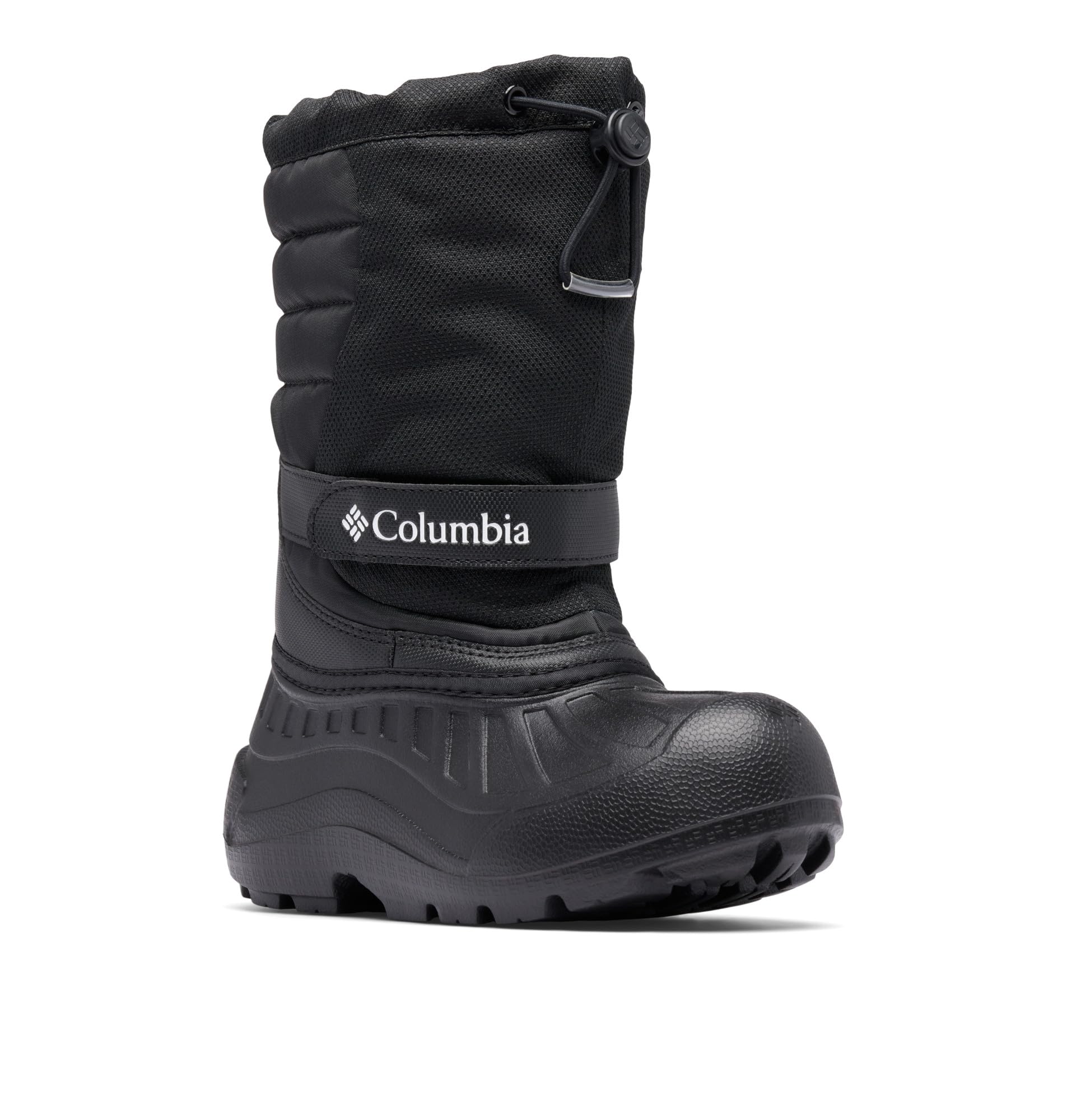
That insulation rating is high enough for a snow day spent building forts in -25°F wind chill, but the boot’s profile is narrow enough to fit into a standard sled or stroller foot pocket without jamming. The Omni-Grip outsole uses a directional lug pattern that sheds snow with each step rather than packing it into the crevices and turning into an ice skate.
The shaft height reaches about two inches above the ankle bone, which is exactly the right point to tuck a snowpant gaiter underneath without the pant leg riding up. The closure is a simple pull-on with a back handle, plus a top hook-and-loop strap around the calf that keeps snow from spilling in from above. Parents report the fit runs true to size, though if the child wears thick wool socks, sizing up a half-step gives wiggle room for the toes without heel lift.
The boot’s main limitation is the non-removable liner — if the lining gets soaked from sweat or a snow-pant leak, it takes a full overnight dry near a vent. Also, the outsole is molded solid rubber with no replaceable parts. For most families, the warmth-to-weight ratio makes this the top all-day snow boot for kids who actually move.
Why it’s great
- 200g Thermolite insulation provides warmth down to -25°F without bulk
- Lightweight enough for extended active play and easy walking
- Omni-Grip directional lugs provide reliable traction on packed snow and ice
Good to know
- Liner is not removable — wet drying requires overnight air time
- Sizing can be tight with thick wool socks; a half-size up is recommended for heavy sock use
2. Sorel Toddler’s Snow Commander Boot
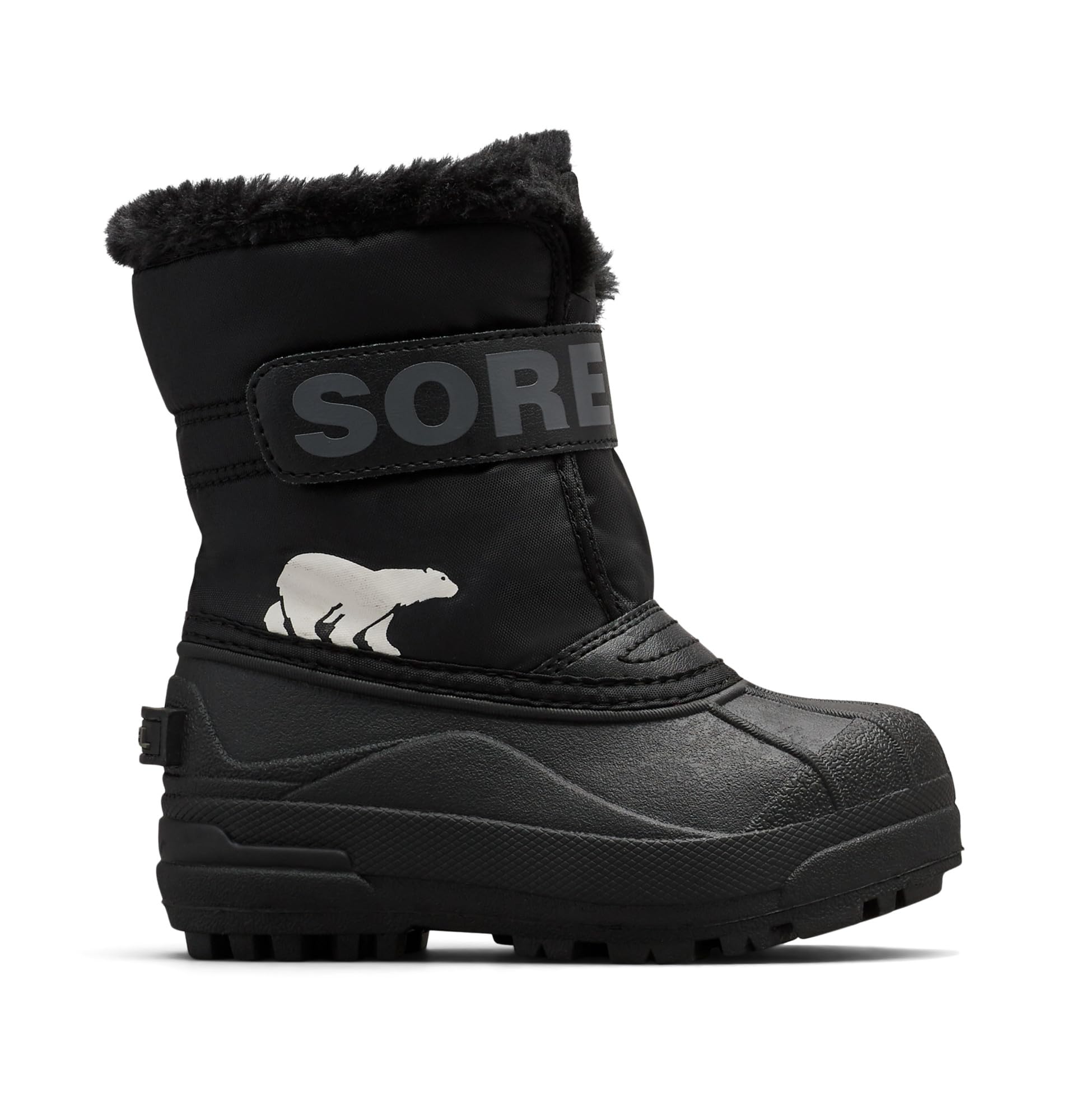
Sorel’s Snow Commander boot uses a construction philosophy borrowed from adult winter expedition gear: a rubber waterproof lower that wraps up to the ankle and a textile upper that seals with a gusseted tongue. The removable 9mm washable liner is the standout feature here. When the liner gets damp from snow melt or toddler sweat (and it will), you pop it out, toss it on a drying rack, and the boot is ready again by morning. That same liner is rated to -25°F before wind chill, making this boot a serious cold-weather tool for a family that lives where snow is a daily reality from December through March.
The outsole uses a multi-directional lug pattern with an exaggerated heel kick that lets the child dig in when climbing a snow bank. The shaft reaches about three inches above the ankle, which is higher than most competitors, and the top opening cinches with a snow collar that seals around the pant leg. The boot is built for durability — the rubber lower resists cracking in sub-zero temperatures, and the textile upper is reinforced at the wear points where a boot rubs against the other leg while walking.
The trade-off is weight. At nearly 20 ounces per boot in toddler sizes, the Snow Commander is the heaviest boot on this list. For a small toddler or a child with a shorter stride, the extra mass can cause tripping or fatigue. The price also sits at the top of the category range. If the coldest days in your local forecast rarely dip below 0°F, the lighter Columbia boots may be more practical.
Why it’s great
- Removable 9mm felt liner washes and dries separately — no wet boot mornings
- Rated to -25°F with a sealed lower that blocks slush and standing water
- Snow collar and cinch top prevent snow entry during deep play
Good to know
- Heavier than any other boot on this list; may fatigue younger toddlers during long walks
- Premium price point limited to families who face consistently deep cold
3. Columbia Kids’ Bugaboot Celsius Snow Boots

The Columbia Bugaboot Celsius sits in the mid-range sweet spot: 100 grams of Thermolite insulation wrapped inside a molded TPR shell that goes up to mid-calf. This amount of insulation is ideal for the child who spends twenty minutes walking to school and then sits indoor — the boot keeps the feet warm but doesn’t overheat during the transition. The same boot works for a preschooler who runs warm on the playground and only needs protection from wet ground, not arctic air.
The outsole uses Columbia’s Omni-Grip compound with a siped pattern that channels water away from the contact surface. On wet pavement, packed snow, and black ice patches, the boot holds better than a flat-rubber rain boot. The pull-on size with a handle at the heel and a hook-and-loop ankle strap makes self-dressing achievable for a three-year-old. The boot shaft is flexible enough at the ankle that the child can bend toward the ground without resistance.
The 100g insulation limit is the Achilles heel if your region sees sustained sub-zero temperatures. On a day at -10°F with strong wind, the child will need a heavy wool sock to supplement the boot’s warmth. The non-removable liner also means drying takes overnight. For the majority of families who face cold but not extreme polar conditions, the Bugaboot Celsius is a well-balanced daily driver.
Why it’s great
- 100g Thermolite is the right warm-to-cool balance for active wear in moderate cold
- Omni-Grip siped outsole grips wet pavement, black ice, and packed snow reliably
- Easy pull-on with handle and ankle strap encourages independent dressing
Good to know
- 100g insulation is insufficient below -10°F without a thick merino wool sock
- Liner is not replaceable — takes overnight to dry fully if soaked
4. Kamik Kids Snowbug 5 Winter Snow Boot

Kamik builds the Snowbug 5 with a synthetic leather upper and a removable liner, which makes it the only boot on this list outside of the Sorel that offers replaceable interior warmth. The liner is thick synthetic insulation, not felt, and it comes out for machine washing and quick drying — a genuine advantage for families dealing with sweaty feet after indoor-outdoor transitions. The waterproof seal is a vulcanized rubber shell that wraps around the toe and heel, bonded to the upper with a sealed seam that prevents entry even when the child stomps through standing puddle water.
The boot also carries a vegan material certification, which means no animal products in the leather or insulation. For families who prioritize that, it’s one of the few warm snow boots on the market that fits the requirement. The adjustable strap across the instep lets you cinch the boot down for a snug heel fit without compressing the child’s toes, which is important because a loose heel causes friction blisters. The outsole uses a chevron-style rubber tread that clears snow with each step.
The downsides are minor but real. The boot runs slightly narrow in the forefoot, so children with wide feet may need to size up or choose a different model. The synthetic leather is not as abrasion-resistant as a full rubber lower, meaning it can scuff and eventually show wear on the toe if the child drags feet while walking. For the price point, the removable liner alone makes it a strong contender for families who need boots used daily.
Why it’s great
- Removable, machine-washable liner dries fast and extends the boot’s usable life
- Vegan materials appeal to families who avoid animal-based insulation and leather
- Adjustable instep strap prevents heel slip without compressing the forefoot
Good to know
- Forefoot runs narrow — wide-footed children may need a half-size up
- Synthetic leather upper scuffs faster than a full rubber lower shell
5. Western Chief Kids Traverse Neoprene Cold Weather Boots
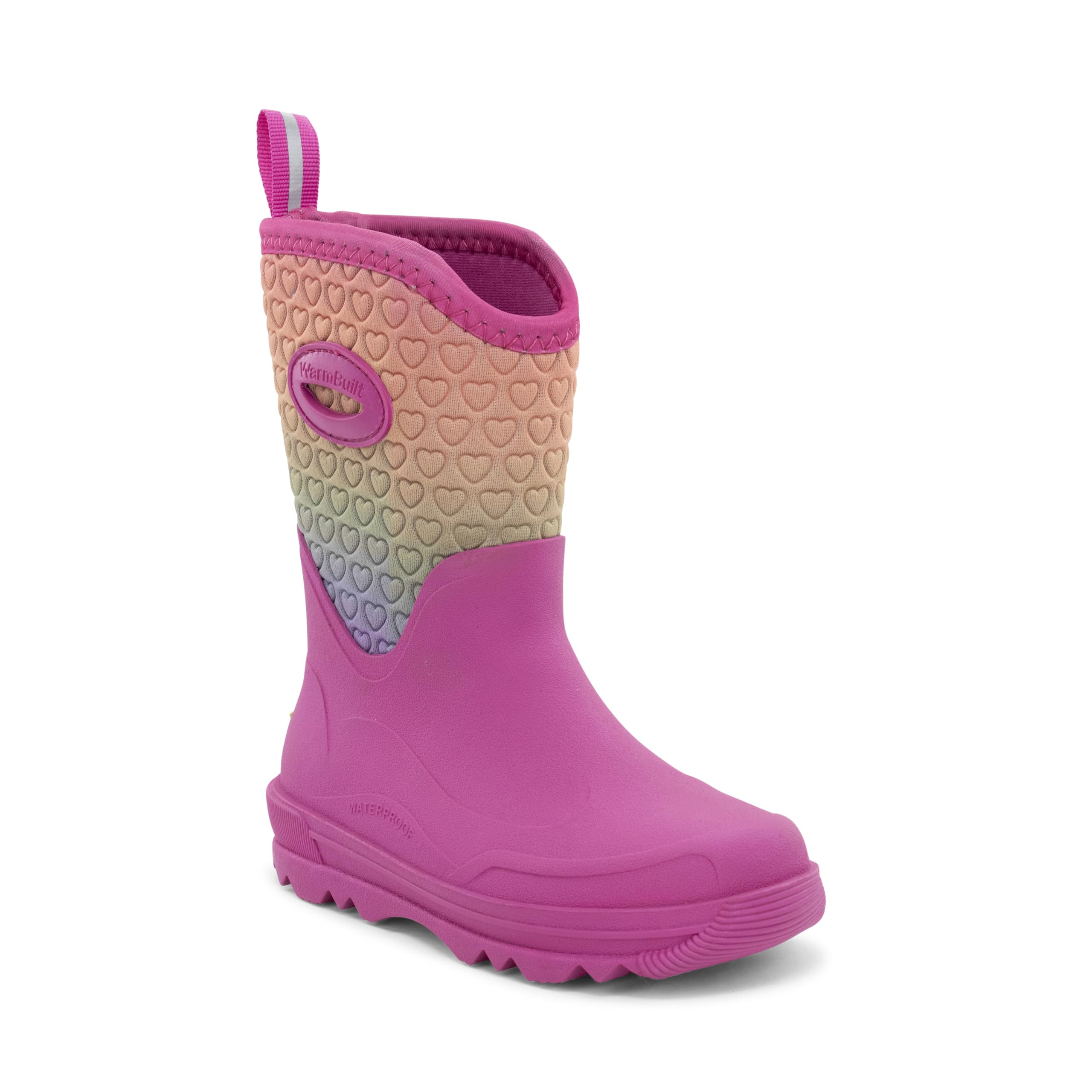
The Western Chief Traverse uses a neoprene upper bonded to a rubber lower, which gives the boot a wet-suit-like stretch that makes getting on and off remarkably easy — two large pull handles at the heel and tongue let a kid yank the boot on solo without a struggle. The fleece lining covers the entire interior from sole to collar, providing immediate warmth against the skin. For a child who plays in slushy spring snow or wet winter rain, the neoprene stretches to accommodate a thick snowsuit cuff without bunching.
The outsole uses a chevron tread pattern that channels water and mud out of the way, but the lugs are not as deep as the Kamik or Columbia options. That means on hard-packed ice with no snow cover, the boot has less grip. The boot is also uninsulated beyond the fleece lining — there is no synthetic foam layer like Thinsulate. For temperatures above 20°F, the fleece works. Below that, the child’s foot loses warmth fast, especially if they stand still. This is best classified as a cold-weather rain boot rather than a deep-winter snow boot.
Parents should note that the fleece lining is not removable or washable. If it gets muddy from a snow-pant leak, spot-cleaning is the only option. The rubber lower is tough — it holds up to scuffing and side-wall wear from car door thresholds. For families who need a boot for wet weather and light snow rather than bitter cold, the Traverse delivers easy on-and-off and reliable waterproofing.
Why it’s great
- Neoprene upper with double pull handles makes independent dressing fast for toddlers
- Fleece lining is warm and comfortable directly against skin without needing a thick sock
- Rubber lower is durable against scuffs and general daily wear
Good to know
- Fleece lining alone is insufficient insulation below 20°F — not a deep cold boot
- Lining is not removable or washing machine safe; difficult to clean if muddy inside
6. WTW Kids Rubber Rain Boots – Neoprene Insulated
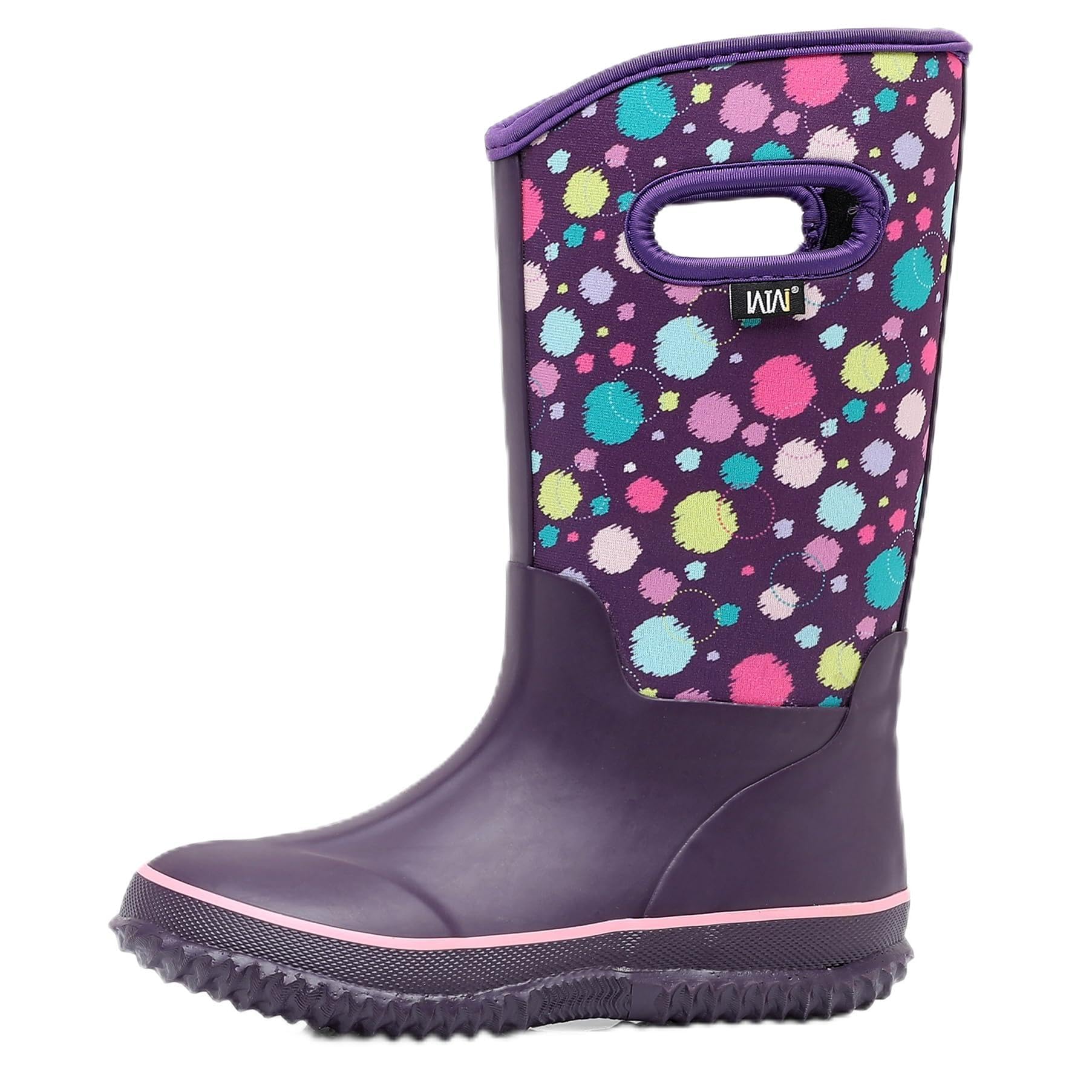
The WTW Kids Rubber Rain Boots are a classic mid-calf rubber boot with neoprene insulation added to the upper shaft. The shell is 100% waterproof — no seam leaks, no absorbed moisture — and the neoprene layer extends about two inches below the collar to add a small amount of warmth retention. The boot’s primary job is keeping wet out, and it does that at a price point that’s half that of the premium options. For families who face occasional snow or slush rather than daily deep winter, this boot works.
The outsole is a rubber tread block with cross-hatch grooves, not a deep chevron lug. On snow-covered pavement, the grip is adequate; on a solid sheet of black ice, expect the same slippage as any standard rain boot. The shaft is tall enough to allow a full snowpant tuck without gaping, but there is no closure at the top — if a child wades through deep powder snow, it can pour in from above. The boot weighs about 2.4 pounds per pair, which is mid-pack for this category but feels light on the child’s foot because the neoprene is less dense than rubber.
The main limitation is warmth. The neoprene layer provides light insulation, but without a fleece or synthetic foam lining, the boot is comfortable only down to about 25°F with a wool sock. Below that, the child’s toes will be cold after fifteen minutes of sitting play. This is a fair-weather snow boot for mild winters or for families who need a budget backup when the primary boots are wet.
Why it’s great
- 100% waterproof construction prevents any moisture entry through the sole or sidewall
- Lightweight neoprene upper reduces fatigue compared to full-rubber alternatives
- Budget-friendly price point for occasional snow use or as a backup pair
Good to know
- No top closure lets deep snow in from above — not for heavy snow play
- Lacks serious insulation; comfortable only above 25°F with a thick sock
7. HISEA Kids Rain Boots for Boys Girls – Waterproof Insulated

HISEA positions its rain boots as a four-season wear, and the construction backs that up: a natural rubber shell with a seam-sealed bond to a neoprene upper. The rubber lower is thick enough to withstand rough playground use and the neoprene shaft allows enough stretch that the boot slips on easily over a thick pant leg. The boot includes a rear pull tab that works well for small hands, and the shaft height reaches the same mid-calf point as the WTW pair. The pack weight is slightly lighter at about 2 pounds per pair.
The inside has a thin neoprene lining that provides a small amount of insulation — enough for rain at 40°F and light snow at 32°F, but not enough for a true snow day below 25°F. The outsole uses a rubber lug pattern with shallow sipes. On wet grass, mud, and shallow slush, it holds fine. On ice, it performs poorly. The boot also has a generous forefoot width, which makes it comfortable for wide-footed children who find other boots too narrow.
The boot’s limitation for snow use is the same as the WTW: no top closure and minimal insulation. For a child who spends recess on wet blacktop or walks through shallow slush, the HISEA is adequate. For a deep-snow scenario, the child needs a taller boot with a closing cuff. Also, the interior lining is not removable, so if snow gets inside through the top opening, it will take a full day to dry out. This boot serves best as an entry-level option for families who need one pair for both fall rain and light winter snow.
Why it’s great
- Seam-sealed natural rubber shell provides durable 100% waterproof protection
- Wide forefoot accommodates children with wider feet who struggle with slim boots
- Lightweight at about 2 pounds per pair reduces leg fatigue during active play
Good to know
- Lacks insulation and top closure — unsuitable for deep snow or sub-25°F temperatures
- Shallow outsole lugs provide minimal grip on ice and hard-packed snow
FAQ
What temperature rating should I look for in kids snow boots?
Can I use insulated rain boots as winter snow boots for my child?
How much room should I leave in the toe of a snow boot?
Final Thoughts: The Verdict
For most users, the kids snow boots winner is the Columbia Powderbug Snowlite because it delivers 200g Thermolite insulation in a lightweight package with reliable Omni-Grip traction, making it the best all-rounder for active snow play down to -25°F. If you want the advantage of a removable, machine-washable liner that dries overnight, grab the Sorel Snow Commander. And for a budget-friendly fall-to-light-snow option that keeps water out without breaking the bank, nothing beats the WTW Rubber Rain Boots.