When your child’s foot rolls inward excessively with every stride, it doesn’t just affect their gait — it can pull their knees, hips, and lower back out of alignment over time. The right pair of stability-focused shoes acts like a subtle suspension system, guiding each step back toward neutral without forcing the foot into an unnatural position.
I’m Emma — the founder and writer behind Baby Bangs. I’ve spent years analyzing pediatric foot mechanics and reviewing shoe construction details that actually support growing arches and correct motion control.
This guide breaks down the specific arch heights, medial post densities, and heel cup stiffness that separate supportive footwear from sneakers that merely look sturdy. You’ll find the best kids shoes for overpronation that combine pediatric-fit science with materials built to survive playground use.
How To Choose The Best Kids Shoes For Overpronation
Selecting a shoe for a child who overpronates comes down to three construction zones that work together as a unit. Ignore any single one and the shoe’s support system breaks down mid-stride.
Medial Post Density and Placement
The medial post is a firmer section of foam or rubber built into the inner midsole. In kids’ shoes, the post should run from the heel through the arch, not just a small dot under the midfoot. Look for posts that feel noticeably harder when you press into the arch area — soft foam there means zero motion control.
Heel Counter Stiffness
Squeeze the back of the shoe between your thumb and fingers. A proper heel counter for overpronation resists collapse when pinched. If it crushes easily, the shoe cannot hold the rearfoot in neutral alignment during the gait cycle. This is non-negotiable for children whose ankles roll inward.
Toe Box Shape and Volume
Wide, flat toe boxes allow the forefoot to splay naturally, which reduces compensatory pronation. Shoes that taper at the toes force the foot into adduction and can worsen the inward roll. Measure the widest part of your child’s foot and compare it to the internal width of the shoe — not just the outsole.
Quick Comparison
On smaller screens, swipe sideways to see the full table.
| Model | Category | Best For | Key Spec | Amazon |
|---|---|---|---|---|
| Merrell Trail Chaser | Trail Runner | Outdoor stability in uneven terrain | Rubber medial outsole wrap | Amazon |
| ASICS Contend 9 GS | Daily Trainer | School and after-school activity | Rearfoot GEL cushioning | Amazon |
| Kids Orthopedic Wide Tennis Shoes | Orthopedic Casual | All-day wear with arch support | Wide toe box construction | Amazon |
| See Kai Run Dean Adapt II | Adaptive Sneaker | Easy on/off for sensory-sensitive kids | Zipper closure system | Amazon |
| Kids Orthopedic Tennis Shoes | Orthopedic Sport | Playground running and PE class | Arch contour insole | Amazon |
| Orthopedic AFO Support Shoes | Corrective AFO | Postural correction and ankle support | AFO-compatible deep heel cup | Amazon |
| New Balance Baby 990v6 | Premium Sneaker | Structured support for early walkers | ENCAP midsole technology | Amazon |
In‑Depth Reviews
1. New Balance Baby 990v6 Sneakers

The 990v6 brings New Balance’s adult stability platform down to toddler sizes, and it’s one of the few infant shoes that actually includes a medial support structure rather than just soft cushioning. The ENCAP midsole combines a polyurethane rim with an EVA core, creating a stable platform that resists the inward roll during early walking patterns. The heel counter is noticeably firm — squeezing it reveals a rigid plastic reinforcement that locks the rearfoot in place.
What sets this apart from other premium infant sneakers is the combination of a structured upper and a generous toe box. The mesh and suede overlay construction allows the foot to breathe while preventing lateral stretch that can destabilize a young gait. The outsole rubber extends up the medial side, adding an additional layer of pronation control that most baby shoes completely ignore.
This pair runs slightly larger than some competitors, which is actually helpful for children with orthotics or custom insoles. The removable footbed gives you room to insert a dedicated arch support if your pediatrician recommends one. For early walkers who show clear pronation tendencies, this is the most complete stability package available in the infant size range.
Why it’s great
- Dual-density midsole provides genuine motion control for tiny feet
- Firm heel counter holds the rearfoot in neutral alignment
- Removable footbed accepts custom orthotics
Good to know
- Runs half a size large — measure carefully before ordering
- Premium price reflects the advanced construction
2. Kids Orthopedic Corrective Ankle and Arch Support AFO Shoes
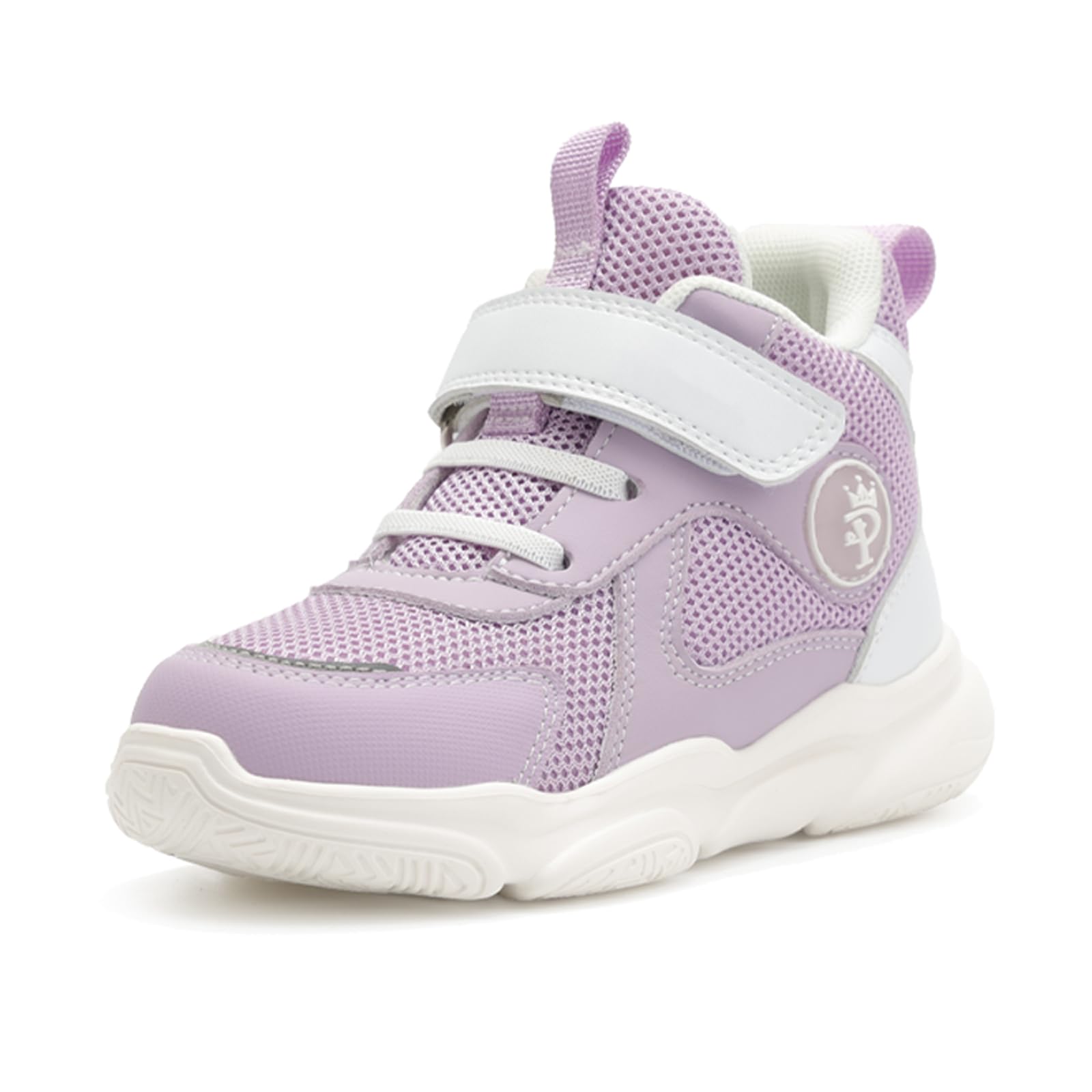
This shoe is built specifically for children who require ankle-foot orthosis compatibility, meaning the deep heel cup accommodates rigid braces while still providing independent arch support. The construction features a raised medial sidewall that cups the arch and prevents the foot from sliding inward, which is exactly what kids with severe overpronation need. The sole is wider than average, providing a stable base that resists tipping during stance phase.
The upper uses a combination of synthetic leather and mesh, with the medial side reinforced to resist stretch when the foot tries to roll over the insole. The lacing system extends far down the tongue, allowing you to adjust tension across the midfoot independently from the ankle. This is critical for children who wear AFOs because the brace volume changes how the shoe fits across the instep.
Parents of hypermobile children will appreciate the rigidity of the heel counter — it’s one of the stiffest options in this price tier and does not collapse even under aggressive thumb pressure. The downside is the break-in period; the shoe requires several days of wear before the materials conform to the child’s specific foot shape. For moderate to severe overpronation, this is the most corrective non-custom shoe available.
Why it’s great
- AFO-compatible deep heel cup accommodates rigid orthotic braces
- Raised medial sidewall actively resists arch collapse
- Extended lacing system for customized midfoot tension
Good to know
- Stiff materials require a break-in period of several days
- May feel too rigid for children with mild pronation
3. Kids Orthopedic Wide Tennis Shoes with Arch Support
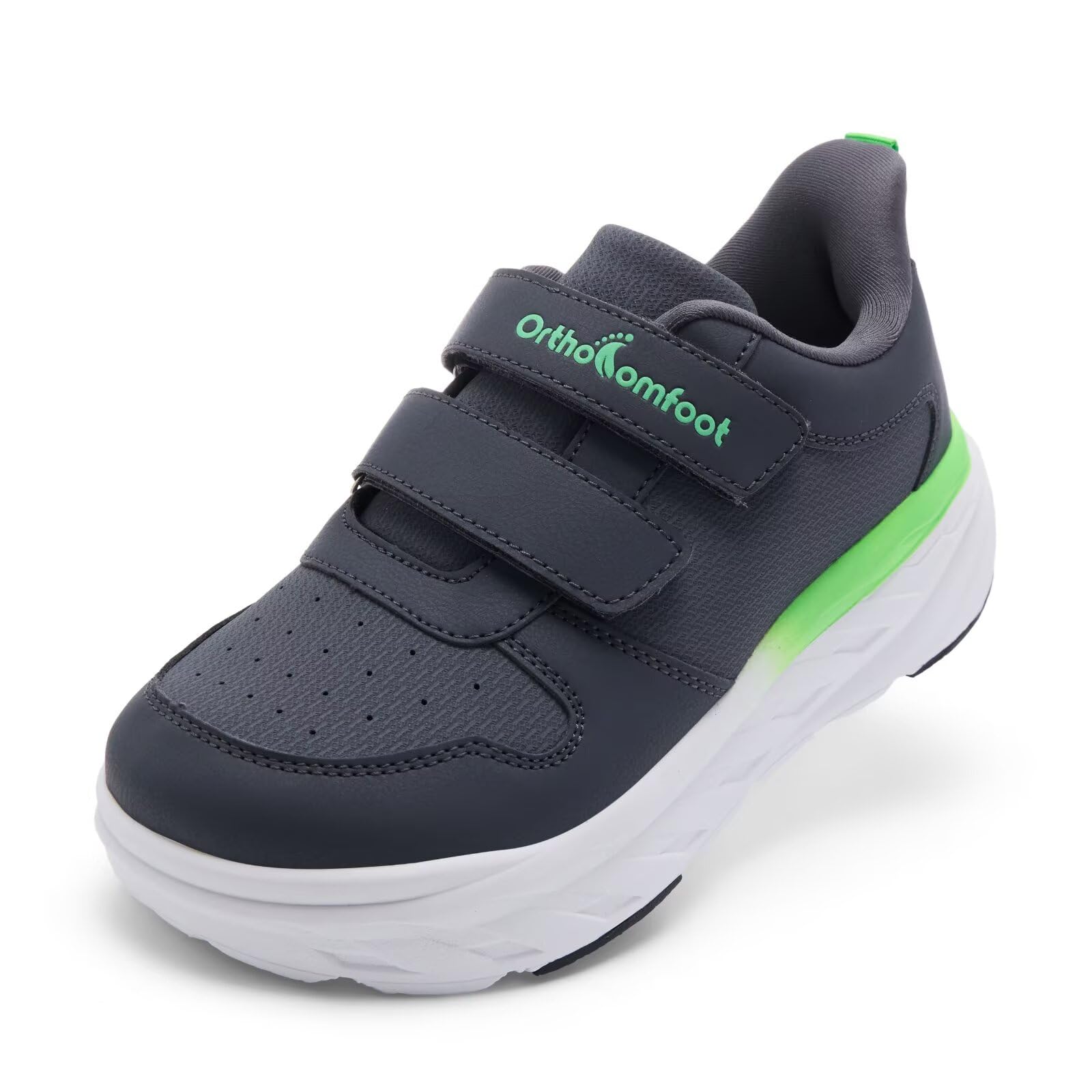
This shoe targets the intersection of affordability and genuine arch support, and it succeeds by using a molded insole that rises higher on the medial side than typical budget options. The wide toe box allows the metatarsals to spread naturally, which reduces the forefoot drift that often accompanies overpronation. The outsole pattern uses a stiffer rubber compound along the inner edge, creating a subtle medial post effect without adding bulk.
The upper is constructed from a breathable knit fabric with reinforced stitching along the arch line, preventing the shoe from stretching out of shape during repeated wear. The heel counter is moderately firm — not as rigid as the AFO-specific shoes, but adequate for mild to moderate pronation. The lace-up design includes an extra eyelet at the top for a heel-lock tie that adds ankle stability.
Parents should note that the sizing runs true to length but the wide fit means children with narrow feet may experience heel slip. A thicker sock or a small heel gripper pad resolves this. For school days where the child will be on their feet for hours, this shoe provides the support-to-comfort ratio that active kids actually tolerate.
Why it’s great
- Molded medial arch insole supports collapsing foot structure
- Wide toe box prevents forefoot adduction during gait
- Stiffer rubber inner edge acts as a mild medial post
Good to know
- Wide fit may cause heel slip in narrow-footed children
- Heel counter is moderate, not rigid enough for severe pronation
4. See Kai Run Dean Adapt II – Adaptive Sneaker
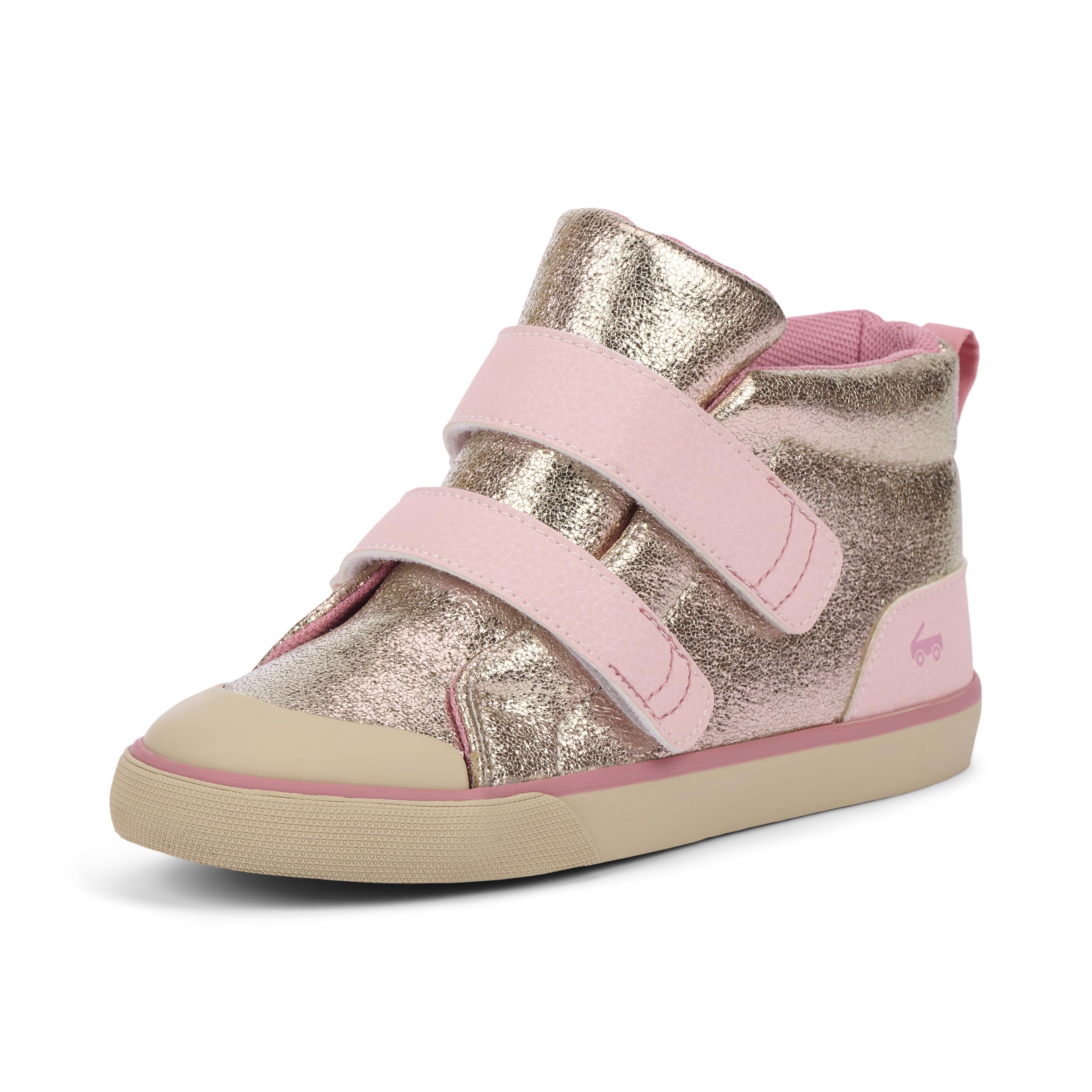
The Dean Adapt II solves a specific problem that parents of overpronating kids face repeatedly: getting the shoe on and off without disrupting the alignment support. The full-length zipper opens the shoe wide, allowing the foot to slide in without scrunching the toes or collapsing the arch. Once closed, the integrated medial arch support settles into position automatically without needing manual adjustment of the tongue or laces.
See Kai Run designed this with a wider-than-average last through the forefoot and a tapered heel, which helps center the calcaneus inside the shoe. The outsole flexes at the forefoot but remains stiff through the midfoot, creating a natural rocker motion that discourages the foot from rolling inward during toe-off. The heel counter is reinforced with a thermoplastic overlay that holds shape even after repeated zipper use.
The trade-off is that the zipper mechanism adds some weight to the shoe, and the closure may loosen slightly over a full day of wear requiring a quick re-zip. Children with sensory sensitivities tend to tolerate the flat internal seams well. For kids who struggle with tying or who need quick changes between school and therapy, this adaptive design removes the daily frustration while maintaining pronation control.
Why it’s great
- Full zipper closure eliminates alignment disruption during donning
- Wide forefoot last centers the foot for better pronation control
- Thermoplastic heel overlay resists collapse
Good to know
- Zipper mechanism adds slight weight
- Zipper may loosen over long wear days
5. ASICS Kid’s Contend 9 Grade School Running Shoes
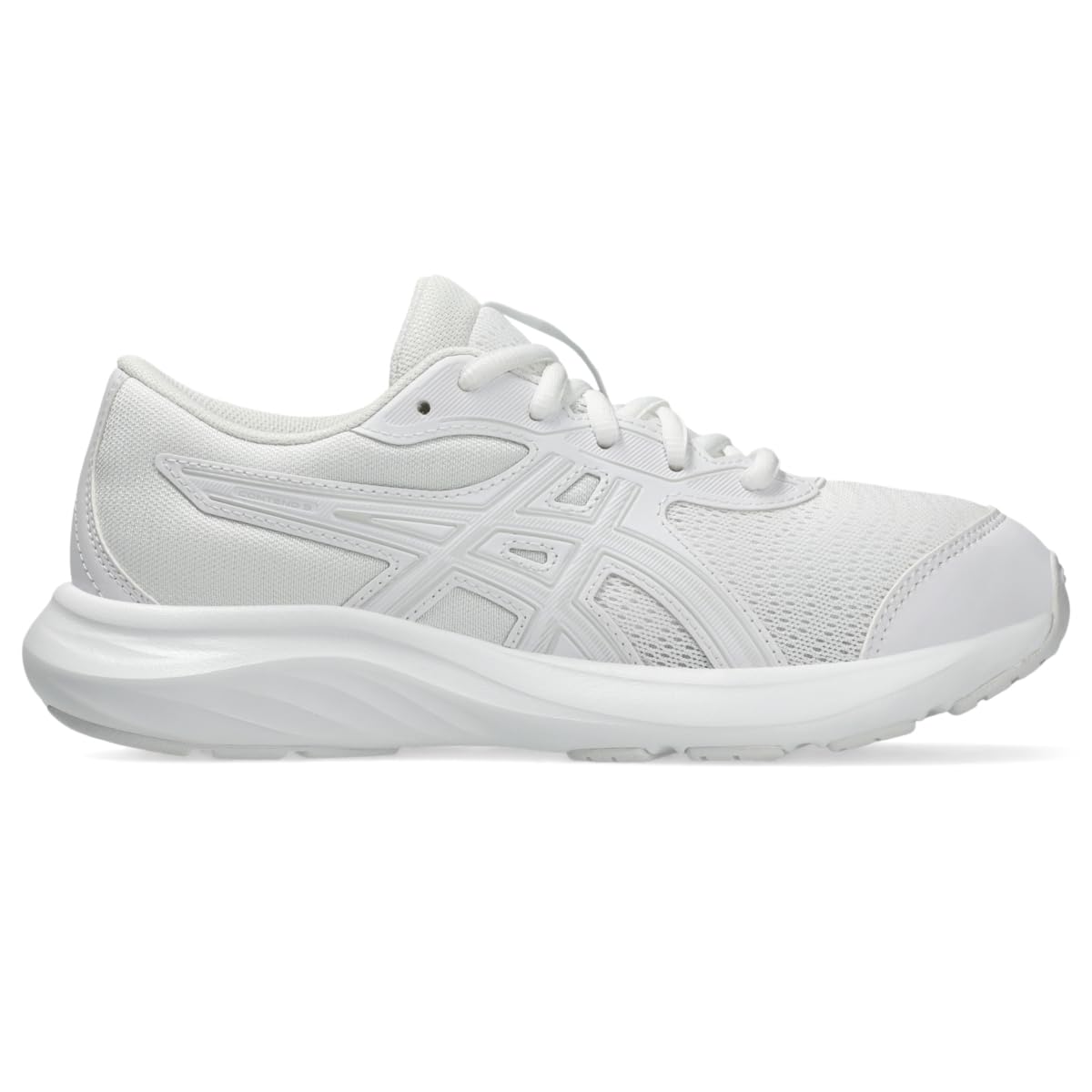
The Contend 9 is ASICS’ entry-level stability shoe for children, and it borrows the same rearfoot GEL cushioning technology used in adult motion-control models. The GEL unit sits directly under the calcaneus, absorbing impact while the midsole’s firmer medial density guides the foot through a neutral gait cycle. The Ortholite sockliner adds an extra layer of moisture management and mild arch contour that supports feet prone to flattening.
The outsole uses a separate rubber piece on the medial heel — a visual indicator that this shoe has intentional pronation control rather than generic cushioning. The mesh upper is lightweight and flexible, though the heel counter is only moderately stiff compared to the premium options on this list. For grade schoolers who run during recess and play sports, the Contend 9 provides enough stability to prevent excessive roll without feeling heavy or restrictive.
Where this shoe falls slightly short is the toe box volume. ASICS uses a more tapered last, which may crowd children with naturally wide forefeet. If your child needs a wide width, look for the specific 4E version of this model. For kids with standard-width feet and mild to moderate overpronation, this is a reliable daily trainer that won’t break the bank.
Why it’s great
- Rearfoot GEL unit absorbs shock and reduces pronation torque
- Medial outsole rubber provides targeted motion control
- Ortholite sockliner manages moisture and adds arch contour
Good to know
- Tapered toe box may not suit wide forefeet
- Heel counter is moderate, not rigid
6. Merrell Trail Chaser Shoe Kids
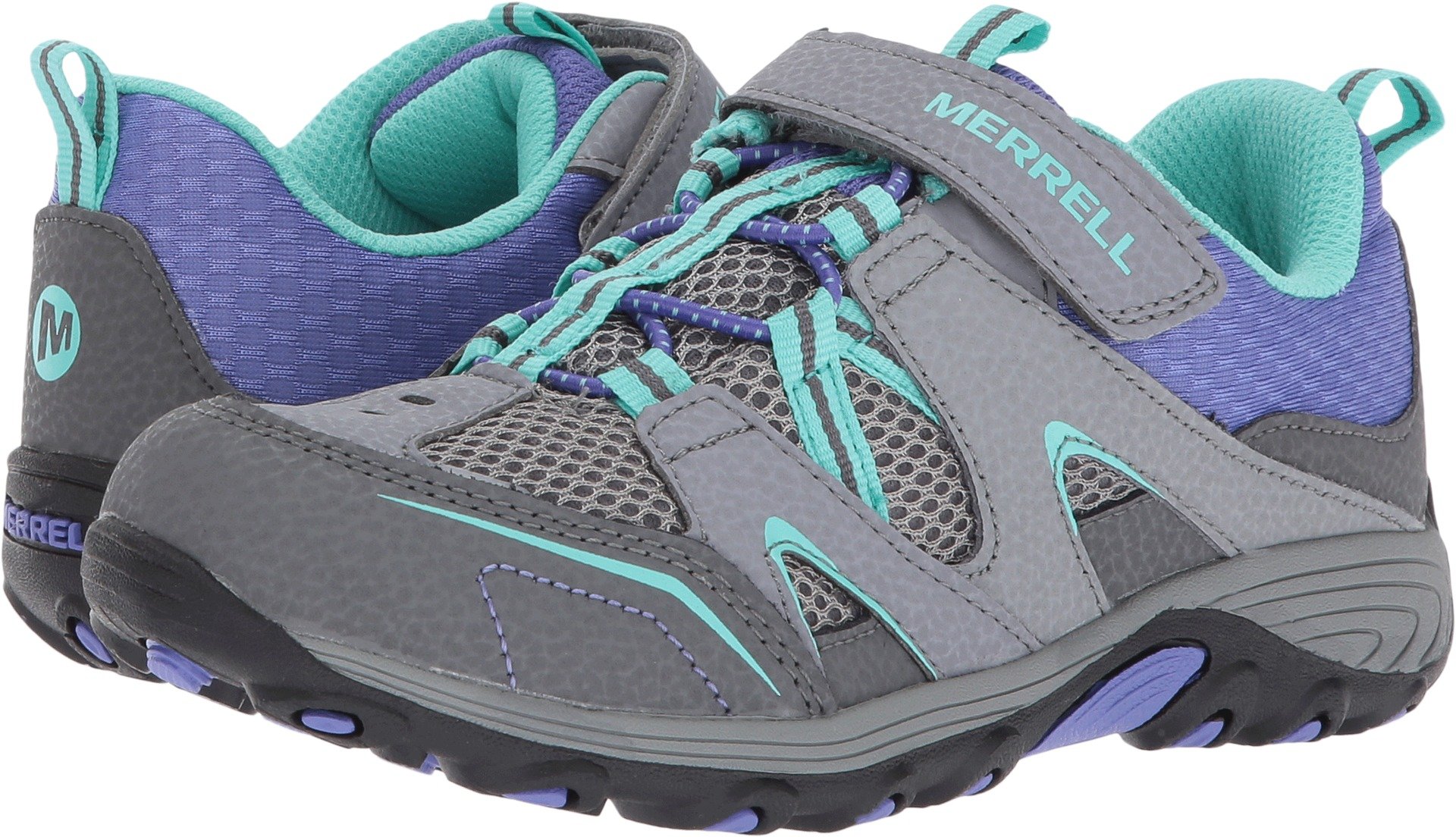
Merrell designed the Trail Chaser for kids who run on uneven surfaces, and that off-road intent translates to better pronation control than most road-focused kids sneakers. The rubber outsole wraps up the medial side, creating a pronounced rim that catches the foot before it rolls past neutral. The midsole uses a single-density EVA that is firmer than average, providing a stable platform without a separate medial post.
The upper is built from abrasion-resistant mesh with synthetic leather overlays that lock the midfoot in place. The toe bumper protects against stubs while adding forefoot stability — a detail that matters when overpronation causes the child to drag their toes during the swing phase. The lace system uses standard eyelets without a lock option, so parents may need to use a surgeon’s knot to secure the heel.
The trade-off for the trail-focused construction is weight; this shoe is noticeably heavier than similarly priced sneakers. It also runs slightly narrow, so children with wide feet should size up. For outdoor play where grass, gravel, and dirt are the primary surfaces, the Trail Chaser offers the grip and medial rigidity that keeps pronating kids stable on uneven ground.
Why it’s great
- Medial rubber wrap acts as a stabilizing rim against pronation
- Firm EVA midsole provides stable platform without soft collapse
- Toe bumper protects from drag and adds forefoot stability
Good to know
- Heavier than typical kids running shoes
- Runs narrow — size up for wide feet
7. Kids Orthopedic Tennis Shoes with Arch Support
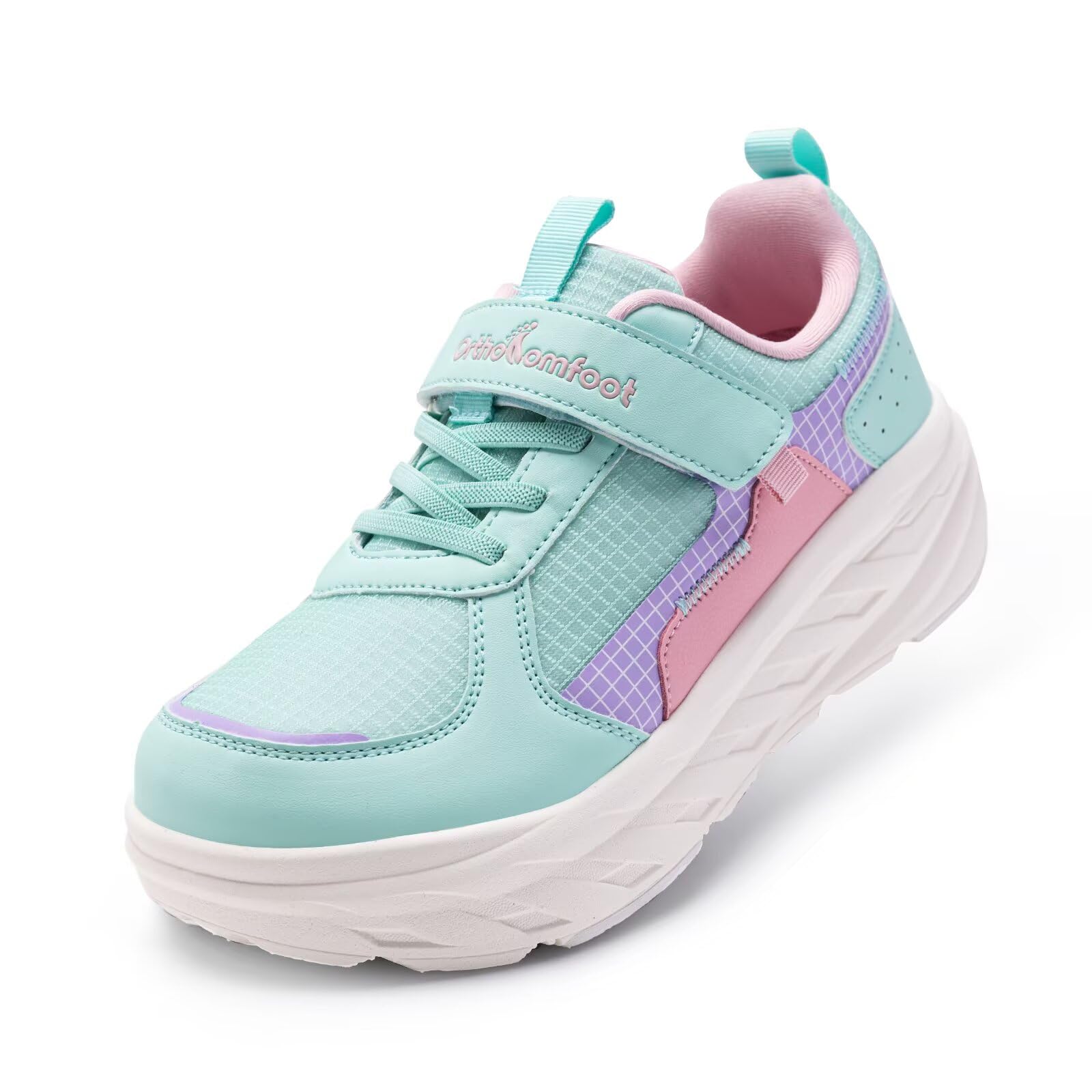
This shoe focuses on making arch support accessible in a sporty silhouette that kids actually want to wear. The insole features a visible medial rise that contours to the arch, and the outsole uses a dual-density rubber layout with a firmer compound on the inner edge. The wide toe box design gives the forefoot room to splay, which helps reduce the inward twist that occurs when toes are compressed.
The upper combines mesh panels with synthetic leather overlays, and the heel counter includes a plastic insert that provides moderate rigidity. The lace system runs through six eyelets, allowing for a secure fit across the instep. The midsole uses an EVA foam that is slightly denser than budget options, providing enough rebound for running while maintaining the stability needed for pronation control.
The main limitation is that the arch support is built into the insole rather than the midsole structure, meaning the support can compress over several months of daily use. Replacing the insole periodically extends the shoe’s corrective life. For kids who need arch support during PE class and sports but don’t have severe pronation, this orthopedic tennis shoe delivers the right balance of structure and flexibility.
Why it’s great
- Molded insole with visible medial arch rise
- Dual-density outsole with firmer inner edge rubber
- Wide toe box allows natural forefoot splay
Good to know
- Arch support compresses over months — insole may need replacement
- Not rigid enough for severe overpronation cases
FAQ
Can overpronation in kids correct itself as they grow?
What is the difference between arch support and motion control in kids shoes?
How do I know if my child’s shoe has a proper medial post?
Should I buy one size up for orthotics or custom insoles?
Final Thoughts: The Verdict
For most children with overpronation, the kids shoes for overpronation winner is the New Balance Baby 990v6 because it combines a dual-density midsole with a rigid heel counter and removable footbed in a package that fits early walkers properly. If your child wears AFO braces or needs maximum corrective control, grab the Orthopedic AFO Support Shoes. And for school-day reliability without the premium cost, nothing beats the Kids Orthopedic Wide Tennis Shoes for balancing support with everyday wearability.