A kids’ mountain bike that shifts smoothly, stops reliably, and weighs little enough for a small rider to muscle up a hill is not a luxury — it’s the difference between a child who begs for one more lap and one who parks it after ten minutes. Most budget bikes stack on cheap components that fight the rider, turning a fun trail day into a frustrating push home.
I’m Emma — the founder and writer behind Baby Bangs. I have spent years cross-referencing frame geometry, drivetrain ratios, and suspension designs across budget, mid-range, and premium tiers to find the models that actually help young riders gain confidence on dirt.
Whether your child is hitting pump tracks for the first time or graduating to rooty singletrack, this guide breaks down the real specs that matter. Read on to find the best kids mountain bike for your young adventurer’s skill level and future growth.
How To Choose The Best Kids Mountain Bike
The wrong mountain bike turns dirt into a punishment. Weight, gearing, and brake type are the three specs that separate a bike a child outgrows in a season from one they ride for years. Here is what to look for.
Wheel Size and Standover Height
20-inch wheels generally fit riders ages 6 to 10 with an inseam around 20 to 24 inches. A 24-inch wheel moves the range to ages 9 to 14 with a taller inseam. The critical number is standover height: the top tube should sit at least one to two inches below the child’s crotch when they straddle the bike. A too-high standover forces a child to dismount awkwardly on every stop, which kills confidence immediately.
Suspension Type: Hardtail vs. Dual Full Suspension
A hardtail — front suspension only — is lighter, more efficient for climbing, and easier for smaller riders to pedal on pavement and packed trails. Dual full suspension adds weight and cost but smooths out rock gardens and roots for aggressive riders at speed. For most kids under twelve, a quality hardtail with a lockout fork offers the best balance of trail comfort and pedal efficiency.
Drivetrain: Speeds and Shifter Quality
A 6-speed drivetrain with a twist shifter is standard on entry-level bikes. A 7-speed or 21-speed setup with a trigger shifter provides more precise gear changes and a wider range for steep climbs. The shifter type matters more than the gear count: children’s hands struggle with stiff, imprecise twist grips, whereas trigger shifters give tactile feedback that encourages shifting early and often on climbs.
Brakes: Coaster vs. Hand Brakes vs. Disc Brakes
V-brakes and coaster brakes (pedal backward to stop) are the lightest and cheapest option but offer poor modulation on steep descents. Mechanical disc brakes provide consistent stopping power in wet mud and dry dust alike. For any trail that includes even a moderate hill, disc brakes with child-friendly reach-adjust levers are the safest choice.
Quick Comparison
On smaller screens, swipe sideways to see the full table.
| Model | Category | Best For | Key Spec | Amazon |
|---|---|---|---|---|
| Glerc Mars Kids Fat Tire | Premium | Trail grip & stability | 2.8-inch fat tires, 6-speed | Amazon |
| Mongoose Flatrock | Premium | All-around performance | Aluminum frame, disc brakes | Amazon |
| Glerc 21-Speed Skyline | Mid-Range | Wide gear range on hills | 21-speed, front suspension | Amazon |
| DEYGIA 7-Speed Dual Suspension | Mid-Range | Rough terrain comfort | Dual full suspension, 7-speed | Amazon |
| JOYSTAR Lubbock Hardtail | Mid-Range | Classic look & pedal efficiency | 1-speed or 7-speed, white wall tires | Amazon |
| JOYSTAR Dual-Suspension 20-Inch | Mid-Range | Versatile dual suspension value | Dual suspension, dual handbrake | Amazon |
| WEIZE 20/24 Inch Girls Bike | Budget | Front suspension entry point | Front suspension fork, 6-speed | Amazon |
| AVASTA Govet 20-Inch | Budget | Color options & basic trail use | 6-speed, suspension fork, multiple colors | Amazon |
| WEIZE Dual Full Suspension 20-Inch | Budget | Dual suspension on a budget | Dual full suspension, 6-speed | Amazon |
In‑Depth Reviews
1. Glerc Mars Kids Mountain Bike (Fat Tire)
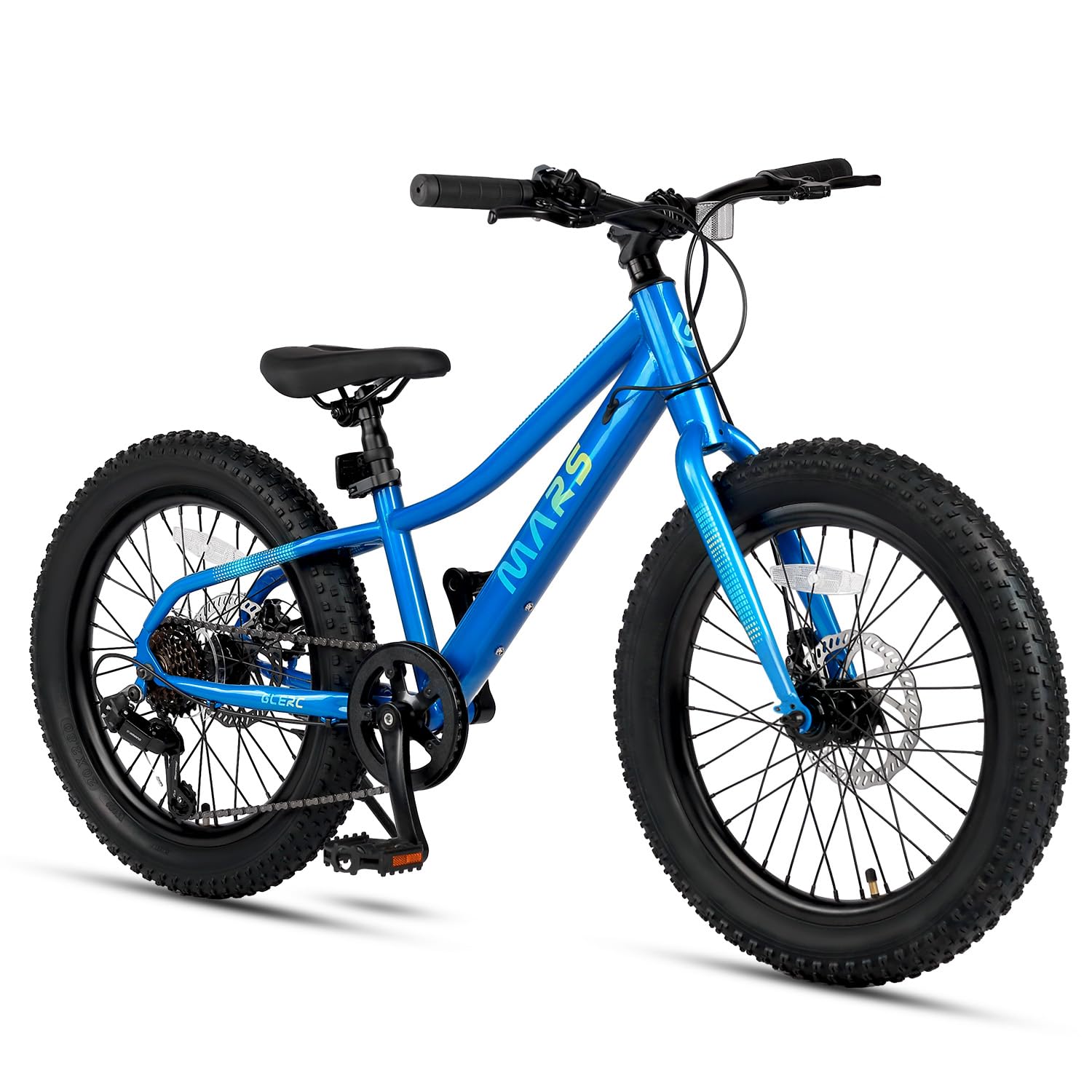
The Glerc Mars changes the game for loose-surface traction by fitting 2.8-inch wide fat tires on a frame designed for riders ages 6 to 14. Those tires float over sand, snow, and gravel in a way that standard knobbies cannot, giving a young rider stability that feels almost impossible to tip over on low-speed corners.
The 6-speed drivetrain with a trigger shifter keeps gear changes positive even with small hands. At roughly 34 pounds for the 20-inch model, it is not the lightest bike in this list, but the extra tire volume and low-pressure footprint mean a child can roll over obstacles rather than fighting to bounce over them.
Disc brakes front and rear deliver consistent stopping power regardless of weather. The fat tire design does add rolling resistance on pavement, so this bike shines brightest when the destination is actual dirt rather than the neighborhood sidewalk.
Why it’s great
- 2.8-inch tires provide unmatched grip on loose terrain
- Trigger shifter offers positive, child-friendly gear changes
- Disc brakes work reliably in wet conditions
Good to know
- Heavier than hardtail alternatives due to tire mass
- High rolling resistance on paved surfaces
2. Mongoose Flatrock
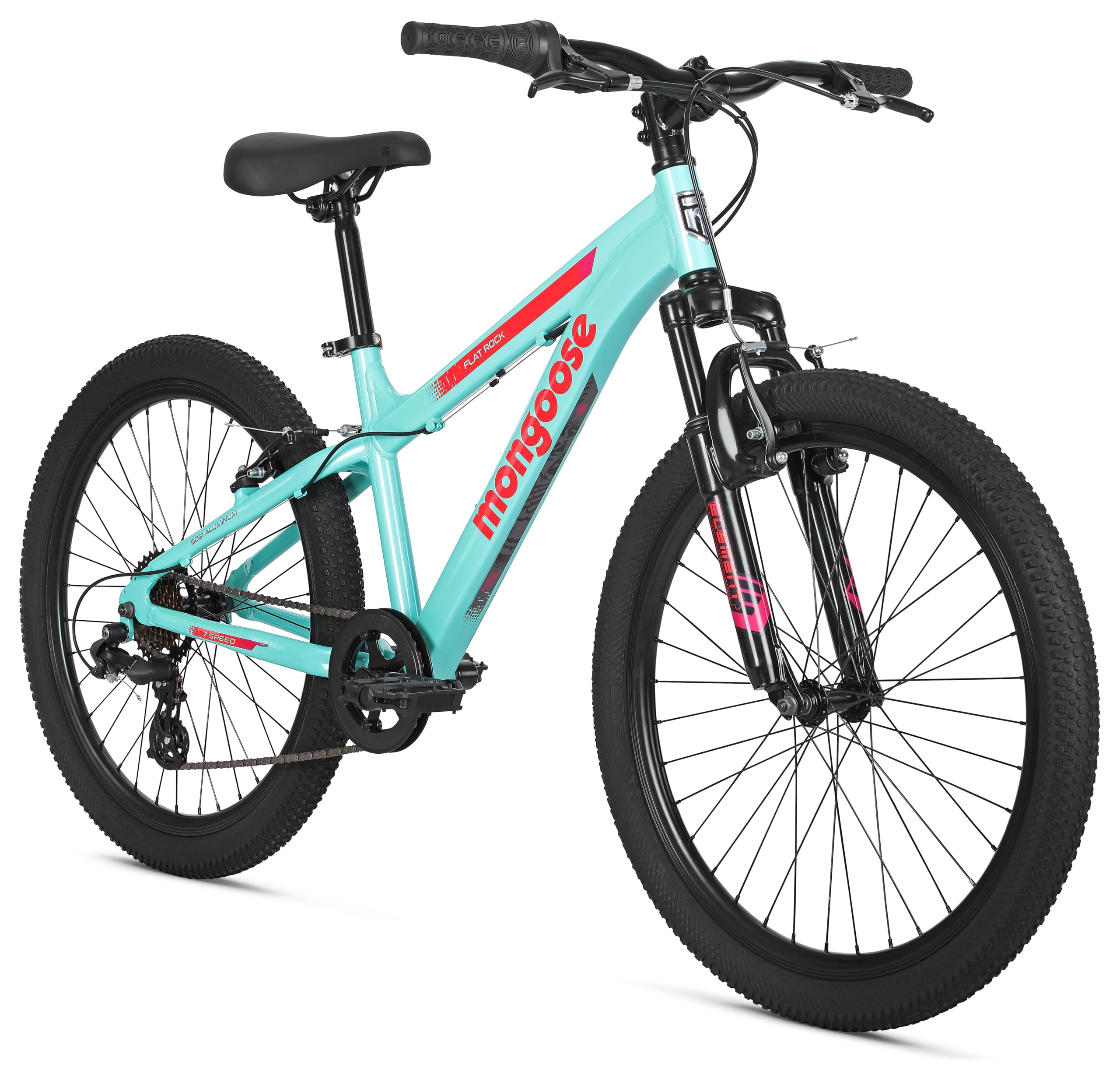
The Mongoose Flatrock is the lightest kid-oriented mountain bike in this review thanks to its aluminum frame, which shaves roughly 3 to 5 pounds compared to high-carbon steel equivalents. For a child learning to lift the front wheel over a log or accelerate out of a corner, every pound reduction translates directly to less effort and more control.
Mechanical disc brakes paired with 24-inch wheels give this bike a near-adult riding feel while keeping the geometry friendly for riders ages 8 and up. The 1-speed drivetrain (or single-speed setup) eliminates derailleur complexity and dropped chains, though it does limit climbing capability on extended grades.
The rigid fork — no suspension — keeps the weight low and the drivetrain efficient for hardpack trails and bike paths. Riders hitting roots and rocks will miss the cushion a front fork provides, but the trade-off is a bike that pedals with noticeably less drag.
Why it’s great
- Aluminum frame is significantly lighter than steel options
- Disc brakes provide reliable stopping power
- Simple drivetrain reduces maintenance and dropped chains
Good to know
- Rigid fork offers no suspension for rough terrain
- Single-speed limits climbing range on steep hills
3. Glerc 20 24 Inch Kids Bike (21-Speed Skyline)
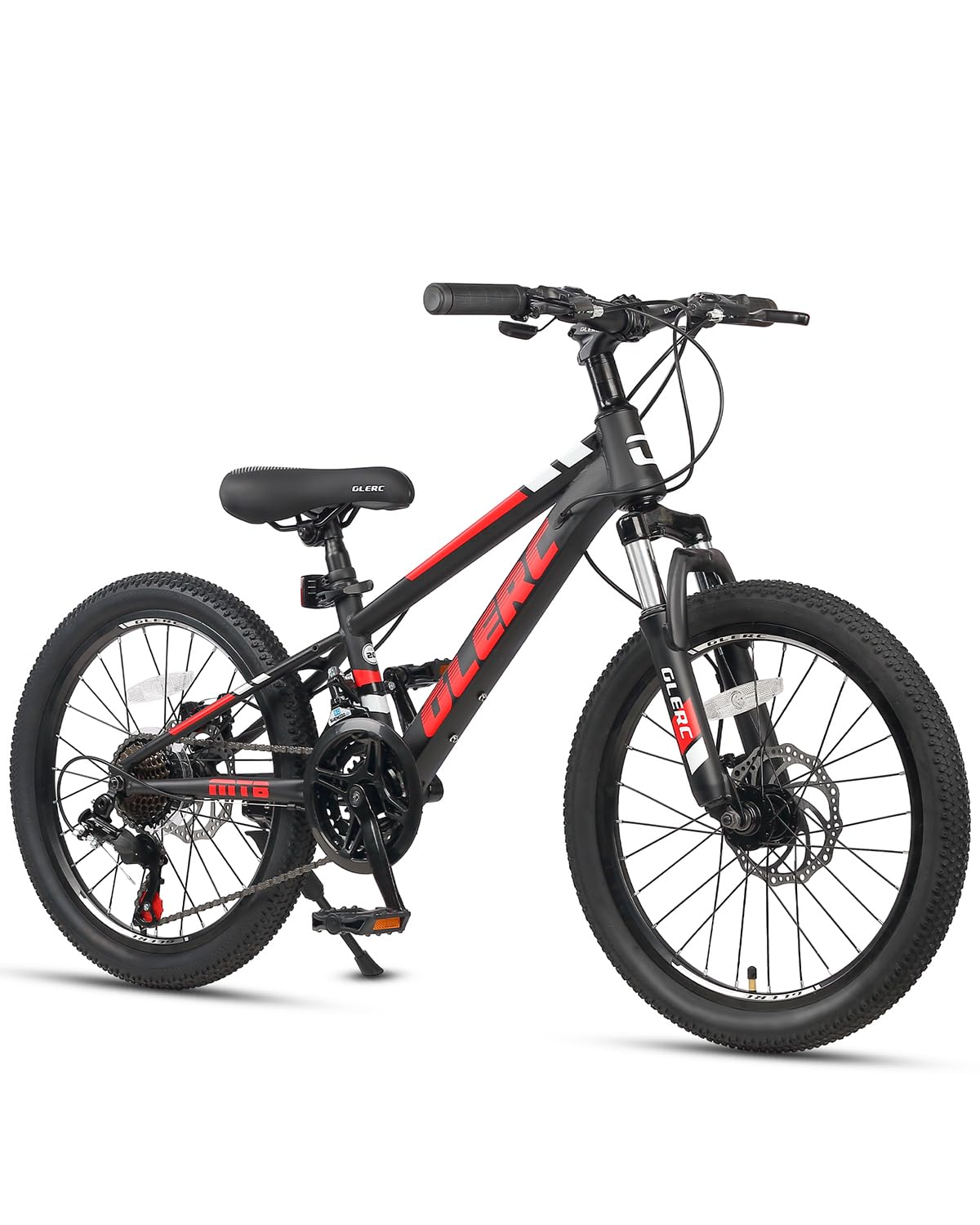
The Glerc Skyline packs a 21-speed drivetrain with a trigger shifter, giving a young rider the widest gear range in this test. That triple chainring setup means a child can spin easily up steep, loose climbs that would stall a 6-speed bike, then shift onto the big ring for fast pavement sections on the return trip.
A front suspension fork with 40mm of travel absorbs trail chatter and small roots, keeping the front wheel planted on descents. The high-carbon steel frame is durable and handles reasonable abuse, though the bike sits at the heavier end of the mid-range category at roughly 30 pounds for the 20-inch variant.
Disc brakes are absent here — this model uses linear-pull V-brakes, which stop adequately in dry conditions but lose bite in mud or wet leaves. The 21-speed complexity also introduces more cable routing and derailleur adjustments that a parent needs to stay on top of monthly.
Why it’s great
- 21-speed drivetrain provides excellent climbing range
- Front suspension fork smooths small trail bumps
- Trigger shifter encourages early shifting on hills
Good to know
- V-brakes lose performance in wet conditions
- Heavier frame adds effort on extended climbs
4. DEYGIA 20/24 Inch Kids Mountain Bike (7-Speed Dual Suspension)
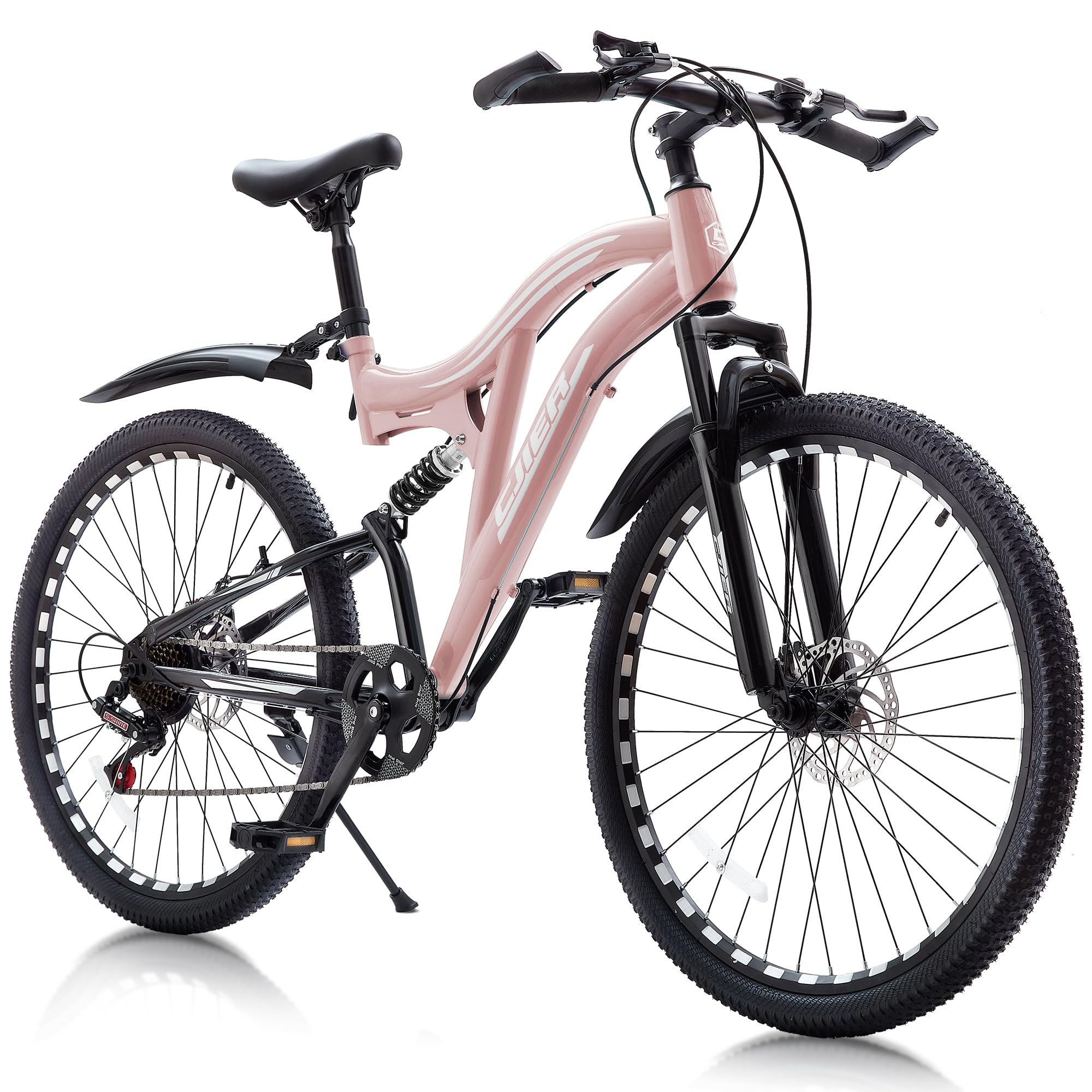
The DEYGIA dual-suspension bike delivers a plush ride that soaks up both front and rear impacts, making it a strong choice for children who ride on rocky or root-strewn singletrack. The 7-speed drivetrain with a trigger shifter offers one extra gear over the standard 6-speed layout, which helps maintain momentum through rolling terrain.
Dual disc brakes front and rear provide consistent modulation, and the high-carbon steel frame can handle the additional stress that rear suspension places on the frame joints. The added pivot points and rear shock do push the bike weight beyond 35 pounds, making this model better suited to riders who already have enough leg strength to muscle the extra mass.
The rear suspension does introduce a small amount of pedal bob when climbing out of the saddle. Parents should check the pivot bolts monthly for tightness, as the budget-tier bushing design can develop play after several months of hard use.
Why it’s great
- Dual suspension smooths rough trail surfaces effectively
- Dual disc brakes offer reliable stopping in all conditions
- 7-speed drivetrain provides an extra gear for varied terrain
Good to know
- Higher weight makes climbing more demanding
- Rear suspension can induce pedal bob on steep ascents
5. JOYSTAR Lubbock 20/24 Inch Kids Hardtail Mountain Bike

The JOYSTAR Lubbock stands out for its classic look: white wall knobby tires and a retro-styled frame that appeals to kids who want a bike that looks as cool as it rides. The hardtail design means no rear suspension, which keeps the bike lighter and more efficient for pedaling on fire roads and bike paths.
Available in a 1-speed option for flat terrain or a 7-speed for varied trails, this bike gives parents a clear choice based on their local riding conditions. The 7-speed uses a trigger shifter, and the gearing is wide enough to handle moderate climbs without the complexity of a triple chainring setup.
The linear-pull brakes are adequate for casual use but will not match the stopping power of disc brakes on wet singletrack. The bike also lacks a suspension fork, so riders will feel every trail vibration through the handlebars on extended bumpy sections.
Why it’s great
- Distinctive white wall tires have strong visual appeal
- Hardtail design keeps weight low and pedaling efficient
- 7-speed option offers climbing range without drivetrain complexity
Good to know
- No suspension fork means the ride is harsh on rough trails
- Linear-pull brakes lose power in wet conditions
6. JOYSTAR 20 Inch Dual-Suspension Kids Mountain Bike

The JOYSTAR dual-suspension 20-inch bike hits a popular middle ground: it offers enough cushion to keep a 6-to-10-year-old comfortable on gravel paths and gentle trails without the weight penalty of a full-fat tire bike. The front and rear suspension system uses coil springs that absorb moderate bumps, though they lack the damping control of pricier air-sprung forks.
Dual handbrakes allow the child to practice using both front and rear brakes independently, which is a critical skill for safe descending. A kickstand is included, a small convenience that many other kids’ mountain bikes omit, making parking at the trailhead less of a balancing act.
The high-carbon steel frame is sturdy, but the bike tips the scales at around 32 pounds, which is noticeable for smaller riders on longer climbs. The drivetrain is a basic 1-speed or single-speed, which keeps maintenance low but limits the bike to flatter terrain.
Why it’s great
- Dual suspension smooths moderate trail bumps
- Dual handbrakes teach proper braking technique
- Included kickstand adds everyday practicality
Good to know
- Coil spring suspension lacks damping for aggressive riding
- Single-speed drivetrain limits use on hills
7. WEIZE 20/24 Inch Girls Kids Mountain Bike
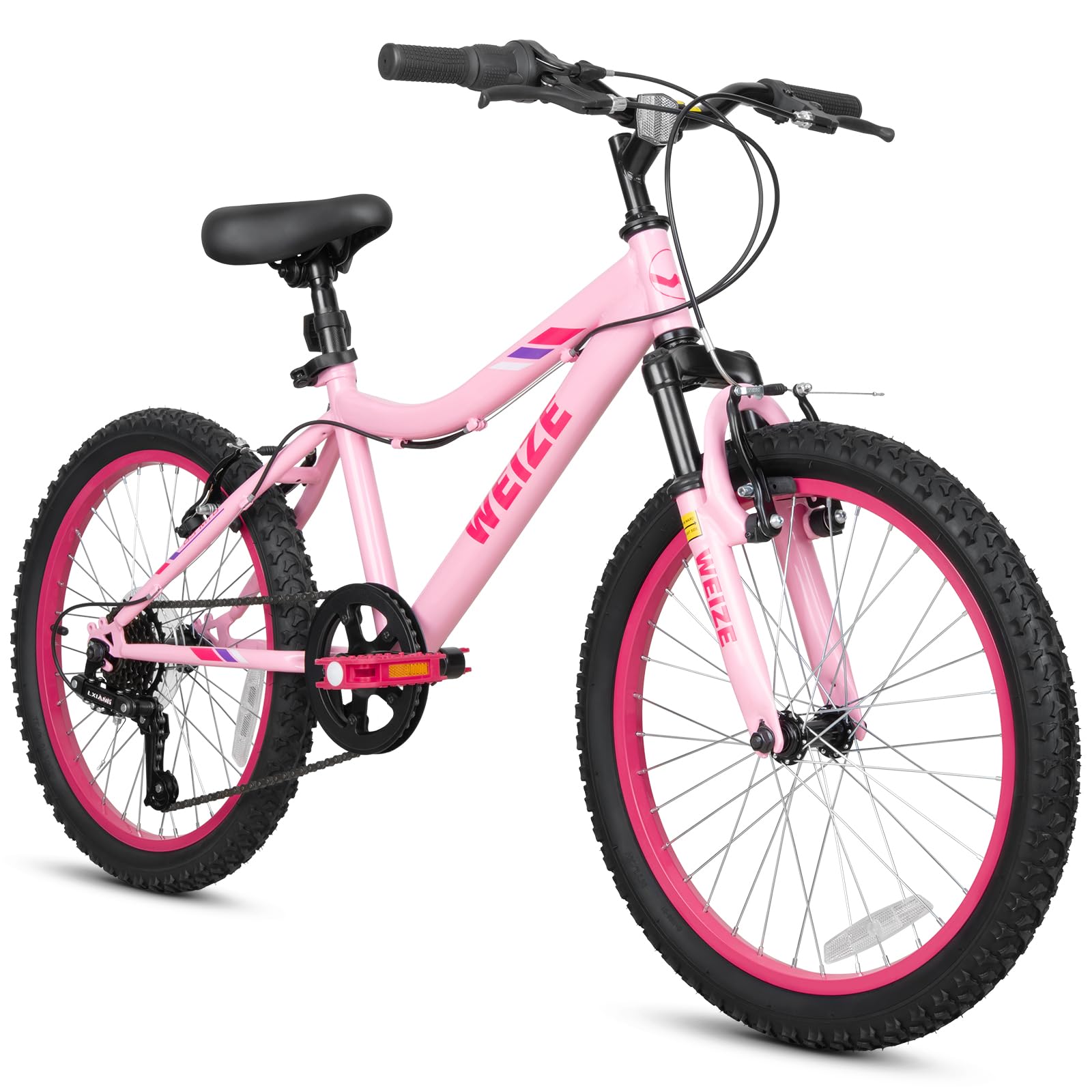
The WEIZE girls’ mountain bike positions itself as a dedicated option for young female riders, with a step-through frame geometry that makes mounting and dismounting easier for children still building confidence. The 6-speed trigger shifter on a high-carbon steel frame provides enough range for rolling hills and green-level trails.
A front suspension fork with about 30mm of travel cushions the rider from small bumps and gravel chatter, keeping the front wheel tracking on looser corners. The adjustable seat height extends the usable age range from roughly 6 to 14 years depending on which wheel size is chosen.
The V-brakes perform adequately for casual neighborhood rides and light trail use, but parents should be aware that the linear-pull design requires periodic pad adjustment and loses effectiveness when the rims are wet. The bike’s paint finish is durable, though the decals can peel if the bike is frequently leaned against rough surfaces.
Why it’s great
- Step-through frame simplifies mounting for less confident riders
- Front suspension fork cushions small trail bumps
- Adjustable seat height extends the bike’s usable life
Good to know
- V-brakes lose stopping power in wet conditions
- Decals may peel over time with rough handling
8. AVASTA Govet 20-Inch Kids Mountain Bike
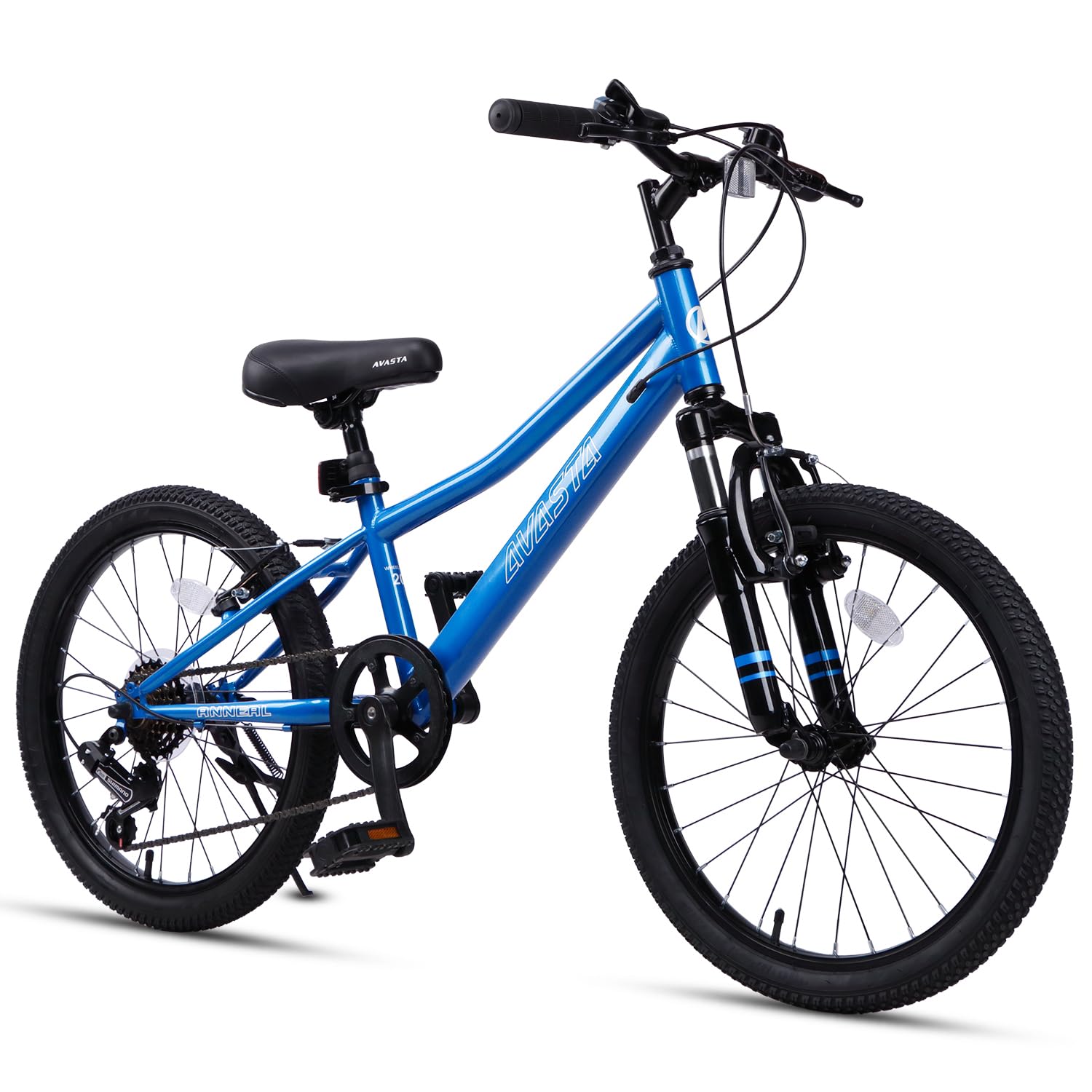
The AVASTA Govet is the most customizable bike in the budget tier, offered in a range of vibrant colors that let a child pick a bike that feels like theirs. The 20-inch wheels target riders ages 6 to 12, and the suspension fork provides basic impact absorption for driveway-to-trail transitions.
The 6-speed drivetrain with a twist shifter is the standard entry-level spec — functional but less precise than a trigger shifter, especially for children with smaller hands who may struggle to twist the grip firmly while pedaling. The high-carbon steel frame is heavy but resilient enough to survive drops off curbs and moderate trail obstacles.
Coaster brakes (pedal backward) combined with a rear handbrake give the child two ways to stop, which helps beginners learn hand-brake modulation. The bike does not include disc brakes, so extended use in wet conditions will reduce stopping power from the rim brake.
Why it’s great
- Multiple color options appeal to individual rider preferences
- Coaster plus handbrake combination aids learning
- Suspension fork cushions basic trail bumps
Good to know
- Twist shifter is harder for small hands to operate precisely
- Rim brakes lose performance in wet weather
9. WEIZE Dual Full Suspension 20-Inch Kids Mountain Bike
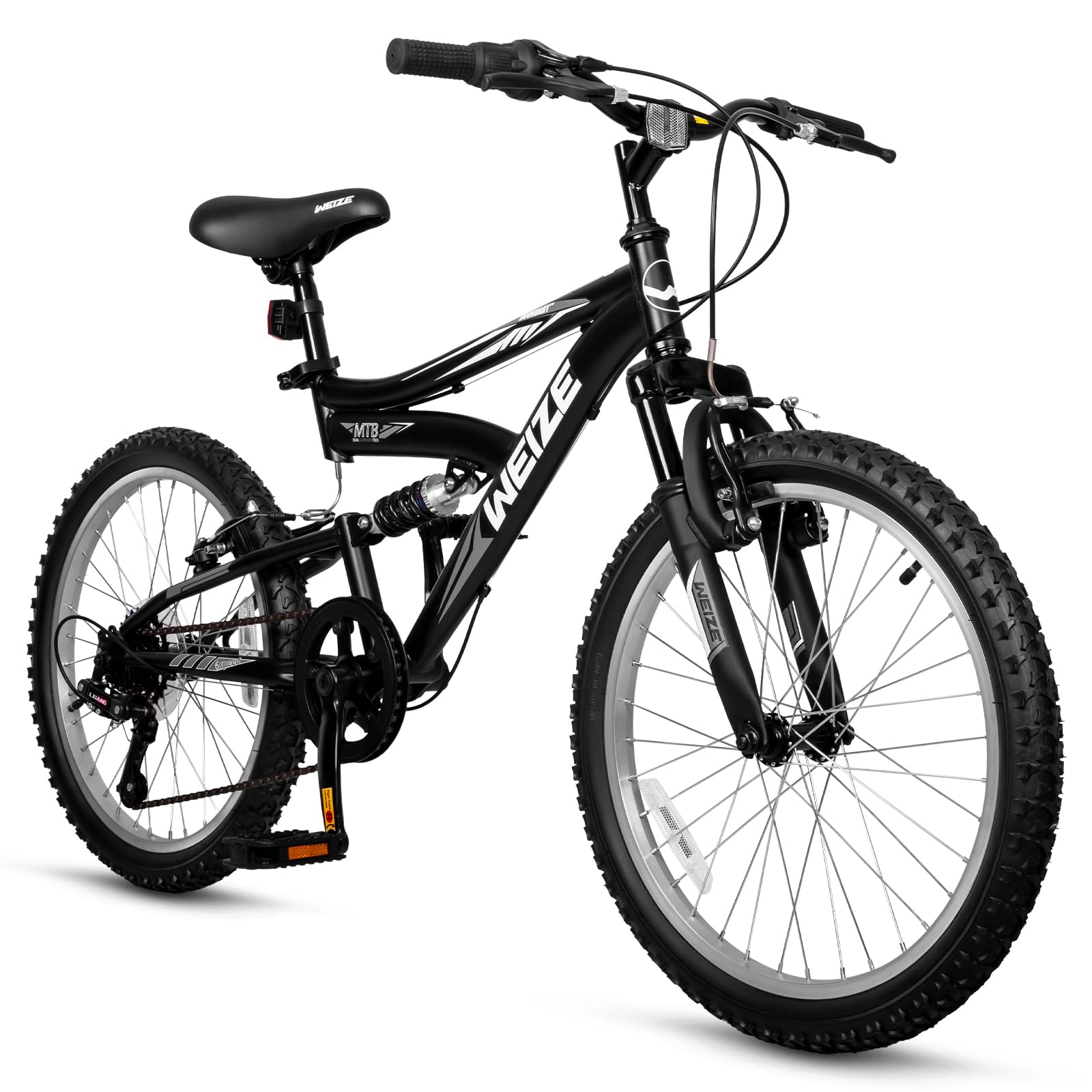
The WEIZE dual-full-suspension model is the most affordable way to get both front and rear cushioning in the same package. Aimed at riders ages 6 to 12, the 20-inch wheels and adjustable seat height mean the bike can stay in service across several growth spurts.
The 6-speed drivetrain uses a twist shifter, and the gear range is narrow compared to 7-speed or 21-speed alternatives. On extended climbs, the rider will run out of low gears, but on rolling terrain and flat trails the gearing is adequate for building speed and confidence.
Disc brakes are absent, and the bike relies on linear-pull V-brakes. The dual suspension adds noticeable weight — well over 35 pounds — making this a challenging bike for smaller or less-strong riders to pedal up hills. The suspension bushings are basic coil units and will require periodic tightening to avoid knocking sounds.
Why it’s great
- Dual suspension at the lowest price point in this review
- Adjustable seat height accommodates growth over multiple years
- 6-speed drivetrain suits rolling and flat terrain well
Good to know
- Heavy weight makes climbing demanding for smaller riders
- V-brakes and basic suspension bushings require regular maintenance
FAQ
What size mountain bike does my child need based on inseam length?
Is a 21-speed drivetrain too complicated for a child?
Should I choose V-brakes or disc brakes for my child’s mountain bike?
How much should a kids mountain bike weigh for a 7-year-old?
Are fat tire bikes useful for kids who ride mostly on pavement?
Final Thoughts: The Verdict
For most users, the best kids mountain bike winner is the Mongoose Flatrock because its aluminum frame keeps the bike light enough for a young rider to handle confidently on trails while disc brakes provide reliable stopping power in all conditions. If you want maximum traction on loose terrain, grab the Glerc Mars Fat Tire. And for a wide gear range to tackle steep hills, nothing beats the Glerc 21-Speed Skyline.