Every parent knows the moment: your child eyes a passing electric scooter with pure longing, and your brain instantly runs a safety checklist. Speed wobbles, sudden jerks, battery running dry mid-block — these are the real concerns that separate a smart buy from a regretful one. The market is flooded with options that either feel sluggish or dangerously fast, making the choice harder than it should be.
I’m Emma — the founder and writer behind Baby Bangs. I’ve spent years analyzing children’s ride-on hardware, dissecting motor wattage, battery chemistry, and safety certifications to help parents avoid the common pitfalls that turn a gift into a hazard.
This guide cuts through the noise to deliver the best kids electric scooters in 2025 — rigorously vetted for real-world balance, durability, and age-appropriate speed limits that keep your rider safe while maximizing the fun.
How To Choose The Best Kids Electric Scooters
Choosing the right electric scooter for your child means balancing real safety concerns with the joy of independent mobility. The wrong spec choice — like an overpowered motor on a lightweight frame — can turn a fun ride into a frightening experience. Here’s what to prioritize.
Speed Governance & Age-Appropriate Limits
Not all “safe” scooters are created equal. A beginner model should cap at 5 mph, while riders aged 8 and up can handle 8–10 mph with proper supervision. Look for models with non-zero-start systems that require a kick to 2 mph before the motor engages — this prevents the lurch that sends first-timers off balance. Dual-speed modes (low/high) give you control as your child’s confidence grows.
Battery Range vs. Real-World Ride Time
Manufacturers often quote optimal-range numbers that don’t account for hills, rider weight, or cold weather. A scooter claiming 5 miles typically delivers 3–4 miles in suburban use. For daily neighborhood loops, 3–5 miles of real range is sufficient. Charge time matters too: a 2-hour fast charge beats a 4.5-hour wait when your child wants to ride again after dinner.
Frame Material, Weight, and Adjustable Heights
Aluminum frames keep scooters lightweight (under 12 lbs) for easy carrying, while high-carbon steel offers higher weight limits at the cost of heft. Adjustable handlebars are non-negotiable for growing kids — look for at least two height settings spanning 29 to 37 inches. A scooter that your child outgrows in one season is a waste of money.
Certifications That Matter
UL2272 certification means the scooter’s electrical system has passed rigorous testing for fire and shock hazards. This is not optional for peace of mind. Also check for TUV or FCC certifications on charging components. Avoid unbranded imports that skip these safety standards entirely.
Quick Comparison
On smaller screens, swipe sideways to see the full table.
| Model | Category | Best For | Key Spec | Amazon |
|---|---|---|---|---|
| Segway Ninebot C2 Pro | Premium | Long-term investment for ages 8+ | 132 lbs capacity, cruise mode | Amazon |
| Gyroor H30 Max | High-End | Older kids needing more speed | 150W motor, dual brake system | Amazon |
| FanttikRide C9 Pro | Mid-Range | Growing riders 8–12 years old | 3 speed modes, rainbow lights | Amazon |
| Hiboy ES1 | Mid-Range | Young beginners ages 4–8 | 5 mph safe speed, UL2272 | Amazon |
| Gyroor KS2 | Value | First scooter for ages 6–12 | Foot sensor start, 2 hr charge | Amazon |
| Gotrax GKS Mini | Budget | Entry-level value for ages 6–12 | 7.5 mph, thumb control | Amazon |
| iScooter IK3 | Budget | Lightweight portable for ages 6–10 | 10.1 lbs, magnetic charging | Amazon |
In‑Depth Reviews
1. Segway Ninebot Kids eKickScooter C2 Pro

The Segway name carries real weight in the scooter world, and the C2 Pro delivers on that legacy with a refined ride tuned for kids up to 132 lbs. Its cruise mode maintains a steady speed without constant throttle input — a surprisingly useful feature for longer neighborhood loops. The adjustable handlebar height grows with your child, and the UL2272 certification gives parents a crucial safety benchmark that many budget scooters skip entirely.
What sets the C2 Pro apart is its overall polish: smooth acceleration curve, solid rubber tires that resist punctures, and a deck that offers real foot room for growing feet. The motor is tuned for controlled speed — not raw power — which is exactly what you want for riders transitioning from push scooters. The battery range of approximately 5–6 miles handles daily excursions without a mid-ride shutdown.
If you want a scooter that your child won’t outgrow in 18 months and that doesn’t cut corners on safety certifications, the C2 Pro justifies its premium position through engineering maturity rather than flashy features. The lack of colorful light show effects might disappoint some kids, but the priority here is durability and predictable handling.
Why it’s great
- UL2272 and UL2271 certified for maximum safety
- Cruise mode reduces fatigue on longer rides
- High 132 lb weight capacity extends usable years
Good to know
- No multi-color deck or wheel lighting effects
- Premium price point reflects the brand and certification cost
2. Gyroor H30 Max Electric Scooter for Kids

The Gyroor H30 Max steps up the power game with a 150W motor and adjustable speed settings that let you dial in the right pace as your child gains experience. The dual brake system — combining an electronic brake with a rear fender brake — gives you redundancy that matters when stopping distance counts. An LED display keeps speed and battery level visible at a glance, a feature often missing on lower-tier models.
Build quality here leans toward durability: the frame feels solid underfoot, and the adjustable handlebar accommodates riders from around 8 years old well into early teens. The battery range supports longer adventures, though real-world use on slight inclines will reduce the quoted numbers. Parents should note that higher speed capacity means more responsibility — this is best for kids who have already mastered a slower scooter.
At this price tier, you’re paying for the flexibility to grow into the scooter rather than outgrow it quickly. The Gyroor H30 Max doesn’t skimp on safety features, but its higher top speed means it’s not suitable for absolute beginners. Pair it with a helmet and knee pads for a solid mid-to-late childhood ride.
Why it’s great
- Dual braking system provides reliable stopping power
- Adjustable speed settings match rider skill progression
- LED display offers clear speed and battery feedback
Good to know
- Heavier frame may be tough for smaller kids to carry
- Higher top speed demands prior riding experience
3. FanttikRide C9 Pro Kids Electric Scooter
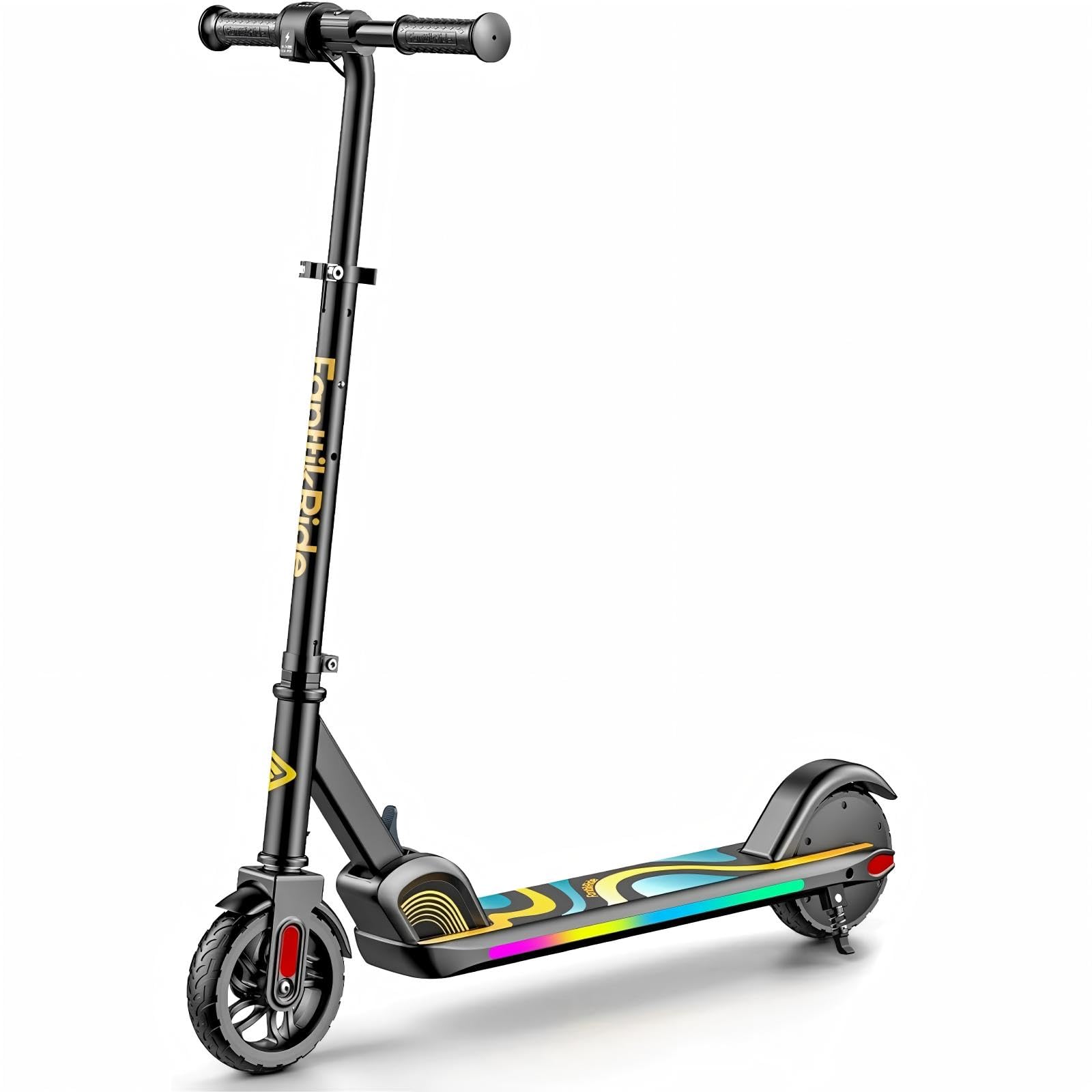
The FanttikRide C9 Pro strikes a compelling balance between visual excitement and practical engineering. Its rainbow-colored LED wheels and deck lights turn dusk rides into a light show that kids absolutely love, while the three speed modes (5/8/10 mph) let you gradually increase the pace as your child’s confidence builds. The adjustable handlebar spans 3.9 to 5.2 feet in rider height, making it one of the more accommodating models for the 8–12 age bracket.
With a 132 lb weight limit and 5-mile range, the C9 Pro handles typical suburban use without breaking a sweat. The 40-minute ride time quoted is realistic for flat pavement at moderate speeds. Assembly is straightforward, and the scooter remains stable even when transitioning between speed modes — no sudden lurches that might unseat a younger rider.
Where the C9 Pro shines is in that rare intersection of fun and function: the lighting isn’t just decorative — it improves low-light visibility for both the rider and nearby traffic. If your child values the cool factor but you still want genuine safety features and room to grow, this is the sweet spot in the mid-range.
Why it’s great
- Three speed modes accommodate beginner to intermediate riders
- Bright wheel and deck lighting improves visibility
- Wide handlebar height range fits growing kids
Good to know
- Range may drop to 3–4 miles on hilly terrain
- Light show drains battery slightly faster
4. Hiboy ES1 Electric Scooter for Kids
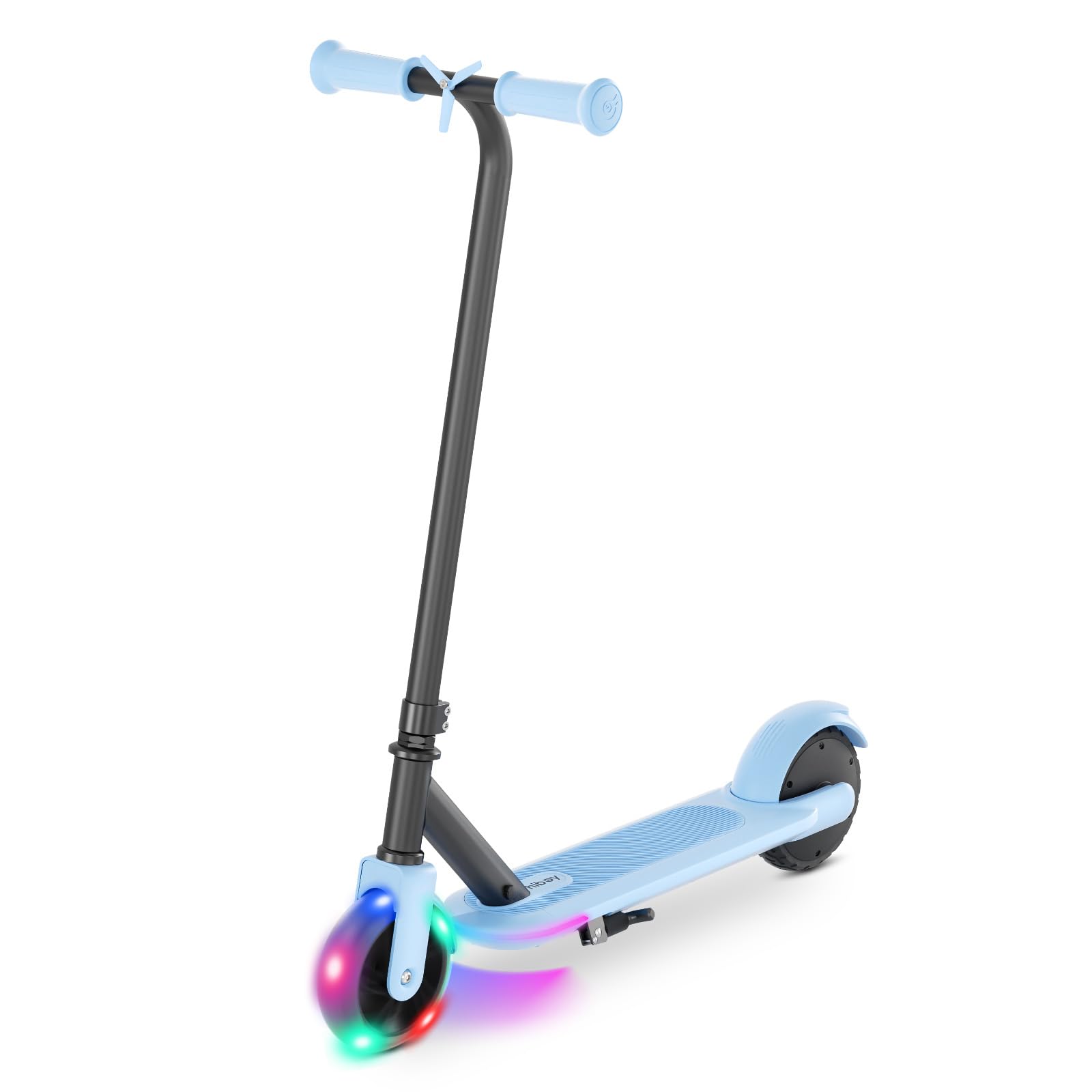
The Hiboy ES1 is built from the ground up for the youngest riders — ages 4 to 8 — and its design choices reflect that focus ruthlessly. The top speed is capped at 5 mph, and the foot-activated pedal membrane switch means the scooter only runs when your child is standing on the deck. No accidental throttle engagement when parked, and the scooter shuts off automatically 10 seconds after the rider steps off. That’s the kind of intentional safety engineering that matters for beginners.
The 6-inch puncture-proof rubber tires and slip-resistant deck handle driveways and sidewalks well, while the curved body eliminates sharp edges that could cause scrapes during tumbles. The colorful wheel and deck lights add visibility without being distracting. With a 50 kg (110 lb) weight limit and 6-mile range, this scooter will last through several growth spurts if your child stays within the recommended age window.
Parents who prioritize safety over flash will appreciate the UL2272 certification and the absence of complex controls. The fixed handlebar (non-adjustable) is the main limitation — measure your child’s height against the 32.68-inch handlebar height before buying. For the right-sized kid, the Hiboy ES1 is the gold standard for first electric scooters.
Why it’s great
- Foot sensor prevents accidental startups
- UL2272 certified for electrical safety
- Puncture-proof tires eliminate flat-tire frustration
Good to know
- Fixed handlebar won’t adjust as child grows
- 5 mph cap feels slow for older or experienced riders
5. Gyroor KS2 Kids Electric Scooter
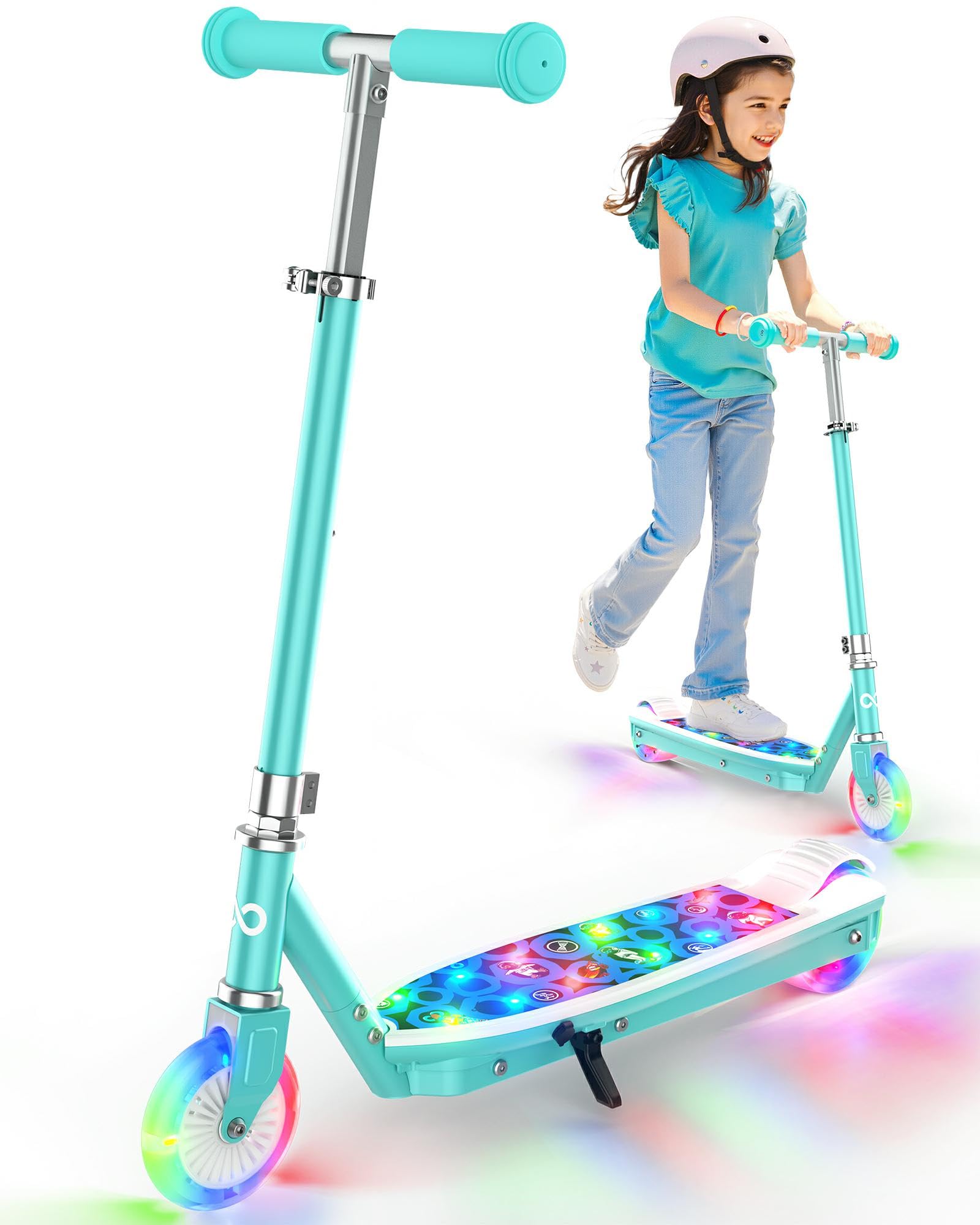
The Gyroor KS2 proves that a well-designed budget scooter doesn’t have to feel cheap. Its foot sensor start system is the same intuitive technology found on more expensive models — step on, kick to 2 mph, and the motor engages smoothly. Beginners ages 6–12 will appreciate the lack of thumb-throttle confusion, while parents will love the 2-hour fast charging that minimizes downtime between rides.
The adjustable handlebar offers two height settings (29.5 to 33.5 inches), accommodating growth without the need for tools. Multi-color LED wheels and deck lights add nighttime visibility and kid appeal. At just 9.26 lbs, the aluminum frame is light enough for a child to carry up steps or into the car trunk — a practical detail that heavier scooters overlook.
With a 121 lb weight limit and UL2272 certification, the KS2 doesn’t compromise on safety to hit its price point. The 5 mph top speed is deliberately conservative, making this ideal for first-time riders still building balance and coordination. If your child is just starting out and you don’t want to overspend, the Gyroor KS2 delivers where it counts.
Why it’s great
- Foot sensor start is intuitive for beginners
- Fast 2-hour charging gets kids back riding quickly
- Ultra-light 9.26 lb frame is easy to carry
Good to know
- 5 mph top speed feels slow for children over 9
- Only two handlebar height settings limit adjustability
6. Gotrax GKS Mini Electric Scooter
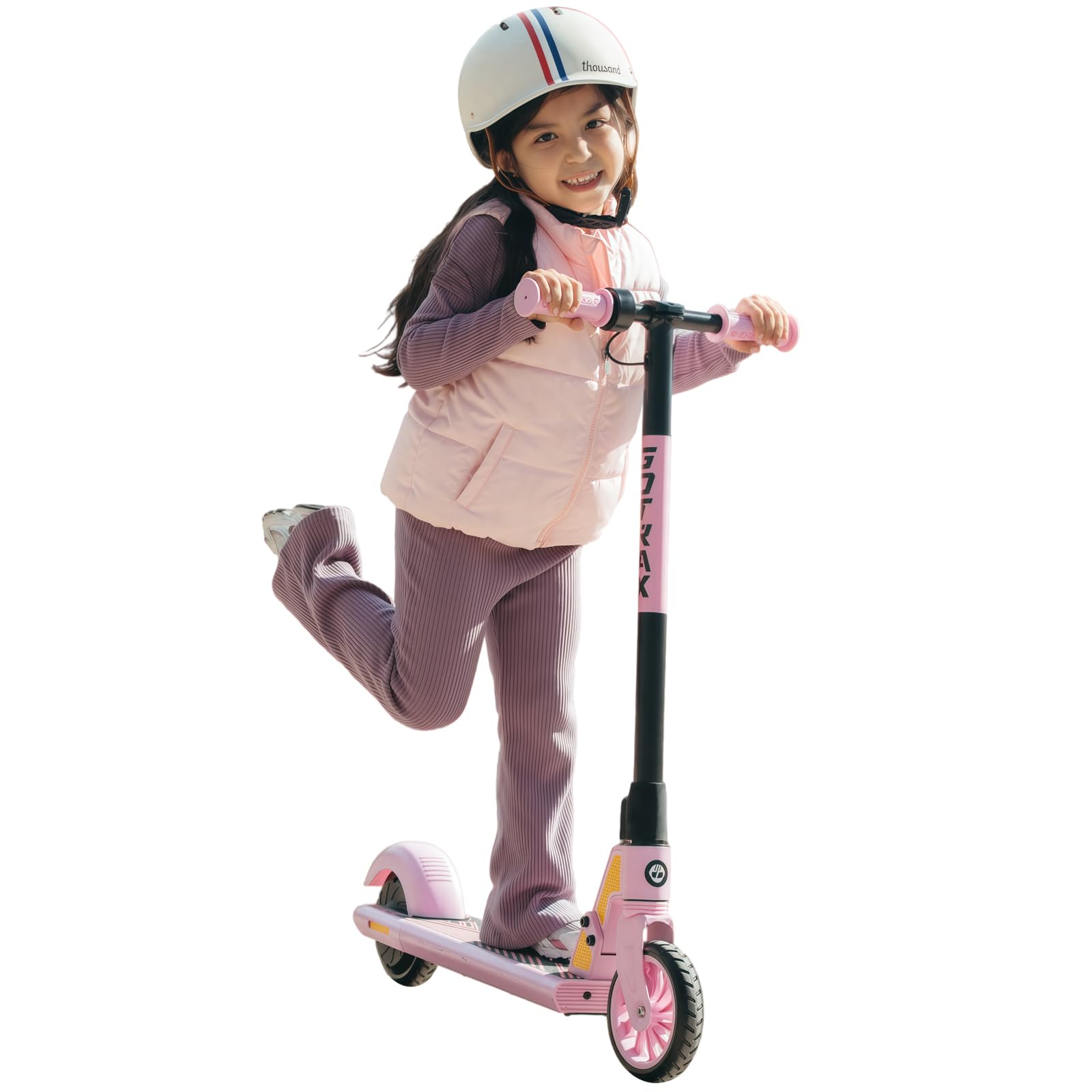
The Gotrax GKS Mini positions itself as an accessible entry point for the 6–12 age range, with a 150W motor pushing a max speed of 7.5 mph. That extra 2.5 mph over strictly beginner scooters gives slightly older kids a bit more thrill without entering dangerous territory. The thumb control is straightforward and familiar to anyone who has used a video game controller, reducing the learning curve.
With a claimed range of 3.75 miles, this scooter is best suited for short neighborhood loops rather than extended adventures. The 6-inch wheels handle smooth pavement well but will vibrate on rough surfaces. Assembly is genuinely simple — the scooter comes mostly pre-assembled, so you’ll have it ready in under 10 minutes straight out of the box.
The GKS Mini’s main trade-off is in overall build refinement: it lacks the UL certification of premium models and the adjustable handlebar limits growth potential. For families on a tight budget who need a functional electric scooter for casual use, it gets the job done. Just budget for a quality helmet and expect to upgrade within 12–18 months as your child’s skills and size increase.
Why it’s great
- Simple thumb control reduces learning curve
- 7.5 mph top speed satisfies older beginners
- Minimal assembly required out of the box
Good to know
- No UL safety certification listed
- Fixed handlebar limits use as child grows
7. iScooter IK3 Serious Electric Scooter
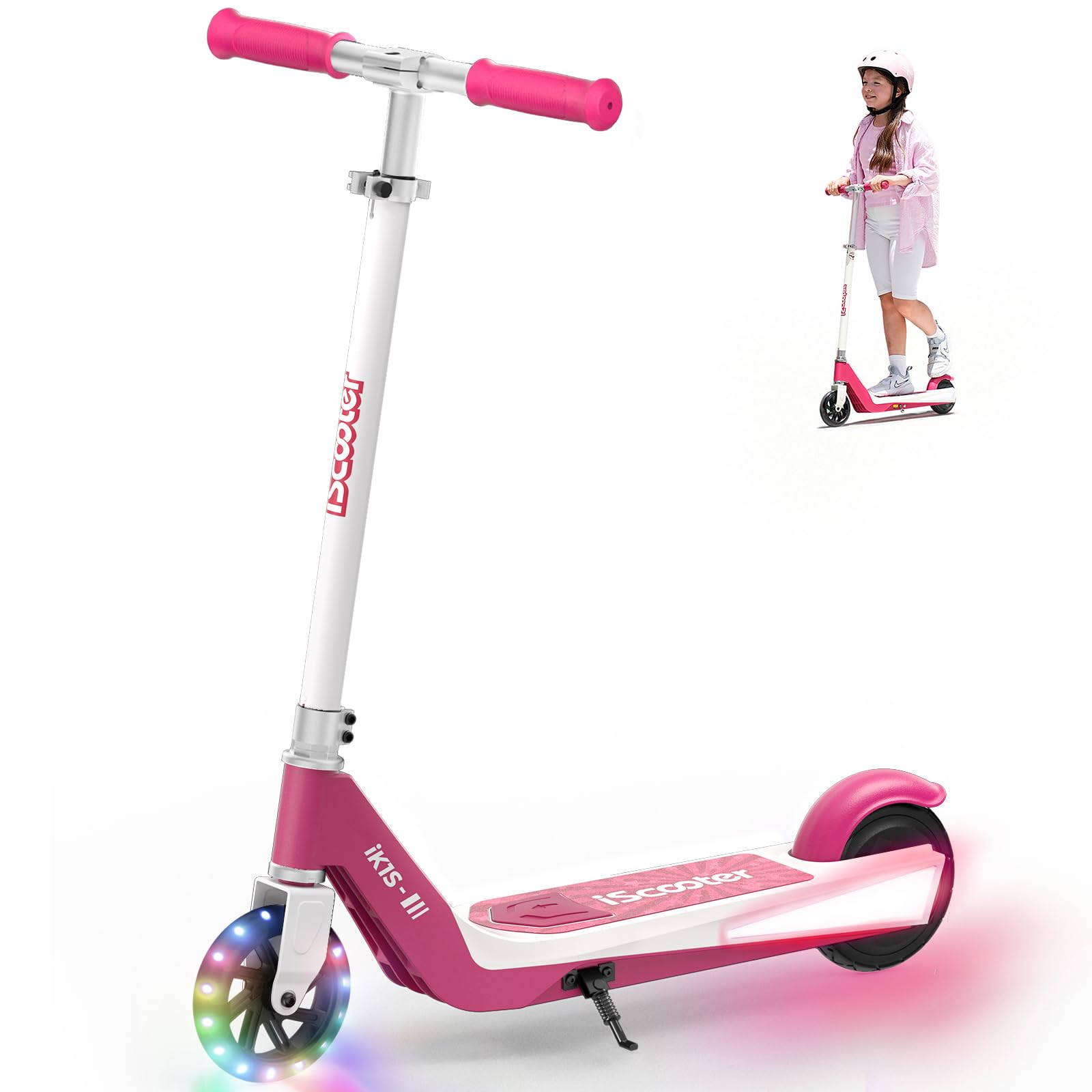
The iScooter IK3 prioritizes portability above all else. At just 10.1 lbs, it’s the lightest scooter on this list, making it the go-to choice for families who need to carry the scooter into stores, onto public transit, or up apartment stairs. The magnetic charging connector snaps on easily and reduces wear on the charging port — a smart touch that competitors in this weight class often overlook.
The three-level height adjustment (32/34.5/37 inches) matches a wide range of kids aged 6–10, and the 110 lb weight limit covers most children in that bracket. Speed options include 3, 6, and 10 mph modes, giving parents granular control as their child builds skill. The 7-color rim lights and side-board ambient lighting add a fun visual element that kids enjoy during evening rides.
Where the IK3 shows its budget roots is in the 4.5-hour charge time — noticeably slower than the 2-hour competitors. The 4.3-mile range is adequate but not generous. The non-zero-start system and auto power-off after 5 minutes of inactivity are welcome safety features. If weight and portability are your primary concerns, the iScooter IK3 delivers unmatched convenience at the cost of longer charging waits.
Why it’s great
- Ultra-light 10.1 lb frame is the most portable option
- Magnetic charging connector reduces port wear
- Three speed modes support skill progression
Good to know
- 4.5-hour charge time is slower than competitors
- Range drops significantly on inclines
FAQ
What age is appropriate for a kids electric scooter?
How do I know if the handlebar height fits my child?
Is a higher top speed always worse for safety?
Final Thoughts: The Verdict
For most families, the best kids electric scooters winner is the Segway Ninebot C2 Pro because it combines UL certification, cruise mode, and a 132 lb weight limit that extends its usable life well beyond the competition. If you want a scooter with the visual excitement kids crave and three speed modes for gradual progression, grab the FanttikRide C9 Pro. And for young beginners aged 4–8 who need maximum safety engineering, nothing beats the Hiboy ES1.