The struggle with keto pasta is real — rubbery konjac that smells like a fish market, or zucchini noodles that turn to mush before you finish cooking. Most low-carb alternatives trade texture so aggressively that you wonder if a bowl of crunchy salad is actually the better option. That trade-off ends here.
I’m Emma — the founder and writer behind Baby Bangs. I’ve spent the last two years dissecting the keto pasta category, comparing net carb counts against fiber profiles, protein content, and real-world mouthfeel to separate the genuinely usable products from the shelf-sitting experiments.
This guide evaluates the top contenders by their nutritional honesty, texture under sauce, and overall meal compatibility. Whether you’re meal-prepping for the week or craving a quick weekday dinner, this roundup of the best keto pasta options will help you make a confident choice without sacrificing the joy of a proper noodle bowl.
How To Choose The Best Keto Pasta
Keto pasta is not one monolithic category. The base ingredient — konjac flour, lupini bean protein, or egg whites — completely changes your cooking experience, the macronutrient profile, and how the noodle interacts with sauces. Ignore the base ingredient and you risk buying a box that looks promising but tastes like failure.
Net Carbs — The Only Number That Matters
Total carbohydrate count on a keto pasta label often looks frightening until you subtract the dietary fiber. Konjac noodles, for example, can show near-zero net carbs because the glucomannan fiber is indigestible. Lupini-based pastas like the Kaizen Ziti sit around 6g net carbs per serving — still low enough for daily ketosis but not zero. Know your threshold before you scan the label.
Texture and Preparation Method
Konjac noodles require draining, rinsing thoroughly, and dry-frying in a hot pan to shed their excess water and remove any residual aroma. Egg white noodles like Noodle Revolution come ready to eat after a simple drain. Lupini-based pastas cook almost exactly like traditional semolina pasta — boil for 4 to 6 minutes and you are done. Matching your preparation tolerance to the product type prevents kitchen frustration.
Protein Density and Satiety
Standard konjac noodles provide almost zero protein per serving. That matters if you rely on pasta as a meal anchor rather than a side vehicle. Lupini and egg white options push protein up into the 17 to 20 gram range, which turns a carb-light bowl into a legitimately filling meal without needing to double the meat portion.
Quick Comparison
On smaller screens, swipe sideways to see the full table.
| Model | Category | Best For | Key Spec | Amazon |
|---|---|---|---|---|
| Soeos Konjac Noodles | Mid-Range | Variety packs on a budget | 3 shapes (Angel Hair, Spaghetti, Fettuccine) | Amazon |
| 52USA Organic Konjac Noodles | Mid-Range | Certified organic shoppers | USDA Organic, odor-free claim | Amazon |
| Apexy Organic Shirataki | Mid-Range | Pure organic konjac, no frills | 8 pouches of organic spaghetti shapes | Amazon |
| Kaizen Ziti Protein Pasta | Premium | High-protein, lupini-based meals | 20g protein, 6g net carbs per serving | Amazon |
| Noodle Revolution Keto Noodles | Premium | Egg white texture, lowest carbs | 2g carbs, 17g protein, ready to eat | Amazon |
In‑Depth Reviews
1. Soeos Konjac Noodles

The Soeos Konjac Noodles deliver three distinct shapes — angel hair, spaghetti, and fettuccine — in a single box, which is a practical way to test which cut best matches your keto pasta routine before committing to a bulk purchase of one shape. Each 9.5-ounce pack drains down to a modest portion, so the total 57-ounce box covers multiple meals without forcing you to eat the same noodle silhouette every night.
These are pure shirataki noodles, meaning zero digestible carbs and virtually no calories. The preparation ritual matters here: drain, rinse under cold water for at least 30 seconds, then dry-fry in a non-stick pan until the noodles start to squeak against the surface. That step kills the residual liquid that dilutes sauces and eliminates any trace of the konjac scent. Once properly dry-fried, these hold up well to stir-fry sauces and broth-based soups.
The box format keeps the packs organized in the pantry, and the variety lets you switch from a pad thai night (angel hair) to a creamy fettuccine Alfredo later in the week. If you want a konjac starter kit with shape flexibility, this is the most economical way to sample the full range.
Why it’s great
- Three noodle cuts in one box keep meals from getting boring
- Zero net carbs — completely keto safe
- Large total weight stretches across multiple cooking sessions
Good to know
- Konjac noodles have no protein — pair with a high-protein sauce or meat
- Requires thorough rinsing and dry-frying to avoid odd texture
2. 52USA Organic Konjac Shirataki Noodles
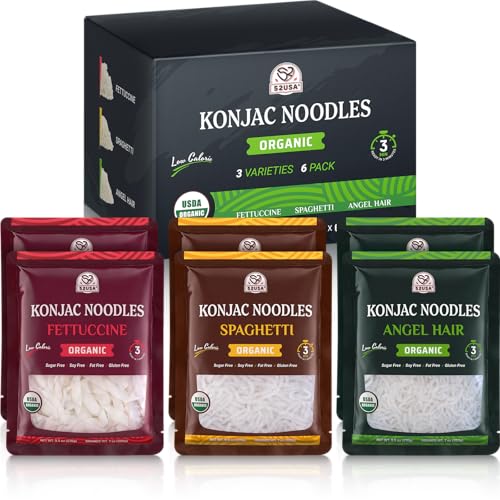
The 52USA organic konjac noodles bring a USDA Organic certification to the keto pasta aisle, which matters for buyers who want to avoid any pesticide residues in a product where the base ingredient — konjac flour — is the whole show. These come in a six-pack split across angel hair, fettuccine, and spaghetti, mirroring the variety approach but with an organic stamp that the Soeos box lacks.
Brands often struggle with the ammonia-like smell that konjac naturally holds, but 52USA specifically markets these as odor-free out of the bag. That claim holds up reasonably well — the rinse phase still produces a faint earthy note, but it is far milder than generic konjac blocks. Texture after dry-frying leans toward al dente rather than gelatinous, which is the ideal state for a shirataki noodle.
The glucomannan fiber in these noodles absorbs water and expands in the stomach, which can help with portion control, but the flip side is that overeating them can cause bloating. Stick to one pack per meal and you get a clean, organic, zero-carb base that lets your sauce do the heavy lifting flavor-wise.
Why it’s great
- USDA Organic certification adds peace of mind for ingredient purity
- Odor profile is noticeably milder than standard konjac options
- Six-pack quantity gives good value per serving
Good to know
- Still requires the standard rinse and dry-fry process for best results
- Glucomannan fiber can cause digestive discomfort if portions are too large
3. Apexy Organic Shirataki Konjac Noodles

The Apexy Organic Shirataki Konjac Noodles stick to a single shape — spaghetti — but deliver eight pouches in the bundle, which is the highest unit count in this roundup. For someone who has already settled on spaghetti as their go-to keto pasta cut, this bulk offering reduces the per-meal cost significantly compared to boutique brands.
Like all konjac noodles, these are vegan, gluten-free, and keto-friendly with near-zero net carbs. The organic label here matches the 52USA certification, but the difference is in the packing: Apexy uses individual pouches rather than a boxed multipack, which makes grabbing a single serving for lunch slightly more convenient. The noodles benefit from the same draining and dry-frying ritual — no shortcuts if you want a pleasant bite.
Taste-wise, these are neutral, which is exactly what you want from a konjac base. The spaghetti thickness is comparable to traditional dry pasta, meaning it works well with marinara, alfredo, or pesto without feeling like a completely different food. If your goal is a large supply of organic konjac spaghetti that stays shelf-stable for months, this eight-pack delivers the highest volume.
Why it’s great
- Eight pouches offer the highest unit count for organic konjac in this list
- Spaghetti shape matches traditional pasta dishes closely
- Organic certification without a premium markup
Good to know
- Single shape limits versatility for those who want variety
- No cooking instructions included — requires knowing the konjac prep method
4. Kaizen Ziti Protein Pasta
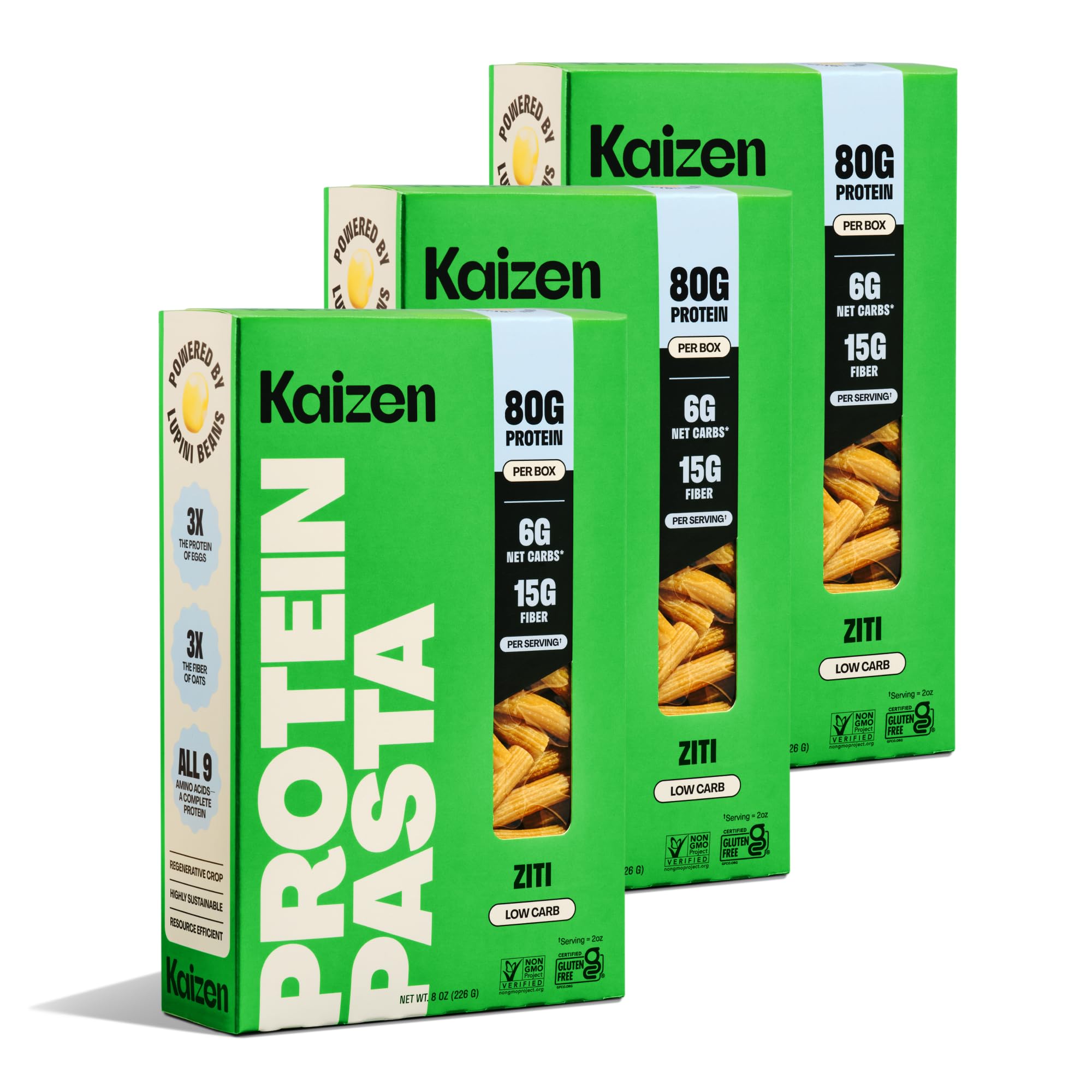
The Kaizen Ziti Protein Pasta represents a fundamentally different approach to keto pasta — it is made from lupini beans rather than konjac root. Each 8-ounce serving packs 20 grams of protein with only 6 grams of net carbs, which places it in a category of its own for nutritional density. This is not a zero-calorie noodle sub; this is a legitimate macronutrient tool that can function as the base of a complete meal.
Texture-wise, lupini pasta behaves far closer to traditional semolina ziti than any konjac product in this guide. You boil it in salted water for about 4 to 6 minutes, drain it, and toss it with sauce — no rinsing, no dry-frying, no funky smells. The al dente bite holds up well in baked pasta dishes or cold pasta salads, and the noodle surface grips sauce rather than repelling it.
The trade-off is that this is not a zero-carb product. 6 grams of net carbs per serving fits within a standard keto macro budget, but if you are running a very strict <20g net carb protocol, you need to account for these. The three-pack provides 24 ounces total, which is enough for three to four meals depending on portion size. For anyone who misses the act of cooking actual pasta, this is the closest sensory experience available in the keto aisle.
Why it’s great
- 20g protein per serving — far more satiating than konjac alternatives
- Boils and handles like traditional semolina pasta
- Gluten-free and plant-based without sacrificing texture
Good to know
- 6g net carbs per serving requires macro tracking for strict keto dieters
- Smaller package size (8 oz per pack) compared to bulk konjac bundles
5. Noodle Revolution Keto Noodles
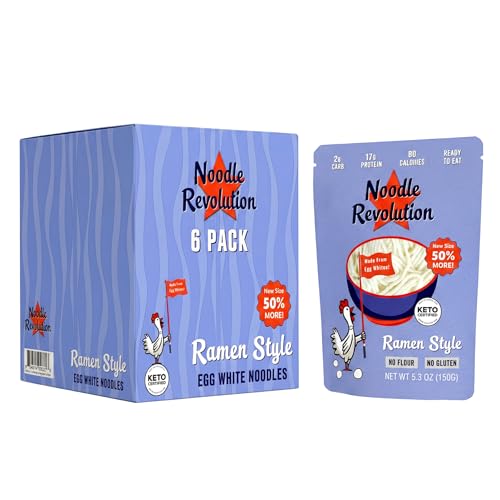
The Noodle Revolution Keto Noodles solve the two biggest problems with konjac-based keto pasta: the low protein content and the unpleasant texture. Made from egg whites with just three simple ingredients, these deliver 17 grams of protein and only 2 grams of carbs per serving, which hits a near-ideal macronutrient ratio for anyone maintaining nutritional ketosis. The new package is 50 percent larger than the original, which improves the value equation considerably.
Texture is where this product separates from the pack. These noodles taste and chew like fresh rice noodles or ramen, with a slight springiness that konjac simply cannot replicate. There is no rinsing or dry-frying required — just drain the pouch and fold the noodles into your sauce, soup, or stir-fry. The shelf-stable packaging means you can stock up without refrigeration, and the certified keto and paleo badges from the Paleo Foundation provide third-party verification that the carb claims are accurate.
The ramen cut shape makes them ideal for broth-based dishes, but they also work in stir-fries and cold noodle salads. The only catch is the price — this is the most expensive option in the guide on a per-serving basis. But the combination of low carbs, high protein, and actual noodle texture justifies the premium for anyone who has been underwhelmed by konjac alternatives.
Why it’s great
- 17g protein with only 2g carbs — best macro balance in the guide
- Texture mimics real ramen and rice noodles closely
- Ready to eat with no rinsing or dry-frying step
Good to know
- Highest per-serving cost among all products reviewed
- Ramen cut is excellent for soups but less versatile for baked pasta dishes
FAQ
Do I need to rinse konjac noodles before cooking?
Can I eat keto pasta every day on a vegetarian diet?
Why does some konjac pasta smell fishy even after rinsing?
Final Thoughts: The Verdict
For most users, the best keto pasta winner is the Noodle Revolution Keto Noodles because it combines the lowest net carb count with high protein and a texture that genuinely resembles traditional noodles. If you want a more affordable bulk option for everyday meal prep, grab the Soeos Konjac Noodles for the three-shape variety and zero-carb profile. And for high-protein kitchen performance without konjac prep quirks, nothing beats the Kaizen Ziti Protein Pasta for its lupini-based, boil-and-serve convenience.